Leaders are needed for tough times. “Doing difficult creates natural separation” for your leadership, says Eric Thomas. Check out this full conversation from The Craig and Greg Show.
“Busier than a businessman, more sought out than a celebrity, wanted as a mother of many toddlers, and bearing a task as big as the world, Jesus prayed.” Check out Scott Hubbard’s post Never Too Busy To Pray.
“This is certain, that a man that studieth revenge keeps his wounds green, which otherwise would heal and do well.” —Sir Francis Bacon
“Do not have your concert first, and then tune your instrument afterwards. Begin the day with the Word of God and prayer, and get first of all into harmony with Him.” —Hudson Taylor
There are almost 12,000 species of snakes and lizards, but evolutionists still do not know where they came from. Vertebrate paleontologist Michael Benton stated, “The early history of squamates [snakes, lizards] is patchy,” and the debate of snake origin “is far from resolved.” ICR offers the most straightforward solution to this supposed evolutionary dilemma: “snakes and lizards have been created with the genetic ability to undergo “remarkably varied jaw shapes” that have led to “their extraordinary ecological success” as they move in and fill various niches.”
Seth Porch, in talking about the joy of daily reading the Bible, notes, “By itself, neither habit, shame, nor duty will lead you to open God’s word daily with a heart posture of humble expectation and joy. Such an attitude toward the Bible comes only from the astonished realization that in these pages God actually speaks.” I hope you find the joy in reading God’s Word throughout this new year. I love my YouVersion reading plans that take me through the Bible. You may also like the companion book by Dick Brogden called Missionary God, Missionary Bible. And I shared some Bible studies that may interest you here and here.
Listen to the podcast of this post by clicking on the player below, and you can also subscribe on Apple, Spotify, or Audible.
Last week I shared this thought with you from Pastor Tim Keller: “Your prayer must be firmly connected to and grounded in your reading of the Word. This wedding of Bible and prayer anchors your life down in the real God. … Without immersion in God’s words, our prayers may not be merely limited and shallow but also untethered from reality.”
“Untethered from reality” means that we determine the manner in which we come to God in prayer, the way prayer works, and the way God must respond to our prayer. But what we read in the Bible is the opposite of this (Isaiah 1:11-15).
I think there are two opposite and equal erroneous thoughts about how we approach prayer:
I’m not worthy to come into the presence of an all-holy God
I can waltz right into God’s presence whenever and however I please
Both are wrong and both are strategies the devil has used to keep us prayerless. Either we don’t go to God at all or our prayers are unheard because the Bible says that our arrogance has made our prayer ineffectual.
Our Prayer Book—the Bible—helps us find the balance. George Whitefield noted, “Reading the Bible is a good preparative for prayer, as prayer is an excellent means to render reading effectual.” So here’s what we read about those two errors.
I’m not worthy. God is unapproachable in His holiness, but Jesus has made it possible for us to enter in through His righteousness (1 Timothy 6:15-16; Isaiah 6:1-5; Hebrews 4:1, 14, 16; John 16:23-24).
I can come anyway I want to. Passages like Psalm 15:1-5 and Isaiah 58:2-4 make it clear that we cannot simply approach God in a way of our choosing.
Let’s unpack that second error a little more. We have to be clothed in righteousness in order to come into God’s presence, but we cannot be clothed in a righteousness that is apart from Jesus. When we say that we are praying in the name of Jesus, it means we are praying in the nature of Jesus and through the righteousness of Jesus. We must be wearing His righteous robe (Romans 3:22-24; Isaiah 61:10).
So I think we need to pray before we pray. Let’s try these actions which are tethered to the reality of our Prayer Book.
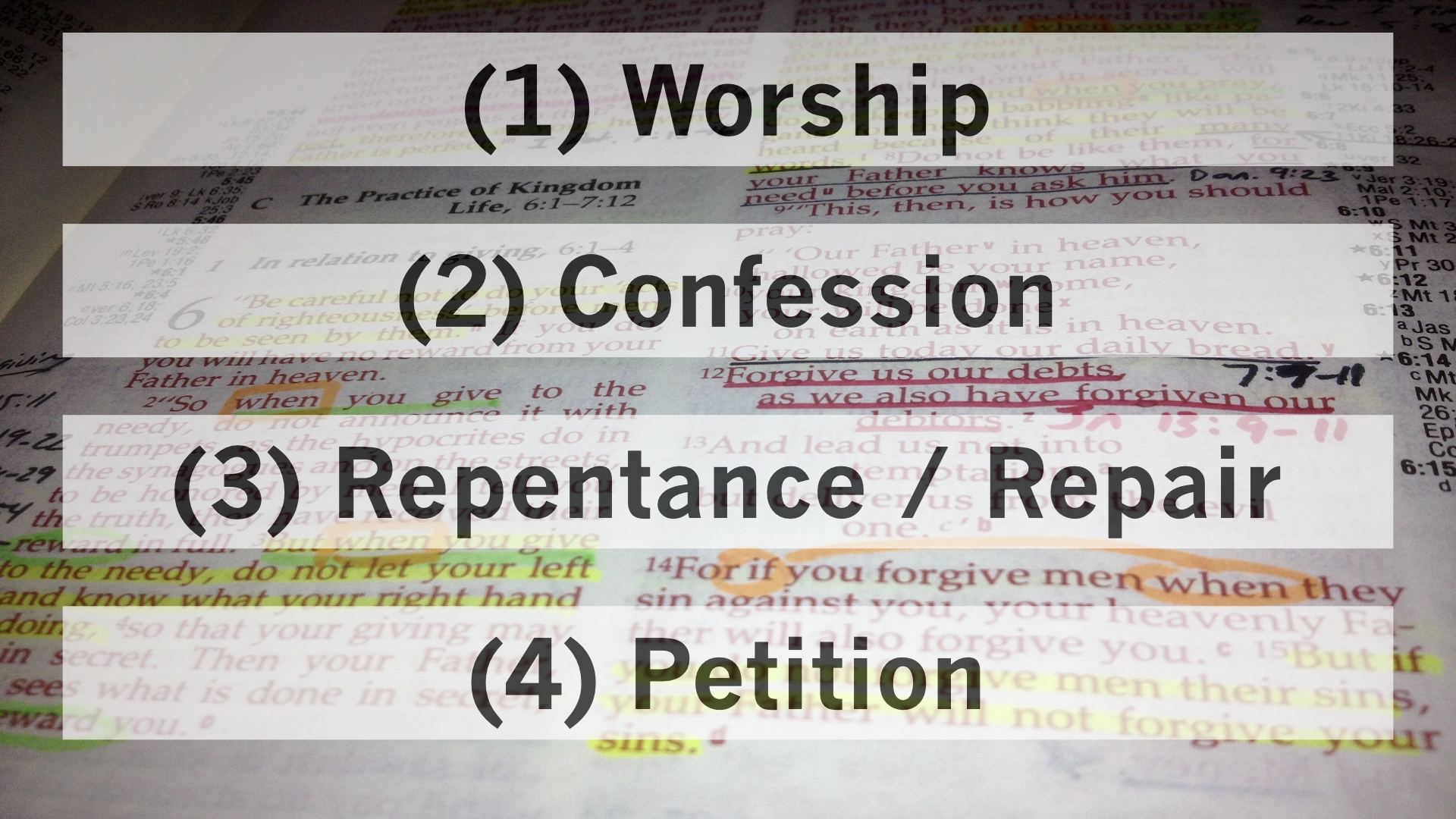
Worship. This is a deep pondering of who God is; it is humbly assigning Him the highest worth. In face, the Old English spelling of this word (“worthship”) gives us insight into what worship does. It is this kind of humility that God responds to (Isaiah 6:5-7; 57:15; Luke 18:9-14).
Confession. As we are worshiping, we will see our inadequacies (much like Isaiah did in Isaiah 6, or the tax collector did in Luke 18). We then need to confession these shortcomings. Dick Brogden wrote, “Confessed sin opens the portals of heaven into our darkness, and light and glory overwhelm shame. Confession is our glory for it lifts our heads and eradicates shame.” We see this so vividly lived out in the prayers of David (Psalm 139:23-24; 51:1-2; 19:12-14).
Repentance. I think we could also call this Repair. After confession where we have fallen short, we resolve now to both take a different path and repair what was damaged (Matthew 5:23-24; Mark 11:25-26; 1 Peter 3:7).
Petition. After worship, confession, and repentance / repair, our heart’s attitude is now in the place for God to heed our cries for His help (1 Peter 3:12).
Let’s learn to pray before we pray. Don’t just rush in and rush out of God’s presence. Take time to worship, confession any sins the Holy Spirit reveals, make things right, and then present your petitions.
Our hearts need to be prepared to present our petitions. This is how we know that God will hear our voice.
“If we try to display the excellence of God without joy in it, we will display a shell of hypocrisy and create scorn or legalism. But if we claim to enjoy His excellence and do not display it for others to see and admire, we deceive ourselves, because the mark of God-enthralled joy is to overflow and expand by extending itself into the hearts of others. … God calls us to pray and think and dream and plan and work not to be made much of, but to make much of Him in every part of our lives.” —John Piper
I have blogged quite a bit about the importance of getting enough quality sleep. A new study finds that the link between poor sleep and mental health problems could be related to deficits in brain regions that keep unwanted thoughts out of mind. Check out the full report.
“You may have to fight the battle more than once to win it.” —Margaret Thatcher
Listen to the podcast of this post by clicking on the player below, and you can also subscribe on Apple, Spotify, or Audible.I am sometimes amazed at how much Jesus accomplished in just a little over three years of public ministry. What I would have expected to see is a Man burning the candle at both ends—up early, working hard without any breaks each day, very little (if any) leisure time, and then burning the midnight oil.
But instead we see Jesus never seeming to be rushed or exhausted. He takes time for meals with friends, time away from the crowds, and still in just a short period of time He fulfilled hundreds of ancient prophecies and trained His followers to take the Gospel around the globe!
One of the keys is His priority. Notice that I said priority and not prioritieS. Jesus was singularly focused on His Father’s glory and He showed total dependence on Him. I think one of the most telling verses is Mark 1:35: “Very early in the morning, while it was still dark, Jesus got up, left the house and went off to a solitary place, where He prayed.”
If Jesus needed prayer to start His day, how much more do we need this!
Scottish pastor Robert Murray McCheyne wrote in his journal, “Rose early to seek God, and found Him whom my soul loveth. Who would not rise early to meet such company?”
So why don’t we treat prayer like this? I think there are three main hindrances to keep us from making prayer a priority.(1) Self-reliance. A common phrase we use is, “I need to get to work.” But this puts the emphasis on me—my plans, my abilities, my work ethic. I believe I can do more than pray, but I also believe that I shouldn’t do anything until I have prayed.
Prayer, therefore, is a reminder of my utter God-reliance.
God has a better plan than we do. God has more wisdom than we do. God has more strength than we do. So wouldn’t it be better to ask Him what we should be doing, how we should be doing it, and then ask Him for the strength to do it?
When we have this focus, our prayer time will keep us aligned with His plans and empowered with His wisdom and strength. Look at a couple of examples.
Sarah knew how to believe God because He showed how He kept His promise in His perfect timing (Genesis 21:1-2).
Mary knew how to pray and behave in alignment with God’s word (Luke 1:31-38). Her prayer shortly after this is sautéed in Scripture, showing how she relied on God to keep His Word (vv. 46-55).
Saul of Tarsus (who became Paul the apostle) had assurances of God’s direction for his life at almost every turn (Acts 9:15-16, 20:22-24, 21:10-14, 23:11, 27:21-25). Then he writes to his friends at Philippi how God received the glory throughout this whole process (Philippians 1:12-14, 25-26).
We can live and pray with the same assurance that God is completely in control (Isaiah 55:8-11; Romans 8:26-28). (2) Distractions. When Martin Luther was asked about his plans for the next day he said, “I have so much to do that I shall spend the first three hours in prayer.” That sounds unrealistic to most of us, but that is because we call too many things “priorities.” We need a singular priority: The knowledge of God’s will and the help that only God can give.
Stephen Covey has a very helpful tool that I use regularly: the urgent/important grid. Bible reading and prayer time is most decidedly a Quadrant II activity. We make time for these important activities by removing unimportant activities from Quadrant IV. The Bible frequently couples a “take off” with a “put on” (see 1 Corinthians 13:11; 2 Timothy 2:4; Ephesians 6:11-18), which should prompt us to ask, “What’s one thing I can take off of my Quadrant IV and put on that time for prayer in Quadrant II?”(3) Uncertainty. Sometimes we may wonder if our prayers are doing anything. Maybe we think we are not praying the “right way” or perhaps we wonder if we are praying for something in alignment with God’s will or only our own selfishness.
The only two things Jesus said were the “wrong ways” to pray were praying to show off, and babbling like pagans (Matthew 6:5-8). As we read in Romans 8, the Holy Spirit will help us pray, if we will let Him.One way we pray in alignment with God’s will is to pray using the Scripture. The Bible is our Prayer Book. Pastor Timothy Keller wrote, “Your prayer must be firmly connected to and grounded in your reading of the Word. This wedding of Bible and prayer anchors your life down in the real God. … Without immersion in God’s words, our prayers may not be merely limited and shallow but also untethered from reality.”
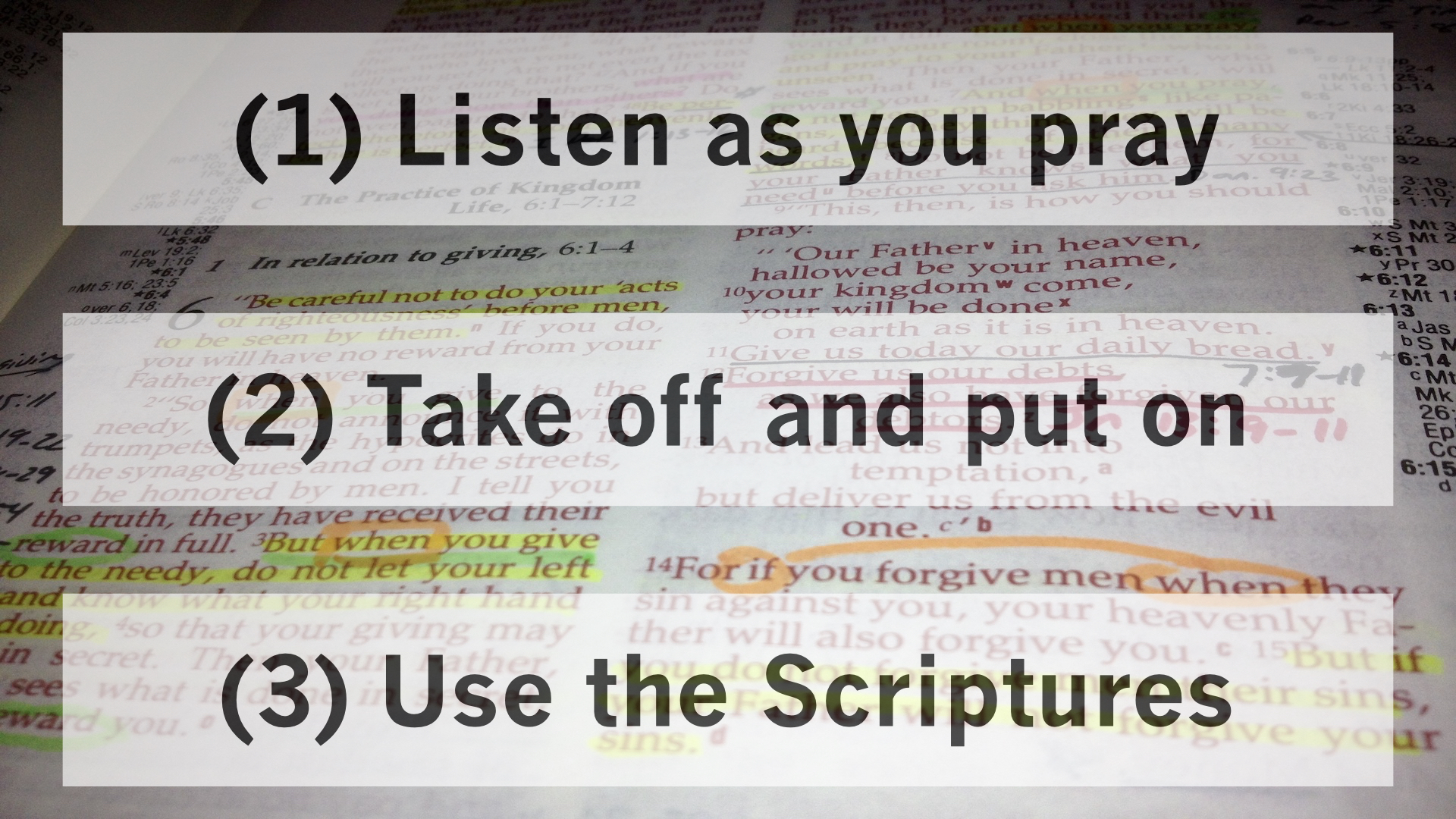
So here are three steps we need to implement to counteract those three hindrances to a consistent, meaningful prayer life:
Listen to yourself pray—replace the “I have to” with “God, I trust You to direct me and help me.”
Track your time in each quadrant and identify just one Quadrant IV activity you can replace with prayer.
“Your failures are your accomplishments because it makes you prepared for whatever it is that you are going to do next.” —Lee Daniels
One of my favorite Christmas movies is Miracle on 34th Street, where a well-timed letter to Santa Claus arrives at the courthouse to tip the scales of justice for Kris Kringle. The US Postal Service reports that they still get thousands of letters addressed to Santa each year. Have you ever wondered what happens to them. The Smithsonian has the heart-warming story.
“The more we learn from God’s Word about how creation praises and reveals Him, the better able we will be to explain His revelation to others. But we’re not content for people merely so experience some revelation of God from the things He has made. We want them to know Jesus. For that, we’ll have to lead them to the Scriptures. The better we know the Scriptures and are daily immersed in them, the more we will see Jesus there and be made like Him. The more we are made like Him, the more we will see Him in all His works, and the more our hope will grow and be visible to others, some of whom may ask a reason for the hope that is within us.” —T.M. Moore
“No priest, no theologian stood at the manger of Bethlehem. And yet all Christian theology has its origin in the wonder of all wonders: that God became human. Holy theology arises from knees bent before the mystery of the divine Child in the stable. Without the holy night, there is no theology.” —Dietrich Bonhoeffer
“Early Pentecostals generally viewed the observance of the ‘church calendar’ as remnants of liturgical traditions. Apart from Easter and Christmas, there were few days that Pentecostal churches set aside for special services. One exception was New Year’s Eve, when a ‘Watchnight Service’ would be held, typically starting around 7 p.m. and lasting until after midnight.” Check out the notable history of people “praying in the New Year.”
Scott Hubbard writes, “Spiritual health yesterday does not guarantee spiritual health today. So, at the end of a new year, on the edge of another, let’s stop to take some spiritual vitals. How healthy is your soul?” He then gives us six biblically-based questions to help us assess the healthiness of our soul.
Listen to the podcast of this post by clicking on the player below, and you can also subscribe on Apple, Spotify, or Audible.
We have the candles of hope and peace burning brightly. Romans 15:13 tells us that our hope in God’s fulfilled promises and our hope in His fulfilling of His future promises is what brings us not only peace but joy as well.
William Gurnall noted, “Joy is the highest testimony which can be given to our peace.” That means that hope bubbles up in peace and joy, but joy then sustains and fuels future hope, which allows us to experience peace all over again!
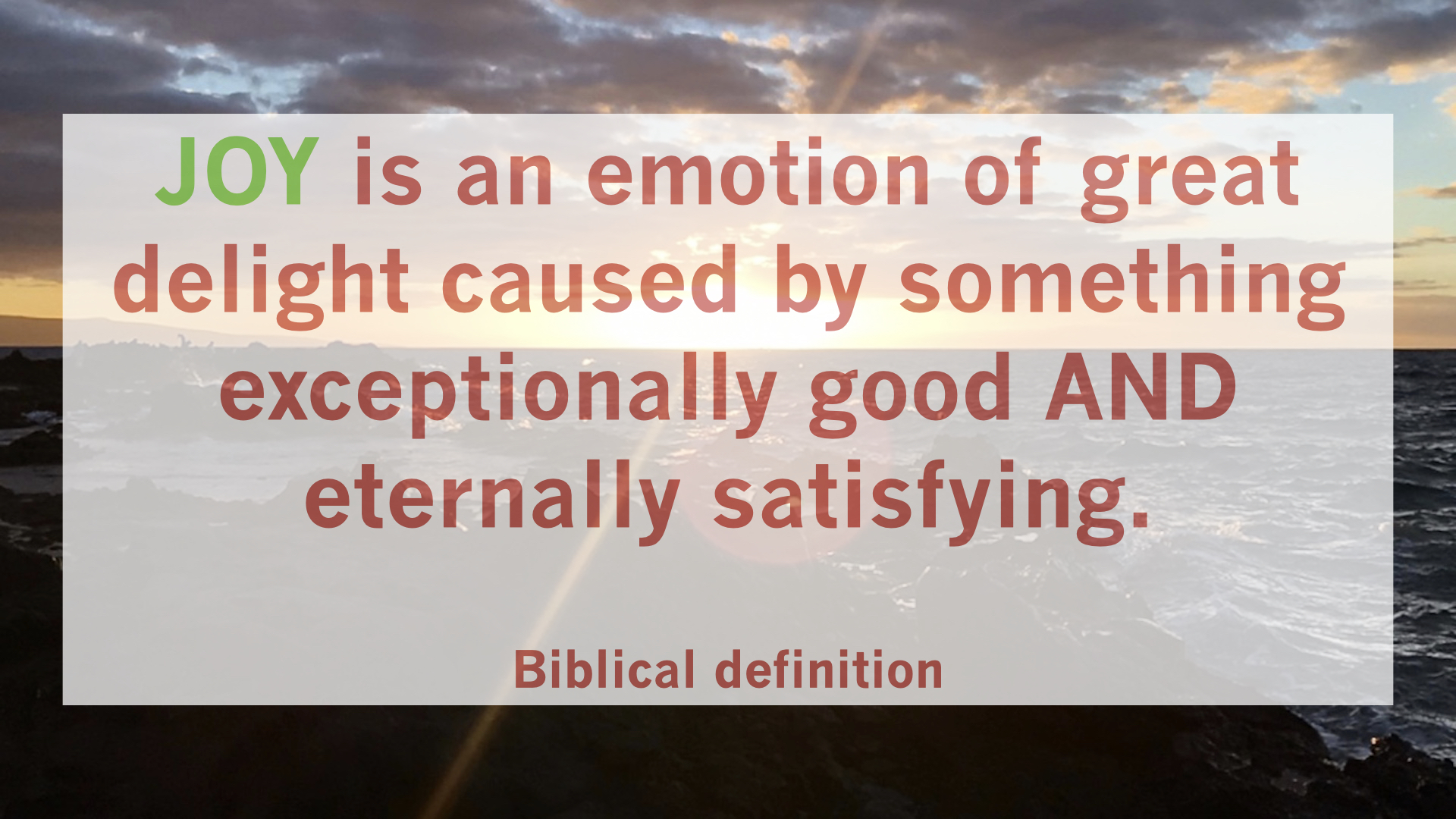
The English dictionary has the right definition for joy: the emotion of great delight caused by something exceptionally good or satisfying. Unfortunately, all of the examples the dictionary gives for joy are fleeting external things.
The Bible makes it quite clear that pleasure is not the same thing as joy, but still people try to find what they call joy in things that bring them pleasure. C.S. Lewis wrote, “Joy is never in our power and pleasure often is.”
Just ask the wisest and richest man who ever lived: King Solomon. He wrote the Book of Ecclesiastes which is all about his pursuit of pleasure, yet every attempts ends with him crying, “Vanity! Meaningless!” But notice something: every time he says this, the phrase “under the sun” is adjacent to it. In other words, nothing on earth can provide true joy.
Paul experienced the same thing in the New Testament (see Romans 7:18-20).
Just like we said about these candles that darkness is not the opposite of light, but it is the absence of light, so too, this wretched state of joylessness is the absence of things that are eternally satisfying.
That means we need something other-worldly—something higher than the sun—to truly bring light and satisfaction. The prophet Isaiah foretold the light that Jesus would bring from Heaven, and this light would be our eternal joy and salvation (Isaiah 9:1-3, 6-7; Matthew 1:21).
Notice how the angelic announcement of Christ’s birth ties together the thoughts of joy with Savior (Luke 2:8-11).
Isaiah foretold this First Advent which Jesus fulfilled (Isaiah 61:1-3; Luke 4:18-19), and which Paul come to discover as well (Romans 7:24-25).
Another biblical definition for the word joy is delighting in God’s grace in our trials because we understand that these trials enlarge our capacity for even greater joy. This is the joy we can know as we live between the two Advents of Jesus. We see this in the example of Jesus fixing His eyes on the eternal joy even as He walked toward Calvary, and how His Father then exalted Him for that (Hebrews 12:2; Philippians 2:9-11).
In a similar, Jesus prepares us for the joy following our time of grief (John 16:17-24). The writer of Hebrews agreed with this (Hebrews 12:11), as did the writer of the 126th Psalm (notice the word joy being used four times in just six verses here!).
The Second Advent of Jesus will be eternally satisfying joy beyond anything we can imagine! I love how Isaiah 35 foretells what we can read on the last pages of the Book of Revelation.
This thought from Charles Spurgeon is spot-on: “We who trust in Jesus are the happiest of people, not constitutionally, for some of us are much tried and are brought to the utter depths of poverty, but inwardly, truly, our heart’s joy is not to be excelled.”
May we all live in that hope-filled, peace-fueled joy every single day until Christ returns or calls us Home!
If you missed it, check out the lights of hope and peace in our previous messages in this series by clicking here.
The apostle Paul lists three indispensable qualities of a godly leader. Remove even one of those qualities, and you no longer have a godly leader. I dive deep on these qualities (and more) in my book Shepherd Leadership.
I have lots of new content every week, which you can check out on my YouTube channel.
T.M. Moore wrote, “We are God’s poems, as Paul says in Ephesians 2:10, where the Greek word for ‘workmanship’ is ποίημα, poiema—poem. Perhaps this is why we find it pleasurable when others take an interest in us and want to get to know us better. They’re asking us to ‘read’ our ‘poem’ to them. What fun! And God wants us to know, love, enjoy, and serve Him by all the things He has freely given to us and which He seeks to ‘read’ to us day by day.”
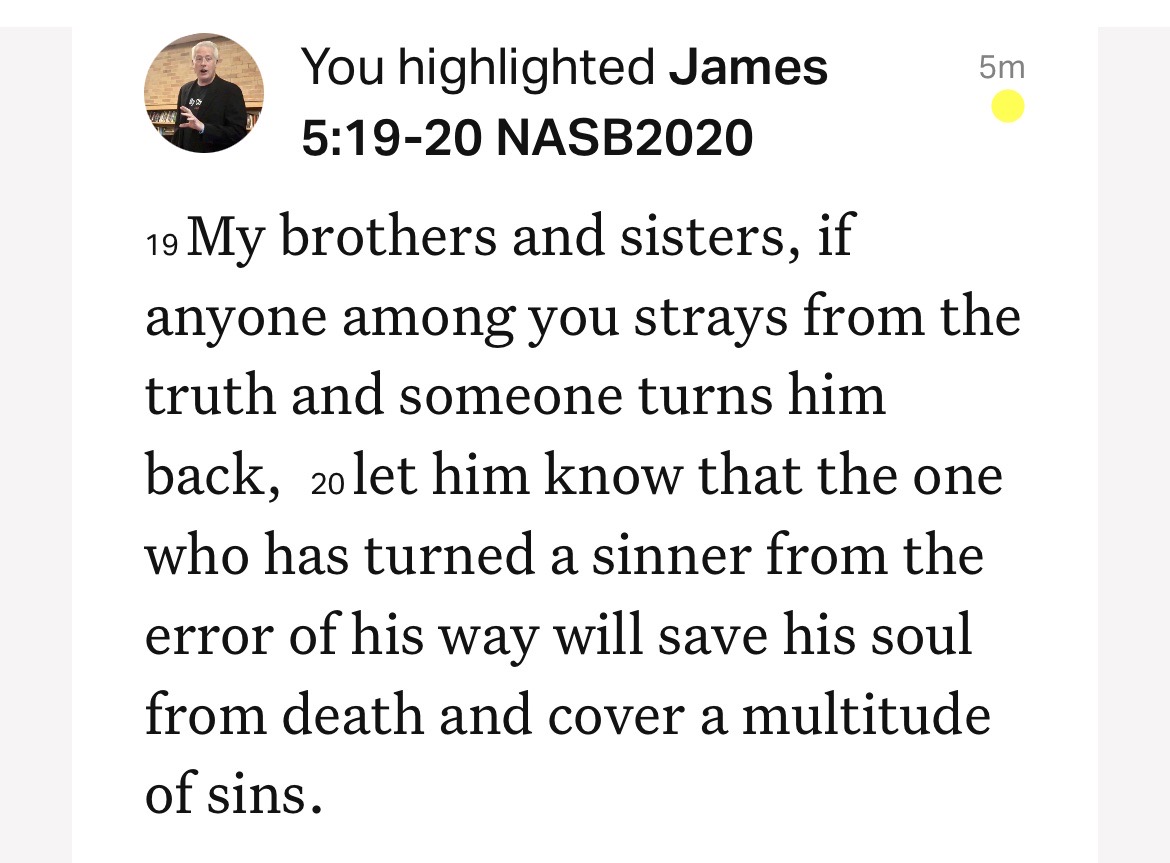
“Saints” is always plural in the Bible. That means we always need to be looking out for our brothers and sisters in Christ. I love the words James uses to close his letter to the saints.
✅ Gather frequently to encourage others
✅ Reach out to those who are absent
✅ Speak the truth in love
✅ Exhort and encourage
✅ Forgive and ask for forgiveness
✅ Restore quickly and gently
Anthony Kidd warns about something I address in my book When Sheep Bite. “Inherent to our calling as shepherds is the task of looking out for the flock of God and protecting it from savage wolves and false shepherds. However, Paul emphasizes here that one of the greatest threats to the church can emerge from within its own leadership ranks, making self-awareness a critical aspect of pastoral leadership.” Read this full article about the earning signs of diseased leadership.
More amazing findings that show the incredible beauty and wisdom of our Creator! The ICR reports, “Insects, such as the winged insects in the order Lepidoptera, continue to reveal incredible abilities with some facets that zoologists thought were reserved only for vertebrates.”
Christians aren’t celebrating just one Advent, but two. The First Advent of Jesus gives us cause to celebrate, but the expectation of His Second Advent gives us reason to anticipate. Let’s make sure we are always celebrating both of Christ’s Advents. Check out the full sermon on hope.
I have lots of new content every week, which you can check out on my YouTube channel.
“When we elevate the end over the means, we miss out, because often God does some of His greatest work along the way. For Him, it’s all about the process, and less about the final destination.” —The King Is Coming reading plan on YouVersion
“If you want a religion to make you feel really comfortable, I certainly don’t recommend Christianity.” —C.S. Lewis, in God In The Dock
I had never even heard of the heart cockle until I read this article. This amazing mollusk has a symbiotic partnership with a type of plankton that lives inside the shells. This plant needs photosynthesis to live and produce the food which the heart cockle needs to survive. But how does sunlight get through the solid shell of the heart cockle? Not surprisingly, our All-wise Creator designed the heart cockle with little “windows” perfect for letting in just the right amount of sunlight the S. corculorumrequires. Amazing!
The Reader’s Digest uncovers some bizarre laws surrounding the Christmas season. For instance, “In 1643, England passed an ordinance ‘encouraging’ citizens to treat Christmas as a solemn holiday, rather than a celebratory feast. By the next year, Christmas had been banned altogether. Christmas remained illegal in England until 1660. … In 1659, the Puritan government of the Massachusetts Bay Colony went so far as to outlaw Christmas in order to discourage ‘disorderly’ behavior that might be ‘offensive to God.’ Anyone who failed to show up for work or participated in feasting would be fined five shillings. The Christmas ban lasted until 1681 and Massachusetts didn’t make Christmas an official holiday until 1856.”
“The future of our country and the quality of our lives is not determined primarily by who is in public office. Politicians are the fruit of the tree, they are not the tree. Our future will be determined by the strength of our families, and we all have control over that. Be great husbands, wives, parents, friends, and neighbors. Live for others, and live as if your kids, and God, are always watching. God is always watching, and our kids are watching more than we realize. Find things to be grateful for and resist the temptations to complain. Go out of your way to make someone else’s life better and yours will be too, even if you don’t like who is in the White House. If our joy is dependent upon a political outcome, we’ll never be happy.” —Joseph Backholm
Shepherd leaders cannot allow past hurts to negatively impact their current situations. Don’t give in to the natural fight-or-flight response, but ask God to help you response with supernatural faithfulness. I unpack this idea in greater depth in my book When Sheep Bite.
I have lots of new content every week, which you can check out on my YouTube channel.
In responding to an evolutionary biologist’s claims that the material world is all that matters, John Stonestreet invokes the timely wisdom of G.K. Chesterton and C.S. Lewis. One of my favorite quotes from Lewis appears in this post: “A theory which explained everything else in the whole universe but which made it impossible to believe that our thinking was valid, would be utterly out of court… It would be an argument which proved that no argument was sound—a proof that there are no such things as proofs—which is nonsense.”
“Good leaders love leading the people they lead more than they love leading people.” —John Maxwell
Gerrit Scott Dawson writes about how the Bible helps us see ourselves more clearly. “The truth-telling mirror of Scripture exposes and composes us. Imagine a mirror that would make you as appealing as you could hope to be. Imagine a well of clear water that not only reflected but washed you clean of dirt and blemishes. When we read Scripture with open hearts and in reliance on the Spirit, that’s what happens.”
“Twice in the book of Hebrews we are urged to ‘consider Jesus.’ In Hebrews 3:1, the writer exhorts us to consider Jesus (κατανοήσατε) so that we will continue believing in and confessing Him throughout our lives. This word means to pay attention to something through direct observation, with the implication of also thinking about it, meditating on it, and returning to it often, just as one might carefully observe an object in creation or a work of art. … In Hebrews 12:3, the writer calls us again to consider Jesus, but this time as a work of rational analysis (ἀναλογίσασθε), a theological analysis, as opposed to an aesthetical contemplation. This suggests the need to study, read, think deeply, meditate, talk with others, and know Jesus in terms appropriate to His uniqueness and mission.” —T.M. Moore
“Be silent, if you choose; but when it is necessary, speak—and speak in such a way that people will remember it.” —Wolfgang Amadeus Mozart
I’ve got a great Christmas gift idea for you to give to your favorite pastor: a copy of my book When Sheep Bite. I promise you that your pastor has been bitten and that there will be more bites in the future. This book will bring about the healing and restoration that your pastor needs.
I have lots of new content every week, which you can check out on my YouTube channel.
“Good advice is always certain to be ignored, but that’s no reason not to give it.” —Agatha Christie
“Let us remember, dear friends, that as we meet at our tables today with our sisters and brothers from distant parts, we are also invited by our elder Brother, our divine Friend, to join with Him in a higher feast, the way there sprinkled with His own blood. Let us not forget, as we are blessed with the providential bounties for the nourishment of these frail bodies that Christ the Lord summons us to a spiritual feast.” —Rev. James Cruickshanks, November 21, 1861
“The apostle Paul explained that the power of God at work within us, the power of His indwelling Holy Spirit, is exceedingly abundantly greater than all we could ever ask or think (Ephesians 3:20). Greater for what? For a clearer vision of Christ and more intimate communion with Him (Colossians 3:1-3; 2 Corinthians 3:12-18). More continuous and abundant yields of spiritual fruit (Galatians 5.22-23). Greater consistency and effectiveness in the exercise of spiritual gifts for ministry (1 Corinthians 12:7-11). More power to bear witness for Christ, to love God and our neighbors, and to advance His rule of righteousness, peace, and joy on earth as it is in heaven (Acts 1:8; Matthew 22:34-40; Romans 14:17-18).” —T.M. Moore [check out all of the Scripture here]



 Leaders are needed for tough times. “Doing difficult creates natural separation” for your leadership, says Eric Thomas. Check out this full conversation from The Craig and Greg Show.



 Craig T. Owens