Ken Blanchard shared a blog post based on one of the chapters in his book Simple Truths Of Leadership (which I highly recommend to leaders!). He wrote, “When you catch yourself doing things right, everything in your life will improve—especially your relationships. Why? Because it’s fun to be around people who like themselves. After all, if you’re not your own best friend, who will be? And as my dad used to say, ‘If you don’t toot your own horn, others might use it as a spittoon!’”
Doug Clay, the General Superintendent of the Assembly of God wrote, “Our nation needs revival!
“Culture may well be at a deeply dark moment, but that’s when the Church can shine the brightest as Christ’s witness to the world. I’m reminded of Romans 8:19 (Message), ‘The created world itself can hardly wait for what’s coming next.’
“A.W. Tozer once said, ‘The world is waiting to hear an authentic voice, a voice from God—not an echo of what others are saying, but an authentic voice.’ Let’s rise and be that authentic voice to a generation that is desperately in need.”
“What satan put into the heads of our remote ancestors was the idea that they could ‘be like gods’—could set up on their own as if they had created themselves—be their own masters—invent some sort of happiness for themselves outside God, apart from God. And out of that hopeless attempt has come nearly all that we call human history—money, poverty, ambition, war, prostitution, classes, empires, slavery—the long terrible story of man trying to find something other than God which will make him happy.” —C.S. Lewis
Meet Piper. She was abandoned with her mother and one other sibling. The mother then left the two kittens behind, who were hiding in a storm pipe. We were able to rescue this little calico and named her Piper as a reminder of where she was rescued from.
Physicist Brian Cox discusses where God fits into scientists’ understanding of the universe. Two statements that are interesting to me—“we don’t know all the laws of science” (at 1:17), and “science is only an observational framework” (at 2:40). Both of these statements fit well with my biblical creationist paradigm.
Max Lucado addresses the sickening news of sexual abuse coverups in the church. He wrote, “[Jesus] defended the weak, stood up for the forgotten. The idea that His church would be unsafe for His sons and daughters disturbs Him deeply. And you can bet your Bible that He’ll turn a few tables. If history teaches us anything it is this: Jesus will not sit idle while His church drifts from His cause. ‘I will rescue My flock from their mouths,” He declared through a prophet. ‘It will no longer be food for them’ (Ezekiel 34:10).
“Repentance is necessary; heartfelt, tear-stained, face-on-the floor repentance. By all of us in positions of leadership. Will we see it? I pray so. Regardless, I pray that you will pursue the difficult path of seeking Christ in spite of Christians who have let you down. His pastors have failed to pastor. But when they don’t, He still does. Let Him pastor you.”
Darren Carlson wrote, “Healthy pastors experience the fullness and complexity of their emotions, and then hold them up against the sinlessness of Christ. How might Jesus respond to the pain and loss and victory and neediness in front of me? We grow emotionally as leaders by studying the heart of Jesus as he walks among sinners and sufferers.” His post ‘Healthy Pastors Have Emotions: How to Test and Cultivate Your Feelings’ is an excellent read. I explore the emotional health of shepherd pastors in my book.
C.S. Lewis identifies one of the harmful effects of pornography. “For me the real evil of masturbation would be that it takes an appetite which, in lawful use, leads the individual out of himself to complete (and correct) his own personality in that of another (and finally in children and even grandchildren) and turns it back: sends the man back into the prison of himself, there to keep a harem of imaginary brides. And this harem, once admitted, works against his ever getting out and really uniting with a real woman. For the harem is always accessible, always subservient, calls for no sacrifices or adjustments, and can be endowed with erotic and psychological attractions which no woman can rival.” —C.S. Lewis
“Joy is not a requirement of Christian discipleship; it is a consequence.” —Eugene Peterson
In my personal devotional time, I came across a sobering idea in the book of Amos about God’s love. I am reading through the Bible in Halley’s Study Bible, where I also read this: “The basket of ripe fruit [Amos 8] is another symbol that the sinful kingdom was ripe for ruin. And Amos reiterates the causes: greed, dishonesty, and merciless brutality toward the poor. Over and over, through many images, the Bible makes it plain that there is no possible way to escape the consequences of persistent sin.” —Dr. Henry Halley
J. Warner Wallace wrote, “The historic development of language and communication prepared the way for the birth of Jesus. God orchestrated this timing, along with the development of roads, postal services and a 200-year period peace within the Roman Empire (known as the Pax Romana) to prepare the world for the arrival of Jesus.”
Our church is taking time on Fridays to fast and pray. Here is a reminder of the expected results that I shared with our church family—
William Perkins defined theology as, “The science of living blessedly forever.” He also had this word for pastors as they teach theology: “The ‘demonstration of the Spirit’ becomes a reality when, in preaching, the minister of the Word conducts himself in such a way that everyone—even those who are ignorant of the gospel and are unbelievers—recognize that it is not so much the preacher who is speaking but the Spirit of God in him and by him…. This is what makes his ministry living and powerful.”
“Self-trust is the first secret of success.” —Ralph Waldo Emerson
John Piper identifies five digital dangers and gives us strategies for combating them. I especially thought these insights on pornography were powerful: “More insidious that X-rated videos, we can now not only watch but join the perversity in the privacy of our own den. Interactive porn will allow you to ‘do it’ or make them ‘do it’ virtually. I have never seen it. Nor do I ever intend to. It kills the spirit. It drives God away. It depersonalizes women. It quenches prayer. It blanks out the Bible. It cheapens the soul. It destroys spiritual power. It defiles everything. Resolution: I will never open any app or website for sexual stimulation, nor purchase or download anything pornographic.”
“I could well believe that it is God‘s intention, since we have refused milder remedies, to compel us into unity, by persecution even and hardship. satan is without doubt nothing else than a hammer in the hand of a benevolent and severe God. For all, either willingly or unwillingly, do the will of God: Judas and satan as tools or instruments, John and Peter as sons.” —C.S. Lewis
“The response of Jesus to those guilty of sexual sin is not to condemn nor condone the sin. I see in His example [John 8:10-12] a good pattern: (1) Love first—‘I don’t condemn you’; (2) Speak the truth—‘Sin no more.’” —Kevin Berry. The world has made “love” mean accepting whatever the other person is doing, and “truth” now means agreeing with the other person. With the Holy Spirit’s help, we can speak the truth in love without condemning nor condoning.
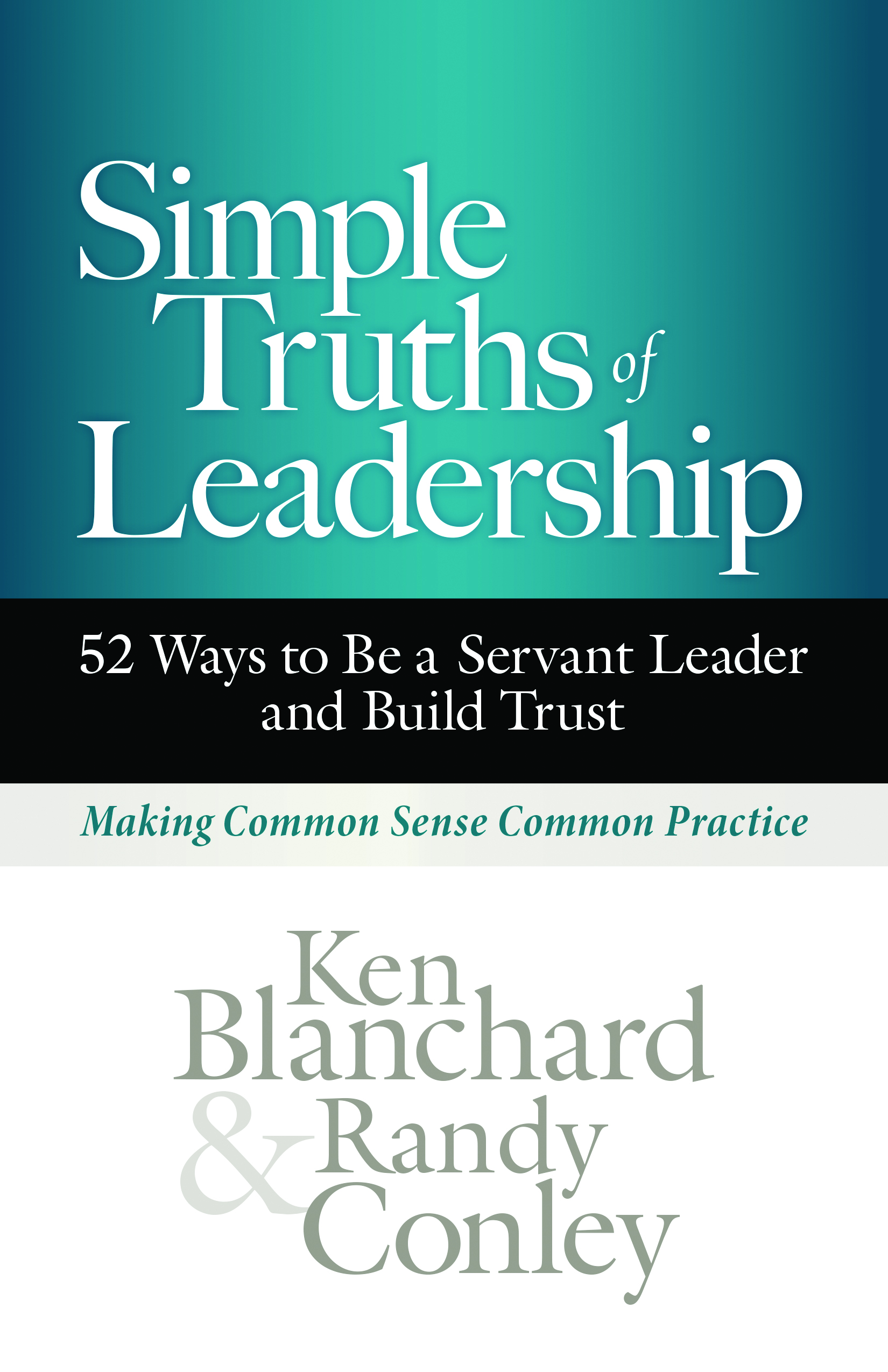
Kenneth Blanchard and Randy Conley have given leaders a gift in Simple Truths of Leadership. Inside you will find 52 leadership lessons that can be immediately added to your leadership toolbox, and ample follow-up information if you want to dive deeper into any of these principles. Check out my full book review by clicking here.
“If today’s leaders had a more commonsense approach to leadership, we’d venture to say that 65 to 70 percent of the workforce would not be considered disengaged. That’s one reason our original title for this book was ‘DUH! Why isn’t commonsense leadership common practice?’”
“The most persistent barrier to being a servant leader is a heart motivated by self interest that looks at the world as a ‘give a little, take a lot’ proposition. … If leaders don’t get their heart right, they will never become servant leaders.”
“Organizational leaders often have an either/or attitude toward results and people. … You can get both great results and great relationships if you understand the two parts of servant leadership: the leadership aspect focuses on vision, direction, and results; the servant aspect focuses on working side-by-side in relationship with your people.”
“Empower your people by letting them bring their brains to work.”
“When people are off track, don’t reprimand them—redirect them.”
“The best minute servant leaders spend is the one they invest in people.”
“Ministers should be persons of the same quiet, lamb-like spirit that Christ was of, the same spirit of submission to God’s will, and patience under afflictions, and meekness towards men; of the same calmness and composure of spirit under reproaches and sufferings from the malignity of evil men; of the same spirit of forgiveness of injuries; of the same spirit of charity, of fervent love and extensive benevolence; the same disposition to pity the miserable, to weep with those who weep, to help men under their calamities of both soul and body, to hear and grant the requests of the needy, and relieve the afflicted; the same spirit of condescension to the poor and mean, tenderness and gentleness towards the weak, and great and effectual love to enemies.” —Jonathan Edwards
“God has promised to supply all our needs. What we don’t have now, we don’t need now.” —Elizabeth Elliot
In my book Shepherd Leadership: The Metrics That Really Matter, I talk about how important it is for us to get a good night’s sleep to keep our leadership skills sharp. Sleep is also vitally important to help in the battle against overcoming temptations.
A groundbreaking paper was released this year that appears to debunk evolutionary theories once again. Check out this commentary from John Stonestreet’s podcast.
“There’s no such thing as a spiritual vacuum in the cosmos. Whatever of our time, attention, interest, or strength is not devoted to the Lord, and His Kingdom and glory, will become susceptible to being taken over by contrary interests. These often take the form of false teachers who appeal to our selfish interests and encourage us to make of the faith of Jesus Christ a kind of spiritual smorgasbord for whatever we think we need. We leave off the solid food of sound doctrine and dabble in the sweets and crunchies of mere self-interest—if we spend any time in the Word of God at all. Our mind enters a period of arrested development which will become permanent atrophy unless serious measures are engaged.” —T.M. Moore
“Always make your gratitude greater than your success.” —Dan Sullivan & Catherine Nomura
Listen to the podcast of this post by clicking on the player below, and you can also subscribe on Apple, Spotify, or Audible.
I am so grateful for the blessings of a godly mother and a godly wife! I can relate to Abraham Lincoln who said, “All I am, or can be, I owe to my angel mother. … I remember my mother’s prayers and they have always followed me. They have clung to me all my life.”
Mothers—both the natural, physical, and adoptive mothers—can save the rest of us from a world of hurt. We see this in a story in the Bible of a mother that saved innumerable people from the consequences of folly. This is an amazing story in 1 Samuel 25, so please take some time to read it for yourself.
King Saul and David have finally separated from each other, with Saul returning home to Gibeah and David returning to his stronghold at En Gedi. Eventually, David moved west from En Gedi to the Desert of Moan, where the town of Carmel was nearby.
A prominent citizen of Carmel was a man named Nabal. He is described as “very wealthy,” owning 1000 goats and 3000 sheep. But he apparently gained his wealth through less-than-honorable means because he is described as “surly and mean in his dealings.” We find out later in the story that he’s also hard-hearted and hard-headed, not listening to any counsel others may offer him.
That fits him because his name means “fool.” I find it hard to believe that his parents named him this from birth. If they did, it reminds me of the opening words of C.S. Lewis’ book The Voyage Of The Dawn Treader: “There was a boy named Clarence Eustace Scrubb, and he almost deserved it.” Instead, I think Nabal’s dealings were so mean, surely, and foolish that the name stuck. Perhaps he even wore that name as a badge of honor.
It came sheep-shearing time—which is really payday for shepherds—so David sends some of his servants to Nabal to ask for whatever he might find to give as a gift to “your servants and your son David.” David’s men had been a constant source of protection for Nabal’s herdsmen, so a gift of gratitude does seem appropriate.
Nabal doesn’t just say, “No,” but he insults David. As his foolish nature controlled him, he not only insulted David, but he insulted God too by implying that David wasn’t anointed by God, but was merely ruthlessly climbing a ladder of success. Probably Nabal thought this way because that’s how he himself gained his fortune.
Nabal’s response lit David’s fuse! In fact, David’s response to his men was just four words long: “Put on your swords!”
Fortunately, one of Nabal’s servants informed his wife Abigail of this.
In the same verse where Nabal is described as mean and surely, Abigail is described as “intelligent and beautiful.” Whereas Nabal’s name means fool, Abigail’s name means “my father’s joy.” She must have been born at just the right time for her father and she continues to be a just-in-time woman!
This servant brought Abigail word of Nabal’s foolish response, telling her that David’s men were indeed “a wall around us” while they were in the desert. And then he says, “Think carefully about what you should do because disaster is hanging over us!”
Abigail acts quickly, wisely, and humbly.
The first thing she does is send hundreds of pounds of food to David and his men. She sends the gift that Nabal probably should have sent. Then Abigail herself follows the gifts on her own donkey. When she encounters David and his armed men coming down the mountain pass, she humbly falls at his feet asking David to reconsider.
Abigail doesn’t tell David he shouldn’t be angry, but she points him to something bigger and more long-lasting than his immediate thought of revenge. She reminds him that he is God’s anointed leader, and she asks, “When you become king, do you want this bloodshed on your conscience?”
Abigail’s words have an immediate effect on David, who calls off the attack, praises Abigail, and praises God for sending Abigail to him. Abigail rescued Nabal’s family and workers from imminent destruction, and she saves David from the consequences of his rash response.
The next morning, when she relates this story to Nabal, he has either a stroke or a heart attack, and then dies ten days later. Justice is served, but it’s served by God and not by David.
Later on, David takes the now-widowed Abigail as his wife.
Abigail’s name scarcely appears anywhere else in the Bible, but there is one notable appearance:
Sons were born to David in Hebron: His firstborn was Amnon the son of Ahinoam of Jezreel; his second, Kileab the son of Abigail the widow of Nabal of Carmel; the third, Absalom the son of Maakah daughter of Talmai king of Geshur; the fourth, Adonijah the son of Haggith; the fifth, Shephatiah the son of Abital; and the sixth, Ithream the son of David’s wife Eglah. (2 Samuel 3:2-5)
Amnon, first in line for the throne, raped his half-sister Tamar and was then killed by Absalom, who was Tamar’s brother. Absalom, third in line for the throne, not only avenged his sister’s disgrace but led a coup against David, where he was killed in battle.
That leaves Kileab as the obvious heir to King David’s throne, yet this is the only place he is mentioned in the Bible. I think Abigail’s wise influence saved Kileab from the drama of aspiring to be king, a painful future, and perhaps a premature death.
From this amazing story, I would like to offer three takeaways for Moms:
Use your inner beauty to persuade foolhardy men—1 Peter 3:2-3
Use your Holy Spirit-given wisdom to dissuade foolishness—Matthew 10:19
Use your prayer life to bring a legacy of peace—Psalm 116:16
Godly mothers, please be encouraged today at how much influence you exert over others in your life. Your inner beauty, God-given wisdom, humility, and prayers are making more of an impact than you may ever know. I believe in heaven the full story will be shared, and you will be praised for being a wise and faithful servant.
May God continue to bless, empower, and use our Moms to save us from the consequences of our foolishness!
To fill the granaries of God! —Margaret J. Prescott
My friend and podcast partner Greg Heeres talked about growing and learning through change. You can check out the rest of this episode of The Craig And Greg Show here.
Sometimes the prophetic language in the Bible can be a bit confusing. Like the phrase: “A time, times, and half a time.” Here is how Dr. Henry Halley unpacks this—
“It denotes the duration of the other horn of the fourth beast (Daniel 7:25). It denotes the period from Daniel to the time of the end (Daniel 12:6–7). It is used in Revelation 12:14 as identical to 42 months and to 1260 days (Revelation 11:2–3; 12:6, 14; 13:5), the period of time the Holy City was trampled, the two witnesses prophesied, the woman was in the wilderness, and the revived beast was on the throne.
“The word ‘time,’ in the phrase ‘a time, times, and half a time’ is generally taken to mean year; the phrase thus means three and a half years, which is 42 months, or 1260 days.
“By some, this is taken to refer to a literal three and a half years. Others, on the year-day interpretation (Numbers 14:34; Ezra 4:6), take it to be a period of 1260 years. Still others look upon the figures, not as defining time limits or periods, but as being symbolic: 7 Is the symbol of completeness, while three and a half, which is half of 7, represents incompleteness—that is, the reign of evil will be only temporary.” —Halley’s Study Bible(check out all of the biblical references in this quote by clicking here)
“Ambivalence toward the Law of God is troubling. Theologians discard the Law, and pastors either reject or neglect it. Jesus said that keeping and teaching the Law of God was a mark of Kingdom greatness (Matthew 5:17-19). Apparently that’s not a goal many of us aspire to. He also said that when the Law of God is neglected, love grows cold (Matthew 12:24). The ubiquitous lack of love in our world today is undoubtedly related to our failure to teach and live according to the Law of God. …
“Pastors have three main resources for the work and business of ministry: The Word of God, prayer, and their personal example (Acts 6:4; 1 Peter 5:1-3). If any of these fails, their ministry will as well. Especially must pastors be seen to be men zealous for the Law of God, to obey all the counsel of the Lord in His Word and to resist the devil and overcome every temptation. Jesus did. Paul did. John said this is the way love flourishes (1 John 5:1-3). Throughout this generation, failures of obedience on the part of highly visible pastors have contributed to the Church’s becoming an object of scorn by many unbelievers, while believers have been largely silent about their failings. We must be diligent in obeying Christ if we would teach others to do so and thus fulfill our calling to the Kingdom and glory of God.” —T.M. Moore
Not all viruses need to be eliminated. A study has discovered 5500 new RNA viruses on the ocean, finding “an entire phylum, the Taraviricota . . . found all over the oceans, which suggests they’re ecologically important.” The Creator knew what He was doing!









 Craig T. Owens