“…and let us all hasten to approach to perfect manhood, to the measure of the completed growth of the fullness of Jesus Christ, in Whom let us love one another, praise one another, correct one another, encourage one another, pray for one another, that with Him in one another we may reign and triumph.” —Columbanus, Letter to Certain Bishops, Irish, early 7th century
Have you ever wondered how the laws of the Old Testament era should be applied to New Testament Christians? Theologian T.M. Moore has an excellent series of articles on this, but I think his post The Church is not Ancient Israel is especially informative.
Here is one way the Holy Spirit can speak to us—
“It is not the body of truth that enlightens; it is the Spirit of truth who enlightens. If you are willing to obey the Lord Jesus, He will illuminate your spirit. He will inwardly enlighten you. The truth you have known intellectually will now be known spiritually. Power will begin to flow up and out, and you will find yourself changed—marvelously changed.” —A.W. Tozer
“The greatest tragedy of life is not unanswered prayer, but unoffered prayer.” —F.B. Meyer
This is pretty cool: some fossilized human footprints in the salt flats of Utah. “Both creationist and uniformitarian scientists agree that these tracks were made during the Ice Age, although they disagree about when the Ice Age occurred. Creationists think these footprints are just a few thousand years old. However, evolutionists think the tracks are more than 10,000 years old, because they believe the wet conditions needed to form and preserve the footprints have been absent from the Great Salt Lake area for at least that long. … wet Ice Age deserts are extremely difficult for evolutionary scientists to convincingly explain. However, the Bible’s real history makes much better sense of both these wet deserts and preserved Ice Age footprints.”
Don’t cut corners to get more. Instead, be faithful, do your best work, and the “more” will follow at the right time—
Listen to the podcast of this post by clicking on the player below, and you can also subscribe on Apple, Spotify, or Audible.
A meme that makes me chuckle every time I see it is a “quote” attributed to Abraham Lincoln in which he says, “The problem with quotes found on the internet is that they are often not true.”
(Not to spoil the joke for you, but unless Lincoln knew how to time travel to the future, I don’t think he knew about the modern internet! 😂)
I love this meme because it captures something that so many people fall into: a quick acceptance of a statement without verifying its source or thinking through the implications of the statement’s truthfulness.
Some insightful comments sound Shakespearean, but William never wrote them.
Some pieces of wisdom sound Socratic, but Socrates never taught them.
Some religious maxims sound godly, but the Bible never recorded them.
I would like to invite you to join me as we relaunch this series called Is That In The Bible? I think you may be surprised to discover just how many phrases we call biblical aren’t, and how many phrases there are that we never realized are actually in the Bible.
By the way, if you have a phrase that you would like to have us explore in this series, please leave it in a comment below. You may want to check out the questions we addressed in both the first installment and second installment of this series.
In this installment of this series, we asked: Is this in the Bible…
My wife and I just celebrated our anniversary. We enjoyed the many words of congratulations we received, but that got me thinking about marriages where only one spouse is a Christian and I then recorded this thought—
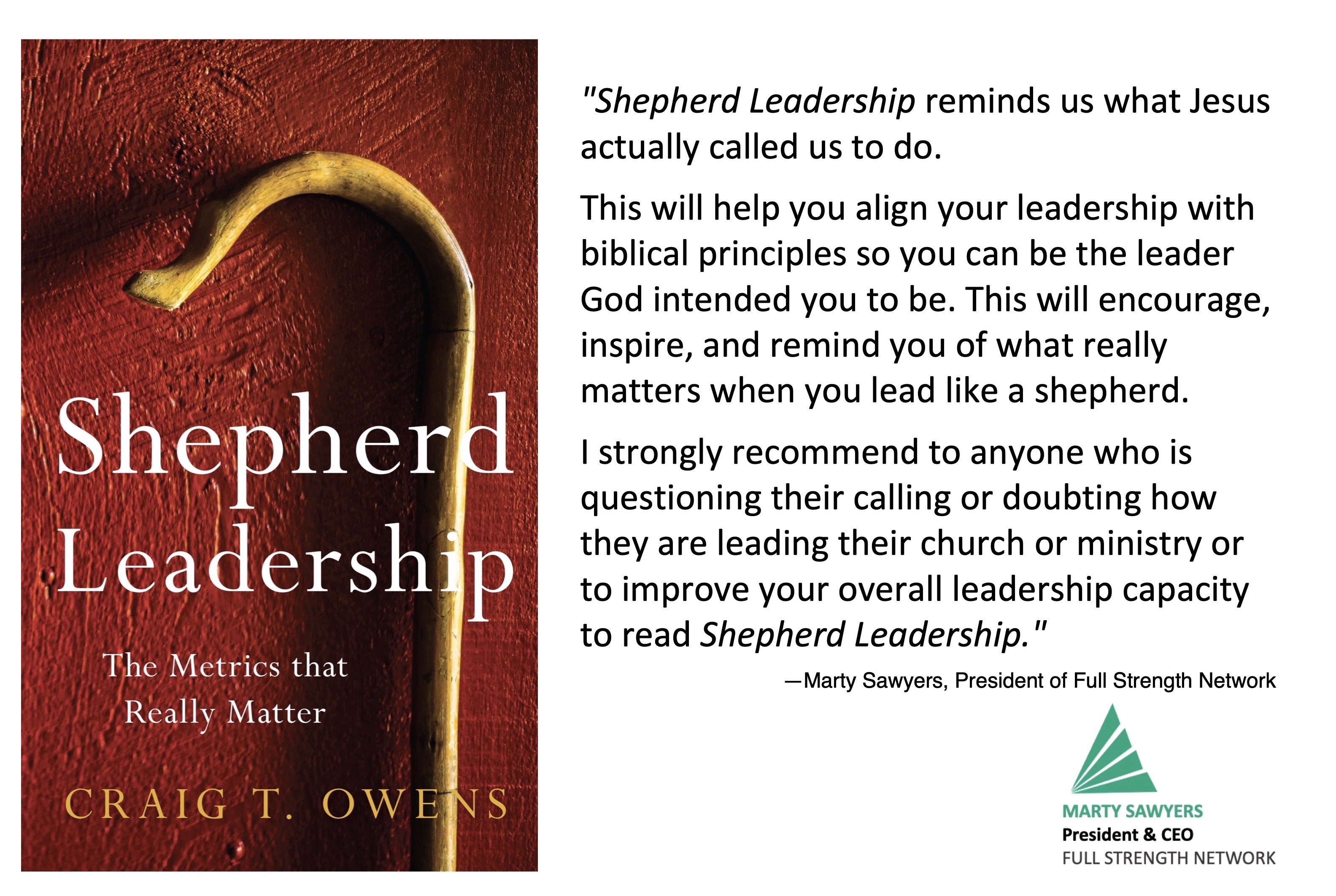
I was so honored to receive another great endorsement for my book Shepherd Leadership: The Metrics That Really Matter.
“It is not your business to succeed, but to do right; when you have done so, the rest lies with God.” —C.S. Lewis
“Homosexuality is not about some issue to debate; it’s about people to love.” —Dr. Preston Sprinkle, Living In A Gray World
“It is better to fail in originality than to succeed in imitation.” —Herman Melville
More fascinating news for creationists. Plants know how to defend themselves. “There are two main types of threat-detection mechanisms in plant cells—the ability to recognize distinctive chemical patterns that signify an invader, such as components of a bacterial cell, and the ability to recognize a disruption caused by invading pathogen.” Check out the full article here.
I shared an important reminder with my fellow pastors—
“God, give me a deep humility, a well-guided zeal, a burning love, and a single eye, and then let men or devils do their worst.” —George Whitefield, prayer when sailing for Georgia, December 30, 1777
T.M. Moore wrote to pastors, “Effective ministry and fruitful Christian living are not automatic. They don’t just happen. Each requires that we receive the gifts of God, develop them according to His Word, and put them to proper use day by day. We must work out our salvation and work at our calling with focus and vigor.” Check out the rest of his post.
Speaking of pastors: In order for us pastors to be at our peak, we need to take care of ourselves. Here is a short video where I talk about the principle of sabbathing (a topic I explore in-depth in my book Shepherd Leadership: The Metrics That Really Matter).
This study from PennMedicine tells us that our brains can continue to learn new things until the day we die. So apparently you can teach an old dog new tricks!
My friend Greg and I have always tried to combine work and play. We’ve found that fun can really help leadership lessons stick. Check out this clip from a recent Craig And Greg Show leadership podcast.
John Stonestreet wrote, “The moment Roe v. Wade was overturned last month, desperate activists began to dust off the oldest and oddest arguments for abortion. These “gotcha” scenarios are supposed to prove that pro-lifers don’t really value human life or consider preborn babies from the earliest stages of development to be human. Instead, these pretend scenarios demonstrate that pro-lifers are simply hypocrites.” Check out the rest of his post.
“When the facts are not clear [in a relationship issue] it is better to consider someone innocent until proven guilty. That is the law of mercy, which we all want applied to us as well.” —Dr. John Townsend, Who’s Pushing Your Buttons
Pornography is contributing to the over-sexualization of young people, which is reaping some painful consequences…
A good friend of mine, Pastor Kristi Rhodes, is in a battle with cancer and I’m fighting alongside her! If you want to join Team Kristi, join the team by clicking here.
John Maxwell makes it clear in this quote that leaders are to focus on the other person: “Lead according to their dream. Coach according to their weakness. Mentor according to their potential. Delegate according to their strengths. Relate according to their personality.” —John Maxwell
“…One of my favorite analogies of prayer is a wartime walkie-talkie. I like to contrast the wartime walkie-talkie of prayer with the domestic intercom. What I like to say is that one of the reasons prayer malfunctions is because people take a wartime walkie-talkie and try to turn it into a domestic intercom, in which they ring up the butler to please bring another pillow to the den.
“Prayer is not designed as an intercom between us and God to serve the domestic comforts of the saints. It’s designed as a walkie-talkie for spiritual battlefields. It’s the link between active soldiers and their command headquarters, with its unlimited fire-power and air cover and strategic wisdom. When you understand this, you can pray the locks off people’s hearts.” —John Piper
“I do not think that there is any other quality so essential to success of any kind as the quality of perseverance.” —John D. Rockefeller
“Envy is the demand that what will make me happy is what I do not possess.” —Dr. John Townsend
Here is a brief clip from a recent Craig And Greg Show leadership podcast that honors my grandpa’s words and gives something for all leaders to aspire to: honoring others…
I thought this was brilliant insight from the weekly Cultural Translator newsletter from Axis—
In the Q&A portion of one of his lectures, Jordan Peterson was asked about his thoughts on abortion. At one point he said, “The discussion regarding the legality of abortion is nested inside a larger discussion about the morality of abortion, and that’s nested inside a larger discussion about the proper place of sexuality in human behavior. And to me, that’s the level at which the problem needs to be addressed.” Although he doesn’t offer specific prescriptions about how to do that, it’s a helpful way to position the conversation.
In many people’s minds, sex is appropriate whenever the parties involved consent to it. In this view, sexual activity outside of marriage becomes a foregone conclusion. Abortion is then regarded as a necessary adaptation for this new undeniable sexual ethic. In that same Q&A, Peterson says, “Let’s say you are in a position where you are inclined to seek an abortion. The question is: how did you get there?” The literal answer for 99% of pregnant women is via voluntary sexual intercourse—but when our culture frames “sexual expression” as an inevitability, it can seem hard to envision other safe paths forward apart from abortion.
For some, it’s too late to think proactively. Along those lines, one of the primary pro-choice arguments has been that having children too soon will plunge parents into permanent poverty. But when the church is at its best, it has rallied together to provide for those who could not provide for themselves. Acts 2:44-45 says about the early church, “All the believers were together and had everything in common. They sold property and possessions to give to anyone who had need.” Other ancient sources record that the early church was known for saving and protecting unwanted children, who were sometimes left outside to die.
Although some may frame “celebrating the Supreme Court’s decision” and “thinking about how to be more holistically pro-life” as somehow in tension, the early church models both a care for babies and for their mothers. May God give us grace to do the same.
The 1440 Daily Digest had an interesting article for the July 4th weekend entitled “Happy Birthday, America.”
Congratulations, America—Monday marks the 246th commemoration of the day the Declaration of Independence was adopted by the Second Continental Congress. The Congress actually voted to separate from Great Britain two days earlier, and possibly didn’t sign the document until August. Some argue the US didn’t really become a country until we began operating under the Constitution in 1789.
Still, since then, the country has grown from 13 colonies with about 2.5 million people to 50 states and 14 territories with a population of more than 330 million. The economy has swelled to roughly $24T. Advances in public health—public sanitation, the germ theory of disease, and more—have cut the child mortality rate from more than 45% to under 1%, and our citizens live 35 years longer on average.
We’ve built almost 4 million miles of paved roads and more than 5,000 public airports. More than 2.7 million miles of power lines electrify the country, with about 85% of households having access to broadband internet and 92% having at least one computer. In 1800, 95% of the population lived in rural areas, and now about 83% live in urban areas. The US has also been responsible for more than 800 human visits to space—the most of any other country with a space agency.
While there will always be challenges to face and improvements to make, we’ve come a long way since the beginning. So grab a hot dog and your drink of choice—here’s to the next 246 years.
“The measure of a country’s greatness is its ability to retain compassion in times of crisis.” —Thurgood Marshall
This is a weekly series with things I’m reading and pondering from Charles Spurgeon. You can read the original seed thought here, or type “Thursdays With Spurgeon” in the search box to read more entries.
Listen to the podcast of this post by clicking on the player below, and you can also subscribe on Apple, Spotify, or Audible.
God Means What He Says
…For the mouth of the Lord has spoken (Isaiah 1:20).
You talk about God as being ‘love,’ and if you mean by this that He is not severe in the punishment of sin, I ask you what you make of the destruction of Jerusalem? Remember that the Jews were His chosen nation and that the city of Jerusalem was the place where His temple had been glorified with His presence. Brethren, if you roam from Edom to Zion and from Zion to Sidon and from Sidon to Moab, you will find, amid ruined cities, the tokens that God’s words of judgment are sure. Depend on it, then, when Jesus says, ‘These will go away into everlasting punishment’ (Matthew 25:46), it will be so. When He says, ‘If you do not believe that I am He, you will die in your sins’ (John 8:24), it will be so. …
It is of no avail to sit down and draw inferences from the nature of God and to argue, ‘God is love, and therefore He will not execute the sentence upon the impenitent.’ He knows what He will do better than you can infer. He has not left us to inferences, for He has spoken pointedly and plainly. He says, ‘He that believes not shall be damned’ (Mark 16:16), and it will be so, ‘for the mouth of the Lord has spoken.’ Infer what you like from His nature. But if you draw an inference contrary to what He has spoken, you have inferred a lie and you will find it so. …
I know why you do not believe in the terrible threats. It is because you want to be easy in your sins. … Yet if you do not believe its loving warnings nor regard its just sentences, they are true all the same. If you dare its thunders, if you trample on its promises, and even if you burn it in your rage, the Holy Book still stands unaltered and unalterable. ‘The mouth of the Lord has spoken.’ Therefore, I pray you, treat the sacred Scriptures with respect and remember that ‘these are written that you may believe that Jesus is the Christ, the Son of God, and that believing you might have life through His name’ (John 20:31).
From The Infallibility Of Scripture
Spurgeon delivered this sermon on March 11, 1888. Nearly 2000 years earlier, Asaph delivered a similar message from God—
“Call upon Me in the day of trouble; I will deliver you, and you shall glorify Me.” But to the wicked God says: “What right have you to declare My statutes, or take My covenant in your mouth, seeing you hate instruction and cast My words behind you?When you saw a thief, you consentedwith him, and have been a partaker with adulterers. You give your mouth to evil, and your tongue frames deceit. You sit and speak against your brother; you slander your own mother’s son.These things you have done, and I kept silent; you thought that I was altogether like you; but I will rebuke you, and set them in order before your eyes. Now consider this, you who forget God, lest I tear you in pieces, and there be none to deliver:Whoever offers praise glorifies Me; and to him who orders his conduct aright I will show the salvation of God.” (Psalm 50:15-23)
Commenting on this passage from Psalm 50, T.M. Moore wrote, “Surely, this is the most fundamental error of thinking humans ever make: To think of God, spiritual things, worship, human life, the world, and everything else from our vantage point rather than His. … Asaph could see what was happening. And even though the nation was safe, strong, and surfeited with wealth, he knew that, spiritually, things were going awry. The people had persuaded themselves that God was just like them, that He thought like they did, and so was agreeable to their doing things their own way, indulging all their base desires, and pursuing their schemes for success—all the while continuing an outward show of faith.”
Let us take the Bible as what it truly is: Words the mouth of God has spoken. Let us not play games with them, changing the message to words we like. But if the Word of the Lord makes us uncomfortable, let us repent and return to Him. It is those who accept God’s Word as His Word, and obey it, that will see the salvation of God.
“…when it comes to following Jesus, life is never as good as it gets. There is always more righteousness, more peace, and more joy in the Spirit to know, and more love and truth to share, as long as we are willing to press on.” Read more of this post from T.M. Moore here.
J. Warner Wallace understands why the church is often confused about the role of apologetics in evangelism. In this video he does a marvelous job of explaining the value of apologetics—
Scott Klusendorf wrote, “If Roe and Casey are struck, it will be a truly historical moment, and pro-lifers should indeed celebrate. Nine unelected judges on the Supreme Court will no longer have sole legal authority to determine abortion policy. Rather, the legislative and executive branches of the federal government, along with those in the individual states, will now decide how the practice is governed. Put simply, the American people—your friends, your classmates, your coworkers, and your family members—will now determine if unborn humans enjoy the same legal protections as you and I, or get relegated to the dumpster.” This is a fascinating article about how pro-life Christians should prepare for a post-Roe America.
Even the pro-abortion research firm The Guttmacher Institute reports “an estimated 100,000 children are killed after the first trimester of pregnancy each.” Let that sink in: 300 lives are snuffed out every day by burtual, inhumane abortion techniques!
Dr. Tim Clarey at the Institue for Creation Research explains how the dinosaurs in the Juassic Park series are “imaginary dinosaur science.” He then lays out the facts.
J. Warner Wallace is a cold-case detective. His investigation into the biblical claims of the death and resurrection of Jesus led him to become a Christian. In this video he explains his thought process as an atheist—










 Craig T. Owens