Do People Know That You Know That God Is Good?

Listen to the podcast of this post by clicking on the player below, and you can also subscribe on Apple, Spotify, or Audible.

If you’ve been reading or watching my series on God’s favor the last few weeks, I hope you truly know this: God is for you! 

But the key question for Christians comes down to this—Do others know that you know that God is for you? 

You see, God is for you because God is joyful and happy, and He wants you to not only know this but to radiate this joy and happiness to those around you. 

Here’s how it works:

(1) Joy is an inside job. The dictionary defines joy as “a feeling of great delight caused by something exceptionally good or satisfying.” When we know by our personal experience with Him how good God is, joy is birthed in our hearts as we see Him as All-Good and All-Satisfying. 

(2) Joy is regardless of my external circumstances. Some people try to pursue happiness apart from joy. Trying to get happy without having the foundation of joy is like having a flower that has been picked from the plant. Happiness may be pretty for a short while, but it is already fading because it is completely dependent on the environment around it. True happiness isn’t dependent on external circumstances because it is rooted in something far greater. 

(3) Knowing God’s favor fuels our joy. There is a Hebrew word for know which means “knowledge through intimate, personal experience.” Psalm 100 describes happy people and their joyful praise. Their joy comes from this: They know that their Lord is God and that He is good. This joy comes from seeing and savoring God’s favor.  

(4) Our internal joy should bubble up into external happiness. All throughout the Bible, we read how those who are filled with joy as they get to know this exceptionally good, all-satisfying God cannot help but burst out in songs of happy praise (see Psalm 28:7 and Luke 10:21).

(5) Our external happiness becomes our testimony. In Psalm 126 we read that God’s people who were full of God’s joy burst out into happy praise. When they did the people around them recognized that God had done great things for them. 

Check this out—

“I don’t think it’s a stretch to say that to be a Christian and to be unhappy is a sin. An unhappy Christian gives God no praise, robs Him of glory, and paints God in a bad light. A happy Christian knows the Lord is his strength, his comfort, his supply. The happy Christian lifts God high and invites others to know this All-Good, All-Happy God too!” —Craig T. Owens 

So let me ask you again: If you call yourself a Christian, do people know that you know that God is for you? Are you making God look All-Good and All-Satisfying by your deeply fueled joy and your face-brightening happiness? 

What a testimony it is when God’s people are happy in Him! 

►► Would you please prayerfully consider supporting this ministry? ◀︎◀︎

If you have missed any of my other posts about God’s favor, you may check them out by clicking here.


Albert Einstein On The Library Of The Universe

“I’m not an atheist, and I don’t think I can call myself a pantheist. We are in the position of a little child entering a huge library filled with books in many languages. The child knows someone must have written those books. It does not know how. It does not understand the languages in which they are written. The child dimly suspects a mysterious order in the arrangement of the books but doesn’t know what it is. That, it seems to me, is the attitude of even the most intelligent human being toward God. We see the universe marvelously arranged and obeying certain laws but only dimly understand these laws. Our limited minds grasp the mysterious force that moves the constellations.” —Albert Einstein

Common Sense Or Trust

“God expects of us the one thing that glorifies Him—and that is to remain absolutely confident in Him. … 

“Can you trust Jesus Christ where your common sense cannot trust Him? ‘Abide in Me,’ says Jesus, in spiritual matters, in money matters, in every one of the matters that make life what it is.” —Oswald Chambers, in Run Today’s Race

A Double Portion

“I am convinced that we don’t get a double portion of God’s Spirit by watching Elijah walk away while standing at Jericho. When we choose to remain behind, we also leave behind all that God desires to do in us and for us and through us. If we want to inherit a double portion of the spirit of Elijah, we need to walk in the steps of Elijah until he leaves no more footprints. …

“Don’t wait to be asked—volunteer. Volunteer to go forward. Volunteer to go further. Volunteer to go harder. You cannot pioneer out of obligation. It is not an adventure if it is not your choice. You have to want it. You have to want more. If you are going to be greedy, this is the right place to be greedy. Want everything God has for you. Want more than others think you can obtain. Why settle for a single portion if a double portion can be yours for the asking? …

“Perhaps the reason so few of us have received a double portion of God’s Spirit is that the lives we have chosen require so little of God because they require so little of us. … I want to live the kind of life that cannot be lived without the fullness of Christ in my life.” —Erwin McManus, in The Last Arrow (emphasis added)

Lost Intimacy


“People don’t lose intimacy when they stop talking, but when they stop listening. Leaders seldom realize how much their listening empowers the other person. Because they are leaders, the sheer act of listening speaks volumes that even a great speech can’t communicate.” —John Maxwell

The One Place You Must Never Settle

“One of the nuanced skills of people who maximize their capacity and optimize their impact on the world is that they know which battles not to fight. They know which ground to give up. They know where to settle. This is not because they’re postured for compromise; it’s because they have a clarity about what really matters to them. They know what their lives are about. They have profound intention, and that intention informs every arena of their lives. Those who care about everything actually care about nothing. … 

“In the end, the one thing where you must never settle for less is the calling that God has on your life, the purpose for which He has created you, the impact He designed you to make in the world. … 

“Is it possible that God is waiting to do more then we could ever ask or imagine and is looking throughout the earth for someone who refuses to settle?” —Erwin McManus, in The Last Arrow

The Power Of God’s Name

“God’s name marks Him out; by it will we address Him; it embodies His character. … This name that is written all over the Bible, but specially exhibited in Christ Jesus, Who came to declare to us the Father’s name, is a name—

  1. Of greatness. Jehovah, God, Creator, El-Shaddai; all expressive of majesty and power and glory. The Lord God omnipotent.
  2. Of grace. It is the declaration of free love. Merciful and gracious. He to whom it belongs must be the fountain-head of love. God is love. In Him is infinity of compassion and longsuffering.
  3. Of forgiveness. He pardons iniquity, transgression, and sin; all sin, great and small; there is forgiveness with Him, that He may be feared; forgiveness to the uttermost.
  4. Of righteousness and holiness. It is holy love that is to be found in Him; righteous grace to the unrighteous; righteous pardon to the guilty.” —Horatius Bonar, in Light & Truth—The Old Testament

Everyone’s A Critic

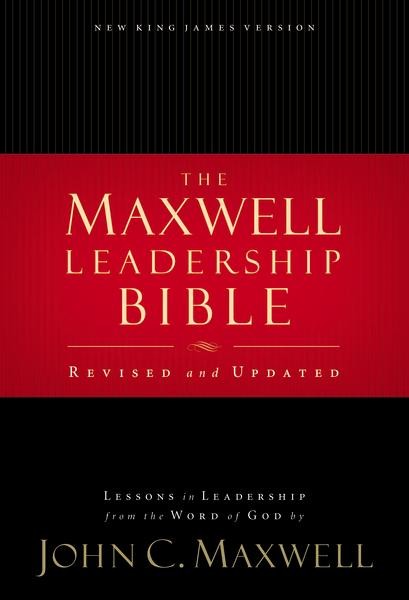
These are wise words from John Maxwell in The Maxwell Leadership Bible…

Then Miriam and Aaron spoke against Moses because of the Ethiopian woman whom he had married; for he had married an Ethiopian woman. (Numbers 12:1)

Leaders can bank on two truths. First, they will be criticized. Second, criticism always changes the leader. Unhappy people tend to attack the point person.

Moses’ only family criticized him. Notice what God and Moses teach us on how to handle criticism (Numbers 12):

  1. Maintain your humility. (v. 3)
  2. Face the criticism squarely. (v. 4)
  3. Be specific about the issue. (vv. 5-8)
  4. Lay out consequences. (vv. 9, 10)
  5. Pray for the criticizers. (vv. 12, 13)
  6. Restore them when appropriate. (v. 14)

Beyond that, consider the ways leaders should handle criticism:

  1. Understand the difference between constructive and destructive criticism.
  2. Look beyond the criticism to see the critic.
  3. Guard your own attitude toward the critic.
  4. Keep yourself spiritually in shape. Associate with people of faith.
  5. Wait for time to prove the critic wrong.
  6. Concentrate on your mission; change your mistakes.

You might also want to check out—

A.L.I.V.E.—The “E” Is For Engagement Of Christ’s Followers

Let’s get some insight into the Greco-Roman and Jewish mindsets of the first century AD. Specifically, the mindset of men. 

There is a well-known letter written June 17, 1 BC, from a man named Hilarion, who was gone off to Alexandria, to his wife Alis, whom he has left at home. He writes to her: “If—good luck to you—you bear a child, if it is a boy, let it live; if it is a girl, throw it out.” This letter captures the male-dominated mindset in the Roman world concerning women and children. In a word: inferior or even disposable. 

This mindset wasn’t limited to the world the Jews called “pagan,” but it was prevalent in Judaism too. Every day Jewish men began their morning prayer time with, “God, I thank You that You did not make me a Gentile, a slave, or a woman.” 

With this background, it makes it startling that a Jewish man (who prayed that prayer thousands of times) writing to people in Rome (who undoubtedly had the same mindset as Hilarion), begins his list of thank you notes with gratitude to two women! Paul goes on to list no less than 8 women, even giving preferential treatment to a wife (Priscilla) over her husband (Aquila) when he mentions her name first! (see Romans 16:1-4, 6, 12).

William Barclay wrote, “Anyone who asks the question: ‘What has Christianity done for the world?’ has delivered himself into a Christian debater’s hands. There is nothing in history so unanswerably demonstrable as the transforming power of Christianity and of Christ on the individual life and on the life of society.”

Indeed Christians changed the lives of at least four groups:

  1. Women (especially in the role of marriage)—divorce was so common that it was neither unusual nor particularly blameworthy for a woman to have a new husband every year. Yet Christians taught men to esteem their wives and for marriage to be honored by everyone (Ephesians 5:28; Hebrews 13:4). 
  2. Children—who weren’t even considered a part of the family until they had grown up and proven their worth to the father. Yet Christians taught fathers to nurture their children (Ephesians 6:4).
  3. Senior citizens—the pragmatic Romans had little to do with those they considered less valuable. But the first blind asylum was founded by Thalasius, a Christian monk; the first free medical dispensary was founded by Apollonius, a Christian merchant; the first hospital of which there is any record was founded by Fabiola, a Christian lady.
  4. The weak and sick—when a plague hit Rome, all the young, healthy people left the sick and elderly behind. They ran away, but the Christians stayed to help. The Christians taught that everyone (regardless of age, sex, or wealth) was valuable (1 Timothy 5:1-2). 

That was just the start of Christianity. Men like William Wilberforce and Abraham Lincoln were Christians who opposed slavery; Clara Barton was nicknamed “the angel of the battlefield” and founded the Red Cross; Paul Brand was a doctor who ran to leprosy patients when everyone else shunned them; Mother Teresa loved those poor, dying souls whom others ignored. 

So what’s your conclusion? Throughout history Christians have been martyred for their faith, but not only are they willing to die for their belief that Jesus is alive, but they continue to do good to those who persecute them. Would people do this to perpetuate a hoax? Or does this sound more like the real deal?

Please check out the other evidence I have presented for the resurrection of Jesus:

The Scriptures And Our Temperament

“We naturally tend to interpret Scripture in the light (or shadow) of our own temperament and let our peculiar mental cast decide the degree of importance we attach to various religious doctrines and practices. …

“The minister above all others should look deep into his own heart to discover the reason for his more pronounced views. It is not enough to draw himself up and declare with dignity that he preaches the Bible and nothing but the Bible. That claim is made by every man who stands in sincerity to declare the truth; but truth has many facets and the man of God is in grave danger of revealing only a limited few to his people, and those the ones he by disposition favors most. …

“The Scriptures, critical self-discipline, honesty of heart and increased trust in the inward operations of the Holy Spirit will save us from being too greatly influenced by temperament.” —A.W. Tozer, in Man—The Dwelling Place Of God