Thursdays With Spurgeon—Instructor And Indweller

This is a weekly series with things I’m reading and pondering from Charles Spurgeon. You can read the original seed thought here, or type “Thursdays With Spurgeon” in the search box to read more entries.

Instructor And Indweller

O righteous Father! The world has not known You, but I have known You; and these have known that You sent Me. And I have declared to them Your name, and will declare it, that the love with which You loved Me may be in them, and I in them. (John 17:25-26) 

     John’s Gospel is always easy for the child to read, but it is always hard for the man to understand. And these two verses, which are almost entirely made up of words of one syllable, contain mysteries that baffle the most enlightened understanding. …  

     The twenty-sixth verse speaks of the wonderful discoveries of a love of infinite excellence: “That the love with which You loved Me may be in them, and I in them.” And you notice that in order to bring that love home to us, there is a divine Indweller who goes with it, and without whom it could not be! As a teacher is required to bring us the choice knowledge, so an indweller is necessary to infuse into us the infinite love: “And I in them.” Jesus must teach us or we will not know the Father. He must dwell in us or we will not rejoice in His love.

     Thus our first subject is divine knowledge and the divine Instructor. Our second subject is indwelling love and the indwelling Lord. The two are one! The blessed Person of our Lord Jesus is so connected with both and so unites both that the subject is one! To know God in Christ Jesus is to love Him, and to be loved of Him is the cause of our being made to know Him! When Jesus declares the Father’s name, we both know and love. And when we see the Father in the Son, we are filled with both instruction and affection. …  

     “Righteous Father”—I know of no other place in Scripture where God is called by that name. … He is righteous, having the attributes of a judge and ruler. He is just, impartial, by no means sparing the guilty. He is Father, near of kin, loving, tender, forgiving. In His character and in His dealings with His people, He blends the two as they were never combined before! How can the Judge and the Father be found in one? When guilty men are concerned, how can both characters be carried out to the fullest? How is it possible? There is but one answer, and that is found in the sacrifice of Jesus that has joined the two in one! In the atonement of our Lord Jesus, “mercy and truth have met together; righteousness and peace have kissed” (Psalm 85:10). 

From The Righteous Father Known And Loved

Jesus showed us the full extent of His love at Calvary. When He was ready to ascend to heaven, He promised to send the Holy Spirit to remind us of all that we had learned about this love and salvation of Jesus, and so much more! 

This should suggest to each of us a searching question: Do I know the Lord? 

If not, you can know Him today!
 

Killing Discontentment

Fading gratitude is a terrible thing. Not being thinkful of our past not only keeps us from being thankful, but it also keeps us stuck in the past. And allowing gratitude to fade also sucks the life out of our every-day experiences.

Asaph told us about the manna that God provided for the Israelites to eat every single day that they were in the wilderness. He called it the bread of angels. But even this wasn’t enough for people who weren’t thinkful nor thankful. Instead, they craved more (Psalm 78:25-30). 

The dictionary defines forgetfulness as “ceasing to think about something.” Gratitude, then, is to continue to think about Someone—that “Someone” being God who daily provides for us.

Fading gratitude brings two ugly realities: 

(1) Discontentment. The dictionary calls this “a restless desire or craving for something one does not have.” In other words, it’s counting up what you don’t have instead of being grateful for what you do have. 

(2) Entitlement. This is discontentment’s sickly twin sister. Where discontentment counts up what it doesn’t have, entitlement says, “I deserve what I don’t have!” Jesus told a story about entitled people who had been given land, a vineyard, and everything they needed to be successful with their farm. Yet when the owner of the farmland asked for his rightful payment, the renters thought they were entitled to keep it all. 

There are serious—and potentially eternal—consequences for our unchecked discontented entitlement. Jesus said, “What then will the owner of the vineyard do? He will come and kill those tenants and give the vineyard to others” (Mark 12:9). And Asaph reported that for the discontented, entitled Israelites, “God’s anger rose against them; He put to death the sturdiest among them, cutting down the young men of Israel. … So He ended their days in futility and their years in terror” (Psalm 78:31, 33). 

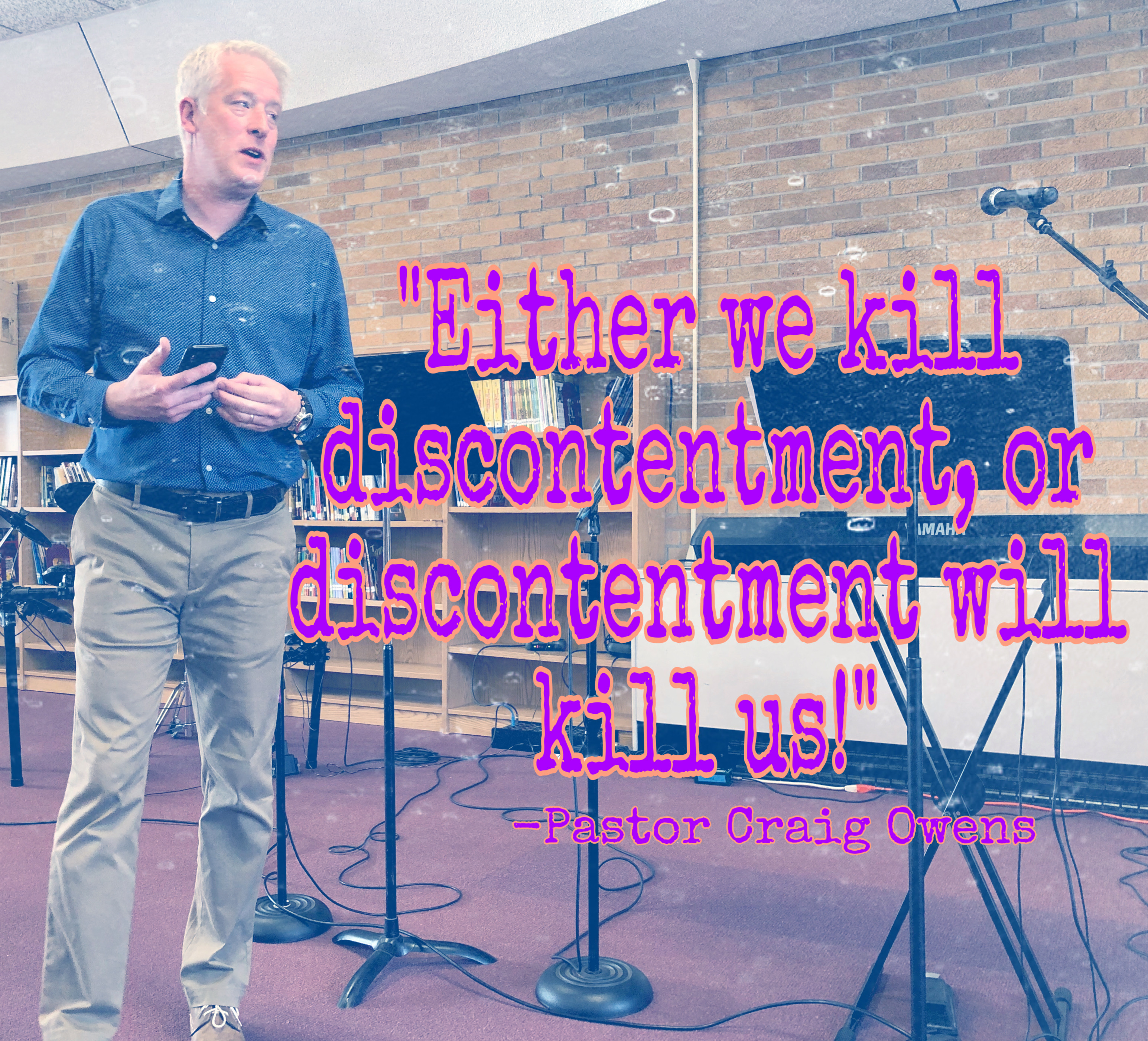
One of two things is going to happen: either we kill discontentment, or discontentment will kill us! 

It’s not complicated to kill discontentment, but it is hard work. We kill discontentment with contentment. We learn to separate the dis from discontentment with the sword of gratitude! 

The apostle Paul wrote “…I have LEARNED to be content whatever the circumstances. I know what it is to be in need, and I know what it is to have plenty. I have LEARNED the secret of being content in any and every situation, whether well fed or hungry, whether living in plenty or in want. I can do all this through Him who gives me strength” (Philippians 4:11-13). 

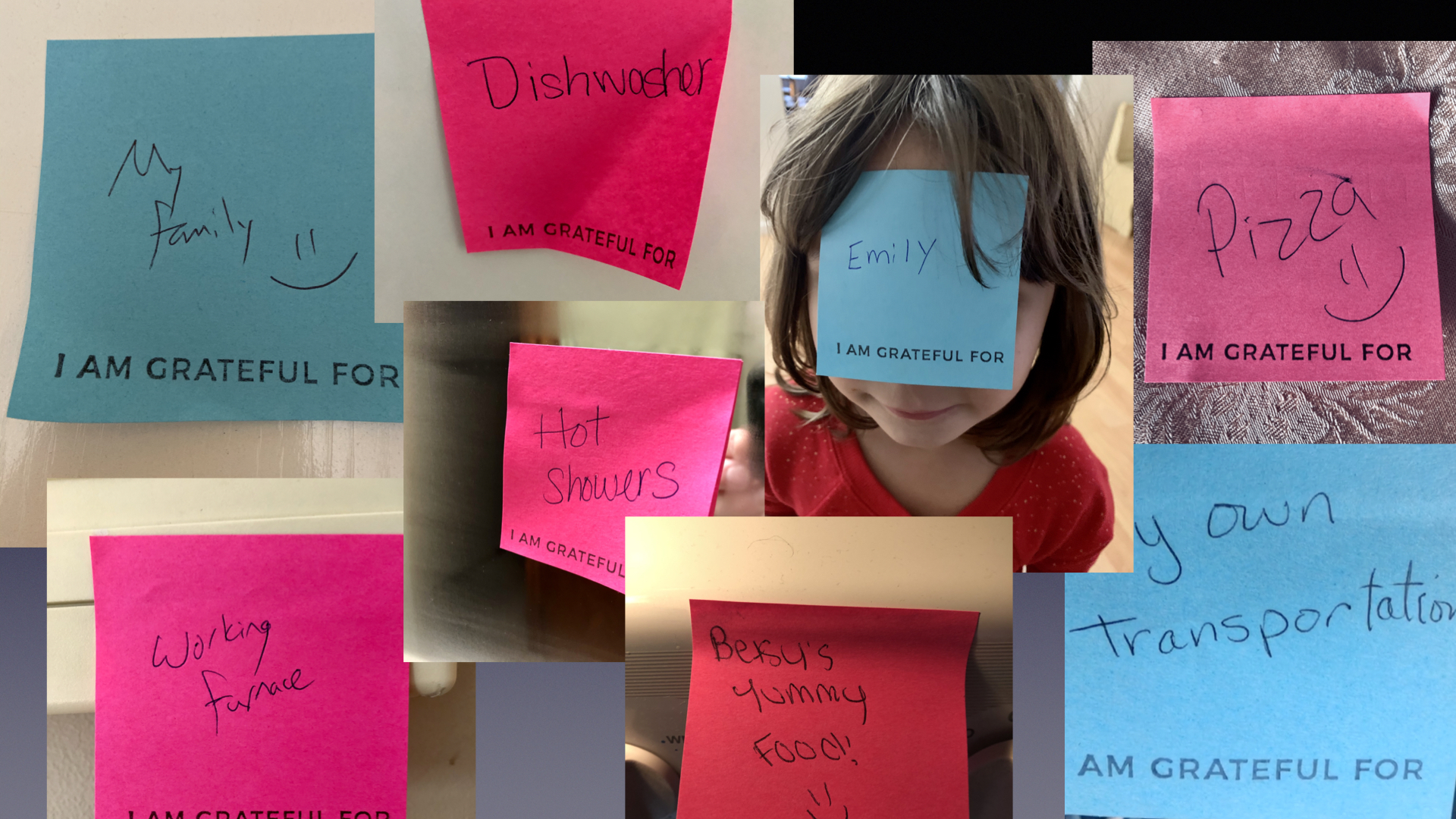
One way to learn contentment is to keep reminders around you of all the things which with God has blessed you. Don’t let your gratitude fade for one moment! 

Next week we will be wrapping up this series by considering what can happen to our future outlook if we let gratitude fade from our hearts and minds. I hope you can join me! 

Thursdays With Spurgeon—You Cannot Hide Your Heart From God

This is a weekly series with things I’m reading and pondering from Charles Spurgeon. You can read the original seed thought here, or type “Thursdays With Spurgeon” in the search box to read more entries.

You Cannot Hide Your Heart From God

Hell and destruction are before the Lord: how much more then the hearts of the children of men? (Proverbs 15:11 KJV) 

     God knows the burial places of all His people. He notes as well the resting place of the man who is buried tombless and alone as the man over home a mighty mausoleum has been raised. He saw the traveler who fell in the barren desert, whose body became the prey of vultures and whose bones were bleach in the sun. He saw the mariner, who was wrecked far out at sea and over whose corpse no dirge was ever wailed, except the howling of the winds and the murmuring of the wild waves. God knows the thousands who have perished in battle, unnumbered and unnoticed; the many who have died alone amid dreary forests, frozen seas, and devouring snowstorms; all these and the places of their sepulcher. God has marked that silent grotto within the sea, where pearls lie deep, where now the shipwrecked one is sleeping, as the death place of one of His redeemed. …

     Yes, hell, horrible as it is and veiled in many clouds and covered over with darkness, is naked before the vision of the Most High. There is the grand fact stated: “Hell and destruction are before the Lord.” After this the inference seems to be easy: “How much more, then, the hearts of the children of men?” … 

     God who sees death and hell sees our hearts, for they are far less extensive. … Scarcely have we time enough to tell the story before it comes to its end. Surely, then, God may easily understand the history of a man, when He knows the history of the monarchies of death and hell. [see Psalm 44:21; Jeremiah 23:24; Revelation 2:23] … 

     God does not judge by the appearance of a man’s great heart, or the outside appearance of a good heart. But He puts it in the scales and weighs it; puts His own Word in one scale and the heart in the other. He knows the exact weight. He knows whether we have grace in the heart, which makes us good weight, or only presence in the heart, which makes us weigh light when put into the scale. He searches the heart in every possible way. …

     Oh, you may endeavor as much as you can to hide your faults from God. But beyond a doubt, He will discover you.  

From God, The All-Seeing One

When—not if—God looks at your heart, what will He find? 

Yes, we should pray—Search me, O God, show me anything that is offensive to You [Psalm 139:23-24]—but then we must repent and ask forgiveness when the offense is revealed. No excuses, no covering up!


Ingratitude Can Mess Us Up

Fading gratitude can negatively impact our past, present, and future. Because when our gratitude to God begins to fade, so does our understanding of what God has already done for us, our appreciation of what He is still doing for us today, and our hope for what He will provide for us tomorrow. But we can flip the script—Our continual gratitude can begin to positively impact our past, present, and future! 

“Gratitude is from the same root word as ‘grace,’ which signifies the free and boundless mercy of God. Thanksgiving is from the same root word as ‘think,’ so that to think is to thank.” —Willis P. King 

The more we THINK about God’s grace in our lives, the more we can give THANKS for all He has done. Or said another way…

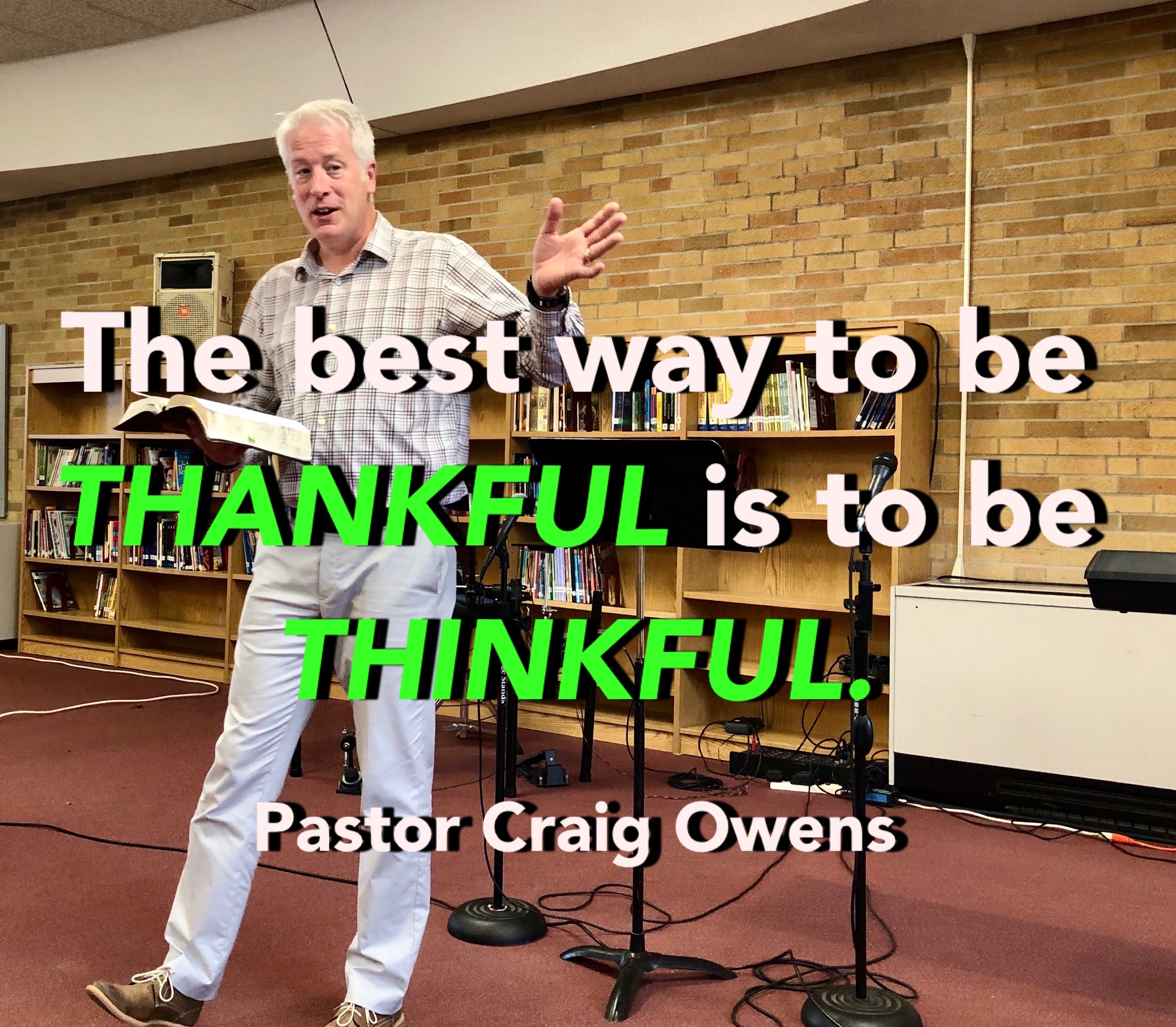
The best way to be THANKFUL is to be THINKFUL!

In Psalm 78, Asaph gives us a two-word reason for the up-and-down history of the Israelites: they forgot. The Israelites’ forgetfulness led to their lack of gratitude, which then caused yet another downward turn away from God. One of the examples he gives us is very informative: the daily provision of manna while the Israelites were in the wilderness (see Psalm 78:11-25; Exodus 16:4, 14-18). 

Every day God’s people had their food needs miraculously supplied for them, yet they begin to take this gift of God for granted. They stopped thinking about His provision, and then they began to ungratefully grumble (Numbers 11:4-6). Their grumbling actually caused them to want to return to slavery in Egypt! 

With fading gratitude, we can get stuck in the past. We even end up looking back at slavery and scarcity and call it “the good old days”! With fading gratitude for the past, sometimes we beat ourselves up. We say things like, “If I would have known then what I know now….” But you couldn’t know then what you know now. You only know now because of what you went through then, which makes another reason to be grateful. After all, God is using everything we have gone through to work out His plan (see Isaiah 46:9-10; Romans 8:28). 

We need to be thinkful about our past so that we can be thankful for what God is doing with it today.

Manna provided food every single day the whole time the Israelites were in the wilderness. It stopped immediately after they entered the Promised Land. For that daily provision, they should have been thankful but it was when they forgot to be thankful that they longed for the past and tried to do things on their own. 

The manna is a picture of Jesus. Not only is He our daily bread for today, but He is also our hope for eternity with God in Heaven. And for that, we should be daily thinkful AND thankful. 

If you’d like a fun idea of how to stay thinkful AND thankful, check this out.

Join us this Sunday as we learn more about the dangers of our fading gratitude. 

Forgetfulness Can Be Fatal

Have you ever noticed the up-and-down track record of the Israelites? We see them worshiping God, enjoying His abundance, with their enemies on the run in one chapter, only to see them worshiping idols, barely scraping by, with their enemies closing in on them.  

What led to the downturn from freedom and abundant blessing to slavery and scarcity? I think it’s summed up in two words: They forgot. 

Asaph captures this idea in the 78th Psalm. And if we’re honest with ourselves, Israel’s history is our history too. 

There is a peril in our forgetfulness!  

“When we have much of God’s providential mercies, it often happens that we have but little of God’s grace, and little gratitude for the bounties we have received. We are full and we forget God: satisfied with earth, we are content to do without Heaven. Rest assured it is harder to know how to be full than it is to know how to be hungry—so desperate is the tendency of human nature to pride and forgetfulness of God.” —Charles Spurgeon (emphasis added)

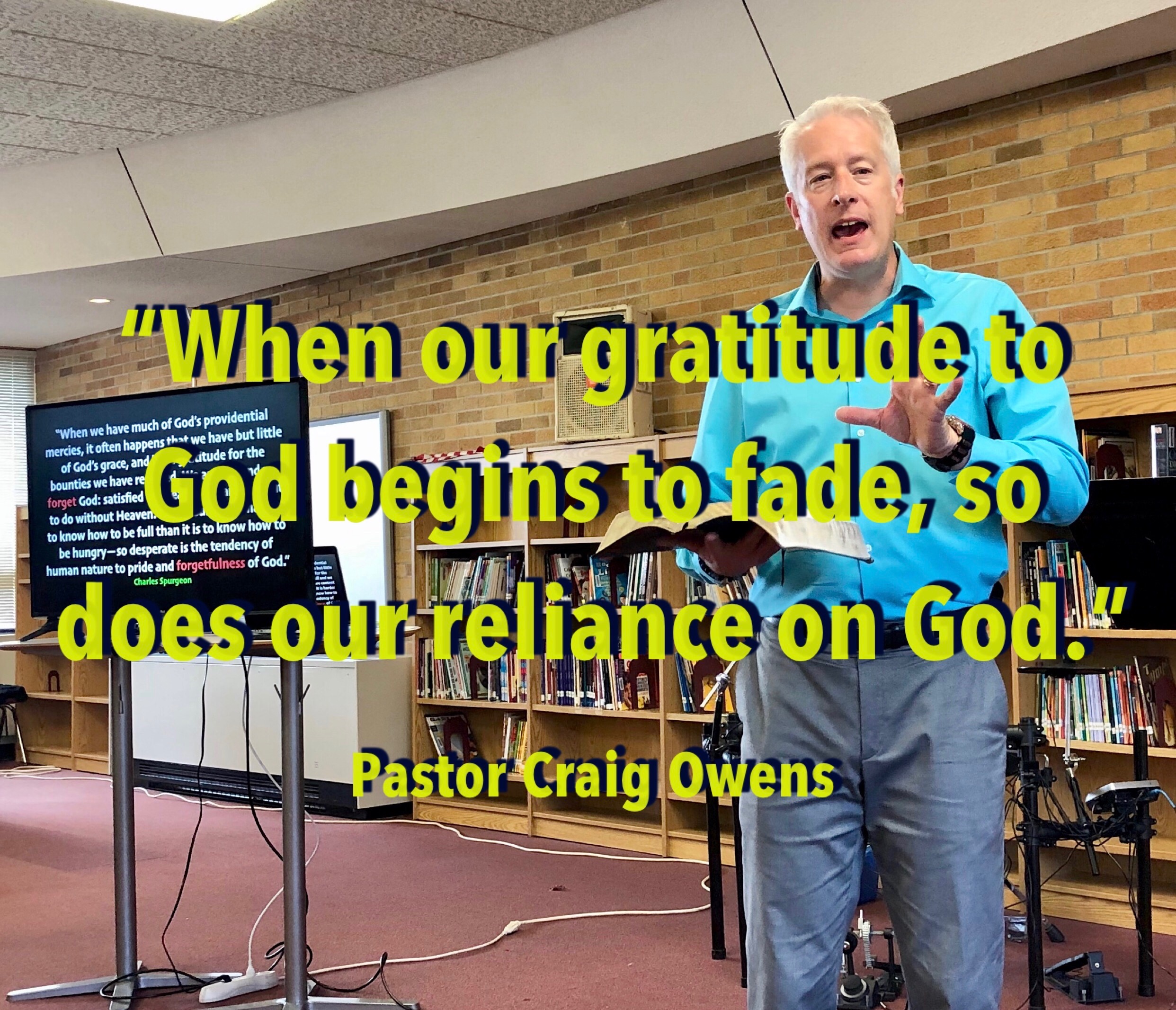
When our thoughts about God begin to fade, so does our gratitude to God. When our gratitude to God begins to fade, so does our reliance on Him. 

The dictionary defines some important terms:

  • Ungratefulness—not giving due return for benefits conferred
  • Unthankfulness—not repaying the blesser with thanks

I don’t think anyone consciously chooses to be ungrateful, but if we don’t choose to actively remember our blessings—and our Blesser—we will become ungrateful. So what if we began to think differently about the definition of gratitude? 

  • Forgetfulness—to cease to think of something
  • Gratitudeto continue to think of Someone (with that Someone being God!) 

When we are continually thankful—when we don’t let our gratitude fade—it keeps God’s blessings at the forefront of our minds. Gratitude—continuing to think of Someone—makes us completely God-reliant. 

Moses had a good idea to help us to continue to think of God’s blessings—

Impress them on your children. Talk about them when you sit at home and when you walk along the road, when you lie down and when you get up. Tie them as symbols on your hands and bind them on your foreheads. Write them on the doorframes of your houses and on your gates. (Deuteronomy 6:7-9) 

What if you posted reminders of God’s blessings all over the place? What if you made it almost impossible to forget God? What if you were constantly thinking of your blessings? 

Join us for our series called Fading Gratitude during the month of November.

Thursdays With Spurgeon—Our Secure Future Hope

This is a weekly series with things I’m reading and pondering from Charles Spurgeon. You can read the original seed thought here, or type “Thursdays With Spurgeon” in the search box to read more entries.

Our Secure Future Hope

     First, Christ is all. Next Christ is in all His people, but the consummation, the top-stone of all, is that God may be all in all [1 Corinthians 15:22-28]. … 

     The fact is, our Lord Jesus Christ has performed and is still performing a work that will end in putting everything into its proper order. …

     Christ is come into the world that all of the evil that is in the world should be subdued. And He will drive it out of the world. There will remain no power that will dare revolt against the Majesty of Heaven! Over the whole surface of this globe, beneath the new heavens and on the new earth, there will yet be the kingdom established all of which Jesus Christ will be the Supreme Head and over which He will reign forever, King of kings and Lord of lords! The Lord hasten it in His own time! … 

     I don’t know whether you catch my thought yet, but it is just this: all evil subdued, all the saints having Christ dwelling in them, Christ the head of all these saints, and then God, still as God, all the more surely and securely supreme over all things, or the head of Christ is God and God is all in all. … 

     I want to you, beloved friends, so to live as to be persuaded that it will be so one day, that God will be all in all—that there will come a time when we will stand before the throne of God, God in us all, and everything in us of God, when all His elect, all His redeemed, all to whom Christ is all, and all in whom Christ is, will only know God as their All-in-All!

From All And All In All

What a glorious future hope is secured for God’s saints! 

If we know what is coming, why would we fear today? If our hope is secure, that means our today is secure as well. That’s why David could confidently say: I keep my eyes always on the Lord. With Him at my right hand, I will not be shaken (Psalm 16:8).

Favorable Influence

Listen to the podcast of this post by clicking on the player below, and you can also subscribe on AppleSpotify, or Audible. 

Twice the 80th psalm declares—Restore us, O Lord God Almighty; make Your face shine upon us, that we may be saved (Psalm 80:19). 

But if we are already a Christian that has been saved from the penalty of our sin and saved to an eternal reward, then that also means that God’s face IS already shining on us, He HAS already restored us, and He HAS already given us His favor. 

I like how the Amplified Bible renders this verse: Restore us, O Lord God of hosts; cause Your face to shine in pleasure, approval, and favor on us, and we shall be saved! 

What we have received is too wonderful for us to keep to ourselves, so we must let His pleasure, approval, and favor now shine out of us! 

“If the result of our experience of God does not compel and propel us into global mission, it is doubtful whether we have really encountered the God of the Bible.” —Dick Brogden 

Jesus stated His mission simply and then sent us out on the exact same mission (Luke 4:18-19; John 20:21). We do this best by living closely among people so they can also see us shine with God’s favor.

Paul called us to shine as well: Live clean, innocent lives as children of God, shining like bright lights in a world full of crooked and perverse people (Philippians 2:15). I believe this is a perfect definition of the word influence. The origin of the word meant the supposed flowing of ethereal fluid from the stars thought to affect the actions of men. Christians that let their good deeds shine in the darkness can influence the entire culture around them!

“Radical Christianity is not going on a missions trip or a big conference. Radical Christianity is staying steady for decades.” —Mike Bickle 

Being a person that shines with favorable influence requires staying involved for the long haul so that you can build trustworthiness. It’s being in visible places not to get glory, but to let people see God’s glory. When they see His glory shine on you and out of you, they will want what you have too!

Solomon said, By the blessing of the influence of the upright and God’s favor—because of them the city is exalted (Proverbs 11:11). So, my fellow Christian, let me ask you: 

  • Has God shined on you?
  • Are you letting Him shine out of you? 
  • Are you living a noteworthy, trustworthy, visible life in your dark community? 

“It’s your choice: You can be a part of your city’s elevation or its deterioration.”

—Craig T. Owens

►► Would you please prayerfully consider supporting this ministry? My Patreon supporters get behind-the-scenes access to exclusive materials. ◀︎◀︎

How To Respond To Evildoers

I’m sure if I asked for a show of hands, everyone of you would put up a hand (or maybe even two!) to the question, “Has someone done something bad to you?” 

The real issue is not if we’ve been the victim of evildoers doing evil things; the real issue is how to respond to evildoers that do evil things. 

In Psalm 52, David tells us that he wrote this prayer after a vile man named Doeg had done atrociously evil things to a whole town of innocent people. Worse yet: these people were simply trying to help David!

David was fleeing for his life from King Saul, forcing him to leave home with just the clothes on his back. He stopped at the village of Nob and asked Ahimelech the priest for food and a weapon. That act, in King Saul’s mind, was worthy of death. None of Saul’s soldiers would carry out his command to execute the priest, but Doeg quickly responded. Doeg not only killed Ahimelech, but he killed the 85 priests with him, and then he proceeded to annihilate everything and everyone left in the village of Nob. Only one man escaped to tell David what happened. 

When David begins this psalm, he uses the words you or your 14 times in just the first five verses. David is addressing Doeg, almost holding up a mirror to his evil deeds. By contrast, the word I is used five times in just the last two verses of this prayer. 

That tells me that we have to work on this problem of evil from two different directions. We need to see evildoers in their evil, and we need to see a godly response to evildoers. As with many Hebrew poems, the most important principle is in the middle—Surely God will bring evildoers down to destruction, but He will protect the righteous (v. 5). 

In the opening words, David asks Doeg, “Why do you boast of evil?” The word for boast in Hebrew is halal—this is usually the word we translate Hallelujah! In other words, Doeg has put his evil on the throne of his life and is saying “Hallelujah!” to it. A downward slide of all sorts of evil words and evil deeds spiral out from this until the climax: Surely God will bring judgment. 

Notice David says “God” (not you) “will” (not might) take care of this. 

Now let’s look at it from a righteous perspective. Working backwards from verse 9 to verse 5, we see whereas Doeg was praising his evil deeds, David is praising God. David recognizes that it’s only in God’s presence that he can be free, and it’s only God that can ultimately balance the scales of justice. 

▶️ My friend, you cannot make things right. Only God can do this. Please, please, take your eyes off the evildoer that did evil things to you, and put your eyes on the Perfect Judge. He alone can balance the scales of justice. ◀️

So here are four lessons for all of us to learn—

  1. When evildoers do evil things to you, talk to God about them; don’t talk to your enemies and don’t even talk to your friends.
  2. Continue to redirect your heart and thoughts to God’s unfailing love, and away from thoughts of retribution—even if you have to do this a hundred times a day.
  3. When evildoers afflict you, look in the mirror of God’s Word to see if there is anything for which you need to repent and then ask forgiveness.
  4. When judgment comes, don’t gloat. John Bradford, when he saw a cartful of men going off to be hanged said, “There goes John Bradford but for the grace of God.”

In this video I reference our series on the Selahs in the book of Psalms. If you missed any of these, please click here to find a list of the other topics we covered.

Rejoicing At The Coming Of The Judge

In Psalm 50, we read the first-of-twelve psalms written by King David’s handpicked worship leader, a man named Asaph. On the day that Asaph first took up his position as worship leader, David gave him a special song, which definitely influenced Asaph’s songwriting.  

Psalm 50 has a pretty easy outline: an introduction in the first six verses, followed by 17 verses of God speaking to His people—speaking to you and me! In between the introduction and God’s speaking is the word selah.

Selah means a time for us to pause and carefully consider. So Asaph is essentially saying, “God is getting ready to speak with us, so we need to selah—pause from what we are doing so that we can pay careful attention to His words!”  

Asaph sets the stage in the first verse, telling us that the Mighty One, God, the Lord speaks. The words that are about to be spoken come from THE I AM—the All-Sufficient One, the Omnipotent, the All-Knowing, All-Powerful Ruler of the Universe. Asaph also reminds us that He is coming as THE Judge.

When you hear that THE All-Powerful, All-Knowing One is THE Judge that has summoned you into His courtroom, it’s quite likely that your heart would skip a beat. Especially when God lists some of the sins you and I are guilty of breaking in verses 16-20. 

It’s also possible that the news that you have to appear before THE Judge could cause you to rejoice. What? How can we rejoice at that?! David taught Asaph this concept in the song he gave him: God’s people should rejoice over God’s judgments. 

You see, in Psalm 50 God says, “I do not rebuke you for your sacrifices, or for all your attempts to follow the rules.” It’s not in the practices of the law that we find salvation.

God doesn’t need our sacrifices, but He wants our hearts. 

In order to win our hearts for Himself, THE Judge did something absolutely mind-blowing—THE I AM became flesh like us. And then He became the once-for-all sacrifice for our sins, paying our penalty Himself when He died on the Cross (see Hebrews 2:14-17; 7:17-27). 

This is why we can rejoice when we hear we have to stand before THE Judge. When you have placed your faith in what Jesus did for you on the Cross, when THE Judge opens His perfect record book to your page He will read this inscription written in the crimson red blood of Jesus: PAID IN FULL!

This is why we can rejoice at the thought of seeing THE Judge face to face!

Join me next Sunday as we wrap up this summer looking at the Selahs in the Psalms. We plan to restart this series next summer, unless the Judge calls us home before then!

Ultimate Wisdom

Last week I posted a quote on some of my social media channels that simply stated: “Our opinions don’t matter if they don’t square with God’s Word on the matter.” This seemed to me to be a fairly uncontroversial statement, but one anonymous reader really took me to task for using the hashtag #objectivetruth. Apparently, he thinks there is no such thing. 

But don’t we all rely on objective, external standards all the time? For instance, a gallon of gasoline is a gallon regardless of where you buy it, or whether you feel like it’s a gallon or not. And when you go to pay for your gasoline, the price isn’t based on how the gas station attendant is feeling at that moment, but on the objective amount posted. 

Psalm 49 is somewhat unusual in that it is a “wisdom psalm.” This psalm feels a lot more like something we would read in Proverbs or Ecclesiastes than it does a prayer or song in the Psalms. 

For instance, the first four verses of this Psalm sound a lot like the opening verses of the Book of Proverbs. And verses 5-13 of the Psalm echo what Solomon wrote in Ecclesiastes 2. 

This psalmist—like Solomon—wants us to understand how important it is to get wisdom. So we are urged to listen intently to those who have hard-won insight, to those who have “been there, done that” so that we don’t have to repeat their folly. 

What is that wisdom? It can be broken down into two profound statements:

(1) Everyone dies. 

That can be a really depressing truth IF your focus is building your own kingdom. If all there is to life is what you can earn and build before you die, only to realize that your “kingdom” ends at your last breath, that can be very depressing. 

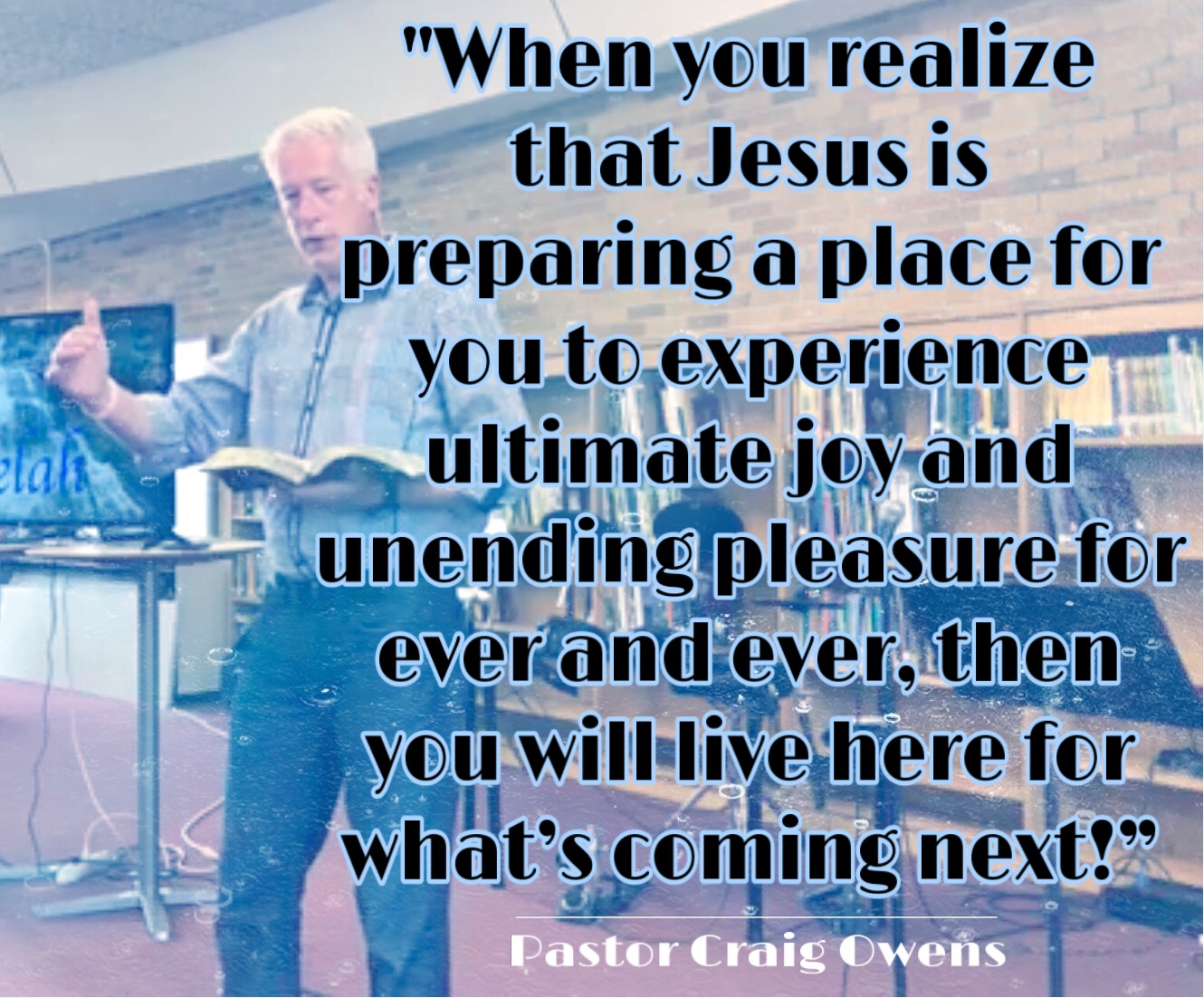
However, this realization that everyone dies can be a very liberating truth IF your focus is on the eternal kingdom that is awaiting you in Heaven. When you realize that Jesus is preparing a place for you to experience ultimate joy and unending pleasure forever and ever, then you will live here for what’s coming next! 

(2) Our eternal destination after we die is determined before we die.

If someone told me that he had discovered the secret to immortality, and then he died and came back to this life to tell me that his theory was correct, it would be wise listen to him. 

That’s exactly what Jesus did for us!

He told us that He would die on a Cross and that He would be raised back to life. AND HE DID IT! His hard-won insight, His “been there, done that” wise words to us are this—“Believe in Me. I died to pay the penalty for the sins that will keep you out of Paradise. So place your faith in what I did, and ask my Father to forgive your sins. Then I promise you that you will spend forever and ever with Me in Paradise!” 

THIS objective truth determines everything else about our lives. 

So I’ll repeat it again—

“Our opinions don’t matter if they don’t square with God’s Word on the matter.” —Craig T. Owens

Join me next Sunday as we continue our series looking at the Selahs in the Psalms.