Poetry Saturday—Exhortation To Prayer

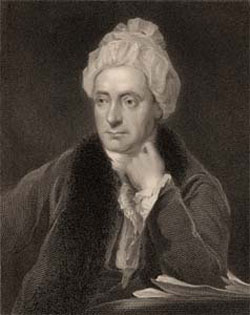
William CowperWhat various hindrances we meet
In coming to a mercy-seat!
Yet who that knows the worth of prayer,
But wishes to be often there?

Prayer makes the darken’d cloud withdraw,
Prayer climbs the ladder Jacob saw,
Gives exercise to faith and love,
Brings every blessing from above.

Restraining prayer, we cease to fight,
Prayer makes the Christian’s armor bright;
And satan trembles when he sees
The weakest saint upon his knees.

While Moses stood with arms spread wide,
Success was found on Israel’s side;
But when through weariness they fail’d,
That moment Amalek prevail’d.

Have you no words? Ah! think again,
Words flow apace when you complain,
And fill your fellow-creature’s ear
With the sad tale of all your care.

Were half the breath thus vainly spent
To Heaven in supplication sent,
Your cheerful song would oftener be,
“Hear what the Lord has done for me.” —William Cowper


Thursdays With Oswald—Philanthropy, Prayer, And Penance

Oswald ChambersThis is a weekly series with things I’m reading and pondering from Oswald Chambers. You can read the original seed thought here, or type “Thursdays With Oswald” in the search box to read more entries.

Philanthropy, Prayer, And Penance 

     In chapter Matthew 5, our Lord demands that our disposition be right with Him in our ordinary natural life lived to men; in chapter 6, He deals with the domain of our life lived to God before men. The main idea in the region of religion is: Your eyes on God, not on men. …  

     Briefly summed up these verses [6:1-4] mean: Have no other motive in giving than to please God. In modern philanthropy we are ‘egged on’ with other motives—It will do them good; they need the help; they deserve it. Jesus Christ never brings out that aspect in His teaching; He allows no other motive in the giving than to please God. … It is a very penetrating thing to ask ourselves this question—“What was my motive in doing that kind act?” … 

     But when you give it to the needy, do not let your left hand know what your right hand is doing.” That means do good until it is an unconscious habit of the life and you do not know you are doing it…. 

     Have no other motive in prayer than to know Him [6:5-15]. … Call a halt one moment and ask yourself—“Why do I pray? What is my motive? Is it because I have a personal secret relationship to God known to no one but myself?” … 

     It is impossible to live the life of a disciple without definite times of secret prayer. You will find that the place to enter in is in your business, as you walk along the streets, in the ordinary ways of life, when no one dreams you are praying, and the reward comes openly, a revival here, a blessing there. …  

     In verse 8 Jesus goes to the root of all prayer—“Your Father knows what you need before you ask Him.” Common sense says, “Then why ask Him?” Prayer is not getting things from God, that is a most initial stage; prayer is getting into perfect communion with God; I tell him what I know He knows in order that I may get to know it as He does. …  

     Penance [6:16-18] means putting ourselves into a straitjacket for the sake of disciplining our spiritual character. Physical sloth will upset spiritual devotion quicker than anything else. If the devil cannot get at us by enticing to sin, he will get at us by sleeping-sickness spiritually…. Penance means doing a hardship to the body for the sake of developing the spiritual life. … Jeremy Taylor said that men hang out the sign of the devil; to prove there is an angel within; that is, they wear sad countenances and look tremendously severe in order to prove they are holy. 

From Studies In The Sermon On The Mount

Good questions from Oswald Chambers:

  • Philanthropy—What was my motive in doing that kind act?
  • Prayer—Why do I pray? What is my motive? Is it because I have a personal secret relationship to God known to no one but myself?
  • Penance—Am I “hanging out a sign” just to let other people know that I’m discipling myself? 

Boldly Praying

As a general rule, God would like us to pray much more boldly than we typically do. 

Jesus told us that we could pray mountain-moving prayers! But C.S. Lewis rightly observed, “If we consider the unblushing promises of reward and the staggering nature of the rewards promised in the Gospels, it would seem that our Lord finds our desires, not too strong, but too weak.” 

This Sunday we begin a new series of messages called Boldly Praying, in which we are going to consider how we can replace our weak prayers with bold prayers. We’ll be looking at the requests of four bold pray-ers that we meet in the pages of Scripture, and each one of them will teach us a new aspect of bold praying. 

Join us either in person or on Facebook Live. 

If you have missed any of the messages in this series, check out these recaps—

Continually Learning To Pray

Lord, teach us to pray… (Luke 11:1). 

This is a request I can continue to make. Jesus is in heaven interceding for me (Hebrews 7:25), and He has given me His Holy Spirit to help me pray (Romans 8:26). 

Jesus is the Perfect Pray-er, so He is the one to Whom I should continually say, “Lord, teach me to pray.”

The key thought Jesus presents is persistence (see Luke 11:8-10). Why? Because the One to Whom I persistently appeal has told me to! God is my Heavenly Father—He wants to give the best to His children. He even gives us “how much more”! 

I learn to pray by praying.

I have to begin to do it and then let the Holy Spirit instruct me. In the meantime, even my childlike prayers are clarified and amplified by the Spirit, they are used by Jesus to intercede on my behalf, and they are carried into the throne room of Almighty God as an incense before Him. He loves to hear from me, or else He would not have told me to keep on asking, keep on seeking, and keep on knocking.

To paraphrase a father who was in desperate need of Christ’s help, “Lord, I am praying; help me to keep on praying!” (see Mark 9:24) 

Book Reviews From 2018

More Trust With Each Birthday

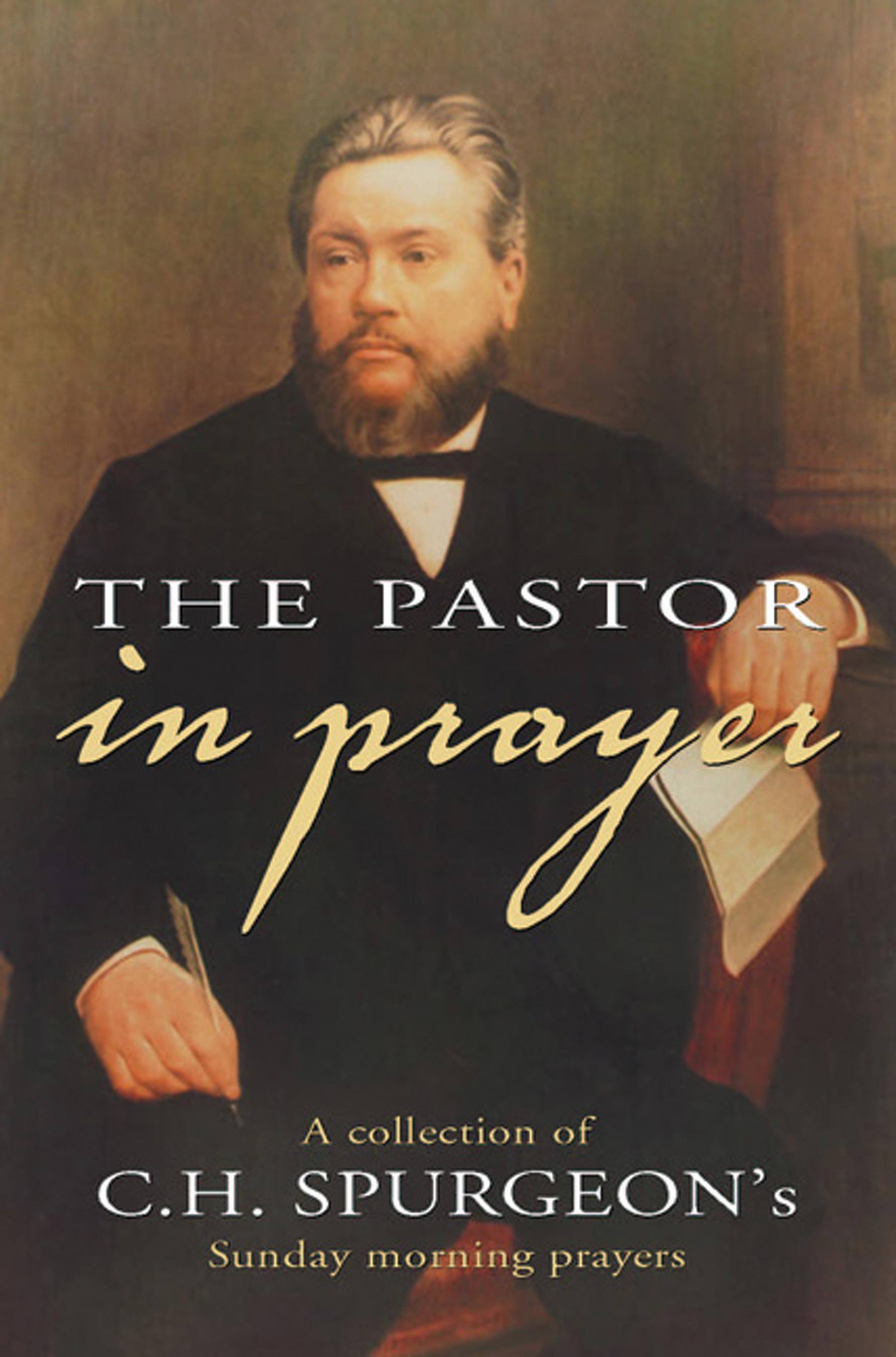
“Peradventure it is written in the tablets of Thine eternal purpose that we shall soon end this mortal life and die. Well, be it so, we shall the sooner see Thy face, the sooner drink eternal draughts of bliss. But if Thou hast appointed for us grey hairs and a long and weary time of the taking down of the tabernacle, only grant us grace that by infirmity our faith may never fail us, but when the windows are darkened may we still look out to see the hope that is to be revealed; and when the grasshopper becometh a burden still let our strength be as our days, even to the last day. … O God, we can trust Thee, and we do. Our faith has gathered strength by the lapse of years. Each following birthday, we trust, confirms us in the fact that to rely upon God is our happiness and our strength.” —Charles Spurgeon, from The Pastor In Prayer

I shared other quotes from this book here.

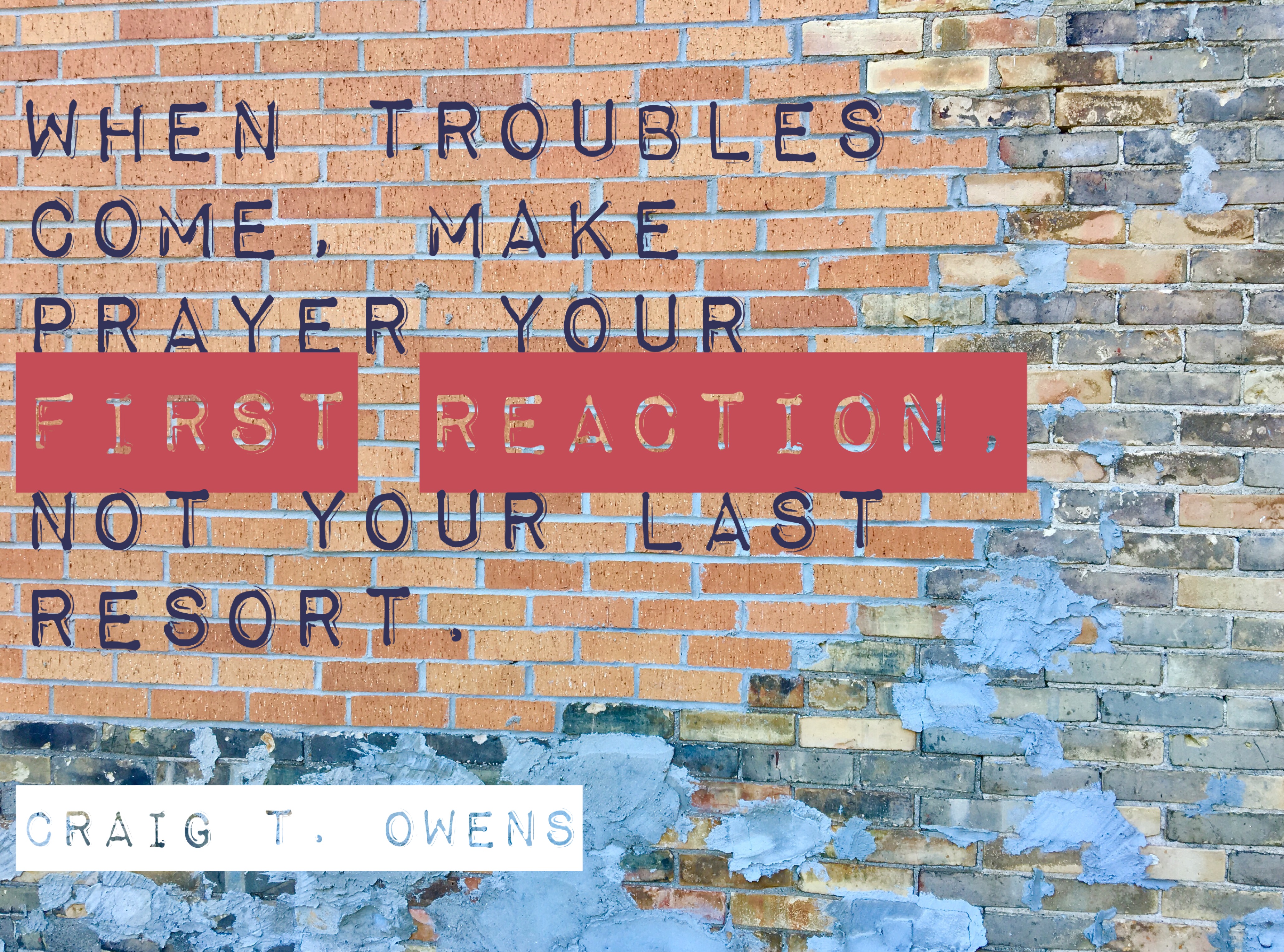
First Reaction

“…Be patient in trouble, and keep on praying” (Romans 12:12).

When trouble comes, is our first response “I’ve got to do something” or “I’ve got to pray”?

Let’s make prayer our first reaction, not our last resort.

Amen!

A Leader’s Intercession

As for me, far be it from me that I should sin against the Lord by failing to pray for you (1 Samuel 12:23).

Leaders teach, and encourage, and train, and correct, and sometimes even warn. But despite all of this effort sometimes people still do wrong—and even sinful—things. And sometimes there are consequences for these poor choices that even a leader cannot deflect away from them. 

  • Position-conscious leaders say, “It’s not my fault, and I hope this doesn’t reflect poorly on me!” 
  • Selfish leaders say, “I’m glad I’m not in trouble!” 
  • Vindictive leaders say, “It serves you right!” 

Godly leaders say, “How can I serve you?” 

The Israelites grumbled against God, and God was angry. It would have been understandable if Moses would have said, “You complained so you’re going to have to bear the consequences.” But instead, Moses interceded before God on their behalf (Numbers 11:1-2). 

The people rejected God as their King and chose instead a man named Saul to lead them. Samuel could have said, “You’re in big trouble now!” But instead, he said, “Far be it from me that I should sin against the Lord by failing to pray for you” (1 Samuel 12:23). 

What about you? Have you ever grumbled against God or chosen a path that wasn’t best for you? Jesus could say, “Well, you should have known better!” But instead, we read that He intercedes before God’s throne on our behalf (Job 9:33-34; Hebrews 4:15-16; 7:25). 

The mark of a godly leader is one who intercedes for his people.

If you are a Christ-follower and you are a leader of people, then follow Christ’s example. Yes, continue to teach, encourage, train, correct, and warn. But if people mess up, don’t write them off; instead, intercede before God on their behalf! 

This is part 32 in my series on godly leadership. You can check out all of my posts in this series by clicking here.

11 Quotes On The Gospel Of Mark

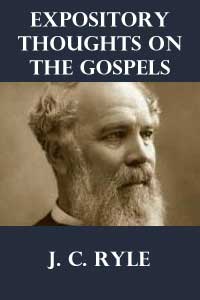
Alongside my daily Bible study time in the Gospels of the New Testament, I have been reading J.C. Ryle’s Expository Thoughts On The Gospels. You can check out my review of this book by clicking here. 

These are a few of the quotes I especially appreciated from Ryle’s comments on the Gospel of Mark. 

“We should always read the Old Testament with the desire to find something in it about Jesus Christ.” [cf John 5:39] 

“It will always be found that when prayers are few, grace, strength, peace, and hope are small. We shall do well to watch our habits of prayer with a holy watchfulness. Here is the pulse of our Christianity. Here is the true test of our state before God. Here true religion begins in the soul, when it does begin. Here it decays and goes backward, when a man backslides from God. Let us walk in the steps of our blessed Master in this respect as well as in every other. Like Him, let us be diligent in our private devotion. Let us know what it is to ‘depart into solitary places and pray.’” 

“What extravagant importance is attached to trifles by those who are mere formalists in religion!” 

“Christ’s service does not exempt His servants from storms.” 

“The assaults of persecution from without have never done half so much harm to the church as the rise of false doctrines within. False prophets and false teachers within the camp have done far more mischief in Christendom than all the bloody persecutions of the emperors of Rome. The sword of the foe has never done such damage to the cause of truth as the tongue and the pen.” 

“Incredible is the bondage in which men live to the opinion of the world! Let us all pray daily for faith and courage to confess Christ before men. … In spite of laughter, mockery, and hard words, let us boldly avow that we serve Christ.” 

“It is a dreadful fact, whether we like to allow it or not, that pride is one of the commonest sins which beset human nature. We are all born Pharisees. We all naturally think far better of ourselves than we ought. We all naturally imagine that we deserve something better than we have. It is an old sin. It began in the garden of Eden, when Adam and Eve thought they had not got everything that their merits deserved. It is a subtle sin. It rules and rains in many a heart without being detected, and can even wear the garb of humility. It is a most soul-ruining sin. It prevents repentance, keeps men back from Christ, checks brotherly love, and nips in the bud spiritual desires. Let us watch against it, and be on our guard. Of all garments, none is so graceful, none wears so well, and none is so rare as true humility.” 

“It is not so much the having money, as the trusting in it, which ruins the soul. Let us pray for contentment with such things as we have.” 

“Above all, let all who desire to walk in Christ’s steps labor to be useful to others. … Let them never forget that true greatness does not consist in being an admiral, or a general, a statesman, or an artist. It consists in devoting ourselves, body, and soul, and spirit to the blessed work of making our fellow man more holy and more happy. … Let us strive to leave the world better, holier, happier than it was when we were born.” 

“The dark ages of Christendom were times when the Bible was kept back from the people. The Protestant Reformation was mainly effected by translating and circulating the Bible. The churches which are most flourishing at this day are churches which honor the Bible. The nations which enjoy the most moral light are nations in which the Bible is most known. … The godliest families are Bible-reading families. The holiest men and women are Bible-reading people.” 

“Let us remember that for our sakes Jesus voluntarily endured the most painful, horrible, and disgraceful death. Surely the thought of this love should constrain us daily to live not unto ourselves but unto Christ.” 

You can read the quotes I shared from Ryle’s thoughts on the Gospel of Matthew by clicking here. 

Returning Home

And Abram went on his journey from the south as far as Bethel, to the place where his tent had been at the beginning … to the place of the altar which he had made there at first. And there Abram called on the name of the Lord (Genesis 13:3, 4).

While he was in Egypt, Abram pitched no tents nor did he set up any altar of worship. In fact, it was probably unwise of him to go to Egypt in the first place, as there is no record of God telling him to do so. While he was sojourning there, Abram also perpetrated a lie as an attempt to protect himself.

Whenever we take an unwise detour—and then realize it—part of repentance is to return to where we know we previously had met with God. Abram returned it to the place where he had first set up his tents, and worshipped God once again at the altar he had built at first. There he once again “called on the name of the Lord.”

It was from this place (not from Egypt) that God could say to Abram, “Arise, and walk in the land through its length and width, for I give it to you” (v. 17). “THEN” (v. 18)—and only then—was it safe for Abram to move his tents and set up a new altar of worship. 

Prayer—Father, I am sure I have strayed into an Egypt before, sojourning where my wits—and not Your voice—have led me. Thank You, Lord, for protecting me there, and for allowing me to “return home” to the place You intended for me, to the place where Your blessings flow. May I not move forward again unless You direct me. In Jesus name, Amen.