This unity is seen during the outpouring of the Holy Spirit on the day of Pentecost recorded in Acts 2. But unity is not the same thing as conformity, as I shared in this message.
God’s laws, precepts, and commands are given to us because He loves us and wants to keep us safe. His laws keep us in a place where we can experience His abundant blessings!
I have lots of new content every week, which you can check out on my YouTube channel.
“Establishing the Kingdom of God means ending evil, which happens not through violent force or coercive threats but through loving-kindness and patient forgiveness. It’s a world compelled by love instead of fear. … This [the outpouring of the Holy Spirit on the Day of Pentecost] is the beginning of a new world. The old world creates enemies and divides people, falsely claiming that some are loveable and others are throwaways, but not so in the Kingdom of God! In God’s empire, all people mutually love one another without partiality.” —Why Is Pentecost Important? reading plan on YouVersion
In the weekly Culture Translator newsletter from Axis Ministry, they had this insightful reminder about the worldview of pornography: “Pornography is not just sexual entertainment; it is a form of propaganda about what human beings are. In the same way that Scripture has a vision for humanity (that all people are God’s beloved children, worthy of honor and respect, with inherent dignity as his image-bearers), pornography also has a vision for humanity: that people (especially women) are objects to be gawked at, violated, and discarded at will. Porn offers a worldview, and like any other worldview, it shapes the way we think about what people are for—and how they should be treated. ‘Pornography teaches us lies that we ingrain into aspects of our relationships and our lives,’ argues Sam Black, Covenant Eyes’ Director of Recovery Education. These lies include the notion that we can’t live without sex, that sex equals love (or acceptance), and/or that what gives humans value is exclusively their sexual attractiveness. ‘Pornography warps our views of our relationships,’ Black continues, ‘and we haven’t even realized it.’”
“I always turn to the sports page first. They record people’s accomplishments. The front page has nothing but man’s failure.” —Chief Justice Earl Warren
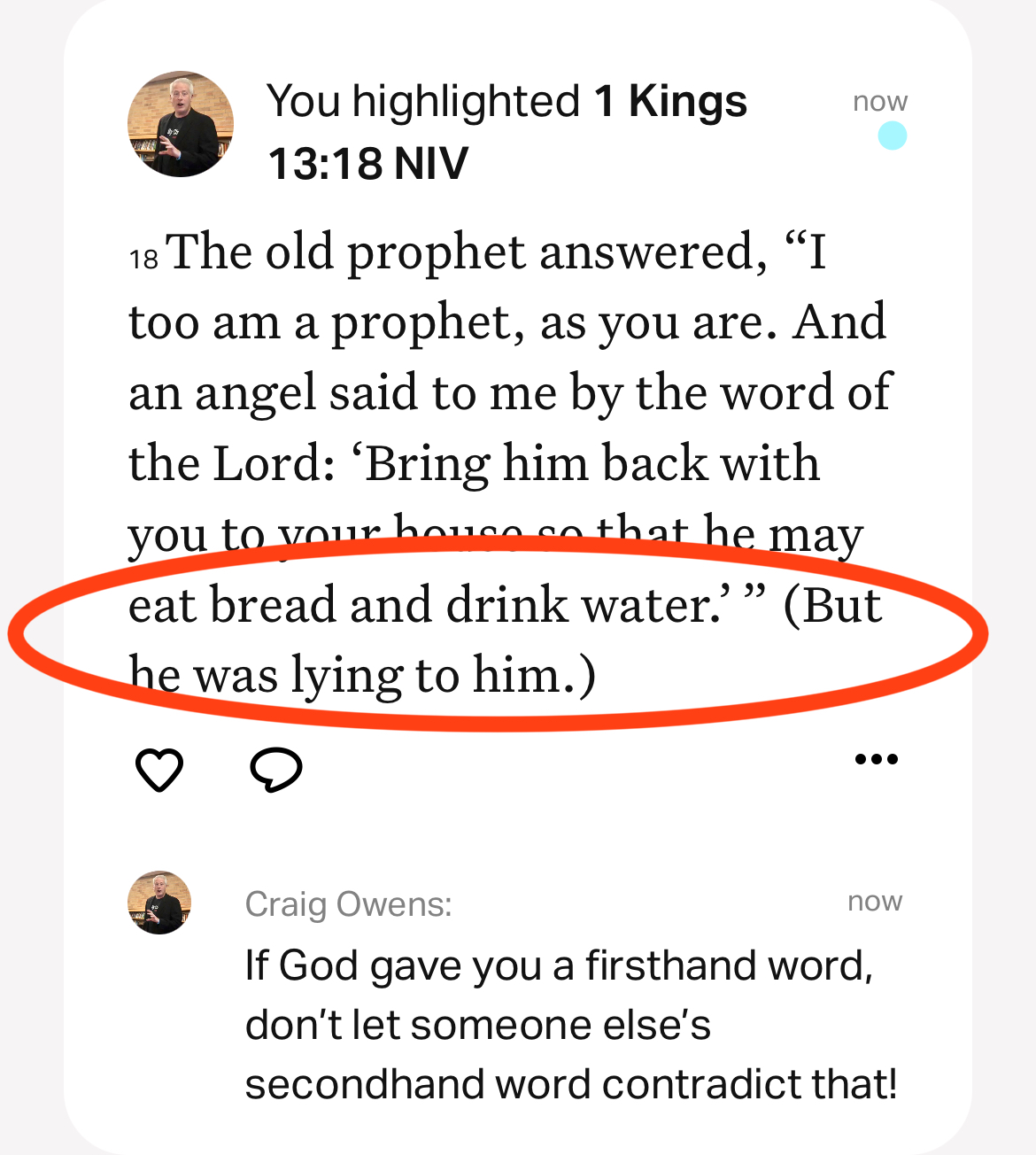
There is a very unusual story told in 1 Kings about a couple of unnamed prophets. One prophet heard from God, delivered the powerful warning God directed him to give, but then disobeyed God because of something another prophet told him that he had heard from God. I shared this commentary on YouVersion, “If God gave you a firsthand word, don’t let someone else’s secondhand word contradict that!”
“All religions are either a preview or a perversion of Christianity.” —C.S. Lewis
“If our relationships with other human beings are going to be meaningful, they will cost us something. Relationships are demanding.” —Herbert Wagemaker
I saw this side-by-side graphic and so many thoughts about perseverance, grit, and stick-to-it-iveness came to mind. It is so true: we all have moments of stumbling. Losers tend to quit when they fall down, but winners learn something from their stumble, improve, and continue to grow. And then I came across this related quote from John D. Rockefeller, “I do not think that there is any other quality so essential to success of any kind as the quality of perseverance.”
Listen to the podcast of this post by clicking on the player below, and you can also subscribe on Apple, Spotify, or Audible.
Jesus sent us to all nations—to all the streets in all the world (Luke 24:47-49; Acts 1:8). We are to begin in Jerusalem and move outward. As we have seen, Jerusalem is like out Main Street, where there are more similarities than differences between us and the people to whom we are taking the Good News of Jesus. Judea is our Lombard Street & Rodeo Drive, where we are starting to see more differences.
Then we move to Samaria where there are now way more differences than similarities. But still, let’s never forget that Jesus sent us and the Holy Spirit empowers us to be effective in our witness on every street—even those with whom we have very little in common.
Jesus was baptizing in the Judean countryside (John 3:22) and now He is heading back to Galilee. “The shortest route from Judea in the south to Galilee in the north went through Samaria. The journey took three days if one wanted to travel the direct route. The Jews often avoided Samaria by going around it along the Jordan River. The hatred between the Jews and Samaritans went back to the days of the exile” (Dr. Henry Halley).
There were wide differences between Jesus and this woman of Sychar:
Cultural differences—The Jews considered the Samaritans to be no longer “pure” Jews, but half-breeds and traitors (vv. 5-9).
Personal differences—She was female, Jesus was male; she was a divorcée, Jesus was single (vv. 9, 16-18).
Religious differences—The Samaritans only recognized the Pentateuch; the Jews recognized the entire Old Testament Scripture. And the Samaritans saw Mt. Gerizim as the center of worship and the place the Messiah would reign; the Jews believed Jerusalem to be the center of worship (vv. 19-20).
Our first task is to find common ground with whoever we can. Jesus used the word “whoever” three times in John 3:16, 18, 36, saying that whoever believed in Him would have eternal life. We need to have this same mindset. It’s not His desire that any should perish—not even the Samaritans!—but that all should come to know Him as Savior.
In his book Winning With People, John Maxwell presents The 101% Principle: Find the 1% we can agree upon and give that 100% of your effort.
Jesus found the 1% and gave 100% to it. For He and this Samaritan woman their common connection was water and worship (John 4:9-15, 21-26). Jesus used both of those things to open a conversation about eternal matters.
Who are the Samaritans in my life? They are people…
…I have very little in common with
…I go out of my way to avoid talking to
…I think are never going to “get it”
…who make me angry, defensive, or combative
But they are also people…
…for whom Jesus died
…who are dearly loved by our Heavenly Father
…who need to hear the Gospel
…to whom I have been sent
Our prayer should be this:
Holy Spirit, help me to notice the people to whom I have been blind or whom I have been avoiding. Help me to find the 1% on which we can agree, and then empower me to give 100% of my effort to that 1%. I want my heart to beat with the heart of my Savior: Whoever believes on Him will not perish but will have eternal life.
We need to be careful of overlooking details we think might be insignificant because we can easily think that our small lives are somehow insignificant. They are not! As Tom Kaastra reminded us last week, we are here on purpose and for a purpose; our lives are eternally significant.
Immediately after His resurrection, the followers of Jesus struggled to wrap their minds around what they had just experienced. Just before His ascension, Jesus explained to them both what had happened already, and what was about to happen (Luke 24:44-49).
Jesus said He had already fulfilled the promised about His crucifixion and resurrection. Luke writes that Jesus “opened their minds so they could understand” (v. 45).
Notice two important things:
The Spirit of Jesus—the Holy Spirit—opens minds
He opens minds to grasp the truth in Scripture
Jesus also says that we are still fulfilling the “what is written” (v. 46) in the the proclamation of the death and resurrection of Jesus. We are fulfilling the prophecy that says the message of Jesus will be preached everywhere to all peoples, so that they also can receive the forgiveness Jesus paid for and repent of their Godless ways.
Who opens minds? The Holy Spirit.
What does the Spirit use as a catalyst to open minds? Our witness.
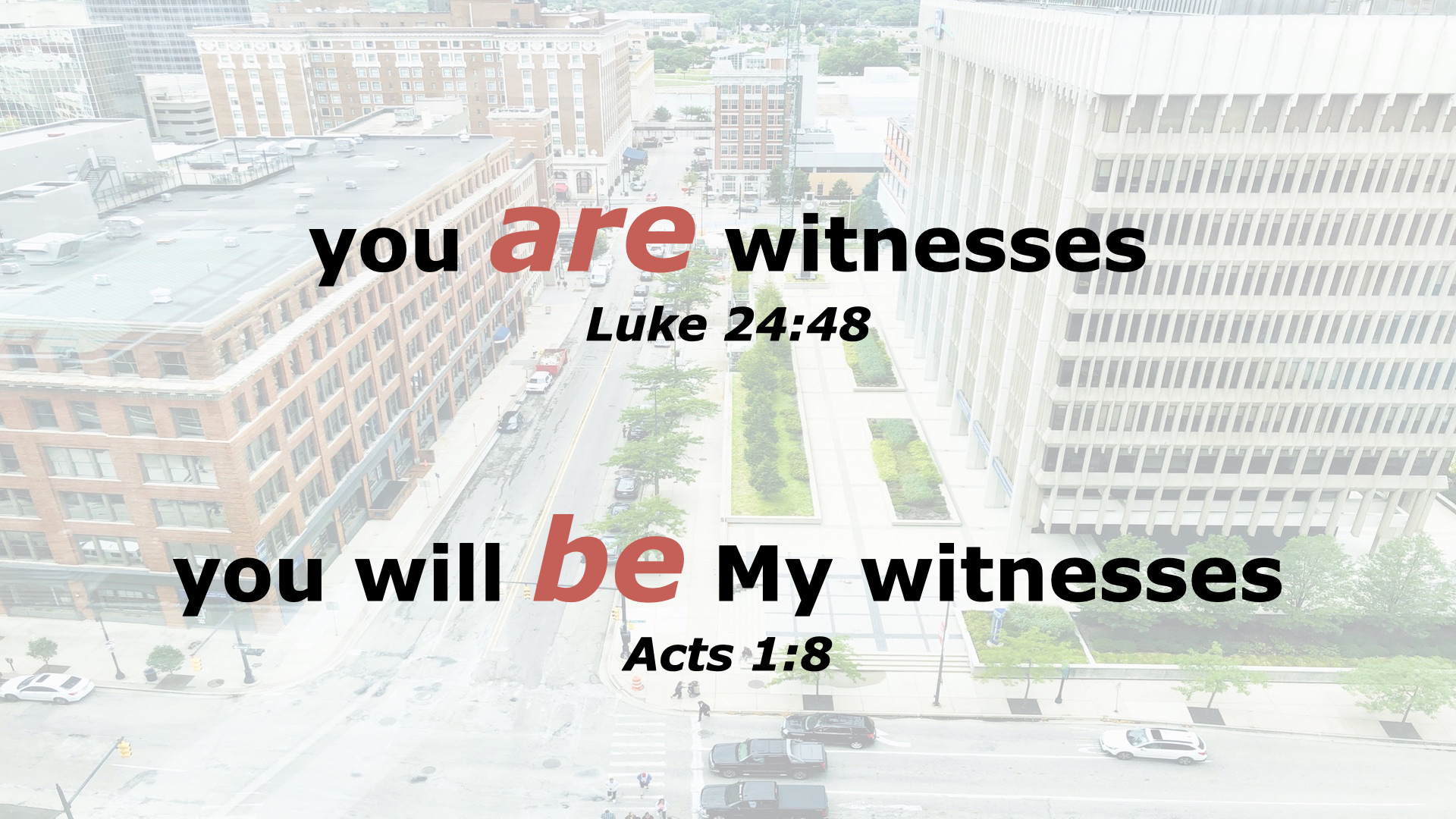
A witness is a truth-teller, who tells their firsthand story and who amplifies their verbal testimony by their Christ-honoring lifestyle. Jesus used two phrases to remind us that witnessing is not something we do, but it is who we are:
you ARE witnesses (Luke 24:48)
you will BE My witnesses (Acts 1:8)
Holy Spirit-baptized Christians are empowered to take Jesus to every street. God has strategically and purposefully placed us on our “streets” to proclaim our witness. From Easy Street to Skid Row, and everywhere in between, we are to fulfill the prophecy of proclaiming this good news to all nations (see 1 Corinthians 9:20-22).
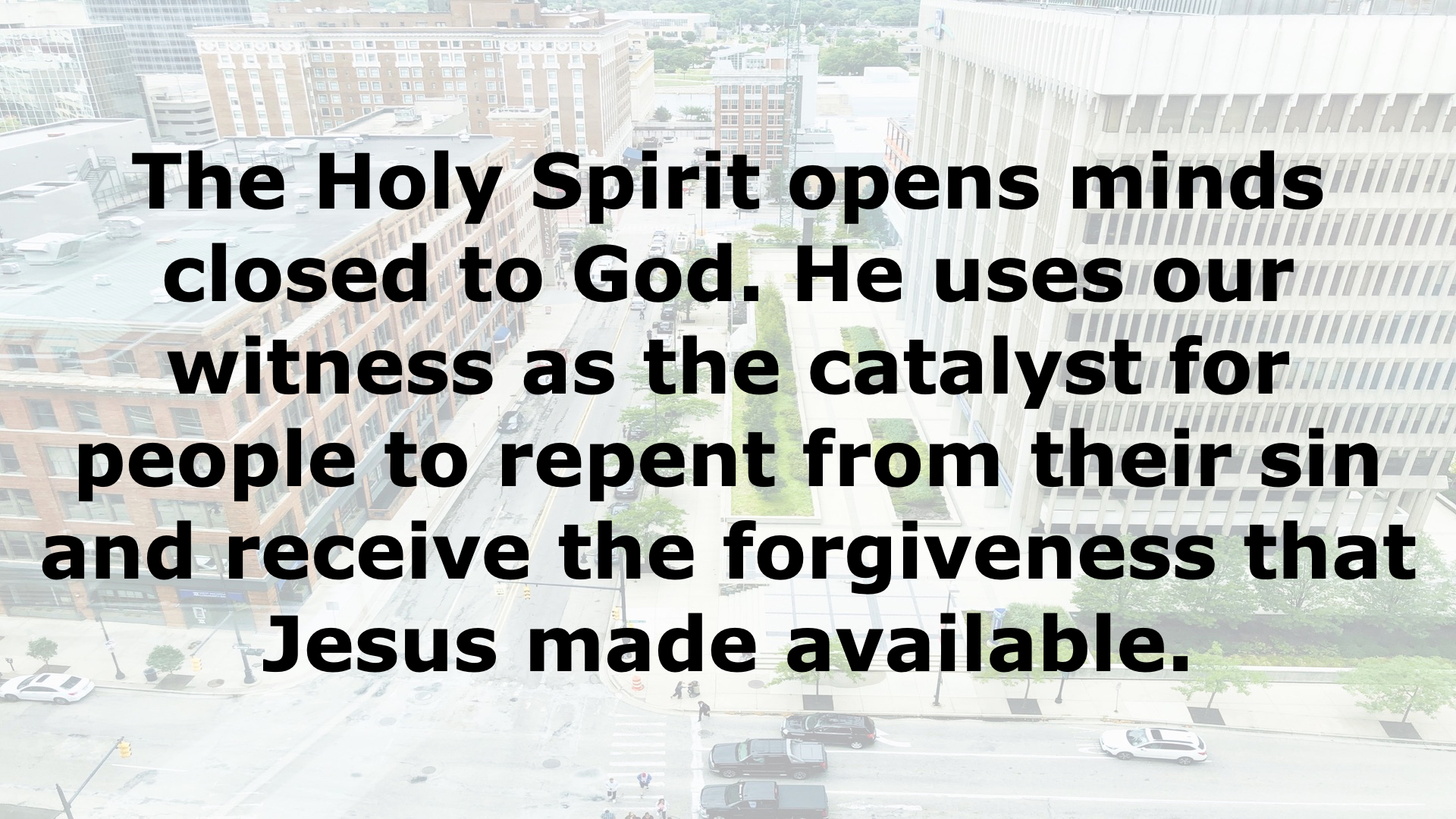
The Holy Spirit opens minds closed to God. He uses our witness as the catalyst for people to repent from their sin and receive the forgiveness that Jesus made available.
Listen to the podcast of this post by clicking on the player below, and you can also subscribe on Apple, Spotify, or Audible.
The apostle Peter said he wrote two letters to the church “as reminders to stimulate you to wholesome thinking” (2 Peter 3:1). And Paul reminded his young friend Timothy to “keep reminding [your congregation] of these things” (2 Timothy 2:14).
In the spirit of those great apostles, I have made it a practice to take time at the end of each year to look back on all that we have learned in the previous year, and then to look forward to where God may be leading Calvary Assembly of God in this upcoming year.
Clicking on each series title will take you to a list of all of the sermons in that series.
Intimate Conversation—The dictionary defines the word “intimate” with these phrases: associated in close personal relations, characterized by warm friendship, and closely personal. These words perfectly describe the relationship God wants to have with His children through prayer. Pete Briscoe said, “Prayer is an intimate conversation with the One who passionately loves you and lives in you.” The One who loves you so passionately desires to walk with you and share intimate knowledge with you. Prayer is not something formal, cold, or mechanical, but it is vibrant, warm, engaging, and life-changing.
A Christian’s Mental Health—I don’t think there is any arguing that Jesus was the healthiest individual who ever walked planet Earth. Some may want to push back with, “Of course He was because He didn’t have any problems to deal with!” But the writer of Hebrews tells us that Jesus experienced everything you and I will ever experience (Hebrews 2:17), so His deity didn’t exclude Him from the stressors that His humanity would have to face. And yet, He handled all of these things successfully. Luke the physician observed the growth of Jesus and tells us that it all began with Jesus having a robust mental health. From that foundation, everything else—physical, spiritual, relational—all could develop properly. We must learn from this example and pay careful attention to our own mental health.
Bold Claims—“That’s a pretty bold claim. Are you prepared to back that up?” I’ll bet you have heard something like that said to you, and maybe you have even said that yourself to someone else who made a big, audacious statement. After Jesus is arrested by the religious leaders—an arrest that will ultimately lead to Jesus being crucified on the Cross—there are some incredibly bold claims spoken by key people in this part of the Story. For the most part, these are claims that we don’t read earlier in any of the Gospels, but as this story is heading toward its most crucial moment, we have these audacious statements pronounced. But here’s the most important part: These bold claims weren’t just made, but they were backed up with proof as well.
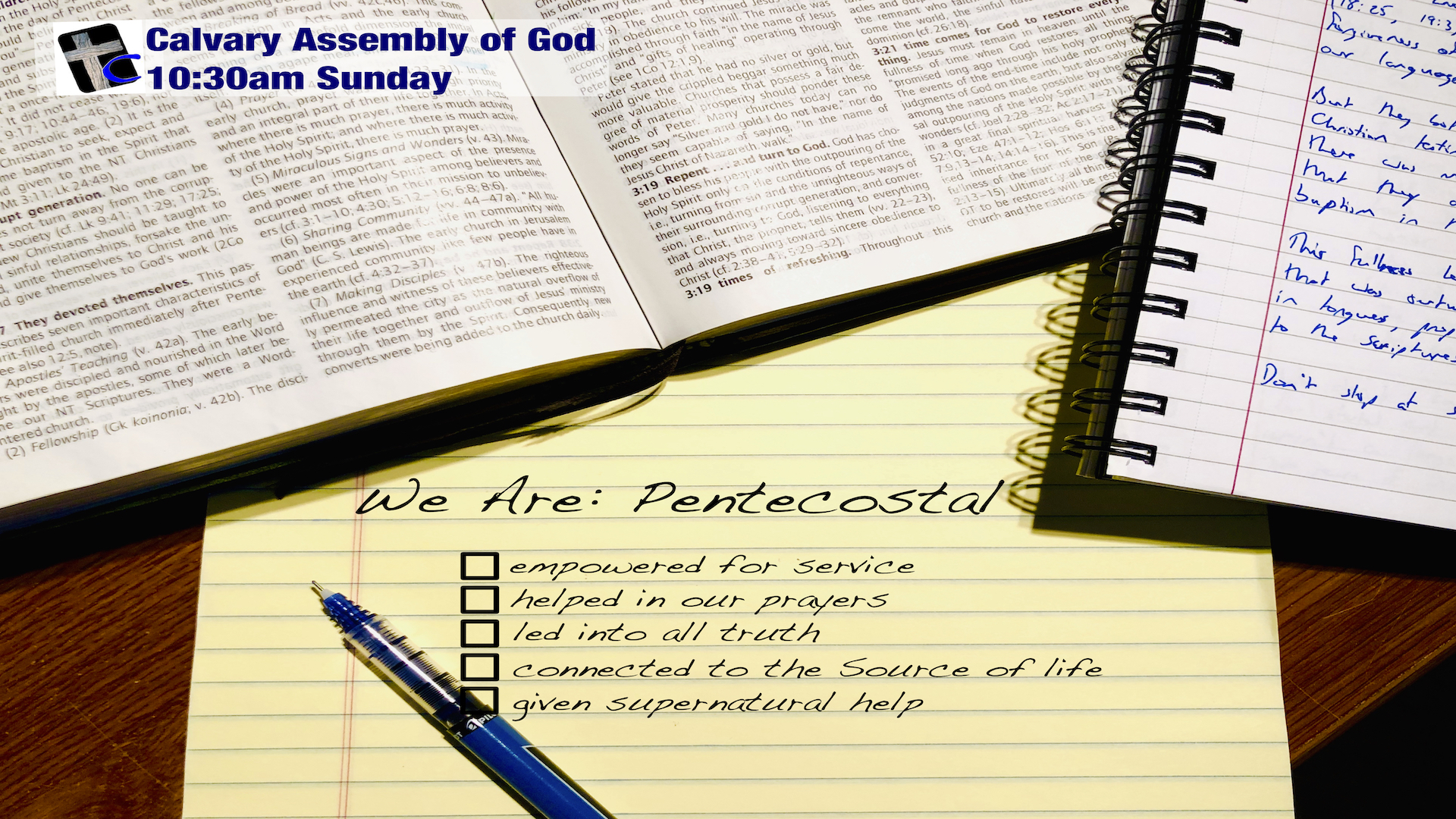
We Are: Pentecostal—Pentecost for over 1500 years was a celebration in Jerusalem that brought in Jews from all over the world. But on the Day of Pentecost that came just ten days after Jesus ascended back into heaven, the meaning of Pentecost was forever changed! Followers of Jesus—now empowered by an infilling of the Holy Spirit—began to take the good news of Jesus all over the world. These Spirit-filled Christians preached the Gospel and won converts to Christ even among hostile crowds, performed miracles and wonders, stood up to pagan priests and persecuting governmental leaders, and established a whole new way of living as Christ-followers. We, too, can be Pentecostal followers of Jesus Christ today.
Ascending—Every year, Jews from around the world made four pilgrimages up to Jerusalem for various feasts and sacrifices. These journeys reminded them of God’s goodness as they went to the Temple to worship, and they helped refocus on God’s ways as they returned to their regular routines. Jerusalem is over 2500 feet above sea level, so the pilgrimage there was a physical workout as well as a spiritual workout. These workouts were beneficial for God’s people, preparing them to minister in their cities in the following months. The Book of Psalms contains 15 songs that these pilgrims would sing to and with each other as they traveled up to Jerusalem. These Psalms of Ascent are still instructive for Christians today.
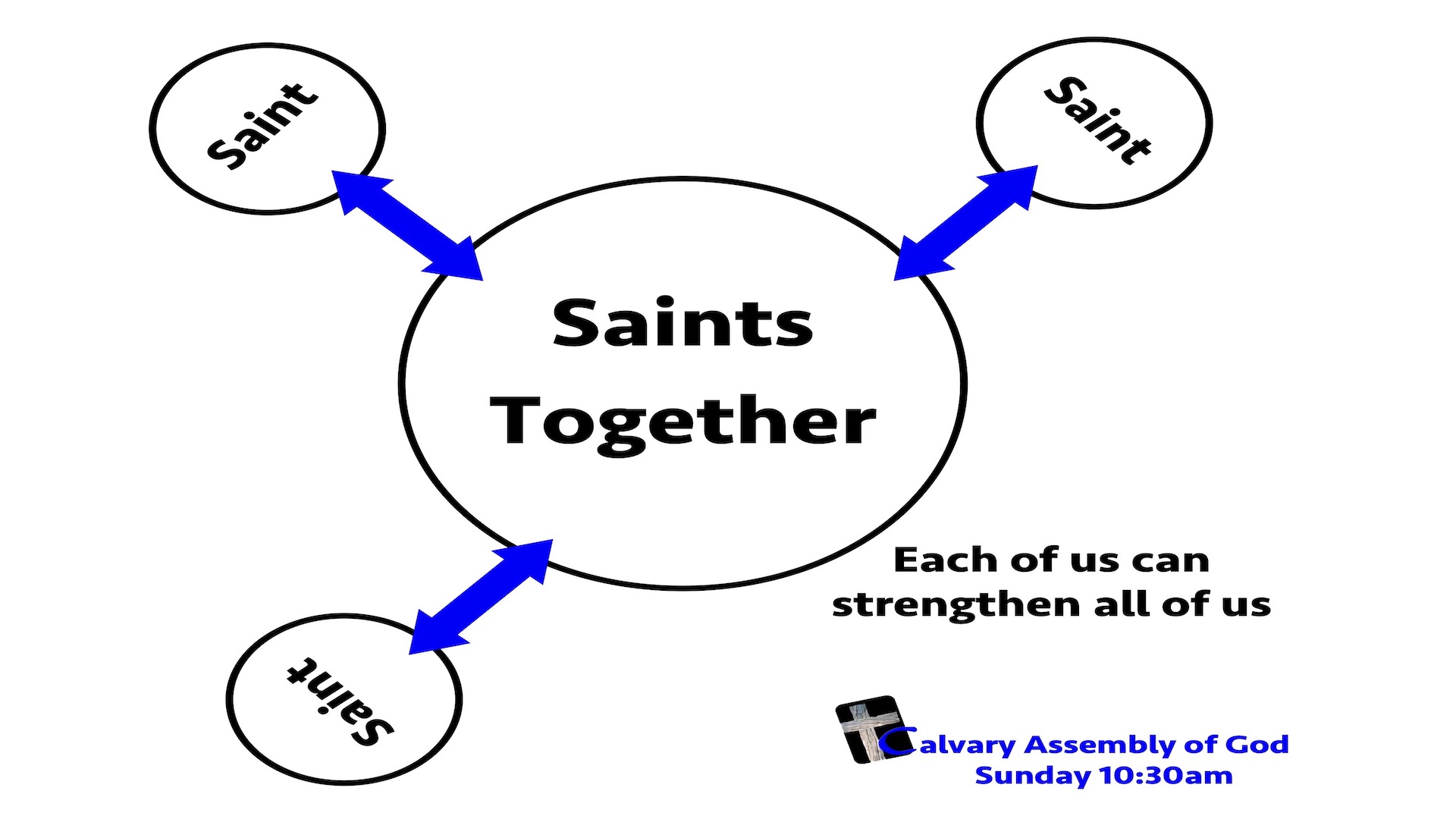
Saints Together—Throughout the New Testament the word “saints” is always in the plural form. This is a clear indication that none of us can develop into the full-fledged Christians we were meant to be on our own. We all need each other. More specifically, we all need the most mature version of each other. A key component of an individual saint’s development is the time spent alone being forged by the discipline of the Holy Spirit. Maturing saints then come together with each other to continue to strengthen and sharpen everyone in the church. Strong individual saints make a strong church, and a strong church makes strong individual saints! Let’s learn about six important spiritual disciplines that each individual saint must put into practice so that they can use their newly developed strengths to help other saints in their own development.
The Great Attitude Of Gratitude—There’s something about gratitude that distinguishes people. Think about it: would you rather hang around with grumblers or grateful people? The gratitude of Paul and Silas certainly made them stand out from the crowd when they were in Philippi. Wrongly accused, beaten, and thrown in prison, but instead of bellyaching, they were praising God. Later on, when Paul wrote his letter to the Christians in Philippi, the theme of gratefulness permeates his letter. The distinguishing mark is actually in the title: The GReat ATTITUDE spells out GRATITUDE!
Long Live The King Of Kings—Throughout human history, whenever a king died, the people would say something like, “The king is dead. Long live the king!” They would say this because the next king ascended to the throne immediately after his predecessor died. Except when a nation had been defeated, the cry, “The king is dead” was unanswered by, “Long live the king!” Israel must have felt like this. After being defeated by Nebuchadnezzar and spending 70 years in exile, it appeared to many that the line of kings was broken. Even after retuning to their homeland, Israel continued to live under the thumb of other powerful nations. And yet, some still clung to the glimmer of the promise God had made about an eternal King sitting on Jerusalem’s throne. The First Advent of Jesus revealed to us in the Gospels reassures us that the promise of an eternal King is true. Jesus came to earth to reveal His majesty to us. The First Advent is so important because it bolsters our faith for the imminent Second Advent when Jesus will return as the King of kings! Christmas is a great time to be reminded that even now we can confidently declare, “Long live the eternal King of kings!”
2024 promises to be an exciting year! If you don’t have a home church in the northern Kent County area, I would love to have you join us!
Listen to the podcast of this post by clicking on the player below, and you can also subscribe on Apple, Spotify, or Audible.
I’ve talked before about the benefits of calling the Old and New Testaments the First and Second Testaments. This helps me not to subconsciously slip into the thought that “old” means outdated or that “new” means a replacement of what came before it. When I say First and Second I remember that there cannot be a Second without a First, that the First anticipates the Second and the Second fulfills the First.
The people of the First Testament experienced the Spirit of God in an often-repeated phrase: “the Spirit of the Lord came on” someone. It usually came on them for a specific task or season. For instance…
70 leaders to help Moses (Numbers 11:25)
the judges that delivered Israel from their enemies (Judges 3:10, 6:34, 11:29, 14:6, 15:14)
the anointing for Israel’s king (1 Samuel 16:13)
empowerment for prophets to prophesy (Ezekiel 11:5)
When the Holy Spirit came on these men, there was a noticeable supernatural anointing and empowerment, but more times than not these men also had visible and sometimes crippling stumbles.
What happens on the outside often stays on the outside. Sort of like the little boy whose mom brought him to church one Sunday. The little boy was constantly standing up on his chair and disturbing everyone around him. Finally, the exasperated mother whispered, “If you don’t sit down I’m going to take you to the restroom and spank you.” The little boy immediately sat down with his arms tightly crossed. He looked at his mom and said, “Outside I may be sitting down but inside I’m standing up!”
God looks at the heart. He told the Israelites that their inward defiance didn’t outweigh their outward religious practices. And Jesus said that people who prophesied, cast out demons, and performed miracles, but still had an unrepentant heart, would hear Him say, “I never knew you” (Isaiah 1:12-13; Matthew 7:21-23).
In the First Testament, we see a desire for the Holy Spirit to be more than on—a desire for Him to come in.David prayed, “Create in me a pure heart, O God, and renew a steadfast spirit within me” (Psalm 51:10). And God promised His people, “I will give them an undivided heart and put a new spirit in them … And I will put My Spirit in you and move you to follow my decrees and be careful to keep My laws” (Ezekiel 11:19, 36:27).
Paul identified this fruit of the Spirit as “love, joy, peace, forbearance, kindness, goodness, faithfulness, gentleness and self-control,” and he concluded with the phrase, “against such things there is no law” (Galatians 5:22-23). The law always sets limits, but when the Holy Spirit abides in us, the production of fruit is limitless!
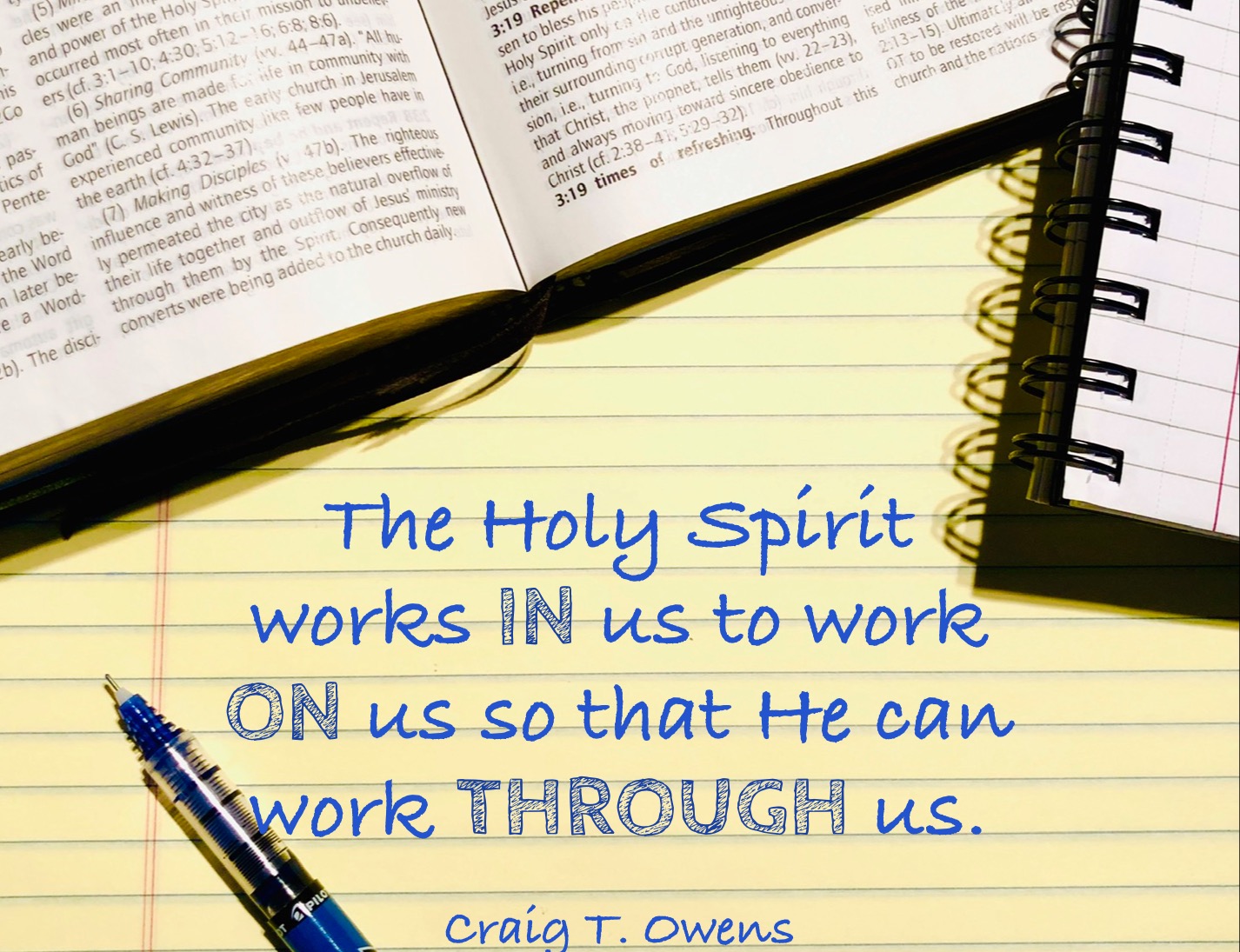
Being baptized in the Holy Spirit means that we allow Him to come in us and then to work on us. It’s only when the Holy Spirit has worked in us that can He flow through us to others. Jesus said that we would receive the Spirit’s empowerment to be witnesses—that’s an inward change that produces an outward fruit.
Listen to the podcast of this post by clicking on the player below, and you can also subscribe on Apple, Spotify, or Audible.
Let’s say you are thinking about buying a particular book. Are you more likely to buy that book because the author says it’s good, because a book reviewer says it’s good, or because a close friend says it’s good? I think all of us give more weight to the suggestions from our friends, especially because they have nothing to gain from making that suggestion.
In the same way, when someone close to us says, “I know from personal experience that following Jesus is the best decision that I have ever made. Making Jesus my Lord and Savior has completely changed everything for me,” it’s easier for us to make that same decision for ourselves.
The deeper the level of our intimacy with someone usually means we have more influence with them.
Jesus told us all about the Holy Spirit when He was discussing His ascension. He wasn’t going to leave us as orphans, but told us of the intimate connection the Spirit would make for us. For instance, Jesus said, “And I will ask the Father, and He will give you another Counselor to be with you for ever—the Spirit of Truth” (John 14:16-17).
Notice that Jesus considers the Holy Spirit an irreplaceable and coequal part of the Godhead—I will ask the Father, and He will give you another Counselor (see also Matthew 3:16-17; Luke 10:21; Matthew 28:19).
The word Jesus uses for Counselor is parakletos. This means One who comes alongside to help us. I like all the words the Amplified Bible uses: “Comforter—Counselor, Helper, Intercessor, Advocate, Strengthener, and Standby.” Indeed, Luke records numerous instances where the Holy Spirit is alongside Christians to strengthen and encourage them (for instance: Acts 4:8, 6:10, 9:31).
Notice as well that Jesus tells us that as a part of the Trinity the Holy Spirit is eternal: “to be with you for ever.” Because the Holy Spirit is fully God, He knows the end from before the beginning. His perspective is infinite, so He can guide us in ways that only One who can see everything could guide us. For example, He leads us to places we might not have chosen on our own (Luke 4:1; Acts 8:29), or stops us from going somewhere at the wrong time (Acts 16:7), or talking with people we might have overlooked (Acts 10:19, 11:12).
Jesus also calls the Him the Spirit of Truth. He reveals things that we could not have perceived with our natural minds (see Acts 5:1-9).
And Jesus calls the Holy Spirit a great Teacher, “The Counselor, the Holy Spirit, whom the Father will send in My name, will teach you all things and will remind you of everything I have said to you” (John 14:26). So we see the Holy Spirit helping us apply Scripture to our prayers (Acts 4:25-26) and to incredibly complex and delicate situations (Acts 11:15-18, 15:1-21).
The Holy Spirit is not a force to fear but a Person to know ever more intimately.
When our lives are transformed and expanding because of an intimate, ongoing, vibrate relationship with the Holy Spirit, we are witness (Acts 1:8). You cannot exhaust all that the Spirit has for you, so keep abiding and growing in that intimate relationship. Let it be said of you as it was said of Peter and John: “We can tell you have been with Jesus!” (Acts 4:13).
Listen to the podcast of this post by clicking on the player below, and you can also subscribe on Apple, Spotify, or Audible.
Douglas Carmel from Rock Of Israel ministries shared an amazing overview of the seven Jewish feasts that are listed in the Book of Leviticus, and how Jesus is the fulfillment of all of these feasts. Doug was born into a Jewish family and became a Christian in his late teens, so he has firsthand knowledge of both the traditional celebrations and the Christian understanding of these feasts.
One of the things I appreciated was Doug’s explanation that the feasts were merely a shadow of the reality—Jesus is the Reality!
Passover—celebrated on the 14th day of the first month
Leviticus 23:4-5
Matthew 26:17-29; Mark 14:12-26; Luke 22:7-20
Jesus was crucified on the same day that the Passover lamb was being sacrificed
Unleavened Bread—celebrated on the 15th day of the first month
Leviticus 23:6
1 Corinthians 5:6-9
Firstfruits—celebrated on the 16th day of the first month (or the day after the Sabbath)
Leviticus 23:9-14
1 Corinthians 15:12-26
Seven Weeks—celebrated 50 days after Firstfruits
Leviticus 23:15-21
Also known as Pentecost
Acts 2:1-41
Doug called our attention to the calendar on which these feasts appeared. Passover, Unleavened Bread, Firstfruits, and Seven Weeks all happen in the spring. All four of these feasts have already been fulfilled in the life, death, and resurrection of Jesus.
There are no feasts in the summer months, as these are the months of field work (Leviticus 23:22). This is where we are now, which is why Jesus told us, “Ask the Lord of the harvest, therefore, to send out workers into His harvest field” (Matthew 9:38). This is the time for us to tell others about Jesus the Messiah!
The final three feasts appear in the autumn—Trumpets, Atonement, and Tabernacles. These are feasts that are still to be fulfilled at Christ’s Second Advent.
Trumpets—celebrated on the 1st day of the seventh month
Leviticus 23:23-25
This is also known as Rosh Hashanah when the shofar is blown
1 Corinthians 15:51-53; 1 Thessalonians 4:15-18
Atonement—celebrated on the 10th day of the seventh month
Leviticus 23:26-32
This is also known as Yom Kippur—the one day of the year the high priest goes into the Holy of Holies
Romans 11:25-32; Matthew 23:39
Tabernacles—celebrated on the 15th through the 21st days of the seventh month
Jesus said of Himself, “I am the Alpha and the Omega, who is, and who was, and who is to come, the Almighty” (Revelation 1:8). Jesus is THE Reality and THE Fulfillment of all of these celebrations!
Listen to the podcast of this post by clicking on the player below, and you can also subscribe on Apple, Spotify, or Audible.
Last week we mentioned that one of the things the Holy Spirit did after the Day of Pentecost was to unite individual Christians into the Church. In a world divided by religious and political factions, the unity of the Christians set them apart. Is our culture any different? Of course not! So the unity that the Holy Spirit brings is just as vital today.
In Psalm 133, David longs for this unity among believers. This psalm is in the collection of “Songs of Ascent.” That means that pilgrims to Jerusalem sang these songs as they literally went up the hill to Jerusalem. Psalm 133 opens with David singing, “How good and pleasant it is when brothers and sisters live together in unity” (v. 1).
Maybe David thought back to the time when people were joining him to give him support as king—David went out to meet them and said to them, “If you have come peaceably to me to help me, my heart shall be knit to you…” (1 Chronicles 12:17 AMP). In the next two verses of Psalm 133, David explains how this unity from being knit together is seen as a blessing.
Last week, we talked about the blessing of peace the priests pronounced on the people. That word for “peace” is shalom which could be defined as “nothing missing.” But couldn’t we also say that shalom is “no one missing”? Yes, because each and every part of the Body of Christ is vital and indispensable!
We see this same unity when the followers of Jesus were baptized in the Holy Spirit on the Day of Pentecost. Acts 2:1 says these Christians were “all together” (or some translations say “one accord”). This is one word in Greek (homothumadon)which describes the beauty of unity. One Greek dictionary defines this word,“The image is almost musical; a number of notes are sounded which, while different, harmonize in pitch and tone. As the instruments of a great concert under the direction of a concert master, so the Holy Spirit blends together the lives of members of Christ’s church.”
This picture of a majestic musical is further amplified in the next verses of Acts 2 where people from all over the world heard these Christians praising God in their own native tongues. Luke goes on to use homothumadon again and again throughout Acts to show what a powerful testimony their unity was to the watching world.
Paul emphasized the need for unity in the Church when he wrote—
As a prisoner for the Lord, then, I urge you to live a life worthy of the calling you have received. Be completely humble and gentle; be patient, bearing with one another in love. Make every effort to keep the unity of the Spirit through the bond of peace. There is one body and one Spirit, just as you were called to one hope when you were called; one Lord, one faith, one baptism; one God and Father of all, who is over all and through all and in all. (Ephesians 4:1-6)
How does the Holy Spirit help us handle our differences and keep this unity? We first need the Spirit’s help to distinguish whether it’s a biblical, unbiblical, or non-biblical issue.
Biblical issues must send us back to the Bible to find the truth (2 Timothy 3:16-17).
Unbiblical issues—where a brother or sister is living in a way contrary to Scripture—call on us to speak the truth in love and correct in love only after allowing the Holy Spirit to examine our own lives (Ephesians 4:15; Matthew 7:1-5; James 5:19-20). Notice that we are to do this with fellow brothers and sisters, not with those outside the Church.
Non-biblical issues are the trickiest. These are issues over which we should immediately stop fighting as we defer to the weakest brother or sister (Romans 12:10, 14:19-21).
The Church needs this unity today. We need to be in “one accord.” In a world divided by religious and political factions, our unity enhances our witness.
Pentecost for over 1500 years was a celebration in Jerusalem that brought in Jews from all over the world. But on the Day of Pentecost which came just ten days after Jesus ascended back into heaven, the meaning of Pentecost was forever changed!
Followers of Jesus—now empowered by an infilling of the Holy Spirit—began to take the good news of Jesus all over the world. These Spirit-filled Christians preached the Gospel and won converts to Christ even among hostile crowds, performed miracles and wonders, stood up to pagan priests and persecuting governmental leaders, and established a whole new way of living as Christ-followers.
We, too, can be Pentecostal followers of Jesus Christ today. We can experience an anointing and an empowering in our lives that turns ordinary Christianity into extraordinary Christianity!
Please join me this Sunday at Calvary Assembly of God as we rejoin this series. You can check out what I taught in this series in 2019 by clicking here, the messages from 2020 are here, the messages from 2021 are here, and the messages from 2022 are here.