Don’t Stop At Salvation

The Holy Spirit is vital in everything concerning a Christian’s life. Dr. Donald Stamps emphatically said it this way: 

“It is essential that believers recognize the importance of the Holy Spirit in God’s redemptive purpose. Many Christians have no idea what difference it would make if there were no Holy Spirit in this world. Without the Holy Spirit there would be no creation, no universe, no human race (Genesis 1:2; Job 33:4). Without the Holy Spirit there would be no Bible (2 Peter 1:21), no New Testament (John 14:26; 15:26-27; 1 Corinthians 2:10-14), no power to proclaim the gospel (Acts 1:8). Without the Holy Spirit there would be no faith, no new birth, no holiness, no Christians at all in the world.” 

Sometimes I think we have in our mind that the “old” in Old Testament somehow means outdated or no longer applicable to our lives, and the “new” in New Testament should be our sole focus. But Jesus affirmed again and again that all of the Scriptures—what we now refer to as the Old Testament—all point to Him. 

The outpouring of the Holy Spirit on that Pentecost Sunday was not something new to the New Testament Christians. He was always a part of a believer’s life. Even 1000 years before Christ’s public ministry, David knew the importance of the Holy Spirit in both salvation, and in living a consistently holy lifestyle (Psalm 51:10-12, 143:10). 

The role of the Holy Spirit in Christ’s public ministry was foretold in the Old Testament Scriptures and then fulfilled in the New Testament era (see Isaiah 11:1-2; Luke 3:21-22; Isaiah 61:1-2; Luke 4:18-21). 

If Jesus needed the baptism in the Spirit to empower Him, direct Him, and give Him success, how much more do we need this?! That’s why Jesus imparted the Holy Spirit to His followers at their moment of salvation, but then admonished them to eagerly expect the baptism in the Holy Spirit as well (John 20:22; Luke 24:49; Acts 1:8). 

Quite simply Jesus is sayingDON’T STOP AT SALVATION

Jesus didn’t, the apostles didn’t, Paul didn’t, Apollos didn’t, the Ephesian Christians didn’t, I didn’t, and you shouldn’t either! 

Keep on going…

  1. Ask Jesus to forgive you of your sins
  2. Eagerly desire the baptism in the Spirit 
  3. Ask God to baptize you in His Spirit
  4. Expect that He will answer that prayer (Acts 2:38; Isaiah 44:3; John 7:37-39; Luke 11:13; Mark 11:24)

Join me again this Sunday as we continue to learn what it means for Christians today to be Pentecostal. 

If you missed any of the messages in this series, you can access the full list of messages by clicking here.

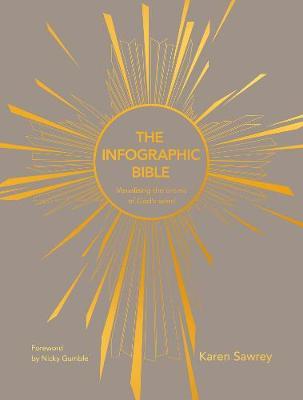
The Infographic Bible (book review)

I love studying the Bible! I enjoy reading it in different translations, consulting my atlas to see where certain events took place, studying the culture of the biblical settings, and even diving in to the Hebrew and Greek definitions of words. But I’ve never seen the biblical story portrayed as uniquely and so visually beautiful as Karen Sawrey has done it in The Infographic Bible.

The subtitle of this work is “visualizing the drama of God’s Word,” and Karen does this in ways you have never seen before. 

The Infographic Bible flows in the same order as the Biblical text, except that there is very little text involved. You will see how the biblical books were compiled and then walk through God’s story in both the Old and New Testaments.

In graphics that typically span the full two-page spread (and sometimes even more), you will see in vivid colors, bold designs, and memorable graphics how God set about to redeem His people and tell His story. You will see the two Genesis accounts of Creation portrayed side-by-side, you will understand genealogies better by seeing their timelines flow through generations, you will appreciate the biblical themes and fulfilled prophesies, and you will look forward to the hope of things to come in Revelation. 

There is so much to discover in this book! The Infographic Bible is a coffee-table-size book, and the beautiful graphics inside will definitely make it a conversation piece to leave on display for your guests. I commend Karen Sawrey for her outstanding work, and I highly recommend this book to you.

Your Incense…

…to God and the world.

Let’s follow this thread from the Old Testament into the New Testament—

“When Aaron trims the lamps at twilight, he shall burn incense. There shall be perpetual incense before the LORD throughout your generations.” (Exodus 30:8)

“Therefore I urge you, brethren, by the mercies of God, to present your bodies a living and holy sacrifice, acceptable to God, which is your spiritual service of worship.” (Romans 12:1)

“For we are a fragrance of Christ to God among those who are being saved and among those who are perishing.” (2 Corinthians 2:15)

“The incense which you shall make, you shall not make in the same proportions for yourselves; it shall be holy to you for the LORD.” (Exodus 30:37)

“Our lives are not to be about us, lived out in private and for self-glory. Our lives are to be about God, lived out in full view of the nations and for His name’s sake.” —Dick Brogden

What incense is your life—your witness, your testimony—sharing with those around you?

11 Quotes On The Gospel Of John

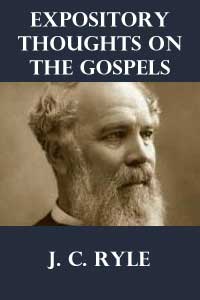
Alongside my daily Bible study time in the Gospels of the New Testament, I have been reading J.C. Ryle’s Expository Thoughts On The Gospels. You can check out my review of this book by clicking here. 

These are a few of the quotes I especially appreciated from Ryle’s comments on the Gospel of John.

“Ignorance of Scripture is the root of every error in religion and the source of every heresy. To be allowed to remove a few grains of ignorance, and to throw a few rays of light on God’s precious Word is, in my opinion, the greatest honor that can be put on a Christian.” 

“It is a real misfortune to Christianity when a Christian cannot smile. A merry heart and a readiness to take part in all innocent mirth are gifts of inestimable value. They go far to soften the prejudices, to take up stumbling blocks out of the way, and to make way for Christ and the Gospel.” 

“We must maintain firmly that God hates wickedness, and that the end of all who persist in wickedness will be destruction. It is not true that God’s love is lower than hell. It is not true that God so loved the world that all mankind will be finally saved, but that He so loved the world that He gave His Son to be the Savior of all who believe. His love is offered to all men freely, fully, honestly, and unreservedly, but it is only through the one channel of Christ’s redemption.” 

“Nothing so defiles Christianity and gives the enemies of truth such occasion to blaspheme as jealousy and party-spirit among Christians. Wherever there is real grace, we should be ready and willing to acknowledge it, even though it may be outside our own pale. We should strive to say with the apostle, ‘If Christ be preached, I rejoice, yes! and will rejoice’ (Philippians 1:18). If good is done, we are to be thankful, though it even may not be done in what we think the best way. If souls are saved, we ought to be glad, whatever be the means that God may think fit to employ.” 

“Well may we be told to pray for the coming of God’s kingdom! Well may we be told to long for the Second Advent of Jesus Christ! Then, and not until then, shall there be no more curse on the earth, no more suffering, no more sorrow, and no more sin. Tears shall be wiped from the faces of all who love Christ’s appearing, when their Master returns. Weakness and infirmity shall all pass away. Hope deferred shall no longer make hearts sick. There will be no chronic invalids and incurable cases when Christ has renewed this earth.” 

“The ‘Scriptures’ of which our Lord speaks are of course the Old Testament. And His words show the important truth which too many are apt to overlook, that every part of our Bibles is meant to teach us about Christ. Christ is not merely in the Gospels and Epistles. Christ is to be found directly and indirectly in the Law, the Psalms, and the Prophets. In the promises to Adam, Abraham, Moses, and David; in the types and emblems of the ceremonial law; in the predictions of Isaiah and the other prophets—Jesus, the Messiah, is everywhere to be found in the Old Testament. How is it that men see these things so little? The answer is plain: they do not ‘search the Scriptures.’ They do not dig into that wondrous mine of wisdom and knowledge, and seek to become acquainted with its contents. Simple, regular reading of our Bibles is the grand secret of establishment in the faith. Ignorance of the Scriptures is the root of all error.” 

“Trial, we must distinctly understand, is part of the diet which all true Christians must expect. It is one of the means by which their grace is proved and by which they find out what there is in themselves. Winter as well as summer—cold as well as heat—clouds as well as sunshine—are all necessary to bring the fruit of the Spirit to ripeness and maturity.” 

“Well would it be for men if they would act upon the truth they know. Instead of saying, as some do, ‘I must first know everything clearly and then I will act,’ we should say, ‘I will diligently use such knowledge as I possess and believe that in the using fresh knowledge will be given to me.’ How many mysteries this simple plan would solve! How many hard things would soon become plain if men would honestly live up to their light and ‘follow on to know the Lord’ (Hosea 6:3). … The plain things in religion are undeniably very many. Let a man honestly attend to them and he shall be taught the deep things of God.” 

“Happy is he who never stifles his conscience, but strives to keep it tender! Still happier is he who prays to have it enlightened by the Holy Spirit and sprinkled with Christ’s blood.” 

“Let us resist procrastination as we would resist the devil. Whatever our hand finds to do, let us do it with our might. ‘The night comes when no man can work.’” 

“It is noteworthy that the resurrection of our Lord in some places is attributed to His Father’s act (Acts 2:24-32), once, at least, to the Holy Spirit (1 Peter 3:18), and here [John 10:18] and in John 2:19 to Christ Himself. All leads to the same great conclusion—that the resurrection of our Lord, as well as every part of His mediatorial work, was an act in which all three Persons of the Trinity concurred and cooperated.” 

You can read Ryle’s quote on The Gospel of Matthew here, on the Gospel of Mark here, and on the Gospel of Luke here.

Book Reviews From 2018

11 Quotes On The Gospel Of Mark

Alongside my daily Bible study time in the Gospels of the New Testament, I have been reading J.C. Ryle’s Expository Thoughts On The Gospels. You can check out my review of this book by clicking here. 

These are a few of the quotes I especially appreciated from Ryle’s comments on the Gospel of Mark. 

“We should always read the Old Testament with the desire to find something in it about Jesus Christ.” [cf John 5:39] 

“It will always be found that when prayers are few, grace, strength, peace, and hope are small. We shall do well to watch our habits of prayer with a holy watchfulness. Here is the pulse of our Christianity. Here is the true test of our state before God. Here true religion begins in the soul, when it does begin. Here it decays and goes backward, when a man backslides from God. Let us walk in the steps of our blessed Master in this respect as well as in every other. Like Him, let us be diligent in our private devotion. Let us know what it is to ‘depart into solitary places and pray.’” 

“What extravagant importance is attached to trifles by those who are mere formalists in religion!” 

“Christ’s service does not exempt His servants from storms.” 

“The assaults of persecution from without have never done half so much harm to the church as the rise of false doctrines within. False prophets and false teachers within the camp have done far more mischief in Christendom than all the bloody persecutions of the emperors of Rome. The sword of the foe has never done such damage to the cause of truth as the tongue and the pen.” 

“Incredible is the bondage in which men live to the opinion of the world! Let us all pray daily for faith and courage to confess Christ before men. … In spite of laughter, mockery, and hard words, let us boldly avow that we serve Christ.” 

“It is a dreadful fact, whether we like to allow it or not, that pride is one of the commonest sins which beset human nature. We are all born Pharisees. We all naturally think far better of ourselves than we ought. We all naturally imagine that we deserve something better than we have. It is an old sin. It began in the garden of Eden, when Adam and Eve thought they had not got everything that their merits deserved. It is a subtle sin. It rules and rains in many a heart without being detected, and can even wear the garb of humility. It is a most soul-ruining sin. It prevents repentance, keeps men back from Christ, checks brotherly love, and nips in the bud spiritual desires. Let us watch against it, and be on our guard. Of all garments, none is so graceful, none wears so well, and none is so rare as true humility.” 

“It is not so much the having money, as the trusting in it, which ruins the soul. Let us pray for contentment with such things as we have.” 

“Above all, let all who desire to walk in Christ’s steps labor to be useful to others. … Let them never forget that true greatness does not consist in being an admiral, or a general, a statesman, or an artist. It consists in devoting ourselves, body, and soul, and spirit to the blessed work of making our fellow man more holy and more happy. … Let us strive to leave the world better, holier, happier than it was when we were born.” 

“The dark ages of Christendom were times when the Bible was kept back from the people. The Protestant Reformation was mainly effected by translating and circulating the Bible. The churches which are most flourishing at this day are churches which honor the Bible. The nations which enjoy the most moral light are nations in which the Bible is most known. … The godliest families are Bible-reading families. The holiest men and women are Bible-reading people.” 

“Let us remember that for our sakes Jesus voluntarily endured the most painful, horrible, and disgraceful death. Surely the thought of this love should constrain us daily to live not unto ourselves but unto Christ.” 

You can read the quotes I shared from Ryle’s thoughts on the Gospel of Matthew by clicking here. 

The Value Of The Old Testament

“Jesus exalted the law of God, and made its importance more evident even than it had been before. In a word, ‘He magnified the law and made it honorable’ (Isaiah 42:21). …

“Let us beware of despising the Old Testament under any pretense whatever. Let us never listen to those who bid us throw it aside as an obsolete, antiquated, useless book. The religion of the Old Testament is the embryo of Christianity. The Old Testament is the Gospel in the bud. The New Testament is the Gospel in full flower. The Old Testament is the Gospel in the blade. The New Testament is the Gospel in full ear. …

“Let us, for another thing, beware of despising the law of the Ten Commandments. Let us not suppose for a moment that it is set aside by the Gospel, or that Christians have nothing to do with it. The coming of Christ did not alter the position of the Ten Commandments one hair’s breadth. If anything, it exalted and raised their authority (Romans 3:31). …

“In the last place, let us beware of supposing that the Gospel has lowered the standard of personal holiness, and that the Christian is not intended to be as strict and particular about his daily life as the Jew. … The more light we have, the more we ought to love God. The more clearly we see our own complete and full forgiveness in Christ, the more heartily we ought to work for His glory. …

“Jesus shows us that the law, as expounded by Him, was a far more spiritual and heart-searching rule than most of the Jews supposed.” —J.C. Ryle, in Expository Thoughts On The Gospels

11 Quotes From “Notes On Jeremiah”

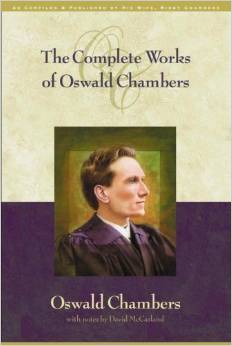
Oswald Chambers gives us some unparalleled insights into the Book of Jeremiah. This is a must-read for serious students of the Bible. Check out my full book review of Notes On Jeremiah by clicking here.

“Very few of us understand why clouds of darkness come. It is God trying to get us into line with the prophets and apostles. It is the Holy Spirit seeking to bring us into the place of vicarious intercession, and we nearly always misunderstand it and say, ‘I must have sinned,’ or ‘I must get out of this, I have got the blues.’” 

“We do not need a new Gospel; what we need is the old truth re-stated to hit the things that are wrong today.” 

“Few of us realize the power God has given us to grip on the threshold of the mind as in a vice the things that ought not to be there.” 

“The Cross of Jesus Christ is not a martyrdom, it does not procure salvation; it is the only salvation.” 

“Beware of ever saying to yourself, ‘God’s law is not exactly binding to me, I am under grace.’ To be under grace should mean that we can fulfill the law of God gracefully.” 

“Prosperity that does not spring from a godly motive is the external sign of having forsaken God.” 

“We cannot answer God’s call collectively (John 6:68-70). Never get disturbed out of hearing God’s voice by saying other people have not heard it.” 

“Human nature hates God’s message that there is a bad tendency inside that has to be plucked out, and unless it is it will damn us.” 

“Jesus Christ’s salvation is the destruction of the sinner in the man, not of the man.” 

“The measure of my misery when I turn from God is proportioned to my knowledge of Him when I walked with Him.” 

“Our Lord Jesus Christ and the Old Testament prophets are inseparable from one another, for in the Person and the teaching of our Lord all that the prophets taught is in part fulfilled, and will be completely fulfilled.” 

Every week I post longer passages from Oswald Chambers’ books in my “Thursdays With Oswald” feature. 

What Is Sin?

“What is sin? It is not an accident, nor in impudence, nor a misfortune, nor a disease, nor a weakness. It may be all these, perhaps; but it is something beyond all these; something of a more fatal and terrible character. It is something with which law has to do, which righteousness abhors, which the judge condemns, which calls for the infliction of punishment from God. In other words, it is guilt—it is crime. Man’s tendency is either to deny it or extenuate it. He either pleads not guilty, or he smooths over the evil; giving it specious names. Or if he does not succeed in these, he casts the blame off himself; he shifts the responsibility to his nature, his birth, his circumstances, his education; nay, to God Himself. But human sin is not thus to be diluted or transformed into a shadow. It is infinitely real, true, deep—terrible in the eyes of Him with whom we have to do. It is the transgression of law; and as such must be dealt with by God, and felt by ourselves. Let us not trifle with sin, either in the conscience or the intellect. Let us learn its true nature from the terribleness of the wrath and condemnation threatened by God against every sin, great or small. … 

“But there is such a thing as forgetfulness with God. ‘Their sins will I remember no more.’ This is the true oblivion; divine oblivion of sin; perfect and eternal oblivion. And how is this? The prophet in the Old Testament, and the apostle in the New Testament, tell us that this is one of the provisions and results of the New Covenant; that covenant which has been sealed with the blood of the Son of God. It is the blood that enables God to forget sin; that blots out all sin of ours from His eternal memory; so that it becomes as if it had never been. But this oblivion is no accident; no mere result of time and intervening circumstances. It is righteous oblivion! … Sin is buried beyond the possibility of resurrection.

“But when does God cease to remember sin in my individual case? When I have accepted the covenant; when I have fixed my eyes upon the blood; when I have received the divine testimony to that great propitiation which has made it a righteous thing in God to remember my sins no more!” —Horatius Bonar, Light & Truth: The Old Testament

Notes On Jeremiah (book review)

Oswald Chambers always gives me unique perspectives on passages of Scripture—even ones that I thought I already knew quite well. He does this again as he dives deep into one of the major prophets in his book Notes On Jeremiah.

These Notes are really his lecture notes from his classes at the Bible Training Institute. Once again, these classes were cut short by the outbreak of The Great War (what we now call World War I), so we only have his brilliant insights through Jeremiah chapter 29. 

Chambers himself noted, “The conception of these studies is that man must look higher for the source of life and salvation than the experience of life. … Jesus Christ is the only One Who can throw light on the prophecies of Isaiah, and He is the only One Who throws any kind of light on the acute suffering and amazing misery of this prophet [Jeremiah].” 

Indeed, many of Chambers’ lectures start with “the experience of life” that most of us have had (or are having at present), and then he tries to take us both higher and deeper. Using Jeremiah’s prophesies like a searchlight, Chambers shows how these Old Testament words find their ultimate relevance and fulfillment in the dazzling Advent of Jesus Christ. 

Jeremiah was prophesying in the darkest days of Judah, just before the city was overthrown by the Babylonians. In the face of this darkness, Jeremiah shines out a light of Ultimate Hope. This is a valuable resource for Christians today who are living in sin-darkened days.

If you are looking for a great companion resource for your Bible reading time in Jeremiah, please add Notes On Jeremiah to your library.