“Unconditionally accepting your kids tells them that being matters. Expressing your appreciation to them says that their doing matters too. …
“Unless your kids are absolutely convinced that you accept them for who they are, your praise and appreciation can become manipulative. Appreciation without acceptance may prompt your child to relate to you on a performance basis, thinking, ‘If I do a good job … if I get A’s … if I score a goal … then my dad will love me.’ Living on a performance basis will tend to produce feelings of false guilt in your kids. That’s why you need to be sure your kids first feel accepted then appreciated. …
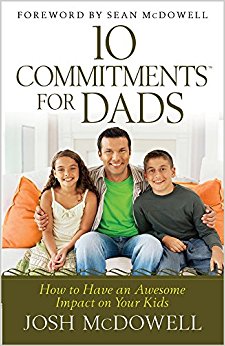
“Appreciate your child’s efforts more than your child’s accomplishments, and appreciate your kid’s worth as God’s creation even more than your kid’s efforts.” —Josh McDowell, in 10 Commitments For Dads
If you are interested in more quotes from 10 Commitments For Dads, you can click here.
Dad, your involvement in the life of your kids and grandkids is vital! Please check out my review of 10 Commitments For Dads and then get a copy for yourself.
“Studies show that even until your child reaches 25 years of age, the greatest influence on his or her behavior will be the loving, close relationship with you, the father.”
“What our kids need to see is that our rules are out of a heart of love and are actually good for them, just as the instructions and commands that come from God. We as dads need to learn how to place God’s truth and family rules squarely within the context of our loving relationships. … The truth is, God designed us to follow the rules because of the relationship. There are do’s and don’ts in life, but they are there to provide for our well-being and protect us from harm. That’s what a person within a loving relationship wants to do—protect those they love and provide for their best.”
“God disciplines us with a purpose—it is to lead us to become more like Him. … When we hold our kids accountable for their benefit, not ours, it too fulfills their sense of purpose and reinforces their sense of responsibility.”
“Tell your kids repeatedly that because God’s nature is holy He will never asked them to do anything that would not be right and good for them. It is out of this pure goodness that He wants to protect them from those things that would harm them and provide for their very best. It is from His holy nature of goodness that He gives unselfishly and makes the security, happiness, and welfare of your kids as important as His own.”
“God has uniquely shaped and molded you and your kids to bring honor to Him. It is only proper and right to love what He has done. Teaching your kids to love what He has uniquely designed isn’t being self-centered. We need to be proud of Him for what He has created and humbly celebrate our uniqueness for His glory, ‘For everything comes from Him and exists by His power and is intended for His glory. All glory to Him for ever! Amen’ (Romans 11:36).”
“What our kids hear and see in today’s culture is rarely a representation of healthy love. Selfish, lustful, and even abusive behavior is passed off as a love relationship. That is why, in a real sense, we must redefine to our kids what such a relationship actually is from a biblical perspective.”
“The best sex education is 30 seconds here, one minute there, 10 seconds here, two minutes in 45 seconds there, and so on, starting as young as possible. When something comes up, step in, addressed it, and step back. Don’t make a big deal out of it.”
“Because true love’s priority is to protect and provide for the one being loved, God’s kind of love will not do things that are harmful to the security, happiness, and welfare of another person.”
I will be sharing more quotes from 10 Commitments soon. You can subscribe to my blog to be notified as soon as they quotes are shared. You can also follow me on Twitter and Tumblr to see the healthy quotes I share every day.
With Father’s Day just around the corner, I’ve got a great book that every Dad needs to check out. Think of this book from Josh McDowell as a Father’s Day gift you will give to yourself and to your family. The book is called 10 Commitments For Dads.
Whether you are a soon-to-be-Dad, a rookie Dad, a veteran Dad, or a Granddad, there is always more to learn and more to do for our kids. Since God has placed His precious children under our care, it’s wise to seek practical, biblically-sound counsel to help us do the best we can. Right at the outset of this book Josh lists seven objectives Dads need to strive for before our kids leave home:
Form a right relationship with God
Develop healthy relationships with others
Have a healthy self-image
Resist sexual pressure
Be a person of integrity
Develop deep and convictions
Know how to handle success and cope with failure
This requires some diligence on a part, beginning with listening to the wise advice Josh shares in this book.
A commitment is not a guarantee, but it is rooted in a strong passion to do the very best that we can do. As Josh leads us through these 10 commitments, you will learn from some of Josh’s successes and missteps, you will learn what the Bible has to say, and you will learn the “whys” behind the “how-to’s” of fatherhood.
10 Commitments offers no quick-fixes for fatherhood, but it does offer hope for those Dads and Granddads who are willing to let God help them do their very best. I would encourage you to also use this book as a discussion starter. You will need the help of your wife, a friend, or a pastor to be at your very best, and the concepts presented in this book are great starting points for evaluations and conversations with your helpers.
Go get this book for yourself, Dad, and then enjoy many, many happy Father’s Days!
For years, Josh McDowell has been ranked as a first-class Christian apologist: one who can persuasively defend the Christian faith. Sean McDowell grew up in this environment, being well mentored by his apologist father, and has become a world-renown apologist himself. So when Sean speaks of the need for a new kind of apologist, Christians should take notice.
A New Kind Of Apologist is a collection of essays edited by Sean McDowell. The book also contains short interviews which Sean has conducted with both those defending and opposing Christianity. This book covers everything from how apologists can be the most effective in a new generation of skeptics and seekers, as well as some thoughtful ways to address the issues at the forefront of the minds of this new generation.
The essays in this book are written by seasoned veterans of Christian apologetics, and some who are newer to the scene. But all of them write with a voice that is relevant to this current generation.
Not only will this book inform your brain, but it will challenge your heart as well. The overriding theme through all of these excellent essays is this—Christians must seek to love people more than win an intellectual argument. The new apologist knows his “stuff” but also knows how to develop genuine, caring relationships with those skeptics and seekers that need to hear the good news that Christianity offers.
I loved this book! It is clearly one that I am going to be referring to again and again and again as I seek to hone my apologetic and relationship-building skills.
Have you ever been stumped by someone’s argument against Christianity or the Bible? Has anyone ever made fun of you because the Bible sounds like a fairy tale? Over 100 years ago Oswald Chambers described how our post-Christian world was beginning to treat Christianity and the Bible on which it’s based—
“We have made ambition and competition the very essence of civilized life. No wonder there is no room for Jesus Christ, and no room for the Bible. We are all so scientifically orthodox nowadays, so materialistic and certain that rationalism is the basis of things, that we make the Bible out to be the most revolutionary, unorthodox and heretical of books.”
It’s that “rationalism” that we need to address. We need to ask scoffers and seekers alike, “What makes you so sure of your beliefs? How did you come to that conclusion?”
Every human being exercises some sort of faith—that the chair will hold them when they sit down, that their spouse will honor their marriage vows, and that their worldview is correct. We need to explore what kind of faith they (and we) have:
Unreasonable faith—believing in something in spite of the evidence.
Blind faith—believing in something without any evidence.
Reasonable faith—believing in something because of the evidence.
I want to show evidence that makes it reasonable to believe in the Bible.
Empirical evidence—
The bibliographical test: determining whether the text of the historical record has been transmitted accurately.
Josh McDowell states, “No other work in all literature has been so carefully and accurately copied as the Old Testament.” He can make this claim because the profession of “scribe” was one of the most professional and exacting of all professions. The rigorous standards employed to prove the accuracy of a copy of a biblical manuscript was higher than for any other literature.
Most of our modern-day Bibles are based on a 1000-year-old manuscript. But after the Dead Sea scrolls were discovered, we found biblical manuscripts going back to 250 B.C. that confirmed the accuracy of the manuscripts we already had. This led Dr. Peter Flint to conclude: “The biblical Dead Sea Scrolls are up to 1,250 years older than the traditional Hebrew Bible, the Masoretic text. We have been using a one-thousand-year-old manuscript to make our Bibles. We’ve now got scrolls going back to 250 BC. … Our conclusion is simply this—the scrolls confirm the accuracy of the biblical text by 99 percent.”
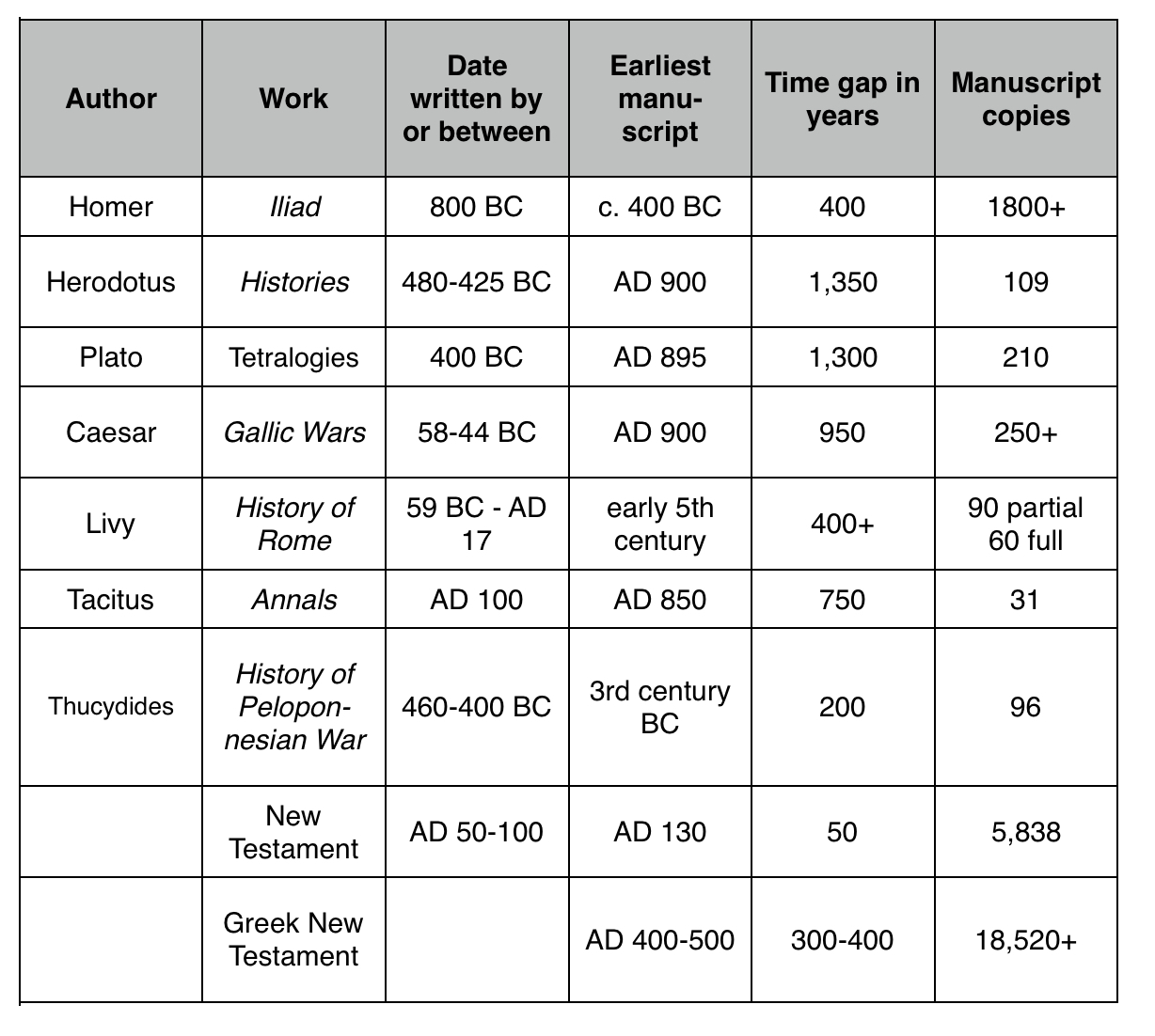
Then regarding the New Testament, Josh McDowell says, “I believe there is more evidence for the reliability of the New Testament than for any other ten pieces of classical literature put together.” Check out this chart reproduced from McDowell’s book God-Breathed to see by comparison to other literature, how close in dating the earliest biblical manuscripts are, and how many of those manuscripts have been discovered!
2. The external evidence test: determining whether the historical record has been verified or affirmed by data outside of itself.
Over one-fourth of the Bible is prophetic, and two-thirds of its prophesies have already been fulfilled. For example, 700 years before His birth, the city in which Jesus was to be born was identified by a man named Micah.
Time and time again archeologists discover articles that verify the claims in the Bible. This led archeologist Nelson Glueck to conclude, “It may be stated categorically that no archeological discovery has ever controverted a single biblical reference. Scores of archeological findings have been made which confirm in clear outline or in exact detail historical statements in the Bible.”
3. The internal evidence test: determining how of the historical record stands up to the test of internal validity.
The Bible was written by 45 different authors, over a span of 1500 years, on 3 different continents, and in 3 different languages. Yet there are no contradictions!
Anecdotal evidence—
Changed lives. My life is one that has been amazingly impacted by the God of the Bible, as was a man named Saul, who had a total about-face after encountering Jesus. As a result, Christianity was spread far and fast through his writings and world travels.
2. Changed societies. Wherever the Christian faith of the Bible has been put into practice, societies improve. Leonard Sweet notes—
“Before Christianity, there were cults that practiced all sorts of human sacrifice as well as self-mutilation and self-castration. Before Christianity, the weak were despised, the poor maligned, the handicapped abandoned. Before Christianity, infanticide was rampant, slavery run-of-the-mill, and gladiatorial combat a form of entertainment. In Jesus’ day, Corinth was famous for its temple prostitutes, continuing a long-standing tradition symbolized by the Corinthian athlete Xenophon.… Aristotle…not only condoned institutionalized slavery but provided an elaborate argument in favor of it. As if that weren’t enough, Aristotle called man ‘begotten’ and woman ‘misbegotten,’ and because a woman’s reasoning was ‘without authority’ accepted no female students.
“Only Jesus and His followers known as the church insisted on the concept of human dignity and the value of every human soul. Only the church built hospitals and took care of the abandoned and disabled. Only the church celebrated charity and selflessness as the highest virtue and elevated the status of women.”
Is all of this “proof positive” that the Bible is God’s Word? No, it’s not. But I think the evidence is compelling enough that it is certainly reasonable to reach this conclusion.
Here are some great application questions from this lesson:
Other than because it says so in the Bible, how do I know that it is God’s Word?
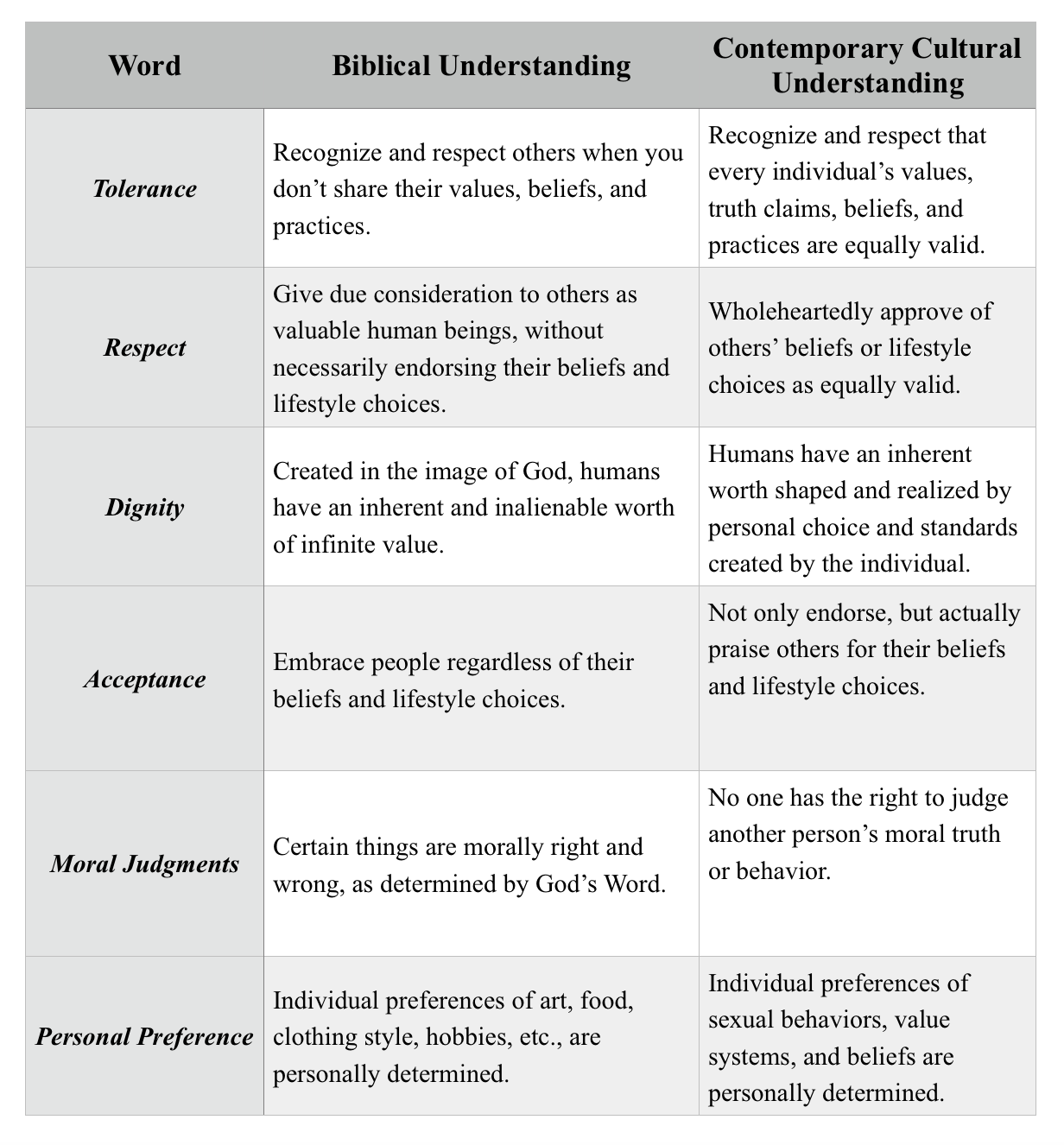
This is the fourth set of quotes I’ve shared from Josh McDowell and Sean McDowell’s book The Beauty Of Intolerance. You can check out the other quotes here, here, and here; and if you missed my review of this book, please click here to read that.
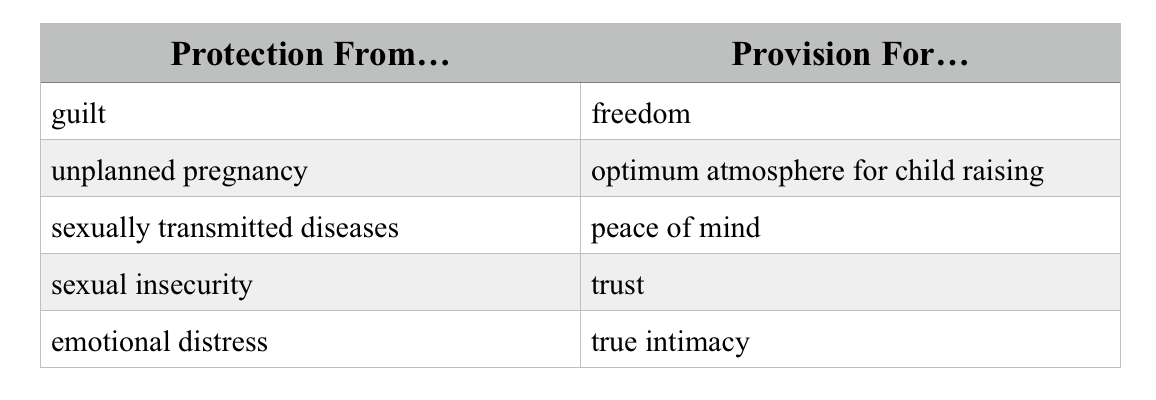
“Respecting the boundaries of sexual morality and prohibitions for extramarital and premarital sex does bring protection and provision. Here are just a few ways it does this:
“Although sin has separated us from God, His original intent for us and the reality that we were created in His image have not changed. What we do or don’t do may distort that image, but our worth to God as human beings never changes.”
“So how has Christ loved you? He values all people for their inherent worth and offers grace freely to all people without exception. Cultural tolerance, on the other hand, claims to accept everyone’s differing beliefs, values, and lifestyles, yet it qualifies that acceptance. … What distinguishes God’s unconditional acceptance from that of our culture is authentic love. His love is intended to make the security, happiness, and welfare of another as important as His own. It is other-focused, not performance-focused. … Real valuing of another’s personhood expressed in the context of authentic love separates doing from being and sees the acts of sin distinct from the sinner (which, by the way, is all of us).”
“The beauty of intolerance is its opposition to wrong and evil in the world—in alignment with God’s righteous and perfect standard of justice, equality, human rights, and caring for others. Intolerance of evil is not mean-spirited and condemnatory; it is actually the only way to be loving and caring. Far from being judgmental, it advances God’s righteous kingdom.”
“Most people in America subscribe to a view of morality called ‘cultural ethics.’ In other words, they believe that whatever is acceptable in that culture is moral; if the majority of people say a thing is right, then it is right. … But there’s a problem with that. If that is true, then how can we say the ‘aborting’ of six million Jews in the Holocaust was wrong? In fact, the Nazis offered that very argument as a defense at the Nuremberg Trials. They argued, ‘How can you come from another culture and condemn what we did when we acted according to what our culture said was acceptable?’ In condemning them, the tribunal said that there is something beyond culture, above culture, that determines right and wrong.”
“We are all entitled to our own beliefs, but this doesn’t mean each of us has our own truths. Our beliefs describe the way we think the world is. Truth describes the objective state of the world regardless of how we take it to be. Beliefs can be relative, but truth cannot. … Moral truth was never meant to be spoken or understood outside of a loving relationship. Being like Christ and speaking the truth in love are synonymous.”
More Than A Carpenter by Josh & Sean McDowell is a wonderful resource to prepare you to share the uniqueness of Jesus Christ. Check out my book review by clicking here, and then enjoy these quotes that I especially found interesting.
“Why don’t the names of Buddha, Mohammed, or Confucius offend people the way the name of Jesus does? I think the reason is that these other religious leaders didn’t claim to be God.” —Josh McDowell
“It was reserved for Christianity to present to the world an ideal which through all the changes of eighteen centuries has inspired the hearts of men with an impassioned love; has shown itself capable of acting on an all ages, nations, temperaments, and conditions; has been not only the highest pattern of virtue, but the strongest incentive to its practice. … The simple record of these three short years of active fife has done more to regenerate and soften mankind than all the disquisitions of philosophers and all the expectations of moralists.” —William Lecky, one of Great Britain’s most noted historians and a fierce opponent of organized Christianity
“This testimony [that Jesus was God], if not true, must be downright blasphemy or madness. … Self-deception in a matter so momentous, and with an intellect in all respects so clear and so sound, is equally out of the question. How could He be an enthusiast or a mad man who never lost the even balance of His mind, who sailed serenely over all the troubles and persecutions, as the sun above the clouds, who always returned the wisest answer to tempting questions, who calmly and deliberately predicted His death on the Cross, His resurrection on the third day, the outpouring of the Holy Spirit, the founding of His church, the distraction of Jerusalem—predictions which have been literally fulfilled? A character so original, so complete, so uniformly consistent, so perfect, so human and set so high above all human greatness, can be neither a fraud nor a fiction. The poet, as has been well said, would in this case be greater than the hero. It would take more than a Jesus to invent a Jesus.” —Philip Schaff
“There exists no document from the ancient world witnessed by so excellent a set of textual and historical testimonies, and offering so superb an array of historical data on which an intelligent decision may be made. An honest [person] cannot dismiss a source of this kind. Skepticism regarding the historical credentials of Christianity is based on an irrational bias.” —Clark H. Pinnock
“The Gospels tell us Jesus’ family, including James, were embarrassed by what He was claiming to be. They didn’t believe in Him; they confronted Him. In ancient Judaism it was highly embarrassing for a rabbi’s family not to accept him. Therefore, the Gospel writers would have no motive for fabricating this skepticism if it weren’t true. Later the historian Josephus tells us that James, the brother of Jesus, who was the leader of the Jerusalem church, was stoned to death because of his belief in his brother. Why did James’ life change? Paul tells us: the resurrected Jesus appeared to him. There’s no other explanation.” —J. P. Moreland
“The resurrection takes the question ‘Is Christianity valid?’ out of the realm of philosophy and makes it a question of history.”
“I believe in the resurrection, partly because a series of facts are unaccountable without it.” —Michael Ramsey, former Archbishop of Canterbury
“The Old Testament contains sixty major messianic prophecies and approximately 270 ramifications that were fulfilled in one Person, Jesus Christ. … We find the chances of just forty-eight of these prophecies being fulfilled in one person to be only 1 in 10157. … All of the prophecies about the Messiah were made at least four hundred years before He was to appear. … This description of the manner of [Christ’s] death was written eight hundred years before the Romans used crucifixion as a method of execution.” —Josh McDowell
I am always sharing quotes from More Than A Carpenter and other interesting authors regularly on both Twitter and Tumblr. Please make sure you are following me there as well to see these quotes as soon as they are posted.
Holidays are usually really good times for Christians to start up a conversation about their faith. Especially Christmas. C’mon, Christ’s name is the main part of CHRISTmas, right?! But I realize as well that some folks are reluctant to begin such a conversation because they think they might be at a loss as to what to say. This is where More Than A Carpenter by Josh McDowell and Sean McDowell will be an excellent ally.
Christians and atheists alike found More Than A Carpenter compelling reading when it was first published nearly 40 years ago. Now the book has been given a makeover, incorporating new discoveries that have further validated the book’s content, and adding a new chapter by Sean McDowell specifically addressing the “new atheists.”
Jesus is an historical character. He actually lived and walked and died and was resurrected in places that are verified by historical records. And yet Jesus was so much more than merely a person in history. His life impacted history in ways that are still being discovered today. His life is still changing the trajectory of people’s lives today.
Clearly Jesus was much more than merely a first century carpenter!
In easily-readable language, Josh and Sean arm you with all of the evidence you will need to have compelling conversations about Jesus.
You will learn about the historical accuracy of the authors who recorded the details of Jesus Christ’s life.
You will learn what science, philosophy and archeology verify about His life.
You will get insight into the arguments that some atheists use to deny Christ’s deity, and how you can offer alternative facts to counteract those arguments.
And you will hear about Josh’s personal life-changing encounter with this Carpenter from first-century Israel.
This is a phenomenal book for you to read as we head into this CHRISTmas season. This is also a great resource for you to put into the hands of someone who is skeptical or even antagonistic toward the claims of Christians. In short: you will be better prepared to have meaningful conversations with others after you have read More Than A Carpenter!
If you would like to access a ton of great resources associated with More Than A Carpenter, I highly recommend you check out the Josh McDowell Ministry’s store by clicking here.



 “Unconditionally accepting your kids tells them that being matters. Expressing your appreciation to them says that their doing matters too. …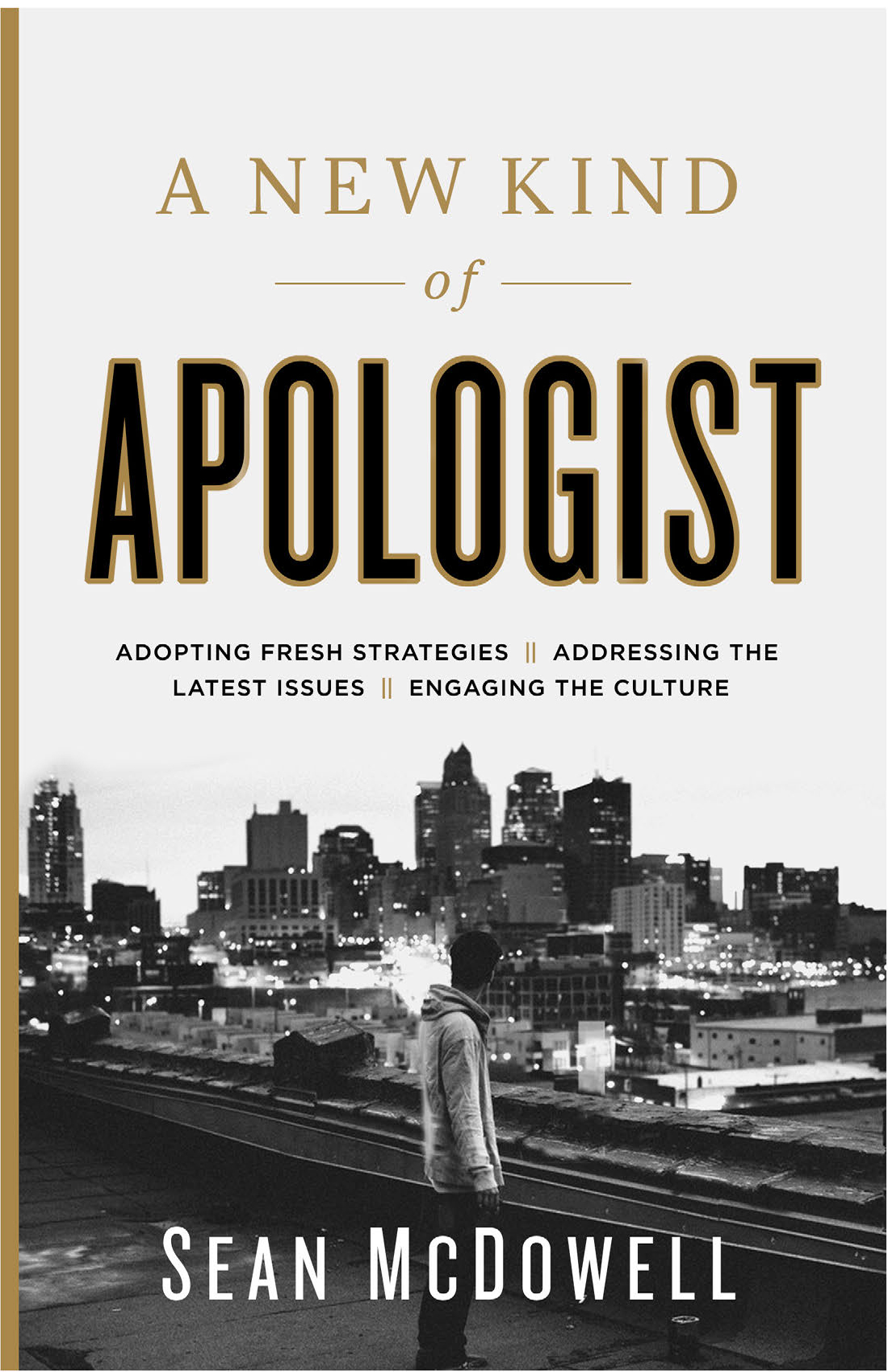



 Craig T. Owens
Book Reviews From 2016
December 27, 2016 — Craig T. Owens#struggles
Alive
An Angel’s Story
Answering Jihad
Archeological Study Bible
Chase The Lion
Churchill’s Trial
Culture
Hope … The Best Of All Things
How To Read A Book
I Stand At The Door And Knock
Jesus Always
Letters To A Birmingham Jail
Light & Truth—Acts & The Larger Epistles
Light & Truth—Revelation
Light & Truth—The Lesser Epistles
More Than A Carpenter
Of Antichrist And His Ruin
On This Day
One Of The Few
Our Iceberg Is Melting
Shaken
So, Anyway…
Streams In The Desert
The American Patriot’s Almanac
The Bad Habits Of Jesus
The Beauty Of Intolerance
The Blessing Of Humility
The Dawn Of Indestructible Joy
The Duty Of Pastors
The Gospels Side-By-Side
The Mathematical Proof For Christianity
The Philosophy Of Sin
The Place Of Help
The Porn Circuit
The Psychology Of Redemption
The Seven Laws Of Love
The Shadow Of An Agony
The Tabernacle Of Israel
Think On These Things
Today’s Moment Of Truth
Useful Maxims
Your Sorrow Will Turn To Joy
Here are my book reviews for 2011.
Here are my book reviews for 2012.
Here are my book reviews for 2013.
Here are my book reviews for 2014.
Here are my book reviews for 2015.
Share this: