Don’t give in to F.E.A.R. When the devil’s lies make us afraid, remember that F.E.A.R. stands for false evidence appearing real. The Holy Spirit can help you find the true evidence in God’s Word that will confront and dismantle the false evidence.Check out this full message here. I have lots of new content every week, which you can check out on my YouTube channel.
“Meanwhile it is also necessary for the ruler [pastor] to keep wary watch, lest the lust of pleasing men assail him; lest, when he studiously penetrates the things that are within, and providently supplies the things that are without, he seek to be beloved of those that are under him more than truth…” (Gregory the Great). Check out how T.M. Moore unpacks this quote.
The Culture Translator” newsletter from Axis has this sobering reminder of the dangers of pornography.
What it is: An eye-opening essay in The Free Press describes the impact of pornography on a teen’s developing brain.
What it tells us: The author of this piece, Isabel Hogben, is a homeschooled high schooler living in Redford City, California. In one of several devastating lines, Hogben details how she stumbled upon PornHub when she was only ten years old, even as her very present mother was “making sure I was eating nine differently colored fruits and vegetables on the daily.” Hogben goes on to explain that today’s pornography depicts a synthetically augmented and physically brutal type of sex that makes Playboy magazine look “like an American Girl Doll catalog.” She notes that teens who have never had a physical sexual encounter can’t know the difference between what fake sex and real sex is supposed to be like, skewing their expectations, and that her peers think selling nudes online is normal. As she examines the way porn causes scientifically-measurable changes in the brain, Hogden concludes that porn is not “content” as much as it is a dangerously addictive substance not unlike street drugs.
“Do nothing that you would not like God to see. Say nothing you would not like God to hear. Go no place where you would not like God to find you. Never spend your time in such a way that you would not like God to say, ‘What are you doing?’” —J.C. Ryle
“Learning to say no is not just about courage, but also learning how to prioritize your life and become more productive.” —John Maxwell
Listen to the podcast of this post by clicking on the player below, and you can also subscribe on Apple, Spotify, or Audible.
I’m not a fan of rollercoasters, but I know a lot of people who really like them. Some even travel all over the world to experience unique rollercoasters. The anticipation as the cars climb slowly up the big hill, knowing that there’s no stopping this thing now! Then the rush of emotions, a deep breath and a laugh at the end (usually laughing at our friends’ responses while on the ride), and then we just walk away. The moment of anticipation leading up to the big drop was usually longer and more intense than the ride itself.
Not only do people travel all over to find rollercoasters, some people seem to have their emotions perpetually on rollercoasters.
One of the telltale signs of someone with an immature mental health is the way every situation gets blown out of proportion before anything even happens. Then as an event unfolds, their exaggerations continue: the molehills are mountains, every valley is the valley of the shadow of death, the night is a nightmare, the “crisis” is lasting forever, no one has ever gone through what they’re going through, and the list goes on.
To break out of this habit requires us developing emotional capacity. John Maxwell describes it like this: “Emotional capacity is the ability to handle adversity, failure, criticism, change, and pressure in a positive way.” Just as athletes have to develop lung capacity or muscle capacity, developing emotional capacity takes time, patience, and diligence.
Increased emotional capacity is not escaping from our problems or even learning coping skill. Escapism never allows us to confront the things that are keeping our emotional capacity immature. On the other hand, maturing emotional capacity is learning to pause to get perspective so that we can avoid turning every mountain into a molehill, and every challenge into a do-or-die battle.
Let me illustrate this by looking at two emotions which seem to be the most rollercoaster-ish.
(1) The first rollercoaster emotion is anger
Out-of-proportion anger can either burn everyone around us when we explode, or it can eat away inside us if we hold it in. Neither of these are healthy emotional responses. Jesus got angry at the religious crowd that was keeping people away from God’s kingdom, but He didn’t ride the rollercoaster that led to a sinful expression of His anger.
God asked Jonah a very helpful question: Have you any right to be angry? (Jonah 4:4). When we feel the Holy Spirit asking us this question, our defiant first response is almost always, “Yes! I didn’t do anything wrong! It was all him!” Solomon would counsel us to cross-examine that thought (Proverbs 18:17).
Sometimes God will bring someone else across our path to help us pause to get perspective—to flatten the rollercoaster. For instance, God used Abigail to help David (see the story in 1 Samuel 25). However the Holy Spirit cross-examines us, we need to learn to truly listen. James told us:
My dear brothers and sisters, take note of this: Everyone should be quick to listen, slow to speak and slow to become angry, because human anger does not produce the righteousness that God desires. (James 1:19-20)
(2) The second rollercoaster emotion is fear
Fear usually causes us to fight or flight. Those are the natural responses, but the supernatural response is to pause to evaluate. I love the reminder that F.E.A.R. means false evidence appearing real.
As with anger, our first pause to get perspective on this potential rollercoaster that can plunge us into a deep, dark valley should be to cross-examine the false evidence of fear.
When the group of ladies came to the tomb of Jesus on the Sunday following His crucifixion, they were already battered and bruised in their emotions. Finding an empty tomb brought even more fear in their hearts. But there is a keyword in this account that will help us:
In their fright the women bowed down with their faces to the ground, but the men [angels] said to them, “Why do you look for the living among the dead? He is not here; He has risen! Remember how He told you, while He was still with you in Galilee: ‘The Son of Man must be delivered over to the hands of sinners, be crucified and on the third day be raised again.’” Then they remembered His words. (Luke 24:5-8)
The Holy Spirit can help us remember the truth in God’s Word to counteract the fear-inducing false evidence (2 Timothy 1:7; John 14:26), but we must pause to listen to this evidence before this rollercoaster emotion picks up speed.
The bottom line: Don’t try to escape your strong emotions. Pause. Cross-examine the evidence with the help of God’s Word, the Holy Spirit, and a friend to get a healthy perspective. This can help you flatten the rollercoaster before your emotions run away with you.
Listen to the podcast of this post by clicking on the player below, and you can also subscribe on Apple, Spotify, or Audible.
I read something which is really challenging my leadership paradigm. It’s a challenge to look at successful organizations through the lens of both a servant-hearted leader and a servant-hearted follower.
Listen to the podcast of this post by clicking on the player below, and you can also subscribe on Apple, Spotify, or Audible.
I love reading, and I love sharing my love of good books with others! Here is a list of the books I read and reviewed in 2022. Click on a title to be taken to that review.
Listen to the podcast of this post by clicking on the player below, and you can also subscribe on Apple, Spotify, or Audible.
Leaders never “arrive” at a place where they have accomplished everything they want to accomplish. John Maxwell helps leaders keep pressing on in their personal growth in his book The Self-Aware Leader.
This book is largely autobiographical, as Maxwell leads us through lessons that he learned by not being self-aware. His leadership stumbles served as a wake-up call that allowed him to reflect, learn, and then correct his technique. Then after decades of honing these techniques, he shares with his readers the practical steps for them to become self-aware of a potential stumbling point before it actually trips them up.
I also appreciated the self-aware leader’s questions for reflection at the end of each chapter. To me, this is an ideal place for leaders who are in mutual accountability to focus their discussion as they meet together. My biggest takeaway from this book is that I cannot become self-aware nor correct the things that could derail my leadership solely on my own. Reading The Self-Aware Leader is a good starting point, but I also highly recommend reading this book with another leader that also desires to grow and improve.
John Maxwell makes it clear in this quote that leaders are to focus on the other person: “Lead according to their dream. Coach according to their weakness. Mentor according to their potential. Delegate according to their strengths. Relate according to their personality.” —John Maxwell
“…One of my favorite analogies of prayer is a wartime walkie-talkie. I like to contrast the wartime walkie-talkie of prayer with the domestic intercom. What I like to say is that one of the reasons prayer malfunctions is because people take a wartime walkie-talkie and try to turn it into a domestic intercom, in which they ring up the butler to please bring another pillow to the den.
“Prayer is not designed as an intercom between us and God to serve the domestic comforts of the saints. It’s designed as a walkie-talkie for spiritual battlefields. It’s the link between active soldiers and their command headquarters, with its unlimited fire-power and air cover and strategic wisdom. When you understand this, you can pray the locks off people’s hearts.” —John Piper
“I do not think that there is any other quality so essential to success of any kind as the quality of perseverance.” —John D. Rockefeller
“Envy is the demand that what will make me happy is what I do not possess.” —Dr. John Townsend
Here is a brief clip from a recent Craig And Greg Show leadership podcast that honors my grandpa’s words and gives something for all leaders to aspire to: honoring others…
Listen to the podcast of this post by clicking on the player below, and you can also subscribe on Apple, Spotify, or Audible.
John Maxwell was right: “Everything rises and falls on leadership.”
As the leader goes, so goes the family, the neighborhood, the business, the church, the country. Just as Israel’s leaders fell into sin and took the people down with them, so too the religious and political leaders in America are leading people to sin.
God told Ezekiel, “See how each of the princes of Israel who are in you uses his power to shed blood” (Ezekiel 22:6). These ungodly leaders were described as:
The bottom line: God says, “You have forgotten Me” (v. 12).
This kind of evil must be punished by an All-Righteous God.
But God is still merciful. He is still looking for just one who will turn away from the sins of the culture and live righteously. He is looking “for someone among them who would build up the wall and stand before Me in the gap on behalf of the land so I would not have to destroy it” (v. 30).
God is looking for just one leader who will seek God’s glory and not personal gain, who will stand for righteousness even if he has to stand alone.
Will you be that one?
I pray I may be that one!
I pray for godly leaders to stand up! “Holy God, may we stand for You in this evil culture. May Your Holy Spirit strengthen us to stand unmoved against the onslaught of depravity. Strengthen us against the evil one and against evil people, knowing that greater are You in us than the evil that is in the world. May we be the ones that refuse to bend our knee to anyone or anything but You. In the powerful name of Jesus, I pray this. Amen!”
Listen to the podcast of this post by clicking on the player below, and you can also subscribe on Apple or Spotify.
John Maxwell said, “We overestimate what we can do in a day; we underestimate what we can do in a year.” In the case of parents, I think we do the same thing: we lose sight of the big picture when we get bogged down in the details and the pressures of each day. As a result, many times we are unaware of the long-lasting rewards that come from our daily obedience and God’s eternal faithfulness. This was never more true than in the fantastic love story of Ruth + Boaz.
Last week we looked at the history of Pentecost and what took place 50 days after the Passover, we saw a picture in the Old Testament that was fulfilled in the New Testament. The Jews saw this too. In the Hagiographa (Holy Writings), they picked one of the books of the Old Testament to read at each of the annual Jewish feasts, and the Book of Ruth was selected for Pentecost. I think this was because Ruth herself is in essence a “harvest” of God’s blessing. She is the firstfruits of the non-Jewish people whom God has engrafted into His holy family.
The story of Ruth’s coming into God’s family is birthed out of heartache. Elimelech and Naomi live in Bethlehem, which means “house of bread,” but it was a time of famine; Elimelech’s name means “God is King,” but Israel had no king and everyone lived for themselves; Naomi’s name means “pleasant,” but her days were bitter (see Judges 21:25; Ruth 1:1-5).
After Elimelech and his two sons die, Naomi changes her name to Mara (which means bitterness), and yet she hears “that the LORD had come to the aid of His people by providing food for them” (1:6) and she decides to return to Bethlehem. She counsels her daughters-in-law to remain with their families in Moab, but Ruth decides to cling to Naomi.
In the face of utter hopelessness, Ruth could have chosen what was familiar—her family, her homeland, her gods—but instead she chose to cling to Jehovah.
Perhaps when she heard that Jehovah had come to the aid of His people she realized, “I’ve never heard of Chemosh coming to the aid of his people. We sacrifice to him but he doesn’t do anything for us. This Jehovah cares for His people. I will put my faith in Him.”
Ruth’s first step of obedience triggers a whole series of events, starting with one that the writer of this story introduces by saying, “As it turned out, Ruth found herself working in a field belonging to Boaz.”
But this is no accident—God oversees and directs all of the details. All of history is His story. God is in charge of the tiniest of details: even down to directing Ruth to the right barley field. Ruth’s trust in Jehovah, her obedience in following Him, set things in motion that God had planned, just as Paul explained in Romans 8:28.
Moms, at the end of the story of your life, you will look back and see so many as-it-turned-out moments. But that means you are living in an as-it-turned-out moment right now.If you believe God is overseeing the details of your life, then every momentis divinely orchestrated by Jehovah, every moment is strategic, every moment is God-directed. You must remain daily obedient to God.
Don’t underestimate the legacy of God’s provision that is being established every single day that you remain obedient in following Him. Look at the amazing way God used Ruth and Boaz in the family tree of Jesus Christ (Ruth 4:16-22; Matthew 1:1-6).
Moms, your obedience today is preparing your children—and their future generations—for them to experience God’s provision in a coming famine (see Amos 8:11; Psalm 91).
Of course, Ruth can’t give birth to Obed without there being a father, which is why the story is called Ruth + Boaz. On Father’s Day we’ll look at the integrity of Boaz that made this possible too, so please make plans to join me then.
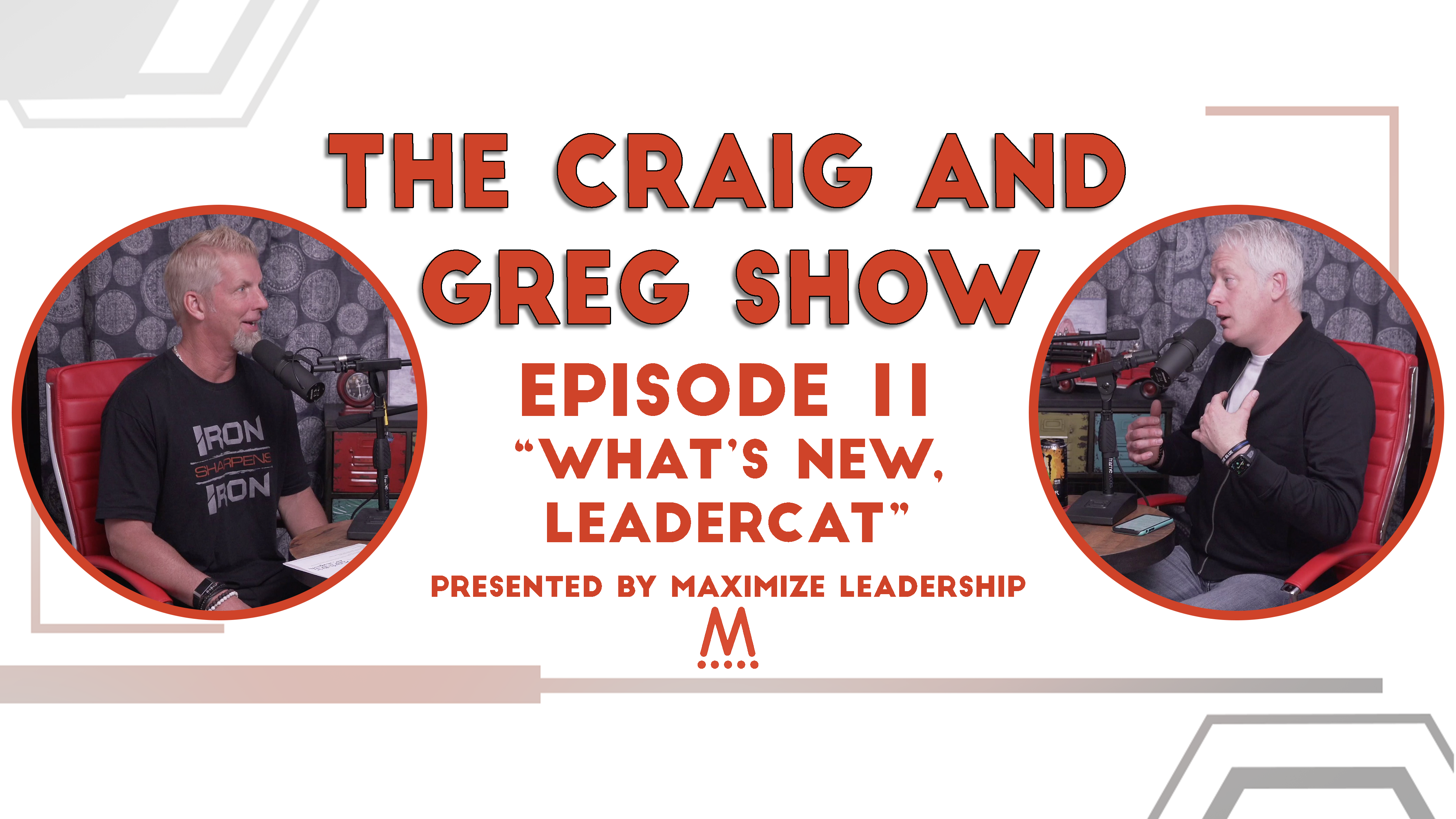
Greg cautions that either we address change or we avoid change, but if we avoid changing, our group may move on without us
just because we are changing doesn’t mean we are growing
Greg offers counsel on what leaders need to evaluate when considering changes
“unhealthy leaders change things to gain more control; healthy leaders change things to help the whole team get better,” Greg says
we don’t grow in areas of comfort: we learn most of our lessons moving forward, but we learn very few lessons sitting still
good leaders reassure other leaders to make thoughtful changes
the right way for leaders to partner with their team to effect positive changes
Check out this episode and subscribe on YouTube so you can watch all of the upcoming episodes. You can also listen to our podcast on Spotify and Apple.
Listen to the podcast of this post by clicking on the player below, and you can also subscribe on Apple or Spotify.
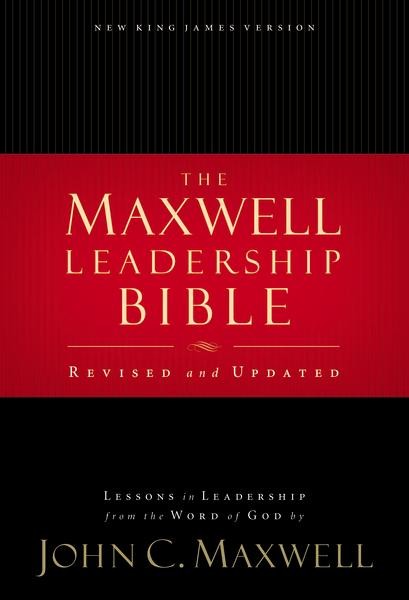
Pastors and other Christian leaders, this is from theMaxwell Leadership Bible and it’s well worth your time to contemplate.
“God contrasts the poor leader with the godly leader in Ezekiel 22. The poor leader oppresses and destroys his or her followers, while the godly leader ‘stands in the gap’ on behalf of the land and the people. These leaders represent God to the people, and represent the people to God. They serve as ‘middle-men,’ serving God and serving the needs of the people. This text describes ten traits of the leader God affirms:
Consecration: They set themselves apart and remain committed to their call.
Discipline: They do what is right even when it is difficult.
Servanthood: They model a selfless life, lived for the benefit of others.
Vision: They see what God sees and live off the power of potential.
Compassion: Love for their cause and their people moves them to action.
Trustworthiness: They keep their word regardless of what others do.
Decisiveness: They make good decisions in a timely manner.
Wisdom: They think like God thinks and avoid impetuous moves.
Courage: They take risks for what is right.
Passion: They demonstrate enthusiasm for their divine calling.” —John Maxwell
Check out what God Himself says:
“Your princes plot conspiracies just as lions stalk their prey. They devour innocent people, seizing treasures and extorting wealth. They make many widows in the land. Your priests have violated My instructions and defiled My holy things. They make no distinction between what is holy and what is not. And they do not teach My people the difference between what is ceremonially clean and unclean. They disregard My Sabbath days so that I am dishonored among them. Your leaders are like wolves who tear apart their victims. They actually destroy people’s lives for money! And your prophets cover up for them by announcing false visions and making lying predictions. They say, ‘My message is from the Sovereign Lord,’ when the Lord hasn’t spoken a single word to them. Even common people oppress the poor, rob the needy, and deprive foreigners of justice. I looked for someone who might rebuild the wall of righteousness that guards the land. I searched for someone to stand in the gap in the wall so I wouldn’t have to destroy the land, but I found no one.” (Ezekiel 22:25-30 NLT)
Pastor, will you be that righteous one who will stand in the gap? Will you stand strong against the onslaught of sin and a compromising culture? Will you be a leader that God can use?










 Craig T. Owens