Christ’s Advents

The word Advent means the appearing—something that bursts onto the scene. 

At this time of year we are actually thinking about TWO Advents. We look backward in gratitude to celebrate the first Advent of Jesus when He was born in a manger in Bethlehem. And then we look forward in joyful expectation to the second Advent of Jesus when He will return to earth again as King of kings. 

As Christians live in this time between the two Advents, our celebration and expectation should bring four noticeable attributes from our lives: 

  1. Hope 
  2. Peace 
  3. Joy 
  4. Love

Please join me at Calvary Assembly of God as we learn more about how the Holy Spirit empowers these four attributes in our daily lives, how this glorifies God, and how it then draws others to Jesus their Savior. 

MVP: Most Valuable Praise

Listen to the podcast of this post by clicking on the player below, and you can also subscribe on AppleSpotify, or Audible. 

In preparing for our Be Thankful series at my church, I have been reading and studying quite a bit about gratitude. For example, my wife and I are reading a devotional on the YouVersion Bible app call “Practicing Gratitude.” 

The other morning, our devotional writer shared this thought: “When the prophet Jonah was having a terrible day at work, he found gratitude by looking at God’s provision through the physical environment. God made a bush for shade and ‘Jonah was very happy about the bush’ (Jonah 4:6).” 

In our shared notes, my wife had an insightful word. She wrote, “Jonah’s gratitude didn’t last long. This is a great reminder to pursue a lifestyle of gratitude. It is sometimes very challenging in the midst of hard days to recognize God’s blessings, but it forces me to take my eyes off myself and place them back on my Lord and Savior!” 

My studies, this devotional plan, and Betsy’s insight got me thinking even more about the most valuable praise we can offer to our God. 

Jonah was indeed happy about the shade. But as soon as the shade was gone because the plant withered, he was back to his sullen complaining all over again! 

Ah, yes, poor Jonah is a microcosm of the whole Old Testament: God’s blessings are only appreciated for a moment until the complaining starts up again. 

Oh, wait! That’s still our story today. All of God’s blessings are so quickly forgotten unless we are intentionally grateful.

Especially in the hard times where it feels like our difficulties are just so unfair. 

Paul wrote, “In everything give thanks; for this is the will of God for you in Christ Jesus” (1 Thessalonians 5:18). 

In everything” is not the same thing as “for everything.” This means that I can still be God-focused in my painful circumstances, even though I may not be thankful for those circumstances. 

But as I remain thankfully God-focused, perhaps I may begin to see what He is accomplishing because of my painful circumstances. Just as Jesus saw “the joy set before Him” (Hebrews 12:2) and knew that His Father would triumph even in that horrific time, perhaps as I keep my eyes on Jesus I can begin to get a glimpse of God’s coming glory. 

Isn’t it “the will of God” that I know—beyond a shadow of a doubt—that I am irremovable from my position “in Christ Jesus”? 

For I am convinced that neither death, nor life, nor angels, nor principalities, nor things present, nor things to come, nor powers, nor height, nor depth, nor any other created thing will be able to separate us from the love of God that is IN Christ Jesus our Lord. (Romans 8:38-39 NASB)

Shouldn’t my assurance of that truth produce a joy that prompts praise from my lips that brings glory to God? Isn’t that praise of greater value precisely because it comes from a person in a setting where thankfulness seems impossible? 

God is magnified even more when praise comes from a thankful heart that is in a place where humanly there seems to be absolutely nothing praiseworthy. 

It is in this place that my praise is to God simply because He is God and He is worthy to be praised simply because of who He is! 

So I will praise Him no matter what—“in all things”—because I am secure that I am “in Christ Jesus.” That hope produces a reward that is invaluable. That hope produces a praise that is beautiful in God’s ears. 

…And we boast IN the hope of the glory of God. Not only so, but we also glory IN our sufferings, because we know that suffering produces perseverance; perseverance, character; and character, hope. And hope does not put us to shame, because God’s love has been poured out INTO our hearts through the Holy Spirit, who has been given to us. (Romans 5:2-5) 

We give God our MVP—our most valuable praise—when it is lifted to Him in that place and time where the natural response would be grumbling and complaining. In those moments, remind yourself that you are IN Christ Jesus, which means even here in this dark moment you can be thankful IN all things. 

(You may also be interested in my post and video Praising God in the Troughs.) 

►► Would you please prayerfully consider supporting this ministry? My Patreon supporters get behind-the-scenes access to exclusive materials. ◀︎◀︎
Unwittingly Fulfilling

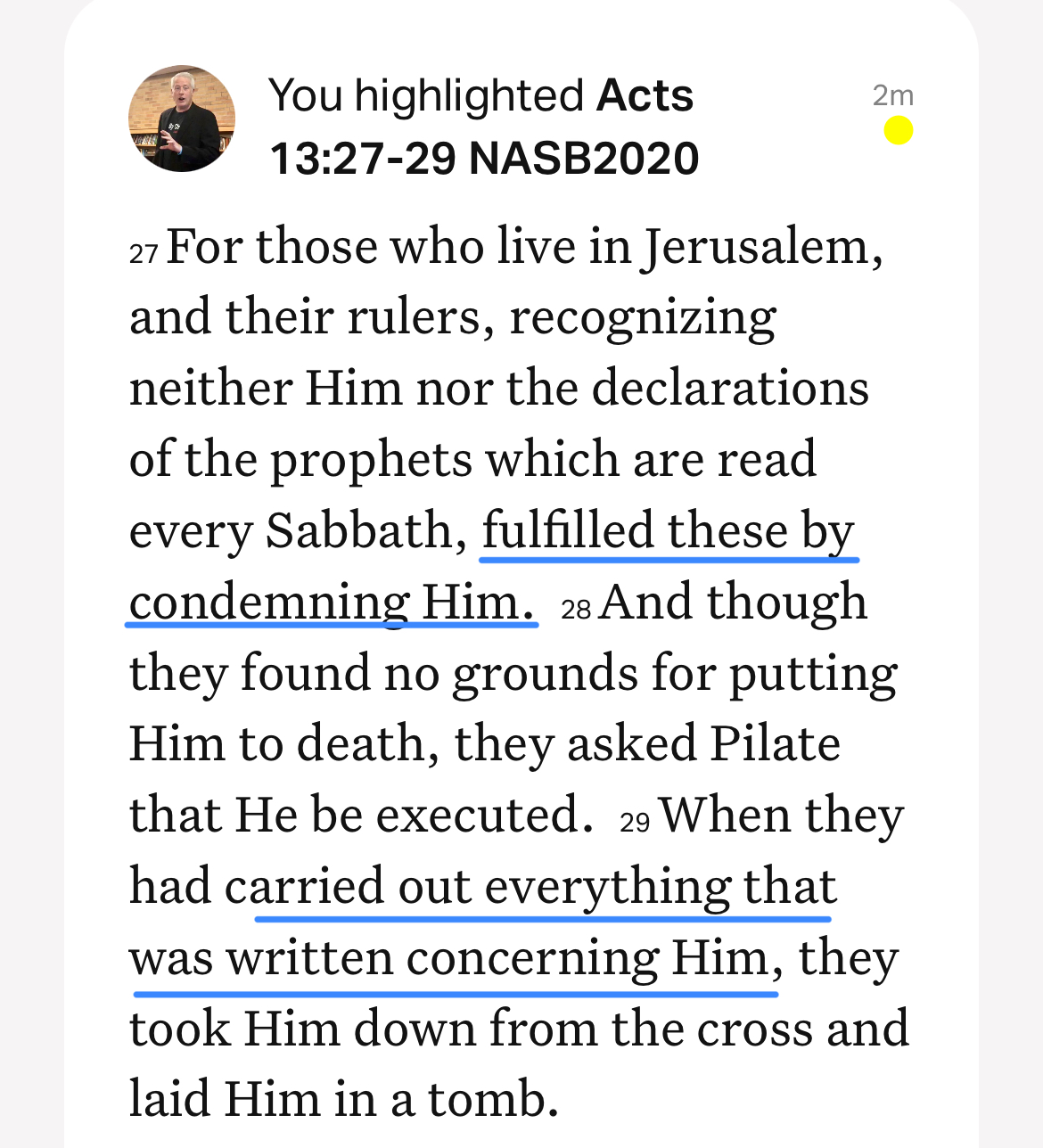
For those who live in Jerusalem, and their rulers, recognizing neither Him [Jesus] nor the declarations of the prophets which are read every Sabbath, fulfilled these by condemning Him. And though they found no grounds for putting Him to death, they asked Pilate that He be executed. When they had carried out everything that was written concerning Him, they took Him down from the Cross and laid Him in a tomb. (Acts 13:27-29) 

The prophetic words about Jesus were fulfilled by people who didn’t even realize they were fulfilling God’s pre-ordained plan! It is still true today: Nothing can thwart or delay God’s design, and people are still unwittingly fulfilling that design. 

God always gets the final word, the decisive word, and the best word. 

Here is an example from the public ministry of Jesus: A Christlike Response To Skeptics. 

Jesus is fulfilling every promise that His Father made, so we can live confidently and joyfully in that assurance. Check out my post Walking Boldly In Dark Places.

The Gift Of Just Being There

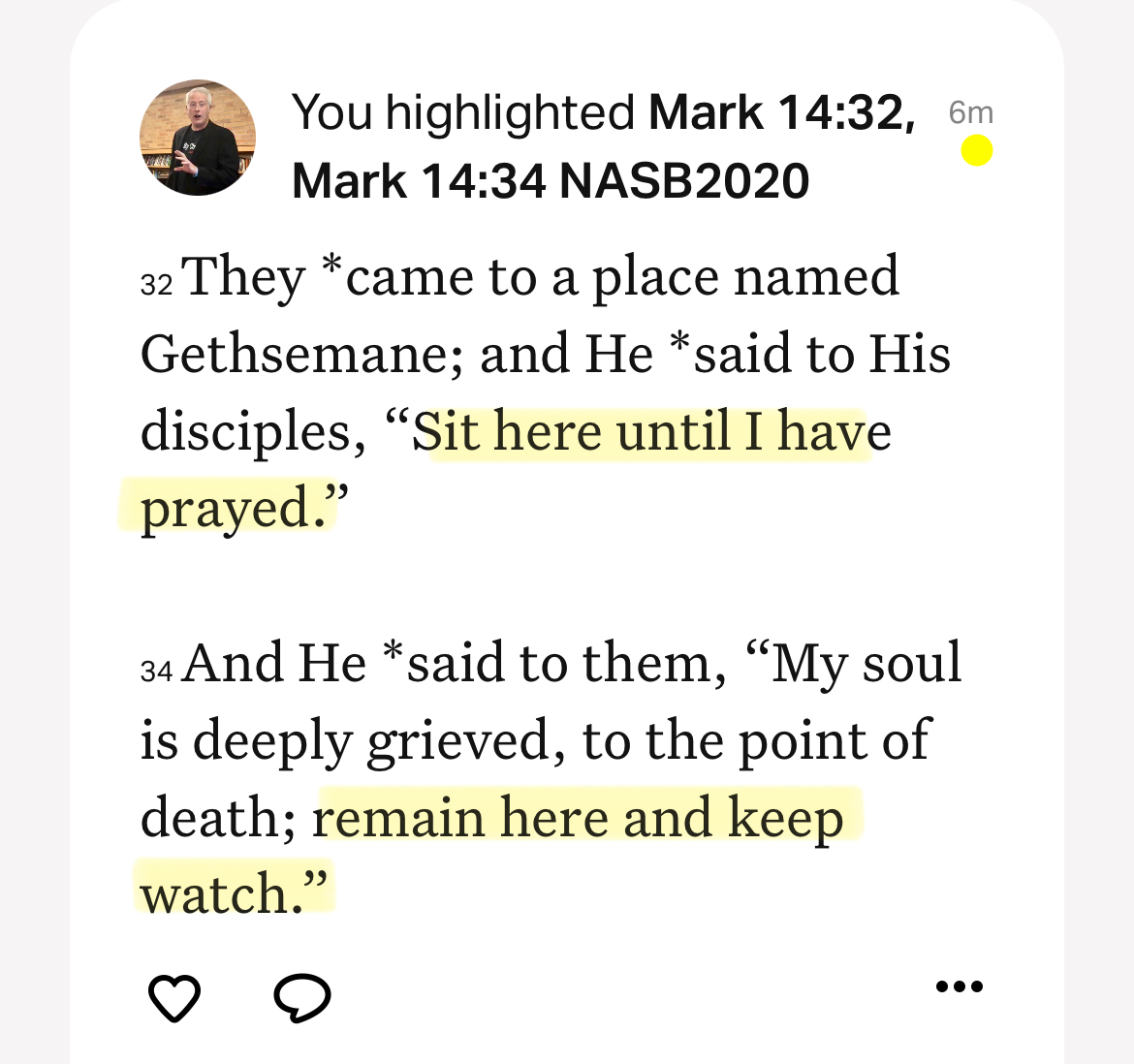
They came to a place named Gethsemane; and He said to His disciples, “Sit here until I have prayed.” … And He said to them, “My soul is deeply grieved, to the point of death; remain here and keep watch.” (Mark 14:32, 34)

Jesus was staring down the most intense, horrific experience anyone on earth had ever faced—more intense than what anyone has ever faced since then. At this moment, He just wanted His friends close by. 

Sometimes the best thing we can do for a hurting friend is just be present. Just be there for them. We cannot fully know what battle is raging in our friend’s heart, so we probably won’t have the appropriate words to share. So just be present for them—be physically there in the room with them. 

Job’s friends started out well, as they sat silently with their friend. When they tried to counsel Job, they made matters worse. Job called them “miserable counselors” (Job 16:2) and their words made God angry with them too. 

Don’t feel like you have to have words to share with your friend. Sometimes just weeping with those who weep is enough to let your friend know that they are not alone. 

You may also be interested in my posts The Present of Presence and Presents or Presence? 

…And It Got Their Attention

Listen to the podcast of this post by clicking on the player below, and you can also subscribe on AppleSpotify, or Audible. 

And Jesus cried out again with a loud voice, and gave up His spirit. And behold, the veil of the temple was torn in two from top to bottom; and the earth shook and the rocks were split. Also the tombs were opened, and many bodies of the saints who had fallen asleep were raised; and coming out of the tombs after His resurrection, they entered the holy city and appeared to many. (Matthew 27:50-53) 

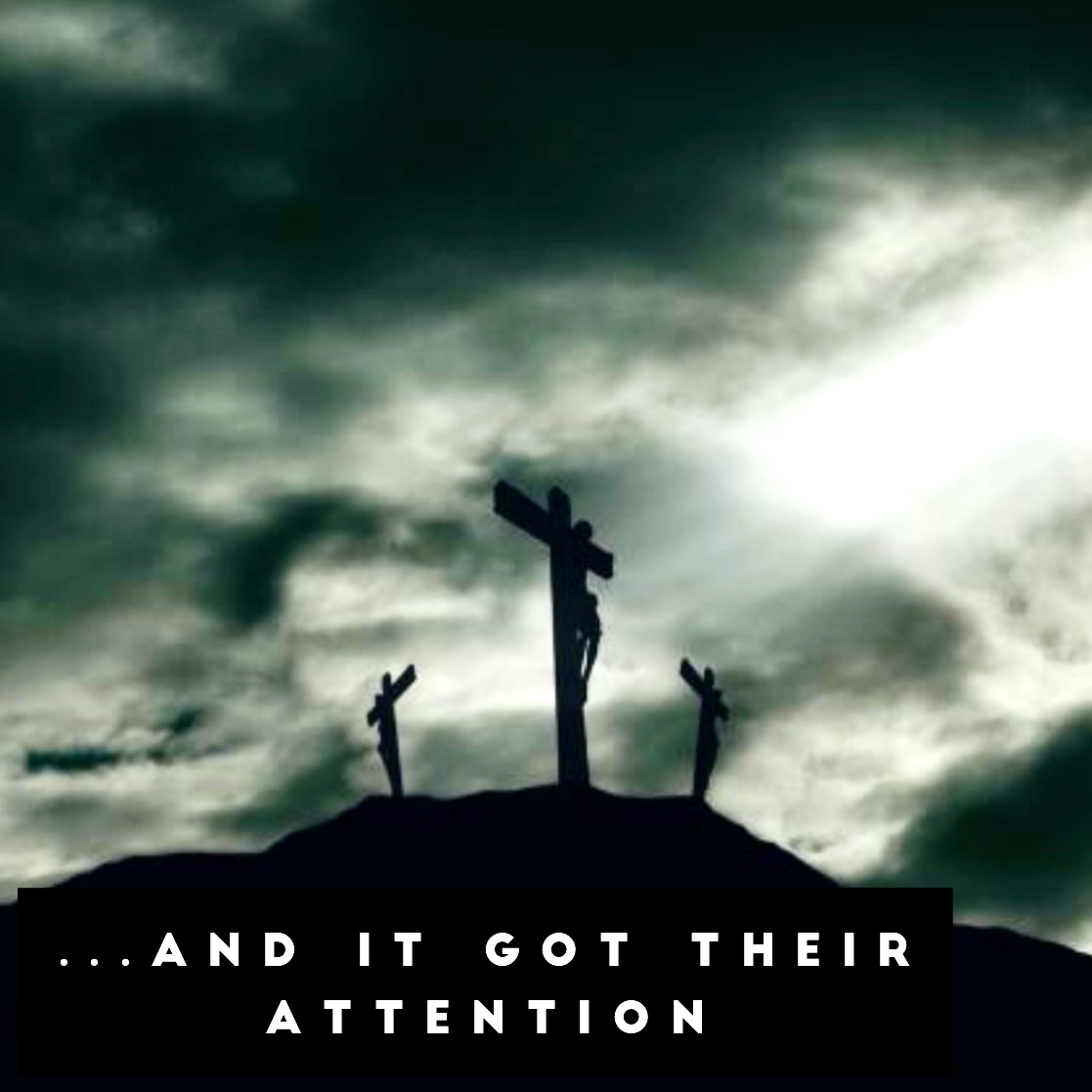
The centurion and his soldiers saw a Man die like no other crucifixion victim ever had. And it got their attention! 

People in Jerusalem had dead friends and family members return to life. And it got their attention! 

The religious leaders felt the earthquake and saw the curtain that shielded the Holy of Holies ripped in half. And it got their attention!

Now all of them had a choice: Would they acknowledge that Jesus was who He said He was or not. The Bible gives us only one man’s response: the centurion at the CrossAnd Jesus, crying out with a loud voice, said, “Father, into Your hands I entrust My spirit.” And having said this, He died. Now when the centurion saw what had happened, he began praising God, saying, “This Man was in fact innocent” (Luke 23:46-47).

I wonder if there were others? 

More importantly, with all of God’s miracles around me every single day, does it get my attention? 

►► Would you please prayerfully consider supporting this ministry? My Patreon supporters get behind-the-scenes access to exclusive materials. ◀︎◀︎

The Logic Of Jesus

And Jesus responded and said to the lawyers and Pharisees, “Is it lawful to heal on the Sabbath, or not?” But they kept silent. And He took hold of him and healed him, and sent him away. And He said to them, “Which one of you will have a son or an ox fall into a well, and will not immediately pull him out on a Sabbath day?” And they could offer no reply to this.

The logic of Jesus is supported by the proof of His miracles and His knowledge of Scripture. This makes His arguments airtight so that none of His opponents can even respond to Him, much less refute Him. 

We have the same things available to us:

(1) The Word of God which the Holy Spirit illuminates to our minds, and which He helps us use when critics attack.  

(2) The example of our lives which have been changed by a personal encounter with Jesus. 

(3) The logical connection of Scripture to the situation in which we find ourselves. 

But remember, we are not trying to win arguments, but we are trying to win souls! The Holy Spirit will help us engage all of the things mentioned above only if our heart’s attitude is focused on glorifying God, not glorifying our rhetorical prowess. 

Check out a related post: A Christlike Response to Skeptics. 

I also have several posts addressing how we can use logic in a God-honoring way.

What Can Your Pain Tell You?

Listen to the podcast of this post by clicking on the player below, and you can also subscribe on AppleSpotify, or Audible. 

Have you ever been trying to finish a DIY project and you’re getting frustrated because there’s one part you cannot seem to complete? Then you phone a friend. They come over, look at the situation, pull the perfect tool out of their toolbox, and quickly fix the problem. You are amazed and they think, “It’s no big deal. I just happened to have the right tool for the job and the skill to know how to use it.”  

We are all gifted, but in different ways. 

God has uniquely prepared you for the situations you will face in your life. David declared, “All the days ordained for me were written in Your book before one of them came to be” (Psalm 139:16). That tells me that your loving Creator knew the challenges and opportunities you would have, and He has already placed the perfect tool in your toolbox that you will need to excel in that moment. 

We have already talked about how your passion helps you discover your areas of giftedness. Finding out what thrills you and what fills you is one key step on this journey. There’s another aspect of this discovery process that at first seems almost the opposite, but I think they are actually two sides of the same coin. 

If passion is what thrills me, then pain is what kills me. I think a good word for this is zeal. In the biblical context, zeal would be anger at the things that keep people from experiencing all that God has for them—things that keep them from knowing the fullness of God’s glory. 

As Moses grew older, it killed him that the Jewish people were now enslaved by the Egyptians and kept from worshiping God in their own place (Exodus 2:11-12). 

(Check out all of the Scriptures in this post by clicking here.)

We see Moses’ zeal misapplied at first (I mean, he did commit a murder!). This about the differences between a river powerfully flowing within its banks, and a flood when the river overflows its banks. When we use our God-implanted zeal in ways that He hasn’t sanctioned, we make a mess like that flood. But when we use our zeal to glorify God, it is as powerful as a mighty river within its banks. 

We see perfect zeal in Jesus. We see Him cleansing the temple so all worshipers could come close to God (John 2:13-17). We see his anger over the religious rules that kept people trapped in their disease( Mark 3:1-5; Luke 13:10-16). 

If passion asks, “What is God passionate about that thrills my heart too?” then pain asks, “What breaks God’s heart that also breaks my heart?” or “What’s broken that I would love to fix?” 

Zeal moves us to action! 

When we move forward in our zeal, others may say we are meddling or we are sticking our nose in places where it shouldn’t be. But we simply cannot help ourselves. 

In Moses’ initial zeal—without God’s commission—he committed murder and then fled to the wilderness. 

Stephen says, “Moses was well educated in all the wisdom of the Egyptians and was powerful in speech and action” (Acts 7:22). The word Stephen uses for “educated” means Moses was fully trained to interact success with is culture. And he also says Moses was “powerful” in speech and action. 

So why does Moses say of himself that he is not “eloquent” and “slow of tongue” (Exodus 4:10)? Literally, Moses is saying, “I might make the same mistake that I made previously.” 

Moses looked back on his initial stumble and was fearful he may misfire again. He was comfortable staying in his restricted comfort zone, but this attitude made God angry (Exodus 4:10-12). 

Saul in his zeal for the rules and traditions of Judaism, persecuted the Christians. After he became a Christian, we see the same zeal—calling out Barnabas and Peter, and asking the Galatians who has bewitched them to stay entangled with meaningless traditions. 

We usually discover our giftedness by looking backward. The devil would love for us to see our previous missteps as disqualifications for future service. But God says that He can use all of these things for His glory (Romans 8:28). We have to surrender our fears to Him if we want to soar out of our comfort zone and into our comfort zone. 

Let me give you three things to consider:

  1. What do you find yourself praying about more than anything else? 
  2. What do you move toward that others ignore or move away from?  
  3. What topic do you talk about all the time?  

Here’s your homework: Think about the three things to consider regarding pain, and then consider where your passion circle and your pain circle may overlap. 

If you’ve missed any of the messages in our series Living In Your Gift Zone, you can find them all here. 

►► Would you please prayerfully consider supporting this ministry? My Patreon supporters get behind-the-scenes access to exclusive materials. ◀︎◀︎
Ungodly Leadership Is Unsure Leadership

Listen to the podcast of this post by clicking on the player below, and you can also subscribe on AppleSpotify, or Audible. 

After examining Jesus himself and then getting a report back from King Herod, Pontius Pilate announces to the crowd of religious leader, “I find no basis for a charge against Him. But…” (John 18:38-39). 

The “But” signals the language of an unsure leader.  

Pilate knew the truth. He knew the Roman law. He had soldiers around him to protect him from physical harm. No recrimination or rebuke would have come from Rome for letting Jesus go free. Yet Pilate wavered. 

He was unsure of his leadership position. “Did I earn this position or did I manipulate my way into it? What will others think of me if I make this decision? Is there a way that I can keep everybody happy?” 

Pilate gave himself an out: “…but it is your custom for me to release to you one prisoner at the time of the Passover. Would you like me to release Jesus?” 

Pilate was hoping to satisfy the fickle mob that was pressing in on him and pestering him to give in to their demands, even if it meant he would be perverting justice. Unsure leaders are always trying to find a way to navigate the current situation, just to get on to the next chapter of their leadership. 

History records that about three years later, Pilate took his own life in the face of being removed from his office. 

A godly leader who is sure of his calling can make tough calls while still preserving justice and maintaining truth. 

A mark of an ungodly leader is one who is both unsure of his leadership authority and unstable in his leadership activities. 

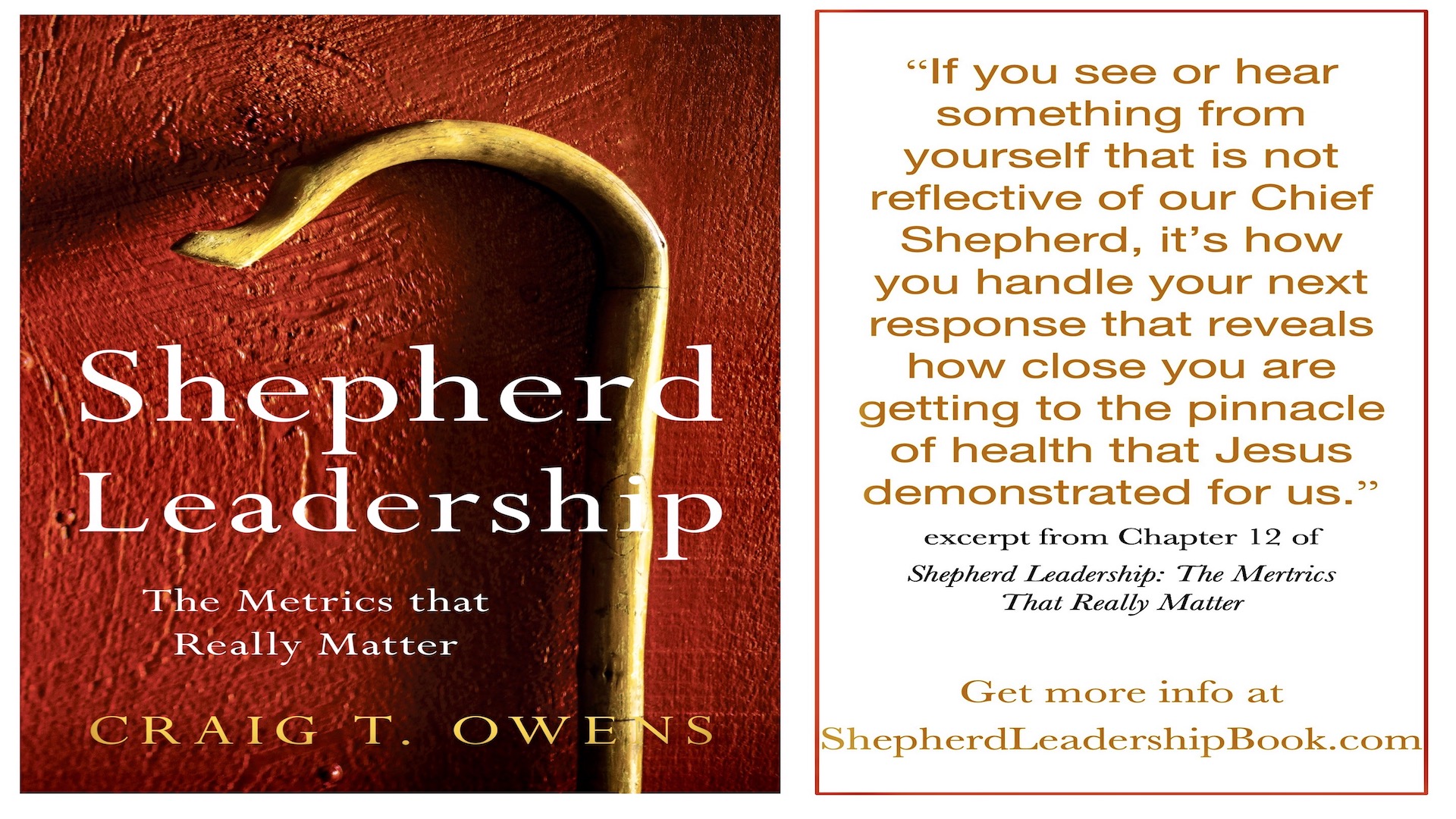
I talk more about a godly leader’s sure calling in my book Shepherd Leadership. And in this blog post, I give a three-word statement that can help godly leaders navigate through the toughest of decisions. 

This is part 79 in my series on godly leadership. You can check out all of my posts in this series by clicking here.

►► Would you please prayerfully consider supporting this ministry? My Patreon supporters get behind-the-scenes access to exclusive materials. ◀︎◀︎
Empowered For Obedience

Listen to the podcast of this post by clicking on the player below, and you can also subscribe on AppleSpotify, or Audible. 

In the 40 days between His resurrection and His ascension, we read that Jesus was with His disciples “giving instructions through the Holy Spirit” (Acts 1:2). 

I think this word “instructions” in the NIV is too soft. The other translations say things like:

  • commandments (NKJV) 
  • orders (NASB & NET) 
  • instructed and commanded (AMPC) 

The Greek word Luke uses in Acts 1:2 is entellomai and it is a word that carries weight. Throughout the New Testament this word is used to identify…

  • …the words of God (Matthew 4:6, 15:4; Luke 4:10; Acts 13:47; Hebrews 9:20) 
  • …the words of Moses (Matthew 19:7; Mark 10:3; John 8:5) 
  • …the words of Jesus (Matthew 17:9, 28:20; Mark 11:6; John 14:31; 15:14, 17; Acts 1:2, 13:47) 
  • …the words of recognized leaders (Mark 13:34; Hebrews 11:22) 

(Check out all of the above Scriptures by clicking here.)

In the Septuagint (the Greek translation of the Old Testament) this word is used seven times. Five of these times link together the words “command” and “covenant” (Deuteronomy 4:13; Joshua 23:16; Judges 2:20; Psalm 111:9–10; Jeremiah 11:3–4). The other two times express God’s strong promise-keeping power that is awe-inspiring (Psalm 90:11, 91:11). 

In other words, these aren’t just any words, but they carry an awesome authority with them. These are binding commands. They are not merely wise counsel or suggestions for godly living. They are indispensable to the Christian life. 

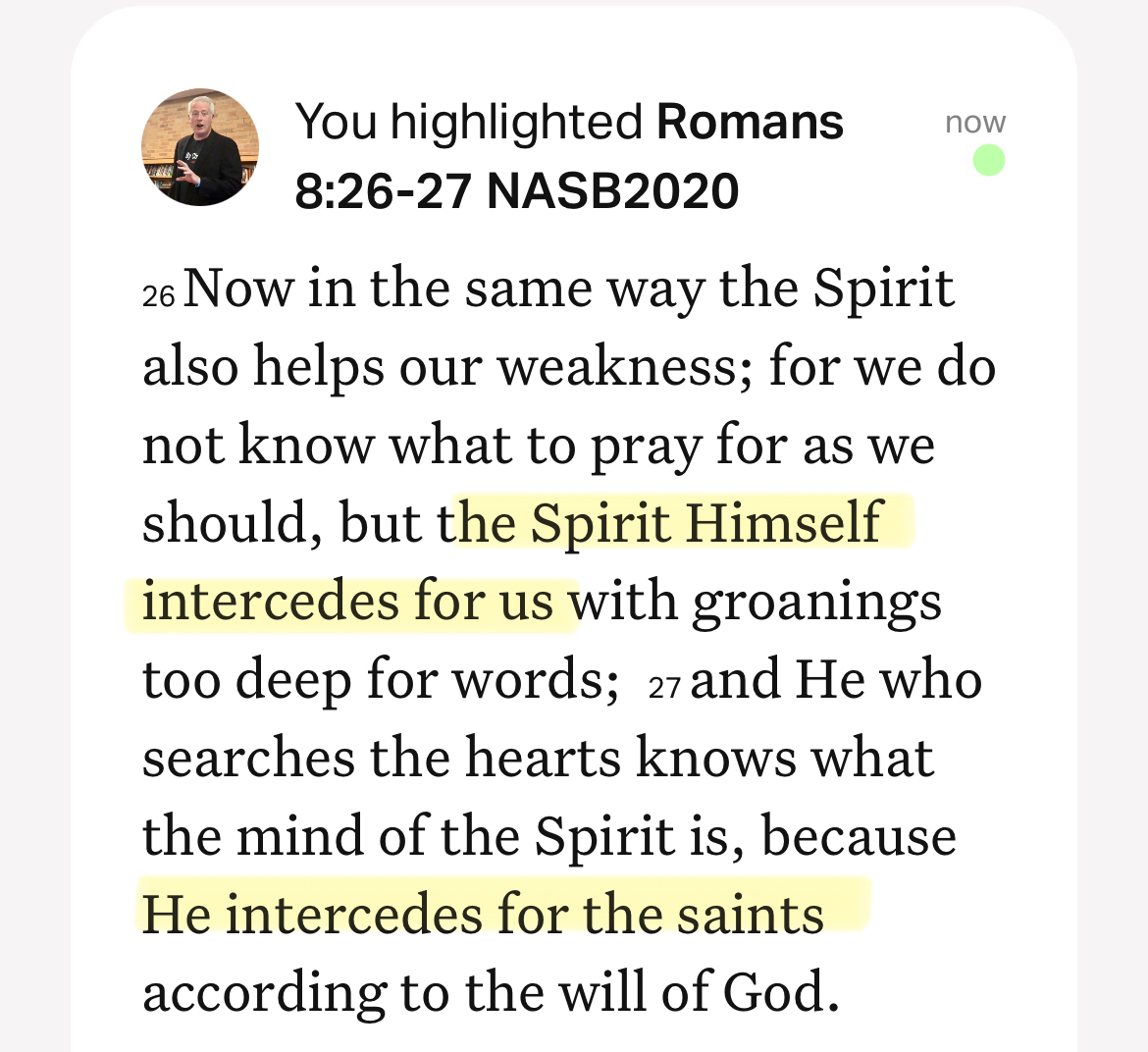
Luke points out that Jesus gave these commands “through the Holy Spirit” because it is only through the Holy Spirit that you and I can understand them, apply them, and be empowered to obey them. 

Jesus uses the same word entellomai in the Great Commission (Matthew 28:20) as well as in Acts 1:2. Clearly, the Scripture is telling us that we are powerless to understand and powerless to obey without the Holy Spirit’s daily empowerment. Jesus would never give us commands that we were unable to carry out, which is why He gives us instructions through the Spirit, and then the Spirit gives us the power to joyfully obey those commands. 

Don’t ever think that you are on your own in trying to figure out what Jesus said, and how you are going to live it out.

I discuss the role of the Holy Spirit in a Christian’s life in much greater detail in my series called We Are: Pentecostal. 

►► Would you please prayerfully consider supporting this ministry? My Patreon supporters get behind-the-scenes access to exclusive materials. ◀︎◀︎

The Hour, The Power, And The Procedure

Listen to the podcast of this post by clicking on the player below, and you can also subscribe on AppleSpotify, or Audible. 

If you’re going through a dark time in your life right now, I’ve got a word of encouragement for you. Well, actually three words of encouragement!

Check out this episode of The Podcast. 

Here are the Scriptures I reference in this video—John 13:1-5, 18:4-11; Matthew 26:51-54; John 17:11-12; Psalm 23:4 

You may also want to check out a couple of related blog posts:

My book When Sheep Bite is for pastors who are going through challenging times in their ministries.

►► Would you please prayerfully consider supporting this ministry? My Patreon supporters get behind-the-scenes access to exclusive materials. ◀︎◀︎