Listen to the podcast of this post by clicking on the player below, and you can also subscribe on Apple, Spotify, or Audible.
Isaiah 49 has an interesting phrase that appears twice: “But I said…” (vv. 4, 14).
Notice that first word: But. That conjunction means that “I” am saying something in contradiction to what someone else has said. Sadly, in this case the Someone Else that is speaking in this chapter is God Himself!
The phrase “this is what the LORD says” is used three times in this same chapter (vv. 8, 22, 25). Look at what God is saying to you and me:
I made you
I called you
you are My servant
I reward you
you have My favor
you have My comfort
I never forget you
I will never disappoint you
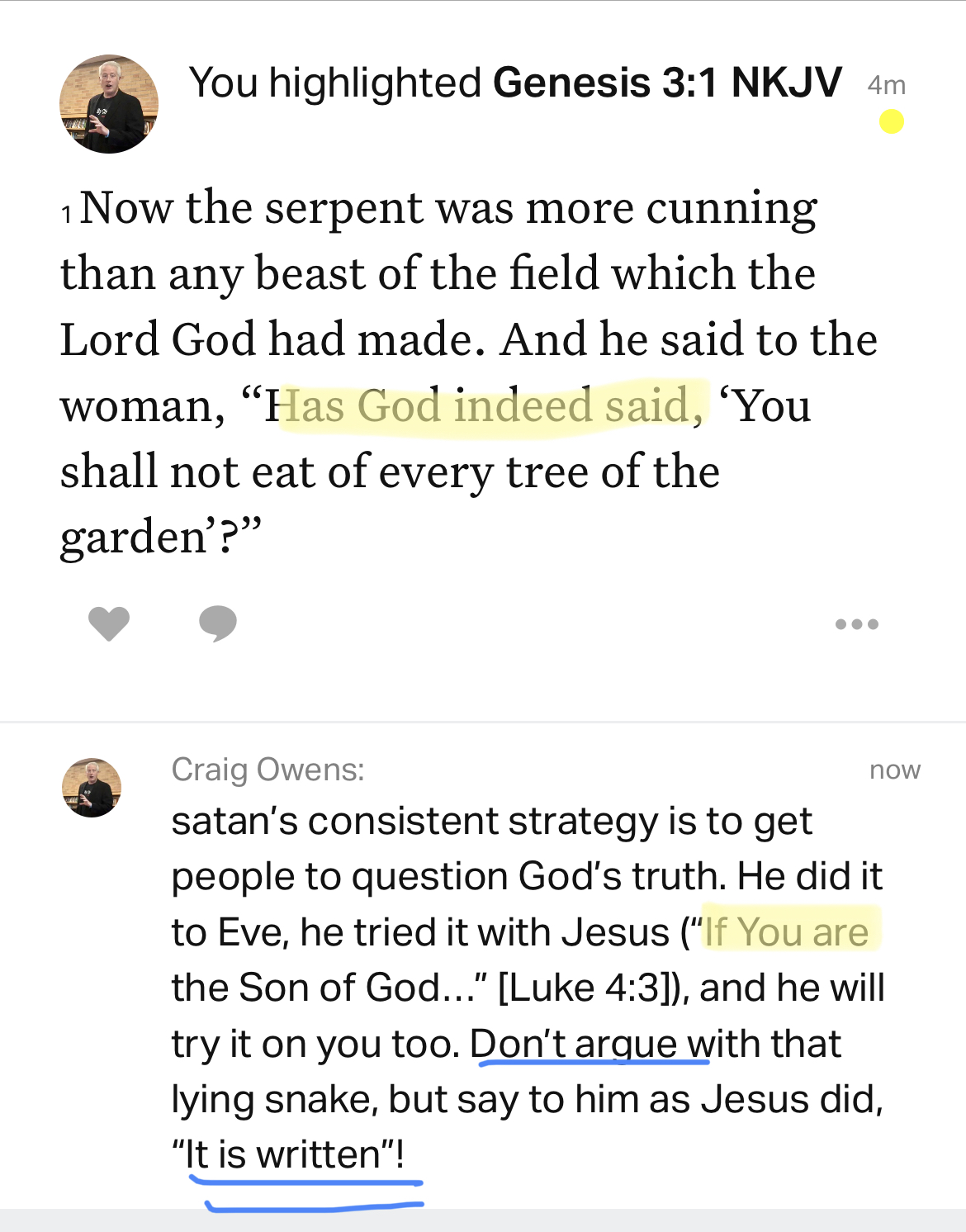
A consistent strategy of the devil is try to get us second-guessing or doubting God’s promises. He did this to Eve—“Did God really say that?”—and he tried it with Jesus—“Are You really the Son of God?”—and he’s still trying it today.
Jesus said the devil’s native tongue is lying. He lies and he slanders you. He wants you to simply listen to those lies without questioning them.
Someone once asked Smith Wigglesworth, “Smith, how do you feel?” He replied, “I never ask Smith how I feel. I tell him how he feels!”
That’s good counsel for us today!
Don’t listen to yourself, especially when you’re tired or lonely or anxious or scared, but talk to yourself. Remind yourself what God says to you and what He says about you. Remind those negative thoughts that God never lies, that He is all-loving, that He is all-powerful, and that He has a unique plan and purpose your life.
Whenever you feel like saying, “But I said,” change those thoughts around to, “But this is what God says!”
I’ve shared a couple of other posts that expand on this idea which you may want to read here and here.
Listen to the podcast of this post by clicking on the player below, and you can also subscribe on Apple, Spotify, or Audible.
The Lord is angry with all nations… (Isaiah 34:2).
Perhaps that verse surprises you in light of the title of this post, “Everlasting, Unshakable Joy,” but stick with me.
These phrases from Isaiah 34 do sound like terrible news:
God is angry with all nations
His wrath is on all their armies
God will totally destroy them
Even all the starry host will fall
God Himself says, “My sword has drunk its fill”
All the world’s princes will vanish away
But please keep in mind that this is only bad news for those who don’t have their sins forgiven through a personal relationship with Jesus Christ. “For the Lord has a day of vengeance, a year of retribution, to uphold Zion’s cause” (v. 8). And, “He will come with vengeance; with divine retribution He will come to save you” (35:4).
So God’s anger is not at those whose sins have been forgiven, but at those who are not only unforgiven but hell-bent on attacking those who are forgiven.
These words are intended to “strengthen feeble hands, steady the knees that give away,” and to bring strength “to those with fearful hearts” (35:3-4).
The righteous have nothing to fear when the world is quaking in fear! “They will enter Zion with singing; everlasting joy will crowned their heads. Gladness and joy will overtake them, and sorrow and sighing will flee away” (v. 10)!
This is why Jesus told us, “I tell you, My friends, do not be afraid of those who kill the body and after that can do no more” (Luke 12:4 NIV), and, “Save your fear for God, who holds your entire life—body and soul—in His hands” (Luke 12:5 MSG). And also the apostle Peter reminds us that we do not fear what the world fears (1 Peter 3:14).
If your sins are forgiven, if you are walking in God’s paths, if you are seeking to savor the glory of God, and desirous that His glory be seen on earth as it is in heaven, there is not only nothing to fear, but you will have an everlasting, unshakable joy!
Get your eyes off the world’s bad news, and keep your eyes firmly on the Good News that only Jesus has made a reality!
Listen to the podcast of this post by clicking on the player below, and you can also subscribe on Apple, Spotify, or Audible.
Christmas time finds me sampling a whole lot of delicious treats, and I’m not complaining at all! But I’m a pretty simple guy, so one of my favorite treats is just plain old peanut butter. I love it! Sometimes I stick my spoon right in the jar and eat a big spoonful.
But then there’s the age-old problem: How do you get peanut butter off the roof of your mouth? You can use your tongue or try blowing on it. Or you can use your finger!
But then there’s another problem: How do you get peanut butter off your finger? Blow it? Shake it? Or eat it!
Hmm, now I seem to be back to the original problem: How do you get peanut butter off the roof of your mouth?
Maybe you’ve tried to solve one problem, only to create another problem. And then when you solve that problem you find yourself right back where you started! Round and round it goes!
The Israelites were facing much the same situation. They sinned, God punished them through King Nebuchadnezzar, they tried to rebel, they were taken into captivity, and then they were finally allowed to return to Jerusalem after 70 years. But they still weren’t in charge of their own fate. First it was the Babylonians calling the shots, then the Medians, then the Persians, and then the Romans. Luke begins the birth story of Jesus with the words “in the days of Caesar Augustus” (Luke 2:1).
The Israelites were waiting for God to restore their Promised Land to them. Some people believed a miraculous champion was going to come on the scene (much like Samson of old), and some thought a new anointed king from King David’s line would appear and rally an army to himself.
We can understand this because of one of the prophecies from Isaiah 9 that talks about a warrior and God’s zeal.
That word “warrior” got people pumped up! As did the promise that “the zeal of the LORD Almighty will accomplish this”! For many, this was their proof that God wanted His people to rule this Promised Land for themselves
We’ve been going through a series called People Will Talk, and these voices of a miraculous champion or a new king from David’s line were loud voices to be sure. But interestingly, the Bible doesn’t record much of what these loud voices were saying.
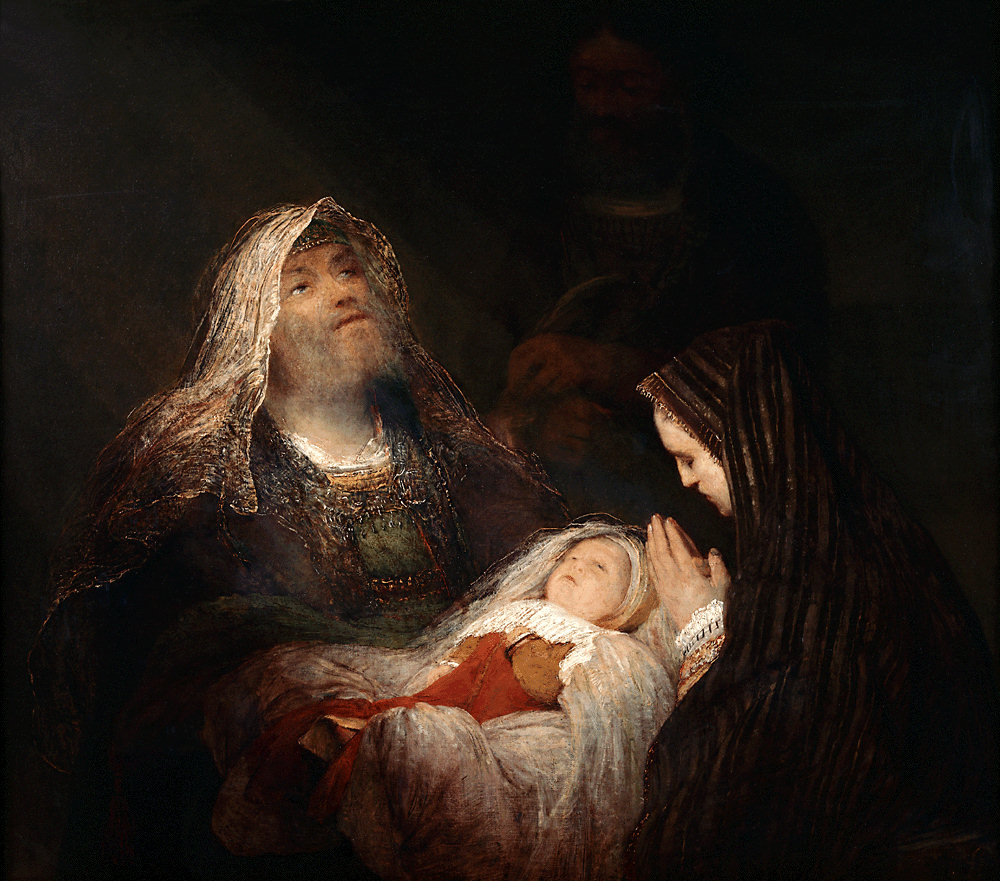
Also among the people of this time there was another group that were called “the Quiet in the Land.” These were people who didn’t talk very much, but instead they clung to the promise spoken by God Himself of the Messiah. One of these quiet ones was a man named Simeon.
He was called “righteous and devout” and someone “waiting for the consolation of Israel.” Which meant he carefully attended to the prophecies of Scripture. The Amplified Bible says that Simeon “lived in prayerful expectancy [of] the Lord’s Christ.”
I left out an important part of that prophecy in Isaiah 9—something that I think the loud ones overlooked or downplayed too. In between those words about “warrior” and “God’s zeal” we read this: “For to us a Child is born, to us a Son is given. The government will be upon His shoulders. And He will be called Wonderful Counselor, Mighty God, Everlasting Father, Prince of Peace” (Isaiah 9:6).
What does the “Prince of Peace” have to do with a warrior? Quite simply, when Jesus the Messiah came, the struggle was over. Jesus was the Warrior King who defeated the enemy of sin that kept us out of God’s presence.
The loud Israelites believed God wanted His people to rule their Promised Land for themselves. But God wanted a people exclusively for Himself. ALL people—Jews and Gentiles alike—regardless of where or when they lived!
Jesus is the way into God’s presence. He told us, “I am the way, the truth, and the life” (John 14:6).
You can try to solve your own problems, but only Jesus can bring the ultimate salvation. In the Christmas carol Come, Thou Long-Expected Jesus, check out the lyrics of the second stanza:
Born Thy people to deliver,
Born a child and yet a King,
Born to reign in us for ever,
Now Thy gracious kingdom bring.
By Thine own eternal Spirit,
Rule in all our hearts alone;
By Thine all sufficient merit,
Raise us to Thy glorious throne.
A relationship with Jesus means there is no more struggle of trying to solve our own problems, or figure out how things are supposed to work, or pushing down one problem only to have another one pop up. We come to the One and Only One who can raise us to His glorious throne forever and ever!
Advent is a celebration of the end of our struggle because Jesus has made the way for us to have peace with God.
Listen to the podcast of this post by clicking on the player below, and you can also subscribe on Apple, Spotify, or Audible.
What people were saying about Jesus from His birth—before He preached a sermon, performed a miracle, or stepped on the toes of religious or political leaders—was revealing the truth. I’ve already discussed the words of the Magi and King Herod the Great, but all of these men also interact with another group (Matthew 2:1-6). Matthew calls them “all the people’s chief priests and teachers of the law.”
This group was commonly called the Sanhedrin. It was an influential body of 70 + 1 leaders (Numbers 11:16), whose influence was felt in the temple in Jerusalem, in the synagogues in small villages, in King Herod’s throne room, and in the palace of the Roman governors.
Notice that Matthew says “chief priests” in the plural. At the time of the birth of Jesus, Caiaphas was high priest and Annas his father-in-law was the former high priest. In the time of the early church, Annas is again called the high priest (Luke 3:2; John 18:13; Acts 4:6)
Even under the Roman government the Sanhedrin held tremendous power…
they were experts in the Mosaic law and its application (Matthew 22:35)
Jesus said, “the teachers of religious law and the Pharisees are the official interpreters of the law of Moses” (Matthew 23:2 NLT)
Jesus also said they had storehouses of helpful knowledge (Matthew 13:52)
they decided who would get to use their authority (Mark 11:27-28; 1:22)
they were keepers of the traditions and became “indignant” when those traditions weren’t followed (Mark 7:5; Matthew 21:15)
they were exorcists (Mark 9:14-17; Acts 19:13-14)
Jesus said these leaders would be instrumental in His death (Matthew 16:21)
they had their own armed guards and prisons (Mark 14:43; Acts 4:1; 5:18)
yet they were afraid of the opinions of the people (Luke 22:1-2; Mark 11:31-32)
Jesus said they were “the official interpreters of the law,” yet they oftentimes interpreted the law to benefit themselves.
When Herod asks them where the Messiah is to be born, they quote Micah 5:2 as saying, “a Ruler who will be the Shepherd of My people Israel.” But the word they use for “Ruler” means a leader with authority, or a governor (the same word is used for Joseph in Acts 7:10). Remember Herod’s violent temper and his insane suspicion? The word these religious leaders used gave them an “out.” They were almost saying to Herod, “When the Messiah does come, He will be a governor, which means there’s a good chance that He would report to you.” This “tame” interpretation was an attempt to keep them in the good graces of King Herod the Great
But Micah himself uses the word for “Ruler” that means one with absolute dominion. Jesus will be THE Sovereign King.
After hearing that this long awaited Messiah had finally been born in fulfillment of the prophecies, take a look at their response—
they said .
they did . (even though Bethlehem was only 6 miles away!)
How sad!
But I think this is because they believed themselves to be “in” with Jehovah because they so carefully kept the rules. They didn’t need a Messiah to save them because—in their minds—they believed they were already saved from God’s punishment.
Keeping religious rules doesn’t save anyone.
Honoring age-old traditions doesn’t save anyone.
Only coming to Jesus saves anyone!
A key prophecy about Jesus in Isaiah 9:2 says that the Messiah will save us from darkness and shadows. What exactly are these?
The writer of Hebrews tells us that the law and rules are merely shadows of the True Substance. God said through Isaiah that relying on the rules keeps us trapped in meaningless religious traditions. But Jesus came as the Light and as the Substance that set us free. His death and resurrection made it possible for our sins to be forgiven (see Hebrews 10:1-7; Isaiah 1:11-14, 18).
Rules don’t take us into God’s presence, but Jesus does. Not just talking about Jesus, but coming to Jesus as our Savior and Lord.
People will talk about Jesus—even you may talk about Him. That doesn’t do anything. But when we do more than talk—when we come to Him to follow Him as our Ruler and Shepherd—then we find forgiveness and freedom.
Let’s not just talk about Jesus, but let’s be actively obedient!
Listen to the podcast of this post by clicking on the player below, and you can also subscribe on Apple, Spotify, or Audible.
Surely it was for my benefit that I suffered such agony… (Isaiah 38:17).
These are words written by King Hezekiah after God had healed his life-threatening illness. Hezekiah also noted how he would now conduct himself: “I will walk humbly all my years because of this anguish of my soul” (v. 15).
Hezekiah had been a godly king, leading Judah in removing idol worship from its borders. In his prayer from his sickbed, Hezekiah asked God to remember how he had faithfully lived in such a God-honoring way. God heard this prayer, He answered this prayer, and Hezekiah was totally healed.
Sadly, after the threat of death was removed, Hezekiah became proud of his accomplishments, and enjoyed showing off his treasures (Isaiah 39:2, 4). When some ambassadors came for a visit because they had heard he was ill, he showed them every precious thing he possessed, but didn’t mention one word of the God who had miraculously and graciously healed him.
There’s a valuable lesson in this for us to keep in mind today: Affliction can be a good thing IF it drives us to God’s presence.
And there’s a corollary to this lesson: Blessing can be a bad thing IF it drives us from God’s presence.
Hezekiah would have done well to remember the words of one of his predecessors. King Solomon prayed, “Give me neither poverty nor riches, but give me only my daily bread.Otherwise, I may have too much and disown You and say, ‘Who is the Lord?’ Or I may become poor and steal, and so dishonor the name of my God” (Proverbs 30:8-9).
Whether things are going well or not—whether we are suffering affection or enjoying blessing—we must be diligent to remain constantly dependent on God!
Listen to the podcast of this post by clicking on the player below, and you can also subscribe on Apple, Spotify, or Audible.
“…If you do not stand firm in your faith, you will not stand at all” (Isaiah 7:9).
These words were spoken to King Ahaz and his people when they heard that enemies had allied themselves to attack. Their immediate response was, “And his people were shaken, as the trees of the forest are shaken by the wind” (v. 2). These are the people to whom God says, “If you do not stand firm in your faith, you will not stand at all.”
In Hebrew this phrase is really just the same Hebrew word repeated twice: aman aman. It amounts to this: if you don’t stand, you won’t stand.
Stand on what? Your faith.
Faith in what? Isaiah tells us, “This is what the Sovereign Lord says” (v. 7). Jehovah Adonai is the final word. He calls the two conspiring enemies “smoldering stubs of firewood,” and He states definitively of their plans, “It will not take place, it will not happen” (vv. 4, 7). Fittingly, several English translations of this verse say, “Their plans will not stand.”
When God speaks his final and decisive word, my faith-filled response should be exactly what He commanded the Israelites: “Be careful, keep calm, and don’t be afraid. Do not lose heart” (v. 4).
I must deliberately and repeatedly silence the saber rattling of the enemy by standing in faith on God’s decisive word. My faith comes from hearing God’s word (Romans 10:17).
This is why I am a huge proponent of not only reading God’s word, but turning His decisive word into prayer. Reminding myself—and repeatedly re-reminding myself—of what Jehovah Adonai has said is the only way to stand firm in faith. If I don’t stand firm in faith on His word, I will not be able to stand at all.
I recently shared some faith-filled decisive promises from God’s word in another post. If I can help you find a word of God on which you can stand in faith, please reach out to me.
Listen to the podcast of this post by clicking on the player below, and you can also subscribe on Apple, Spotify, or Audible.
“Woe is me!” said the prophet (Isaiah 6:5).
The Hebrew word for “woe” here is the word “oy!” Although the word “woe” appears 20 times in the English translation of Isaiah, the Hebrew word “oy” is only used four times, and two of those times are Isaiah speaking of himself (6:5; 24:16). “Oy!” is a cry from a profound stab of pain from the realization that my sin has transgressed an All-Holy God.
Isaiah saw his own sin (6:5) as well a the sin of his people (3:9, 11), and it took his breath away. He stood trembling before a holy God pleading for mercy and cleansing before he could answer the call to be God’s messenger to the people of Israel (6:5-8).
The other Hebrew word that gets translated into the English word “woe” is “howy.” This is usually uttered from someone in pain because things aren’t going well. It’s a cry of, “Hey! Look! This is painful. This is not good at all.” But unlike “oy” which requires a profound heart change, “howy” can be said with the mouth without any change of the heart.
Isaiah cried, “Oy!” because his sin deserved the punishment of the Righteous Judge, but his heart posture called on God’s mercy for forgiveness and restoration. Because of his cleansed heart, Isaiah could now call, “Howy!” to the people: “Hey, sinful Israel, look at your sin. Look at how you’ve transgressed against God. Feel that pain, then don’t delay, but cry out ‘Oy!’ to Him now, while mercy may still be found.”
Isaiah’s “howy” had the impact of godly integrity because he had first cried “oy” in God’s presence. His “howy” was a call to others to do what he had done: see the holiness of God, see their sin, tremble in fear before an All-Holy God, and then cry “oy” to an All-Merciful God for forgiveness and restoration.
We should do the same thing. When the Holy Spirit convicts you of sin, don’t merely say, “Hey (howy), that hurts!” But say, “Oy! I have sinned, but God is a merciful Forgiver of sin.” Let that stab of pain from the conviction of your sin bring a change in your heart as well as a cry from your lips. God is merciful, and He does forgive.
Listen to the podcast of this post by clicking on the player below, and you can also subscribe on Apple, Spotify, or Audible.
Zechariah is the longest book of the minor prophets. His ministry overlaps Haggai the prophet, Ezra the priest, Zerubbabel the governor, and Joshua the high priest. I point all of this out because we need to always keep in mind that the Bible isn’t a collection of stories. It’s a verifiable (or falsifiable) record of real people at real moments in history. Many of the stories in the Bible confirm and even amplify each other.
Stand assured, encouraged, and unmovable on God’s Word
Aren’t you more assured of a message that has a confirmation? Like if one person gives you a compliment that you hadn’t considered before, and then later on someone else notices the same attribute. I think we are more ready to receive the word when it has a confirmation like that.
Haggai delivered a word directed to Zerubbabel the governor, which we saw was a prophecy pointing to and ultimately fulfilled in Jesus. God called Zerubbabel “Mysignet ring”—a mark of God’s supreme authority.
That might have been a difficult thing for Zerubbabel to accept, so Zechariah is given a confirming word two months after Haggai’s prophecy (Zechariah 4:1-9). This prophecy affirms the message given through Haggai, and also points to its ultimate fulfillment in Jesus.
But then Zechariah is also given an amplifying word, as he speaks a word from God to Joshua, the other “olive tree” in his God-given vision (Zechariah 3:1-9; 6:9-13).
Zechariah confirmed and amplified Haggai’s message. And then Jesus fulfilled both of their prophecies! We have the benefit of seeing the prophecy and fulfillment, which should build our faith in ALL of the promises in God’s Word.
The Word of God then become the (s)word of God in our mouths and hearts!
Because of these specific prophecies that have been fulfilled in Jesus Christ, we can now stand assured, encouraged, unmovable, and well-armed with the same sword of God.
There isn’t a more effective sword or shield than God’s (s)word!
Listen to the podcast of this post by clicking on the player below, and you can also subscribe on Apple, Spotify, or Audible.
Have you ever heard this truism: The person with an experience is never at the mercy of the person with an argument?
There are, sadly, many who deny the reality of God’s divine healing for today. They may say God healed in the past, but that age has passed, or they may simply deny all supernatural activity. I have the best reply to these skeptics or deniers—and you may have this same reply: God does heal today; I know this is true because He has healed me!
Our truth statement about this says: “Divine healing is an integral part of the gospel. Deliverance from sickness is provided for in the atonement, and is the privilege of all believers.” Let me break this down into three parts.
(1) “Divine healing is an integral part of the gospel.” After that word “integral” I’d like to insert the word “indisputable.” When God does the miraculous, it is an undeniable proof of His love and power. A great story to prove this point is when Jesus healed a paralytic after He forgave him of his sins (Luke 5:17-26).
Notice how the people responded: Everyone was amazed and gave praise to God. This glory to God has always been the reason God performs miracles (see Mark 6:7-13; Acts 2:43; Acts 3:9-12).
(2) “Deliverance from sickness is provided for in the atonement.” I like to remember that the word atonement means “at-onement” and stands opposed to disease which I like to say as “dis-ease.” Sin is our ultimate dis-ease—the ultimate separator—so Jesus took care of both our spiritual dis-ease and our physical dis-ease when He died on the Cross for us, just as Isaiah prophesied. That’s why the New Testament also shows us salvation and healing frequently being linked together (Acts 10:38; 8:4-8).
(3) “And is the privilege of all believers.”ALL believers, not just a select few and not just those who lived at the time of the first apostles.
Divine healing has been—and always will be—an integral and indisputable part of the gospel precisely because it exalts God as THE Healer.
Many people today still believe what the disciples of Jesus believed: Disease is a consequence of personal sin. In addressing this misunderstanding, Jesus said that disease was “so that the work of God might be displayed” in the life of the one about to be healed. He said something similar while at the graveside of Lazarus, before he raised that dead man back to life (John 9:1-38; 11:4-45).
Sometimes God heals us now, but ALWAYS He heals us in our glorified bodies (2 Corinthians 12:9-10; 5:1-9; Revelation 21:4). Our patience and hope in our future, ultimate healing glorifies God in the present.
By faith in Jesus we can claim that “by His stripes we have been healed” (1 Peter 2:24). The verb tense Peter uses means we have been healed, we are being healed now, and we will be ultimately healed in Christ’s eternal presence. Whether we are healed here or not, we can live knowing that His healing power always brings Him glory and always draws people to Him, so don’t hesitate to keep on asking Him for His healing touch on your body and soul.
This is a weekly series with things I’m reading and pondering from Charles Spurgeon. You can read the original seed thought here, or type “Thursdays With Spurgeon” in the search box to read more entries.
Listen to the podcast of this post by clicking on the player below, and you can also subscribe on iTunes or Spotify.
Such Love!
Our Savior so loved us that He stripped Himself of His robes of radiance. Listen, you children of God, it is the old story over again, but it is always new to you. He stripped Himself of His bright array. He laid aside His scepter and His crown and became an infant in Bethlehem’s manger among the horned oxen. Thirty years of poverty and shame the King of heaven spent among the sons of men, and all out of love to us. Jesus the heavenly lover, panting to redeem His people, was content to abide here without a place to rest His head that He might rescue us!
Do you see Him yonder in the garden in His agony? His soul is exceedingly sorrowful even to death! His forehead, no, His head, His hair, and His garments are red with bloody sweat. Do you see Him giving His back to the smiters and His cheeks to them who pluck off His hair? See Him, as He hides not His face from shame and spitting, dumb like a sheep before her shearers and like a lamb that is brought to the slaughter! He opened not His mouth but patiently bore it all on our behalf. See Him with the Cross upon His mangled shoulders, staggering through Jerusalem’s streets, unwept for and unpitied, except by poor feeble women!
See Him, you who love Him, and love Him more as He stretches out His hands to the nails and gives His feet to the iron. See Him, as with power to deliver Himself He is made captive. Behold Him as they lift up the Cross with Him upon it and dash it down into its place and dislocate His bones. Hear that cry, ‘I am poured out like water, and all My bones are out of joint’ (Psalm 22:14). Stand, if you can, and view that face so full of grief. Look till a sword will go through your own heart as it went through His mother’s very soul. Oh, see Him as He thirsts and has that thirst mocked with vinegar!
Hear Him as He prays and has that prayer parodied, ‘Look, He is calling for Elijah! … Let us see if Elijah will come to take Him down’ (Mark 15:35-36). See Him as they who love Him come and kiss His feet and bathe them with their tears. Will you not love Him who did all that friend could do for a friend? He who gave His life for us?
From The Church’s Love To Her Loving Lord
My friend, if you don’t know Jesus as your personal Lord and Savior, I ask that you would consider this amazing act of love all for you. Jesus went through all of this for you! Won’t you accept His love and invite Him into your heart today?
If you do have a personal relationship with Jesus, look again at your Beloved Savior. Let this love rekindle your heart to share Christ’s love with everyone around you.



 Isaiah 49 has an interesting phrase that appears twice: “But I said…” (vv. 4, 14).