When the Holy Spirit shines His light on a biblical promise, and you turn that into a prayer, write it down! You may need to go back to this again and again. When God answers your prayer, write it down again! This can become a testimony journal that you and others can use to recall God’s provision.
“The pathway to maturity and to solid biblical food is not first becoming an intelligent person, but becoming an obedient person.” —John Piper
“Somehow or other an extraordinary idea has arisen that the disbelievers in miracles consider them coldly and fairly, while believers in miracles accept them only in connection with some dogma. The fact is quite the other way. The believers in miracles accept them (rightly or wrongly) because they have evidence for them. The disbelievers in miracles deny them (rightly or wrongly) because they have a doctrine against them.” —G.K. Chesterton
“At every moment, we always have a choice, even if it feels as if we don’t. Sometimes that choice may simply be to think a more positive thought.” —Tina Turner
Every day should be a day of thanksgiving!
“We are strangers on Earth; our homeland is in Heaven. Our walk is here; our hearts are there.” —Dr. Henry Halley
I have already shared the first two posts in the latest archeological research on the biblical city of Jericho. Here is part three.
“Success is no accident. It is hard work, perseverance, learning, studying, sacrifice, and most of all, love of what you are doing or learning to do.” —Pelé
“The greatest leader is not necessarily the one who does the greatest things. He is the one who gets people to do the greatest things.” —Ronald Reagan
Listen to the podcast of this post by clicking on the player below, and you can also subscribe on Apple, Spotify, or Audible.
I was absolutely fascinated by a Messianic Jew’s insights on the Old Testament Tabernacle, and how every aspect of it pointed to Jesus the Messiah.
The overview of the construction of the Tabernacle starts in Exodus 25 and covers the next fifteen chapters in that book. Here are a few of my main takeaways from my friend’s teaching.
The materials for the Tabernacle are brought as a freewill offering given by freed slaves (Exodus 25:1-2). This gold, silver, bronze, linens, and other materials were gifts from the Egyptians when the Israelites left on the night of the Passover.
The Tabernacle is at the center of the Israelite camp (Numbers 2:1-34), signifying God’s presence in the center of our lives. When the Israelite community moved out, the tribe of Judah went first. Judah means “praise.” What a great reminder to let praise to God be at the forefront of all we do!
In Exodus 27:16, the materials to be used for the curtains compromising the entrance to the Tabernacle are blue, purple, and scarlet. The blue is for sky (Heaven), the purple designates royalty, and the scarlet signifies the blood of the sacrifices. Jesus came to earth as royalty from Heaven, and by His shed blood He opens the way for all of us to be with Him in Heaven forever! Jesus said He was the only way to Heaven (Hebrews 2:14-15; John 14:6).
The bronze altar for cleansing was just inside the entrance (Exodus 27:1-8). The worshiper offered this sacrifice in place of their sin. The priests would then move to the laver to wash off the dirt of the world. It’s important to note that the priests wash at the laver, not in the laver. Jesus is the One who washes us and cleanses us (Ephesians 5:26).
There are four different coverings over the Holy Place. As the priest progresses farther into the Holy Place, the coverings become thicker, so less outside light is visible.
First covering (Exodus 26:1) was blue, purple, and scarlet yarns (like the colors at the entrance) with cherubim woven into the fabric. The priests looking up would see these angels.
Second covering (v. 7) was goat’s hair. Goats were used for sin offerings, reminding the priests that there was a sacrifice to cleanse them so they could approach the presence of God.
Third covering (v. 14) was a red-dyed ram skin, showing the blood that covers us.
Fourth covering (v. 14) was the durable leather of a badger. Now there would have been very little light from outside, but the angels would still be seen for those inside the Holy Place.
In the Holy Place was the showbread (sometimes called the bread of presence) pointing to Jesus as our Bread of Life (Exodus 25:23-30; John 6:35). Also in the Holy Place was the lampstand filled oil (vv. 31-37). Only one stick holds the oil and supplies the other six branches. The priests could only work by the light of God. Jesus is our light (John 8:12). And we also find the altar of incense here (30:1-7). This was a unique perfume that wasn’t used anywhere else. The prayers of the saints that arise before the throne in Heaven as said to rise as incense (Psalm 141:2; Revelation 5:8). Worshipers in God’s presence are saturated with the aroma of Jesus (2 Corinthians 2:14-15).
In the Holy of Holies is the ark of the covenant of the Lord (25:10-22). Inside the ark were the stone tablets that contained the Ten Commandments. On top of the ark, overshadowed by the wings of two huge cherubim angels, was the mercyseat or atonement cover. Notice that mercy is over the Law, and that the blood of the sacrifice of Jesus covers my disobedience and makes me at one with God (the literal definition of atonement).
How beautifully all of these aspects of the earthly Tabernacle point to Jesus (Hebrews 8:5, 10:1)! And even more amazingly, Jesus fulfilled every requirement in this Tabernacle to make it possible for all who put their faith in Him to enter the Heavenly Tabernacle and remain in His presence for ever and ever!
And a voice came from the throne, saying, “Give praise to our God, all you His bond-servants, you who fear Him, the small and the great.” Then I heard something like the voice of a great multitude and like the sound of many waters, and like the sound of mighty peals of thunder, saying, “Hallelujah! For the Lord our God, the Almighty, reigns.” (Revelation 19:5-6)
What a song of praise is raised in Heaven!
You can join that heavenly choir every day when your life (and words) express your firm belief that your God is sovereign and you are His servant. That means your life lifts a mighty “Hallelujah!” when you live like this: “Not my will but Yours! May Your will be done on earth as it is in Heaven. Not to me, but may all of the glory and honor go to You!”
Listen to the podcast of this post by clicking on the player below, and you can also subscribe on Apple, Spotify, or Audible.
We lit the candle of Hope last week and today we light the candle of Peace.As we saw, hope is what allows us to experience peace and joy: “May the God of hope fill you with all joy and peace as you trust in Him, so that you may overflow with hope by the power of the Holy Spirit” (Romans 15:13).
But notice the phrase “as you trust in Him” in that verse. Peace doesn’t come just because we want it to, but it only comes as we trust in the One called the Prince of Peace.
Light drives out darkness and exposes sin, and often people don’t like it (John 1:9-11). In fact, Jesus Himself said that He was first coming with a sword to do battle against all of the things that rob us of lasting peace (Matthew 10:34).
Oswald Chambers described it this way, “The coming of Jesus Christ is not a peaceful thing; it is overwhelmingly and frantically disturbing, because the first thing He does is to destroy every peace that is not based on a personal relationship to Himself.”
Peace is only possible when the war is over. Modern-day diplomats use a phrase “sue for peace,” but this can only be done when one side admits defeat. God is at war with sin and He only gives peace to those who throw up their hands in total surrender to Him (Isaiah 57:14-21).
Jesus said He was the Light of the world and the only way to peace with the Father. The apostle Paul elaborates on that idea—
Remember that at that time you were separate from Christ, excluded from citizenship in Israel andforeigners to the covenants of the promise, without hope and without God in the world. But now in Christ Jesus you who once were far away have been brought near by the blood of Christ. For He Himself is our peace, who has made the two groups one and has destroyed the barrier, the dividing wall of hostility, by setting aside in His flesh the law with its commands and regulations. His purpose was to create in Himself one new humanity out of the two, thus making peace, and in one body to reconcile both of them to God through the Cross, by which He put to death their hostility. He came and preached peace to you who were far away and peace to those who were near. For through Him we both have access to the Father by one Spirit. Consequently, you are no longer foreigners and strangers, but fellow citizens with God’s people and also members of His household. (Ephesians 2:12-19)
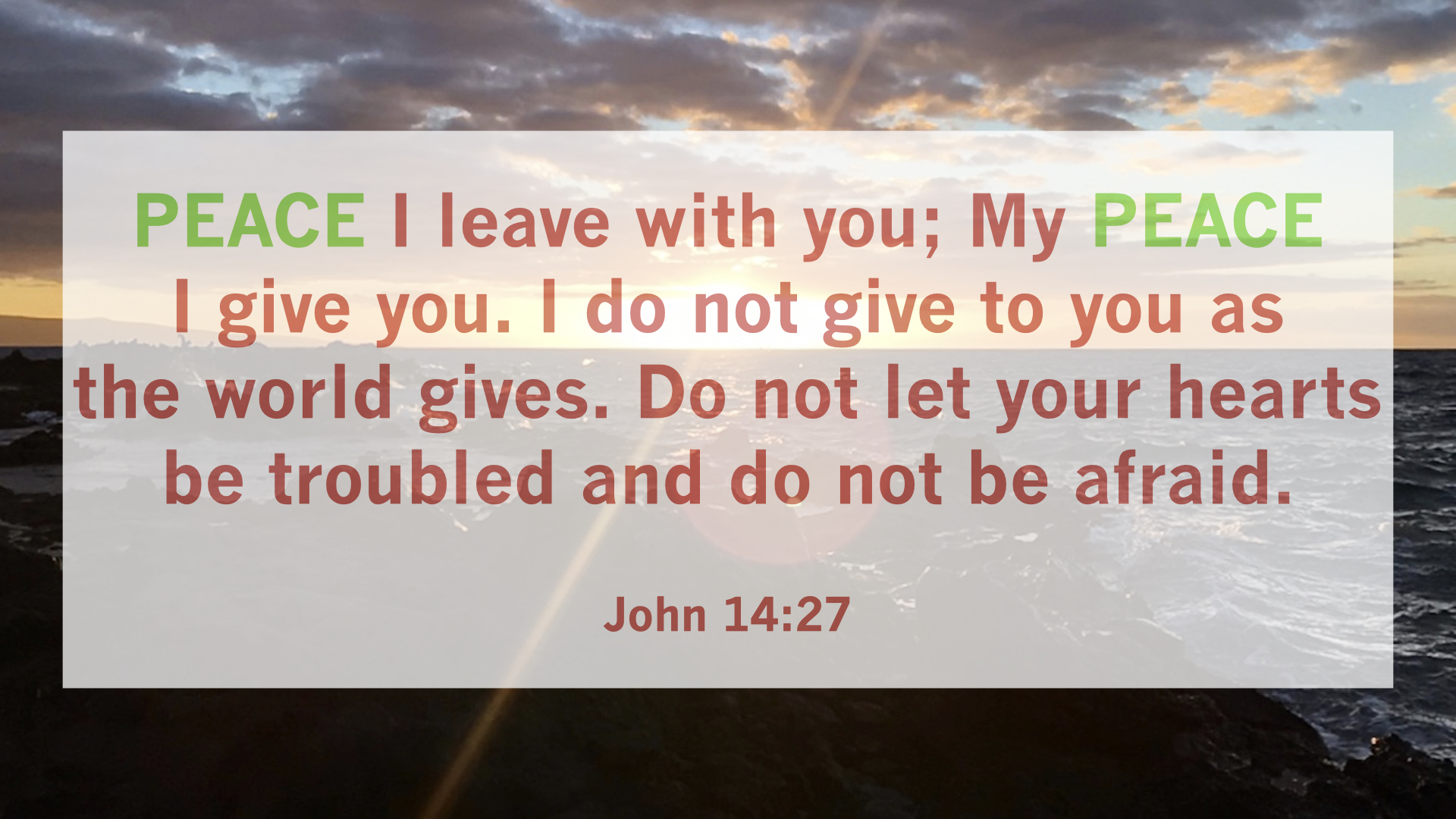
That’s what Jesus provided for us at His First Advent. Now, as we live between the Advents of Jesus, we can expect to have trouble in the world, but never peacelessness (John 14:27, 16:33).
The Messiah’s peace will:
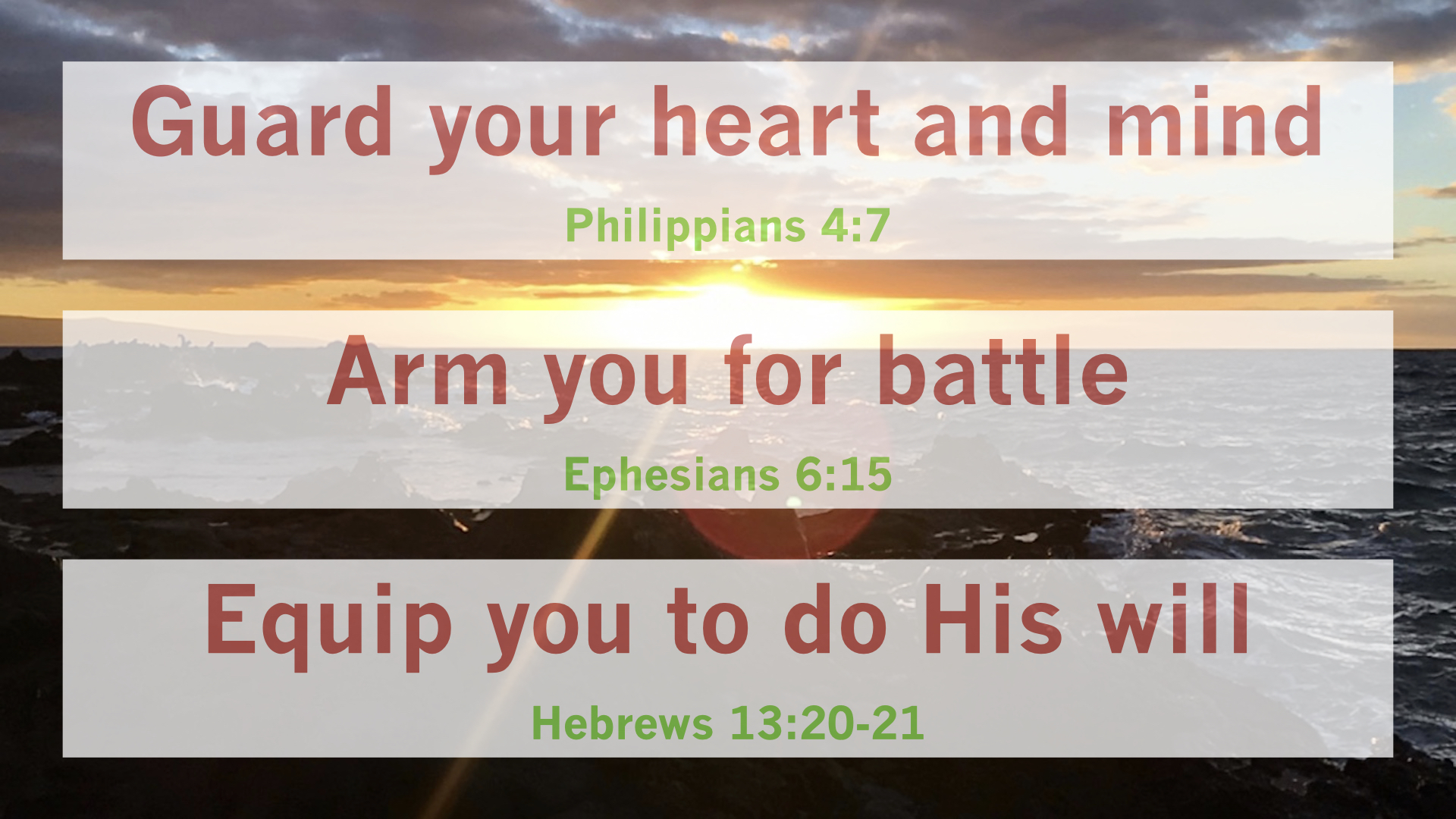
Guard your heart and mind—Philippians 4:7
Arm your for battle against the enemy—Ephesians 6:15
Equip you to do His will—Hebrews 13:20-21
As our hearts are guarded, we are prepared to stand firm in spiritual battle, and we are equipped to do God’s will, we can live in peace concerning Christ’s Second Advent.
Jesus will appear again to fulfill one of the first promises made about the peace He would bring. God told satan that Jesus would crush his head, and then Paul tells us, “The God of peace will soon crush satan under your feet” (Genesis 3:15, Romans 16:20)!
So we have no fear of Death or Hell because the Prince of Peace has forever defeated those things for those who “trust in Him” (Revelation 20:10, 14; 21:1-5).
Our anxiety is usually tied to our insecurity about our needs being met. Philippians 4:6-7 counsels us to turn those anxieties into prayer. It’s not what we can provide for ourselves, but trusting what our Heavenly Father has already provided for us. Check out this amazing series on prayer. I have lots of new content every week, which you can check out on my YouTube channel.
A recent post at the Institute for Creation Research says, “despite popular perception, the impact theory of dinosaur extinction has problems and is still a source of contention among even conventional scientists.” In fact, “Despite uniformitarian claims to the contrary, these rocks and fossils are best explained by the Genesis Flood that covered the earth about 4,500 years ago. All the air-breathing, land-dwelling creatures outside the Ark perished. However, the representatives of these animals that God brought on board the Ark, including dinosaurs, survived, reproduced, and spread across the Earth after the Flood. Many ancient peoples wrote about and described what appear to be dinosaurs, even though they called them by other names, e.g., dragons. In the creation Flood model, impacts may have hit the earth during the Flood, but none of them caused the dinosaurs to go extinct.” This article is a good overview of the geological and paleontological evidence that supports the biblical account of the Flood.
“Scripture teaches us that there are two points of view from which we may regard Christ’s death upon the Cross. The one is the redemption of the Cross: Christ dying for us as our complete deliverance from the curse of sin. The other, the fellowship of the Cross: Christ taking us up to die with Him and making us partakers of the fellowship of His death in our own experience. … O Christian, when the world crucified Christ, it crucified you with Him, when Christ overcame the world on the Cross, He made you an overcomer too. He calls you now, at whatever cost of self-denial, to regard the world, in its hostility to God and His kingdom, as a crucified enemy over whom the Cross can ever keep you conqueror. What a different relationship to the pleasures and attractions of the world the Christian has who by the Holy Spirit has learned to say: ‘I have been crucified with Christ;…[the crucified] Christ lives in me!’ (Galatians 2:20).” —Andrew Murray
Sullivan and Addie Chainey were both deaf, but that didn’t stop them from becoming premier missionaries in the Assembly of God fellowship. Their work with other deaf people was amazing! I love this concluding thought in this short biography of their ministry work: “The Chaineys’ story testifies that God can empower those who are marginalized in society to do redemptive work in their own communities and beyond.”
“Earth, I think, will not be found by anyone to be in the end a very distinct place. I think earth, if chosen instead of Heaven, will turn out to have been, all along, only a region in Hell: and earth, if put second to Heaven, to have been from the beginning a part of Heaven itself.” —C.S. Lewis, in The Great Divorce
Years later, Boaz was obeying this commandment in Leviticus 19:9. That allowed Ruth to be in his field, which led to a marriage that began the family line of King David, which traces all the way to Jesus! Obedience matters. Just imagine if Boaz had been disobedient in this. The Messiah still would have come, but Boaz and Ruth (and their children and grandchildren) would have missed out on this blessing.
Listen to the podcast of this post by clicking on the player below, and you can also subscribe on Apple, Spotify, or Audible.
The main point in Hebrew literature is usually found in the middle. In Psalm 122 that would be verse 5 where we seethe keyword in this verse is thrones—“thrones for judgment” and “thrones of the house of David.” Before this, we have the call to go up to Jerusalem (the City of Peace) in the first four verses, and after this, we have overwhelming, saturating peace in the last four verses.
But I wonder: How do thrones—especially a throne of judgment—bring about peace?
Remember that these are songs of ascent: we are called upward. I think “up” implicitly appears in verse 1—“I rejoiced with those who said to me, ‘Let us go UP to the house of the Lord,’—and “up” explicitly appears in verse 4—“That is where the tribes go UP, the tribes of the Lord, to praise the name of the Lord.”
There is clearly a longing to go up to meet with God, but I also detect a note of uncertainty. Let me show you what I see. First of all, verse 3 in the New Living Translation says about Jerusalem that “its seamless walls cannot be breached.” And yet the walls were breached in 586 BC when Jerusalem fell to the Babylonians. So anyone singing this song of ascent after the time of exile would have known that the walls weren’t as secure as David hoped they would be.
Second, verse 4 in the Contemporary English Version says that “every tribe of the Lord obeys Him.” And yet it was the disobedience of every tribe of the Lord that led to their defeat and then their 70-year exile. So, again, anyone singing this song of ascent after the time of exile would know about the punishment for disobedience.
In an earlier Psalm, David asked God who could go up to the Holy City, and then he answered his own question like this—
The one whose walk is blameless, who does what is righteous, who speaks the truth from their heart; whose tongue utters no slander, who does no wrong to a neighbor, and casts no slur on others; who despises a vile person but honors those who fear the Lord; who keeps an oath even when it hurts, and does not change their mind; who lends money to the poor without interest; who does not accept a bribe against the innocent. (Psalm 15:1-5)
That description also sounds a bit unachievable to me, because who has ever fulfilled all of the items on that list perfectly?
So we get to verse 5 and read about the thrones. The word “throne” means the seat of honor, authority, and power. It represents the place where the final and unchallengeable word is spoken. There is a final day of judgment before God’s throne, which John records in Revelation 20:11-15.
And yet, that day of judgment is not here yet. Jesus quoted the prophecy from Isaiah about Himself in His first sermon, but He purposely left off the last phrase about the day of judgment. He, instead, ended with the phrase where He had come to “proclaim the year of the Lord’s favor” (Isaiah 61:1-2; Luke 4:17-21). We see this thought again in John’s Gospel—
For God so loved the world that He gave His one and only Son, that whoever believes in Him shall not perish but have eternal life. For God did not send His Son into the world to condemn the world, but to save the world through Him. (John 3:16-17)
If we try to earn our own way into the Eternal Jerusalem, we will find that the walls can be breached, our obedience is not consistent, and that we are unable to keep that full list in Psalm 15. As a result, we face a throne of judgment.
But when we place our faith in what Jesus did for us on the Cross, where He paid the price for our sin, took away our unrighteousness, and gave us His righteousness in its place, then we will stand before the throne of shalom.
In the second half of Psalm 122, the words we read are peace, secure, peace, security, brothers and friends, peace, prosperity. That word “peace” is the Hebrew word shalom, which means nothing lost, nothing missing. Jesus wants us to be in the Eternal Jerusalem with Him for ever and ever.
Christ’s desire is that none should be separated from Him (see 2 Peter 3:9-14), so we could also say that shalom means no one lost, no one missing. We should want everyone—every tribe, nation, and people—to be with us in the Eternal Jerusalem forever!
I rejoiced with those who said to me, “Let us go UP to the house of Lord.” Let’s not go alone. Let’s bring as many people with us as we can to enjoy the eternal shalom of God’s Holy City!
If you’ve missed any of the other messages in our look at the Psalms of Ascent, you can find them all here.
Listen to the podcast of this post by clicking on the player below, and you can also subscribe on Apple, Spotify, or Audible.
When Mary visits Elizabeth, she discovers that Elizabeth is pregnant, just as the angel Gabriel told her. This confirms for Mary that everything Gabriel told her about her own pregnancy would be fulfilled too.
Mary’s rejoicing was prompted by her deeper realization of who her Savior is. The more she knows her Lord, the more she can praise Him; the more she praises Him, the more He is glorified; the more He is glorified, the more she knows Him.
So could we say it this way? As my spirit rejoices in God my Savior my soul glorifies Him. Yes, indeed we can! There seems to be an interconnectedness: As I focus on God to rejoice in Him, that rejoicing cannot help but glorify Him.
So we could also say it this way: God is glorified in my rejoicing of Him.
Or: As I express my delight in my Savior, His glory is seen more clearly.
However we put it, when I rejoice in who God is, He is glorified. As He is glorified, my joy in rejoicing in Him is increased. As my joy in Him increases, I cannot help but rejoice in Him even more.
This, I believe, is a picture of Heaven. Just as the angels encircle the throne and call out to one another, “Holy! Holy! Holy!” as they perpetually rejoice in a new realization of God’s glory, so will we. There are an infinite number of beauties in our Savior which will prompt us to rejoice in Him and glorify Him, so we need an infinite amount of time to fully appreciate His majestic beauty.
Let’s not wait until we arrive in Heaven to begin this loving worship. Let’s follow the example of Mary and sing out our praise at every possible moment. As we do, a desperate world cannot help but be drawn to gaze upon the beauty which is celebrated in our rejoicing.
Shalom—the peace that comes from God—could be defined simply as “nothing missing.” But couldn’t it also be defined as “no one missing”? It sure could! What peace there is when no one is missing from Heaven! Check out more of this message here. And be sure to check out all of my videos on my YouTube channel.
“Despite the moon’s apparently simple shape, uniformitarian scientists have long had great difficulty explaining how it could form by natural processes apart from a supernatural Creator. One Harvard astrophysicist once quipped that the best explanation for the moon’s existence was observational error—the moon doesn’t really exist!” This is a very interesting post from the Institute for Creation Research.
“Do we not miss very much of the sweetness and efficacy of prayer by a want of careful meditation before it, and hopeful expectation after it? … We too often rush into the presence of God without forethought or humility. We are like people who present themselves before a king without a petition, and what wonder is it that we often miss the end of prayer? We should be careful to keep the stream of meditation always running, for this is the water to drive the mill of prayer. … Prayer without fervency is like hunting with a dead dog, and prayer without preparation is hawking with a blind falcon. Prayer is the work of the Holy Spirit, but He works by means. God made man, but He used the dust of the earth as a material. The Holy Ghost is the Author of prayer, but He employs the thoughts of a fervent soul as the gold with which to fashion the vessel. Let our prayers and praises be not the flashes of a hot and hasty brain but the steady burning of a well-kindled fire.” —Charles Spurgeon, in Spurgeon and the Psalms
What a powerful word to pastors from T.M. Moore’s post First Things First. “Pastors sometimes complain that their people don’t seem very hungry or thirsty for the things of the Lord. Sated on the junk food of getting-and-spending, generously ladled over with pop culture, God’s people have little appetite for Christ or His Word. But what about us? Does our hunger and thirst for Christ make them long for the same? Do they see in us that earnest desire to be with the Lord that tells them they’re missing something of great importance? Loving Christ and delighting to be with Him is infectious. If the people we serve see it in us, they’ll want it for themselves, more than anything this world might offer.”
We don’t read about Jesus getting angry that often, but what usually got Him upset was when people in need were being kept from the God who could meet their needs. Sadly, it was usually man-made rules and practices that kept people away. I don’t want to make Jesus angry, so I need to evaluate anything in my life that may be standing in the way of connecting needy people with a need-satisfying God.
“So in our broader culture, people no longer sin; they make mistakes. What about our Christian environment? In our case, sin is not denied. Instead it is often redefined to refer to the more flagrant sins of society. We tend to ignore our own sins of pride, selfishness, gossip, and the like. So, effectively, no one sins anymore. The reason is that we have lost sight of the biblical meaning of sin. Typically, if we are not actually murderers, felons, or adulterers, we tend to think of our common sins as no more serious than a parking violation. We are so used to living with pride, selfishness, envy, gossip, and a whole host of other ‘respectable sins’ that we don’t even think of them as sin. But the fact is that, as serial sinners, we are all as guilty before God as that murderer. You and I sin every day in thought, word, deed, and motive. And whether those sins appear great or small in our own sight, in reality every sin we commit is an act of rebellion against God, a rejection and attempted negation of His sovereignty and rulership over us.” —Jerry Bridges
Pastors, on Monday morning, as you debrief how things went on Sunday, if you are feeling a bit discouraged, I want you to consider something Jesus said. Your success in ministry is not exclusively seen in the harvest you reap, but in the seeds you are sowing. Keep sowing good seed faithfully and then let God help it grow.
Many people turn to pornography when they are feeling bad about themselves. Sadly, watching porn can actually diminish a person’s self-esteem. Check out this post from Fight The New Drug.
“We ought above all things to desire a heavenly happiness; to be with God and dwell with Jesus Christ. Though surrounded with outward enjoyments, and settled in families with desirable friends and relations; though we have companions whose society is delightful, and children in whom we see many promising qualifications; though we live by good neighbors, and are generally beloved where known; we ought not to take our rest in these things as our portion. We should be so far from resting in them, that we should desire to leave them all, in God’s due time. We ought to possess, enjoy and use them, with no other view but readily to quit them, whenever we are called to it, and to change them willingly and cheerfully for heaven.” —Jonathan Edwards
“Jesus didn’t preach to tell you to turn over a new leaf, but to turn you to a new life.” —Reinhard Bonnnke
Steven Lee has an excellent post entitled Good leaders are easy to follow. I wholeheartedly concur! “A church’s willingness to obey and submit affects the joy and the care they receive from their leaders. But the reverse is true as well. Leaders can lead in a way that makes obedience and submission easy and happy, or difficult and frustrating. Shepherds shape the habits of the sheep.”
T.M. Moore has a series of posts on apologetics, which I encourage you to check out. In one post he writes, “God is not a capricious Deity. He does not act in ways that make it difficult to know Him or His will. His purposes are carefully considered and prudentially engaged, and in such a way that human beings can understand what He is about. … God shows us that He Himself is reasonable in that He makes known Himself and His will in a wide range of rational ways—through types and symbols and teachings and verbal exchanges of many different sorts. Anyone who takes the time to read the Bible can understand it. Its stories are stories about people like us. The teachings of Scripture are not shrouded in arcane or mystical language. What God has done and what God requires can be clearly discerned by any reasonable person, because God reveals Himself and His will in terms amenable and accessible to reason.”
Premier athletes know the value of flexibility for keeping them in the game. I think we would be wise to practice flexibility in our relationships too—this is definitely a game-changing move! Check out my weekly Monday Motivation videos on my YouTube channel.
“The bravest are surely those who have the clearest vision of what is before them, glory and danger like, and yet notwithstanding, go out to meet it.” —Thucydides
One of my YouVersion friends (Nikki) commented a great reminder: “God can do way more with my surrender than with my striving.”
Thomas Zimmerman was an influential leader in the early days of the Assembly of God fellowship’s history. “Over a 50-year period, Thomas F. Zimmerman (1912-1991) served the Assemblies of God as pastor, district official, department leader, assistant general superintendent, and general superintendent. His leadership greatly increased the influence of the Pentecostal movement in the evangelical world, as well as in the broader American religious landscape.”
I post quality content nearly every day. If you don’t have time to read all that I share, please let me read it for you. The Craig T. Owens Audio Blog is just like this blog, except you get to hear me read my blog posts. Check it out my podcast on Spotify, Apple, and even Audible.
“The word ‘hell’ is used in the New Testament fourteen times, twelve times by Jesus Himself. It is not a myth created by dismal and angry preachers. It is a solemn warning from the Son of God who died to deliver sinners from its curse. We ignore it at great risk.” —John Piper
Christian apologist and cold-case detective J. Warner Wallace wrote, “the battleground on the abortion issue is beginning to shift, and this shift is going to cause us to rethink our approach to the debate.” Pro-life advocates need to check out Wallace’s post Justifying Homicide: The Future Battleground In The Abortion Debate.




 Every day should be a day of thanksgiving!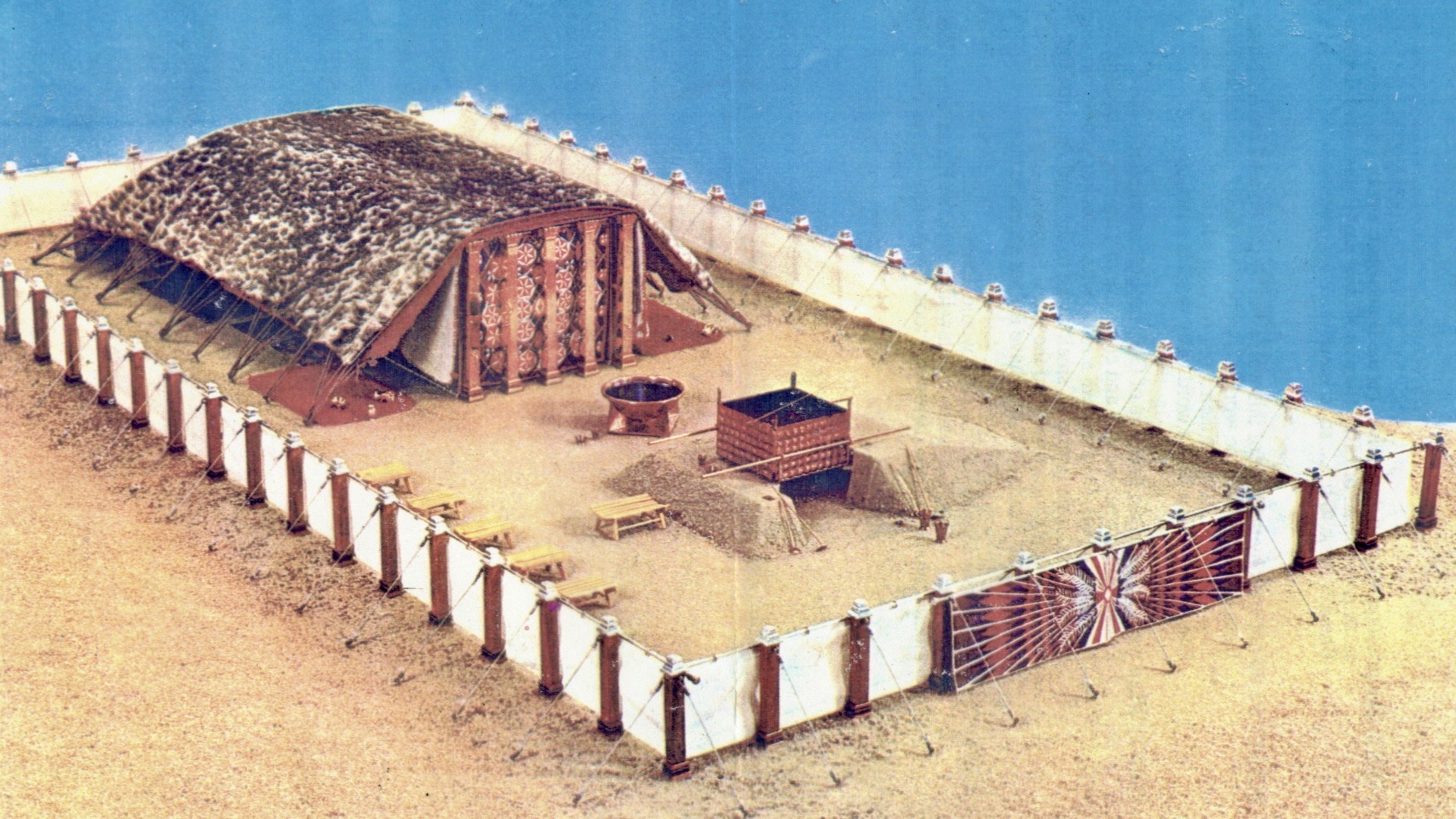




 Craig T. Owens