Overcoming Unbelief Before It’s Too Late

Unbelief can shut down the “Shalom Cycle” that God intends for our lives. Even worse, unbelief can put us on a slippery slope that could be disastrous for our future! So it is vital that we understand what unbelief is, how we can recognize it in our own lives, and the steps we can take to recover from unbelief. 

First of all, let me remind you of what the Shalom Cycle looks like—

Quite simply, when we are grateful for what God has already done for us it fuels our trust in God’s future grace to meet our needs. 

But when we forget to be grateful and gratitude turns to grumbling, unbelief displaces trust.

A good way to remember how unbelief works is thinking of it as an un-complete faith. An un-complete faith is lacking power to trust God because of one of two reasons:

  • Either we don’t know there is a promise available to us,
  • Or we know of a promise but don’t think it applies to our circumstance. 

J.C. Ryle pointed out that, “Unbelief has a power to rob man of highest blessings.” 

Hebrews 3 shows us that left unchecked and uncorrected, unbelief can turn into disbelief. You can remember this word by defining it as a complete disintegration of faith. Notice in Hebrews 3 how quickly the word unbelieving becomes turns away from God, and how closely associated are the words unbelief and disobeyed (Hebrews 3:12, 19-20). 

We need to correct and reverse unbelief as quickly as possible. We do this through capturing our thoughts—or thinking about what we’re thinking about—and identifying three warning signs: 

  1. Worrying all the time—God wants you to enter His rest, not wallow in worry (Hebrews 3:11) 
  2. Making contingency plans—the Israelites forgot to be grateful and they grumbled instead. The next step (since they didn’t trust that God’s future grace would take them into the Promised Land) was to disobey by concocting a Plan B: “Let’s go back to Egypt.” 
  3. An inward focus on self-preservation—we no longer encourage others but think only of ourselves (Hebrews 3:13). 

If you detect any of these warning signs, quickly repent (Revelation 3:2-3) and then run to Jesus for help. One of the most honest prayers you can pray—and one of the prayers Jesus answers the quickest—is “Lord, I believe; help me overcome my unbelief!” (Mark 9:22-24). 

“Lord, I believe; help me overcome my unbelief!” 

Take control of grumbling by gratitude
Take control of unbelief by repentance and running to Jesus for help
Then help others take control of their unbelief by encouraging one another daily

Join me next Sunday for the final message in our 4-part series on God’s Shalom. 
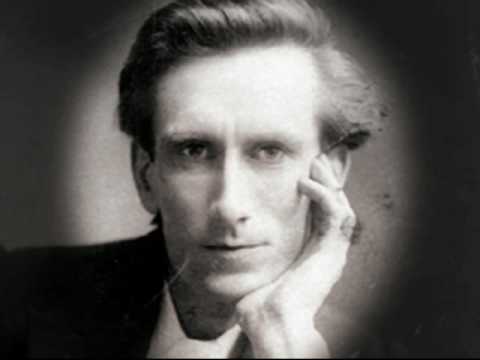
Thursdays With Oswald—Christianity In The Actual And Real Life

This is a weekly series with things I’m reading and pondering from Oswald Chambers. You can read the original seed thought here, or type “Thursdays With Oswald” in the search box to read more entries.

Christianity In The Actual And Real Life

     A man cannot take in anything he has not begun to think about, consequently until a man is born again what Jesus says does not mean anything to him. The Bible is a universe of revelation facts have no meaning for us until we are born from above; when we are born again we see in it what we never saw before. We are lifted into the realm where Jesus lives and we begin to see what He sees (John 3:3). 

     By “Actual” is meant the things we come in contact with by our senses, and by “Real” that which lies behind, that which we cannot get at by our senses (cf. 2 Corinthians 4:18). The fanatic sees the real only and ignores the actual; the materialist looks at the actual only and ignores the real. The only sane Being whoever trod this earth was Jesus Christ, because in Him the actual and the real world one. …  

     When we are born from above we begin to see the actual things in the light of the real. …

     Deliverance from sin is not deliverance from conscious sin only, it is deliverance from sin in God’s sight, and He can see down into a region I know nothing about. By the marvelous Atonement of Jesus Christ applied to me by the Holy Spirit, God can purify the springs of my unconscious life until the temper of my mind is unblameable in His sight. …  

     Everything Jesus says is impossible unless He can put His Spirit into me and remake me from within…. When a man is born from above, he does not need to pretend to be a saint, he cannot help being one. …

     There is only one way in which as a disciple you will know that Jesus has altered your disposition, and that is by trying circumstances. … The proof that God has altered our disposition is not that we persuade ourselves He has, but that we prove He has when circumstances put us to the test.

From Studies In The Sermon On The Mount

The truths that the Bible declares are real truths, but they need to be lived out in the actual life of a Christian. Jesus is the only One who has ever done this, but by His Atonement applied to our actual lives by the Holy Spirit, we can begin to live this way as well. 

In order to live out real truths in actual life, we have to experience actual life—all of the ups and downs, the victories and defeats, the temptations succumbed to and the temptations overcome—in light of real truth. In every experience, the Holy Spirit can sanctify us. I like to think of that word sanctification like this: saint-ification. If I will allow Him, the Holy Spirit can bring out actual saintly qualities in my life. 

The more I allow Him to do this, the more saintliness is seen in my actual life. As Chambers reminds us, then we don’t have to pretend to be a saint, but we cannot help but be an actual one! 

What Is Shalom?

Shalom is the Hebrew word for peace. Some of the best definitions of shalom include ideas of completeness, soundness, and wholeness. One Jewish rabbi commented that when you say “Shalom” to someone, you’re really saying, “may you be full of well-being.” Or another way of thinking of shalom is—nothing missing, nothing broken. 

Some have tried to describe shalom as the absence of conflict, but that’s not quite accurate. On the verge of going into the Promised Land to fight their enemies, God commanded Aaron to speak a blessing of peace of the people (Numbers 6:24-26). And just before Jesus said, “Blessed are those who are persecuted because of righteousness,” He said, “Blessed are the peacemakers” (Matthew 5:9-10). 

Shalom is not controlled by outward circumstances. Shalom is a deep-seated, rock-solid, unshakable assurance that I am in God’s hand. 

Isaiah describes how we live in shalom like this—

You will guard him and keep him in perfect and constant peace whose mind—both its inclination and its character—is stayed on You, because he commits himself to You, leans on You, and hopes confidently in You. (Isaiah 26:3)

How do we do keep our mind stayed on God? The Apostle Paul says, “We take captive every thought to make it obedient to Christ” (2 Corinthians 10:5). Psychologists call this process metacognition: when we think about what we’re thinking about. It’s being aware of our anxious thoughts that are robbing us of shalom and then talking back to them. 

What often robs us of peace is listening to ourselves instead of talking to ourselves! 

Someone once asked evangelist Smith Wigglesworth, “Smith, how do you feel?” He replied, “I never ask Smith how I feel. I tell him how he feels!” Exactly right! 

Why do we make our thoughts obedient to Jesus? Because one of the titles given to Jesus before He was born was Prince of Peace (Isaiah 9:6), and Jesus assures us that His peace is unlike anything we can ever find in earthly things (John 14:27, 16:33). 

God’s peace is always there, but our divided minds keep us from experiencing His peace. So Isaiah tells us to keep our mind steadfast on God’s goodness, and Paul says the same thing—Don’t fret or worry. Instead of worrying, pray. Let petitions and praises shape your worries into prayers, letting God know your concerns. Before you know it, a sense of God’s wholeness, everything coming together for good, will come and settle you down. It’s wonderful what happens when Christ displaces worry at the center of your life. (Philippians 4:6-7)

I want to encourage you to practice what the Bible calls capturing your thoughts—or what psychologists call metacognition. Ask yourself, “Why am I thinking that?” Capture those thoughts and make them obedient to Christ. Don’t let your worrisome thoughts rob you of God’s shalom.

Join me this Sunday as we take a closer look at the “shalom cycle,” including the things that can derail it. 

Thursdays With Oswald—How To Understand And Apply The Scriptures

This is a weekly series with things I’m reading and pondering from Oswald Chambers. You can read the original seed thought here, or type “Thursdays With Oswald” in the search box to read more entries.

How To Understand And Apply The Scriptures

     In order to understand the Sermon on the Mount, it is necessary to have the mind of the Preacher, and this knowledge can be gained by anyone who will receive the Holy Spirit (see Luke 11:13; John 20:22; Acts 19:2). The Holy Ghost alone can expound the teachings of Jesus Christ. The one abiding method of interpretation of the teachings of Jesus is the Spirit of Jesus in the heart of the believer applying His principles to the particular circumstances in which he is placed. “Be transformed by the renewing of your mind,” says Paul, “that you may prove,” i.e. make out, “what is that good, and acceptable, and perfect will of God” [Romans 12:2]. …

     Every mind has two compartments—conscious and subconscious. We say that the things we hear and read slip away from memory; they do not really, they pass into the subconscious mind. It is the work of the Holy Spirit to bring back into the conscious mind the things that are stored in the subconscious. In studying the Bible never think that because you do not understand it, therefore it is of no use. A truth may be of no use to you just now, but when the circumstances arise in which that truth is needed, the Holy Spirit will bring it back to your remembrance [John 14:26]. … 

     We do not hunt through the Bible for some precept to obey…but we live so in touch with God that the Holy Spirit can continually bring some word of His and apply it to the circumstances we are in. … The teaching of Jesus Christ comes with astonishing discomfort to begin with, because it is out of all proportion to our natural way of looking at things; but Jesus puts in a new sense of proportion, and slowly we form our way of walking and our conversation on the line of His precepts: Remember that our Lord’s teaching applies only to those who are His disciples.

From Studies On The Sermon On The Mount

What Chambers says about the Sermon on the Mount is true of any biblical passage we read: we need to have the Holy Spirit’s help to understand it and apply it to our unique life setting. 

Think of this—the same Holy Spirit who inspired the biblical writers is the exact same Spirit who will assist you in understanding that Word! Before I read the Bible I often pray: May the Spirit who inspired this Word now illuminate my mind to understand it and obey it. 

Try that prayer yourself and see how God’s Word is opened up to you. 

What’s Behind A Church’s ♥able Reputation?

Last week I said if people are going to say “I ♥ That Church!” it has to be a ♥able church. A ♥able church has a ♥able reputation that compromises what Luke captured about the very first Church—internal unity, sincere piety, supernatural results, and practical help.

Once a church has this kind of reputation, how is it sustained? 

First, let me tell you how it’s NOT sustained: A church’s ♥able reputation isn’t sustained by that church focusing on it’s ♥able reputation. 

A ♥able reputation must flow from the constant development of godly character. Otherwise, we substitute what sounds good with what is actually sound, and we substitute what looks good with what is actually good. 

That’s what the Pharisees did—they were more concerned about how their religion looked to others, and not how it aligned with God’s heart. In fact, Jesus told two stories about people that thought they were “in” with God because of their reputation, but God actually says to them, “I don’t know who you are” (see Matthew 7:21-23; 25:1-12). 

Matthew Henry reminded us, “Men may go to hell with a good reputation!” 

But D.L. Moody got the order right when he said, “If I take care of my character, my reputation will take care of itself.”

I believe the first Church shows us three components of a maturing godly character. 

  1. Our source must be pure. The Christians devoted themselves to the apostles’ teaching. In other words, they grew with sound doctrine, not with things that sounded like doctrine (2 Timothy 4:3; Acts 17:11). 
  1. Our daily disciplines must be productive. The Christians saw “church” as an every day thing. They didn’t view studying the Scriptures, prayer, fellowship, and other maturing activities a merely something to be checked off their To Do list. 
  1. Our accountability must be in our fellowship. The Greek word for fellowship (koinonia) means an active involvement with the “one anothers” in the Church. What’s especially important is maintaining the highest levels of accountability with each other so that the growth of godly character can continue (see especially Hebrews 10:24-25; James 5:16). 

“When wealth is lost, nothing is lost. When health is lost, something is lost. When character is lost, everything is lost.” —Billy Graham 

My church’s ♥able reputation will be sustained as I am committed to growing in godly character. 

So… are you committed to that continual growth? 

A Church With A ♥able Reputation

Demographers report that there are upwards of 70 million people in America that are unchurched. In my own experience, I have found that the unchurched people I have met are really dechurched people. At one time they were a part of a church community, but finding nothing of value there, they left. 

The way the first-century community responded to the Church—the historian Luke says “everyone was filled with awe and enjoying the favor of all the people”—is how people will still respond today to the extent that we resemble that first Church. 

If people are going to say “I ♥ That Church!” we have to be a ♥able church!

Here are four qualities that I see in the first Church that gave it such a ♥able reputation— 

  1. Internal unity

Luke uses the word fellowship (Greek: koinonia) which means an intimate, personal involvement in each other’s lives. The historical account lists phrases like devoted, breaking of bread and prayer, together, together with glad and sincere hearts, and one in heart and mind. 

  1. Sincere piety

Church for these first Christians wasn’t a place they went to on a certain day of the week; it wasn’t a set of religious rules they rigorously followed. They didn’t do church because they had to, but because they loved to! Luke says all the believers were together, and every day they continued to meet…with glad and sincere hearts.

  1. Supernatural results

Luke says wonders and miracles, signs, and great power accompanied the Church’s activity. Interestingly, the order is fellowship → awe → miracles, NOT what I would have expected, which is fellowship → miracles → awe. The awe came from the Church’s unified, sincere fellowship, and then the miracles simply confirmed God was there (cf. Mark 16:20). 

  1. Practical helps

Henry Ford said, “You can’t build a reputation on what you’re going to do.” The first Christians saw people in need and they helped: they gave to anyone as he had need and they shared everything they had so that there were no needy persons among them. This is exactly what Jesus told us to do (see Matthew 25:34-40). 

People will ♥ the Church when they see real ♥ among church people! 

If we want to see dechurched people become rechurched people, we need to return to our Christian roots—we need to make sure we are lovingly unified in heart and mind, allowing God to perform the miraculous among us, and then practically meeting the needs of everyone around us. 

Join me this Sunday as we learn more lessons from this first-century Church. You can join me in person or on Facebook Live.

Alien Friendships

As Peter wraps up his letter, he reminds us of his purpose in writing to us aliens and strangers—

  • encouraging you = speaking encouraging words to your heart.  
  • testifying that this is the truth = speaking thoughtful words to your head. 

But Peter also says that he wrote this letter “with the help of Silas”—some translations even say “by Silas”—indicating that Peter needed someone to come alongside him with words of encouragement and strength, as much as he needed to deliver those words to fellow Christians. 

Peter mentions three people that were alongside him. These folks are instructive for us too:

  1. Silas 

Peter called Silas a faithful brother. The Greek word he uses for brother is adelphos, a word which usually meant someone who shared the same parents. But Peter modifies this to mean a Christian brother whose heartbeat with the love of Jesus the way his did; someone who shared the same Heavenly Father.  

Silas was a recognized church leader and a companion of Paul (Act 15:22, 30-32, 40). He had quite an extensive and impressive resume, and he also had the full endorsement for such notable people as James, Paul, and Peter. 

  1. She who is in Babylon

Babylon is a code word almost universally agreed to be Rome, but there is some debate as to whom the “she” is. Some think this is the church-in-exile in Rome, and some think this is Peter’s wife (Matthew 8:14; 1 Corinthians 9:5). 

Whether the church or Peter’s wife, they/she are anonymous servants of God, but never for a moment forgotten by God, nor is their reward going to be lacking (Matthew 6:1, 4). 

  1. Mark

Peter calls Mark my son. Again, he takes a word that originally meant “my offspring” and changes it to mean Mark was his protegé. 

Mark had traveled with Paul, then left Paul mid-journey, and was eventually reconciled to Paul (Acts 13:5, 13; 15:36-41; Colossians 4:10; 2 Timothy 4:11). 

Mark listened to and recorded Peter’s accounts of Christ’s earthly ministry and wrote the first Gospel that was produced. His Gospel became one of the main reference documents that Matthew and Luke referred to in writing their Gospels. 

Here’s the point—There are no dispensable people in the Church! 

You may be like Silas with many talents and an impressive resume and references. Or you may be like the “she” who is an anonymous helper to others. Or you may even by like Mark who made mistakes but was given a second chance to make good on your commitment. 

You need a Silas, a she, and a Mark in your life. And you just may need to be one of those to someone else. 

“You can deceive yourself with beautiful thoughts about loving God. You must prove your love to God by your love to your brother; that is the one standard by which God will judge your love to Him. If the love of God is in your heart you will love your brother.” —Andrew Murray 

So let me ask you to consider something vital: Are you remaining faithful to your Christian family? 

If you’ve missed any messages in this series, you may find the complete list by clicking here.

Fight Or Flee?

But you, man of God, flee from all this, and pursue righteousness, godliness, faith, love, endurance and gentleness. Fight the good fight of the faith… (1 Timothy 6:11-12). 

Psychologists tell us that when faced with certain situations our bodies instinctively prepared to fight or flight. Knowing which situations to fight and which to run from are crucial for living a long and productive life. 

It’s no different in the spiritual realm. 

Christian leaders must know which things are worth the fight, and which things they simply must flee. To flee from things we should fight shows a lack of courage. But to try to fight the things we should run from shows a lack of wisdom. 

A mark of a godly leader is one who knows what to fight and what to flee.

Three things you must FIGHT for…

  1. …the purity of the true faith (1 Timothy 6:12; Jude 1:3)
  2. …the disempowered (Proverbs 31:8-9; Matthew 21:12-13)
  3. …the devil (1 Peter 5:9; James 4:7; Ephesians 6:11) 

Three things you must FLEE from…

  1. …idolatry (1 Corinthians 10:14)
  2. …sexual sin (1 Corinthians 6:18; Genesis 39:12)
  3. …earthly riches (1 Timothy 6:9-11)

Don’t try to fight the things you must flee from, and don’t run away from the things you must fight for. Pray for God’s wisdom to know which is which. 

This is part 29 in my series on godly leadership. You can check out all of my posts in this series by clicking here.

Battle Ready

The Bible says that satan prowls around like a lion, looking for an opening to devour Christians. Are you battle ready? The Apostle Peter gives us all of the battle preparation that we will need to be victorious!

One of the most important things we need to do is prepare ourselves before the battle even begins. Peter lists two key components: (1) self-control and (2) alertness (1 Peter 5:8-11). 

This Greek word for self-control is only used six times in all of the New Testament. Peter uses it three times in his first epistle, and the Apostle Paul also uses the word three times. It’s amazing to see the similarity in uses between the two of them. 

Both apostles use self-control in the context of the value of prayer (1 Thessalonians 5:6, 8; 1 Peter 4:7). In other words, Christians don’t wear armor to fight; they wear armor to pray. We have to be self-controlled enough to stick to the business of prayer. 

Restraining prayer, we cease to fight 
Prayer makes the Christian’s armor bright 
And satan trembles when he sees 
The weakest saint upon his knees. —William Cowper

Then both apostles use the Greek word for self-control in the context of using God’s Word as a spiritual weapon (2 Timothy 4:1-5; 1 Peter 1:10-13). Jesus used this same strategy in his battle in the desert against satan (Matthew 4:1-10)—Jesus was praying before the devil came to tempt Him, and then He defeated the devil’s temptations by quoting Scripture. 

Peter says the devil “prowls around like a roaring lion.” Notice that important word: like. The devil has always been an imitator—trying to be like God, he was expelled from Heaven, and then he deceived Adam and Eve by telling them they could be like God too. He’s using the same strategy now. 

Augustine pointed out, “Christ is called a Lion because of His courage; the devil because of his ferocity. The Lion comes to conquer, the other to hurt.” 

So Peter encourages us to “resist him, standing firm in the faith.” You resist the devil when you… 

  • …stay submitted to God 
  • …remember the blood of the Jesus—THE Lion of Judah—that won your victory 
  • …stay self-controlled in prayer
  • …remain alert in the Scriptures

Ask the Holy Spirit to keep you battle ready by helping you to develop the self-control and alertness you need. 

If you’ve missed any messages in this series, you may find the complete list by clicking here.

Thursdays With Oswald—Jeremiah 24

Oswald ChambersThis is a weekly series with things I’m reading and pondering from Oswald Chambers. You can read the original seed thought here, or type “Thursdays With Oswald” in the search box to read more entries.

Jeremiah 24

[These are notes from Oswald Chambers’ lecture on Jeremiah 24.] 

     The estimate a Christian must hold of his own value is what he is worth to God. You cannot judge whether you are right with God by His blessings because “He makes His sun to rise on the evil and on the good, and sends rain on the just and on the unjust” [Matthew 5:45]. God is not meant to bless us; the vital question is—What am I worth to God? In times of affliction am I giving way to self-pity? am I badgering the throne of God for Him to bless me, or am I saying, “Though He slay me, yet will I wait for Him” [Job 13:15]? … 

     The question, “What do you see, Jeremiah?” is the call for Jeremiah to state clearly to himself what it is he sees. ‘Two baskets of figs set before the temple of the Lord’—these symbolize the people as they appear before God. They have been trying to bring wrong things to the altar, and now God is saying He will destroy the evil and wrong out of the nation.

     “Therefore, I urge you, brothers, in view of God’s mercy, to offer your bodies as living sacrifices, holy and pleasing to God—this is your spiritual act of worship” (Romans 12:1). This verse refers to an abiding law, individually and nationally: we cannot consecrate to God anything that is sinful. We cannot present our bodies “a living sacrifice” to God unless we have been cleansed from sin; He won’t have them. The call in this verse is not for sanctification, but for the service of the sanctified. We could never begin to be of worth to God in service until we have been through what is represented in the atoning sacrifice of Our Lord Jesus Christ. That is why the majority of us are of no worth to God. We are of no value to God until we enter into the experience of instantaneous, continuous sanctification, then our “spiritual act of worship” is the offering of ourselves “as living sacrifices, holy and pleasing to God,” and we no more bother about ourselves.

From Notes On Jeremiah

This is, without a doubt, a challenging word from Oswald Chambers that deserves some time for us to thoughtfully consider it. 

Can God use me? Am I allowing the Holy Spirit to continually and instantaneously stamp the image of Jesus more clearly in my life? Or am I saying, “I’m good like this. I don’t need to go any further”? 

God wants to use us for His glory. Are we allowing ourselves to be in a place where we can be used “as living sacrifices, holy and pleasing to God”?