John Calvin On Prayer

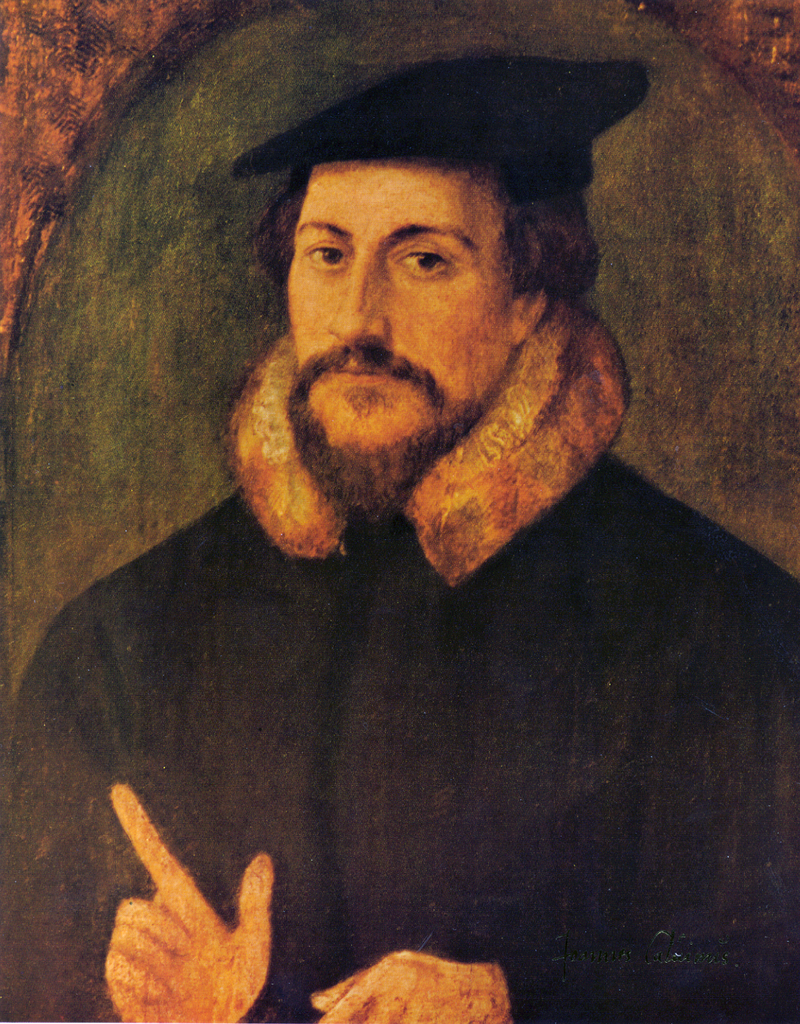
John CalvinSome great quotes from John Calvin on prayer…

“Oh Lord, Heavenly Father, in Whom is the fullness of light and wisdom, enlighten our minds by Your Holy Spirit, and give us grace to receive Your Word with reverence and humility, without which no one can understand Your truth.” —John Calvin

“O grant that we may learn to rely wholly on Your goodness.” —John Calvin

“Prayer is the spade with which we dig up all the promises in God’s garden.” – John Calvin  

“Whenever men are to pray to God concerning any great matter, it would be expedient to appoint fasting along with prayer. Their sole purpose in this kind of fasting is to render themselves more eager and unencumbered for prayer… with a full stomach our mind is not so lifted up to God.” – John Calvin

14 Quotes From “Not Knowing Where”

Not Knowing WhereNot Knowing Where is the first Oswald Chambers book I ever read, and I was instantly hooked. I recently re-read this book and found new gems I hadn’t seen before. You can read my full book review by clicking here, and then enjoy a few of the many, many quotes I highlighted this time around.

“To debate with God and trust common sense is moral blasphemy against God. … When God calls us He does not tell us along the line of our natural senses what to expect; God’s call is a command that asks us, that means there is always a possibility of refusal on our part. Faith never knows where it is being led, it knows and loves the One Who is leading.”

“The call of God only becomes clear as we obey, never as we weigh the pros and cons and try to reason it out.”

“God will never allow you to hold a spiritual blessing for yourself, it has to be given back to Him that He may make it a blessing to others. If you hoard it, it will turn to spiritual dry rot.”

“There is a difference between circumstances and environment. We cannot control our circumstances, but we are the deciders of our own environment. … ‘Circumstances over which I have no control’ is a perfectly true phrase, but it must never be made to mean that we cannot control ourselves in those circumstances.”

“At times it appears as if God has not only forsaken His Word, but has deliberately deceived us. We asked Him for a particular thing, or related ourselves to Him along a certain line, and expected that it would mean the fullness of blessing, and actually it has meant the opposite—upset, trouble and difficulty all around, and we are staggered, until we learn that by this very discipline God is bringing us to the place of entire abandonment to Himself.”

“God holds His children responsible for the way in which they interpret His will. We only discern God’s will by being renewed in the spirit of our minds in every circumstance we are in. We must learn to tell ourselves the truth on the basis of God’s Word.”

“In worship I deliberately give back to God the best He is given me that I may be identified with Him in it.”

“The greatest enemy of the life with God is not sin, but the good that is not good enough. … Many of us do not go on in our spiritual life because we prefer to choose what is our right instead of relying upon God to choose for us.”

“Reality is not found in logic; Reality is a Person.” 

“Spiritual fatigue comes from the unconscious frittering away of God’s time. When you feel weary or are exhausted, don’t ask for hot milk, but get back to God.”

“To say ‘I have got the victory’ is a selfish testimony; the testimony of the Spirit of God is that the Victor has got me.”

“A saint is not an angel and never will be; a saint is the flesh and blood theater in which the decrees of God are carried to successful issues. All of which means that God demands of us the doing of common things while we abide in Him.”

“Self-pity is satanic.”

“There is nothing more heroic than to have faith in God when you see so many better things in which to have faith.”

Attitude Check

Attitude checkWhen we realize that nothing can thwart God’s plan, and that you and I are a part of that plan, I think there could be a couple of attitudes that might pop up: (1) Confidence―not in my abilities, but in God’s; or (2) Humility―not thinking less of myself, but thinking of myself less.

Confidence without humility leads to self-destructive pride, and humility without confidence leads to self-destructive fear. We need confidence with humility, just like Jesus demonstrated in going to the old rugged Cross.

We can see the confidence in Jesus when He claims to be the “I AM” (John 8:54-59). But we can also see the humility of Jesus when He said He would lay His life down (John 10:11, 15:13).

These two attitudes converge powerfully in John 13:1-17 when we read that Jesus knew that God had put all authority under His command (vv. 1, 3), and then He used His confident authority to serve His friends by washing their feet.

Confidence without humility won’t serve because it thinks others must serve them. Humility without confidence won’t serve because it thinks others will take advantage of them. But Jesus was confidently humble (or humbly confident) so He could serve. It’s the only time Jesus said “I have set you an example” (v. 15). Our attitude is to mirror His, and we are to confidently and humbly serve.

A humbly-confident / confidently-humble servant is known by his or her:

  • Heart―E.G.O. (edging God out) or E.G.O. (exalting God only) [*]
  • Head―having his/her thoughts aligned with the Word of God
  • Hands―serving God and others (Matthew 20:25-28)

If you were to honestly reflect on this, where do you rate yourself?

  • Are you confident that God loves you and has a plan for your life, a plan that cannot be thwarted?
  • Are you humble enough to serve others? To give up your own agenda so that God is glorified?
  • Can you honestly say you have the right E.G.O.?
  • Are your thoughts becoming more and more aligned and shaped by God’s Word?

We’ll be continuing our series on The Old Rugged Cross next Sunday, and I would love to have you join us.

[*] My thanks to Kenneth Blanchard for his insightful description of E.G.O. in his book Lead Like Jesus

21 Benefits From Doing Things God’s Way

got wisdom?I was reading Proverbs 3 this morning, and the opening words are, “My son, do not forget my teaching….” As if to emphasize why we shouldn’t forget how God tells us to live, Solomon lists at least 21 benefits that come from doing things God’s way―

  • A life worth living
  • Tranquility
  • Favor
  • Good reputation with God and people
  • God will keep you on track
  • Health and strength
  • Overflowing success
  • God’s discipline
  • Wisdom and understanding
  • Better return on investments
  • Riches and honor
  • Peace
  • Blessing
  • Safety
  • Sweet sleep
  • Fearlessness
  • Confidence
  • God’s friendship
  • A blessed home life
  • Grace
  • Honor

Now that’s a list worth having! And it’s all there for the one who will heed God’s Word and obediently live out what He says.

An Insightful Dozen From Andrew Murray

Andrew MurrayI love the insight of this godly man, and I hope you enjoy these quotes too…

“God, as Creator, formed man to be a vessel in which He could show forth His power and goodness. Man was not to have in himself a fountain of life or strength or happiness. The ever-living and only living One was intended each moment to be the communicator to man of all that he needed.” 

“The blessing of God’s Word is only to be known and enjoyed by obeying it: ‘If you love Me, you will obey what I command’ (John 14:15). Keeping His Word is the only proof of a genuine saving knowledge of God, of not being self-deceived in our faith, of God’s love being experientially known and not merely imagined.”

“The person who reads his Bible with longing and determination to learn and to obey every commandment of God is on the right path to receiving all the blessing the Word is meant to bring.”

“The New Testament standard of Christian commitment is barely realized in the church today. Its whole tone is intensely supernatural. Christian commitment and devotion involves a life totally identified with the life of Christ. It must be a life in the continual presence and under the guidance of the Holy Spirit.”

“Many pray for the Spirit that they may make use of Him and His power for their work. This is an entirely wrong concept. It is He who must use you.”

“Unless we are willing to pay the price, to sacrifice time and attention and seemingly legitimate or necessary tasks for the sake of the spiritual gifts, we need not look for much power from above in our work. God’s call to much prayer need not be a burden or cause for continual self-condemnation. He intends it to be a joyful task. He can make it an inspiration. Through it He can give us strength for all our work and bring blessing to others by His power that works in us.”

“Let our lack of prayer convict us of the coolness in our Christian life that lies at the root of it. God will use the discovery to bring us not only the power to pray that we long for but also the joy of a new and healthy life of which prayer is the spontaneous expression.”

“Our prayers must not be vague appeals to His mercy or indefinite cries for blessing, but the distinct expression of a specific need. It is not that Jesus’ loving heart does not understand our cry or is not ready to hear, but He desires that we be specific for our own good. Prayer that is specific teaches us to better know our own needs.”

“Do you see what holiness is and how it is to be found? It is not something formed in you. It is not something put on you from without. Holiness is the presence of God resting on you. Holiness comes as you consciously abide in that presence, doing all as a sacrifice to Him.”

“The connection between the prayer life and the Spirit life is close and indissoluble. … Learn from our Lord Jesus how impossible it is to walk with God, obtain God’s blessing or leading, or do His work joyously and fruitfully apart from close, unbroken fellowship with the One who is our living fountain of spiritual life and power.”

“His blood is the eternal and undeniable proof that God the Father and Christ will do for you all that is needed, and that they will not forsake you until they have accomplished their work in you from beginning to end.”

“Live your daily life in full consciousness of being righteous in God’s sight, an object of delight and pleasure in Christ. Connect every view you have of Christ in His other graces with this first one: Christ Jesus—our righteousness from God. This will keep you in perfect peace.”

Links & Quotes

link quote

“Hope is not some vague emotion that comes out of nowhere, like a stomachache. Hope is the confidence that the stupendous future promised to us by the Word of the Spirit is going to really come true. Therefore, the way to be filled with the Spirit is to be filled with His Word. The way to have the power of the Spirit is to believe the promises of His Word.” —John Piper

“God never fits His Word to suit me; He fits me to suit His Word.” —Oswald Chambers

Good food for thought: Let’s Bring Conversation Back.

Seth Godin has more great insight in More Trouble Than It’s Worth.

An interesting discussion on the state of the United States Armed Forces: The World Is Becoming More Dangerous.

4 Notes On Haggai

(c) Laura Kranz at The Overview Bible Project (see my note below)

(c) Laura Kranz at The Overview Bible Project (see my note below)

The prophet Haggai wrote one of the shortest books in the Old Testament, and his recorded ministry only spans five months(!) in 520 B.C. But in this short book I find four really cool things—

(1) God uses His people at specific times for specific purposes. All of Haggai’s messages from God have a very precise date stamp on them, so we know exactly when  they were delivered. Also, most of his messages say something like, “The word of God came through Haggai to Zerubbabel [or to Joshua, or to the people, or to the priests].” If God used Haggai like this, isn’t it likely that He is using you or I at specific times and for specific purposes?

(2) God invites us to “give careful thought” to His messages. Five times God says, “Give careful thought to your ways” (1:5, 7; 2:15, 18). This phrase literally means to take a strong hold on each thought and examine it intensely. This thought process is always connected to another phrase: “This is what the Lord Almighty says….” In other words, we are to thoughtfully examine our lifestyle with God’s Word being the standard of measurement (cf. 2 Corinthians 10:5).

(3) Obeying God’s Word brings God’s “stirring.” When God says move and we move, His Spirit will energize our spirit, and empower our lives for action. God never calls us to do something without giving us the empowerment to do it.

(4) I need to act courageously. God calls us to “be strong” (three times in 2:4) “and work, for I am with you.” Courageous action after God has stirred us up drives out fear. On the flip side, inactivity because of fear almost always leads to more fear and more inactivity.

Don’t ever let the category “minor prophet” trick you into thinking God doesn’t have a major message to share with you. Just one word from God is more powerful than we can ever imagine!

(The portrait of Haggai in this post was created by Laura Kranz at The Overview Bible Project. She and her husband Jeffrey do some amazing things that will add insight to your Bible study time. Click here to read my review of their book The Illustrated Guide To The Authors Of The Bible. And while you’re on their website, subscribe to some of the cool guides that regularly get emailed out.)

E.M. Bounds On Prayer

E.M. BoundsAn amazing passage from E.M. Bounds’ book The Necessity Of Prayer—
“Here, let it be said, that no two things are more essential to a Spirit-filled life than Bible reading and secret prayer; no two things more helpful to growth in grace; to getting the largest joy out of a Christian life; toward establishing one in the ways of eternal peace. The neglect of these all-important duties, presages leanness of soul, loss of joy, absence of peace, dryness of spirit, decay in all things that pertain to spiritual life. Neglecting these things paves the way for apostasy, and gives the evil one an advantage such as he is not likely to ignore. Reading God’s Word regularly, and praying habitually in the secret place of the Most High puts one where he is absolutely safe from the attacks of the enemy of souls, and guarantees him salvation and final victory, through the overcoming power of the Lamb.” (emphasis added)

What God Is Building

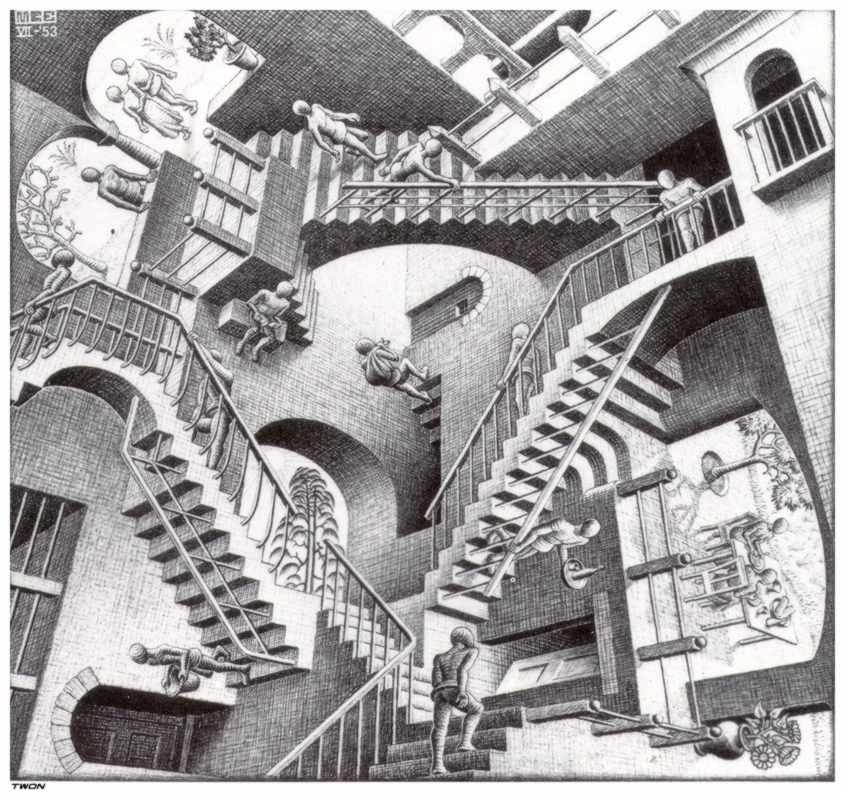
Relativity by M.C. EscherI love the drawings of M.C. Escher. But some of his sketches are clearly optical illusions we all know couldn’t work in the real world. We don’t have to be architects or engineers or builders to know that for a building to be functional it has to have (1) a solid foundation, (2) it must be built with quality materials, and (3) it must be constructed by someone who knows what he/she is doing.

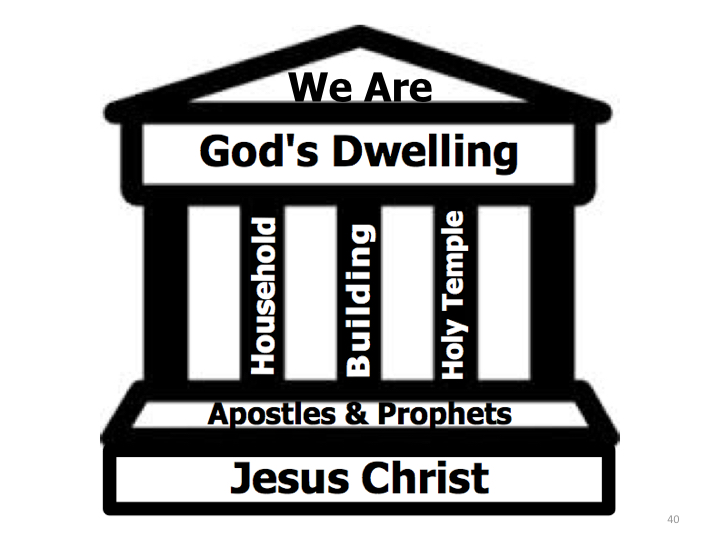
The Apostle Paul tells us that (1) Jesus Christ is the cornerstone of the sure foundation, (2) you and I—God’s saints—are the quality building materials that are being used, and (3) the Holy Spirit knows exactly what He is doing as He joins us together.

A cornerstone is the first stone set in the construction, the reference point for all other stone, which determines the position of the entire structure. Christ Jesus Himself is the cornerstone of His Church (Ephesians 2:20b). Orientated to that cornerstone we have the foundation of the apostles and prophets (2:20a).

This foundation is the Word of God (2 Peter 1:19-2:3 and 2 Timothy 3:14-4:5). We dare not try to replace, nullify, update, or change His Word. Not would this cause the foundation to crumble, but there are dire consequences for the one who tries to do so (Revelation 22:18-19).

Our foundationOn this foundation, God is constructing three things, each one growing in its level of intimacy with Him and with the surrounding saints:

  • God’s household (Ephesians 2:19)—this Greek word means a family home.
  • the whole building (Ephesians 2:21a)—this is a specific part of the family home used for prayer and fellowship.
  • a holy temple (Ephesians 2:21b)—this is the same word used for the Holy Place and Holy of Holies in the tabernacle.

God’s Presence dwells in us individually, but collectively we make a more powerful statement (1 Corinthians 3:16). There is a far greater testimony to the world when individuals willingly and actively allow themselves to be built together; when Christians give up their personal agendas to say, “I want to be a part of something bigger than me—I want to be a part of we.”

We must study God’s Word to make sure we are building on the same foundation. We must allow our lives to be quality building materials. We must allow the Holy Spirit to build us together through prayer and fellowship! This becomes the fulfillment of the prayer Jesus Himself prayed for us (John 17:20-23).

This was the last message (for this time) in our series on the Book of Ephesians. I hope to be able to continue this study next year.

9 More Quotes From “The Blood Of The Cross”

The Blood Of The CrossThere were way too many quotes from The Blood Of The Cross by Horatius Bonar that I wanted to share, so here is the second installment. You can read the first set of quotes by clicking here, and you can read my review of this must-read book by clicking here.

“It is not my looking to the blood in conjunction with my looking to my own act of seeing that brings this peace. It is my simple and direct looking to the blood. It is in looking that I am blessed; not in thinking about my looking. To look to the blood is to be cleansed; to look away from the blood, or too self, or to the world, or to sin, is to arrest the cleansing process and to neutralize the healing power. The more I see of the matchless value of that blood, and understand the substitution of life for life, which that blood proclaims, and to which it is ever pointing, the more will my peace be like a river.”

“The Lamb has been slain, the Lamb of God, as it is written, ‘It pleased the Lord to bruise Him’ (Isaiah 53:10). His blood has been shed, and sprinkled, and accepted; and that shed blood is for the remission of sin, and for reconciling us to God. That blood is intended to set us in the place of the innocent; to bring us nigh to God just as if we had never separated; to be our recommendation to God, so that coming with it as our plea, we may expect to be treated by God as HE is treated Whose blood we thus recognize and rest on.”

“To come with anything else than the blood as our introduction is most certainly to secure or for ourselves rejection; but to come with it alone is to ensure that blessed welcome which the blood has never yet failed to obtain for the vilest sinner that ever went to God with it as his only plea.”

“That blood is valuable enough to answer for yours, and God is willing to accept the exchange. Nay, it was He Who first proposed it; it is He Who is pressing this exchange upon your notice and entreating you to receive it, so that there maybe nothing left for you to pay.”

“It loses none of its efficacy by time or repetition. It is the same in this age as when it was shed at first. It is the same today as when first we applied to it for healing and for cleansing. Nothing can rob it of its potency. It has cleansed millions; it can cleanse millions more; it has washed out stains, in number past calculation, in dye most thoroughly crimson. Yet it is unpolluted. It has taken on no stain. It is still as able to pacify the conscience and to release the soul from guilt.”

“Realizing these things, the saint moves on his joyful course. The blood is ALL to him. It is his peace; it is his medicine; it is his daily comforter. And resting in it he rejoices in hope hope of the glory to be revealed.”

“Thou hast gone near enough to the gates of hell; yet go not in. Turn back. It is not yet too late. Even thou mayest be saved. The gate of light stands as widely open as the gate of darkness. The way of life, the narrow way, is as free to thee as is the way of death. There is still forgiveness. And the glad tidings of it are as glad as ever. No sin of thine has altered that gladness or made the tidings a forbidden joy to thee. We can tell you as truly as ever that ‘these things are written that thou mightest believe that Jesus is the Christ, and that believing thou mayest have life through His name’ (John 20:31).”

“That nonconductor is unbelief. It interposes between the soul and all heavenly blessing, all divine intercourse. It may seem a thing too slight to effect so great result; yet it does so inevitably. It shuts off the communication with the source of all glad tidings. It isolates man, and forbids the approach of blessing. That conductor is faith. In itself it is nothing, but in its connection everything. It restores in a moment the broken communication; and this, not from any virtue in itself, but simply as the conducting link between the soul and the fountain of all blessing above.”

“In Jesus there is salvation—salvation without a price—salvation for the most totally and thoroughly lost that this fallen earth contains. Go and receive it.”