In his letter to the Christians in Ephesus, Paul uses the word “walk” seven times to instruct them how to follow the path Jesus laid down for us.
In Greek, the word for “walks” (peripatēo) means something that regulates my life, or something that keeps me on the right path. It’s my lifestyle that is kept in proper boundaries by something outside of me.
First of all, notice how Paul tells Christians how not to walk. DON’T WALK THIS WAY…
…following pop culture (2:2)—Living a certain lifestyle because “everyone” is doing it, or because some popular people are living that way.
…without thinking about why you’re walking the way you are (4:17)
…without comparing your walk to truth (5:8)—Living a life because it feels good to me is a dangerous way to live. I must make sure there is an objective truth that is keeping me on a proper path.
…foolishly (5:15)—To be foolish is either (a) not knowing the truth, (b) not applying the truth I have been shown, or (c) choosing to disregard the truth I’ve been given.
…knowing I am God’s workmanship, created for a great purpose (2:10)—It may take me some time to discover my purpose and my talents, but I keep at it.
…worthy of my vocation (4:1)—Once I have discovered my talents, I develop them into strengths that will benefit others.
…lovingly (5:2)—Just as Jesus did!
…in the light of God’s truth (5:8)—This is the exact opposite of foolishly walking. It means I seek the truth and I apply the truth to my life.
…circumspectly (5:15)—Not wasting my moments, but making sure I am giving 100 percent every single day.
When I WALK THIS WAY people will inevitably notice that I’m motivated not by popularity with people, but by intimacy with God (5:2-7). They will see that my path is bordered by the principles in God’s Word (5:8-14; Psalm 119:105). And they will notice that my life has purpose and is productive (5:15-20).
All Christians should ask themselves:
Is Jesus pleased with the path I’m on today?
Can others follow my footsteps toward their own relationship with Christ?
If you can answer “yes” to those questions, then Jesus will be pleased that you WALK THIS WAY!
[You can check out the Scriptures I referenced in this post by clicking on DON’T WALK THIS WAY and WALK THIS WAY above.]
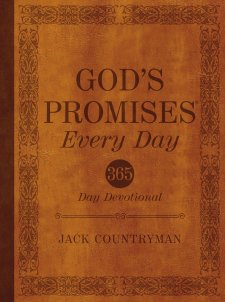
God’s Promises by Jack Countryman is a wonderful resource to help you use the Bible to enhance your prayer life and build your faith. Check out my full review of this fantastic book by clicking here.
“Each day we can look forward to God’s Spirit going before, clearing the way, leading the path, and giving us the guidance we need. … But God doesn’t stop at mere survival. He doesn’t just satisfy and strengthen. Though there will be difficulties and times of drought in our lives, God guides us to His living waters. He enables us to flourish ‘like a watered garden,’ where His blessings always bloom.” [Isaiah 58:11]
“When life darkens our door with its troubles and trials, satan wants nothing more than for us to feel forsaken and alone—but we are not! God stands by our side; He guides, counsels, and comforts. Rest assured, no matter what you face in the coming year, nothing can separate you from the love of your Father (Romans 8:38-39). Therefore walk boldly into each new day, knowing that you follow the footsteps of the One who never leaves you.” [Deuteronomy 31:8]
“Troubles are never pleasant at the time, but they quickly turn into tools when entrusted to God. Our Lord will take our times of troubles and trials—even the hard feelings we experience in them—then use them to teach us to fully rely on Him and His provision.” [Psalm 138:7]
“Our God is a loving God, but He isn’t Santa Claus or a genie in a bottle. Our God loves to give good gifts, but in His economy the best gifts are not tangible or material. Yes, our God feels compassion when we hurt, but He still allows hardships into our lives that will refine our character and strengthen our faith. Against the backdrop of these truths, we can better understand the often-misread statement that God will give us the desires of our hearts. The real promise of this verse is that, as we pray, read His Word, and grow closer to the Lord, He will change our hearts so that what we desire for ourselves is what He desires for us.” [Psalm 37:4]
“Mercy. We don’t deserve it. We haven’t done—can’t possibly do—anything to earn it. And yet we are promised that this unbelievably lavish gift is ours when we choose to follow Jesus. Why? Why would such a perfect and powerful God gives such a gift to ones so undeserving? He tells us in Titus 3:4: because of ‘the kindness and love of God our Savior toward man.’ And He not only gave us mercy, He also ‘poured out on us abundantly’ His own Spirit, to live and work within us, making us more and more like the Savior who died to save us.” [Titus 3:4-6]
“Our God is not some fickle, capricious, changeable sort of God. He does not search out ways to be angry or displeased with His people. In fact, He so wants to be pleased with us that He gave us the example of His Son to follow.” [Ephesians 5:2]
“When our burdens and sorrows seem too heavy for us to bear, God offers to carry them for us, inviting us to cast them upon Him (Psalm 55:22). And when the sorrow is so great that we feel we cannot put one foot in front of the other, God gives us this promise: ‘I will carry you; I will sustain you’ (Isaiah 46:4).”
“Perhaps nothing is as devastating as being betrayed by someone you love and trust. Know that Jesus—betrayed by Judas, denied by Peter—fully understands. He will enable you to recover. The key, as hard as it is, is to pray for that person and ask God to bless him or her. When you pray to God—and you may have to do this again and again—you release the anger and disappointment that come with being betrayed. It is difficult to despise someone you lift up in prayer. And though retaliating is a natural response, it’s not a godly one. Praying is always the best option. Allow the Lord to receive your hurt and to replace it with His peace.” [Psalm 3:4, 6]
“When we place our faith in Christ, the stormy seas of our lives—churned up by our own sins—are stilled. And while the storms may still rage around us in this sin-plagued world, they do not rage within us. That does not mean our troubles and tribulations are over, but it does mean we can rest in knowing God will see us through them.” [Romans 5:1]
C.S. Lewis said, “If satan’s arsenal of weapons were restricted to a single one, it would be discouragement.” How true! In relation to our prayer time, satan tries to discourage with lies like—
“God has bigger things on His mind than your puny request!”
“God helps those who help themselves; what have you done for yourself?”
“You created this situation and now you think God is going to bail you out?!?”
“Haven’t you prayed about this long enough already?”
“Your prayers don’t really make a difference.”
All of these lies are designed to discourage you, but always remember this—they are all lies! David said to God, “You keep track of all my sorrows. You have collected all my tears in Your bottle. You have recorded each one in Your book. My enemies will retreat when I call to You for help. This I know: God is on my side!” (Psalm 56:8-9)
A great example of a man who prayed long and hard—and fought off the things that might discourage him to give up—was Daniel.
Daniel began to do two things in the physical realm that results in two unseen spiritual victories taking place.
First, Daniel prayed. Daniel not only prayed boldly, but he also prayed long. Although Daniel prayed for 21 days, when an angel arrived with God’s answer, the angel said, “From the moment you decided to humble yourself to receive understanding, your request was heard in heaven. I have come in answer to your prayer.”
Second, Daniel fasted. The word fast literally means “to cover the mouth.” In Daniel’s case, we know that for 21 days he abstained from meat and wine. But he also abstained from “choice food” (NIV). What are those? I think these might be our “comfort foods.” Foods we go to to help relieve stress. Foods that become substitute sources of help, instead of humbling ourselves to go to God and ask for wisdom.
As Daniel was praying and fasting, it appeared that nothing was happening. But there were actually two victories won out of human sight.
First, a spiritual battle was won. The angel sent to Daniel was locked in combat with a demon for 21 days before he broke free to come to Daniel. We are still involved in that kind of spiritual warfare today (see Ephesians 6:12-18).
Second, Daniel was being refined and strengthened. When the angel arrived, he called Daniel “highly esteemed.” Don’t miss this—this greeting is the same Hebrew word used for what Daniel fasted (“choice food”). In other words, the temporary thing Daniel fasted turned into something of invaluable strength.
What if Daniel had stopped praying after 2 days? 10 days? 20 days?
Daniel—and you and I—may not see with our natural eyes the victories that are being won, but make no mistake about it: Our fasting and praying IS doing something amazing.
Your prayers are being heard. Spiritual battles are being won. You are being refined. God IS going to accomplish something great. God IS being glorified. Don’t stop praying and fasting until God comes through!
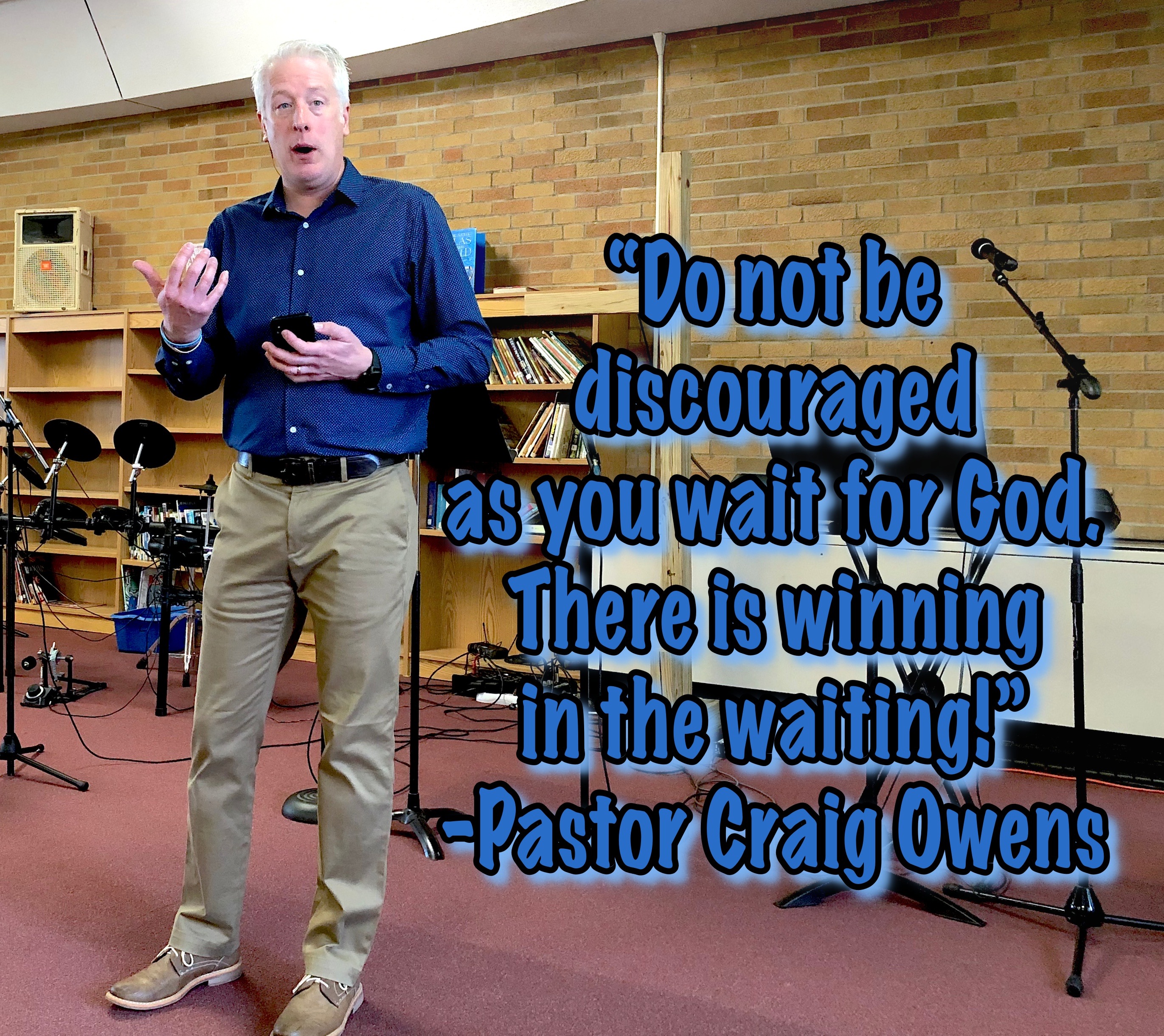
Do not be discouraged as you wait on God. There is winning even in the waiting!
Just as John was obedient to his calling, I need to be obedient to God’s calling as well.
John spoke God’s word clearly. He lived it out. He didn’t water down nor compromises his message. He didn’t let “ministry success” lead to pride. His whole life pointed everyone to Jesus.
This I must do too!
A mark of a godly leader is one who is humbly confident that God has a call on his life.
This is part 33 in my series on godly leadership. You can check out all of my posts in this series by clicking here.
In my current Bible reading time, I am reading J.C. Ryle’s Expository Thoughts On The Gospels as a read-along companion with my Bible. Bishop Ryle correctly feels the weight and effectiveness of prayer in the life of a Christian. Here are some of his quotes regarding prayer.
“If afflictions drive us nearer to Christ, the Bible, and prayer, they are positive blessings.”
“It is not for us to prescribe either the time or the way in which our requests are to be answered.… Let us rather ‘continue in prayer,’ ‘watch unto prayer,’ ‘pray always and not faint.’”
“Why is it that there is so much apparent religious working and yet so little result in positive conversions to God—so many sermons, and so few souls saved—so much machinery, and so little effect produced—so much running here and there and yet so few brought to Christ? Why is all this? The reply is short and simple: there is not enough private prayer. The cause of Christ does not need less working, but it does need among the workers more praying. … The most successful workmen in the Lord’s vineyard are those who are, like their Master, often and much upon their knees.”
“If we would have good ministers we must remember our Lord’s example and pray for them. Their work is heavy. Their responsibility is enormous. Their strength is small. Let us see that we support them and hold up their hands by our prayers.”
“Let us bear these rules in mind every Sunday morning before we go to hear the Word of God preached. Let us not rush into God’s presence careless, reckless, and unprepared, as if it mattered not in what way such work was done. Let us carry with us faith, reverence, and prayer. If these three are our companions, we shall hear with profit and return with praise.”
“Let a petition for more faith form a part of all our daily prayers. As ever we would have peace, and calmness, and quietness of spirit, let us often say, ‘Lord, increase our faith.’”
“Let us strive and pray that the same mind may be in us which was in our blessed Master. Like Him, let us be willing to go anywhere, do anything, suffer anything when the path of duty is clear and the voice of God calls. Let us set our faces steadfastly to our work when our work is plainly marked out, and drink our bitter cups patiently when they come from a Father’s hand.”
“We must seek to have knowledge as well as zeal. Zeal without knowledge is an army without a general, and a ship without a rudder. We must pray that we may understand how to make a right application of Scripture.”
“Prayer is one of the best and most powerful means of helping forward the cause of Christ in the world. … Not all believers have money to give to missions. Very few have great intellectual gifts or extensive influence among men. But all believers can pray for the success of the Gospel—and they ought to pray for it daily.”
“Prayer is one of the principal weapons which the minister of the Gospel ought to use. To be a true successor of the apostles, he must give himself to prayer as well as to the ministry of the Word (Acts 6:4). He must not only use the sword of the Spirit, but pray always, with all prayer and supplication (Ephesians 6:17, 18). This is the way to win a blessing on his own ministry. This, above all, is the way to procure helpers to carry on Christ’s work.”
“Daily bread and daily mercy are by far the first and principal things that mortal man needs. He is the rich man who possesses them. He is the wise man who is not ashamed to pray for them every day.”
“Nothing that concerns God’s people is too little for Him to manage or for them to bring before Him in prayer.”
“‘He spoke a parable to this end: that men ought always to pray, and not to give up.’ These words, be it remembered, are closely connected with the solemn doctrine of the second advent, with which the preceding chapter concludes. It is prayer without fainting during the long weary intervals between the first and second advents which Jesus is urging His disciples to keep up.”
“Let us often pray that we may have wisdom from above in order to answer rightly when perplexing questions are put to us. The servant of Christ must expect a portion like his Master. He must count it no strange thing if the wicked and worldly-minded endeavor to entangle him in his talk, and to provoke him to speak unadvisedly with his lips.”
“Whatever other means of relief we use, let us pray. The first Friend we should turn to ought to be God. The first message we should send ought to be to the throne of grace.”
When C.S. Lewis first introduces us to the land of Narnia in The Lion, The Witch and The Wardrobe, we discover that the White Witch has Narnia seemingly under her iron fist, and has made it so that it’s always winter but never Christmas.
“Come on!” cried Mr. Beaver, who was almost dancing with delight. “Come and see! This is a nasty knock for the Witch! It looks as if her power is already crumbling. … Didn’t I tell you, that she’d made it always winter and never Christmas? Didn’t I tell you? Well, just come and see!”
And then they were all at the top and did see.
It was a sledge, and it was reindeer with bells on their harness. But they were far bigger than the Witch’s reindeer, and they were not white but brown. And on the sledge set a person whom everyone knew the moment they set eyes on him. He was a huge man in a bright red robe (bright as holly-berries) with a hood that had fur inside it and a great white beard that fell like a foamy waterfall over his chest. … Some of the pictures of Father Christmas in our world make him look only funny and jolly. But now that the children actually stood looking at him they didn’t find it quite like that. He was so big, and so glad, and so real, that they all became quite still. They felt very glad, but also solemn.
“I’ve come at last,” said he. “She has kept me out for a long time, but I have got in at last. Aslan is on the move. The Witch’s magic is weakening.”
I think the Israelites waiting for their Messiah must have felt a little like the Narnians: always winter, but never Christmas; trapped under the iron-fisted rule of Babylon, and Persia, and Rome.
But as they approached what we now call the year 1 AD, winter is about to end and the Advent of CHRISTmas is about to occur at long last!
You might think that the birth of Jesus brought us the King of Kings. But actually, there were three other “king of kings” that preceded Jesus, who all helped to fulfill God’s ultimate plan.
Nebuchadnezzar was the king of Babylon. God called him “My servant” and also gave him the title “king of kings” (Jeremiah 27:6; Ezekiel 26:7). It was he who defeated Judah and took captives with him to Babylon. Among those captives was a young man named Daniel.
God gave Daniel the ability to interpret Nebuchadnezzar’s dream which foretold of three other kingdoms which would follow Babylon, with the fourth kingdom being called a kingdom of iron. History shows us that Babylon was defeated by the Medes, who were in turn defeated by the Persians, who were themselves defeated by the Greco-Romans.
Artaxerxes was king of the Persians, and he called himself “king of kings” (Ezra 7:12). He helps to facilitate the Jews’ return back to Jerusalem, and even helped fund their efforts to rebuild the temple of Solomon and reestablish worship there.
In 44 BC, Julius Caesar was assassinated, and Octavius was named in Caesar’s will as his adopted son and heir. Eventually, Octavius quelled a 20-year-long civil war and established himself as the unquestioned ruler of the Roman Empire. He changed his name to Caesar Augustus, which means the exalted one. But all throughout the Mediterranean world archeologists have discovered numerous other titles for Caesar Augustus—Divine, Son of God, God Incarnate, God from God, Lord, Redeemer, Liberator, Savior of the World, and King of Kings.
Historian Luke records these words, “In those days Caesar Augustus issued a decree” (Luke 2:1). This decree called everyone to return to his hometown to be registered in Rome’s census. This decree meant that Joseph was obligated to return to Bethlehem. He took his pregnant wife with him to arrive just in time for Jesus to be born.
Jesus—THE eternal and ultimate King of Kings—was born in Bethlehem just as had been prophesied 700 years earlier in the winter of Israel’s captivity:
But you, Bethlehem Ephratah, you are little to be among the clans of Judah; yet out of you shall One come forth for Me Who is to be Ruler in Israel, Whose goings forth have been from of old, from ancient days (eternity). (Micah 5:2)
The coming of THE King of Kings is proof that God sees you too. God brought the king of kings named Nebuchadnezzar, and Artaxerxes, and Caesar Augustus to power just to move two “average Joes” 70 miles from Nazareth to Bethlehem so that THE King of Kings could be born there to fulfill the prophesy.
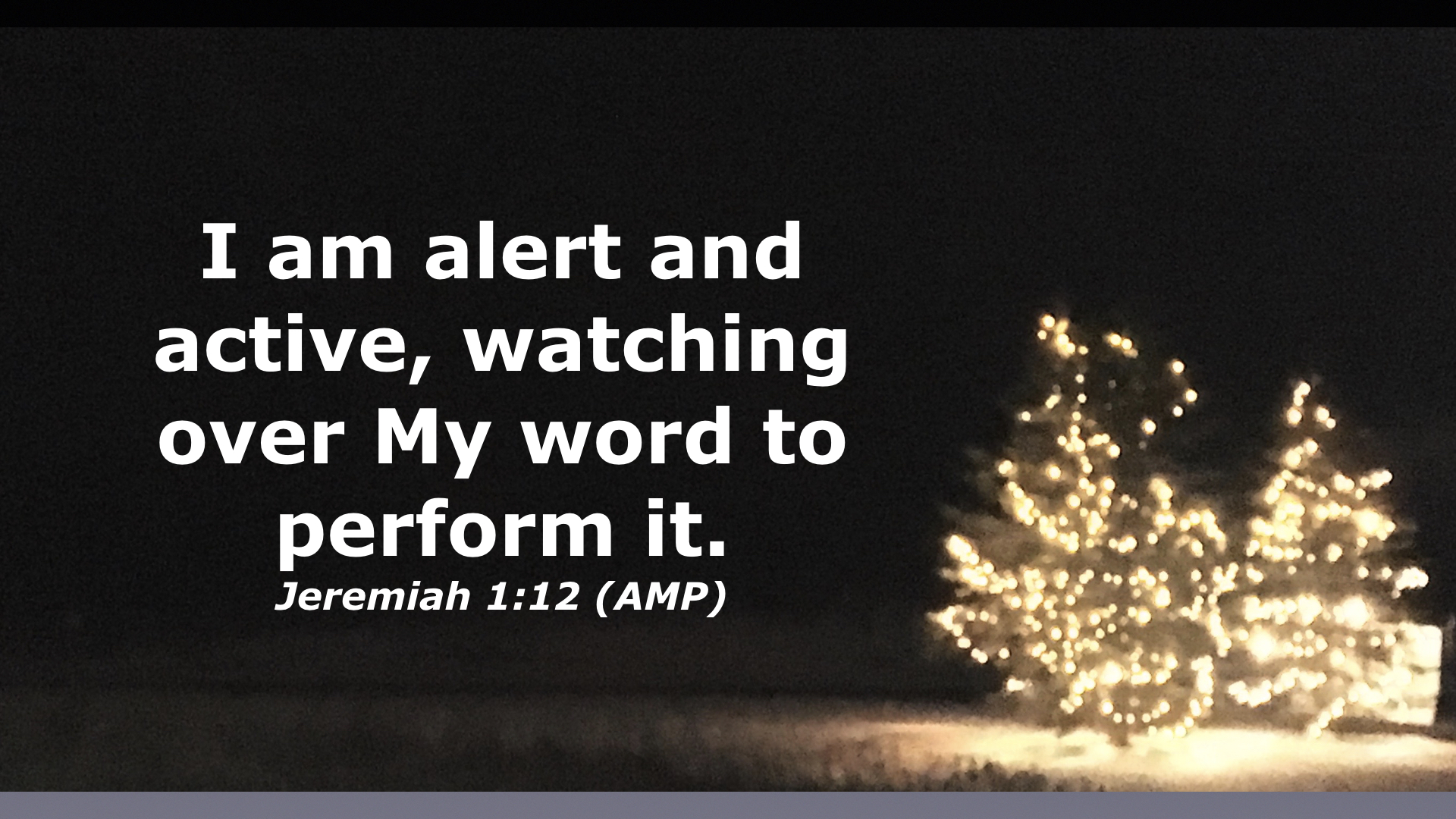
God has a plan for your life. His plan for you was in place before you were even conceived in your mother’s womb. And—even this very moment—He is watching over world events to make sure that every detail of His plan is fulfilled (see Ephesians 2:10; Psalm 139:16; Jeremiah 1:12)!
If you ever feel like you are in a “winter” season of your life—always winter and never Christmas—just remember that God sees you, He has a plan for you, and He will bring an end to your winter just in time to bring you CHRISTmas!
But you, man of God, flee from all this, and pursue righteousness, godliness, faith, love, endurance and gentleness. Fight the good fight of the faith… (1 Timothy 6:11-12).
Psychologists tell us that when faced with certain situations our bodies instinctively prepared to fight or flight. Knowing which situations to fight and which to run from are crucial for living a long and productive life.
It’s no different in the spiritual realm.
Christian leaders must know which things are worth the fight, and which things they simply must flee. To flee from things we should fight shows a lack of courage. But to try to fight the things we should run from shows a lack of wisdom.
A mark of a godly leader is one who knows what to fight and what to flee.
In Praying The Promises, Max Lucado gives us valuable instruction on how to turn Scriptural promises into powerful prayers. Here are a few of those prayers (the biblical reference in brackets is the passage that helped form the prayer).
Thank you for being a God who wants me to know You.… Your wisdom surpasses all wisdom on this earth. Your ways are so much higher than mine. I could study You and Your Word for the rest of my life and still only scratched the surface of the depths of who You are. You are at once knowable and unknowable.… Deepen my knowledge of You, God. [Psalm 19:1-2; Isaiah 55:8-9; Romans 1:19-20]
Help me rely on Your promise of grace because I have been found righteous through Jesus. When trouble comes, use those troubles to increase my faith and draw me nearer to You. [Hebrews 7:25]
Father, sometimes I convince myself that I need to earn Your salvation. I feel like I should do more, be more, and achieve more. But You simply want my faith. Help me let go of my striving and this need to perform for You and for others. [Romans 4:5; Philippians 3:4-7]
Guide me during the difficult times. Give me hope as I pray and wait. Remind me of Your power and authority so that I will trust Your ways, even when I can’t see where the path before me is going. [Genesis 50:20-21; Ephesians 1:11-12; Romans 5:3]
Forgive me when I look for guidance outside of Your Word. When I ask friends what to do before I open my Bible. When I am resistant to reading Your Word because I want to guide myself rather than be guided by You. Renew my desire and passion for reading the Bible. … May I learn something new about You and Your character each time I read it.[Psalm 32:8; 2 Timothy 3:16-17]
When a worry arises, remind me of Your presence so I will turn to You and not fear. [Psalm 23:1, 4]
Gracious Father, nobody is beyond Your redemption. Because of Your love and mercy, You provided a Redeemer for us in Christ, who graciously stopped us while we were on the path of sin, gave us refuge, and pointed us toward the road of redemption. [Galatians 4:4-5]
Forgive me when I try to fight my own battles. … If I try to fight for myself, I end up feeling exhausted and defeated by my own efforts. You have said You are fighting for me. Help me believe that truth even when I am so tempted to fight for myself. Go before me this week as I face temptation. Go before me as I face anxiety, fear, and uncertainty. Protect me in every spiritual battle. Fight for me and help me surrender each battle to You. [Exodus 14:14; Deuteronomy 1:30; Psalm 20:7-8]
As concerns and questions come up, remind me to turn each of them over to You in prayer. I lift up my family to You. I lift up my work to You. I lift up my to-do list to You. Cover each worry with Your peace. Prioritize my day so that it aligns with Your will and not mine. [1 John 5:14]
You can check out my review of Praying The Promises by clicking here, and you can read some other quotes from this book by clicking here.
If I were to ask you if we should we pray for our friends in need, I think I’d probably get a universal “yes.” Even non-Christians might say we should “send good thoughts” or “best wishes” to our friends.
But if I were to ask, “How long should we pray for them?” we might get a lot of different answers.
What about if we’re praying for a friend to get a job (and he gets it), or a friend to be healed (and she is), or a marriage to be restored (and it is)—do we stop praying then?
Psalm 20 and 21 appear to be companion psalms: with Psalm 20 being David’s prayer of petition, and Psalm 21 being his prayer of praise. But there is also something quite interesting in each of these psalms about the placement of the word Selah.
Remembering that Selah means some sort of pause, I find it very interesting where David tells us to pause in both of these psalms. In Psalm 20 we see the prayer request “may” either 6 or 7 times in the first five verse, but the Selah pause is right in the middle of them. Why would David start making his requests to God, tell us to pause in the middle, and then continue making his requests?
I believe this Selah means to “pause and consider” that…
God invites us to participate with Him in fulfilling His plans.
God loves us so much that He wants to hear from us.
God is powerful enough to grant what we ask of Him.
It’s as if in the middle of all of his petitions, David says, “Hold on a second. Do you realize what we are in the midst of doing? We are actually communing with the All-Knowing, All-Loving, All-Power Creator and Sustainer of the Universe!!”
In Psalm 21 David is offering up a prayer of praise for God’s answers to his prayers (note the similar language in Psalm 20:4 and 21:2), and once again he tells us to Selah pause right in the middle of those prayers of gratitude.
I asked earlier, “When do we stop praying for a friend or for ourselves?” Is it when we get the job, or experience the healing, or have the breakthrough or restoration? What if the job, the healing, the restoration was just the beginning of what God wanted to do? The Selah in Psalm 21 is an accentuation: an explosion into so much more!!
David prayed for victory in battle, but God gave him an everlasting victory; David prayed for long life, but God gave him eternal life (21:4); David prayed for blessings on his battle, but God gave him His eternal blessings (21:6).
Jesus said our Heavenly Father has gifts for us beyond our asking (Matthew 7:11), and the Apostle Paul said the same thing in Ephesians—
Now glory be to God, who by His mighty power at work within us is able to do far more than we would ever dare to ask or even dream of—infinitely beyond our highest prayers, desires, thoughts, or hopes. (Ephesians 3:20 TLB)
These two Selahs tell me:
Don’t quit praying when times are tough.
Don’t quit praying when you’ve prayed a long time.
Don’t quit praying when it seems like God has answered.
Keep on praying. Always. About everything!
Please join me this coming Sunday as we continue to look at the Selahs in the Psalms. You can join me in person or via Facebook Live.
“It was because of His grace that God the Father sent His only Son to die in our place. To say it another way, Christ’s death was the result of God’s grace; grace is not the result of Christ’s death.” —Jerry Bridges
God had been showing us His love throughout the Old Testament period, but the Advent of Jesus made it abundantly and unmistakably clear that God is for us!
John (the one who would announce the arrival of Jesus) means Jehovah is a gracious Giver.
Elizabeth (John’s mother) said that God had not only shown His favor to her by making her pregnant, but she also said God had removed her disgrace.
Mary (the mother of Jesus) was greeted by the angel with the phrases “You are highly favored” and “You have found favor with God.”
On the night of Christ’s birth, the angels sang, “Glory to God in the highest heaven, and on earth peace to those on whom His favor rests.”
Jesus, in His first public sermon, quoted Isaiah’s words, saying He had come to proclaim God’s favor.
But please notice this truth—We don’t try to find or earn God’s favor. It’s already there; we just need to realize it’s there!
You see, we don’t grow in God’s favor, nor do we get more favor, but we progressively become more deeply and intimately acquainted with God’s favor that is already there. Check out what Moses said:
If I have found favor in Your sight, show me now Your way, that I may know You progressively become more deeply and intimately acquainted with You, perceiving and recognizing and understanding more strongly and clearly and that I may find favor in Your sight (Exodus 33:13)
The angel said to Mary, “You are HIGHLY FAVORED” (Luke 1:28). God uses the same word when He says to us: God made us ACCEPTED in the Beloved (Ephesians 1:6).
How can this be??Because on the Cross, Jesus switched places with us. He took all our sin and DISgrace, and gave us all of His righteousness. Now when God the Father looks at us, all He sees is the righteousness of His Son. Now all praise to God for His wonderful kindness to us and His favor that He has poured out upon us because we belong to His dearly loved Son(TLB).
God’s grace is undiminished. It is as full today as it ever has been. God could never love you more than He already does. God could never love you less because of anything you do. Keep your eyes on Him and you will find just how much favor He has for you!
Join me this Sunday either in person or on Facebook Live as we continue to learn more about God’s favor.



 In his letter to the Christians in Ephesus, Paul uses the word “walk” seven times to instruct them how to follow the path Jesus laid down for us.