Undeniableness

…we cannot deny it (Acts 4:16)

The healing of a 40-year-old man who has been lame from birth is truly undeniable! But the Sadducees (the truly religious elite) took issue with the fact that Peter and John were then telling people about God’s resurrection power (which they did not believe).

It was undeniable that…

  • … the lame man was healed
  • … Peter spoke boldly with the help of the Holy Spirit
  • … Peter and John’s eloquence in spiritual matters was not bookish learning but divine illumination
  • … Peter and John had been with Jesus
  • … Peter and John could not be silenced by threats
  • … the admiration of the crowd following the healing and Peter’s sermon
  • … God was glorified

So what did the church do? They prayed for more “undeniableness” to be demonstrated by God through their lives!

They knew none of these threats took God by surprise, but they all happened as God had “determined before to be done” (v. 28). So they said, “We are Your servants in this—do more undeniable things through us. Enable us to speak Your Word boldly, and empower us to do signs and wonders in the name of Jesus” (vv. 29, 30).

And God answered that prayer!

What about us? Are we willing to pray that prayer today? Will we allow God to do undeniable things through us? Persecution may follow, but so will God’s glory, and saved souls, and healed people!

For more evidence of the unmistakable evidence that follows Spirit-baptized Christians, check out this post.

15 Quotes On Prayer From J.C. Ryle

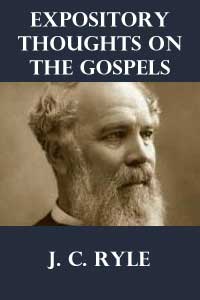
In my current Bible reading time, I am reading J.C. Ryle’s Expository Thoughts On The Gospels as a read-along companion with my Bible. Bishop Ryle correctly feels the weight and effectiveness of prayer in the life of a Christian. Here are some of his quotes regarding prayer. 

“If afflictions drive us nearer to Christ, the Bible, and prayer, they are positive blessings.” 

“It is not for us to prescribe either the time or the way in which our requests are to be answered.… Let us rather ‘continue in prayer,’ ‘watch unto prayer,’ ‘pray always and not faint.’” 

“Why is it that there is so much apparent religious working and yet so little result in positive conversions to God—so many sermons, and so few souls saved—so much machinery, and so little effect produced—so much running here and there and yet so few brought to Christ? Why is all this? The reply is short and simple: there is not enough private prayer. The cause of Christ does not need less working, but it does need among the workers more praying. … The most successful workmen in the Lord’s vineyard are those who are, like their Master, often and much upon their knees.” 

“If we would have good ministers we must remember our Lord’s example and pray for them. Their work is heavy. Their responsibility is enormous. Their strength is small. Let us see that we support them and hold up their hands by our prayers.” 

“Let us bear these rules in mind every Sunday morning before we go to hear the Word of God preached. Let us not rush into God’s presence careless, reckless, and unprepared, as if it mattered not in what way such work was done. Let us carry with us faith, reverence, and prayer. If these three are our companions, we shall hear with profit and return with praise.” 

“Let a petition for more faith form a part of all our daily prayers. As ever we would have peace, and calmness, and quietness of spirit, let us often say, ‘Lord, increase our faith.’” 

“Let us strive and pray that the same mind may be in us which was in our blessed Master. Like Him, let us be willing to go anywhere, do anything, suffer anything when the path of duty is clear and the voice of God calls. Let us set our faces steadfastly to our work when our work is plainly marked out, and drink our bitter cups patiently when they come from a Father’s hand.” 

“We must seek to have knowledge as well as zeal. Zeal without knowledge is an army without a general, and a ship without a rudder. We must pray that we may understand how to make a right application of Scripture.”

“Prayer is one of the best and most powerful means of helping forward the cause of Christ in the world. … Not all believers have money to give to missions. Very few have great intellectual gifts or extensive influence among men. But all believers can pray for the success of the Gospel—and they ought to pray for it daily.” 

“Prayer is one of the principal weapons which the minister of the Gospel ought to use. To be a true successor of the apostles, he must give himself to prayer as well as to the ministry of the Word (Acts 6:4). He must not only use the sword of the Spirit, but pray always, with all prayer and supplication (Ephesians 6:17, 18). This is the way to win a blessing on his own ministry. This, above all, is the way to procure helpers to carry on Christ’s work.” 

“Daily bread and daily mercy are by far the first and principal things that mortal man needs. He is the rich man who possesses them. He is the wise man who is not ashamed to pray for them every day.” 

“Nothing that concerns God’s people is too little for Him to manage or for them to bring before Him in prayer.”

“‘He spoke a parable to this end: that men ought always to pray, and not to give up.’ These words, be it remembered, are closely connected with the solemn doctrine of the second advent, with which the preceding chapter concludes. It is prayer without fainting during the long weary intervals between the first and second advents which Jesus is urging His disciples to keep up.” 

“Let us often pray that we may have wisdom from above in order to answer rightly when perplexing questions are put to us. The servant of Christ must expect a portion like his Master. He must count it no strange thing if the wicked and worldly-minded endeavor to entangle him in his talk, and to provoke him to speak unadvisedly with his lips.” 

“Whatever other means of relief we use, let us pray. The first Friend we should turn to ought to be God. The first message we should send ought to be to the throne of grace.” 

A Church With A ♥able Reputation

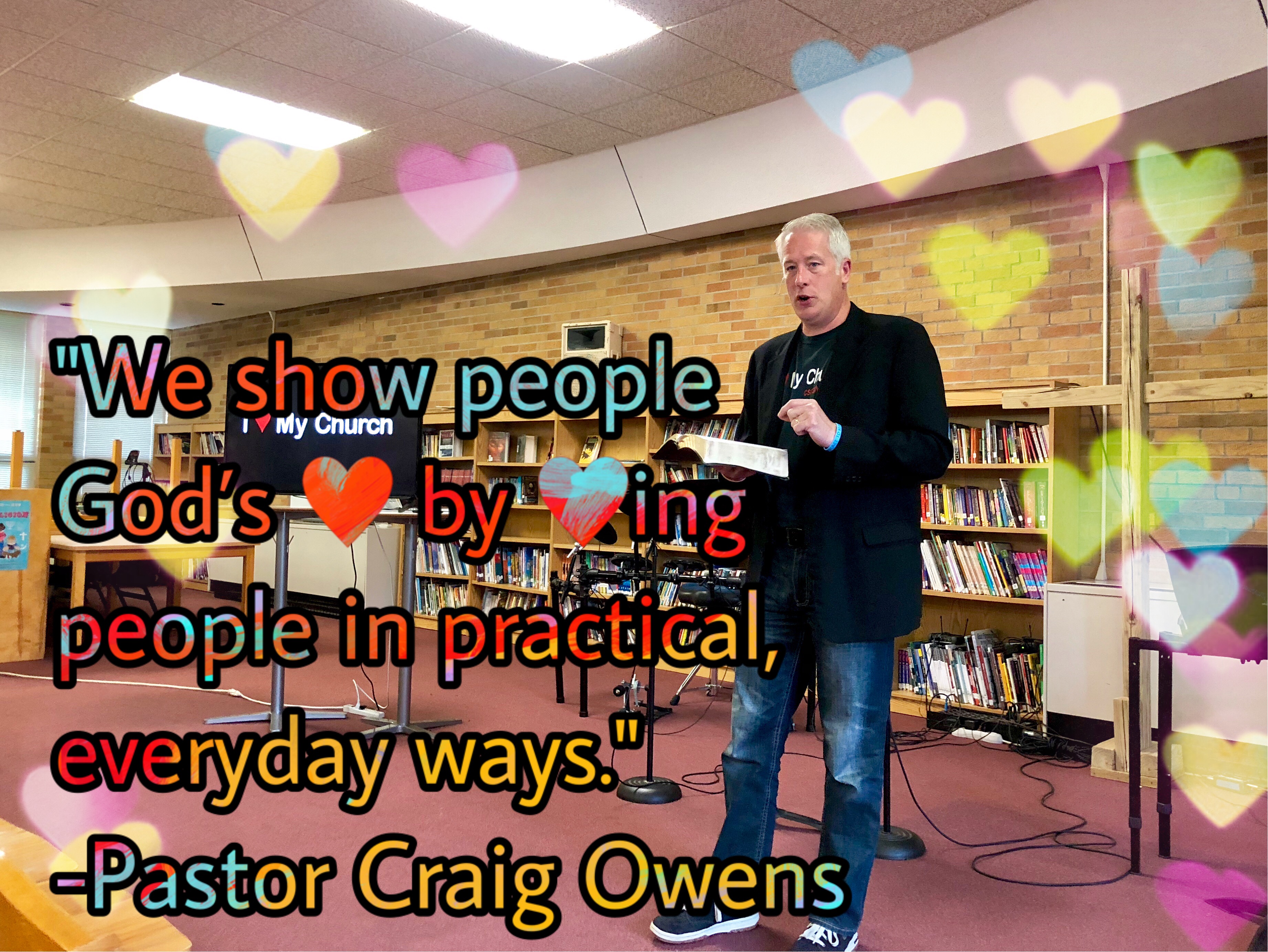
Demographers report that there are upwards of 70 million people in America that are unchurched. In my own experience, I have found that the unchurched people I have met are really dechurched people. At one time they were a part of a church community, but finding nothing of value there, they left. 

The way the first-century community responded to the Church—the historian Luke says “everyone was filled with awe and enjoying the favor of all the people”—is how people will still respond today to the extent that we resemble that first Church. 

If people are going to say “I ♥ That Church!” we have to be a ♥able church!

Here are four qualities that I see in the first Church that gave it such a ♥able reputation— 

  1. Internal unity

Luke uses the word fellowship (Greek: koinonia) which means an intimate, personal involvement in each other’s lives. The historical account lists phrases like devoted, breaking of bread and prayer, together, together with glad and sincere hearts, and one in heart and mind. 

  1. Sincere piety

Church for these first Christians wasn’t a place they went to on a certain day of the week; it wasn’t a set of religious rules they rigorously followed. They didn’t do church because they had to, but because they loved to! Luke says all the believers were together, and every day they continued to meet…with glad and sincere hearts.

  1. Supernatural results

Luke says wonders and miracles, signs, and great power accompanied the Church’s activity. Interestingly, the order is fellowship → awe → miracles, NOT what I would have expected, which is fellowship → miracles → awe. The awe came from the Church’s unified, sincere fellowship, and then the miracles simply confirmed God was there (cf. Mark 16:20). 

  1. Practical helps

Henry Ford said, “You can’t build a reputation on what you’re going to do.” The first Christians saw people in need and they helped: they gave to anyone as he had need and they shared everything they had so that there were no needy persons among them. This is exactly what Jesus told us to do (see Matthew 25:34-40). 

People will ♥ the Church when they see real ♥ among church people! 

If we want to see dechurched people become rechurched people, we need to return to our Christian roots—we need to make sure we are lovingly unified in heart and mind, allowing God to perform the miraculous among us, and then practically meeting the needs of everyone around us. 

Join me this Sunday as we learn more lessons from this first-century Church. You can join me in person or on Facebook Live.

I ❤️ My Church!

If you lived in the early first century AD—and if the donkey carts had bumper stickers—I’ll bet that you would have seen “I ❤️ My Church” bumper stickers on everything the early Christians owned. 

Both the Bible and historians of that day talked about the positive societal changes that Christians were making in their communities, and how every place they lived and worshipped got better. 

Why not today? 

Why not in your community? 

I believe Christians can—and should—live in such a way that everyone in their communities would sit up and take notice of the positive changes. If Christians really lived this way, we wouldn’t even need “I ❤️ My Church” bumper stickers because our lives would be the best advertisement there was! 

Join me this Sunday as we learn how the first Christians lived such positive, society-changing lives, and how we can do the same thing today. Join us in person or on Facebook Live this Sunday. 

Alien Friendships

As Peter wraps up his letter, he reminds us of his purpose in writing to us aliens and strangers—

  • encouraging you = speaking encouraging words to your heart.  
  • testifying that this is the truth = speaking thoughtful words to your head. 

But Peter also says that he wrote this letter “with the help of Silas”—some translations even say “by Silas”—indicating that Peter needed someone to come alongside him with words of encouragement and strength, as much as he needed to deliver those words to fellow Christians. 

Peter mentions three people that were alongside him. These folks are instructive for us too:

  1. Silas 

Peter called Silas a faithful brother. The Greek word he uses for brother is adelphos, a word which usually meant someone who shared the same parents. But Peter modifies this to mean a Christian brother whose heartbeat with the love of Jesus the way his did; someone who shared the same Heavenly Father.  

Silas was a recognized church leader and a companion of Paul (Act 15:22, 30-32, 40). He had quite an extensive and impressive resume, and he also had the full endorsement for such notable people as James, Paul, and Peter. 

  1. She who is in Babylon

Babylon is a code word almost universally agreed to be Rome, but there is some debate as to whom the “she” is. Some think this is the church-in-exile in Rome, and some think this is Peter’s wife (Matthew 8:14; 1 Corinthians 9:5). 

Whether the church or Peter’s wife, they/she are anonymous servants of God, but never for a moment forgotten by God, nor is their reward going to be lacking (Matthew 6:1, 4). 

  1. Mark

Peter calls Mark my son. Again, he takes a word that originally meant “my offspring” and changes it to mean Mark was his protegé. 

Mark had traveled with Paul, then left Paul mid-journey, and was eventually reconciled to Paul (Acts 13:5, 13; 15:36-41; Colossians 4:10; 2 Timothy 4:11). 

Mark listened to and recorded Peter’s accounts of Christ’s earthly ministry and wrote the first Gospel that was produced. His Gospel became one of the main reference documents that Matthew and Luke referred to in writing their Gospels. 

Here’s the point—There are no dispensable people in the Church! 

You may be like Silas with many talents and an impressive resume and references. Or you may be like the “she” who is an anonymous helper to others. Or you may even by like Mark who made mistakes but was given a second chance to make good on your commitment. 

You need a Silas, a she, and a Mark in your life. And you just may need to be one of those to someone else. 

“You can deceive yourself with beautiful thoughts about loving God. You must prove your love to God by your love to your brother; that is the one standard by which God will judge your love to Him. If the love of God is in your heart you will love your brother.” —Andrew Murray 

So let me ask you to consider something vital: Are you remaining faithful to your Christian family? 

If you’ve missed any messages in this series, you may find the complete list by clicking here.

Thursdays With Oswald—Jeremiah 19

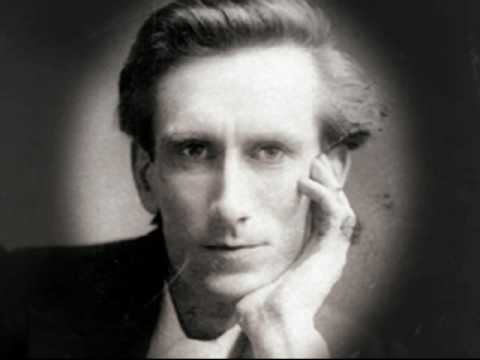
Oswald ChambersThis is a weekly series with things I’m reading and pondering from Oswald Chambers. You can read the original seed thought here, or type “Thursdays With Oswald” in the search box to read more entries.

Jeremiah 19

[These are notes from Oswald Chambers’ lecture on Jeremiah 19.] 

     In the temple precincts judicious minds were without excuse, because they understood what Our Lord was doing. Outside Jerusalem, Our Lord always said, “Don’t tell anyone Who I am”; every time He went to Jerusalem He made it clear who He was. 

The presentation of the Gospel of God to sinners is one of love and mercy, but to the house of God one of judgment and truth. When we preach to the crowd outside we lambast drunkenness and other things, Jesus never did. The stern messages of the Bible are never given to sinners, but to God’s people.

From Notes On Jeremiah

Hmmm, are we doing this the right way? It seems like many times we get this reversed—we rebuke those outside because of their sin, and we speak tenderly to those on the inside. Definitely something for Christian leaders to consider carefully. 

Living Lives That Make Sense

This sounds totally contrary to common sense, but I’ll bet you’ve seen this before—Someone does something unexpectedly nice, and gets criticized for it. 

Why would that be? 

Christians can expect to experience this more frequently. Jesus told His followers to be prepared for persecution from those who didn’t believe in Him. One of Christ’s disciples named Peter added a few other warnings for Christians: 

  • Non-Christians will accuse you of doing wrong even when you’re doing right
  • Non-Christians will think it’s weird that you don’t do the same evil deeds they do
  • Non-Christians will heap abuse on you for not doing the evil deeds they do (1 Peter 2:12; 4:4)

This is because living good, Christ-honoring lives causes a burning in those hearts that don’t know Jesus yet. 

Solomon said there’s an aching void in the heart of every human being. It’s a longing to know what makes sense in life (see Ecclesiastes 3:11). When Christians live their lives focused on God, and they live—as Peter said—“such good lives,” it reminds non-Christians of what they’re missing. 

Christian, you need to remember why we live this way. The belief that Jesus is the Christ, the Son of the living God (Matthew 16:18) is the foundation for our lives. In fact, Peter called Jesus the Living Stone. As His followers, we are also called “living stones” that the Holy Spirit is building together to make a spiritual signpost to point others to Jesus (see 1 Peter 2:4-5, 9, 12). 

We cannot do this under our own power. Jesus Himself reminded us that we need the Scriptures which all point to Him (Luke 24:27, 44-45), and the Holy Spirit which will help us apply the revealed Scriptures (John 14:26) and live “such good lives.” 

So here’s how I’m challenging myself this week, and I’d like to extend this challenge to you too. For the next seven days, just before going to bed I’ll be asking myself these three questions:

  1. Did I read the Word of God today? 
  2. Did I see the God of the Word in the Word of God a little more clearly today?
  3. Did I live a good, Christ-honoring life today that pointed others to Jesus?

Join me this Sunday as we continue our look at how Christians should live as aliens and strangers. If you’ve missed any messages in this series, you may find the complete list by clicking here.

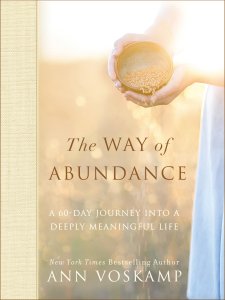
11 Quotes From “The Way Of Abundance”

Ann Voskamp speaks lovingly to the hurting and broken. She never condemns them for their brokenness, nor does she encourage them to stay in their difficult place. Instead, Ann brings a new perspective to the path of healing; a path that allows our brokenness to become our givenness to other broken and hurting people. This is The Way Of Abundance. Be sure to check out my full book review by clicking here. 

“Go fall in love with grace and mercy and the only One who has ever loved you to death—and back to the realest, abundant life. Because the world is begging us all to get out of bed and live given, get out of bed and sacrifice for someone hurting, for someone different, for someone forgotten or marginalized, to hold the hand of someone who doesn’t look like a us, to lean in and listen to someone angry and grieving and doubting the likes of us, to give a bit of ourselves to those who feel like they aren’t given much real space at the table.” 

“The real Jesus turns our questions of why—why this brokenness, why this darkness?—and says, ‘You’re asking the wrong question. You’re looking for someone to blame. There is no such cause-effect here.’ ‘This happened so the power of God could be seen in him’ [John 9:3]. There’s brokenness that’s not about blame. There’s brokenness that makes a canvas for God’s light to be lavishly splashed across the darkness. There’s brokenness that carves windows straight into our souls. Brokenness cracks open a soul so the power of God can crack the darkness in the world.” 

“When you aren’t afraid of being afraid, you transform fear into friend. … Feelings can accompany you, but they don’t get to control you. Feelings get to inform you, but they don’t get to form you. Feelings get to keep you company, but they don’t get to keep you in bondage. Only God keeps you.” 

“We are always lost until our heart makes its home inside of someone else. Our lives are unfulfilling if we only let our hearts fill us instead of filling other people’s broken places. The art of living is believing there is enough love in you, that you are loved enough by Him, to be made into love to give. Fulfilling lives happen when we give our hearts to fill other people’s empty spaces.” 

“There are really only two choices when begging temptation looks you square in your twitching eye: there is either the pain of self-denial, or the pain of self-destruction. … They’ll tell you there’s no such thing called temptation anymore, only repressed self-limitation. They’ll tell you temptation isn’t an issue for the sophisticated. And all I want to say: just don’t say you’re a follower of Christ if you’re actually following your own heart.” 

“Shame dies when stories are told in safe places. … Shame gets unspeakable power only if it’s unspeakable.” 

“The only way to live a truly remarkable life is not to get everyone to notice you, but to leave noticeable marks of His love everywhere you go.” 

“When you feel basically respectable, you want religion. And when you know you feel the brokenness of rejection, you want the gospel. In religion, it’s the ‘respectable’ who search for a God to impress. But in the Gospel, it’s God who searches for the brokenhearted rejected to save.” 

“Never fear the moments you imagine will freeze you: unexpected blasts of cold can be what draws you nearer to the flame of His love.” 

“The body of Christ must recapture its vision as the only collective in the world that exists for its nonmembers. … We are a community that will not dish out condemnation but courage, that will lean in and listen long and love large.” 

“You love as much as you are willing to be inconvenienced. … The brokenness of people is never truly an intrusion. Loving the broken people when it is inconvenient is the way to have fuller inclusion in the life of Christ.” 

What Is Church?

All across the world on Sunday morning, people met for church? But what exactly is church? Is it a place we go to? Is it something that only happens on Sundays? 

The Greek word for church is ekklesia. It meant an assembly of citizens. Luke used the term when he recorded a government official saying, “If there is anything further you want to bring up, it must be settled in a legal assembly” (Acts 19:39). But in the New Testament, it came to mean “a community based on a special religious idea and established in a special way” (Dr. Marvin Vincent). It can also mean either a local group of Christians or “the whole body of Christians scattered throughout the earth” (Dr. James Strong). 

Church never means a building. Nowhere does the phrase “go to church” appear in the New Testament. Instead, church carried the idea of a living, growing organism because church was wherever a follower of Jesus was. Sometimes the church met collectively in one location, and sometimes individual believers were out in the community. But wherever the Spirit of God went, church was happening. 

If church is not something we go to, it’s also not something that takes place only one day per week. Look at what Jesus did on the Sabbath day: 

But we also see Jesus doing all of these things EVERY day of the week. 

For Jesus, neither the day of the week nor the location determined the way He lived. Peter summed it up this way, “God anointed Jesus of Nazareth with the Holy Spirit and with power. Then Jesus went around doing good and healing all who were oppressed by the devil, for God was with Him” (Acts 10:38). 

In fact, before they were called Christians the church was simply called “the Way” letting us know that the church was a way of life, not a day of the week. 

Based on how Jesus lived and how the Apostle taught, I think we can see the Church Way like this: 

In other words, EVERY day and in EVERY place the followers of Jesus were being enriched in their own lives so that they could reach out to the hurting so that they could come to know Jesus personally so that their lives could be enriched so that they too could reach out to others, and on, and on, and on it goes! 

Limiting “church” to a specific location or to a specific day of the week is way too small-minded. Church as Jesus intended it was a powerful force that would set people free EVERY day and in EVERY place from the power of the devil and introduce them to God’s eternal life! 

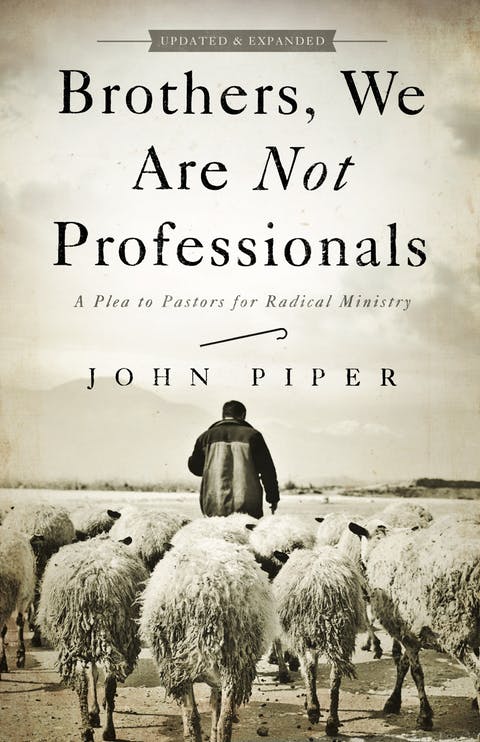
9 More Quotes From “Brothers, We Are Not Professionals”

Those in pastoral ministry are ministers; they are not professional, career-minded, corporate ladder-climbers. John Piper has written a book that I believe every pastor should read: Brothers, We Are Not Professionals. Here are a few more quotes from this excellent book. 

“Is not our most painful failure in the pastorate the inability to weep over the unbelievers in our neighborhoods and the carnal members of our churches? …  

“I must feel the truth of hell—that it exists and is terrible and horrible beyond imaginings forever and ever. ‘These will go away into eternal punishment’ (Matthew 25:46). Even if I try to make the ‘lake of fire’ (Revelation 20:15) or the ‘fiery furnace’ (Matthew 13:42) a symbol, I am confronted with the terrifying thought that symbols are not overstatements but understatements of reality. …

“I say to you, on the authority of Scripture, remember, remember, remember the horrid condition of being separated from Christ, without hope and without God, on the brink of hell. ‘Remember that you were at that time separated from Christ, alienated from the commonwealth of Israel and strangers to the covenants of promise, having no hope and without God in the world’ (Ephesians 2:12). … 

“When the heart no longer feels the truth of hell, the gospel passes from good news to simply news.” 

“Warning has value in stirring us up to take the glories of holiness and heaven seriously so that we come to see them for what they are and delight in them. But it is the delight in them that causes the true grief when we fall short.” 

“Pastors, you will know your people’s souls best by knowing your own. So try to be ruthlessly honest with yourself.” 

“If the heart is without passion, it will produce lifeless, jargon-laden spontaneity. And if the heart is aflame, no form will quench it.” 

“We ought to experience the deepest emotions about the deepest things. And we ought to speak often, and publicly, about what means most to us, in a way that shows its value.” 

“Eating, exercising, and sleeping are more spiritually relevant in the ministry than we may think. … The point is that we be intentional about how our eating affects the ability of our body to be a helpful partner in seeing the glory of God.” 

“When we say that what we do on Sunday morning is to ‘go hard after God,’ what we mean is that we are going hard after satisfaction in God, and going hard after God as our prize, and going hard after God as our treasure, our soul-food, our heart-delight, our spirit’s pleasure. Or to put Christ in His rightful place—it means that we are going hard after all that God is for us in Jesus Christ, crucified and risen.” 

“It will transform your pastoral leadership in worship if you teach your people that the basic attitude of worship on Sunday morning is not to come with your hands full to give to God but with your hands empty to receive from God.” 

“Brothers, we are leaders, and the burden of change lies most heavily on us.” 

You can read my full book review of Brothers, We Are Not Professionals by clicking here, and you can check out some other quotes from this book here.