
10 Quotes From “Legacy Leadership”

I just finished an outstanding reading plan on YouVersion called Legacy Leadership by Dr. J. Lee Whittington. For anyone interested in the biblical concept of servant-leadership, I highly recommend you check out this reading plan.

Here are a few quotes I especially liked…

“Legacy Leadership is a process of intentional influence that takes place in the context of a relationship.”

“There is a recurring pattern of affirmation and exhortation in Paul’s leadership. He provided a dynamic balance between challenging his followers to grow and acknowledging their progress. He was affirming, but never content.”

“There is a growing trend to attack, criticize, and resent anyone who has talent or achievements that sets them apart from others. This tendency extends to those who resent the efforts of leaders who challenge the status quo. Opponents of change initiatives often attempt to marginalize leaders by attacking their character and questioning their motives. If the messenger is flawed, then the message and vision they offer cannot be trusted. As disappointing as it is, these challenges come with the territory of leadership.”

“If I am to lead with integrity, I must always confront my own lack of integrity. This demands a willingness to constantly reflect on my motives and the courage to confront my own hypocrisy. It also requires me to allow myself the discomfort of inviting the scrutiny of both the Lord and others who care enough to confront me about my motives, my attitudes, and my behavior.”

“The most effective leaders are able to exert influence without asserting their formal authority. … Paul deliberately chose to forego the legitimate, reward, and coercive power inherent in his position. Instead, he leaned into another base of power: referent power. Referent power is based on respect and admiration. When this is present, the followers identify with and want to emulate their leader. This power base does not come from the leader’s position or control of resources. Rather, it is based on the leader’s character and integrity. Referent power is based on who the leader is.”

“Legacy Leaders do not lead from a distance. They imitate Jesus who said, ‘I am among you as one who serves’ (Luke 22:27). They are comfortable sharing their lives with their followers.”

“The best relationships between a leader and their followers are those that are characterized by a great deal of mutual trust and shared information. The responsibility for creating this type of relationship rests squarely on the shoulders of the leader.”

“Authentic leaders have a seamless link between their values and their actions. But the congruence between values and attitudes is just the starting point for authentic leadership.  From the perspective of scripture, a leader’s attitudes and actions must be anchored to God’s standards. When a leader’s enacted values are in congruence with their espoused values, and those espoused values are in turn anchored to God’s principles, the leader had moral authority.”

“It’s easy to critique the authenticity of others.  But, if we are really serious about developing our own authenticity, we must focus on ourselves. I read this statement several years ago: ‘If we are to be people of integrity, we must constantly confront our lack of integrity.’”

“Legacy Leaders embrace the principles of servant-leadership and understand that the conscious choice to lead comes after the desire to serve. This inclination is not natural. It must be energized by continuous reliance on the empowering presence of God’s Spirit.”

12 Quotes From “A New Kind Of Apologist”

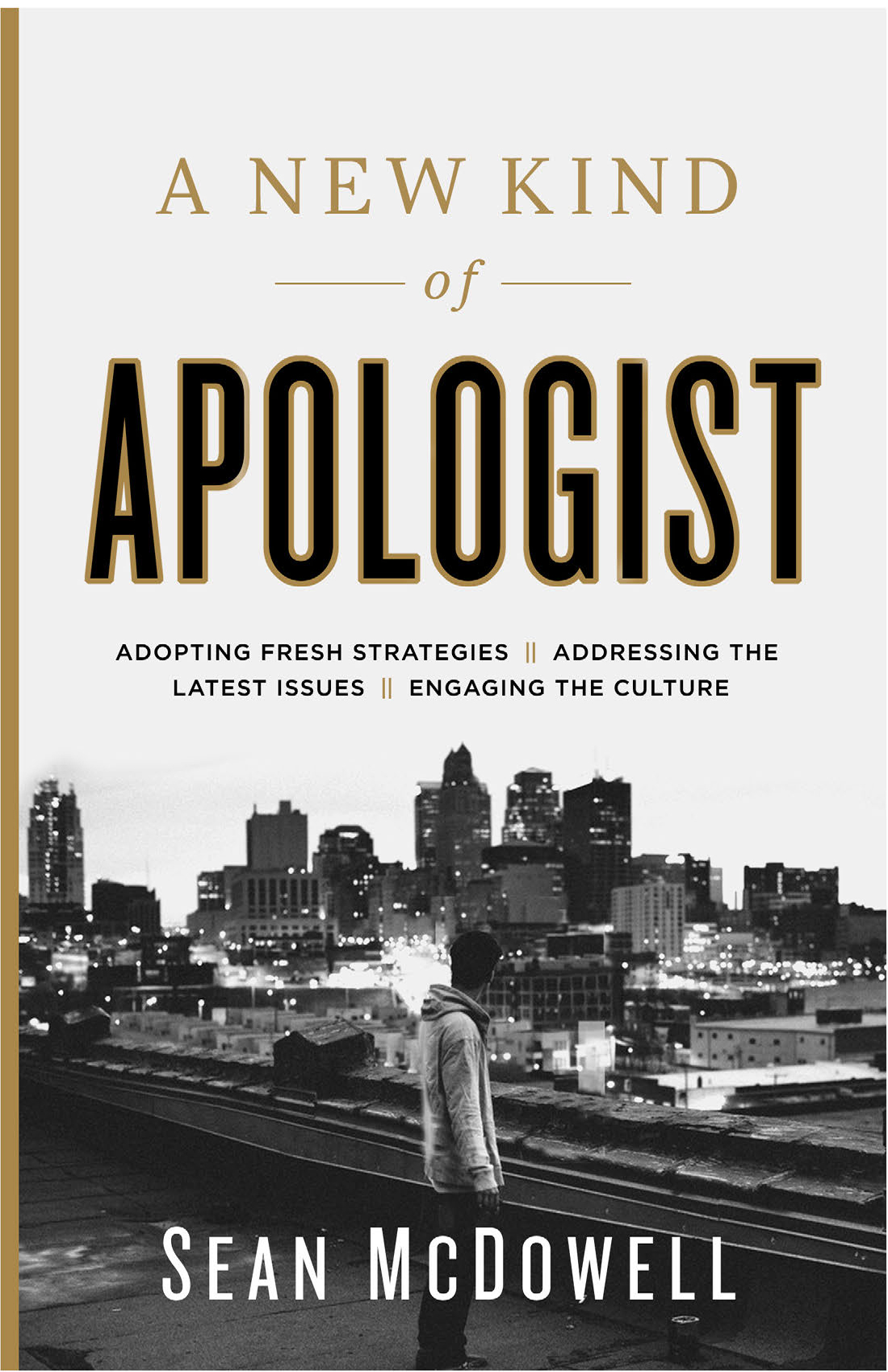
A New Kind Of Apologist is edited by Sean McDowell and contains a collection of fabulous essays to prepare Christian apologists to be effective in this current generation. You can read my full book review by clicking here. These quotes mainly deal with the attitude that a Christian apologist should adopt.

“Truth must be wedded to grace, and what we say is important…but how we say it is equally critical.” —Sean McDowell 

“To listen to a person will require that we temporarily set aside our objections to what a person is saying and allow him or her to speak openly without fear of being challenged.” —Tim Muelhoff

“Our character and relationships with others have a greater capacity for attracting those around us to the Christian message than do our arguments or rhetoric.” —Ken Wytsma & Rick Gerhart 

“If our beliefs are not expressed in love and by example, we miss the greatest command of all, which is loving God and loving others.” —Dan Kimball

“The Barna Research Group found that twentysomethings who stay in church were twice as likely to have a close personal friendship with an adult inside the church. Those who had an adult mentor at church, aside from the pastor, were almost three times as likely to stay as those who did not.” —Jeff Myers

“Any fully-orbed presentation of the truth about ourselves and God’s plan for us cannot be a disembodied, purely intellectual truth; it must truthfully reflect our nature as created beings.

“Part of being incarnate means that it is good and right for us to have emotions and express them—as our Lord did, for example, by weeping at the tomb of Lazarus and getting angry with the money changers in the temple. The fact that little children wanted to come to Him suggests that He had a welcoming physicality and a warm personality that they instinctively trusted and found attractive. He wasn’t just a walking dictionary of Christian theology.” —Holly Ordway

“At its core, apologetics is the art and science of defending the faith. However, practically understood, the work of the apologist is simply to answer with integrity, clarity, and compassion the questions critics are asking about the gospel (1 Peter 3:15). The context of this passage implies a lifestyle on the part of the apologist that engenders and welcomes questions from their audience. The encouragement of Peter seems to be that we avoid the telemarketer approach of simply enduring questions solely for the sake of closing the deal. Rather, Peter calls us to anticipate and patiently answer the questions of our unbelieving friends, family members, and neighbors in an uncompromising and yet humble manner.” —Christopher Brooks

“We must be Christians first and apologists second, which means our intellectual lives must be primarily shaped by seeking to understand the faith we live within rather than debating, disputing, or even persuading those who do not believe it.” —Matthew Anderson 

“It is our responsibility to share the message of hope through Christ ‘with gentleness and respect’ and ‘with grace,’ as Peter and Paul taught. The gospel message is already offensive to some. We need not make it more offensive by presenting it in a manner that lacks gentleness, respect, and grace.” —Mike Licona

“Truth without grace is abusive and arrogant. Grace without truth is mushy sentimentalism. … As much as possible, always deal with the person in grace and the issue itself in truth.” —Glenn T. Stanton

“Paul doesn’t say that we ought to know how to answer each question [see Colossians 4:5-6]. He specifically teaches us to answer each person. … Paul tells us that we aren’t in the question-answering business. We are in the people-answering business. Today’s apologist must understand that questions don’t need answers; people need answers. … I am convinced that the key to apologetics today is to identify what non-Christians thirst for most and show how the Christian faith alone can slake that thirst.” —Abdu Murray

“The manner in which we communicate the gospel is not a minor add-on to the gospel itself [see 1 Peter 3:15-16]. Very often it is the nature of the communication that determines whether the gospel gets a hearing at all. …

“It remains true that it is not arrogant to make truth claims, it is not arrogant to pursue a knowledge of that truth, and to argue that we’ve found it. It is important that the content of our message is a genuine reflection of the gospel, and that the manner in which we communicate it doesn’t become a stumbling block.” —Tanya Walker

More quotes from A New Kind Of Apologist will be coming soon. You can also follow me on Tumblr and Twitter to read great quotes every single day.

11 Quotes From “Shade Of His Hand”

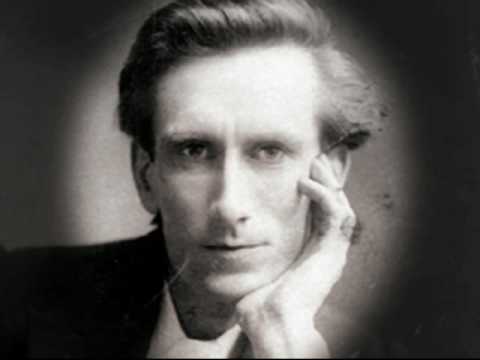
The book of Ecclesiastes in the Bible can be a challenging read for many people. In Shade Of His Hand, Oswald Chambers walks us through this biblical book of wisdom chapter-by-chapter. Shade is a great companion for your personal Bible study time in Ecclesiastes. Check out my full book review by clicking here.

Below are just a few of the many (many!) passages I highlighted in Shade. Some of the longer passages I have already shared in my weekly “Thursdays With Oswald” posts. You can read those by clicking here.

“We always get out of touch with the Bible attitude to things when we come to it with our own conclusions.”

“The intellectual order of life does not take things as it finds them, it makes us shut our eyes to actual facts and try to live only in the ideal world. … Solomon is fearless in facing facts as they are. … It is not a question of living a blind life in the brain away from actuality, not of living in dawns or on mountain tops; but of bringing what you see there straight down to the valley where things are sordid, and living out the vision there.”

“Unless you bank your faith in God, you will not only be wrongly related in practical life and have your heart broken, but you will break other things you touch.”

“Almighty God does not matter to me, He is in the clouds. To be of any use to me, He must come down to the domain in which I live; and I do not live in the clouds but on the earth. The doctrine of the Incarnation is that God did come down into our domain. The Wisdom of God, the Word of God, the exact expression of God, was manifest in the flesh.”

“To serve God in order to gain heaven, is not the teaching of Christianity. Satisfaction cannot be found in gain, but only in a personal relationship to God. … A man is not to serve God for the sake of gain, but to get to the place where the whole of his life is seen as a personal relationship to God.”

“Whenever we put theology or a plan of salvation or any line of explanation before a man’s personal relationship to God, we depart from the Bible line, because religion in the Bible is not faith in the rule of God, but faith in the God Who rules.”

“Sometimes it is cowardly to speak, and sometimes it is cowardly to keep silence. In the Bible the great test of a man’s character is his tongue (see James 1:26). The tongue only came to its right place with in the lips of the Lord Jesus Christ, because He never spoke from His right to Himself. He Who was the Wisdom of God Incarnate, said ‘the words that I speak unto you, I speak not of Myself.’ … We are either too hasty or too slow; either we won’t speak at all, or we speak too much, or we speak in the wrong mood. The thing that makes us speak is the lust to vindicate ourselves.”

“The general history of Christianity is that it has been tried and abandoned because it is found to be difficult; but wherever it has been tried and honorably gone on with, it has never failed.”

“The Christian faith is exhibited by the man who has the spiritual courage to say that that is the God he trusts in, and it takes some moral backbone to do it.” 

“We reap terrific damage to our own characters when we vow and do not perform. … Promises are a way of shirking responsibility.”

“It is appalling to find spiritual people when they come into a crisis taking an ordinary common-sense standpoint as if Jesus Christ had never lived or died.”

More quotes from Shade Of His Hand are coming soon…

9 Quotes From “Leadership Promises For Every Day”

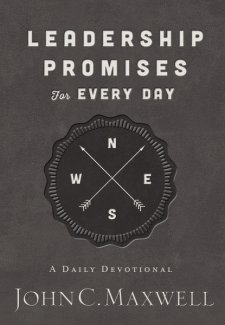
leadership-promisesLeadership Promises For Every Day is a devotional book for leaders and aspiring leaders. A passage from the Bible is combined with a passage from one of John Maxwell’s outstanding books. It’s an excellent way to start your day! If you haven’t already, check out my review of this book here, and then enjoy a few quotes—

“How many leaders have ruined their lives and damaged the lives of others through immorality? Character has become a crucial issue today precisely because of the myriad of leaders in the political, business, and religious worlds who have fallen morally. No doubt they fall partly because the enemy has targeted leaders for attack. Leaders need to remember that they influence many others beyond themselves; they never fall in a vacuum. They also need to realize that replacing fallen leaders is a slow and difficult process.”

“Our goal among brothers should not be to punish or excommunicate, but to restore. Confrontation is a redemptive act of leadership.”

“Leaders need to respond to individuals based on their needs rather than their faults. … Good leaders do this well. They don’t lead out of a predetermined package of behaviors, but size up every situation and discern what must happen to reach the desired goal.”

“People rise or fall to meet our level of expectations for them. If you express skepticism and doubt in others, they’ll return your lack of confidence with mediocrity. But if you believe in them and expect them to do well, they’ll wear themselves out trying to do their best.”

“Leaders must constantly ask if their plans fit God’s revealed will for them and their organization. Then they must ask if their plans remain relevant to the needs of their mission, their values, their vision, and their long-range objectives. Finally, they need to ask if their plans fit the needs of their culture and time.”

“We need to remember that when people follow behind us, they can only go as far as we go. If our growth stops today, our ability to lead will stop along with it. Neither personality nor methodology can substitute for personal growth. We cannot model what we do not possess. Begin learning and growing today, and watch those around you begin to grow.”

“Servanthood is not about position or skill. It’s about attitude.” 

“People who blame others for their failures never overcome them. They simply move from problem to problem. To reach your potential, you must continually improve yourself, and you can’t do that if you don’t take responsibility for your actions and learn from your mistakes.”

“Laughter breeds resilience. Laughing is the quickest way to get up and get going again when you’ve been knocked down.”

I am always sharing great quotes from John Maxwell and others on Twitter and Tumblr. If you’re not following me there, please do so!

Thursdays With Oswald—Making Saints

Oswald ChambersThis is a weekly series with things I’m reading and pondering from Oswald Chambers. You can read the original seed thought here, or type “Thursdays With Oswald” in the search box to read more entries.

Making Saints 

     It is not sufficient for a Christian to walk in the light of his conscience; he must walk in a sterner light, in the Light of the Lord. … 

     I am not judged by the light I have, but by the light I have refused to accept. … This is the condemnation, that the Light, Jesus Christ, has come into the world, and I preferred darkness, i.e., my own point of view. The characteristic of a man who begins to walk in the light is that he drags himself into the light all the time. He does not make excuses for things done in the dark, he brings everything to the light, and says, “This is to be condemned; this does not belong to Jesus Christ,” and so keeps in the light. … 

     The New Testament view of a saint is a more rugged type. You and I are a mixture of dust and Deity, and God takes that sordid human stuff and turns it into a saint by Regeneration. A saint does not mean a man who has not enough sin to be bad, but a man who has received from Jesus Christ a new heredity that turns him into another man. … 

     Conscience and character in the saint, then, means the disposition of Jesus Christ persistently manifested.

From The Shadow Of An Agony 

In order to become the saints God intends for us to be, Oswald Chambers says one big thing is required of Christians: Constantly bringing our thoughts and actions into the Light of Jesus.

I think this is what Paul means when he tells us to take captive every thought to make it obedient to Christ (2 Corinthians 10:5). And this is certainly what David invited when he prayed, Search me, O God, and know my heart; test me and know my anxious thoughts. See if there is any offensive way in me, and lead me in the way everlasting (Psalm 139:23-24).

I pray we will always be bringing our thoughts and actions into the Light, and never preferring the darkness of our own point of view!

Jim Daly On Forgiveness

Jim Daly“Have you noticed? It can be a challenge to say, ‘I’m sorry.’ Oh, it’s not hard to speak the words, but it can be tough to say them with sincerity. Why? Probably because we understand that to apologize is to accept responsibility for ill-spoken words or misbehavior. It requires humility on our part, which can often be confused with giving someone else the upper hand over us. That’s why apologies tend to be viewed as a weakness.

“It’s also why people offer apologies that have been stripped of any real meaning. We minimize the severity of our actions; we blame our behavior on others; or maybe we say all the right words, but dilute them with sarcasm or humor. Whatever the method, we recognize a false act of contrition when we see it because the result is always the same: the appearance of an apology without the substance of one. And rather than healing, shallow platitudes often deepen a loved one’s wounds. Like a doctor’s empty syringe, an empty apology pierces the soul but offers nothing that can bring healing.

“That’s why, far from being a weakness, a heart-felt apology requires strength because it demands deep sincerity on behalf of the person offering it. That inner strength and humility often requires God’s grace to express. The Lord’s role is crucial because mending a relationship-gone-wrong has little to do with the specific words we use to express our contrition. The healing comes from the authenticity we pour into our words and actions.” —Jim Daly

7 Quotes On Conquering Fear From “The Seven Laws Of Love”

The Seven Laws Of Love

In The Seven Laws Of Love, Dave Willis gives us some highly practical, biblically-based counsel for investing in all of our relationships. Normally when I share quotes from books, I share all of them at once, but for this book I felt like it would be good to share these quotes a bit more slowly, to give you time to read them and apply them.

The seven laws Dave identifies are:

  1. Love requires commitment (read the quotes here)
  2. Love selflessly sacrifices (read the quotes here)
  3. Love speaks truth (read the quotes here)
  4. Love conquers fear
  5. Love offers grace
  6. Love brings healing
  7. Love lives forever

From law #4, here are some quotes on how love conquers fear—

“Fear may be something natural, but love represents something supernatural. Love has the power to set a positive course for your life and chase away your fears in the process.”

“We do have the power to shape the future, but unless you actually own a time machine, worrying about the past is a complete waste of your time and energy. If you want to live a life of love and the freedom it brings, you’ve got to make peace with your past. We should learn from our past and build on our past but not ever dwell on our past. Just like the rearview mirror in your car, looking at the past gives us perspective; but if you’re staring at it all the time, you’re going to cause a wreck. We need to embrace the moment we are in. Don’t let regrets from yesterday or worries about tomorrow rob you of the peace and blessings God has for you today!”

“The truth is that your past has helped shape your character, but it has nothing to do with your identity. Your identity comes from God alone, and He loves you unconditionally.”

“Don’t get trapped trying to recreate the good old days when your best days are still to come.”

“There isn’t enough room in your heart for both fear and faith, so each day you must decide which one gets to stay.”

“Your character should always be stronger than your circumstances.”

“Your struggles always lead to strength.”

Check out my review of The Seven Laws Of Love by clicking here.

Watch for more quotes from the other laws of love explained in this book throughout this week.

Thursdays With Oswald—The People God Can Do Nothing With

Oswald ChambersThis is a weekly series with things I’m reading and pondering from Oswald Chambers. You can read the original seed thought here, or type “Thursdays With Oswald” in the search box to read more entries.

The People God Can Do Nothing With

     We say, “It seems out of all proportion that God should choose me—I am of no value”; the reason He chooses us is that we are not of any value. It is folly to think that because a man has natural ability, he must make a good Christian. People with the best natural equipment may make the worst disciples because they will “boss” themselves. It is not a question of our equipment, but of our poverty; not what we bring with us, but what He puts in us; not our natural virtues, our strength of character, our knowledge, our experience; all of that is of no avail in this matter; the only thing that is of avail is that we are taken up into the big compelling of God (1 Corinthians 1:26-28). His comradeship is made out of men who know their poverty. God can do nothing with the men who think they will be of use to Him. 

From The Place Of Help

God cannot impart wisdom to a know-it-all, but He can impart it to someone hungry to learn.

God cannot use someone who believes the world revolves around them, but He can use someone who believes the world revolves around Him.

Which are you?

6 Quotes From Billy Graham On Faith

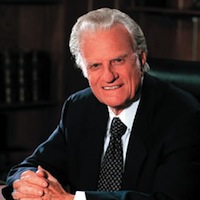
BillyGrahamI recently read The Quotable Billy Graham (you can read my book review here), and I was struck by how relevant his words are, even 50 years after they were spoken. Here are a few quotes on faith.

“I wonder if the church has not failed this generation of young people by failing to make the Christian faith the thrilling, joyful, triumphant experience that it really is.”

“You best demonstrate your faith in a bank by putting your money in it. You best show your faith in the doctor by trusting him in times of illness. You best prove your faith in a boat by getting aboard. You best demonstrate your faith in Christ by trusting Him with your life and receiving Him unconditionally as your Savior.”

“One of the differences I have with some theologians is that they try to reduce the whole content of the Christian faith to an intellectual gymnastic exercise. Christianity cannot be reduced to reason alone.”

“We are rich in the things that perish, but poor and the things of the spirit. We are rich in gadgets, but poor in faith. We are rich in goods, but poor in grace. We are rich in know-how, but poor in character. We are rich in words, but poor in deeds.”

“If you are a Christian, there is no excuse for not having daily victory in your life by renouncing sin and by faith letting the Spirit of God have control of your life.”

“Whenever anyone asks me how I can be so certain about who and what God really is, I am reminded of the story of the little boy who was out flying a kite. It was a very fine day for kite flying, the wind was brisk and large billowy clouds were blowing across the sky. The kite went up and up until it was entirely hidden by the clouds.
‘What are you doing?’ a man asked the little boy.
‘I’m flying a kite,’ he replied.
‘Flying a kite, are you?’ the man said. ‘How can you be sure? You can’t see your kite.’
‘No,’ said the boy, ‘I can’t see it, but every little while I feel a tug, so I know for sure that it’s there!’
“Don’t take anyone else’s word for God. Find Him for yourself, and then you too will know by the wonderful, warm tug on your heartstrings that He is there for sure.”

Links & Quotes

link quote

No matter how loving Christians are, and no matter how carefully we present our beliefs, people will still be offended. Check out this short video from Alan Shlemon at Stand To Reason.

“I am considering not how, but why, [God] makes each soul unique. If He had no use for all these differences, I do not see why He should have created more souls than one. Be sure that the ins and outs of your individuality are no mystery to Him; and one day they will no longer be a mystery to you. The mould in which a key is made would be a strange thing, if you had never seen a key: and the key itself a strange thing if you had never seen a lock. Your soul has a curious shape because it is a hollow made to fit a particular swelling in the infinite contours of the Divine substance, or a key to unlock one of the doors in the house with many mansions. For it is not humanity in the abstract that is to be saved, but you—you, the individual reader, John Stubbs or Janet Smith. Blessed and fortunate creature, your eyes shall behold Him and not another’s. All that you are, sins apart, is destined, if you will let God have His good way, to utter satisfaction.” —C.S. Lewis in The Problem Of Pain

“One doesn’t realize in early life that the price of freedom is loneliness. To be happy one must be tied.” —C.S. Lewis

Eric Metaxas asks, “What’s the difference between evolutionary theory and an octopus?” You will love his answer!

“We make a mistake as Christians if we hold the view that all non-Christian culture is worthless and should be avoided. This is simply not the case. God has given gifts for making culture to every human being, and very often those who do not know Him are capable of making artifacts, establishing institutions, or promoting conventions that actually are very useful for human flourishing. This is a measure of God’s common grace to all people. Believers must not despise such gifts, and we must not ignore or avoid them. … We do not repudiate those unbelieving aspects of culture which are good and useful. Rather, we appropriate all such forms, learning as much as we can about them and considering ways they might be put to use for the glory of God.” —T.M. Moore

Margaret Sanger, the founder of Planned Parenthood wanted to rid society of “human weeds,” and in 1925 she wrote, “We must clear the way for a better world; we must cultivate our garden.” Read more here.

“There is no rule binding with iron force upon you, for we are not under law in Christ’s church, but under grace, and grace will prompt you to do more than law might suggest….” —Charles Spurgeon

“We wouldn’t dare rob somebody of his gold watch or bank account. Yet God states clearly that slandering someone’s name is robbery of the worst kind. And we can do it in the subtlest of ways: by pointing an accusing finger, questioning one’s character, passing on tidbits of gossip. Indeed, three of the most damning words we can speak are, ‘Have you heard?’ The mere suggestion of the question robs a person of something valuable. And it defiles our own mouth.” —David Wilkerson

Frank Turek has an interesting look at the Kim Davis situation in Kentucky.