
7 More Quotes From “Start With The Heart”

Dr. Kathy Koch has given parents—and anyone else who works with children—a marvelously helpful resource in her latest book Start With The Heart. Be sure to check out my full book review by clicking here. 

“God created you and your children with five core, basic needs that must be met. These needs are interrelated. The health of one influences the others:

  • Security—who can I trust?
  • Identity—who am I?
  • Belonging—who wants me?
  • Purpose—why am I alive?
  • Competence—what do I do well?” 

“Children who know their purpose will often choose to look for peers with similar goals and interests. They will want to hang out with people who affirm them and their purpose and be willing to end relationships that are not joyful and purposeful.” 

“When you parent so your children believe three things, their hearts will be impacted and they will be motivated to succeed. This translates into less stress and anxiety and more peace. … Children who believe these things don’t want to be average. They are willing to work for more. … Children’s character will be more Christlike. They’ll want to be more others-centered than self-centered. They’ll be compassionate, brave and able to stand up for themselves and others. 

  1. I have value. Children who do know they have value are often motivated intrinsically, from the inside. They internally recognize what is good for them and respond accordingly.
  2. Learning matters. When children believe they have worth, they are more likely to value learning. … Children who value learning will exhibit many positive character traits, including teachability. This will be true even when they are not convinced that your requests or planned activities are relevant. They’ll pay attention anyway because they know they matter and learning matters. These beliefs strengthen children’s purpose and give rise to competence.
  3. My future can be bright.” 

“Which is better: ‘Be on time!’ or ‘Don’t be late!’? Do you hear the difference? Which one is positive? ‘Be on time’ communicates ‘I believe you’re capable of this.’ It’s more hopeful. It’s about what you want your children to do. ‘Don’t be late’ reminds them of how they’ve frustrated you.” 

“Carol Dweck…has consistently found that children praised for using effort tackled more challenging tasks than those praised just for ability or for the quality of their work.” 

“Sometimes have children tell you what they think they did before you offer your opinions. If they are relatively accurate, affirm them specifically. When they’re not, have the conversation.” 

“Working to provide feedback that can be described with the following attributes will serve you and your children well—specific, believable, helpful, and thoughtful.” 

You can also check out the first set of quotes I shared from Start With The Heart by clicking here.

12 Quotes From “The Strenuous Life”

Teddy Roosevelt believed firmly that a nation rose or fell as individuals exercised strong character or lived a slothful life. He not only preached it, he lived it! The Strenuous Life is a collect of TR’s speeches that emphasized what he called “the manly characters.” Check out my full book review by clicking here. 

“We do not admire the man of timid peace. We admire the man who embodies victorious effort; the man who never wrongs his neighbor, who is prompt to help a friend, but who has those virile qualities necessary to win in the stern strife of actual life.” 

“A man’s first duty is to his own home, but he is not thereby excused from doing his duty to the State; for if he fails in this second duty it is under the penalty of ceasing to be a freeman. In the same way, while a nation’s first duty is within its own borders, it is not thereby absolved from facing its duties in the world as a whole; and if it refuses to do so, it merely forfeits its right to struggle for a place among the peoples that shape the destiny of mankind.” 

“If we stand idly by, if we seek merely swollen, slothful ease and ignoble peace, if we shrink from the hard contests where men must win at hazard of their lives and at the risk of all they hold dear, then the bolder and stronger peoples will pass us by, and will win for themselves the domination of the world. Let us therefore boldly face the life of strife, resolute to do our duty well and manfully; resolute to uphold righteousness by deed and by word; resolute to be both honest and brave, to serve high ideals, yet to use practical methods. Above all, let us shrink from no strife, moral or physical, within or without the nation, provided we are certain that the strife is justified, for it is only through strife, through hard and dangerous endeavor, that we shall ultimately win the goal of true national greatness.” 

“Scant attention is paid to the weakling or the coward who babbles of peace; but due heed is given to the strong man with sword girt on thigh who preaches peace, not from ignoble motives, not from fear or distrust of his own powers, but from a deep sense of moral obligation.” 

“Strive manfully for righteousness, and strive so as to make your efforts for good count.” 

“We are in honor bound to put into practice what we preach; to remember that we are not to be excused if we do not; and that in the last resort no material prosperity, no business acumen, no intellectual development of any kind, can atone in the life of a nation for the lack of the fundamental qualities of courage, honesty, and common sense.” 

“If a man permits largeness of heart to degenerate into softness of head, he inevitably becomes a nuisance in any relation of life. If sympathy becomes distorted and morbid, it hampers instead of helping the effort toward social betterment.” 

“The quality of self-help is so splendid a quality that nothing can compensate for its loss; yet, like every virtue, it can be twisted into a fault, and it becomes a fault if carried to the point of cold-hearted arrogance, of inability to understand that now and then the strongest may be in need of aid, and that for this reason alone, if for no other, the strong should always be glad of the chance in turn to aid the weak.” 

“The Bible always inculcates the need of the positive no less than the negative virtues, although certain people who profess to teach Christianity are apt to dwell wholly on the negative. We are bidden not merely to be harmless as doves, but also as wise as serpents. It is very much easier to carry out the former part of the order than the latter; while, on the other hand, it is of much more importance for the good of mankind that our goodness should be accompanied by wisdom than that we should merely be harmless. If with the serpent wisdom we unite the serpent guile, terrible will be the damage we do; and if, with the best of intentions, we can only manage to deserve the epithet of ‘harmless,’ it is hardly worth while to have lived in the world at all.” 

“The boy who is going to make a great man, or is going to count in any way in after life, must make up his mind not merely to overcome a thousand obstacles, but to win in spite of a thousand repulses or defeats.” 

“Softness of heart is an admirable quality, but when it extends its area until it also becomes softness of head, its results are anything but admirable.” 

“A man is worthless unless he has in him a lofty devotion to an ideal, and he is worthless also unless he strives to realize this ideal by practical methods. He must promise, both to himself and to others, only what he can perform; but what really can be performed he must promise, and such promise he must at all hazards make good.” 

More quotes from TR are coming soon, so stay tuned! 

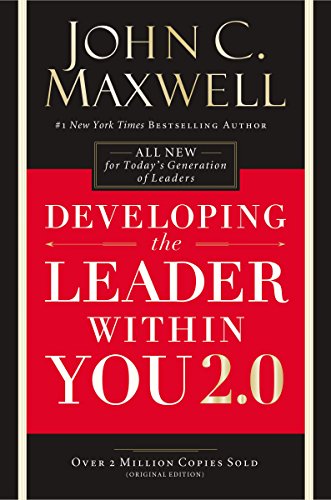
13 Quotes From Others In “Developing The Leader Within You 2.0”

John Maxwell does an excellent job of including insightful words from other authors—past and present—in his books. Developing The Leader Within You 2.0 is no exception. Here are a few of the quotes he shared. 

“There have been meetings of only a moment which have left impressions for life, for eternity. No one of us can understand that mysterious thing we call influence… Yet out of everyone of us continually virtual goes, either to heal, to bless, to leave marks of beauty; or to wound, to hurt, to poison, to stain other lives.” — J.R. Miller 

“The art of being wise is knowing what to overlook.” — William James 

“A man of character will make himself worthy of any position he is given.” —Mahatma Gandhi 

“Nothing is easier than saying words. Nothing is harder than living them, day after day.” —Arthur Gordon 

“We set young leaders up for a fall if we encourage them to envision what they can do before they consider the kind of person they should be.” —Ruth Haley Barton 

“What we achieve inwardly will change outward reality.” — Plutarch 

“Success leads to the greatest failure, which is pride. Failure leads to the greatest success, which is humility and learning.” — David Brooks 

“Our world has replaced the word soul with the word self, and they are not the same thing. The more we focus on our selves, the more we neglect our souls.” — John Ortberg 

“The most effective leaders approach problems through a lens of opportunity.” —Glenn Llopis 

“Face reality, and let your first loss become your last loss.” —Larry Maxwell 

“If we learn to appreciate more of what we already have, we’ll find ourselves having even more to appreciate.” —Michael Angier 

“No one is useless in this world who lightens the burden of it for someone else.” —Benjamin Franklin 

“Everybody can be great, because everybody can serve.” —Martin Luther King Jr 

You can check out my full book review of Developing The Leader Within You 2.0 by clicking here. And you can also read some John Maxwell quotes from this book here. 

12 Quotes From “Developing The Leader Within You 2.0”

Whether you’re a novice or a veteran leader, there’s so much to learn from John Maxwell in his book Developing The Leader Within You 2.0! Check out my full book review by clicking here, and stay tuned for even more quotes coming soon. 

“Developing yourself to become the leader you have the potential to be will change everything for you. It will add to your effectiveness, subtract from your weaknesses, divide your workload, and multiply your impact.” 

“You have influence in this world, but realizing your potential as a leader is your responsibility. If you put effort into developing yourself as a leader, you have the potential to influence more people and to do so in more significant ways.” 

“When you say everything is a high priority, then nothing is a high priority. It really indicates that you’re unwilling or unable to make a decision, which means you won’t get anything done.” 

“Instead of filling every space in my calendar, what I needed to do was create some white space. If I didn’t, nobody else was going to. People who keep burning the candle at both ends aren’t as bright as they think they are.”

“People cannot climb beyond the limitations of their character. Leaders cannot succeed beyond the depth of their character.” 

“Instead of wanting to point to my breakthroughs, I want to direct people to the brokenness that has led to my breakthroughs.” 

“When it comes to character, I believe the best guardrails are the decisions you make before you face high-pressure situations.” 

“People do not naturally resist change; they resist being changed.” 

“If life is tough for individuals, its difficulty is multiplied for leaders. Individuals can think me, but leaders must think we. A leader’s life is not his or her own. Thinking we means other people are included, and that means their problems are also yours to deal with.” 

“You can’t solve problems for others. If you do, you’ll be forever solving their problems. You must solve problems with them—at least until they get the hang of it.” 

“Good leaders don’t just resolve the issue to get it off their plates quickly for the sake of their own comfort. They help create solutions that take their people and their organization forward and put them in a better position than they were in before they experienced the problem.” 

“As a leader, you need to see opportunities differently than most people. They are a chance for you to learn about yourself, your team, and your opportunities. They provide you a way to improve your own life, improve the lives of others, and gaining influence.”

Saturday In The Proverbs—Knowing True & False Riches (Proverbs 22)

[Each chapter in the Book of Proverbs contains thoughts that fit into a theme; they are not just random thoughts gathered together. In this “Saturday In The Proverbs” series, I will share a theme that I see in each chapter. But the cool thing about God’s Word is that you may see an entirely different theme. That’s great! If you do, I would love for you to share it in the comments below.]

…riches… (Proverbs 22:1, 4, 16).

There are earthly riches and there are heavenly riches. There are temporary gains and there is eternal wealth. This Proverb helps direct us to true riches that last forever. 

Good character and a good reputation are better than money (v. 1)

God alone decides what is truly valuable (v. 2)

Prudence helps you avoid bankruptcy (v. 3)

Humbly fearing God is the path to eternal wealth (v. 4)

A perverse pursuit of wealth is a hard and painful path (v. 5)

Better godly children than gobs of money (vv. 6, 15)

Debt enslaves (v. 7)

Cutting corners to make a buck will come back to bite you (v. 8)

Generosity leads to more blessings (v. 9)

Don’t pay attention to those who scoff at God’s ways (vv. 10, 24, 25)

A grace-filled, pure lifestyle will get you noticed and rewarded (v. 11)

God rewards those who do things His way (vv. 12, 17-21)

A good work ethic brings rewards (vv. 13, 29)

Immoral pursuits end in a deep pit (v. 14)

Don’t treat people differently because of their ‘net worth’ (vv. 16, 22, 23; see also James 2:2-4)

Be careful to whom you make financial  commitments (vv. 26, 27)

Don’t encroach on others’ space (v. 28) 

The Power Of God’s Name

“God’s name marks Him out; by it will we address Him; it embodies His character. … This name that is written all over the Bible, but specially exhibited in Christ Jesus, Who came to declare to us the Father’s name, is a name—

  1. Of greatness. Jehovah, God, Creator, El-Shaddai; all expressive of majesty and power and glory. The Lord God omnipotent.
  2. Of grace. It is the declaration of free love. Merciful and gracious. He to whom it belongs must be the fountain-head of love. God is love. In Him is infinity of compassion and longsuffering.
  3. Of forgiveness. He pardons iniquity, transgression, and sin; all sin, great and small; there is forgiveness with Him, that He may be feared; forgiveness to the uttermost.
  4. Of righteousness and holiness. It is holy love that is to be found in Him; righteous grace to the unrighteous; righteous pardon to the guilty.” —Horatius Bonar, in Light & Truth—The Old Testament

Thursdays With Oswald—Isaiah 30

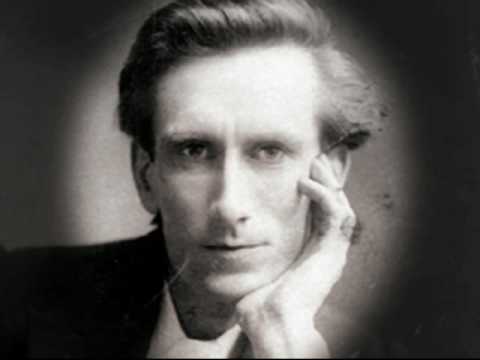
Oswald ChambersThis is a weekly series with things I’m reading and pondering from Oswald Chambers. You can read the original seed thought here, or type “Thursdays With Oswald” in the search box to read more entries.

Isaiah 30 

[These are the notes on Oswald Chambers’ lecture on Isaiah 30.] 

     The test of true religion is the knowledge of the character of God. As long as you think of God in the quietness of a religious meeting you will never know God—what kind of God have you got when you are in touch with the wrong, bad, evil things? God’s Book reveals that it is right in the midst of the very opposite of God that His blessings occur. The very things which seem to be making for destruction become the revealers of God. It is an easy business to preach peace when you are in health and have everything you want, but the Bible preaches peace when things are in a howling tumult of passion and sin and iniquity; it is in the midst of anguish and terror that we realize Who God is and the marvel of what He can do. …  

     God makes His people sing where in the eyes of the world it seems ironical to sing—in a besieged city where things are going to ruin, in the suburbs of hell, in the valley of the shadow of death. When you see lives in the midst of turmoil and anguish full of amazing brightness and uncrushable elasticity of faith in God, if you do not know God you will say, “However can they go through it? how is it that they remain undiscouraged and undismayed?” The explanation is the presence of God made real in His promises.” 

From Notes On Isaiah 

When you go through a “howling tumult” there are some things to remember:

  1. God is with you
  2. God is in control 
  3. God will help you sing through the storm
  4. Others are watching you
  5. God can be glorified in your undismayed faith in His presence through the tumult 

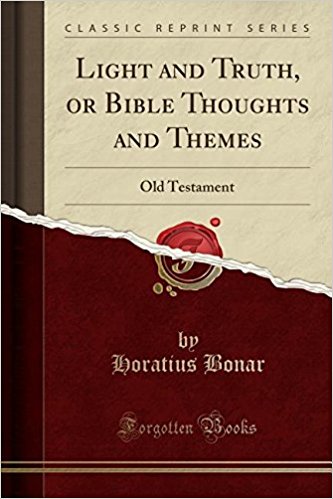
5 Quotes From “Light And Truth—The Old Testament”

I like to think of Horatius Bonar as a tour guide as I read through the Bible, pointing out themes and insights I might have otherwise missed. Check out my full review of Light and Truth—Old Testament by clicking here. 

“The elders [1 Chronicles 21:16]. They acknowledge the stroke and the sin: ‘It is the Lord.’ They clothe themselves in sackcloth, they fall upon their faces. So far as we know, they had not shared David’s sin, yet they at once place themselves by his side in confession and humiliation. David had sinned (v. 8), Israel had sinned (2 Samuel 24:1). They identify themselves with both. It is thus that we should take up a ruler’s sin, or a brother’s sin, or a nation’s sin; not blazoning it abroad in private gossip, or in the newspapers, but taking it on ourselves, and carrying it to God.” 

“We do great injustice to the Old Testament saints and to their privileges, and no less so to the God who made them what they were, when we conceive of them as possessing an imperfect justification, or an imperfect and uncertain knowledge of their justification. Paul’s declaration was explicit on this point: ‘I know Whom I have believed’; and yet it was not a jot more explicit than that of Job: ‘I know that my Redeemer lives.’ When Paul said, ‘It is God that justifies, who is he that condemns?’ he was only speaking what Job had spoken in ages before: ‘I know that I shall be justified. Who is he that will plead with me?’” [Job 13:18-19]

“Everything in God’s character, has by the Cross of Christ been turned into a reason for trusting Him. The more man knows of Him the more he trusts. Trust is the natural and inseparable response of the soul to the divine revelation of the character of God. It is not what man sees in himself, of his good deeds or good feelings, of his graces, or his repentance, or his regeneration, or his faith; but what he sees in God, that calls out confidence.” 

“It is with no distant, unheeding God that we have to do; but with that God who fixes the bounds of our habitation, who counts our hairs, who feeds the ravens, notes a sparrow’s death, clothes the lilies of the field. He is nearer to us than the nearest earthly object or being; more closely in contact with us than we are with one another.” 

“We disjoined God from creation, and so see nothing in it of divine life and power. … The separation of God from His works is one of the awful features of human unbelief. How much more of Him should we know, were we to interpret His works aright. … These skies of His are not bent over us in beauty without a meaning. These seas of His do not roll for nothing. These flowers of His are not fragrant and fair for nothing. They do not say to us, ‘God is your enemy, He hates you’; but ‘God is your friend, He pities you, yearns over you, wishes to make you happy.’ How full a gospel does creation to preach to us, according to its kind and measure!”

12 More Quotes From “Ordering Your Private World”

Gordon MacDonald did a phenomenal job synthesizing biblical principles as he teaches us how to pay attention to our private, inner world. One of the things I enjoyed was the number of other authors and teachers he quotes throughout Ordering Your Private World. Here are a few of those quotes he shared…

“The battle is lost or won in the secret places of the will before God, never first in the external world. … Nothing has any power over the man who has fought out the battle before God and won there. … I must get the things settled between myself and God in the secret places of my soul where no stranger intermeddles, and then I can go forth with the certainty that the battle is won.” —Oswald Chambers

“I took pleasure where it pleased me, and passed on. I forgot that every little action of the common day makes or unmakes character, and that therefore what one has done in the secret chamber, one has some day to cry aloud from the house-top. I ceased to be lord over myself. I was no longer the captain of my soul, and did not know it. I allowed pleasure to dominate me. I ended in horrible disgrace.” —Oscar Wilde 

“Think of no other greatness but that of the soul, no other riches but those of the heart.” —John Quincy Adams, in a letter to his daughter

“A public man, though he is necessarily available at many times, must learn to hide. If he is always available, he is not worth enough when he is available.” —Elton Trueblood

“Remember a long life of steady, consistent, holy labor will produce twice as much fruit as one shortened and destroyed by spasmodic and extravagant exertions; be careful and sparing of your strength when and where exertion is unnecessary.” —Catherine Booth, in a letter to her husband William Booth, founder of the Salvation Army

“There can be intemperance in work just as in drink. What feels like zeal may be only fidgets or even the flattering of one’s self-importance.” —C.S. Lewis

“The man of action has the present, but the thinker controls the future.” —Oliver Wendell Holmes

“No other pleasure suits every occasion, every age or every place. But the study of letters is the food of youth, the delight of old age, a delight at home and no burden abroad; it stays with us at night, and goes with us on our travels, near and far.” —Cicero

“We need to find God, and He cannot be found in noise and restlessness. God is the friend of silence. See how nature—trees, flowers, grass—grow in silence; see the stars, the moon and sun, how they move in silence…. The more we receive in silent prayer, the more we can give in our active life. We need silence to be able to touch souls. The essential thing is not what we say, but what God says to us and through us. All our words will be useless unless they come from within—words which do not give the light of Christ increase the darkness.” —Mother Teresa

“St. Augustine says, ‘God gives where He finds empty hands.’ A man whose hands are full of parcels can’t receive a gift. Perhaps these parcels are not always sins or earthly cares, but sometimes our own fussy attempts to worship Him in our way. Incidentally, what most often interrupts my own prayers is not great distractions but tiny ones—things one will have to do or avoid in the course of the next hour.” —C.S. Lewis

“Let inward prayer be your last act before you fall asleep and the first act when you awake.” —Thomas Kelly

“I know that there are certain mental and emotional and moral and spiritual attitudes that are anti-health: anger, resentments, fear, worry, desire to dominate, self-preoccupation, guilts, sexual impurity, jealousy, a lack of creative activity, inferiorities, a lack of love. These are the twelve apostles of ill health. So in prayer I’ve learned to surrender these things to Jesus Christ as they appear.” —E. Stanley Jones

You can check out my review of Gordon MacDonald’s Order Your Private World by clicking here. And you can read some quotes from Gordon by clicking here.

15 More Quotes From “Run Today’s Race”

Oswald Chambers’ book Run Today’s Race was originally published as a thought-a-day calendar. Here are a few more short, thought-provoking quotes.

“When we say ‘Thy will be done,’ do we say it with a sigh? If so, we have never realized that the character of God is holy love; nothing can ever happen outside His purposeful will.”

“‘Why does God bring thunderclouds and disasters when we want to green pastures and still waters?’ Bit by bit we find, behind the clouds, the Father’s feet; behind the lightning, an abiding day that has no night; behind the thunder, ‘a still small voice’ that comforts with a comfort that is unspeakable.”

“Beware of interpreting Scripture in order to make it suit a pre-arranged doctrine of your own.”

“The New Testament view of a Christian is that he is one in whom the Son of God has been revealed, and prayer deals with the nourishment of that life.”

“In order to be able to wield the Sword of the Spirit, which is the Word of God, we must obey, and it takes a courageous heart to obey.”

“The Bible talks plentifully about joy, but it nowhere talks about a ‘happy Christian.’ Happiness depends on what happens; joy does not. Remember, Jesus Christ had joy, and He prays ‘that they might have My joy fulfilled in themselves.’”

“If God has made your cup sweet, drink it with grace; if He has made it better, drink it in communion with Him.”

“We must distinguish between the burden-bearing that is right and the burden-bearing that is wrong. We ought never to bear the burden of sin or doubt, but there our burdens placed on us by God which He does not intend to lift off. He wants us to roll them back on Him.”

“The reason we know so little about God’s wisdom is that we will only trust Him as far as we can work things out according to our own reasonable common sense.”

“Take time, strangle some other interests and make time to realize that the center of power in your life is the Lord Jesus Christ and His Atonement.”

“The essence of Christianity is that we give the Son of God a chance to live and move and have His being in us.”

“God rarely rebukes us for our impulsive plans because those plans work their own distress.”

“God will never begin to teach me His will in other matters until I do what I know.”

“‘Ye are the light of the world.’ We have the idea that we are going to shine in heaven, but we are to shine down here ‘in the midst of a crooked and perverse nation’ (Philippians 2:15). We are to shine as lights in the world in the squalid places, and it cannot be done by putting on a brazen smile, the light must be there all the time.”

“Have you ever noticed what Jesus said would choke the Word He puts in? The devil? No, the cares of this world. It is the little worries always. … All our fret and worry is caused by calculating without God.”

Please check out my full book review of Run Today’s Race by clicking here, and the first set of quotes I posted from this book is here.