Christians do a disservice to the Gospel when we’re known more for what we’re against than what we’re for.Check out this full message here. I have lots of new content every week, which you can check out on my YouTube channel.
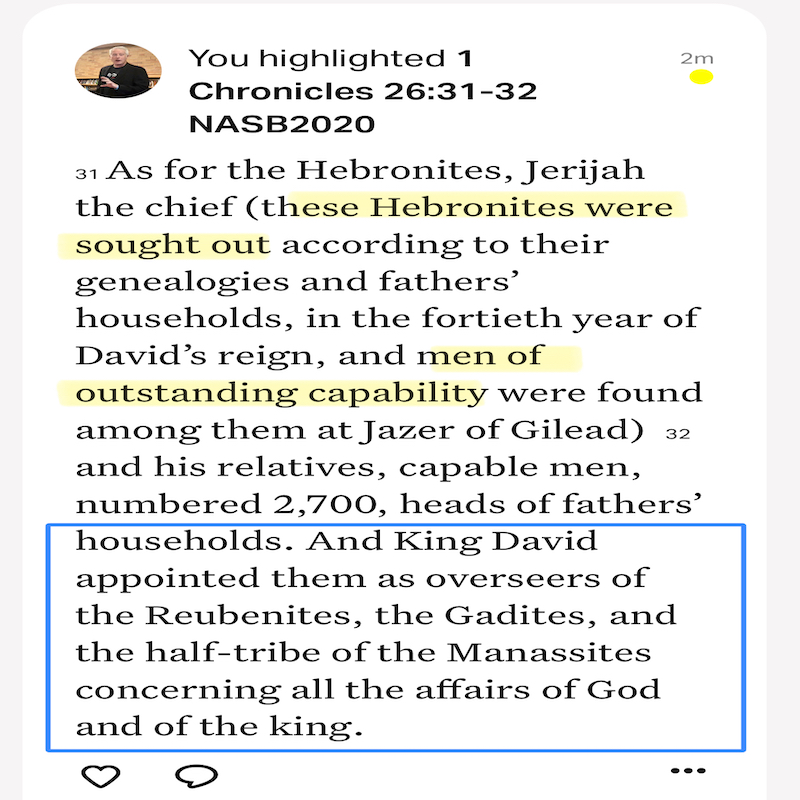
The Hebronites faithfully served God and King David without any fanfare or recognition. God shined His light on these “men of outstanding capability” so that they were finally recognized publicly. Note that they didn’t try to promote themselves. They faithfully served and God promoted these humble men in His timing.
I always appreciate the straightforward leadership insights that Ken Blanchard shares. He wrote, “Leadership is not something you do to people, but something you do with people.” And in this post he discusses some strategies when one of your direct reports is struggling.
“If I find 10,000 ways something won’t work, I haven’t failed.” —Thomas Edison
“We are a Christian people, according to one another the equal right of religious freedom, and acknowledging with reverence the duty of obedience to the will of God.” —1931 Supreme Court ruling
The Holy Spirit reminds us of God’s Word. But in order for Him to remind us, we have to study it first! Check out this full message.
“Your real, new self…will not come as long as you are looking for it. It will come when you are looking for God.” —C.S. Lewis, in Mere Christianity
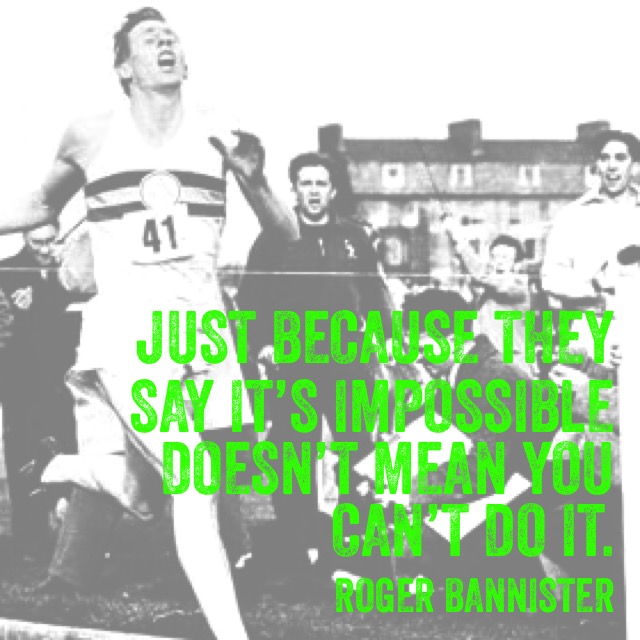
“Just because they say it’s impossible doesn’t mean you can’t do it.” —Roger Bannister, who broke the “impossible” barrier of running less than a 4-minute mile on May 6, 1954
Look at the profound humility of John! His birth was foretold by an angel, his ministry was so powerful that people wondered if he was the Messiah or possibly Elijah, yet he never let all these accolades go to his head.
“I am such a lowly servant of Jesus that I don’t even have the right to take off His sandals.”
As C.S. Lewis said, “Humility is not thinking less of yourself, it’s think of yourself less.” John was too focused on making sure people saw Jesus that he had no time to think about himself.
Jesus said John was the greatest of the prophets (Matthew 11:11; Luke 7:28). The applause of the world means nothing. All that matters is the applause from nail-scarred hands, and the voice of the Master saying, “Well done, good and faithful servant.”
In January 1647, Oliver Cromwell captured King Charles I during the British Revolution. Within just a few months, Charles escaped and was able to raise another army. A year later, in August 1648, Cromwell’s forces once again defeated the army Charles had raised, and once again Charles was taken prisoner.
Oliver Cromwell put Charles on trial for his crimes, and after the guilty verdict was pronounced, Charles I was executed. A total of 59 people signed the former king’s death warrant.
Fast forward eleven years and Oliver Cromwell had died and his son Richard had taken his place as Lord Protector of England. Unlike his father, there was great discontent with Richard’s leadership. As a result, the Loyalists were able to sweep Charles II into power.
After assuming the throne of England, Charles II wanted the 59 death warrant signers put on trial, but fifteen of them had already died. That little fact didn’t stop King Charles II. He ordered that their bodies be exhumed, placed on trial, convicted of their crimes, and then hung.
I’m no psychologist, but I think it’s safe to say that Charles II might have had a slight problem with unforgiveness!
This is from a chapter I entitled “The ties that no longer bind.” The insidious nature of unforgiveness is that it ties us to the one who injured or offended us.
Jesus taught us to pray, “Forgive us our debts, as we also have forgiven our debtors” (Matthew 6:12). The word He uses for “debts” means something justly or legally due, or an offense or sin that has been committed. So a debtor is one who morally or legally owes another for the wrong committed.
So for these debts, we are taught to ask for forgiveness of God and to give that same forgiveness to others. Jesus uses the same root word for both “forgive” and “forgiven,” but there are nuances that make the picture quite clear.
When we ask God to forgive our debts, it is the active voice (I have to ask for it) and it is stated in the second person (I have to receive it). When I ask my Heavenly Father for this, my offense has been paid-in-full because the legal and moral requirements aren’t due any longer. I couldn’t pay this debt on my own, but Jesus paid it for me (2 Corinthians 5:21).
When I forgive someone who has wronged me, it is again the active voice (I have to give it), but it is now in the first person (I don’t wait around for the other person to ask for forgiveness). I let it go. I don’t hinder the other person or myself with waiting for the penalty to be paid any longer.
This is the only part of this model prayer for which Jesus gives a commentary afterwards (in Matthew 6:14-15). With this, Jesus is teaching us that to say, “I’m forgiven” is also to say, “I’m forgiving.”
Unlike Charles II, when we are forgiven and forgiving, the inevitable result is freedom for both ourselves and our offenders.
If we practice this relentlessly, we are both freed ourselves and freeing others!
When we pray, “Forgive as we also have forgiven,” we are both acknowledging His power to forgive us and requesting the faith need to be forgiving people. As C.S. Lewis noted, “To be a Christian means to forgive the inexcusable, because God has forgiven the inexcusable in you.”
The Bible describes satan’s activity as stealing, killing, and destroying. He’s called the father of lies, so he uses slander to try to steal, kill, and destroy. His slander is: “God can’t forgive that” and “You shouldn’t let them off the hook for what they did to you.”
These two thoughts are linked, just as “I’m forgiven” and “I’m forgiving” are linked. If I begin tothink that what someone did to me was too big for me to forgive, then I can also believe that there is a sin I have committed that is too big for God to forgive. But when I live both receiving and giving forgiveness, I can tune out this lie from hell.
Our anxiety is usually tied to our insecurity about our needs being met. Philippians 4:6-7 counsels us to turn those anxieties into prayer. It’s not what we can provide for ourselves, but trusting what our Heavenly Father has already provided for us. Check out this amazing series on prayer. I have lots of new content every week, which you can check out on my YouTube channel.
A recent post at the Institute for Creation Research says, “despite popular perception, the impact theory of dinosaur extinction has problems and is still a source of contention among even conventional scientists.” In fact, “Despite uniformitarian claims to the contrary, these rocks and fossils are best explained by the Genesis Flood that covered the earth about 4,500 years ago. All the air-breathing, land-dwelling creatures outside the Ark perished. However, the representatives of these animals that God brought on board the Ark, including dinosaurs, survived, reproduced, and spread across the Earth after the Flood. Many ancient peoples wrote about and described what appear to be dinosaurs, even though they called them by other names, e.g., dragons. In the creation Flood model, impacts may have hit the earth during the Flood, but none of them caused the dinosaurs to go extinct.” This article is a good overview of the geological and paleontological evidence that supports the biblical account of the Flood.
“Scripture teaches us that there are two points of view from which we may regard Christ’s death upon the Cross. The one is the redemption of the Cross: Christ dying for us as our complete deliverance from the curse of sin. The other, the fellowship of the Cross: Christ taking us up to die with Him and making us partakers of the fellowship of His death in our own experience. … O Christian, when the world crucified Christ, it crucified you with Him, when Christ overcame the world on the Cross, He made you an overcomer too. He calls you now, at whatever cost of self-denial, to regard the world, in its hostility to God and His kingdom, as a crucified enemy over whom the Cross can ever keep you conqueror. What a different relationship to the pleasures and attractions of the world the Christian has who by the Holy Spirit has learned to say: ‘I have been crucified with Christ;…[the crucified] Christ lives in me!’ (Galatians 2:20).” —Andrew Murray
Sullivan and Addie Chainey were both deaf, but that didn’t stop them from becoming premier missionaries in the Assembly of God fellowship. Their work with other deaf people was amazing! I love this concluding thought in this short biography of their ministry work: “The Chaineys’ story testifies that God can empower those who are marginalized in society to do redemptive work in their own communities and beyond.”
“Earth, I think, will not be found by anyone to be in the end a very distinct place. I think earth, if chosen instead of Heaven, will turn out to have been, all along, only a region in Hell: and earth, if put second to Heaven, to have been from the beginning a part of Heaven itself.” —C.S. Lewis, in The Great Divorce
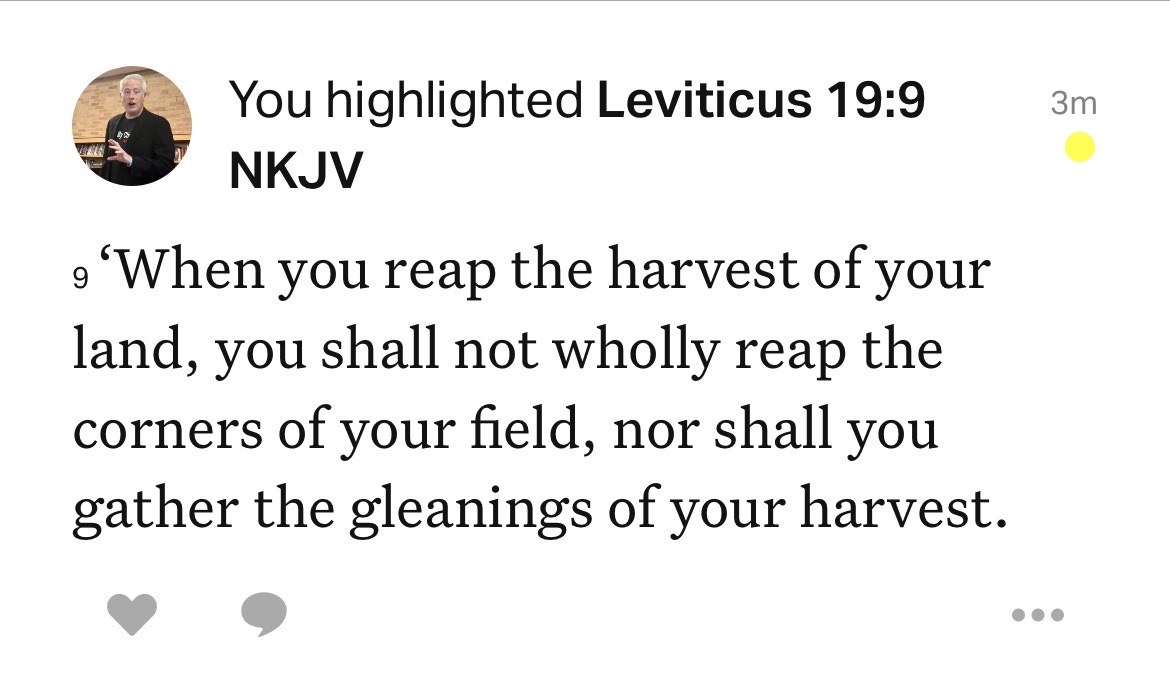
Years later, Boaz was obeying this commandment in Leviticus 19:9. That allowed Ruth to be in his field, which led to a marriage that began the family line of King David, which traces all the way to Jesus! Obedience matters. Just imagine if Boaz had been disobedient in this. The Messiah still would have come, but Boaz and Ruth (and their children and grandchildren) would have missed out on this blessing.
I love reading, and I love sharing my love of good books with others! Here is a list of the books I read and reviewed in 2023. Click on a title to be taken to that review.
“When we are foolish and young, we need more rules. As we mature, we can be trusted with extended boundaries. The wiser we are, the more we appreciate those boundaries and the less they offend us. Offense at law, accountability, hedges, and boundaries is an indicator of immaturity. The wiser we are, the more unafraid and appreciative we are of those who hold us to account.” —Dick Brogden, in Proverbs: Amplified and Applied
“When public policy begins to encroach on the Christian’s freedom and duty to proclaim the Good News, or to bring the benefits of the Gospel to the community, believers must continue our mission nonetheless and be ready to bear whatever punishments those in authority may choose to inflict. Christians do not seek suffering, but we must not shun it, particularly when by our suffering we can work for public policies more in line with the centrality of the Gospel for the wellbeing of all people.” —T.M. Moore
The Golden Rule—treat others as you would want to be treated—applies to the way you treat yourself too. Stop beating yourself up when you make a mistake. You probably don’t beat up others when they stumble, so extend the same grace to yourself. Practice healthy, affirming self-talk. Check out this full conversation from episode 68 of The Craig And Greg Show.
“A thought, a sword, and a spade should never be allowed to rust.” —Irish Proverb
Dr. C. John “Jack” Collins uses some thoughts from C.S. Lewis to help us learn a little better how to read Genesis 1-11. He writes, “We should approach any biblical passage with the conviction that God inspired the Bible to be the right tool for its job. If we can get a good idea of what kind of tool our passage is, we can discern what job God intended it to perform. And that means we need to be willing to adjust what we’re looking for and be willing to find other ways of addressing some questions.”
“Failure to pray is simple unbelief. We must repent of our unbelief and take up the work of prayer with greater devotion and dedication. We shall not be able to realize progress in Christ’s Kingdom, or in returning our nation to a greater experience of justice and goodness, apart from prayer. Prayer is the starting point for public policy. Prayer must be the sustaining power of public policy. And prayer in the form of worship will be the outcome of public policies, forged in prayer, which lead to a peaceful, godly, dignified, true, and Gospel-friendly society.” —T.M. Moore
This is just one example of the power of a leader’s storytelling. Check the full conversation Greg and I had on The Craig And Greg Show. I have lots of new content every week, which you can check out on my YouTube channel.
“We are all born ignorant, but one must work hard to remain stupid.” —Benjamin Franklin
George Jeffreys was born with a limiting speech impediment, but with the empowering of the Holy Spirit, George and his brother Stephen led incredible Pentecostal revivals in England and Wales. They were said to be the greatest evangelists since George Whitefield and John Wesley. Someone asked Jeffreys how long a revival should last, and he responded, “Thank God, a revival started in my heart 30 years ago, and it has never stopped; it will never end.” He continued by saying, “As long as Jesus is kept in the front, and made the center of fellowship and blessing and unity, the revival will never end.” Check out this mini biography about his life.
John Stonestreet uses the example of C.S. Lewis’ Aslan to talk about how God can speak to us through our pain. John writes, “Pain is never the point of God’s plans, any more than it is the purpose of physical exercise. Never pushing ourselves to the point that it hurts means never improving our health. On the other hand, seeking pain is more likely to do harm than to aid our wellbeing. In and of itself, pain is not good, but it is meaningful. Pain indicates that something is wrong and needs to be addressed.”
“The best way to make a dream come true is to wake up.” —Dame Anna Wintour
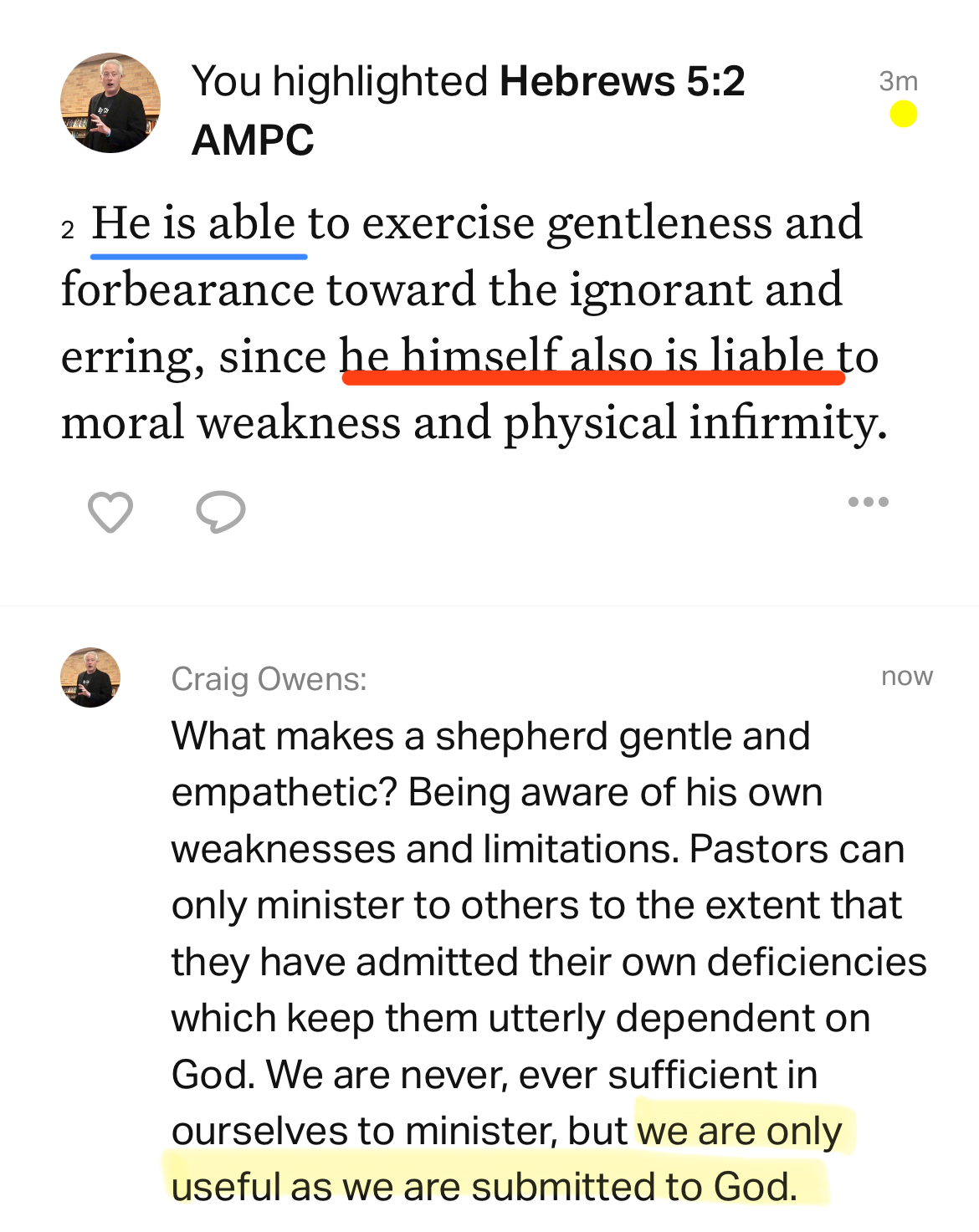
Because of the extensive prayer, research, and work I put into my book Shepherd Leadership, I am frequently drawn to passages of Scripture that reinforce the idea of pastors as shepherds. I was meditating on Hebrews 5:2 the other day, and I shared some of my thoughts with some of my pastor friends.
Healthy leaders look in the mirror first before they confront a teammate on something that needs to change. Check out the full conversation Greg and I had on The Craig and Greg Show about defeating the two-headed leadership killer of ignorance and arrogance. I have lots of new content every week, which you can check out on my YouTube channel.
“I am often, I believe, praying for others when I should be doing things for them. It’s so much easier to pray for a bore than to go and see him.” —C.S. Lewis, Letters to Malcolm: Chiefly on Prayer
“The greatest weapon against stress is our ability to choose one thought over another.” —William James
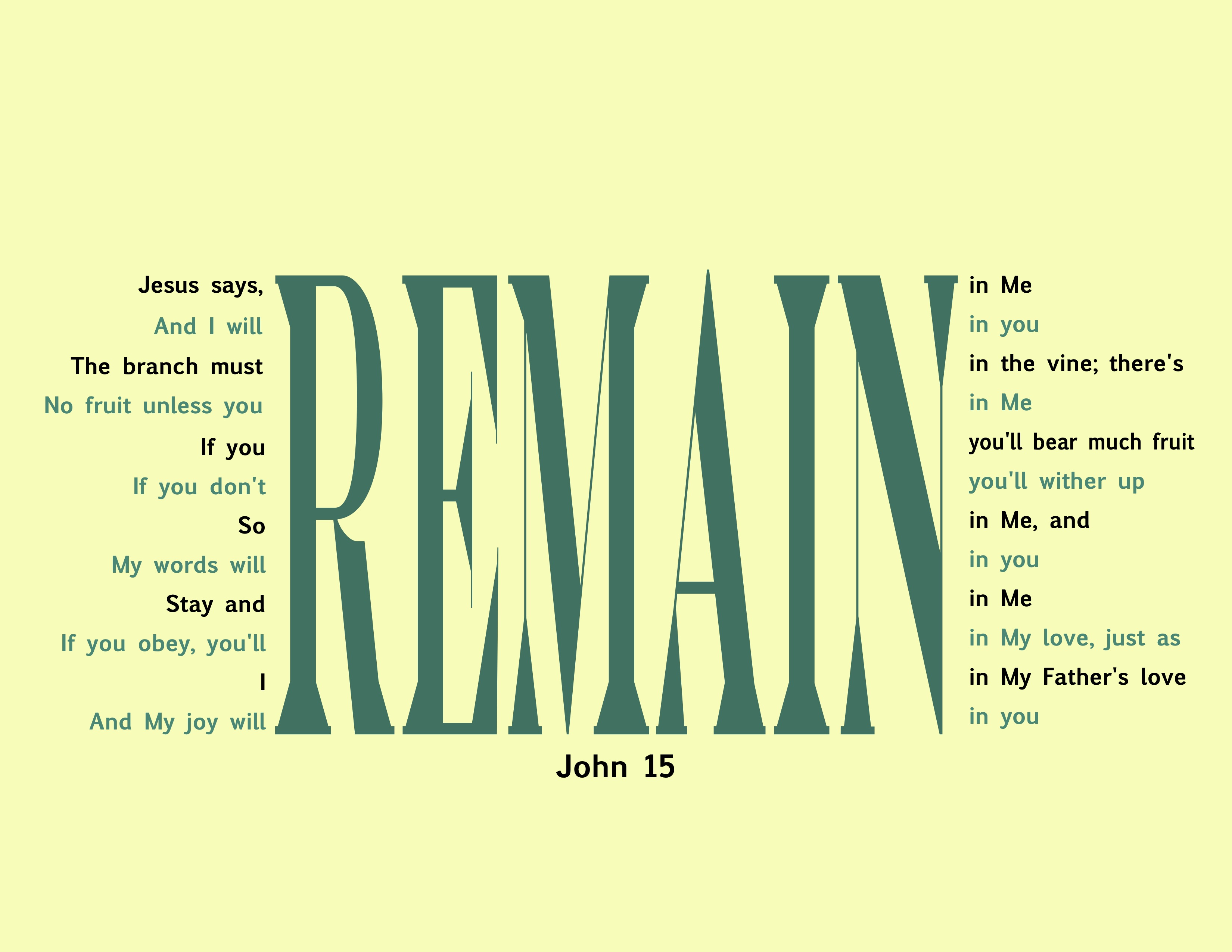
The most empowered and empowering person is the one who remains in Jesus.
“Whereas three or more incidents of intense stress within a year (say, serious financial trouble, being fired, or a divorce) triple the death rate in socially isolated middle-aged men, they have no impact whatsoever on the death rate of men who cultivate many close relationships.” —Daniel Goleman, Richard Boyatzis & Annie McKee, Primal Leadership
T.M. Moore has an outstanding series of posts on how Christians should interact with the governments in the lands in which they live. I highly recommend this series to you. T.M. wrote, “We have seen that justice is a jewel of many facets. In its obligatory facet, justice requires that we love our neighbors simply because they are made in the image of God. We must regard them, and do with them, as we wish to be regarded and done with ourselves. In its preventive facet, justice demands that we use forethought in all our actions to make sure, as far as possible, that our neighbor or his property is not injured by what we do. Distributive justice encourages us to share generously with our neighbors and others in need. Restorative justice comes into play when the balance of neighbor love has become disturbed and the one guilty of disturbing it is required to set things right again. Each of these forms of justice, grounded in the Law of God, is very much a part of life in our society today. It is simply mindless or prejudicial to insist that we should have no input from Scripture or the Law of God, either in the public square or in the making of public policy. Our nation was founded on Biblical principles of justice, and to deny this is to rewrite history past and to put in jeopardy history to come.”
The Greek word translated as “consider” in Hebrews 3:1 means to observe closely, to consider attentively, to fix your eyes or mind upon it. In its context, this verb is usually directing us to the end result of being in awe, kindling a renewed faith, and being rejuvenated with a new resolve to move forward.This is what happens especially when we consider Jesus❣️
Listen to the podcast of this post by clicking on the player below, and you can also subscribe on Apple, Spotify, or Audible.
In our series on six important spiritual disciplines, our key phrase is “so that”—
I get stronger so that we can get stronger.
For discipline #1: I study my Bible so that I have something to apply to my life.
For discipline #2: I take time for solitude so that I can respond in a God-glorifying way in stressful situations.
Our third spiritual discipline makes people nervous: Giving. So perhaps if I give you the “so that” up front that will help you stick with me. Here it is: I practice the spiritual discipline of giving so that I can encourage others and experience God’s greater blessings.
Jesus has a caution about giving: Don’t give to get earthly recognition (Matthew 6:1-4). He states this with two don’ts and one do:
do not announce your giving
do not calculate or reckon your reward for giving
do expect God’s reward for your giving
The stark contrast is seen between Joseph Barnabas and Ananias and Sapphira in Acts 4:34-5:4. Barnabas gave everything he had received from the sale of a piece of property without expecting anything in return. Ananias and Sapphira pretended to give everything they had received from the sale of a piece of property fully expecting some sort of recognition. The results are just as stark and clear: Barnabas was honored by both the church and God, while Ananias and Sapphira were severely punished by God.
When Jesus tells us in Matthew 6 that our giving should be in “secret,” He clearly doesn’t mean that no one knows that we have given. Clearly, in our examples in Acts, people knew that Barnabas had given money to the church.
In two of his public letters, Paul gave public thanks to the church at Philippi for their financial gifts to him, and he called out the church at Corinth for their failure to give as they had promised they were going to (Philippians 4:10; 2 Corinthians 8:11).
Paul noted that the Philippians gave because they knew there was a need, and Paul praised them for this and told them that they would see God’s reward for their generosity (Philippians 4:10-20). We can see our “so that” idea here: Paul was encouraged, he said that the Philippians would have all their needs met, and God was glorified.
Paul used this example of the Philippians as an encouragement to the Corinthians (see 2 Corinthians 8:1-12, 9:5-8). Paul encouraged them to make sure they had a “get to” attitude about giving, not a “have to” obligation. He noted that God blesses the cheerful, get-to giver.
Notice how similar the blessings of God sound to these two churches:
And God is able to bless you abundantly, so that in all things at all times, having all that you need, you will abound in every good work. (2 Corinthians 9:8)
And my God will meet all your needs according to the riches of His glory in Christ Jesus. (Philippians 4:19)
When the Bible talks about giving, it is never restricted to money, although that is part of it. The Bible talks about giving in three categories. We could call these The three Ts—
Treasure—our tithes and offerings.
Time—giving our service to those in need.
Talent—using the abilities God has given each believer to build up the Kingdom of God.
How much of our treasure, time, and talent should we give? We should never look for the bare minimum, but we should be lavish givers. C.S. Lewis said it this way in his book Mere Christianity:
“I do not believe one can settle how much we ought to give. I am afraid the only safe rule is to give more than we can spare. In other words, if our expenditure on comforts, luxuries, amusements, etc., is up to the standard common among those with the same income as our own, we are probably giving away too little. If our charities do not at all pinch or hamper us, I should say they are too small. There ought to be things we should like to do and cannot do because our charities expenditure excludes them.”
For myself, I am trying to think of spiritual discipline #3 as this prayerful declaration:
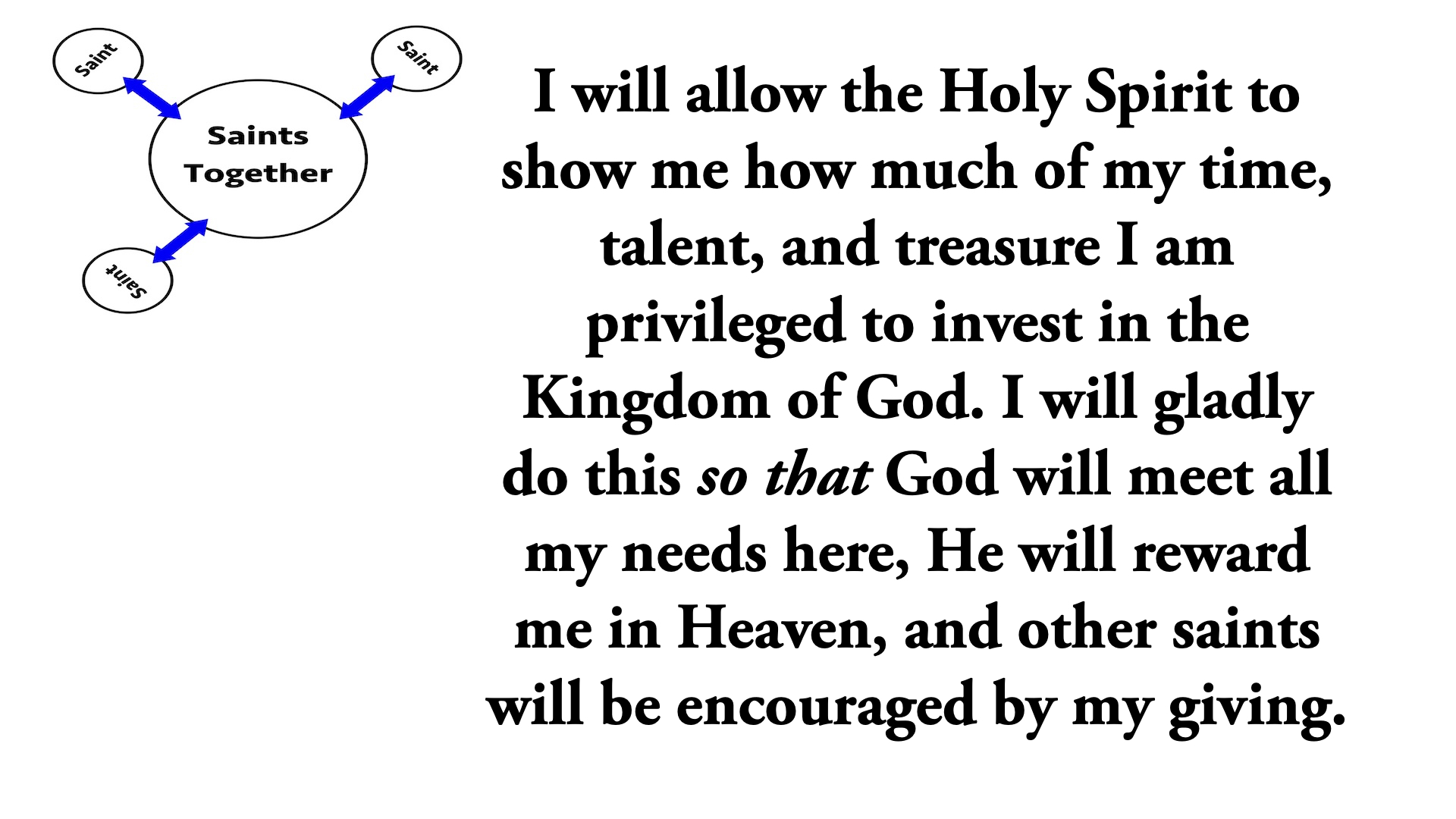
I will allow the Holy Spirit to show me how much of my time, talent, and treasure I am privileged to invest in the Kingdom of God. I will gladly do this so that God will meet all my needs here, He will reward me in Heaven, and other saints will be encouraged by my giving.
I hope you will join me in making this your declaration as well.




 The Hebronites faithfully served God and King David without any fanfare or recognition. God shined His light on these “men of outstanding capability” so that they were finally recognized publicly. Note that they didn’t try to promote themselves. They faithfully served and God promoted these humble men in His timing.
 “Just because they say it’s impossible doesn’t mean you can’t do it.” —Roger Bannister, who broke the “impossible” barrier of running less than a 4-minute mile on May 6, 1954







 Craig T. Owens