Humility (book review)

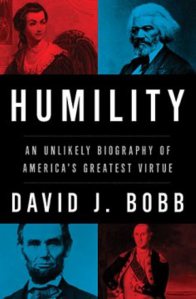
HumilityDavid J. Bobb has a title/subtitle combination that almost sounds paradoxical—Humility: An Unlikely Biography Of America’s Greatest Virtue. After all, when many think of America they are more likely to use the terms “confidant” or even “brash,” but not usually “humble.” But in this seeming paradox is a great truth.

The Greek philosophers often described a virtue as the golden mean between two extremes. Indeed, David Bobb uses such philosophers as Socrates and Aristotle, alongside Augustine and even more modern thinkers like Benjamin Franklin, to explore how America could be virtuous because of its humility.

Or more precisely, how America could be virtuous because of humble Americans. Dr. Bobb explores the biographies of notable Americans like George Washington, James Madison, Abigail Adams, Abraham Lincoln and Frederick Douglass to give us an intriguing description of what true humility looks like. Although in their time many thought of these people as proud or even glory-seekers, Dr. Bobb shows us how it was their profound, often hard-won humility that made them examples worth emulating.

And we do need these examples. In the epilogue, Dr. Bobb quotes Oliver Wendell Holmes, “Humility is the first of the virtues for other people.” How true! The question is: Will Americans re-learn the virtuous power and strength of humility, or will humility continue to erode, mistaken by many as a weakness?

For both history enthusiasts, leaders, leaders-in-training, and those who love a good biography, Humility is a very enjoyable and educational book.

I am a Thomas Nelson book reviewer.

Links & Quotes

link quote

These are links to articles and quotes I found interesting today.

“Truth wears well. Time tests it, but it right well endures the trial. … What a poor thing is the temporary triumph of falsehood!” —Charles Spurgeon, commenting on Proverbs 12:19

The “stimulus” that wasn’t: CBO Again Repeats Faulty Methodology

“The word ‘mercy’ here is extracted from misericordia, the Greek word for ‘misery.’ The full meaning of this word is: ‘to take to heart the misery of another, with the intention of giving him comfort and relief.’ So being merciful means taking on another person’s hurt!” Read more from David Wilkerson.

[PHOTOS] Amazing story captured in Life magazine of a 1950s nurse Maude Callen.

[VIDEO] Largest Lunar Impact Caught By Astronomers

What the IRS is trying now even has the ACLU upset: Stop The Assault

Wow! Check out this tweet from Russian chess champion Garry Kasparov

Book Reviews From 2013

BookshelfHere are the books I read and reviewed in 2013. Click a title to read the review…

10 People Every Christian Should Know

A Harmony Of The Gospels

Alive To Wonder

All In

Alone

Altar Ego

Andrew Murray Daily Reader

Dear Abba

Decision Points

Did The Resurrection Happen … Really?

Draw The Circle

Fight

Firsthand

Francis

God’s Favorite Place On Earth

God’s Workmanship

Habitudes

He Shall Glorify Me

I Never Thought I’d See The Day

If Thou Wilt Be Perfect

If Ye Shall Ask

It Is Finished

Jesus Is _____.

Jesus: A Theography

Knocking At God’s Door

Love To The Uttermost

One Year Book Of Personal Prayer

Outliers

Plastic Donuts

Pouring Holy Water On Strange Fire

Promotion

Raising Your Child To Love God

Seven Men

Smith Wigglesworth On Healing

Sometimes You Win, Sometimes You Learn

Stopping Words That Hurt

The 13th Resolution

The Baptism With The Holy Spirit

The Bare Facts

The Five Levels Of Leadership

The Highest Good

The Hobbit

The Man Who Knew Too Much

The Purpose Of Christmas

The Ragamuffin Gospel

The Reagan Diaries

The Secrets Of Intercessory Prayer

Things We Couldn’t Say

Understanding Sexting

Unfinished

Unstoppable

Visioneering

Who Do You Think You Are?

You Don’t Need A Title To Be A Leader

For my book reviews of 2011 click here, and for 2012’s list click here.

10 People Every Christian Should Know (book review)

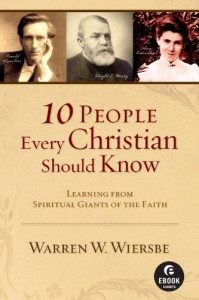
10 People Every Christian Should Know10 People Every Christian Should Know is a quick survey of notable Christian movers and shakers from the 1600s through the 1960s. Warren Wiersbe gives us a quick overview of their lives, attempting to whet our appetites to learn more about them.

By no means are these in-depth biographies, but rather short biographical sketches of their lives. Rev. Wiersbe quotes from other biographies and works written by the person being studied to give us insight into why they belong on this “Top 10” list. Each chapter contains Rev. Wiersbe’s recommendations about which books to read by or about that person to go deeper in your study of their life and beliefs.

I don’t have any arguments with the list of distinguished people who made this list, and I found the book recommendations in each chapter helpful, as well as the extensive list of reference books and biographies at the end of the book. The only thing I found slightly off-putting was Rev. Wiersbe’s commentaries into why the spiritual experiences of some of the subjects weren’t what they were portrayed to be. It would have been far better for him to simply say, “Here’s what happened, and here’s where you can read more.” Other than that, I would recommend this book as a great starting point for anyone who loves studying history as much as I do.

By the way, the Top 10 people covered in this book are:

  • Matthew Henry—Bible commentator
  • Jonathan Edwards—pastor
  • John Henry Cardinal Newman—pastor
  • J.B. Lightfoot—Bible translator
  • J. Hudson Taylor—missionary
  • Charles H. Spurgeon—pastor
  • Dwight L. Moody—pastor
  • Amy Carmichael—missionary
  • Oswald Chambers—professor
  • A.W. Tozer—pastor

Seven Men (book review)

Seven MenWhen I read Bonhoeffer, I knew Eric Metaxas was a special author, bringing such a vibrance and fullness to his subject. So I began Seven Men And The Secret Of Their Greatness with high expectations, and I’m happy to tell you that Eric Metaxas exceeded those expectations!

As the title implies, Seven Men is a collection of seven biographies of key men in history. These aren’t biographies covering the entire lives of these great men, but rather a zoomed-in look at a crucial moment in the lives of these men. Eric gives us just enough of an introduction to their early lives to set the stage, and then concentrates his look at the decisions or stands these men took to achieve the title of “great.”

How does one measure greatness? In the case of these seven men, Eric defines greatness as heroic character put to a test where most are tempted to stop short. These seven men stood firm mainly because of their godly character, and their conviction that a stand in their age would mean others in their own age would be able to stand as well.

Even if you’ve read or heard about George Washington, William Wilberforce, Eric Liddell, Dietrich Bonhoeffer, Jackie Robinson, Pope John Paul II, or Charles Colson, you owe it to yourself to read Seven Men to see why they are considered “great” men.

I am a Thomas Nelson book reviewer.

The Reagan Diaries (book review)

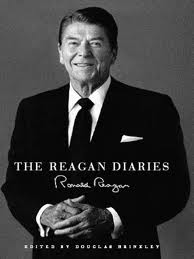
The Reagan DiariesPresident Ronald Reagan was the first president I was old enough to vote for, so he’s always held a special place in my own personal history. After reading several books about President Reagan, I wanted to read something in his own words. I’m so glad I did! The Reagan Diaries is a forthright look at an amazing man.

If you have studied American history during the Reagan presidency—or maybe you lived through that era of our history—you will gain a greater appreciation for the tough decisions that were made during this time. Reagan came into office on a platform that brought a sense of encouragement to an American people who were feeling a bit beat up, and then he tirelessly worked to follow through on the promises he had made, despite a Congress that was initially very antagonistic toward his policies.

Several things really stood out in these diaries. First is Reagan’s reliance on God. Time and again he writes about the wisdom he found in the Scriptures, or the strength he received in prayer. His faith is inseparable from his success in the White House. His faith was one that came to the forefront especially in dark times. Laying in the emergency room after being shot by a would-be assassin, he wrote:

“I focused on that tiled ceiling and prayer. But I realized I couldn’t ask for God’s help while at the same time I felt hatred for the mixed up young man who had shot me. Isn’t that the meaning of the lost sheep? We are all God’s children & therefore equally beloved by Him. I began to pray for his soul and that he would find his way back to the fold. …Whatever happens now I owe my life to God and will try to serve Him in every way I can.”

Another thing that appears in page after page is his love for Nancy. He writes frequently about how lonely the White House seemed when she was gone, he counted down the days until they would be reunited, and he looked forward to the all-too-short times when they could vacation together or take a break on the weekend just to be alone. On the first wedding anniversary they celebrated in the White House, he wrote, “more happiness than any man could rightly deserve.” And back at George Washington Hospital after the assassination attempt he said,

“I opened my eyes to find Nancy there. I pray I’ll never face a day when she isn’t there. Of all the ways God has blessed me giving her to me is the greatest and beyond anything I can ever hope to deserve.”

Finally, I love Reagan’s “realness.” He never took himself too seriously. He remained accessible to as many people in the White House as he could, and spent a lot of time calling and mailing United States’ citizens he read about in the newspapers or saw on the news reports. He was also brutally honest about his own shortcomings. After one press conference he wrote, “I wasn’t very scintillating.”

This is an excellent book to read for both a study in leadership, and as a companion to other U.S. history books of that period. At 700+ pages, it’s a hefty read, but well worth your time.

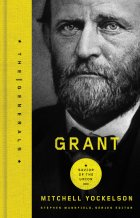
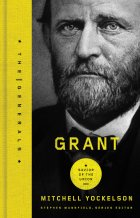
9 Quotes from “Grant: Savior Of The Union”

Grant: Savior Of The Union was a very eye-opening biography to read (you can read my full review by clicking here). Here are nine passages that especially caught my attention:

“This I don’t want you to read to others for I very much dislike speaking of myself.” —Grant, in a letter to his father about the accomplishments of his soldiers 

“The first day out the regiment made it five miles. However, the next morning at six o’clock when Grant resumed the March, his men were unprepared to move. He allowed them time to rise and eat breakfast this time, but the following morning when the men were again not ready to march, Grant left without them. It must have been a sight to see half-dressed soldiers running after their commander. The remainder of the trip to Quincy was conducted in relatively good order. Grant boasted to his father that ‘my men behaved admirably and the lesson has been a good one for them. They can now go into camp and after a day’s March and with as much promptness as veteran troops; they can strike their tents and be on the march with equal celerity.”  —Mitchell Yockelson

At one battle some officers advised retreat. Grant replied, “Retreat? No. I propose to attack at daylight and whip them.”

When some in Washington, D.C., wanted to replace Grant with someone more experienced, President Abraham Lincoln said, “I can’t spare this man; he fights.”

A friend observed that at a banquet where toasts and speeches were made to honor Grant, “his face never changed its unmoved expression. It never lit up with excitement. …His silence was a native endowment, nothing studied, nothing acquired. … His greatest enjoyment was manifestly with [his wife and children]. Their presence and happiness made his face beam as nothing else would.” 

When Grant was given the rank of Lt. General—a rank no one had held since George Washington—Grant’s acceptance speech was very gracious:

“I accept the commission with gratitude for the high honor conferred. With the aid of the noble armies that have fought on so many fields for our common country, it will be my earnest endeavor not to disappoint your expectations. I feel the full weight of the responsibilities now devolving on me and know that if they are net it will be due to those armies. And above all to the favor of that Providence which leads both Nations and men.”

After Robert E. Lee signed the surrender agreement for the armies of the South, word spread to the Union forces, and celebration erupted. “Grant ordered the cheering to stop. He did not want the Union army to gloat and in any way insult the defeated Confederates. ‘The war is over,’ Grant told a staff member. ‘The Rebels are our countrymen again.’”

“It will be a thousand years before Grant’s character is fully appreciated. Grant is the greatest soldier of our time if not all time… he fixes in his mind what is the true objective and abandons all minor ones. He dismisses all possibility of defeat. He believes in himself and in victory. If his plans go wrong he is never disconcerted but promptly devises a new one and is sure to win in the end. Grant more nearly impersonated the American character of 1861-65 than any other living man. Therefore he will stand as the typical hero of the great Civil War in America.” —William T. Sherman

“Of all the American generals of the nineteenth century, it seems to me that Ulysses S. Grant better understood the role of the military in democracy than any other.” —John S.D. Eisenhower, historian and son of Dwight D. Eisenhower

Grant: Savior Of The Union (book review)

I love to read the biographies of history-making people, so I have thoroughly enjoyed “The Generals” series that Thomas Nelson has produced. Almost every child in a US school has learned about the Civil War, and the two generals which stand at the forefront: Robert E. Lee and Ulysses S. Grant. But in Grant: Savior Of The Union, Mitchell Yockelson presents a picture of U.S. Grant that most have not seen.

If you recall what you learned about the Civil War in school, what sort of image comes to mind about General Grant? My textbooks presented a man who was a hard-charging, iron-willed general, who didn’t care how many soldiers he lost to win his battles. With this image in my mind, I could just imagine how distant he must have been as a husband, and how strict he probably was with his children.

Yockelson’s amazing biography of Grant shows nothing of the kind. Instead, we see Grant as a master tactician who thoroughly researched troop strengths and geography prior to the battle, to maximize his chances of success. He was a man who lived among his troops in the same housing they had, and who led from the front lines instead of from a safe distance away. He was a man who wanted his wife and children to be with him whenever it was possible, and was described by others as one of the most loving fathers they had ever seen.

And he was a man who loved the men under his care. After one notable victory, the northern newspapers praised Grant and his success. But Grant wrote home to his wife Julia: “These terrible battles are very good things to read about for a person who lost no friends, but I am decidedly in favor of having as little of them as possible.”

Our country owes a deep debt of gratitude to Ulysses Grant for his unshakable courage, deep compassion for his country and its citizens, and for his skills as a military leader. As Frederick Douglass said, “May we not justly say, will it not be the unquestioned sentiment of history that the liberty Mr. Lincoln declared with his pen General Grant made effectual with his sword—by his skill in leading the Union armies to final victory.”

A wonderful read for military history buffs and students of leadership. (By the way, I also reviewed the Thomas Nelson biography of Robert E. Lee here.)

I am a Thomas Nelson book reviewer.

I have also shared some quotes from this biography here.

Book Reviews From 2011

Here is the complete list of books I read in 2011. Click on each title to be taken to my review…

7 Habits Of Highly Effective Teens

A Collection Of Wednesdays

A Treasury Of A.W. Tozer

Abandon The Ordinary

Average Joe

Be A People Person

Be The People

Biblical Ethics

Biblical Psychology

Bonhoeffer: Pastor, Martyr, Prophet, Spy

Bringing Sons Unto Glory

Chazown

City On Our Knees

Costly Grace

Doing Virtuous Business

Elite Prayer Warriors

Enemies Of The Heart

Experiencing The Spirit

Fasting

For Men Only

From The Library Of A.W. Tozer

Galileo

Generation iY

George Washington Carver

Get Off Your Knees And Pray

Go For Gold

God Is The Gospel

Has God Spoken?

Home And Away

How The Mighty Fall

How To Read The Bible

How To Win Friends And Influence People

I Knew Jesus Before He Was A Christian

In Visible Fellowship

Leadership Gold

Leadership Is Dead

Leadership Prayers

Lee: A Life Of Virtue

Letters From Leaders

MacArthur: America’s General

Max On Life

Me, Myself & Bob

Never Surrender

Night

On The Verge

Peach

Plugged-In Parenting

Radical Together

Remember Why You Play

Say It With Love

Secure Daughters, Confident Sons

Sherman: The Ruthless Victor

Smith Wigglesworth On Faith

Soul Work

Soulprint

Stuff Christians Life

Sun Stand Still

The Blessing Of Adversity

The Church In Exile

The Heart Of A Great Pastor

The Hour That Matters Most

The Next Christians

The Seed

Toxic Committees & Venomous Boards

untamed

Upside

Wandering In The Wilderness

We Shall See God

Whale Done

What The Bible Says About The Holy Spirit

Why God Won’t Go Away

Why Great Men Fall

You Were Born For This

Looking forward to sharing more great reads with you in 2012! Let me know if there are any books you would like me to review.

Sherman (book review)

I find biographies of leaders fascinating. And few Civil War leaders are a more fascinating study than William Tecumseh Sherman, as portrayed in Sherman: The Ruthless Victor by Agostino Von Hassell and Ed Breslin.

Sherman was a man driven by two forces which almost seem contradictory: (1) the desire to make a name for himself, without the help of other; and (2) the almost debilitating fear of trying to attempt anything that wasn’t guaranteed to be successful. Whereas the first might drive him to be something of an entrepreneur, the second would seem to keep him satisfied with the status quo. Ultimately the entrepreneurial force drove him forward.

In fact, it drove him forward so ruthlessly and mercilessly, that his name is still uttered as a curse word in the South, and one of the most fearsome military machines—the Sherman tank—was so aptly named after him.

As I read this biography, I couldn’t help feeling sorry for General Sherman. For a man who had been given so many advantages and opportunities, he seemed not only ungrateful for them, but almost contemptuous of them. In the end, the only thing that gave him satisfaction was totally annihilating everything in his path; including his marriage, his family, and his friends. Sad!

But Sherman is still an important read for any student of leadership. I can’t help but wondering how history might have been different if a mentor might have come alongside Sherman to help him use his God-given talents in a more judicious and beneficial way.

I am a Thomas Nelson book reviewer.