Jesus Is Everlasting Father

Listen to the podcast of this post by clicking on the player below, and you can also subscribe on AppleSpotify, or Audible. 

Last week we talked about how the title “God” can mean different things to different people. When we are talking about the One True God as He is revealed to us in the Person of Jesus, there is no doubt of Whom we are speaking. The opponents of Christianity knew this too, which is why they tried to get the early saints to not use the name Jesus.  

Isaiah 9:6 says that a Child is born and a Son is given, but this Son is given the unusual title of Everlasting Father. Jesus acknowledged this unusualness in this exchange with the Pharisees in Matthew 22:41-45. 

(Check out all of the Scriptures in this post by clicking here.) 

Everlasting” means continuous existence; existing in perpetuity; the Chief by which all other things are ordered and aligned. We see this in Genesis 1:1, where “In the beginning” signifies God started Time but He existed before that moment. 

In John 1:1, similar words are used,  but here “in the beginning” means if you stand at the moment Time began and were able to look back into the immeasurable eternity that existed before that, God was there. More specifically, the Word of God (Jesus) was there as God. Jesus Himself affirmed this in Revelation 1:8 and 3:14. 

Then in 1 John 1:1, the phrase “from the beginning” means that after Time ends, you can look into the infinite eternity that still exists and God is there. Again, Jesus Himself affirms this in Revelation 22:13. 

Father” this is the first word in our biblical Hebrew dictionary. It means father, the head or founder of a family, the protector of the family. Paul says that Jesus fulfills all of these definitions (Colossians 2:9-10, 1:15-22), and the writer of Hebrew opens his epistle with the same thought (Hebrews 1:1-3). 

No one on earth has seen God the Father. This makes it difficult to follow Him. Which is why Jesus made His appearing among us (John 1:1, 14, 18). 

Paul wanted people to know the mystery of God, namely, Christ” (Colossians 2:2), and he said that Jesus is the Key that unlocks the treasure-trove of God’s rich love for us. Notice Paul’s progression: teaching the Word (1:25-27) so that we mature (1:28), so that we have the full riches of complete understanding, in order that we may know the mystery of God, namely, Christ (2:2-4). 

When Jesus was born, Simeon gave us the same assurance when he saw Jesus and announced that Jesus was the Christ that had been prophesied (Luke 2:25-32), and Jesus Himself told His disciples the exact same thing (John 14:8-9). 

Let people see God’s love through your life, all year-round but especially at Christmas. As we said last week, when we talk about Jesus and live for Jesus, we invite others to God, through Jesus, by the Spirit’s illumination. 

If you have missed any of the other messages in our series Jesus Is…, you can find them all here.

►► Would you please prayerfully consider supporting this ministry? My Patreon supporters get behind-the-scenes access to exclusive materials. ◀︎◀︎
Interceding For Others

Listen to the podcast of this post by clicking on the player below, and you can also subscribe on AppleSpotify, or Audible. 

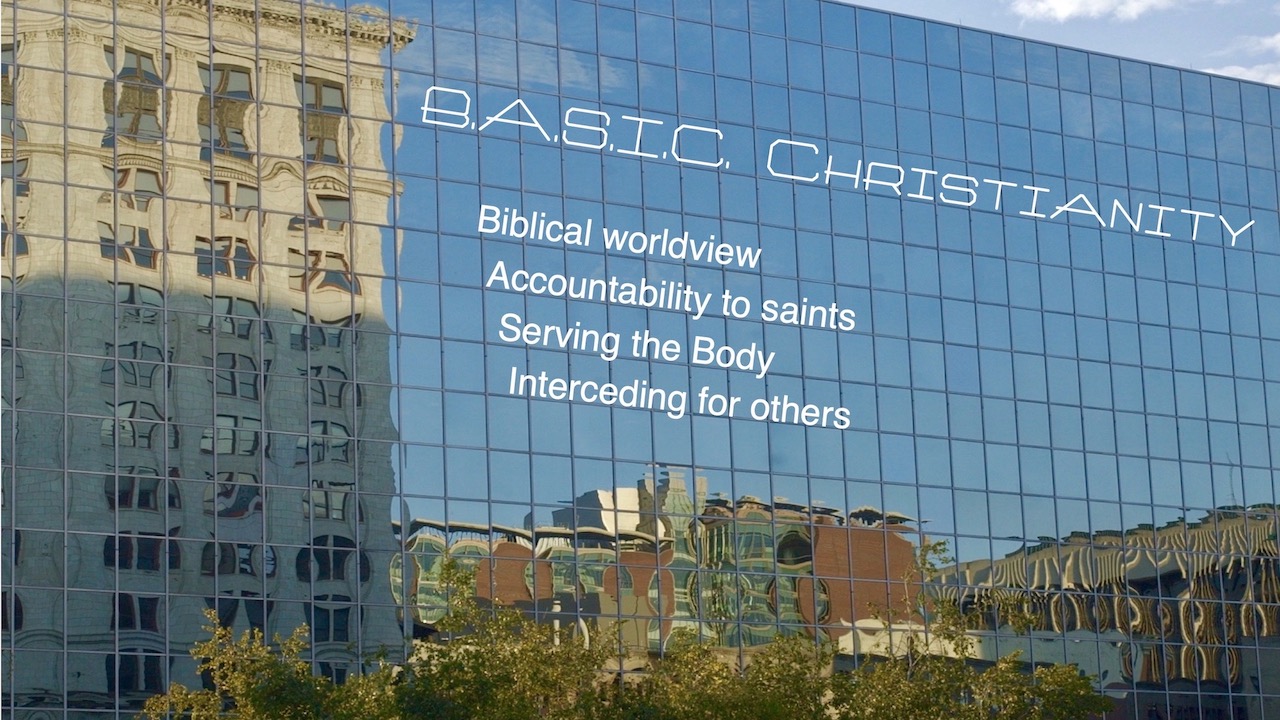
Sanctification (“saint-ification”) is an ongoing process that usually involves the help of other saints. We learn this by having a biblical worldview (that’s the “B”), being accountable with saints (“A”), and serving the Body of Christ (“S”). These are the things that bring out increased fruitfulness in our lives, make us more joy-full people, and enhance our testimony to others.   

What a blessing it is to be involved in all of these saint-ification things alongside other brothers and sisters. Isn’t nice to know that you’re not all alone on your journey? 

Two brothers walked up the hill to the park every afternoon to play baseball. One day a neighbor who lived near the bottom of the hill saw the younger brother pulling his older brother up the hill in a wagon. He observed this for a couple of days before he finally asked what was going on. 

The younger brother said, “My big brother broke his leg so I pull him in the wagon so he can watch us play baseball and can be our coach.” 

“He must be heavy,” the neighbor replied. 

“He’s not heavy,” the little boy said, “he’s my brother!” 

In the first brothers that the Bible shows us, we see the origin of the phrase “brother’s keeper.” Cain was jealous of the way God was blessing his younger brother, and so he murdered Able. God came to Cain and asked him, “Where is your brother Able?” 

Cain responded with another question, “Am I my brother’s keeper?” (Genesis 4:9). 

(Check out all of the Scriptures in this post by clicking here.)

The word brother is someone connected to me by blood or some other common bond. Cain used the same word for brother but then asked if He was supposed to be his brother’s keeper—his guard, helping to keep him in bounds, celebrating his victories. 

The clear teaching of Scripture is that the answer to Cain’s question is an emphatic “Yes!”  

That definition of brother’s keeper sounds a lot like the definition of an intercessor. In the Hebrew, that word mean to go to God on someone else’s behalf (Genesis 25:21; 2 Samuel 24:25). The Greek of the New Testament sounds more intense (hyperentygchano): to meet a person of the purpose of conversation in behalf of someone else. 

Remember that the Hebrew word for brother was pretty narrow? The Christians in the New Testament took the word for relative-by-blood (adelphos) and made it a synonym for fellow saint, regardless of where they are from (Acts 9:17; 2 Corinthians 13:11). 

John used Cain’s misunderstanding of brother’s keeper to show us the spiritual responsibility we have to our adelphos (1 John 3:12, 15-16). 

When we intercede for our adelphos—our fellow saints—we are participating in the same work as both the Spirit and Jesus (Romans 8:26-27, 34; Hebrews 7:25; 1 John 5:16). 

A couple of weeks ago we looked at Philemon’s service to the Body of Christ. Look at how Paul’s intercession may have released Philemon to do this (Philemon 7, 16, 20). 

As Paul said to Philemon, I say to you—

I appeal to you on the basis of love: Be your brother’s keeper! 

Guard your adelphos, keep them in bounds, and celebrate both their righteousness and God’s blessing on their lives. 

If you’ve missed any of the other messages in this series, you can find them all here. 

►► Would you please prayerfully consider supporting this ministry? My Patreon supporters get behind-the-scenes access to exclusive materials. ◀︎◀︎

Serving The Body

Listen to the podcast of this post by clicking on the player below, and you can also subscribe on AppleSpotify, or Audible. 

Last week we were reminded that sanctification (or as I call it “saint-ification”) is an ongoing process that usually involves the help of other saints. There is something else we need to do with other saints: serve them. 

We are all a part of the same Body so it is beneficial for the whole Body if we care for every part of the Body (1 Corinthians 12:25 AMPC; Ephesians 5:30). 

(Check out all of the Scriptures in this post by clicking here.) 

In order to serve others, we are going to have to check our attitude. We have been called to have the attitude that Jesus had about the Church (Ephesians 5:29; Philippians 2:3-7; John 13:3-5, 14-17). 

We must all know: 

  • I have a gift—notice the phrase each of you in 1 Peter 4:10 
  • I must use my gift to serve the Body of Christ (Luke 17:10)

In the early Church, we see so much togetherness that they rewrote the definition of the Greek word koinonia (see Acts 2:42). Here’s what koinonia looks like in the Church:

(1) Testifying in church (Psalm 40:9-10 NLT) 

(2) Being present with saints outside of church. From Acts 20-28, the pronouns “we” and “us” are used over 80 times! Paul was blessed simply by Luke being with him, just as saints are blessed when you are truly with them. 

(3) Love notes when a saint is absent. The apostle John was brilliant at this. Look at his three epistles: 

  • dear children 9x in 1 John  
  • chosen / dear lady 2x in 2 John  
  • dear friend 4x in 3 John  

(4) Hospital-ity whenever it’s needed. Be a place of healing and refreshment for the saints God has placed in your life, just as Philemon did (Philemon 2-7, 22). 

What a testimony it is when we live this way (Romans 12:10, 13)! 

Remember the saint-ification process brings fruitfulness, joy-fullness, and an enhanced testimony. I love this quote from Richard Stearns, “The beautiful simplicity of our faith is that it distills down to the exact same bottom line for both the brilliant theologian and the five-year-old child: love God and love each other—period. Everything else derives from that.” 

If you’ve missed the “B” or “A” in our series B.A.S.I.C. Christianity, you can check those out here. 

►► Would you please prayerfully consider supporting this ministry? My Patreon supporters get behind-the-scenes access to exclusive materials. ◀︎◀︎
Biblical Worldview

Listen to the podcast of this post by clicking on the player below, and you can also subscribe on AppleSpotify, or Audible. 

The definition of salvation comes from Romans 10:9. When we believe in our heart that Jesus paid the penalty for our sins and we confess that with our mouth, we are now justified. I can now stand before God just as if I had never sinned. But the Christian life is more than merely going to heaven at some point. It’s about glorifying God and pointing others to Jesus while we’re on our way to heaven. 

(Check out all of the Scriptures in this post by clicking here.)

We are immediately justified but sanctification (or as I like to call it “saint-ification”) is an ongoing process. 

  • The sanctified life is fruitful 
  • The sanctified life is joy-filled
  • The sanctified life is a testimony to others  

Paul wrote to saints in Corinth (1 Corinthians 1:2; 2 Corinthians 1:1) but he also called them “mere human beings” in 1 Corinthians 3:1-3. Paul points out that there is a difference between viewing this life from a worldly viewpoint and a biblical viewpoint (2 Corinthians 5:16). 

A naturalistic world view is constantly shifting as new discoveries are made. A biblical worldview knows there is nothing new under the sun, that everything is addressed in Scripture. 

In order to not view this world through the lens of “mere human beings” we have to read, study, meditate on, and apply the whole counsel of God’s Word. We put it in and the Holy Spirit helps us live it out. Just like our prescription glasses won’t do a thing to correct our vision of they aren’t on our face, Scripture won’t help us navigate this world in a God-glorifying way if we haven’t put it in our heart. 

Each day before I ready my Bible I pray Psalm 119:18, which asks the Holy Spirit to open my eyes to the amazing things in Scripture. I read, I journal, and I pray over the passage that I have read. Then the Holy Spirit makes good application of that Scripture (John 14:26, 16:13; 1 John 4:6). I want to be sure to read the whole counsel of God’s Word, not just cherrypicking my favorite parts. And I always want to be going deeper (Hebrews 6:1). 

One place that we see contrasting world views—the natural worldview versus the biblical worldview—is in 2 Timothy 2:14-19. 

  • Natural worldview #1—quarreling about words 
  • Biblical worldview #1—correctly handling the Word of truth 
  • Natural worldview #2—engaging in godless chatter 
  • Biblical worldview #2—standing on the firm foundation of Scripture 

The results of a biblical worldview are amazing: 

  1. A sure foundation (Matthew 7:24-27) 
  2. The attention of others (Matthew 7:28-29) 
  3. Useful treasures to share with others (Matthew 13:52) 
  4. A strong defense against critics (Acts 6:9-10; Psalm 119:99) 

Let’s not get stuck in the “mere human being” level of a natural worldview, but let’s commit to studying our Bibles diligently so that the Holy Spirit can develop a robust biblical worldview in us. This worldview is fruitful, joyful, and enhances our testimony. 

Follow along with all the other messages in our series on B.A.S.I.C. Christianity by clicking here. 

►► Would you please prayerfully consider supporting this ministry? My Patreon supporters get behind-the-scenes access to exclusive materials. ◀︎◀︎

Christ’s Advents Bring Love

Listen to the podcast of this post by clicking on the player below, and you can also subscribe on AppleSpotify, or Audible

The lights of hope, peace, and joy burn brightly. They drive out the darkness in our own lives and in the lives of others with whom we come in contact. But you and I both know lots of people who are very positive people—always upbeat, seemingly peaceful and joyful. The real question is: What is the source of this light? Or more specifically, how do people know that you are hopeful, peaceful, and joyful because you know Jesus as your Savior and King?  

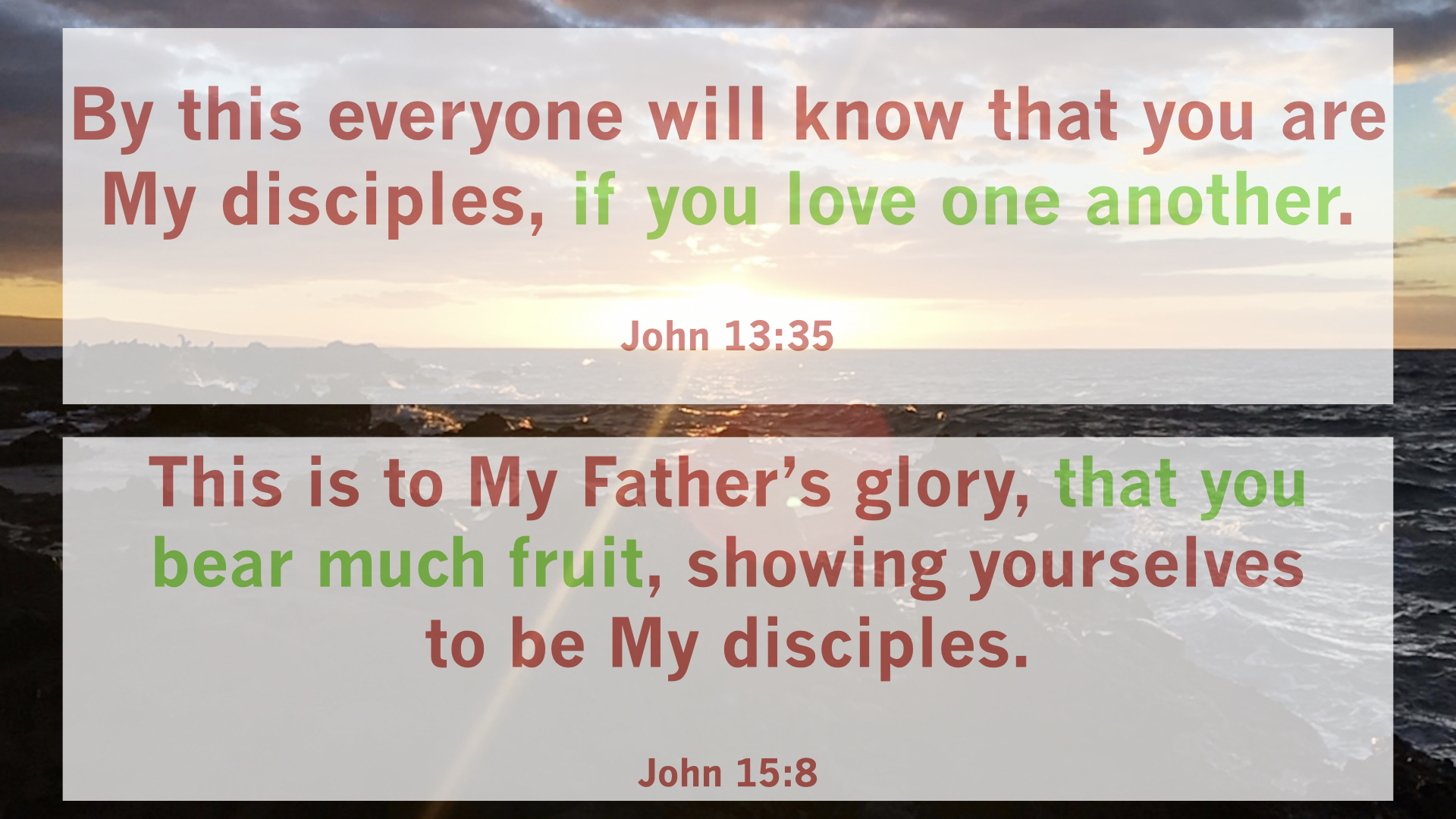
Jesus said there were two proofs that we are His followers:

  1. That we love others (John 13:35) 
  2. That we are producing God-honoring fruit (John 15:8) 

God IS love—it’s His very nature. Just like an apple doesn’t have the capacity for apple-ness but is by its nature an apple, so God doesn’t have the capacity for love, or love more than others, but He is by His nature Love. 

Any qualities of hope, peace, and joy in our lives have to originate from God’s love. We cannot manufacture these fruits, but they are a natural result of our being connected with Love Himself. 

Love is what brought Jesus to earth at His First Advent (John 3:16-17; Romans 5:5-8). And we can only love others and produce the fruit of hope, peace, and joy because Jesus went first and became our Source (1 John 4:19; John 15:1). 

Love brought Jesus to earth at His First Advent, and Love is what empowers us to be loving and fruitful between His Advents. 

  1. Love one another means that love serves (John 13:1-5, 15-17, 34-35) 
  2. Bear much fruit means that love grows (John 15:1-12) 

We can only serve and be lovingly fruitful as we stay connected to Love (2 Peter 1:2-7; 1 John 2:28). 

Love brought Jesus to earth at His First Advent, Love is what empowers us to be loving and fruitful between His Advents, and Love is what patiently waits for Christ’s Second Advent (2 Peter 3:3-4, 9). 

We continue to grow in our love and produce fruit by being connected to the Vine of Love (1 Corinthians 13:11-12; 1 John 3:1-2 ; Hebrews 10:23-24). 

We need to let our love be continually supplied by Love Himself so that our fruitfulness can shine as a bright testimony. Jesus said, He was the Light of the world, and then He called us to be the light to our part of the world where He has placed us (John 8:12; Matthew 5:14-16). 

Always remember that we celebrate the First Advent and look forward to the Second Advent by staying connected to Jesus, growing in our love for Him and for others, and allowing the fruit of hope, peace, and joy to shine brightly for God’s glory. 

If you’ve missed any of the other messages in our Advent series, you can find them all by clicking here

►► Would you please prayerfully consider supporting this ministry? My Patreon supporters get behind-the-scenes access to exclusive materials. ◀︎◀︎

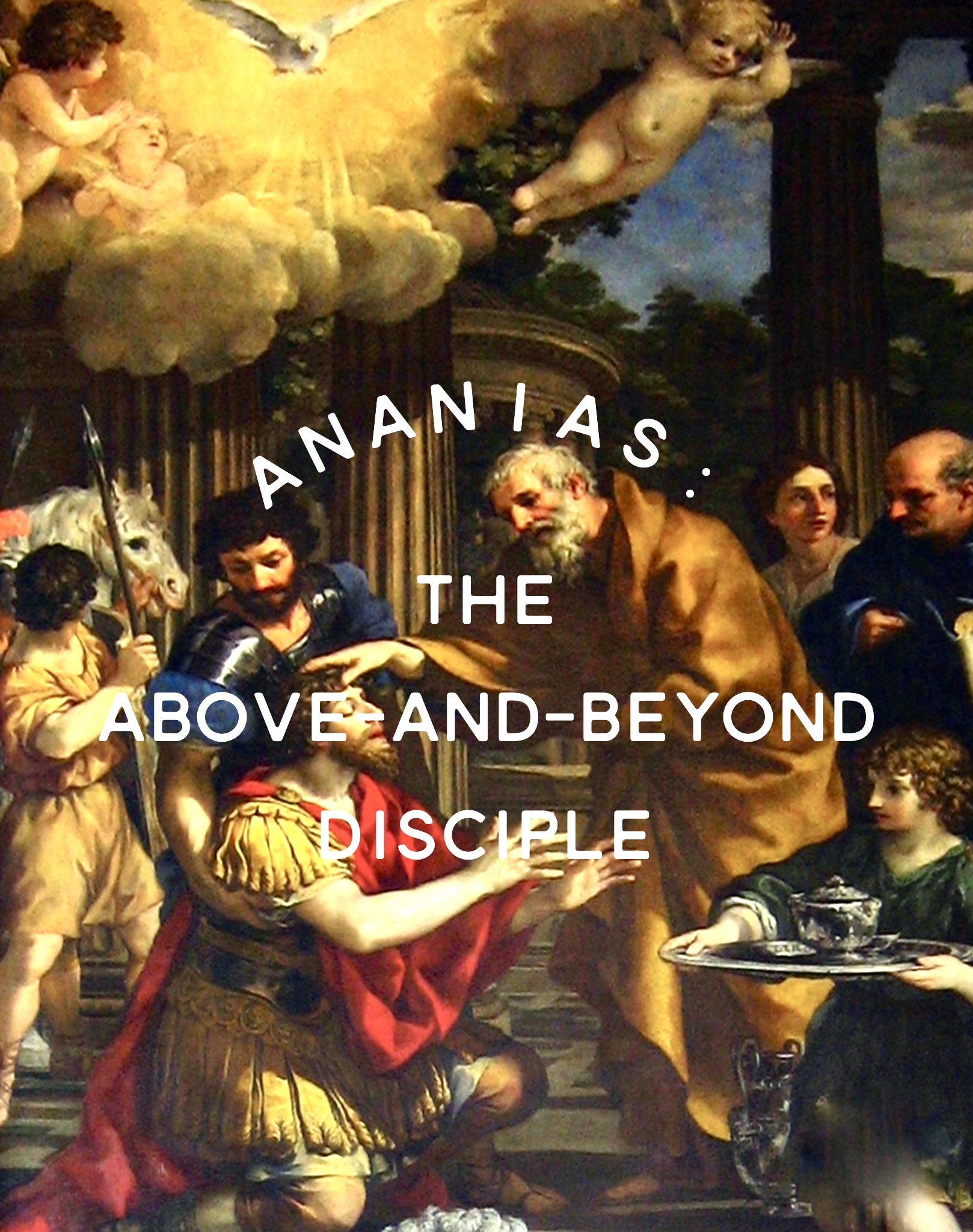
The Above-And-Beyond Disciple

Listen to the podcast of this post by clicking on the player below, and you can also subscribe on AppleSpotify, or Audible. 

It is nearly impossible to overstate how fearful Christians in the first century were of the Jewish zealot named Saul of Tarsus. Saul called himself “extremely zealous for the traditions of my fathers” (Galatians 1:14) as he sought to seek out and destroy all who were followers of The Way. 

(Check out all of the verses in this post by clicking here.)

Not only was he personally bent on his ruthless mission, but he had the full sanctioning of the Sanhedrin (Acts 8:3, 9:1-2). This was the religious body that had successfully goaded Pontius Pilate into crucifying Jesus. 

So you can imagine the apprehension in Ananias’ heart when Jesus calls him to visit with Saul after he had encountered Jesus for himself. Ananias said, “I’ve heard all about this man and the harm he has done. And I also know he has come to my city with the authority to drag Christians off to prison” (Acts 9:13-14). 

Ananias’ interaction with Jesus seems to me to echo the prayer that Jesus prayed in the Garden of Gethsemane. It is as if Ananias is praying, “Is there another way? But not my will but Yours be done, Lord” (see Luke 22:42). 

Ananias is called a disciple of Jesus (Acts 9:10), and Paul even refers to him later as “a devout observer of the law and highly respected by all the Jews” (22:12). In other words, Ananias is an early church leader. What he does or doesn’t do here will set the pace for other Christians. 

So I love the fact that Ananias didn’t just begrudgingly do only what Jesus instructed him, but he said and did only what Christ’s love could empower him to say and do. 

Jesus told Ananias to lay his hands on Saul and pray for the restoration of his sight (9:12). Ananias did more. He laid his hands on him in such a loving way (9:17), that Luke uses the same word as when Jesus laid His hands on people for their healing (c.f. Luke 13:13). Ananias even called him “brother Saul” (9:17). 

Jesus told Ananias to simply pray for Saul’s physical healing, but Ananias did more: he prayed for Saul to be baptized in the Holy Spirit as well (9:17, 22:13). 

Jesus told Ananias what His plan was for Saul’s ministry, but He didn’t tell Ananias that he had to repeat that to Saul. Ananias did more: He reaffirmed to Saul what Jesus had already said to him and encouraged him to get up, be baptized, and began to do what Jesus had told him to do (9:15-16, 22:14-16). 

When Ananias called Saul “brother,” he used the term that fellow Christians used for each other (Philippians 4:1; Hebrews 2:11; 1 John 3:14). That means that Ananias is the first one to recognize the genuine conversion of Saul the persecutor to Paul the Christian. 

When the love of Jesus is in us, we will not be looking for ways to begrudgingly obey what Jesus tells us, but we cannot wait to lavishly do more loving things out of the overflow of Christ’s love in us. What a fantastic example Ananias has give all of us who call ourselves Christians! 

►► Would you please prayerfully consider supporting this ministry? My Patreon supporters get behind-the-scenes access to exclusive materials. ◀︎◀︎

Come To God As A Brother

Listen to the podcast of this post by clicking on the player below, and you can also subscribe on AppleSpotify, or Audible. 

Being the firstborn, I didn’t have a big brother, but I took being the big brother to my little sister very seriously! Like when young men would come to pick her up for a date, I would meet them on the front porch and say, “I hope you have a really nice evening. Just so you know, I will be home all evening waiting by the phone. You’d better pray that my little sister doesn’t have to call me!” Hopefully, that let my sister know I was ready to protect her whenever she may need it. 

 Whenever we go into any situation for the first time, there is always a natural fear of the unknown. What’s going to happen? How do I behave? What do I say? How will others treat me? How will I know who to trust? Or even, how will I know what to pray for? 

Those unknowns cause fear, and fear prevents intimacy. The Bible says, “There is no fear in love” (1 John 4:18). Where there is love, fear has to leave. But when there is fear, love is pushed aside. 

We learned that we can come to God in prayer as a Father—we can bring Him all our fears and concerns and problems—but did you know that we can also come to God in prayer as coming to a Brother? 

Jesus loves the fact that we can come to our Abba Father just as He did, which is why He taught us to begin our prayers with, “Our Father in heaven.” 

How wonderful it is to have a “big brother” to show us the ropes, to walk with us, to give us his counsel! One that says, “I’ve already been to that high school … I know that employer … I have experience with that kind of relationship … I’ve solved that problem … I’ve tasted that pain.…” That’s exactly what Jesus does for us. He is our perfect Big Brother! 

Jesus knows everything we will experience in life. There might be unknown things that we walk into, but they are never unknown to Him. And more importantly, they are never unexperienced by Him. Check out these assuring words from the Book of Hebrews—

Both the One who makes people holy and those who are made holy are of the same family. So Jesus is not ashamed to call them brothers and sisters. … For this reason He had to be made like them, fully human in every way, in order that He might become a merciful and faithful high priest in service to God, and that He might make atonement for the sins of the people. Because He Himself suffered when He was tempted, He is able to help those who are being tempted. (2:11, 17-18) 

For we do not have a high priest who is unable to empathize with our weaknesses, but we have one who has been tempted in every way, just as we are—yet He did not sin. Let us then approach God’s throne of grace with confidence, so that we may receive mercy and find grace to help us in our time of need. (4:15-16) 

Jesus has been there, done that, and has the scars to prove that He is victorious! 

  • We never have to be at a loss of what to say (John 12:49-50)
  • We never have to be at a loss of what path to take (John 14:6) 
  • We never have to be at a loss of what prayer to pray (John 16:23)

(Check out all of those verses by clicking here.) 

Charles Spurgeon said, “The Lord Jesus Christ is always ready to take the most imperfect prayer and perfect it for us. If our prayers had to go up to heaven as they are, they would never succeed; but they find a Friend on the way, and therefore they prosper.” 

Solomon wrote, “Trust in the Lord with all your heart; do not depend on your own understanding. Seek His will in all you do, and He will show you which path to take (Proverbs 3:5-6). 

Commenting on these verses in his book Proverbs: Amplified and Applied, Dick Brogden wrote:

“We tend to crave God’s explicit direction for the momentous choices of life—marriage, study, career, transition, promotion, change—but sail through a thousand daily choices independent of consultation with Him. Functionally, we act as if we only need God’s help for big things because we can handle the small things without Him. The error in this dichotomy of dependence (thinking we only need God’s help for big decisions) is twofold. First, big decisions are not divorced from small decisions; they are simply the crowning act, the summary of a legion of choices. Second, big decisions are not more important than small decisions. It is the small, simple, silent, serial choices of daily living that make one wise. When we acknowledge the Lord in all the minutia, our course is chosen and our path is set, and we do not stand bewildered at the critical crossroads of life.” 

Walking with Jesus as our Brother keeps us free from fear. His perfect love opens our hearts to have intimate conversation with our Heavenly Father. You can trust our Brother to help you with every single decision at every single moment. Let’s learn to lean on Him more! 

If you’ve missed any of the messages in our series on prayer called Intimate Conversation, you can find all of the messages by clicking here. 

►► Would you please prayerfully consider supporting this ministry? My Patreon supporters get behind-the-scenes access to exclusive materials. ◀︎◀︎

Triumphant King

Listen to the podcast of this post by clicking on the player below, and you can also subscribe on AppleSpotify, or Audible. 

Have you ever noticed how many of our Christmas carols celebrate the dark night giving way to the bright light? For instance, the hymn O Holy Night contains the line, “long lay the world in sin and error pining until He appeared.” 

English historian and theologian Thomas Fuller was the first to put into print what has now become a cliché that so many people use: “It is always darkest just before the Day dawneth.” Indeed, Micah paints a very dark scene just before the Messiah makes His First Advent (Micah 5:1). 

The Light of Jesus that burst onto planet Earth in a Bethlehem stable revealed Him as our Great Shepherd, our Prince of Peace, and our Mighty Deliverer. And there is also one more title that Micah foretells: our Triumphant King! 

What does our Triumphant King do? He confronts and defeats the darkest foes. Check out the words in Micah 5:9-15: destroy (5x), demolish (2x), tear down, uproot, take vengeance. 

Christ’s birth in Bethlehem is our proof that God’s plan prevails. God always gets the final word, the decisive word, and the best word! 

Most of the Old Testament prophets foresaw both the first and second advents of Jesus simultaneously. The mountains of prophecy look like they are on top of each other, so it’s very common for the prophets to see events of both advents happening simultaneously. So Micah sees both the coming of Jesus in Bethlehem and His coming at the end of time as King.

There is a spiritual battle that has been raging since before Time began (Ephesians 6:12). It started when Lucifer became satan by his rebellion against God, and then he began his agenda of the destruction of God’s people (Ezekiel 28:12-17; Revelation 12:7-9, 13, 17). 

Into this dark battle, Jesus enters the scene. The reason the Son of God was made manifest (visible) was to undo—destroy, loosen, and dissolve—the works the devil has done (1 John 3:8 AMP). 

I already talked about how the death of Jesus on the Cross meant the death of Death, and Jesus became our Mighty Deliverer! The resurrection of Jesus means satan’s time is nearing an end. It may be dark now, but the darkness has to give way to the Light of the King of kings (check out these verses in Revelation). 

“It is always darkest just before the Day dawneth” should assure us of the victory of the King of kings! Jesus assured us that darkness is only afforded an hour, and then the Light will completely overwhelm it. The Light dawned in Bethlehem and is returning soon to completely vanquish every last bit of darkness!

If you missed any of the messages in our Advent series, you can find a list of all of those messages by clicking here. 

►► Would you please prayerfully consider supporting this ministry? My Patreon supporters get behind-the-scenes access to exclusive materials. ◀︎◀︎
God Longs For You

Listen to the podcast of this post by clicking on the player below, and you can also subscribe on AppleSpotify, or Audible. 

There’s a misconception that many people have about God’s laws: they think that they are intended to rob us of enjoyment, that they restrict our lives and remove our pursuit of happiness. 

In actuality, the exact opposite is true. God is love (1 John 4:8). That means everything God does is rooted in His love for us. Including the laws He gives us. He loves us and wants us to stay in the place where we don’t experience the heartache, pain, and disappointment of missing out on His blessings. 

God is also happy. Paul calls it “the glory of the blessed God” (1 Timothy 1:11). The word “blessed” can easily be translated as happy. God is happy and He wants us to share in this ultimate happiness. 

Consider the blessings that are in first and last of the Ten Commandments: 

  • The first commandment says there is only one God. Far from this being restrictive, it’s a huge blessing. I don’t have to search and compare, I don’t have to make a list of pros and cons and then settle on the best option, but I can enjoy the one and only true God. 
  • The tenth commandment says I don’t need to crave anything outside of what God has given me. Again, this is a huge blessing because it tells me that my loving Father has given me all that I need, that He alone satisfies my cravings. 

John Piper gave the essence of idolatry in this line: “Preferring other things above God.” This is why God delights for us to delight in Him. When we do, He is our sole focus. When He is our focus, we enjoy Him immensely and we reject anything that would remove our gaze from Him. 

That’s why there is a continuous linkage in all 176 verses of Psalm 119 between God’s laws and our delight—between obedience and satisfaction. When we obey God, we experience His happiness. 

The apostle Paul called Christians to live this way: “Whatever happens, conduct yourselves in a manner worthy of the gospel of Christ” (Philippians 1:27). Gospel literally means “good news.” What good news are we supposed to proclaim? The good news that God is happy and that He wants to say to us, “Come and share your Master’s happiness” (Matthew 25:21)! 

When I was a kid I struggled with this question: Do I love God just because He first loved me? I thought, “That seems like a cop out. Am I really saying that the only reason I have for loving Him is that He went first?” But then I realized it couldn’t be any other way. How could I love an angry God? How could I ever expect to approach a God who knew all my sins and had the final say on my punishment, and was just waiting for a chance to get His hands on me? 

I can only love a loving God. I can only love Him because He first loved me (see Romans 5:8). 

In a similar way, I can only crave God because He first craved a relationship with me. Otherwise I’m setting myself up for unimaginable heartbreak and disappointment! 

Jesus said it was His Father’s “good pleasure” to reveal Himself to us. No one knows the Son except the Father, and no one knows the Father except the Son. Our heavenly Father craved a relationship with us, so He revealed His Son Jesus to us so that Jesus could reveal the Father to us (see Matthew 11:25-30; John 14:7).

Just as we could only love God because He loved us first, we could only crave a relationship with God because He craved a relationship with us first. It was always His plan to adopt us into His family—this is what gives Him great pleasure (Ephesians 1:5). Then God works in us to fulfill His craving for us, which empowers us to find our deepest longings satisfied exclusively in Him (Philippians 2:13). 

Sometimes we get a small taste or experience of earthly pleasure that quickly fades away. C.S. Lewis reminded us, “If I find in myself a desire which no experience in this world can satisfy, the most probable explanation is that I was made for another world.” 

Our craving for God is only satisfied in the knowledge that God first craved a relationship with us. Only the intimacy of our Savior will fulfill our cravings. Anything else will end only in utter disappointment. 

If you have missed any of the message in our series called Craving, you can find a list of all of the messages by clicking here. 

►► Would you please prayerfully consider supporting this ministry? My Patreon supporters get behind-the-scenes access to exclusive materials. ◀︎◀︎

The Rewarding Exchange

Listen to the podcast of this post by clicking on the player below, and you can also subscribe on AppleSpotify, or Audible. 

In Romans 3:23 we read, “For all have sinned and fall short of the glory of God.”  What does it mean to “fall short” of God’s standard? John Piper describes it this way: “It means that none of us has trusted and treasured God the way we should. We have not been satisfied with His greatness and walked in His ways. We have sought our satisfaction in other things, and treated them as more valuable than God.” 

A couple of chapters earlier in Romans, Paul tells us about an exchange that people make. They exchange a relationship with the eternal God for things which they can grab immediately. Sadly, these immediate things are only temporal things that fall short of God’s awesome glory and leave us perpetually unsatisfied (Romans 1:21-25). 

We were created by God to crave. Craving is what gives us staying power and brings fulfillment. Think of it this way: Would you rather…

  • …go to a job that is mundane, boring, and only focused on making money OR go to a job that is fascinating, using our talents, and trying to make a difference in the world? 
  • …eat food that tastes like cardboard OR eat savory food? 
  • …serve a god that is temporary, fickle, and unreliable OR serve a God that is eternal, faithful, strong, and loving? 

Or think of it another way: Which of those jobs would you want to go to? Which job would call out your best effort? Which food would you want to eat? Which food would make you want to praise the chef? And which God would you want to spend eternity with? Which God would want to invite others to worship? 

God gives us cravings that can only be satisfied in Him. The devil perverts these cravings to get us to go for quick, easy, self-made pleasures. Just think about how he tempted Adam and Eve (Genesis 3:1-6). 

Both the Old Testament and New Testament tell us of the joys of eternal cravings being satisfied and the consequences of giving in to temporal cravings. For example: 

  • God gives a craving for future meat, but satisfies us with manna while we wait. The devil temps us to have our meat now (Deuteronomy 12:20; Psalm 106:12-14; Numbers 11:34). 
  • God gives a craving for satisfying relationships. The devil tempts us to indulge our passions now by grabbing the most alluring relationship (Proverbs 5:18-19; Deuteronomy 5:21; Romans 1:24, 26). 
  • God gives a craving for success and significance in His timeframe. The devil tempts us to get ahead now (1 Kings 11:37-38; Genesis 3:6). 

(Check out all of these passages by clicking here.)

It’s a terrible exchange when we give up the glorious eternal for the fading temporal! Romans 1 describes the results as sinful, degrading, shameful, unnatural. That’s because the things of earth are temporary; only God is eternal. 

For all that is in the world—the lust of the flesh—craving for sensual gratification—and the lust of the eyes—greedy longings of the mind—and the pride of life—assurance in one’s own resources or in the stability of earthly things—these do not come from the Father but are from the world itself. And the world passes away and disappears, and with it the forbidden cravings (the passionate desires, the lust) of it; but he who does the will of God and carries out His purposes in his life abides (remains) forever. (1 John 2:16-17 AMP) 

We have to trust the One who gave us His unshakable promises—Be delighted with the Lord. Then He will give you all your heart’s desires (Psalm 37:4 TLB). Be delighted with Him and He will—not “may” or “hopefully He will” but He will—give you ALL your heart’s desires! 

There is an ultimate reward in Heaven but there are incredibly satisfying rewards along the journey to Heaven as well. Rewards like happiness, security, insight, and divine counsel from the Holy Spirit (2 Timothy 4:8; Psalm 119:2, 10, 16, 18, 24).

If we will resist the temptation to satisfy our cravings by exchanging the eternal for the temporal, we will be rewarded with divine satisfaction here and rewards beyond imaging forever in God’s presence! 

If you’ve missed any of the message in our series called Craving, you can find all of them by clicking here. 

►► Would you please prayerfully consider supporting this ministry? My Patreon supporters get behind-the-scenes access to exclusive materials. ◀︎◀︎