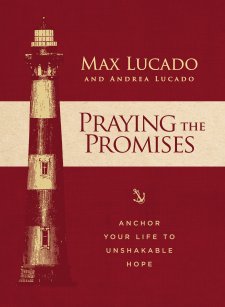
7 More Prayers From “Praying The Promises”

In his book Praying The Promises, Max Lucado shows us how simply we can turn passages of Scripture into intimate and powerful prayers. Here are a few more prayers (the references in brackets are passages that formed the prayer).

Lord, in the midst of my storms, I may doubt Your presence. I may wonder if You are there and if You care. Don’t let me lose hope or lose heart. Deepen my belief in You, even during the storms. Don’t allow doubt to take over. Help me release control of my circumstances and surrender them to You. Jesus is interceding on my behalf, and I am so comforted by this truth. [Luke 22:32; Hebrews 7:25; Matthew 14:23-24]

God, teach me how to live free from condemnation. Teach me how to trust and believe in this promise: in Christ, I am no longer a slave to sin. Free me from guilt and shame. [Romans 3:23-25; Romans 6:6-7; Romans 8:1] 

Lord, thank You for the promise of a temporary tomb. Your power has no limits. You have conquered death. You have promised to make all things new. You are the God of restoration and redemption and regeneration. You are the God of resurrection. In my day-to-day life it can be difficult for me to maintain an eternal perspective. Sometimes I may get bogged down in the worries of today and forget that the best is yet to come. Restore in me the joy of my salvation, God. Renew my mind and my heart so that I will have an eternal perspective of all the worries of my day. They are nothing compared to spending eternity with You. And because of Your promise of resurrection, I do not have to fear death. I will live in faith, knowing that in Jesus, death has been swallowed up in victory. Amen. [Matthew 28:5-6; 2 Corinthians 4:16-18] 

Guide me today, Holy Spirit. Show me where You want me to go, whom You want me to talk to, what decision You want me to make. Help me discern Your voice over my own and others’. Walk closely with me and whisper truth to me. Forgive me when I listen to my own desires and ignore what You are telling me. [John 16:13-15; Galatians 5:25] 

You know all of my needs before I can even ask for them. Sometimes it’s tempting for me to believe I can rely on myself for what I need. Instead of trusting You to provide, I think I can look out for myself. I fear not having enough. And when I do have enough, it never feels like it. But You have promised to meet my needs out of Your glorious riches. Remind me of Your kind and generous provision. Thank You for taking care of me and meeting all of my needs. [Psalm 34:10; Matthew 6:8; Matthew 10:29-31]

Help me to keep eternity in mind, making the most of my days and showing others Your renewing love. [2 Corinthians 4:16-18; 2 Peter 3:13] 

Dear God, You are my unshakable hope. Your promises are unbreakable. You never waiver. You are faithful to the end. My hope cannot be anchored to anything less than Your promises. … Forgive me for those times when I don’t put my hope in You. May I rest in Your promises once again. May any fear, anxiety, or confusion I feel subside in light of You as my anchor. [Isaiah 40:31; Romans 15:13] 

You can check out my review of Praying The Promises by clicking here. I also shared some other prayers here and some quotes from this book here. 
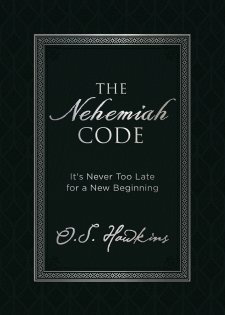
The Nehemiah Code (book review)

I love studying biblical leadership principles, the people who follow or violate those principles, the outcomes of their decisions, and the lessons that we can apply today from those stories. Probably everyone has had something fall apart in their lives that needed to be rebuilt. If so, you will love the biblical leadership principles that O.S. Hawkins reveals in The Nehemiah Code. 

Nehemiah comes on the scene after the Jewish people have been in exile for 70 years, but they are now allowed to return to their homeland. However, there’s an embarrassing problem: the walls around Jerusalem are in utter disrepair and the city gates have been burned away to ash. The returning exiles are wringing their hands over this sorry state of affairs for a long time until a rebuilding leader named Nehemiah comes on the scene. 

O.S. Hawkins shares the leadership principles Nehemiah employs to get the walls rebuilt and the gates rehung—a massive project that he was able to accomplish in just 52 days! But the powerful thing about the way Rev. Hawkins shares these principles is that they are all applicable to rebuilding projects we face today. 

Maybe you don’t have city walls to rebuild, but perhaps your marriage has crumbled, or your status at work has fallen apart, or you’ve done damage to your integrity. Whatever rebuilding project you need to undertake, you will find principles in The Nehemiah Project that you will be able to put into practice today! As Rev. Hawkins says over and over: It’s never too late for a new beginning. 

Whether you have a rebuilding project of your own, you would like to come alongside a friend who is rebuilding something in their own life, or you are simply a God-honoring leader that wants to expand your leadership capacity, this book will help you soar. 

I am a Thomas Nelson book reviewer. 

Life Is Hard! Now What?

Jesus told Peter, and now Peter tells us—Christians are going to be insulted and persecuted for believing in Jesus. So the fact that life is hard shouldn’t come as a surprise. Peter then goes on to elaborate on how Christians should live in spite of the mistreatment. 

“The more Christians are unlike the world, the more it hates us; the more we are like our Lord, the more the world will persecute us.” —Horatius Bonar

How should Christians respond to insults and persecution? Peter outlines the Christian’s response in 1 Peter 4:12-19

dear friends, do not be surprised (v. 12). I like this verse in the Amplified Bible: Do not be amazed and bewildered at the fiery ordeal which is taking place to test your quality, as though something strange (unusual and alien to you and your position) were befalling you. After all, Jesus told us this was coming (see John 15:18-20). 

but rejoice that you participate in the sufferings of Christ (v. 13a). Notice that this should be the sufferings OF Christ, not of our own making. 

—let suffering lead to Spirit-led reflection (notice the if’s in vv. 14-18, and the if’s in what Jesus said in John 15:18-20). We need to make sure our suffering is because we’re standing for Jesus, not because we’re being jerks! David asked God to check if his actions were the cause of his persecution (Psalm 7:3-4) and we should too. If we discover that we’re the one to blame, quickly apologize, ask for forgiveness, and make things right.  

keep your focus on when His glory is revealed (v. 13b). Time is short, and the rewards are sure so don’t remain focused on the immediate pain, but look up to the longterm gain.  

do not be ashamed to suffer for Jesus (v. 16). Jesus told us not to be ashamed of Him because He is not ashamed of us (Luke 9:26; Hebrews 2:11). 

stay committed to your faithful Creator (v. 19a). Staying committed means getting even closer to God in the hard times.

continue to do good (v. 19b). What does continue to do good look like? Peter lists things like being self-controlled, helping others that are being persecuted, showing proper respect, having a good work ethic, not trading insult for insult, and many other commands. Bottom line: doing good means living like Jesus lived while He was on Earth (see Acts 10:38). 

So, Christian, I’ve got two questions for you—

How are you handling insults and persecution? Are you continuing to do good despite the mistreatment? 

Remember Jesus is coming soon, and His rewards are with Him for how we have lived. “Behold, I am coming soon, and I shall bring My wages and rewards with Me, to repay and render to each one just what his own actions and his own work merit.” —Jesus (Revelation 22:12) 

Join me this Sunday as we continue to learn how Christians are to live as aliens and strangers while we visit Earth. If you’ve missed any messages in this series, you may find the complete list by clicking here. 

Saturday In The Proverbs—A Man Of Steeled Character (Proverbs 24)

[Each chapter in the Book of Proverbs contains thoughts that fit into a theme; they are not just random thoughts gathered together. In this “Saturday In The Proverbs” series, I will share a theme that I see in each chapter. But the cool thing about God’s Word is that you may see an entirely different theme. That’s great! If you do, I would love for you to share it in the comments below.]

If you faint in the day of adversity, your strength is small (Proverbs 24:10).

Character is forged like steel—with fire and hammering. 

There are blessings that will come in no other way than for a man or woman to let God forge steel-like character in them. 

A man of steeled character…

…doesn’t try to go along with those who cut corners (vv. 1-2, 15), but builds his foundation on godly wisdom and righteousness (vv. 3-4). 

…seeks counsel from other wise people (vv. 5-8). 

…stands strong in times of adversity (v. 10). 

…rescues those heading toward destruction (vv. 11-12). 

…knows the boundaries and the blessings of temperance (vv. 13-14). 

…isn’t kept down when he stumbles, and never rejoices when others stumble (vv. 16-18). 

…never frets because of evil people (vv. 19-22). 

…is fair, impartial, and just (vv. 23-26). 

has an outstanding work ethic (v. 27), unlike the one lacking in character (vv. 30-34). 

…doesn’t slander others nor try to “get even” with someone who attacked him (vv. 28-29). 

Are you willing to let God forge steel-like character in you?

Thursdays With Oswald—Jeremiah 20

Oswald ChambersThis is a weekly series with things I’m reading and pondering from Oswald Chambers. You can read the original seed thought here, or type “Thursdays With Oswald” in the search box to read more entries.

Jeremiah 20

[These are notes from Oswald Chambers’ lecture on Jeremiah 20.] 

    O Lord…I am ridiculed all day long; everyone mocks me (Jeremiah 20:7b). Jeremiah came back to the city and repeated to all the people the message he gave to the elders (Jeremiah 19:14-15). For the first time Jeremiah is designated by his office—‘the prophet’ (20:2), and the action of Pashur is against him as a prophet for his public utterance. According to the people Pashur was right and Jeremiah a raving fanatic. How we select things out of the Bible! We have forgotten what Paul wrote—‘He was crucified in weakness … likewise, we are weak in Him’ [2 Corinthians 13:4]. A Christian is one who can be weak, an abject failure in the eyes of the world. …

     It takes the grace of God to go through disgrace unspoilt. … 

     O Lord, You deceived me, and I was deceived [v. 7a]. Jeremiah says in heart-breaking sobs before God, ‘I have been deceived in what I hoped Thou wouldst do.’ His cry is not the theological argument of a man’s mind, he is pouring it all out before God; there is no charge brought against God and no reply from God. ‘I spoke because the people were reproaching Thy Word, and now I see nothing but ridicule all day long.’ 

     Jeremiah is sensitive to the last degree to all the affinities of the people and he speaks out of perplexity—But if I say, ‘I will not mention him or speak any more in His name,’ His Word is in my heart like a fire, a fire shut up in my bones, and I am weary of holding it in; indeed, I cannot [v. 9]. 

     I hear many whispering… ‘Report him! Let’s report him!’ All my friends are waiting for me to slip, saying, ‘Perhaps he will be deceived; then we will prevail over him and take our revenge on him.’ ‘The people watch for inconsistencies in my life that they may say on that ground I am not preaching Thy truth.’ To be defamed means that if you stand for God you will not be able to stand for anything else. …

     But the Lord is with me like a mighty warrior [v. 11]—a sudden outburst of the devotion of Jeremiah’s heart for God. … When in communion with God His desires are a delight, he sees and enjoys deliverance.

From Notes On Jeremiah

Standing for God may mean that you stand alone. Are you ready?

Standing for God also mean that He stands with you like a mighty warrior. Are you ready now?!

12 Quotes From “Developing The Leader Within You 2.0”

Whether you’re a novice or a veteran leader, there’s so much to learn from John Maxwell in his book Developing The Leader Within You 2.0! Check out my full book review by clicking here, and stay tuned for even more quotes coming soon. 

“Developing yourself to become the leader you have the potential to be will change everything for you. It will add to your effectiveness, subtract from your weaknesses, divide your workload, and multiply your impact.” 

“You have influence in this world, but realizing your potential as a leader is your responsibility. If you put effort into developing yourself as a leader, you have the potential to influence more people and to do so in more significant ways.” 

“When you say everything is a high priority, then nothing is a high priority. It really indicates that you’re unwilling or unable to make a decision, which means you won’t get anything done.” 

“Instead of filling every space in my calendar, what I needed to do was create some white space. If I didn’t, nobody else was going to. People who keep burning the candle at both ends aren’t as bright as they think they are.”

“People cannot climb beyond the limitations of their character. Leaders cannot succeed beyond the depth of their character.” 

“Instead of wanting to point to my breakthroughs, I want to direct people to the brokenness that has led to my breakthroughs.” 

“When it comes to character, I believe the best guardrails are the decisions you make before you face high-pressure situations.” 

“People do not naturally resist change; they resist being changed.” 

“If life is tough for individuals, its difficulty is multiplied for leaders. Individuals can think me, but leaders must think we. A leader’s life is not his or her own. Thinking we means other people are included, and that means their problems are also yours to deal with.” 

“You can’t solve problems for others. If you do, you’ll be forever solving their problems. You must solve problems with them—at least until they get the hang of it.” 

“Good leaders don’t just resolve the issue to get it off their plates quickly for the sake of their own comfort. They help create solutions that take their people and their organization forward and put them in a better position than they were in before they experienced the problem.” 

“As a leader, you need to see opportunities differently than most people. They are a chance for you to learn about yourself, your team, and your opportunities. They provide you a way to improve your own life, improve the lives of others, and gaining influence.”

C.S. Lewis On Relationships

All of these quotes from C.S. Lewis appear in the book Yours, Jack.

“The modern tradition is that the proper reason for marrying is the state described as ‘being in love.’ … Doesn’t the modern emphasis on ‘love’ lead people either into divorce or into misery, because when that emotion dies down they conclude that their marriage is a ‘failure,’ though in fact they have just reached the point at which real marriage begins.” 

“There is a terrible comment on this in I Cor VI 16 ‘he that is joined to a harlot is one flesh.’ You see? Apparently, if Christianity is true, the mere fact of sexual intercourse set up between human beings a relation which has, so to speak, transcendent repercussions—some eternal relation is established whether they like it or not.” 

“Agape is best seen, I think, in the words ‘love your neighbor as yourself,’ i.e., by an act of will, aim at your neighbor’s good in the same way as you aim at your own. Now you don’t ‘love’ yourself because of your own ‘lovable qualities.’ You may, in moments of vanity, attribute lovable qualities to yourself, but that is not the cause of your self-love but one of the results of it. At other moments, when you dislike yourself, you still wish for your own happiness. This attitude to one’s own self is dictated by nature: towards other selves it has to be acquired.” 

“The great thing in friendship as in all other forms of love is, as you know, to turn from the demand to be loved (or helped or answered) to the wish to love (or help or answer).” 

“When I have learnt to love God better than my earthly dearest, I shall love my earthly dearest better than I do now. In so far as I learn to love my earthly dearest at the expense of God and instead of God, I shall be moving towards the state in which I shall not love my earthly dearest at all. When first things are put first, second things are not suppressed but increased.” 

“I take it that in every marriage natural love sooner or later, in a high or low degree, comes up against difficulties (if only the difficulty that the original state of ‘being in love’ dies a natural death) which forces it either to turn into dislike or else to turn into Christian charity. For all of our natural feelings are, not resting places, but points d’appui, springboards. One has to go on from there, or fall back from there. The merely human pleasure in being loved must either go bad or become the divine joy of loving.” 

“It is right and inevitable that we should be much concerned about the salvation of those we love. But we must be careful not to expect or demand that their salvation should conform to some ready-made pattern of our own. … God has His own unique way with each soul.” 

“The real trouble about the duty of forgiveness is that you do it with all your might on Monday and then find on Wednesday that it hasn’t stayed put and all has to be done over again.”

You can read my review of Yours, Jack by clicking here. And you can check out some other quotes I shared from this collection of Lewis’ personal correspondence here and here.

Developing The Leader Within You 2.0 (book review)

I not only read John Maxwell’s Developing The Leader Within You for myself many years ago, but I have used the content from this book in numerous teaching settings. When I heard that a 25th-anniversary edition of the book was being published, I originally thought of young people to whom I could introduce this helpful book. 

But I was totally blown away to discover that although Dr. Maxwell had promised his publisher that he would revise 15 percent of the book, he actually revised 89 percent of the book! So not only am I excited to get this book in front of people who haven’t read it previously, I’m also encouraging those who read the first edition to get a copy of Developing The Leader Within You 2.0.

In leadership it’s quite simple—you cannot teach accurately what you haven’t internalized yourself, or else risk being called a hypocrite. So any leadership teaching must start with the leader being educated and expanded as a leader himself or herself. I can think of no better resource on the market than this book. 

In typical fashion, Dr. Maxwell masterfully weaves together leadership principles, supporting quotes, transparently personal stories of how he has—sometimes painfully—learned the principles he is teaching, historical and contemporary examples of those who followed or violated these principles, and up-to-date findings from researchers and other front-lines leaders. 

Bottom line: this is a book that is loaded with content but is also very easy to read and apply. At the end of each chapter, you will find some very helpful application ideas for each of the ten principles Dr. Maxwell presents in this book. 

If you’ve already read 1.0, I encourage you to get a copy of 2.0. John Maxwell has learned so much since the first edition and he liberally shares it with us here. 

And if you’re an emerging leader, or simply want to take your leadership to a higher level, this is an excellent foundational book for you to digest and apply.

Unlearning Limiting Fears

Did you know that you were only born with two fears: the fear of falling and the fear of loud noises? Yet the DSM-5 has a whole section to help mental health professionals diagnosis the specific phobia that may be limiting someone’s life. That might be because some places list upwards of 500 recognized phobias that constrict people’s lives! 

Since only two of our fears are innate fears, that means the rest of the fears that trouble us are learned fears. Since God repeatedly says “Fear not!” throughout Scripture, that must mean He also tells us how to overcome our fears. 

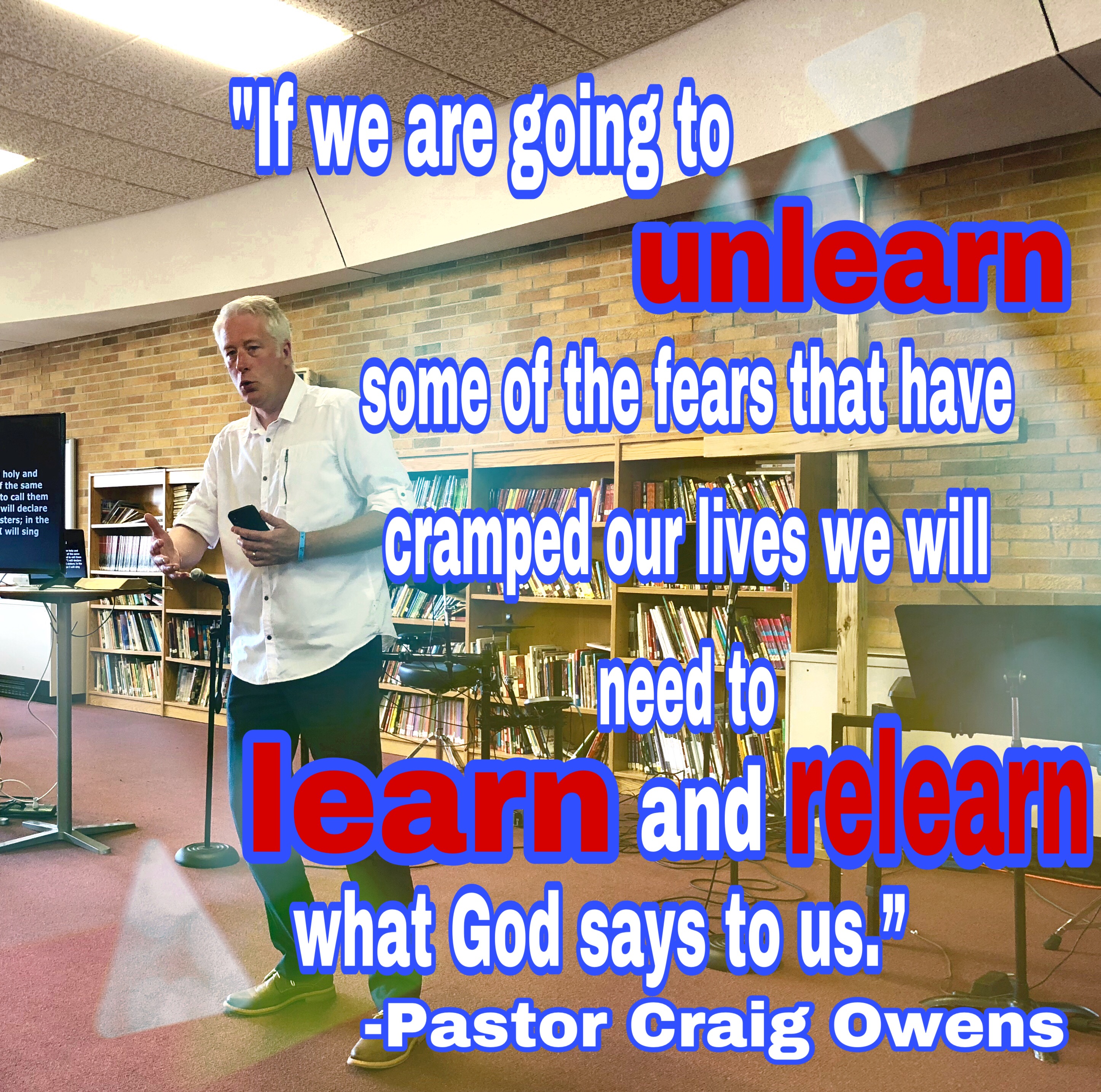
Christians—as aliens and strangers on this Earth—should have an alien response to earthly fears. So if we are going to unlearn some of the fears that have cramped our lives we will need to learn and relearn what God says to us.

Peter asks what might seem like a rhetorical question, “Who is going to harm you if are eager to do good?” Think about it: who wants to punish someone for doing the right thing? Apparently some people do because Peter goes on to add, “But even if you should suffer for what is right, you are blessed. Do not fear what they fear; do not be frightened” (1 Peter 3:13-14). 

So even if people insult Christians for doing things God’s right way, God’s blessing is on them. Sadly, people without God’s blessing on their lives often give in to the FOMO (fear of missing out) and they end up lashing out at those being blessed. That lashing out is directly rooted in their fears. 

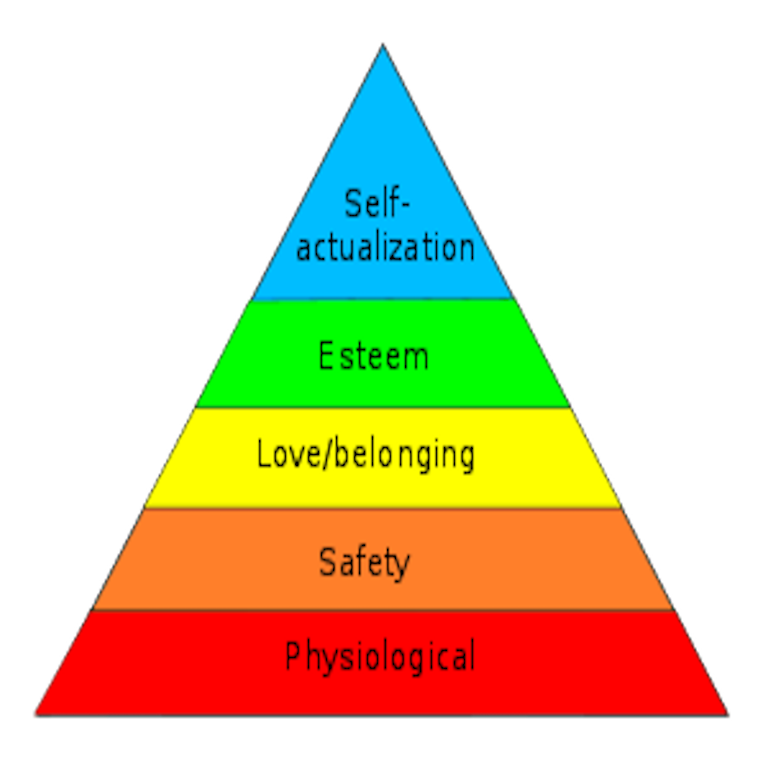
Abraham Maslow proposed a hierarchy of needs that humans have, and obviously, there would be fears associated with any of those needs not being met. At least, that would be the Earthling response. Christians need to unlearn those fears by learning and relearning why God tells them to “Fear not!” 

  1. Fear of not having physiological needs met—Jesus tells us why we shouldn’t worry (Matthew 6:25-34). 
  2. Fear of not being kept safe—the psalmist tells us that God is our shield (Psalm 84:11).
  3. Fear of not fitting in with a certain social group—Jesus proudly call His followers His brothers and sisters (Hebrews 2:11-12).
  4. Fear of not being rewarded or recognized—Jesus says there are blessings for those that hang in with Him through persecution, including being called a co-heir alongside Him (Matthew 5:10-12; Romans 8:17).
  5. Fear of our life not having purpose—the apostle Paul reminds us that God chose us on purpose to be His example to the world (1 Corinthians 1:25-27). 

Since Jesus overcame all the things that could cause us fear, Peter counsels us to arm yourselves with this same attitude (1 Peter 4:1). The Greek word for arm yourselves only appears here, and it means for us to repeatedly remind ourselves of God’s truth. The Greek word for attitude is only here and in Hebrews 4:12, where we are reminded that the Word of God helps our minds unlearn, learn, and relearn God’s truth. 

Have the borders of your life been squeezed by your fears? Do you feel like you’re missing out on the “abundant life” that Jesus said you could have? The Word of God can help you unlearn those fears, and fellow Christians would love to come alongside you to help you continue to relearn that truth over and over again until your fears are banished from your life! 

Don’t let fear keep you from being all that God has planned for you to be! 

Please join me on Sunday as we continue our study of how Christians are to live as aliens and strangers while on Earth. If you’ve missed any messages in this series, you may find the complete list by clicking here. 

Saturday In The Proverbs—Don’t Judge By Outward Appearances (Proverbs 23)

[Each chapter in the Book of Proverbs contains thoughts that fit into a theme; they are not just random thoughts gathered together. In this “Saturday In The Proverbs” series, I will share a theme that I see in each chapter. But the cool thing about God’s Word is that you may see an entirely different theme. That’s great! If you do, I would love for you to share it in the comments below.]

…they are deceptive food (Proverbs 23:3).

Jesus said, “Stop judging by mere appearances, but instead judge correctly” (John 7:24). That means we have to look beyond the surface; we have to see things as they really are, not as we want them to be. 

Things like…

…the outward appearances of wealth aren’t the same thing as true riches (vv. 1-3, 6, 8)

…overwork doesn’t mean it’s good work or a noble work ethic (vv. 4-5) 

…just because someone hears you doesn’t mean they are truly listening to you (v. 9)

…just because you can do something doesn’t mean you should do it (vv. 10-11)

…children may grumble in the moment of correction, but they will be truly thankful in the end (vv. 12-5, 22-25)

…sinners aren’t “getting away” with their sins (vv. 17-18)

…people who “party hardy” aren’t necessarily enjoying themselves (vv. 19-21, 29-35)

…pornography and other sexual sins aren’t victimless crimes or “no one is getting hurt” activities (vv. 26-28) 

As the Holy Spirit to show you the truth. Ask Him to show you the ultimate consequences of your activities. Stop judging by mere appearances, but instead judge correctly.