How To Bring Men To Christ (book review)

Listen to the podcast of this post by clicking on the player below, and you can also subscribe on Apple or Spotify.
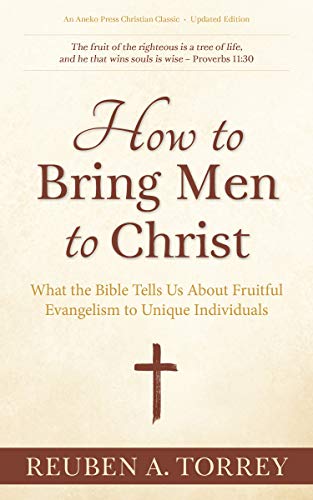
Among the last words Jesus spoke to His disciples was His commission that after they were empowered by the baptism in the Holy Spirit they should go into all the world, preaching the gospel, and making more disciples of Jesus. R.A. Torrey spent his life fulfilling this commission, and he shares the lessons he learned in his book How To Bring Men To Christ. 

This book is a highly practical guide that is set up almost like an encyclopedia. After a brief introduction, the second chapter is simply entitled “How to begin,” and it outlines the broad, big-picture strokes. Then the next nine chapters are all entitled “Dealing with….” Torrey gives us a detailed listing of passages of Scripture, including how and when to use them, for various types of people, such as: the indifferent, those anxious about their eternal fate, those with false hopes, those who lack assurance of salvation, skeptics, complainers, and the hardheaded. Torrey gives the Christian soul-winner all of the biblical help they will need, plus some personal examples of how he employed these scriptures himself. 

The final two chapters of this book focus on the role of the Holy Spirit in helping Christians progress in their own sanctification and grow in their maturity as soul winners. 

How To Bring Men To Christ can probably be read through quite quickly, but it is a book that many Christians will want to put in a place of reference where they can return to it again and again. All Christians who want to live out the Great Commission that was given to us by Jesus Himself will want to read this highly practical book.

►► Would you please prayerfully consider supporting this ministry? ◀︎◀︎
“Father, Forgive Them”

Listen to the podcast of this post by clicking on the player below, and you can also subscribe on Apple or Spotify.

In our system of law, special attention is given to someone’s dying declaration. If our legal system gives such weight to the last words of an imperfect man, it seems to me that we should take special note of the dying declarations of the only truly innocent Man who ever walked this earth: Jesus Christ. 

After being nailed to the Cross, the first dying declaration from Jesus was: Father, forgive them, for they do not know what they are doing (Luke 23:34). 

Let’s say that Billy is dying on a hospital bed after being fatally shot, and all he can muster the strength to do is point at Johnny and whisper, “He… shot… me….” We would know who the “he” was in that situation, but who exactly is the “them” in this declaration of Jesus? 

Who offended Jesus? Who mortally wounded Him? Who caused Him such anguish? Maybe it was…

  • His disciples who couldn’t stay awake to pray with Him 
  • Judas who betrayed Him with a kiss 
  • the nine disciples who ran away 
  • Peter who denied three times that he knew Jesus 
  • the false witnesses in Caiaphas’ house
  • the members of the Sanhedrin who hit Him and spit on Him 
  • the members of the Sanhedrin who were silent 
  • the temple guards who mocked Him 
  • those who spewed lies when Jesus stood before Pilate
  • those who lied about Jesus when He stood before Herod 
  • Herod and his soldiers who mocked Him 
  • the Roman soldiers who abused Him 
  • the Roman soldiers who stripped Him naked and crucified Him 

To all of the above, Jesus said, “Father, forgive them”!  

Listen to how Peter described the response of Jesus to all of this: When they hurled their insults at Him, He did not retaliate; when He suffered, He made no threats… (1 Peter 2:23). That word for insults means to heap abuse on Him or to pile on. This was a fulfillment of a 700-year-old prophecy: He was oppressed and afflicted… (Isaiah 53:7). Isaiah uses similar words, where oppressed means tyrannized, and afflicted means a humiliating, painful loss of dignity. 

Christ’s own disciples afflicted Him, and so did the temple guards, and Pilate, and King Herod, and the Roman soldiers… and you and me. All of this mistreatment and humiliation and tyrannizing was handed out by us too (see Isaiah 53:6; 1 Peter 2:24-25). That’s why His arms were spread so wide when He said, “Father, forgive them,” because there were so many that needed forgiveness! 

When Jesus said forgive, He was asking His Father to take away our guilt that kept us out of God’s presence. Think of a courtroom scene where God the Father is the Judge, satan is the prosecutor, Jesus is the victim, and I am the defendant. The evidence is overwhelming and incontrovertible, and I am pronounced guilty. My punishment is a death sentence. When Jesus says, “Father, forgive him,” He is taking the death penalty in my place! 

In another beautiful fulfillment of an Old Testament practice, Jesus became both our sin offering and our scapegoat, making atonement for us at the mercyseat in the Most Holy Place, and allowing us to be welcomed into God’s holy presence (Leviticus 16:15-16, 20-22; Hebrews 9:12-14). 

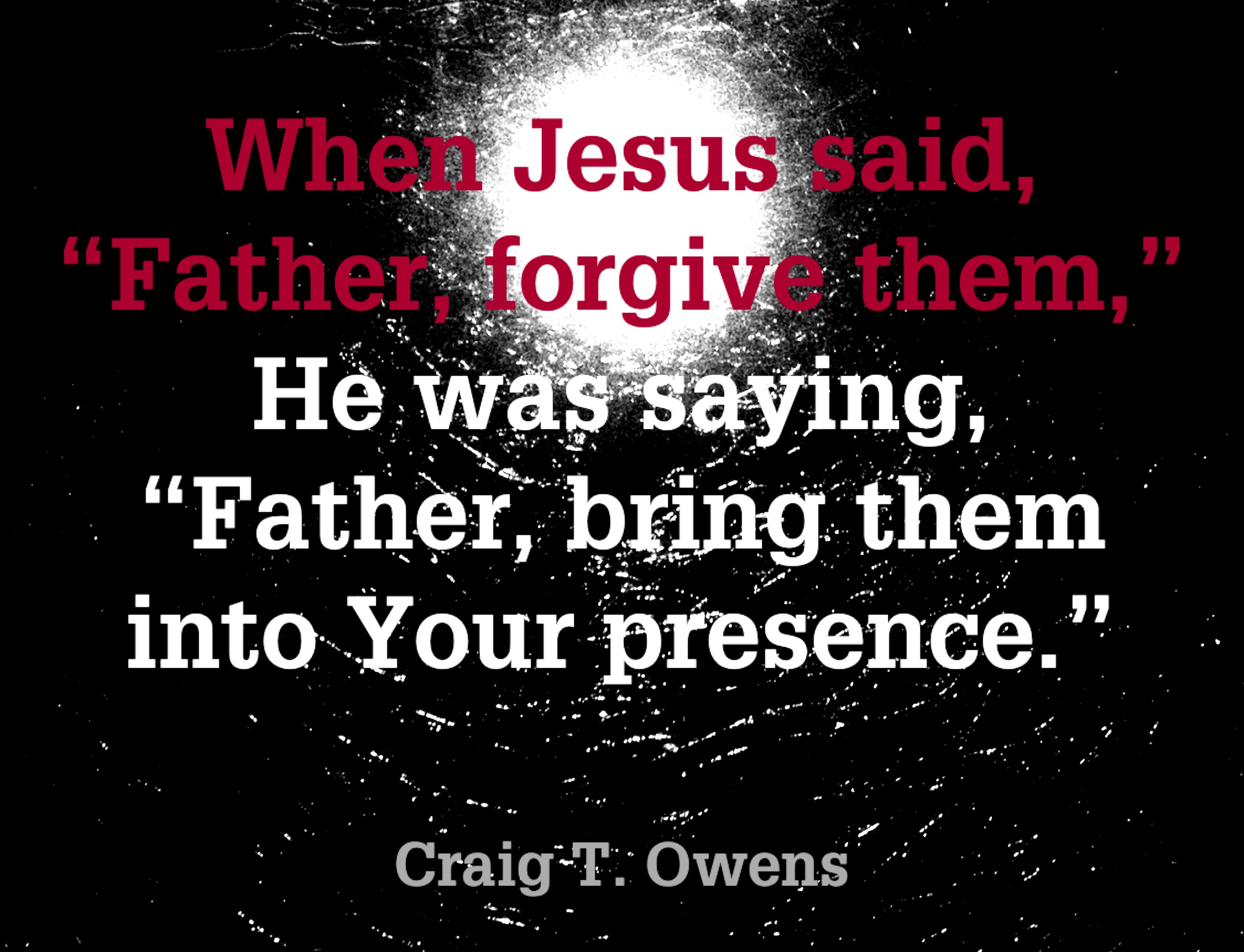
When Jesus said, “Father, forgive them,” He was saying, “Father, bring them into Your presence!” 

You and I need to accept by faith the atoning work done on the Cross, the forgiveness of sins that was purchased for us. Jesus didn’t come to condemn us, but to lovingly restore us, and for that we are eternally and humbly grateful. 

Please don’t miss out on any of these dying declarations from Jesus. You can find my thoughts on all of the confessions of this dying Man by clicking here.

►► Would you please prayerfully consider supporting this ministry? ◀︎◀︎
The Deity And Divinity Of Jesus

Listen to the podcast of this post by clicking on the player below, and you can also subscribe on Apple or Spotify.

Some really silly guys did a series of videos called “Neature Walk” because they wanted to share how neat is nature! In episode one Vic sees a tree that he really likes and says, “Score! This is an aspen tree. You can that it’s an aspen tree because of the way it is.” This is either circular reasoning or an obvious statement. “Just look at this thing. You can tell it’s this thing because it looks and acts like this thing.” 

I feel a lot like this when I look at the first part of our third foundational truth statement: “We believe in the Deity of the Lord Jesus Christ.” (As a side note, I covered the second part of this statement—“As God’s Son, Jesus was both human and divine”—in another post, which you may find here.) 

Check this out: the definition for Deity is the divine character of God, and the definition for divine means things relating to the Deity. In saying we believe Jesus is God we are really saying, “You can tell that Jesus is God because of the way He is.” 

In order to make this definition work, we need evidence for both the divinity and the deity of Jesus. That being said, let me remind you of J. Warner Wallace’s instruction on faith. There is:

  • Blind faith—believing in something without evidence 
  • Unreasonable faith—believing in something in spite of the evidence 
  • Reasonable faith—believing in something because of the evidence 

Here is some evidence that I think makes it reasonable to believe that Jesus is divine:

  1. Virgin birth—Isaiah 7:14; Luke 1:34-35; Matthew 1:22-23 
  2. Sinless life—Isaiah 53:4-6, 9; Hebrews 7:26-27; 1 Peter 2:22 
  3. Miracles—Acts 10:38; 2:22-24 
  4. Death, resurrection, exaltation—Isaiah 53:10-12; Philippians 2:6-8; Hebrews 1:3 

(Check out all the Scriptural references listed above by clicking here.) 

I think the best evidence for the Deity of Jesus is the connection He Himself made between the “Jehovah” titles of the First Testament and His “I AM” statements in the Second Testament:

  • Jehovah Jireh (I Am Your Provider) → I am the Bread of Life (John 6:35)
  • Jehovah Rapha (I Am Your Healing) → I am the Resurrection and the Life (John 11:25-26)
  • Jehovah Nissi (I Am Your Source) → I am the Vine (John 15:5)
  • Jehovah Shalom (I Am Your Peace) → I am the Light of the world (John 8:12)
  • Jehovah Raah (I Am Your Shepherd) → I am the Good Shepherd (John 10:11)
  • Jehovah Sabaoth (I Am Your Wall Of Protection) → I am the Gate (John 10:9)
  • Jehovah Tsid-kenu (I Am Your Righteousness) → I am the Way, Truth, and Life (John 14:6)
  • Jehovah Shammah (I Am Here) → I am the Alpha and Omega (Revelation 1:8; 22:13). 

(Check out all the Scriptural references listed above by clicking here.)

The Jewish leadership understood perfectly what Jesus was claiming! But the more pertinent question is this: Do we understand what we must do with this evidence? 

We cannot claim that Jesus was born of a virgin, or lived a sinless life, or did miracles, or died and rose again and then not believe He is God. We cannot pick and choose the parts of Jesus we want. 

The apostle Paul reminded us that someday “at the name of Jesus every knee should bow, in heaven and on earth and under the earth, and every tongue acknowledge that Jesus Christ is Lord, to the glory of God the Father” (Philippians 2:11-12). 

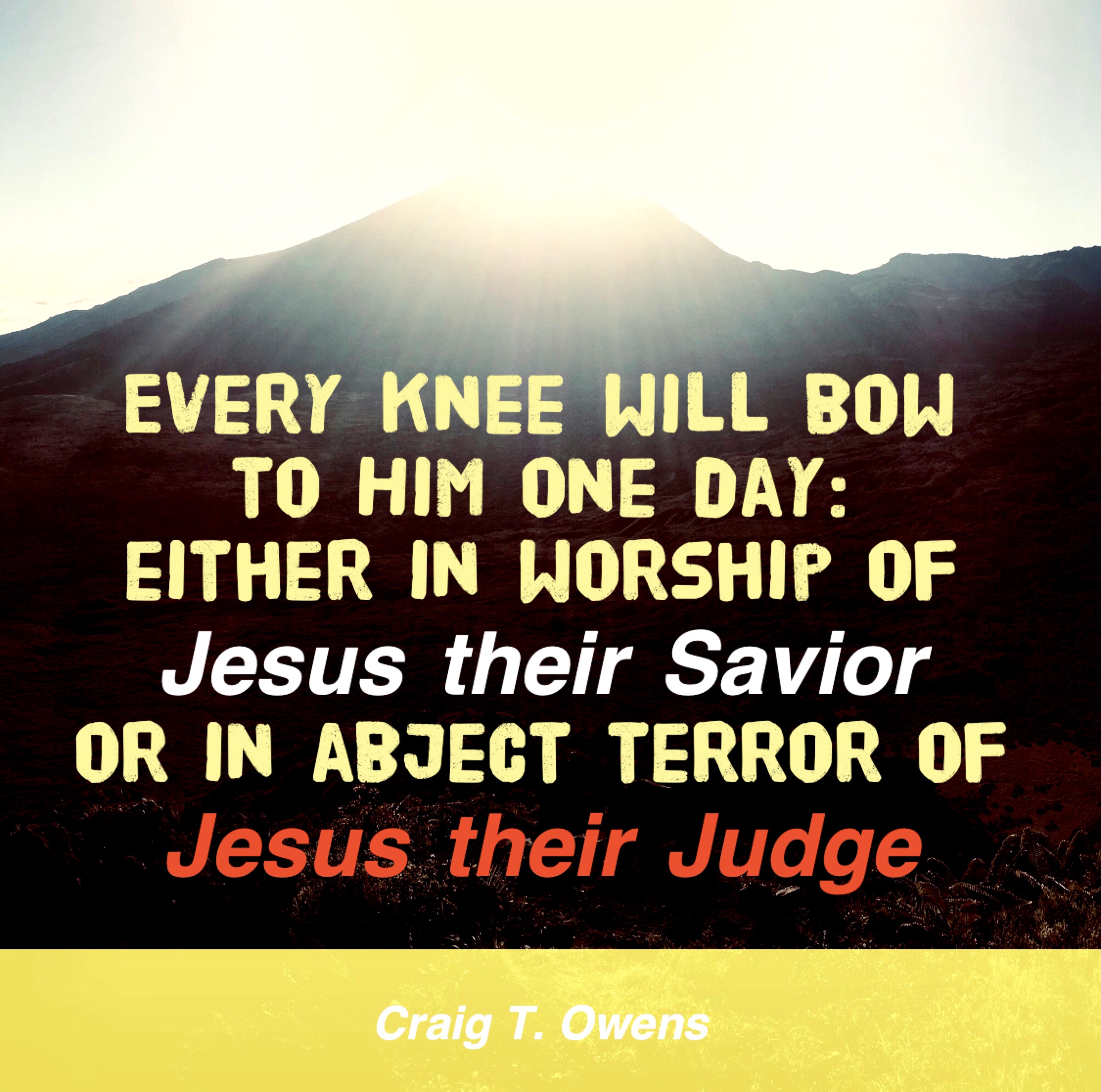
Every knee will bow to Him one day: Either in worship of Jesus their Savior, or in abject terror of Jesus their Judge. 

I pray that you believe in Jesus as your Lord and Savior today… don’t wait another moment! 

►► Would you please prayerfully consider supporting this ministry? ◀︎◀︎

If you’ve missed any of the other messages in our Foundational Stones series, which is exploring our foundational beliefs, you may access all of them by clicking here.

Thursdays With Spurgeon—Security

This is a weekly series with things I’m reading and pondering from Charles Spurgeon. You can read the original seed thought here, or type “Thursdays With Spurgeon” in the search box to read more entries.

Listen to the podcast of this post by clicking on the player below, and you can also subscribe on iTunes or Spotify.

Security 

[God] alone is my rock and my salvation (Psalm 62:2).

     I do not reckon that is salvation that regenerates me and then puts me in such a position that I may fall out of the covenant and be lost. I cannot call that a bridge that only goes halfway over the stream. I cannot call that salvation that does not carry me all the way to heaven, wash me perfectly clean, and put me among the glorified who sing constant hosannas around the throne. … 

     Do I live to God a holy life? It is not I, but Christ who lives in me. Am I sanctified? I did not sanctify myself. God’s Holy Spirit sanctifies me. Am I weaned from the world? I am weaned by God’s chastisements. Do I grow in knowledge? The great Instructor teaches me.

From God Alone The Salvation Of His People


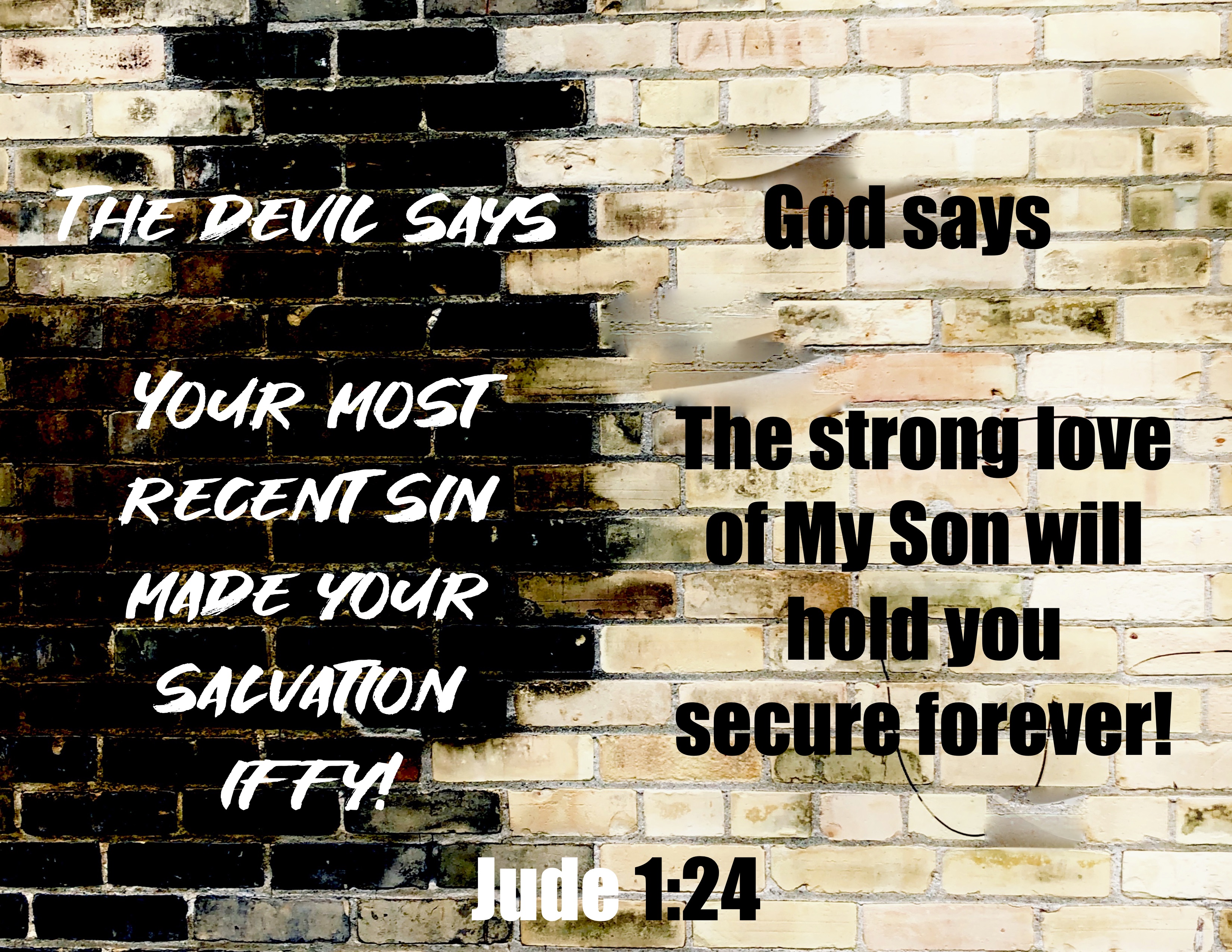
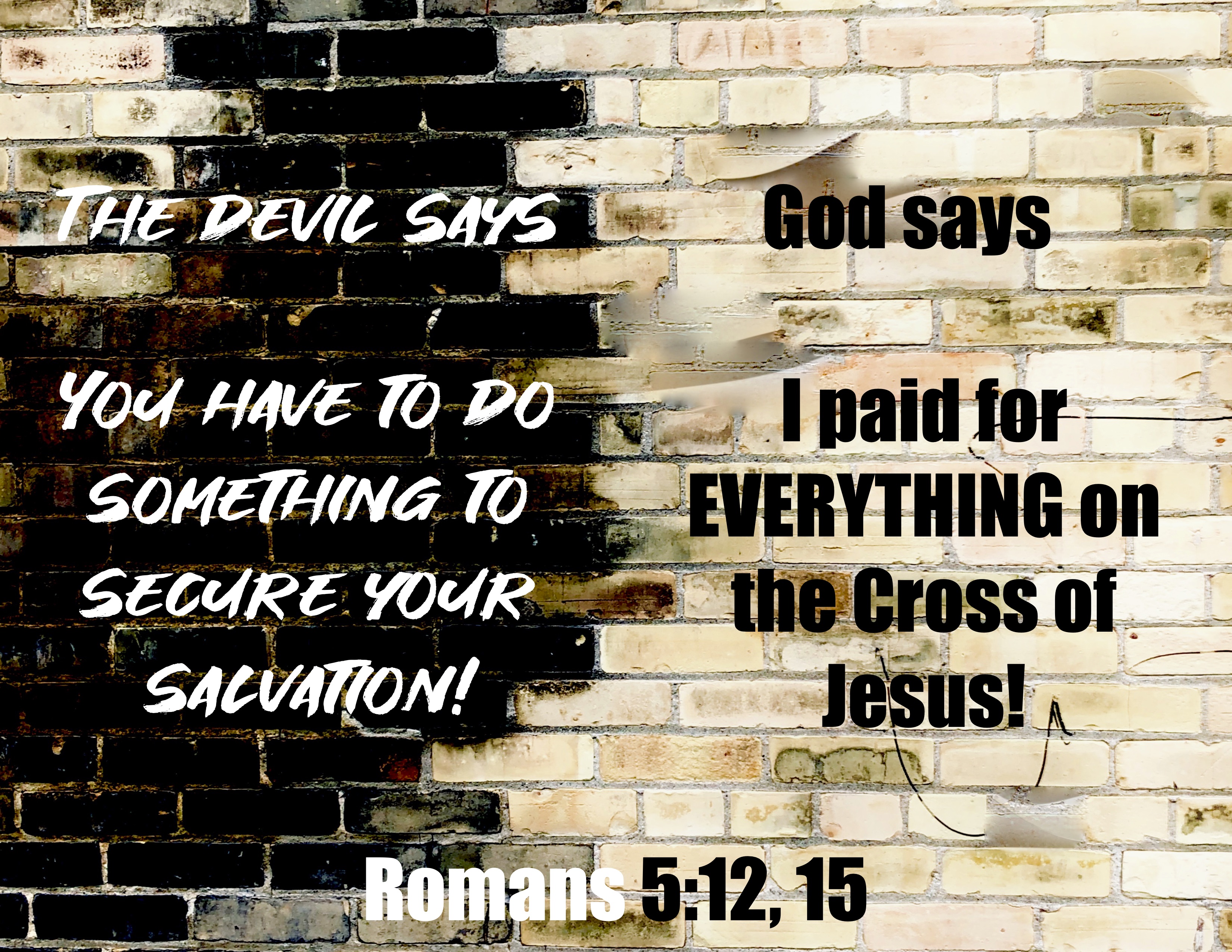
A few months ago I began designing a series of graphics under the heading, “Says who?” I took some of the lies of satan and put them side-by-side with the truth from God’s Word. 

When God is our Savior, we are secure. The devil would love to make us think that our salvation is hanging by a thread, that we have to work harder to make sure we don’t miss out, that a single sin can disqualify us from God’s favor, and a hundred other lies. But they are all just that: lies! 

We have to learn to capture each of these thoughts, and if they are thoughts that don’t align with God’s Word, then we need to confront them with the truth. I have found it very helpful to speak these truths out loud. To see some of the ways I suggested thinking differently about the devil’s lies, check out this post on reversing your thinking.

As the old hymn says, “Jesus paid it all, all to Him I owe.” You don’t have to earn your salvation or make your position secure—your salvation has been paid-in-full and you are perfectly secure! Now what you owe to Jesus is to allow Him to take you safely home. 

►► Would you please prayerfully consider supporting this ministry? ◀︎◀︎
Thursdays With Spurgeon—My Rock

This is a weekly series with things I’m reading and pondering from Charles Spurgeon. You can read the original seed thought here, or type “Thursdays With Spurgeon” in the search box to read more entries.

Listen to the podcast of this post by clicking on the player below, and you can also subscribe on iTunes or Spotify.

My Rock 

[God] alone is my rock and my salvation (Psalm 62:2).

     How noble a title; it is so sublime, suggestive, and overpowering. ‘My rock.’ It is a figure so divine that to God alone will it ever be applied. …  

     Unchangeable He is in His being, firm in His own sufficiency. He keeps Himself immutably the same. And ‘therefore you are not consumed, O sons of Jacob’ (Malachi 3:6). … So is our God a sure defense, and we will not be moved if He has set our feet upon a rock and established our goings (see Psalm 40:2). …  

     ‘He is my rock.’ How glorious a thought! How safe am I and how secure and how may I rejoice in the fact that when I wade through Jordan’s stream He will be my rock! I will not walk upon a slippery foundation, but I will tread on Him who cannot betray my feet. And I may sing when I am dying, ‘He is my rock, and there is no unrighteousness in Him’ (Psalm 92:15).

From God Alone The Salvation Of His People

Spurgeon mentioned singing about God our Rock even when we come to death’s door. Immediately a couple of songs from my childhood sprang to mind.

Rock of Ages, cleft for me,
Let me hide myself in Thee;
Let the water and the blood,
From Thy wounded side which flowed,
Be of sin the double cure,
Save from wrath and make me pure.

While I draw this fleeting breath,
When my eyes shall close in death,
When I rise to worlds unknown,
And behold Thee on Thy throne,
Rock of Ages, cleft for me,
Let me hide myself in Thee. (Augustus Toplady)

Where do I go when there’s nobody else to turn to?
Who do I turn to when nobody wants to listen?
Who do I lean on when there’s no foundation stable?
I go to the Rock, I know He’s able, I go to the Rock.

I go to the Rock of my salvation,
I go to the Stone that the builders rejected,
I run to the Mountain and the Mountain stands by me.
When the earth all around me is sinking sand
On Christ, the Solid Rock, I stand
When I need a shelter, when I need a friend, I go to the Rock. (Dottie Rambo)

My friend, no matter how unstable things may seem, no matter how uncertain the future may appear, remember the One and Only Rock. He alone is my rock and my salvation! Jesus is the same yesterday, today, and forever. Don’t try to make your own secure place, but run to the Rock of Ages, and this immovable Mountain will stand by you and keep you secure for all of eternity! 

Would you please prayerfully consider supporting this ministry? 


Thursdays With Spurgeon—The Greatest Gift

This is a weekly series with things I’m reading and pondering from Charles Spurgeon. You can read the original seed thought here, or type “Thursdays With Spurgeon” in the search box to read more entries.

Listen to this post as a podcast by clicking here:

The Greatest Gift

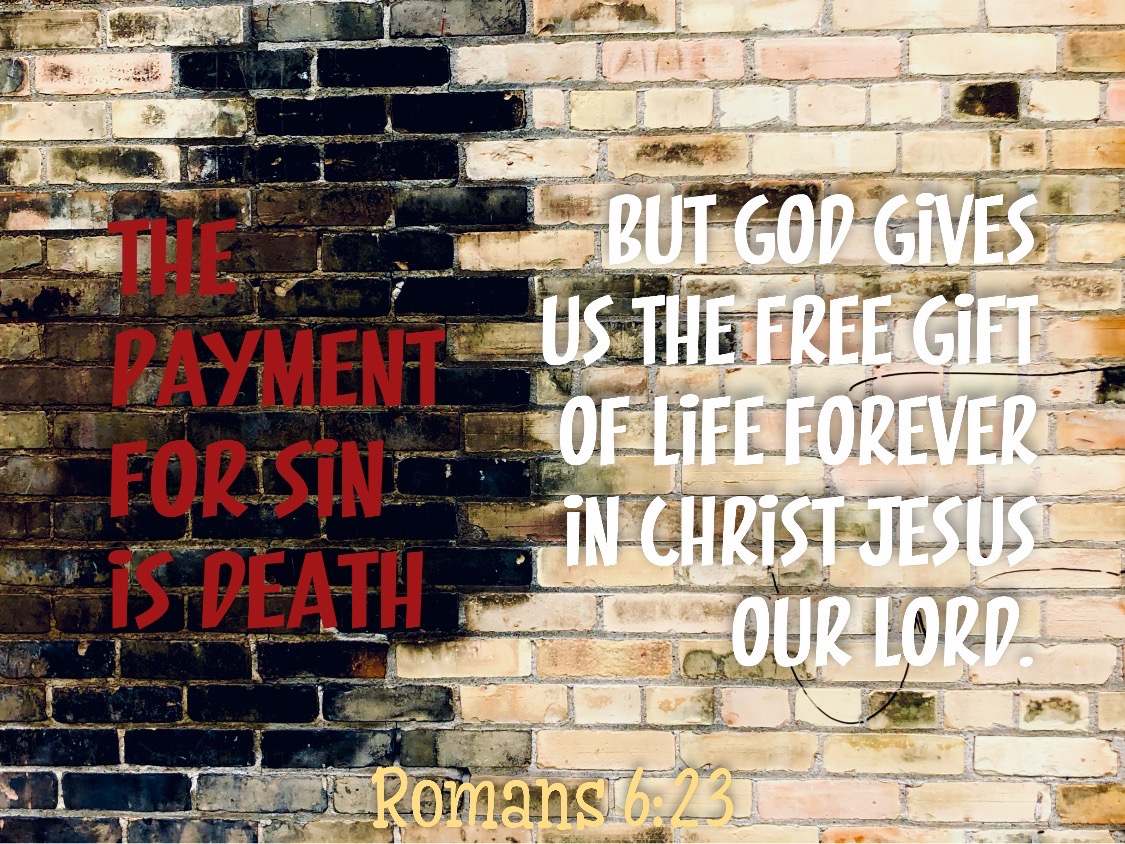
Come…buy wine and milk without money and without price. … The gift of God is eternal life in Christ Jesus our Lord…. (Isaiah 55:1; Romans 6:23) 

     The free grace of God would be insulted by being put up for auction or set forth for sale. … It is a gift and not a prize. There are heavenly prizes to be run for, to be fought for, and to be obtained by divine help. There is a recompense of reward to which we are to look and a crown for which we are to strive, but the divine grace that forgives sin and works faith is no prize for exertion but rather a gift for those without strength. ‘It is not of him who wills, nor of him who runs, but of God who shows mercy’ (Romans 9:16). … 

     The blessings of salvation are freely given us of God; therefore they are not a loan, handed to us for a time and to be one day recalled. Our heavenly heritage is not held on lease, upon terms of annual payment. It is an unencumbered freehold to every man who has by faith put his foot upon it. … When He has given it, the deed is done outright and can never be reversed. O believer, if your sin is blotted out, it can never be written in again! God has declared that He has forgiven our transgressions. And then He adds, ‘Their sins and iniquities will I remember no more’ (Hebrews 10:17). … 

     God is unchangeable, and therefore what He has given He will give again. ‘Still there’s more to follow’ is a popular way of putting a great truth. The stream that has begun to flow will never cease flowing. The more the Lord gives, the more we may expect. Every blessing is not only in itself a mercy, but it is a note for more mercies.

From Grace For Grace

I shared a series of messages on God’s favor—His free gift that we call grace—that was one of the most downloaded and watched of any series I have presented. It almost seems inconceivable to people that God would give so freely and lavishly without expecting some sort of payment in return. 

Why would God “not spare even His own Son but [give] Him up for us all” (Romans 8:32)? Because if you feel distant from Him, how can you glorify Him? If you feel disconnected from His love, how will you draw others to Him? If you feel like your relationship with Him is hanging by a thread, how can you happily abide in His presence? 

Knowing God’s favor—His free gift—is the key to living the abundant life Jesus purchased for you on the Cross!

Thursdays With Spurgeon—The Plan Of The Cross

This is a weekly series with things I’m reading and pondering from Charles Spurgeon. You can read the original seed thought here, or type “Thursdays With Spurgeon” in the search box to read more entries.

The Plan Of The Cross

What we have received is not the spirit of the world, but the Spirit who is from God, so that we may understand what God has freely given us. (1 Corinthians 2:12) 

     The course of our fallen race has been a succession of failures. Whenever there has been an apparent rise, it has been followed by a real fall. Into ever-increasing darkness the human mind seems resolved to plunge itself in its struggles after a false light. When men have been fools, they have danced in a delirium of sin. When they have been sober, they have given themselves up to a phantom wisdom of their own that has revealed their folly more than ever. It is a sad story, the story of mankind! Read it in the light of God’s Word and it will bring tears from your very heart.

     The only hope for man was that God should interpose. And He has interposed, as though He began a new creation or worked a resurrection out of the kingdom of death. God has come into human history and here the bright lights begin. … See yonder avalanche rushing down the steep mountainside? Such is humanity left to itself. Lo, God in Christ Jesus throws Himself in the way. He so interposes as to be crushed beneath the descending rocks. But beloved, He rises from the dreadful burial. He stops the avalanche in its terrible path. He hurls back the tremendous mass and changes the whole aspect of history. … 

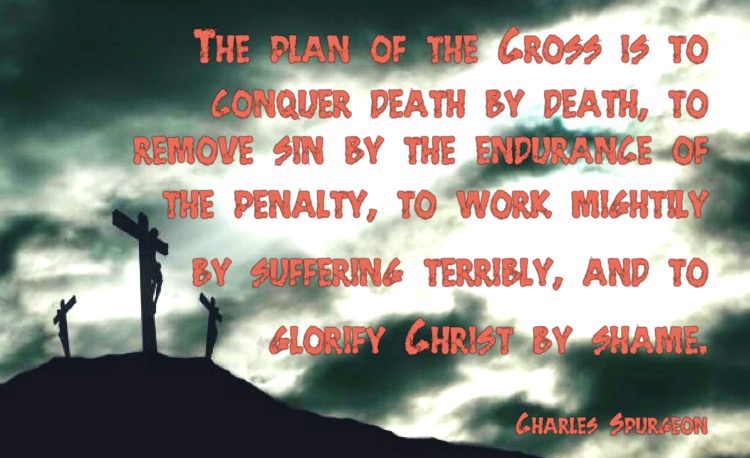
     The plan of the Cross is to conquer death by death, to remove sin by the endurance of the penalty, to work mightily by suffering terribly, and to glorify Christ by shame.

From Grace For Grace

This sermon reminds me of the poignant words from Isaac Watts—

When I survey the wondrous Cross 
On which the Prince of Glory died, 
My richest gain I count but loss, 
And pour contempt on all my pride. 
Forbid it, Lord, that I should boast, 
Save in the death of Christ my God! 
All the vain things that charm me most, 
I sacrifice them to His blood.
 

All of man’s attempts to control his universe, or determine his fate, or even make himself acceptable to God have been an abysmal failure. So God Himself stepped in, but He came in a way that no one could have imagined and no one could claim as their idea. The prophet Isaiah said it this way, “The Lord looked and was displeased that there was no justice. He saw that there was no one, He was appalled that there was no one to intervene; so His own arm achieved salvation for Him, and His own righteousness sustained Him” (Isaiah 59:15-16). 

It is by grace alone, through faith alone, in Christ alone that we have hope of our salvation. And for that we give all glory to God alone. Sola Deo gloria!


Poetry Saturday—Hymn #120

What shall the dying sinner do
That seeks relief for all his woe?
Where shall the guilty conscience find
Ease for the torment of his mind?

How shall we get our crimes forgiv’n?
Or form our natures fit for heav’n?
Can souls all o’er defiled with sin
Make their own powers and passions clean?

In vain we search, in vain we try,
Till Jesus brings His gospel nigh;
‘Tis there such power and glory dwell
As save rebellious souls from hell.

This is the pillar of our hope
That bears our fainting spirits up:
We read the grace, we trust the Word,
And find salvation in the Lord.

Let men or angels dig the mines,
Where nature’s golden treasure shines;
Brought near the doctrine of the Cross,
All nature’s gold appears but dross.

Should vile blasphemers with distain
Pronounce the truth of Jesus vain,
I’ll meet the scandal and the shame,
And sing and triumph in His name. —Isaac Watts

Our Joyful Burden

I shared last week that the judgment of God should be a cause for both fear and rejoicingboth regret and comfort—for those who have a relationship with God through Jesus Christ. But for those who have no relationship with God, the judgment of God is a cause for only fear and regret. 

How did Nahum respond to this word of judgment God spoke through him? His opening words say, “The burden against Nineveh. The book of the vision of Nahum the Elkoshite” (NKJV). The Hebrew word for “burden” is almost always associated with a word God has spoken. It’s a realization of God’s weighty glory; it’s never, ever something we should trivialize! 

Prophets don’t just prophesy future events, they also announce in the present tense where people have departed from a lifestyle that robs God of His glory and how they can be forgiven of sins. 

“The prophets foretell (speak to what will happen in the future) and forth-tell (speak to what we should be doing in the present), both in the light of God’s heart for His own glory among all peoples of the world.” —Dick Brogden 

God never makes idle threats nor empty promises. Truly His Word is His bond. Through Nahum, God foretold that Assyria would be utterly destroyed, twice saying, “I am against you” (Nahum 2:13-3:7). 

The world may rejoice at God’s justice on evil (3:19), but how does God feel about carrying out His judgment? Ezekiel records God saying, “Do I take any pleasure in the death of the wicked,” declares the Sovereign Lord. “Rather, am I not pleased when they turn from their ways and live?” (Ezekiel 18:23) 

And Jesus declared, “For God so loved the world that He gave His one and only Son, that whoever believes in Him shall not perish but have eternal life. For God did not send His Son into the world to condemn the world, but to save the world through Him.” (John 3:16-17)

The Bible shows that when I sin, God’s first response is not anger toward me but broken-hearted grief. This is the message that must be both foretold and forth-told by Christians. 

“But what can I do,” you might ask. “I’m just one person. I’m not a big-time evangelist.” That sounds a lot like Nahum. He was just a guy from Elkosh—no special family lineage, no large city to claim as his home. 

God is looking for just one that will speak out His words (Ezekiel 3:17-21). Just one who will be humble enough to search their own heart first and then both boldly and lovingly deliver a message of both judgment and escape (Matthew 7:1-5; James 5:20). 

Foretelling God’s judgment is a burden. Forth-telling God’s forgiveness is a joy. All Christians have been given the joyful burden of this both-and ministry! 

If you’ve missed any of the other messages in our series called Major Lessons From Minor Prophets, you can find the full list by clicking here

Words To Winners Of Souls (book review)

Horatius Bonar has given us a collection of sermons preached to pastors, which have been collated in a book under the title Words To Winners Of Souls. 

Although these were words by a pastor to pastors, this shouldn’t be a book exclusively read by pastors. Anyone who wants to successfully share their Christian testimony with unsaved friends and loved ones can find much to digest in these sermons. That being said, this is still a must-read (and I don’t say that very often) for those in pastoral ministry. 

Bonar was a no-pulled-punches preacher! He spoke candidly and forcefully, but he also spoke out of a love for the Body of Christ and its ministers. Early on in this book he says, “We take for granted that the object of the Christian ministry is to convert sinners and to edify the body of Christ. No faithful minister can possibly rest short of this. Applause, fame, popularity, honor, wealth—all these are vain. If souls are not won, if saints are not matured, our ministry itself is vain.” Wow: “our ministry itself is vain”—you cannot get more gut-level honest than that! 

In this collection of messages, Bonar helps us diagnose what may be hindering our soul-winning practices, and he also proposes the remedy for those shortcomings. These words are honest and often hard to hear, but they are so needed for everyone who desires, as Jesus does, “that none should perish but all should come to repentance” (2 Peter 3:9). 

Pastors, please read this book! 

Parishioners, please get a copy of this book for your pastor and then offer to prayerfully read through it with him or her. I promise you: this book will pay eternal dividends. 

UPDATE: I have shared some quotes from this book here.