Hope-Filled Declarations

Whether it’s a doctor’s diagnosis of cancer, or a rapidly-spreading virus, or a painful relationship, Lynn Eib helps us keep these unexpected things in perspective. These may have taken us by surprise, but nothing takes God by surprise. No diagnosis nor prognostication can limit God’s power and love. 

As David learned in his painful time: “God has spoken once, twice have I heard this: that power belongs to God. Also to You, O Lord, belong mercy and loving-kindness” (Psalm 62:11-12). He is All-Powerful and All-Loving. 

Let these declarations Lynn made when receiving her cancer diagnosis help put things in perspective for you—

I refuse to believe my diagnosis is a death sentence.

I believe God is on the side of my healing because His unbreakable Word says so.

I believe treatment is effective against this illness, especially the skillful efforts of scientific medicine with my strategies for replacing lying thoughts with truth.

I believe my hormones and immune system are on the side of my healing and are even now working to overcome this illness.

I believe I am personally responsible for my treatment and for managing it.

I believe hope is a choice. I choose hope, not hopelessness.

My major aim is to have a mind fully submitted to the Spirit of God and His truth, not just to see better lab results or improvement in physical symptoms.

I believe I am on earth to share Christ, hope, and joy with others. I am here only to love others, regardless of my physical condition.

I believe that God’s will is good. 

I believe that He loves me and wants only the best for me—whatever He is allowing me to experience right now.

I can recover from this illness and live a rich, productive life of service. But whether I recover or not, I am going to leave this life someday regardless. Until then I can live a full life of service every day for as long as I am given. 

—Lynn Eib, in Peace In The Face Of Cancer 
How Long Will This Last?

Chaos is all around us! There’s infighting both politically and religiously. Government officials are imposing new laws and regulations and restrictions. Lots of rival voices are clamoring to be heard. Loss of personal freedoms, civil liberties, and even the freedom of worship. Uncertainty about the future. Fear in the present. 

Although this may sound like current conditions in the USA, I’m actually describing life in Israel around 31 BC. 

The people of Israel were frustrated beyond words with the restrictions they faced. They thought they were living in their land and that they should be able to govern themselves as they saw best. 

Have you ever been in that place of utter frustration? Are you there now? “What’s happening? Why is this not going according to plan? Isn’t there anything I can do? How long is this going to last? God, where are You in all of this?! 

We humans like to think we are in control. Or at least we like to think that we know God’s timetable. Throughout the Bible—and still today—the questions persist: 

  • How long will this last? 
  • When will this take place? 
  • What about him? 
  • Is this the right time? 

(see Psalm 13:1-2; Matthew 24:3; John 21:21; Acts 1:6; Revelation 6:9-10) 

When we ask God, “How long?” He never answers us by pointing to the calendar or the clock, but He points us to principles in His Word.

Here are four principles that we need to ask the Holy Spirit to help us grasp: 

  1. God’s timing was determined before Time even started. 
  2. God is using this “How long?” time to perfect us for His service.
  3. God is using this “How long?” time to empower us to point others to Him.
  4. God is calling us to trust Him alone during our “How long?” times. 

(see Psalm 90:2; Isaiah 46:10; Psalm 13:5-6; Romans 5:3-4; Matthew 24:13-14; Acts 1:7-8; John 21:21) 

Those Israelites I described earlier were so frustrated with asking “How long?” and apparently getting no answer, that they frequently took matters into their own hands. This never turned out well for them. But God’s perfect timing was heading toward His perfect fulfillment.  

We may not perceive it, but God IS doing more than we will ever know during our “How long?” times. 

God’s perfect timing for His people couldn’t be until Caesar Augustus came on the scene and brought an end to the political uncertainty that kept everything in chaos. Nearly 30 years before Jesus was to be born in Bethlehem, Augustus was launching the pax Romana—the peace of Rome—all over the world. Pax Romana was creating the perfect environment in which Jesus could be born and minister, as well in which His followers could then take the Good News all over the world. 

Jesus was born “in the fullness of time” (Galatians 4:4), around 5 BC, in a land where a Jordanian king (Herod the Great) served an Italian emperor (Caesar Augustus) to a people frustrated with waiting. But God knew exactly when and where and how to send His Son to be our Savior!

So, my friends—Trust God in the “How long?” times! 

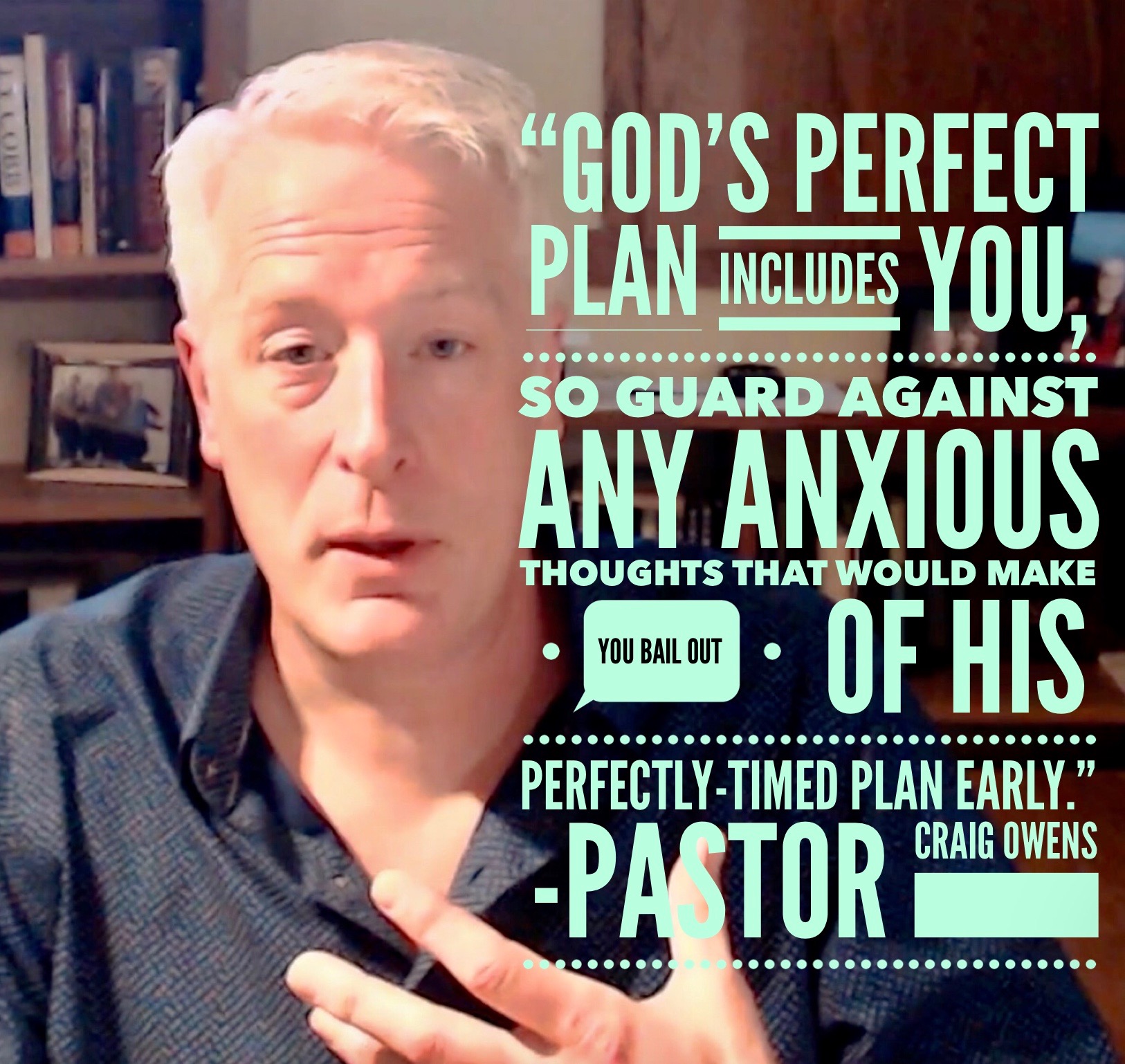
God’s perfect plan includes YOU, so guard against any anxious thoughts that would make you bail out of His perfectly-timed plan early. (see Psalm 139:16, 23-24)

Join me this Sunday as we continue our series called Where’s God? 

4 + 4 Strategies To Eliminate Distractions To Your Prayer Time

There’s a quote that has been the theme for this series on prayer: “Prayer pursues joy in fruitful fellowship with Jesus, knowing that God is glorified when we bear fruit in answer to prayer. Why do God’s children so often fail to have consistent habits of happy, fruitful prayer? Unless I’m badly mistaken, one of the reasons is not so much that we don’t want to, but that we don’t plan to.” —John Piper 

And unless I’m badly mistaken, the most obvious thing we need to plan to eliminate is distractions. 

Some people say they can juggle a lot of things at once. “I’m a really good multitasker,” they say. But science says differently. MIT neuroscientist Earl Miller concluded that our brains are “not wired to multitask well…. When people think they’re multitasking, they’re actually just switching from one task to another very rapidly. And every time they do, there’s a cognitive cost.” What is that cognitive cost? “Multitasking can drop IQ as much as 15 points, essentially turning you into the cognitive equivalent of an 8-year-old” (Inc. Magazine). 

If the devil can make you think you can multitask prayer with other things, he has seriously inhibited the effectiveness of your prayers. 

Jesus was not a multitasker—but He was singularly focused on His Father’s plan. And yet He accomplished more in His three years of public ministry than anyone else in history! 

Here are 4 strategies to help you get ready to pray:

  1. Try to have your prayer time in the same place and at the same time. Your brain likes routine and it will help you zero-in during your scheduled prayer times. 
  2. Silence your cell phone or other noisy distractions. 
  3. Keep a notepad handy for random thoughts that pop into your head. Writing them down will keep your brain from switching back-and-forth to them.
  4. Focus on listening, not on talking—Eugene Peterson said, “Prayer is first of all a means of listening. Prayer is an act of attention.” 

When we get right down to it, prayer is spiritual warfare (2 Corinthians 2:11; Ephesians 6:10-18). In the context of warfare, the word strategy means the maneuvering that takes place prior to the battle. The devil is a masterful tactician, and he will do everything he can to keep you distracted. 

That’s why three times Peter tells us to be clear-minded and singularly-focused in our thoughts SO THAT we can pray without the hindrances of distractions (1 Peter 1:13-14; 4:7; 5:8-9). And Paul tells us to take all our thoughts captive, so that no un-Christlike thoughts are inhibiting our prayer time (2 Corinthians 10:4-5). 

Here are 4 strategies to help you stay focused in prayer:

  1. A—adoration. Enter into God’s presence with a Psalm or worship music. 
  2. C—confession. Deal with unconfessed sin, unforgiveness, or relationship strife as quickly as possible (Psalm 66:18; Matthew 5:21-24). 
  3. T—thanksgiving. Paul counseled us, “Do not be anxious about anything, but in everything, by prayer and petition WITH thanksgiving, present your requests to God” (Philippians 4:6).  
  4. S—supplication. Intercede for your brothers and sisters in the battles they are facing (James 5:16; Job 42:10; Ephesians 6:18).  

Remember—

Prayer isn’t preparation for the battle; prayer IS the battle! Let’s not be distracted from that!

Enjoying The Meal

I am so active every day that I need to eat about 2700 calories just to maintain my weight. Eating that often, if I’m not careful, I can just simply put food in my mouth and really not taste it. 

I think most people realize that there is a difference between eating and enjoying their food. Not only is gulping not very pleasurable, but doctors have even found some negative impacts on habitual food-gulpers. Things like: 

  1. Indigestion 
  2. Weight gain 
  3. Disconnection from hunger/full signals 
  4. Increasingly likelihood of unhealthy food choices 

In the same way, there’s a difference between praying and enjoying our time with God (see Mark 6:30-31 and Revelation 3:20).

Just as there are many physical benefits to enjoying healthy food, there are also many spiritual benefits to enjoying our time in God’s Word and God’s presence. This spiritual eating and digestion process is called meditation. 

Allow me to put a couple of thoughts together to show you the value of this spiritual discipline: 

  • The apostle Paul told us, “Pray continually” (1 Thessalonians 5:17). 
  • God told Joshua, “Keep this Book of the Law always on your lips; meditate on it day and night, so that you may be careful to do everything written in it. Then you will be prosperous and successful” (Joshua 1:8).

So the way we pray continually is to have something healthy to digest. We can feast on God’s Word and then allow the Holy Spirit to extract all of the healthy spiritual nutrients that will allow us to grow and mature. 

David said, “Taste and see that the Lord is good” (Psalm 34:8). Don’t gulp down your meal of the Scripture—taste it. Don’t rush through your prayer time—enjoy it. Keep mulling over what you have read. Keep chewing on it to help the digestion of the good stuff you need to be healthy.

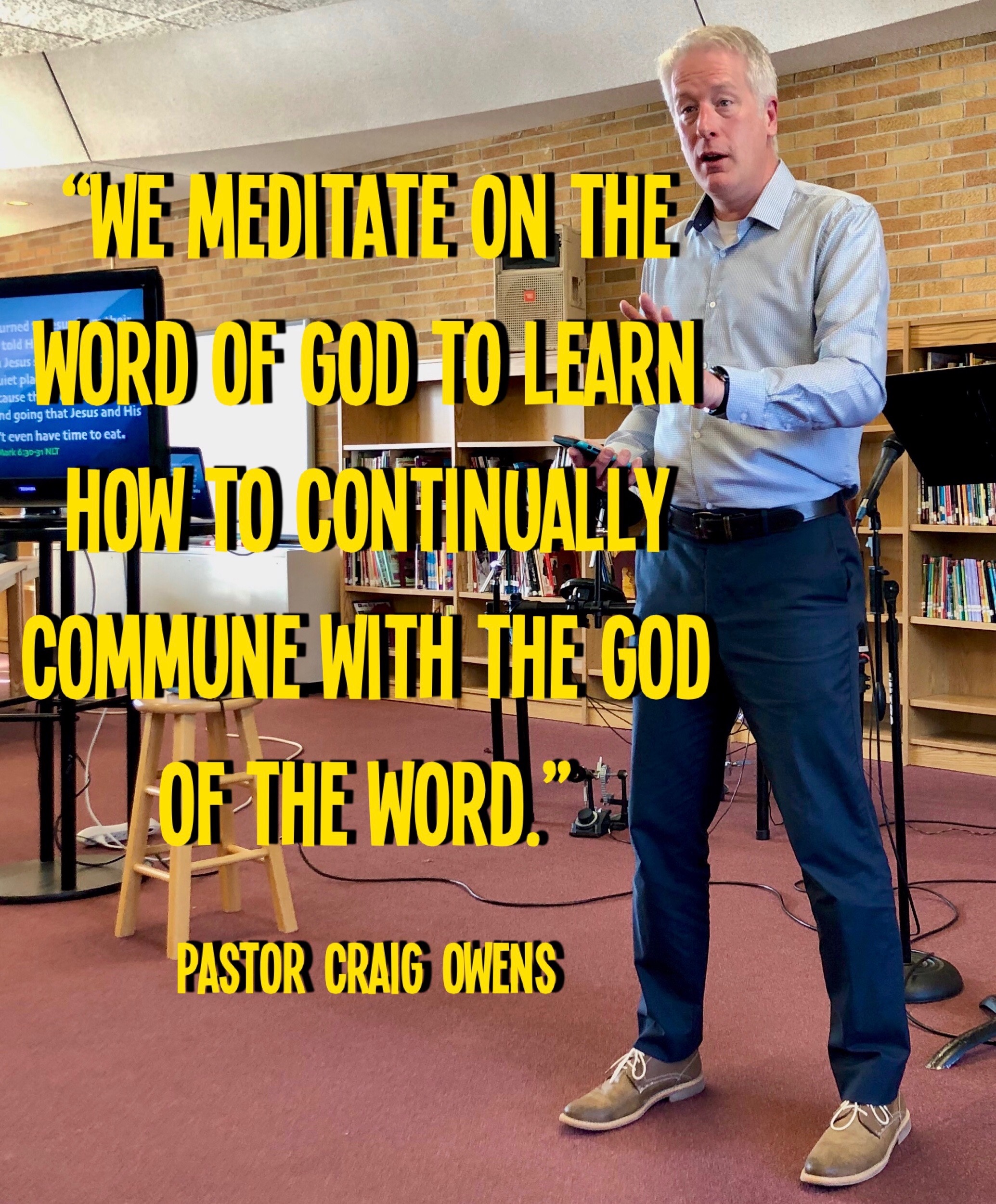
We meditate on the Word of God to learn how to continually commune with the God of the Word. 

Meditating on God’s Word with the Holy Spirit’s help means you will never lack material for praying continually.

Thursdays With Spurgeon—The Oftener The Better

This is a weekly series with things I’m reading and pondering from Charles Spurgeon. You can read the original seed thought here, or type “Thursdays With Spurgeon” in the search box to read more entries.

The Oftener The Better 

     It is strange that spiritual blessings are our only possessions that we do not employ. We get a great spiritual blessing and we let the rest get on it for many a day. There is the mercy seat, for instance. Ah, my friends, if you had the cash box as full of riches as that mercy seat is, you would go often to it, as often as your necessities require. But you do not go to the mercy seat half so often as you need to go. Most precious things God has given to us, but we never overuse them. The truth is, they cannot be overused. We cannot wear a promise threadbare. We can never burn out the incense of grace. We can never use up the infinite treasures of God’s lovingkindness. … 

     How seldom do we ask counsel at the hands of the Lord! How often do we go about our business without asking His guidance? In our troubles how constantly do we strive to bear our burdens, instead of casting them upon the Lord, that He may sustain us! And this is not because we may not, for the Lord seems to say, “I am yours, soul; come and make use of Me as you will. You may freely come to My store, and the oftener the better. Welcome.” … 

     Have not God in name only. Since He allows you to have such a Friend, use Him daily. My God will supply all your wants. Never want while you have a God. Never fear or faint while you have a God. Go to your treasure and take whatever you need. There is bread and clothes, and health and life, and all that you need. O Christian, learn the divine skill to make God all things; to make bread of your God, and water, and health, and friends, and ease. He can supply you with all these. … 

     Oh! Child of God, let me urge you to make use of your God. Make use of Him in prayer. I beseech you, go to Him often, because He is your God. … Fly to Him; tell Him all your wants; use Him constantly by faith, at all times. …  

     Go to God continually, importunately, confidently. Delight yourself in the Lord, and He will bring it to pass. Commit your way to the Lord, and He will guide you by His counsel and afterward receive you to glory (Psalm 73:24).

From God In The Covenant 

Oh what peace we often forfeit
Oh what needless pain we bear
All because we do not carry
Everything to God in prayer

What Does “Gloria In Excelsis Deo” Mean Today?

Listen to the podcast of this post by clicking on the player below, and you can also subscribe on AppleSpotify, or Audible.

A “mondegreen” is a misunderstood word or phrase usually because it’s in a song lyric that is misunderstood. In Christmas carols, many mondegreens come from the fact that the Old English lyrics are sometimes up to 200 years old and simply aren’t the way Americans talk today. One of my favorite mondegreens comes from I Heard The Bells On Christmas Day where people say “the bell freeze up all Christians dumb” instead of “the belfries of all Christendom”! 

If this happens to 200-year-old songs written in English, can you imagine what happens to a song that is 1700 years old and was originally written in Latin?! I’m talking about the chorus from Angels We Have Heard On High which simply says, “Gloria in excelsis Deo.” 

That Latin phrase means Glory to God in the highest! The idea is that our praise of God is both excellent and increasing in its level of adoration. The Latin phrase is shorthand for a doxology that is traced back to 300 AD.

The angels aren’t the subject of this carol, but the focal point is to Whom their song is being raised—“Come to Bethlehem and see Him Whose birth the angels sing; come adore on bended knee Christ the Lord, the newborn King.

The idea of gloria in excelsis is to keep making our praise bigger and more magnificent. We are to MAGNIFY what God has done for us through the advent of Jesus.  

In Hebrew, the word gadal is usually translated as “magnify” or “glorify” in English, and it means something that is growing and becoming more powerful. David uses gadal as he not only praises God from deep within his soul but encourages others to join in his song (Psalm 34:1-3). 

In Greek, the word megalynō is also translated “magnify,” and means to make something great, make it obvious, declare it to be great, celebrate it. Mary’s song called The Magnificat begins with this word (Luke 1:46).

I cannot make God great because He is already THE GREATEST! 
I cannot make God powerful because He is already OMNIPOTENT!
But I can make His greatness and His power more obvious by celebrating Him!

Just like a magnifying glass doesn’t make an object bigger, it just helps us see it better. So, too, our praise and adoration don’t make God bigger, it just helps others see Him better.  

So I have a question to ask you—which I’ve already been asking myself:

How will you give gloria in excelsis Deo this Christmas season and beyond?

►► Would you please prayerfully consider supporting this ministry? ◀︎◀︎

If you’ve missed any of the message in this series, you can check them out by clicking here.

Thursdays With Spurgeon—Instructor And Indweller

This is a weekly series with things I’m reading and pondering from Charles Spurgeon. You can read the original seed thought here, or type “Thursdays With Spurgeon” in the search box to read more entries.

Instructor And Indweller

O righteous Father! The world has not known You, but I have known You; and these have known that You sent Me. And I have declared to them Your name, and will declare it, that the love with which You loved Me may be in them, and I in them. (John 17:25-26) 

     John’s Gospel is always easy for the child to read, but it is always hard for the man to understand. And these two verses, which are almost entirely made up of words of one syllable, contain mysteries that baffle the most enlightened understanding. …  

     The twenty-sixth verse speaks of the wonderful discoveries of a love of infinite excellence: “That the love with which You loved Me may be in them, and I in them.” And you notice that in order to bring that love home to us, there is a divine Indweller who goes with it, and without whom it could not be! As a teacher is required to bring us the choice knowledge, so an indweller is necessary to infuse into us the infinite love: “And I in them.” Jesus must teach us or we will not know the Father. He must dwell in us or we will not rejoice in His love.

     Thus our first subject is divine knowledge and the divine Instructor. Our second subject is indwelling love and the indwelling Lord. The two are one! The blessed Person of our Lord Jesus is so connected with both and so unites both that the subject is one! To know God in Christ Jesus is to love Him, and to be loved of Him is the cause of our being made to know Him! When Jesus declares the Father’s name, we both know and love. And when we see the Father in the Son, we are filled with both instruction and affection. …  

     “Righteous Father”—I know of no other place in Scripture where God is called by that name. … He is righteous, having the attributes of a judge and ruler. He is just, impartial, by no means sparing the guilty. He is Father, near of kin, loving, tender, forgiving. In His character and in His dealings with His people, He blends the two as they were never combined before! How can the Judge and the Father be found in one? When guilty men are concerned, how can both characters be carried out to the fullest? How is it possible? There is but one answer, and that is found in the sacrifice of Jesus that has joined the two in one! In the atonement of our Lord Jesus, “mercy and truth have met together; righteousness and peace have kissed” (Psalm 85:10). 

From The Righteous Father Known And Loved

Jesus showed us the full extent of His love at Calvary. When He was ready to ascend to heaven, He promised to send the Holy Spirit to remind us of all that we had learned about this love and salvation of Jesus, and so much more! 

This should suggest to each of us a searching question: Do I know the Lord? 

If not, you can know Him today!


Killing Discontentment

Fading gratitude is a terrible thing. Not being thinkful of our past not only keeps us from being thankful, but it also keeps us stuck in the past. And allowing gratitude to fade also sucks the life out of our every-day experiences.

Asaph told us about the manna that God provided for the Israelites to eat every single day that they were in the wilderness. He called it the bread of angels. But even this wasn’t enough for people who weren’t thinkful nor thankful. Instead, they craved more (Psalm 78:25-30). 

The dictionary defines forgetfulness as “ceasing to think about something.” Gratitude, then, is to continue to think about Someone—that “Someone” being God who daily provides for us.

Fading gratitude brings two ugly realities: 

(1) Discontentment. The dictionary calls this “a restless desire or craving for something one does not have.” In other words, it’s counting up what you don’t have instead of being grateful for what you do have. 

(2) Entitlement. This is discontentment’s sickly twin sister. Where discontentment counts up what it doesn’t have, entitlement says, “I deserve what I don’t have!” Jesus told a story about entitled people who had been given land, a vineyard, and everything they needed to be successful with their farm. Yet when the owner of the farmland asked for his rightful payment, the renters thought they were entitled to keep it all. 

There are serious—and potentially eternal—consequences for our unchecked discontented entitlement. Jesus said, “What then will the owner of the vineyard do? He will come and kill those tenants and give the vineyard to others” (Mark 12:9). And Asaph reported that for the discontented, entitled Israelites, “God’s anger rose against them; He put to death the sturdiest among them, cutting down the young men of Israel. … So He ended their days in futility and their years in terror” (Psalm 78:31, 33). 

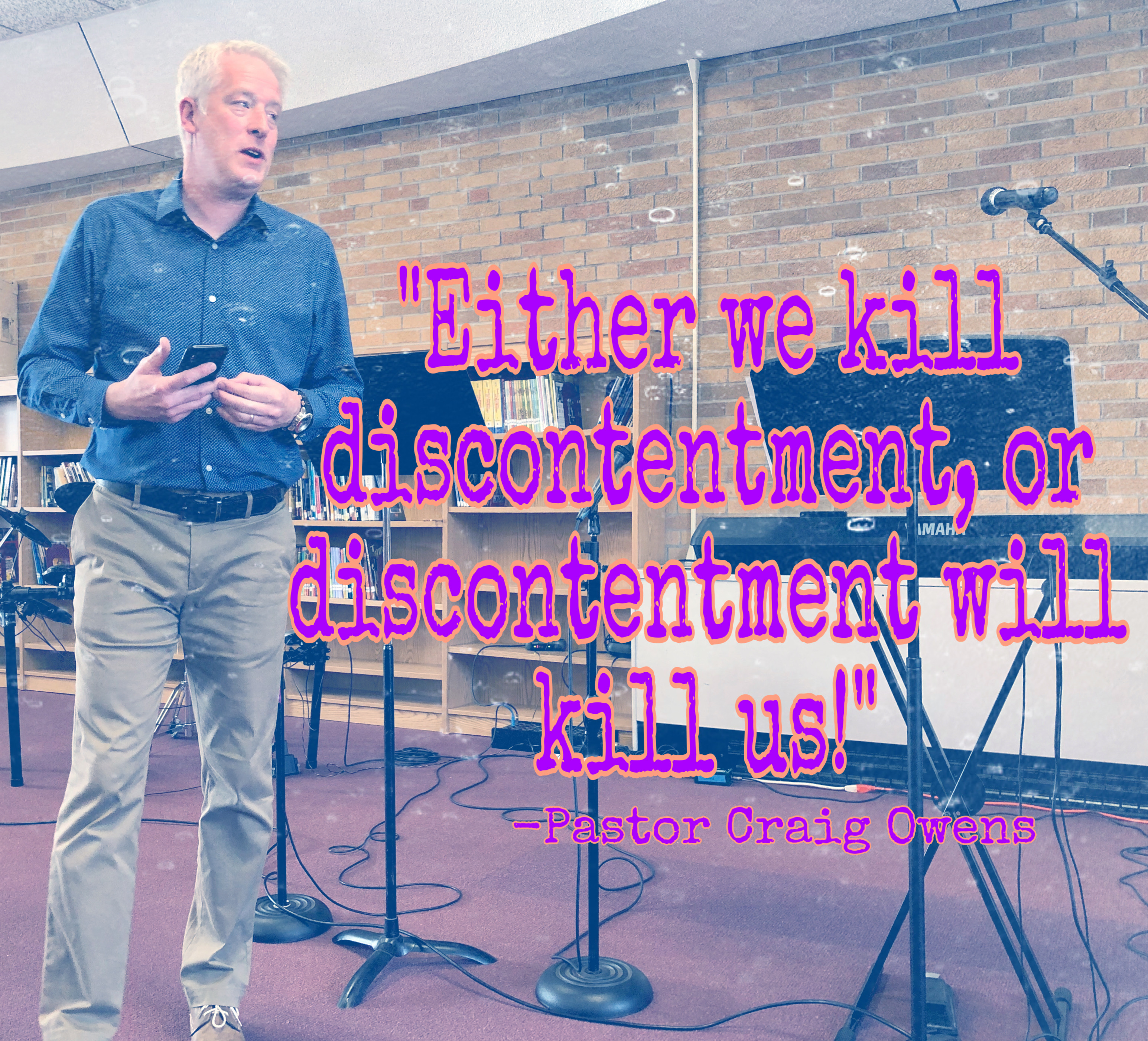
One of two things is going to happen: either we kill discontentment, or discontentment will kill us! 

It’s not complicated to kill discontentment, but it is hard work. We kill discontentment with contentment. We learn to separate the dis from discontentment with the sword of gratitude! 

The apostle Paul wrote “…I have LEARNED to be content whatever the circumstances. I know what it is to be in need, and I know what it is to have plenty. I have LEARNED the secret of being content in any and every situation, whether well fed or hungry, whether living in plenty or in want. I can do all this through Him who gives me strength” (Philippians 4:11-13). 

One way to learn contentment is to keep reminders around you of all the things which with God has blessed you. Don’t let your gratitude fade for one moment! 

Next week we will be wrapping up this series by considering what can happen to our future outlook if we let gratitude fade from our hearts and minds. I hope you can join me! 

Thursdays With Spurgeon—You Cannot Hide Your Heart From God

This is a weekly series with things I’m reading and pondering from Charles Spurgeon. You can read the original seed thought here, or type “Thursdays With Spurgeon” in the search box to read more entries.

You Cannot Hide Your Heart From God

Hell and destruction are before the Lord: how much more then the hearts of the children of men? (Proverbs 15:11 KJV) 

     God knows the burial places of all His people. He notes as well the resting place of the man who is buried tombless and alone as the man over home a mighty mausoleum has been raised. He saw the traveler who fell in the barren desert, whose body became the prey of vultures and whose bones were bleach in the sun. He saw the mariner, who was wrecked far out at sea and over whose corpse no dirge was ever wailed, except the howling of the winds and the murmuring of the wild waves. God knows the thousands who have perished in battle, unnumbered and unnoticed; the many who have died alone amid dreary forests, frozen seas, and devouring snowstorms; all these and the places of their sepulcher. God has marked that silent grotto within the sea, where pearls lie deep, where now the shipwrecked one is sleeping, as the death place of one of His redeemed. …

     Yes, hell, horrible as it is and veiled in many clouds and covered over with darkness, is naked before the vision of the Most High. There is the grand fact stated: “Hell and destruction are before the Lord.” After this the inference seems to be easy: “How much more, then, the hearts of the children of men?” … 

     God who sees death and hell sees our hearts, for they are far less extensive. … Scarcely have we time enough to tell the story before it comes to its end. Surely, then, God may easily understand the history of a man, when He knows the history of the monarchies of death and hell. [see Psalm 44:21; Jeremiah 23:24; Revelation 2:23] … 

     God does not judge by the appearance of a man’s great heart, or the outside appearance of a good heart. But He puts it in the scales and weighs it; puts His own Word in one scale and the heart in the other. He knows the exact weight. He knows whether we have grace in the heart, which makes us good weight, or only presence in the heart, which makes us weigh light when put into the scale. He searches the heart in every possible way. …

     Oh, you may endeavor as much as you can to hide your faults from God. But beyond a doubt, He will discover you.  

From God, The All-Seeing One

When—not if—God looks at your heart, what will He find? 

Yes, we should pray—Search me, O God, show me anything that is offensive to You [Psalm 139:23-24]—but then we must repent and ask forgiveness when the offense is revealed. No excuses, no covering up!


Ingratitude Can Mess Us Up

Fading gratitude can negatively impact our past, present, and future. Because when our gratitude to God begins to fade, so does our understanding of what God has already done for us, our appreciation of what He is still doing for us today, and our hope for what He will provide for us tomorrow. But we can flip the script—Our continual gratitude can begin to positively impact our past, present, and future! 

“Gratitude is from the same root word as ‘grace,’ which signifies the free and boundless mercy of God. Thanksgiving is from the same root word as ‘think,’ so that to think is to thank.” —Willis P. King 

The more we THINK about God’s grace in our lives, the more we can give THANKS for all He has done. Or said another way…

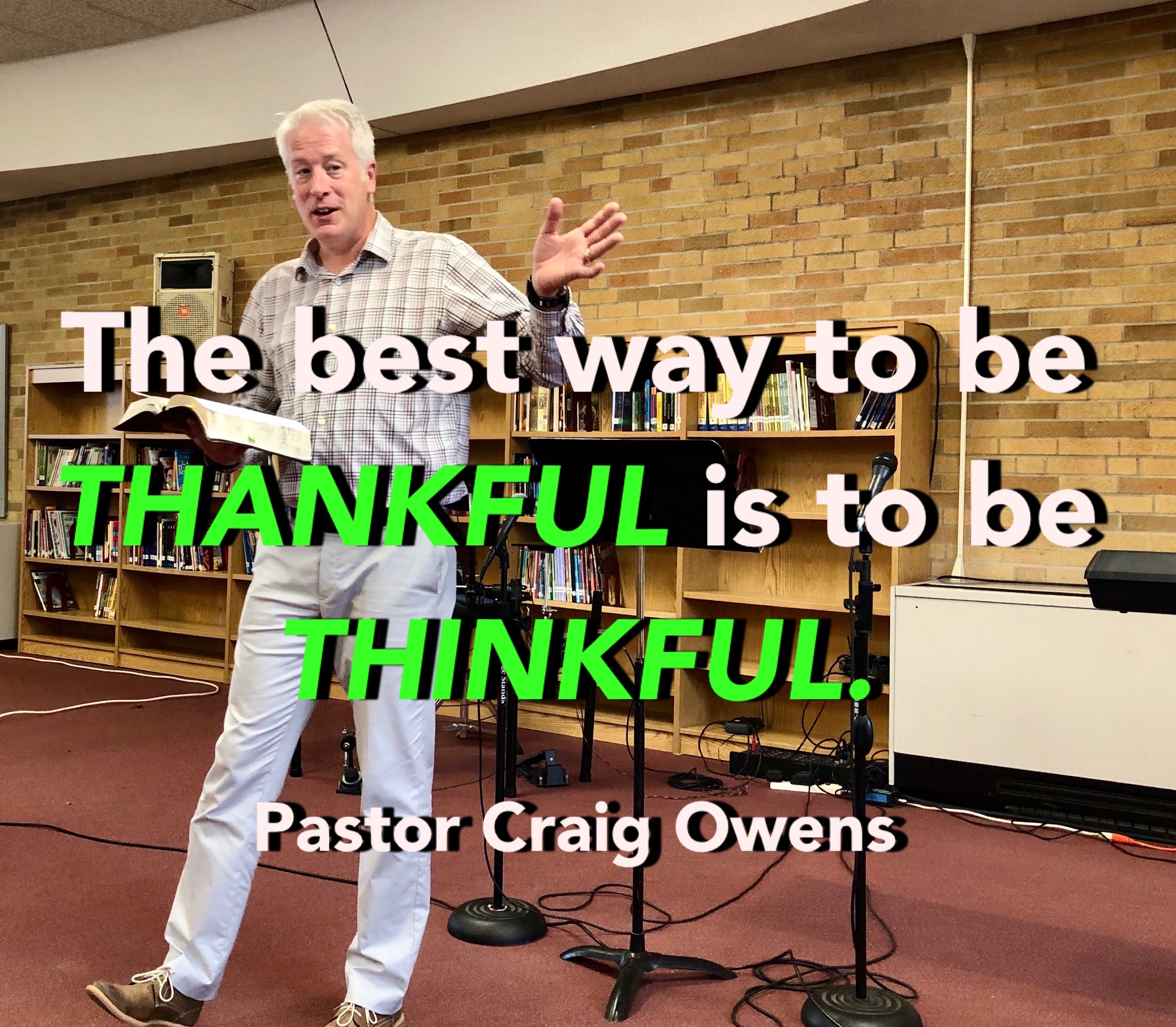
The best way to be THANKFUL is to be THINKFUL!

In Psalm 78, Asaph gives us a two-word reason for the up-and-down history of the Israelites: they forgot. The Israelites’ forgetfulness led to their lack of gratitude, which then caused yet another downward turn away from God. One of the examples he gives us is very informative: the daily provision of manna while the Israelites were in the wilderness (see Psalm 78:11-25; Exodus 16:4, 14-18). 

Every day God’s people had their food needs miraculously supplied for them, yet they begin to take this gift of God for granted. They stopped thinking about His provision, and then they began to ungratefully grumble (Numbers 11:4-6). Their grumbling actually caused them to want to return to slavery in Egypt! 

With fading gratitude, we can get stuck in the past. We even end up looking back at slavery and scarcity and call it “the good old days”! With fading gratitude for the past, sometimes we beat ourselves up. We say things like, “If I would have known then what I know now….” But you couldn’t know then what you know now. You only know now because of what you went through then, which makes another reason to be grateful. After all, God is using everything we have gone through to work out His plan (see Isaiah 46:9-10; Romans 8:28). 

We need to be thinkful about our past so that we can be thankful for what God is doing with it today.

Manna provided food every single day the whole time the Israelites were in the wilderness. It stopped immediately after they entered the Promised Land. For that daily provision, they should have been thankful but it was when they forgot to be thankful that they longed for the past and tried to do things on their own. 

The manna is a picture of Jesus. Not only is He our daily bread for today, but He is also our hope for eternity with God in Heaven. And for that, we should be daily thinkful AND thankful. 

If you’d like a fun idea of how to stay thinkful AND thankful, check this out.

Join us this Sunday as we learn more about the dangers of our fading gratitude.