God Is One, God Is Love

Listen to the podcast of this post by clicking on the player below, and you can also subscribe on Apple or Spotify.
There is a common characteristic among every human civilization: they all have had a pantheon of gods. It seems that no one god could capture all of the attributes each civilization thought were important, so they created multiple gods to help fill in the gaps. 

Onto the world scene comes the account recorded for us in the Bible of a God who creates the universe. The Hebrew word for this God is elohiym which means “a divine one.” This name is used throughout the Creation story in Genesis 1. 

Then in Genesis 2:4, a new name appears, one that is used over 6500 times in the Bible. It is the unpronounceable name YHWH: often pronounced Yahweh or substituted with the word Jehovah. In most Bible translations this name is designated by all capital letters: LORD. Yahweh or Jehovah means “the existing One.” 

The first part of our second foundational truth states, “The one true God has revealed Himself as the eternally self-existent ‘I AM,’ the Creator of heaven and earth and the Redeemer of mankind.” This Creator is uncreated: He sustains the universe without needing to be replenished Himself. He is utterly complete in Himself; hence, His name means I AM (see Exodus 3:13-15). 

The second part of this foundational truth statement says, “He has further revealed Himself as embodying the principles of relationship and association as Father, Son and Holy Spirit.” 

The I AM is One (see Deuteronomy 6:4), but He reveals Himself in three Persons—Father, Son, Spirit—that we call the Trinity (although this is not a word found in the Bible). 

Sometimes Christians have done a disservice to the I AM by making it appear He is divided. For instance, we might say, “The Father is the Creator, the Son is the Redeemer, and the Spirit is the Regenerator.” But remember that our One God is not a pantheon of gods; He is One. We see the fullness of the Trinity operating in every area. Here’s just a short sampling:  

  • The creation of the universe—Genesis 1:1; Colossians 1:15-16; Psalm 104:30 
  • The creation of man—Genesis 1:26-27 
  • A prophecy about Jesus’ advent—Isaiah 9:6 
  • The incarnation of Jesus—Luke 1:35 
  • The baptism of Jesus—Matthew 3:16-17
  • The resurrection of Jesus—Acts 2:32; John 10:18; Romans 1:4 
  • Our atonement—Hebrews 9:14 
  • A Christian’s baptism in the Holy Spirit—John 14:16 

(You can read all of these verses for yourself by clicking here.) 

A good question for us to ponder is: Why would this I AM God create humans? If He needs nothing to complete Himself or sustain Himself, why make us? 

The apostle John captures the essence of the Trinity in three words: God is love.

God created us out of an overflow of His love so that we too could enjoy the intimate, eternal pleasure of being at-onement with Him forever. God then wants our love to overflow to everyone around us, so that they will also be drawn into this at-oneness with the I AM. 

When Jesus was asked to state the greatest commandment, He first quoted from Deuteronomy 6: “Hear, O Israel: The LORD [Yahweh] our God, the LORD [Yahweh] is one.” Christ’s conclusion was for us to love this All-Loving God with all our heart, soul, mind, and strength. And then Jesus added an obvious overflow of that love: “And love your neighbor as yourself” (see Mark 12:29-31).

Love to God and from God should overflow from us to others to bring them into the One God who is love itself.  

The more we understand this love that the I AM has for us: (1) the better able we will be to love and worship Him, (2) the more we will love others out of this overflow of love, and (3) the more glory our awesome GOD will receive. Which is exactly what the apostle Paul prayed for us in Ephesians 3:14-19. 

This idea of an I AM God who reveals Himself as Father, Son, and Spirit has been described by the Latin phrase mysterium tremendum. It is indeed a mystery: not one that frightens and confuses, but one that energizes and enlivens. Pray Paul’s prayer for yourself, so that you can see more dimensions of this awesome love that God has for you! 

If you missed any parts of this series exploring our foundational belief statements, you can check out the full list by clicking here.

Poetry Saturday—The Scriptures

Listen to the podcast of this post by clicking on the player below, and you can also subscribe on iTunes or Spotify.

Note: the spelling in this poem is preserved from the 1663 edition of Herbert’s book of poems

Oh that I knew how all Thy lights combine,
And the configurations of their glorie!
Seeing not onely how each verse doth shine,
But all the constellations of the storie.

This verse marks that, and both do make a motion
Unto a third, that ten leaves off doth lie:
Then as dispersed herbs do watch a potion,
These three make up some Christian’s destinie:

Such are Thy secrets, which my life makes good,
And comments on Thee: for in ev’ry thing
Thy words do finde me out, & parallels bring,
And in another make me understood.

Starres are poore books, & oftentimes do misse:
This book of starres’ lights to eternall blisse. —George Herbert (see Psalm 19:1, 7, 10-11)

Thursdays With Spurgeon—Adopted By God

This is a weekly series with things I’m reading and pondering from Charles Spurgeon. You can read the original seed thought here, or type “Thursdays With Spurgeon” in the search box to read more entries.

Listen to the podcast of this post by clicking on the player below, and you can also subscribe on iTunes or Spotify.

Adopted By God

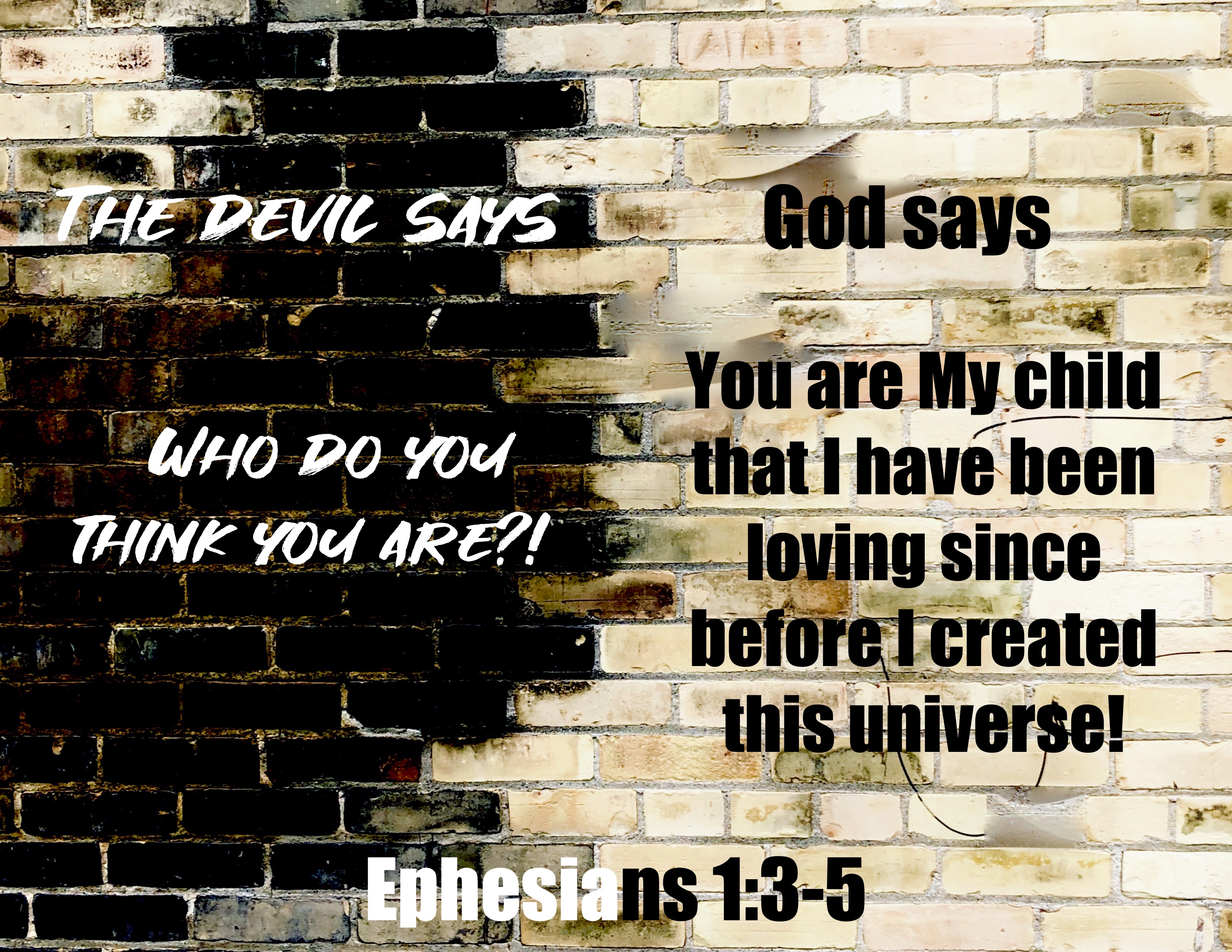
Blessed be the God and Father of our Lord Jesus Christ, who has blessed us with every spiritual blessing in the heavenly places in Christ, just as He chose us in Him before the foundation of the world, that we should be holy and without blame before Him in love, having predestined us to adoption as sons by Jesus Christ to Himself, according to the good pleasure of His will. (Ephesians 1:3-5) 

     It is at once a doctrine of Scripture and of common sense that whatever God does in time, He predestined to do in eternity. …  

     Adoption is that act of God whereby men who were by nature the children of wrath, even as others, and were of the lost and ruined family of Adam, are from no reason in themselves, but entirely of the pure grace of God, translated out of the evil and dark family of satan and brought actually and virtually into the family of God. … This is an act of pure grace. …  

     [God] found a rebellious child, a filthy, frightful, ugly child. He took him to His bosom and said, ‘Evil though you are, you are comely in my eyes through my Son Jesus. Unworthy though you are, yet I cover you with His robe, and in your Brother’s garments I accept you.’ …  

     His only begotten and well-beloved Son was quite enough for Him. … And His own omnipotence was adequate enough to have created a race of beings far superior to us. He stood in no need whatever of any to be His darlings. It was, then, an act of simple, pure, gratuitous grace—and of nothing else—because He will have mercy on whom He will have mercy and because He delights to show the marvelous character of His condescension.

From Adoption

I love that thought that “whatever God does in time, He predestined to do in eternity.” When Adam and Eve sinned, God wasn’t scrambling to fix the sin problem. When He said that a remedy for sin was coming (Genesis 3:15), He was talking about a plan that was already in place. 

When John the Baptist said of Jesus, “Behold the Lamb of God who takes away the sin of the world!” (John 1:29), he was only announcing what was a fact from before time began, where the apostle John described Jesus as “the Lamb slain from the foundation of the world” (Revelation 5:12, 13:8)! And the apostle Paul said God “chose us in [Jesus] before the foundation of the world”! 

Friends, think of what this means: God saw a relationship with you—saw you adopted into His family—before you were born, even before the universe was created! What indescribable love! What amazing grace! 

Do you realize your value in God’s eyes? He didn’t have to send Jesus, but He did. He didn’t have to lavish His love on you, but He does. He didn’t have to adopt you into His family, but what He has done in time, He predestined to do in eternity—from before He even said, “Let there be light” at the moment of creation. 

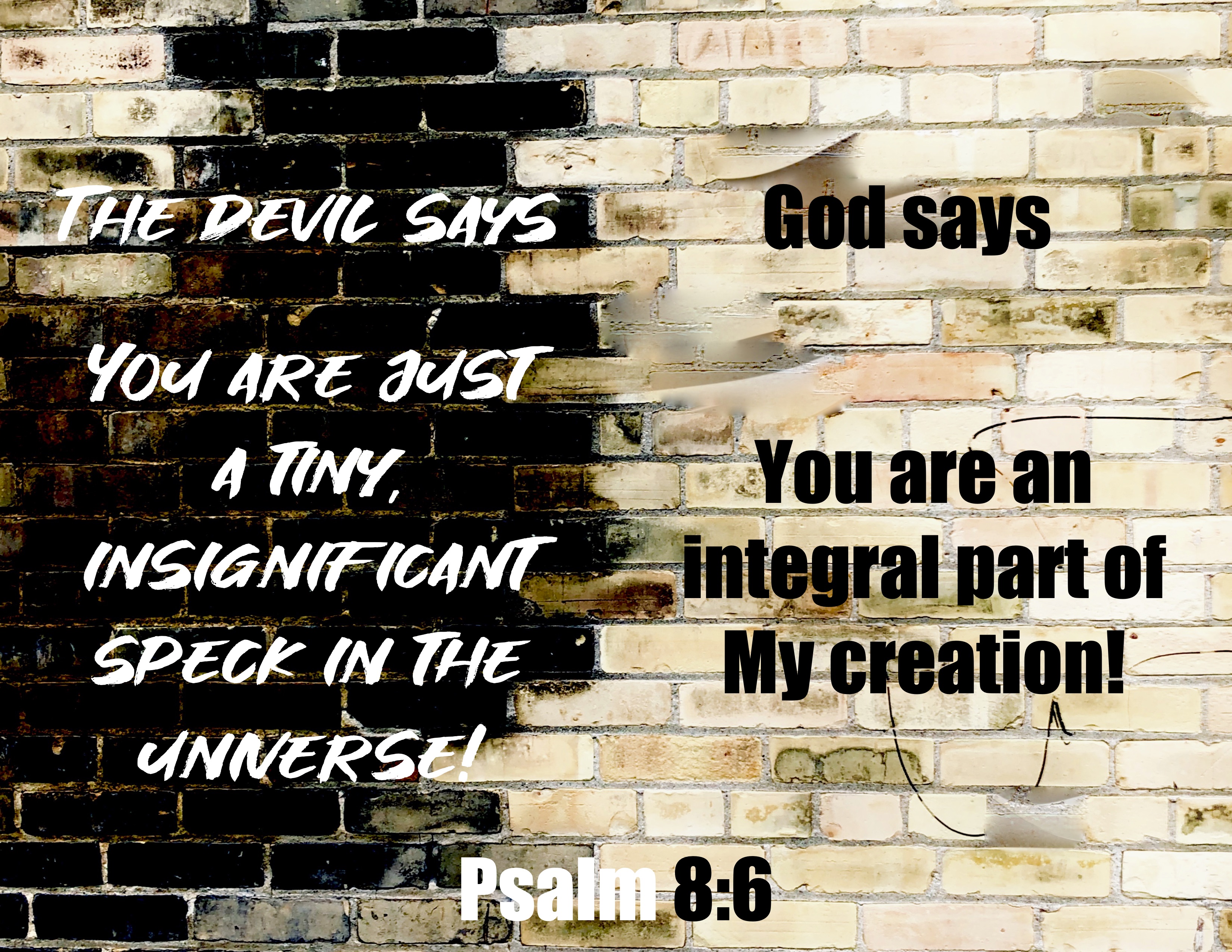
Don’t ever buy into the lies of satan that you’re nothing special, when, in fact, you mean more to God than you can possibly comprehend!

Don’t Give In To Pseudo-Wisdom

Listen to the podcast of this post by clicking on the player below, and you can also subscribe on iTunes or Spotify.

Dr. Craig Bartholomew wrote, “Wisdom is deeply experiential.” In other words, we can’t just have head knowledge and call it “wisdom,” but we have to have an experience in which we have learned a lesson in order for it to truly be called wisdom. 

In the three wisdom books of the Bible—Job, Proverbs, and Ecclesiastes—the wisdom that is shared is hard-won by people who personally experienced what they shared with us. Even if we consider the wisdom in the poetic books of Psalms and the Song of Solomon, we are still reading first-person, firsthand experiences. True wisdom can never be dispensed by someone who hasn’t “been there, done that” and learned a valuable lesson from that experience. 

In Job, we meet three of his friends who claim to have wisdom but don’t meet the criteria of personal experience. This pseudo-wisdom always comes in the form of, “I’ve heard that…,” or “It’s obvious from my observations…,” or “Everyone knows that….” 

That means that satan’s tactics fall into this pseudo-wisdom category too: he has no personal, first-hand experience of human situations that result in hard-won wisdom! The best he can offer is secondhand observations. 

Jesus, on the other hand, fully entered into the human experience. Jesus IS Wisdom. As a human He had first-hand experiences, and as God He doesn’t just see fragments of lessons, but He sees the whole, eternal picture into which all lessons fit. 

This is why Solomon wrote, “The fear of God is the beginning of wisdom.” This holy respect and willingness to heed the words of Wisdom Himself is the starting point and the conclusion of wisdom. This is also why the writer of Hebrews wrote that Jesus knows every situation that we are going through. He knows how to help us because He has personal, first-hand, experiential wisdom.

satan’s temptations are only suppositions. He can never say, “I know from personal experience.” Look at his temptations of Adam and Eve, Job, Jesus, and the apostle Paul:

  • Did God really say?
  • Does this suffering even make sense?
  • Doesn’t the Scripture tell us…?
  • I don’t think you deserve the thorn in the flesh. 

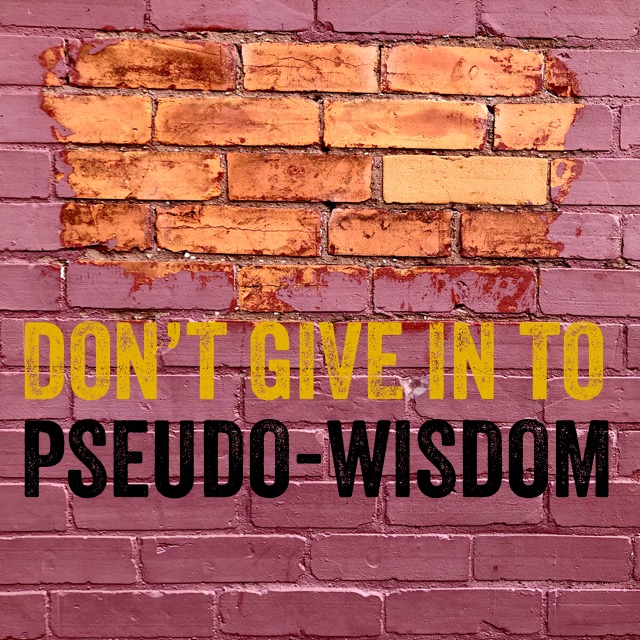
Don’t give in to the pseudo-wisdom that satan pushes!

Jesus was tempted in every human way possible. He learned wisdom by this personal experience. Jesus alone is qualified to be the only source of Wisdom that you and I need to successfully handle trials and temptations. 

Because He Himself in His humanity has suffered in being tempted, tested and tried, Jesus is able immediately to run to the cry of—to assist and relieve—those who are being tempted and tested and tried…. (Hebrews 2:18 AMP)

The Prayerful Heart Of Our Testimony

Listen to the podcast of this post by clicking on the player below, and you can also subscribe on iTunes or Spotify.

The best way to be a first responder in prayer is to work on making prayer a habit. Prayer needs to come first. Remember: I can do more than pray, but I shouldn’t do anything until I have prayed. 

King David showed us his nearly-identical “bookend prayer” that he prayed both at the beginning of his reign as king and again just before he died. We can pray similar bookend prayers when we begin with a petitionary prayer—“God, please help me”—and finish with a thankful prayer—“God, thank You for helping me.” We can also try to expand those bookends toward the middle, allowing us to live as the apostle Paul admonished in 1 Thessalonians 5:17: 

  • Pray without ceasing 
  • Pray continually 
  • Never stop praying 

Jesus gave us a model prayer at the heart—the very middle—of His Sermon on the Mount. This sermon has 107 verses of Christ’s words, making the middle verse Matthew 6:6, which starts, “When you pray….” Notice the model Jesus gave us: 

  • Hallowing God—Our Father in heaven, hallowed be Your name
  • Bringing our petitions—Give us our daily bread, help us forgive, deliver us from evil
  • Worshiping God for His answers and for Who He is—Yours is the kingdom and the power and the glory forever. Amen!

Surrounding this prayer is a Christ-centered life that is:

  • Blessed (the beatitudes) 
  • God-glorifying—so they may see your good works and glorify your Father in heaven
  • Perfect—be perfect, even as your heavenly Father is perfect
  • Compassionate—when you give to the needy

—Model Prayer—

  • Disciplined—fasting, handling your treasures 
  • Anxiety-free—do not worry
  • Fruitful—every good tree bears good fruit
  • Secure—your foundation is on the rock

You see: Prayer helps us live out a God-honoring testimony, and that God-honoring testimony is empowered by prayer. Prayer is both the bookends AND at the heart of a Christ-centered life. 

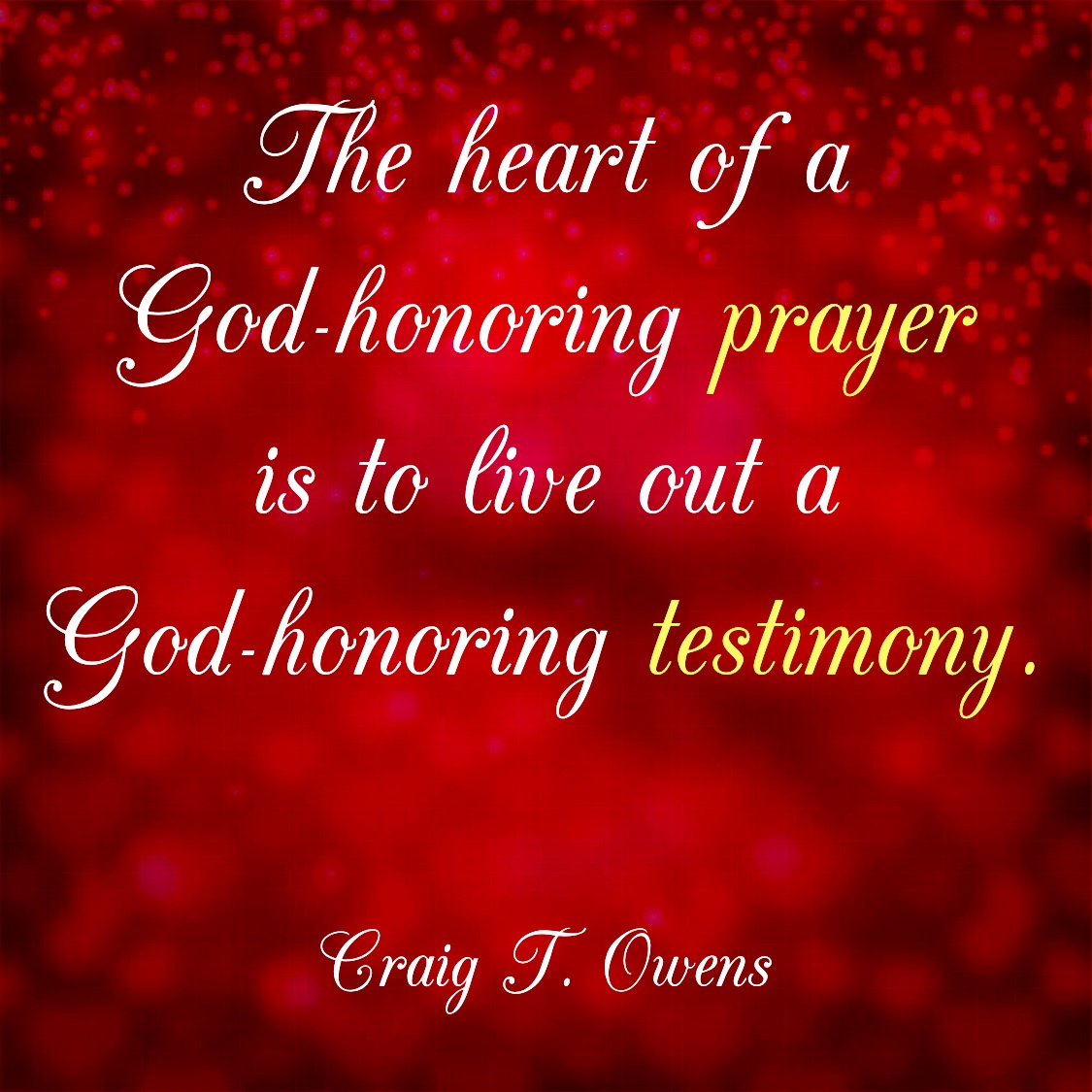
The heart of a God-honoring prayer is to live out a God-honoring testimony.

David’s bookend prayer follows the same model Jesus gave us: hallowing God, making petitions, and then worshipping God. 

Christians need to be BOTH first responders in prayer AND continual responders in prayer—prayer at the beginning, prayer at the heart, and prayer at the end. This way, when God does answer, there is no doubt that He was the One who answered, and it wasn’t just because of something we did. 

Prayer fuels our testimony. Our testimony glorifies God. At the heart of this testimony, our answered prayers glorify our heavenly Father and point others to Him. 

Let me say it again: The heart of a God-honoring prayer is to live out a God-honoring testimony.

If you’ve missed any of the messages in our series called Be A First Responder, you can access the full list by clicking here.

A Proper Perspective In An Evil Culture

Do these phrases sound familiar? 

  • The foundations are being destroyed, what can the righteous do? 
  • The faithful have vanished from among men 
  • Everyone lies to his neighbor 
  • The boastful say, “We will triumph with our tongues” 
  • The wicked freely strut about when what is vile is honored among men 

This could be said today in my neighborhood. And 20 years ago in Washington DC. And 500 years ago in Europe. But it was said over 3000 years ago!

In times like these it’s important to remember that there have always been times like these! 

In the United States, elections bring regular changes in leadership. Around the world and throughout history violent dictators are toppled, benevolent monarchies fall, dominate personalities shine brightly and fade from the scene, even people who called themselves “Great” or “the king of kings” have disappeared. What should our perspective be in changing cultures—whether they are good or evil?

In Psalms 9-12, David shares some timeless reminders.  

In Psalm 9, he contrasts the temporary track record of mortals with the transcendency of Yahweh. His Selah pauses in this psalm invite us to consider the question: Who benefits me ultimately and affects me eternally: mortals or God?

In the Septuagint, Psalms 9 and 10 make up one psalm. In our English Bible, Psalm 9 closes with the phrase “they are but men” and Psalm 10 closes by calling mankind “mere earthly mortals.” Contrast that with Yahweh who is described as “the LORD reigns forever” and “the LORD is King for ever and ever.” 

In between these eternal affirmations of God, mere earthly mortals are described as: 

  • arrogant 
  • boastful—literally saying “hallelujah” to themselves 
  • blessing all who are like them in their wicked thoughts
  • having no room in their thoughts for God 
  • even praying to themselves—which is the literal meaning of “he says to himself” that David repeats three times 

Literally this mere earthly mortal thinks of himself as god! But even as he says “nothing will ever hurt me while I’m alive” he acknowledges his mortality, admitting that he is indeed finite. 

In Psalms 11 and 12, David gives the righteous the proper perspective to handle all of this. In a word, David wants the godly to remember:

  • Remember God sees everything 
  • Remember God punishes the wicked and rewards the righteous 
  • Remember God gets the final word 

Christians can only live exemplary, anxiety-free, and God-honoring lives when we stay focused on the Infinite, on the Eternal God. With this perspective we can live out our roles as “aliens and strangers”—as the apostle Peter calls us—while we live in this evil culture.

God Delights In Me

It’s been said that the bookends of success are starting well and finishing well. I believe that! 

David started well when he lifted up a prayer of thankfulness to God when he became king over the united nation of Israel. Prayer at the the beginning puts us on a path toward success. 

Have you ever begun to assemble a child’s toy or a piece of furniture, gotten completely stumped, and only then read the instruction manual? We’ve all been there! There are many things in life that we start on our own and then hit our knees in prayer only after we’ve exhausted all of our human resources. Fortunately, after we pray and God answers, we often end up finishing well with a prayer of praise and thanksgiving. The question is: what do we do when we again get ready to start something else? Do we pause to start well with prayer, or do we dive in on our own again? 

I think one of the biggest reasons we don’t go to prayer quickly is because we feel unworthy to go into the presence of a holy, righteous God. 

One commentator said about Psalm 18 that David probably prayed this “before he committed his terrible sin” with Bathsheba and Uriah. That may be, but with very few minor changes, David prayed this exact same prayer (2 Samuel 22) at the very end of his reign. His reign as king was bookended with the same prayer. 

Between the bookend prayers of Psalm 18 and 2 Samuel 22, David prayed another prayer—this one was after he had sinned against God, Bathsheba, and Uriah. David truly believed that God forgave that sin and wiped the slate clean, so much so that he noted this great blessing on his life: “He brought me out into a spacious place; He rescued me because He delighted in me. 

He rescued me because He delighted in me?! Yes! 

David knew that God had told us that He delights in those who obey Him. The example of God’s delight was seen in Jesus. Because Jesus paid the price for the forgiveness of my sins, I can be completely cleansed. Then Jesus comes in me, and takes me into Him, and takes both of us into the Father. So now when our Heavenly Father looks at a forgiven sinner, He sees only the righteousness of Jesus—something He utterly delights to see! (Check out all of the biblical passages I’m referencing by clicking here.)  

David said his sin had been washed “whiter than snow” (Psalm 51:7), So now look at what he could claim—

The Lord has dealt with me according to my righteousness; according to the cleanness of my hands He has rewarded me. For I have kept the ways of the Lord; I am not guilty of turning from my God. All His laws are before me; I have not turned away from His decrees. I have been blameless before Him and have kept myself from sin. The Lord has rewarded me according to my righteousness, according to my cleanness in His sight” (2 Samuel 22:21-25). 

…according to my cleanness in His sight. 

In GOD’S sight! The devil wants to accuse me. He wants my sight to dominate. The devil doesn’t want me to see myself as God sees me. But I declare it out loud: I am clean IN HIS SIGHT! 

This cleanness allows me full, bold, confident access to Almighty God! I can take everything to God in prayer because I am clean in His sight! 

If you would like to read more of the posts in our prayer series called Be A First Responder, please click here. 

Obedience Is Success

David said, “…I had it in my heart to build a house as the place of rest for the ark of the covenant of the Lord. … But God said to me, ‘You are not to build a house for My name…’” (1 Chronicles 28:2-3).

David’s son Solomon would later write about how we make plans in our hearts, but God directs all our steps (Proverbs 16:9, 19:21). 

David not only had the desire to build this temple for God but he said the Holy Spirit gave him the plans (1 Chronicles 28:12, 19). As a result of this, David began amassing resources and organizing personnel. All of this David could then hand over to Solomon, the man who would build the house for the ark of the covenant of the Lord. 

I am sure David felt a twinge of disappointment when God said “no.” Still, David continued to work the plan the Spirit had given him. Who knows how Solomon would have begun his reign as king if David hadn’t done all of this for him. Many of the plans God gives me will not be for me but for the following generations who will benefit from my diligence in those plans.

A mark of a godly leader is one who knows that obedience to God IS success. 

In one of David’s psalms, he prays for success and for his heart’s desire to be fulfilled, but he also acknowledges God’s sovereignty over these things (Psalm 20). May I always keep in mind that obedience IS success. Success isn’t limited only to what I can see and measure during my lifetime.

This is part 53 in my series on godly leadership. You can check out all of my posts in this series by clicking here.

Year-End Review (2020 Edition)

I have the privilege of pastoring Calvary Assembly of God. One of the things I am honored to do is share a message from God’s Word with our church each week. Sharing the messages is one thing, but reminding folks of what has been shared is another. This is something that resonated with both the apostle Peter and the apostle Paul. 

Peter wrote, “Dear friends, this is now my second letter to you. I have written both of them as reminders to stimulate you to wholesome thinking” (2 Peter 3:1). And Paul not only told the Romans that “I have written you quite boldly on some points to remind you of them again” (Romans 15:15), but he also taught his protege Timothy to “keep reminding God’s people of these things” (2 Timothy 2:14). 

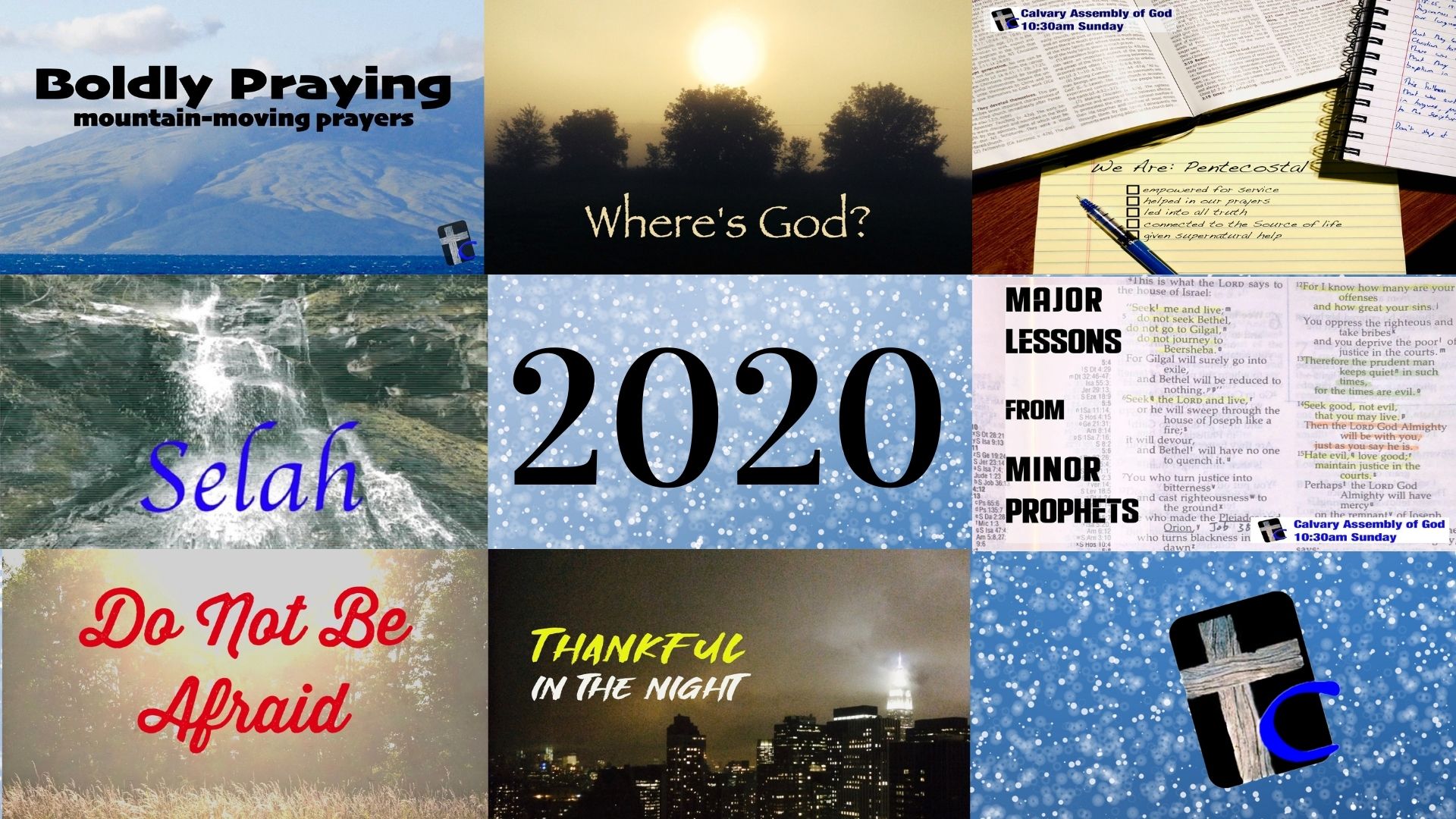
With that backdrop, here is a listing of the sermon series that I presented this year. Clicking on each series title will take you to a list of all of the sermons in that series. 

Prayer Plan—A Christian’s strategy is worked out in the prayer closet. John Piper noted, “Why do God’s children so often fail to have consistent habits of happy, fruitful prayer? Unless I’m badly mistaken, one of the reasons is not so much that we don’t want to, but that we don’t plan to.” These messages taught us to have a plan to pray. 

Where’s God—We’ve all asked that question. Something happens that rocks our world, and we wonder where in the world God is. We call out to God and He seems silent. We search our hearts to see if we can discern something we’ve done wrong, and seeing nothing amiss we cry out again, “God, where are You?” So where is God in our heartache? In our abandonment? In our sorrows? In our distress? In death? Believe it or not, God may be closer in His silence than you’ve ever perceived before. 

We Are: Pentecostal—Pentecost for over 1500 years was a celebration in Jerusalem that brought in Jews from all over the world. But on the Day of Pentecost that came just ten days after Jesus ascended back into heaven, the meaning of Pentecost was forever changed! Followers of Jesus—now empowered by an infilling of the Holy Spirit—began to take the good news of Jesus all over the world. These Spirit-filled Christians preached the Gospel and won converts to Christ even among hostile crowds, performed miracles and wonders, stood up to pagan priests and persecuting governmental leaders, and established a whole new way of living as Christ-followers. We, too, can be Pentecostal followers of Jesus Christ today. 

Selah—The word Selah appears nearly 70 times in the Bible, almost exclusively in the Psalms. Although it is primarily a musical term, it applies beautifully to our summer series. It means a pause. Throughout the Psalms, Selah appears at the end of a verse, at the end of the psalm, or sometimes even mid-sentence. But each one of them is perfectly placed by the Spirit-inspired authors to get us to take a breath and deeply contemplate what we just read or sang. 

Major Lessons From Minor Prophets—Sometimes the naming of things gives us an inaccurate picture of the thing being named. For instance, many people think the “old” in Old Testament means outdated or perhaps updated by the “new” in the New Testament. When in fact, both Testaments are needed to give us the full picture of God’s love and glory. A similar thing happens with the headings “major prophets” and “minor prophets.” It makes it sound like the major prophets have something major to say to us, while we could take or leave the minor messages of the minor prophets. In reality, they were given these headings simply because of the volume of writing—the five major prophets consist of 182 chapters, whereas the 12 minor prophets only have 67 chapters. The volume of their writing may be minor, but their content carries major messages of meteoric power! 

Thankful In The Night—The psalmist wrote, “Yet the Lord will command His loving-kindness in the daytime, and in the night His song shall be with me” (Psalm 42:8). Notice that the psalmist was praising God IN the night, not praising Him FOR the night. Many people have gone through what has been called “the dark night of the soul.” I don’t think anyone has ever given thanks because of being in a dark time, but certainly they have given thanks afterward because of the lessons learned in that dark time. Quite simply put, there are some things God wants to teach us that we can learn in no other way than to go through a dark night. So we can learn to be thankful even IN those nights. 

Do Not Be Afraid—There are more angels sent by God concerning one event than anywhere else in the Bible—the Advent of Jesus. Clearly, this is a big deal: The coming to earth of God Himself! You would think this would be an occasion for great joy. But all four of the angelic appearances around the birth of Jesus have the same message: Do not be afraid. Why are people so afraid? It’s because fear invites us to make a decision to trust God completely. People remain crippled by fear when they try to deal with fear by themselves. But when they learn to fear God instead, there is an almost inexpressible joy and freedom that explodes in our hearts! 

We will be returning to a couple of these series in 2021, and we’ll be launching some brand new ones as well. In either case, if you don’t have a home church in the northern Kent County area, I would love to have you join us! 

Solving The Unsolvable Dilemma

When Gabriel told Mary that she would be the mother of Jesus, he said that “the Lord God will give Him the throne of His father David.” Just before the angel showed up Luke noted that Mary was “pledged to be married to a man named Joseph, a descendant of David (Luke 1:27, 32).

At this time in history marriages were often arranged to preserve and strengthen family lines. Both Joseph and Mary could trace their family lineage through the royal line of Israel’s King David. 

Mary is betrothed to Joseph. Betrothal was considered as strong as a marriage with the only exception being that the couple didn’t yet live together nor sleep together. Betrothal usually lasted a year and would require a divorce to cancel it. 

Mary tells Joseph what Gabriel said to her and then she leaves to visit Elizabeth for the next three months! Joseph is left alone to consider his options. 

The word Luke uses for “consider” is not even close to what’s happening in Joseph’s mind. The word means to revolve around and around in your mind, like trying to solve a Rubik’s Cube. 

Consider Joseph’s options. If he divorces Mary—which was apparently his first reaction—Mary would be publicly embarrassed. Not to mention that Joseph knew that God hated divorce. 

If Joseph decided to proceed with the marriage, he would either have to confess he was the father of her child—which could result in both of them being stoned—or admit that she was pregnant by another man—which would be a permanent disgrace for Mary’s family. 

In either case, both families would be shamed! 

While Joseph was still considering all these unsavory options an angel says to him, “Joseph, son of David, do not be afraid.” By calling him by that title he is really saying, “I know how important your family heritage is to you. I know how important Mary’s family heritage is to her. But do not be afraid to take Mary home as your wife because this all fits into God’s plan. 

Would it have been easier on Joseph and Mary and their families if God could have waited until after they were married? Of course! But then it wouldn’t fit into God’s miraculous plan, because 700 years earlier God promised that Jesus would be born of an unmarried virgin. 

Fearing what’s coming in the future means we have forgotten Who already knows the future. 

God knows YOUR future too! It’s a future He already saw as good and fruitful, if you will put your trust in Him (Psalm 139:16; Jeremiah 29:11; John 15:16).

If you seem paralyzed by a no-win dilemma like Joseph was, first DON’T do what Joseph did: pray! Then DO what Joseph did after hearing the angel: obey. 

Remember Who knows you and Who knows your future, and then take each step on your journey as God directs you. 

If you’ve missed any of the other messages in our series called Do Not Be Afraid, you can access the full list by clicking here.