Links & Quotes

Fellas, the godly superwomen in our lives have unlocked our leadership potential. What are you going to do with that? You have only two choices: steward it or squander it. We only honor these godly women when we steward that potential well. Watch the full Father’s Day sermon here.

I have lots of new content every week, which you can check out on my YouTube channel.

Dan Reiland addresses an important topic for busy leaders: busy work vs. real work. “Doing the easy stuff makes us feel good, doing the hard stuff helps other people live better. When we focus on our real work over busywork, we see intentional progress toward a focused vision or goal, rather than just checking things off a list.” Check out the four things Dan calls leaders to focus on. 

“Because of what Jesus did for us through His life, death, and resurrection, we are no longer the worst things we have ever done. We are now the best thing God has ever done for us! That’s what God saved us from. That is our history. Now the question is, what has God saved us for? That is our destiny!“ —Jim Wiegand, in the Everything Begins With Purpose reading plan on YouVersion

A good reminder for pastors. “Call your own soul often to account; examine the temper, the frame, and the motions of your heart with all holy severity, so that the evidences of your faith in Jesus, and your repentance for sin, and your conversion to God, be many and fair, be strong and unquestionable; that you may walk on with courage and joyful hope toward heaven, and lead on the flock of Christ thither with holy assurance and joy.” —Isaac Watts

“The fellow who never makes a mistake takes his orders from one who does.” —Herbert Brocknow

“‘The fear the Lord.’ This refers to an awesome respect for God, which is a good thing. Without it, people are presumptuous before God. Those who do not fear God fail to respect His awesome power and righteousness, and they do not recognize the infinite distance between their sins and His holiness.“ —Quest Study Bible commentary on Psalm 128:1

“Our Lord did not ask us to give up the things of earth, but to exchange them for better things.” —Fulton J. Sheen

“Abortion advocates have long labeled humans in the earliest stages of development as ‘nothing but’ clumps of cells. This description is like calling Michelangelo’s David ‘a clump of marble.’ The only difference is that while art historians know every detail of this statuary masterpiece, scientists are still unlocking the secrets of the embryo.” John Stonestreet shares some astounding new research about the ways that the cells of a baby develop in a way that can only be attributed to an All-Wise Creator. 

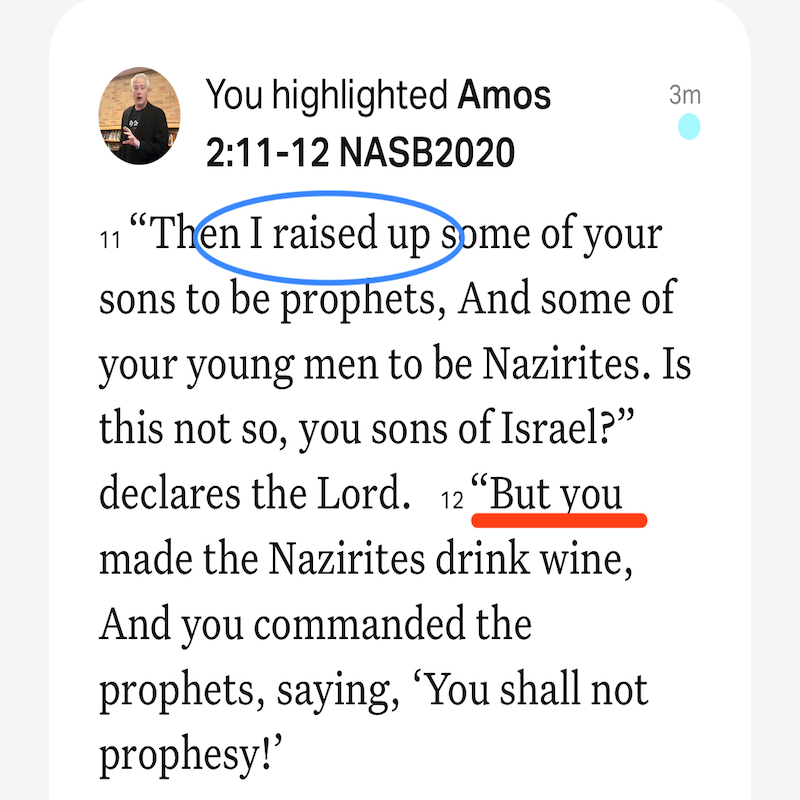
The unrighteous always seek to pull down those who hold to God’s righteous standard. How sad that they think it easier to pull the righteous down than to repent of their own evil. God sees this: He rewards the righteous who do not compromise and He punishes the unrepentant unrighteous who try to force the righteous to compromise.

Ascending (part 2)

Every year, Jews from around the world made four pilgrimages up to Jerusalem for various feasts and sacrifices. These journeys reminded them of God’s goodness as they went to the Temple to worship, and they helped refocus on God’s ways as they returned to their regular routines.

Jerusalem is over 2500 feet above sea level, so the pilgrimage there was a physical workout as well as a spiritual workout. These workouts were beneficial for God’s people, preparing them to minister in their cities in the following months.

The Book of Psalms contains 15 songs that these pilgrims would sing to and with each other as they traveled up to Jerusalem. These Psalms of Ascent are still instructive for Christians today.

As we resume this series this summer, I hope you can join me for this look at the life-changing truths these pilgrimage songs can still teach today to all of God’s people. We would love to have you join us in person, but if you are unable to do so you can watch the videos of these messages on my YouTube channel.

You can check out the messages we shared last summer from Psalms 120-127 here. And the current series of messages include:

Pray For Them?!

Listen to the podcast of this post by clicking on the player below, and you can also subscribe on AppleSpotify, or Audible. 

How exactly should we pray for those who have so badly mistreated us? There’s a natural response, and then there’s a supernatural response that Jesus calls us to.

Check out this episode of The Podcast.

In chapter 14 of When Sheep Bite I wrote—

      In the New Testament, the Greek word for “bless” is eulogeo. The prefix eu- means “good” and the root logos is “word.” So, in the New Testament context in which we now live, to bless someone literally means to say good words both to them and about them. So when Jesus tells us, “Bless those who curse you and pray for those who mistreat you,” He is telling us to say good words to them, and to say good words about them in prayer to our Heavenly Father. …

      Commenting on Psalm 109:4, my friend Kevin Berry said, “While they accuse me like satan, I will pray for them like Jesus.” This is the highest level of Christian maturity: To pray like Jesus did for those who insulted Him, slandered Him, and crucified Him, “Father, forgive them for they don’t understand what they are doing” (Luke 23:34).

The Scriptures that I reference on this episode of The Podcast are Matthew 5:44; Psalm 109:4; Revelation 12:10; John 10:10; Luke 23:34; Psalm 139:23-24; Romans 12:18-21.

And the blog posts I mention are: Unexpected Response and Choice Four-Letter Words.

I truly believe that When Sheep Bite will be a healing resource for shepherd leaders who are still feeling the pain of their latest sheep bite. Please pick up a copy today! 

►► Would you please prayerfully consider supporting this ministry? My Patreon supporters get behind-the-scenes access to exclusive materials. ◀︎◀︎

A Leadership Biography: Heman

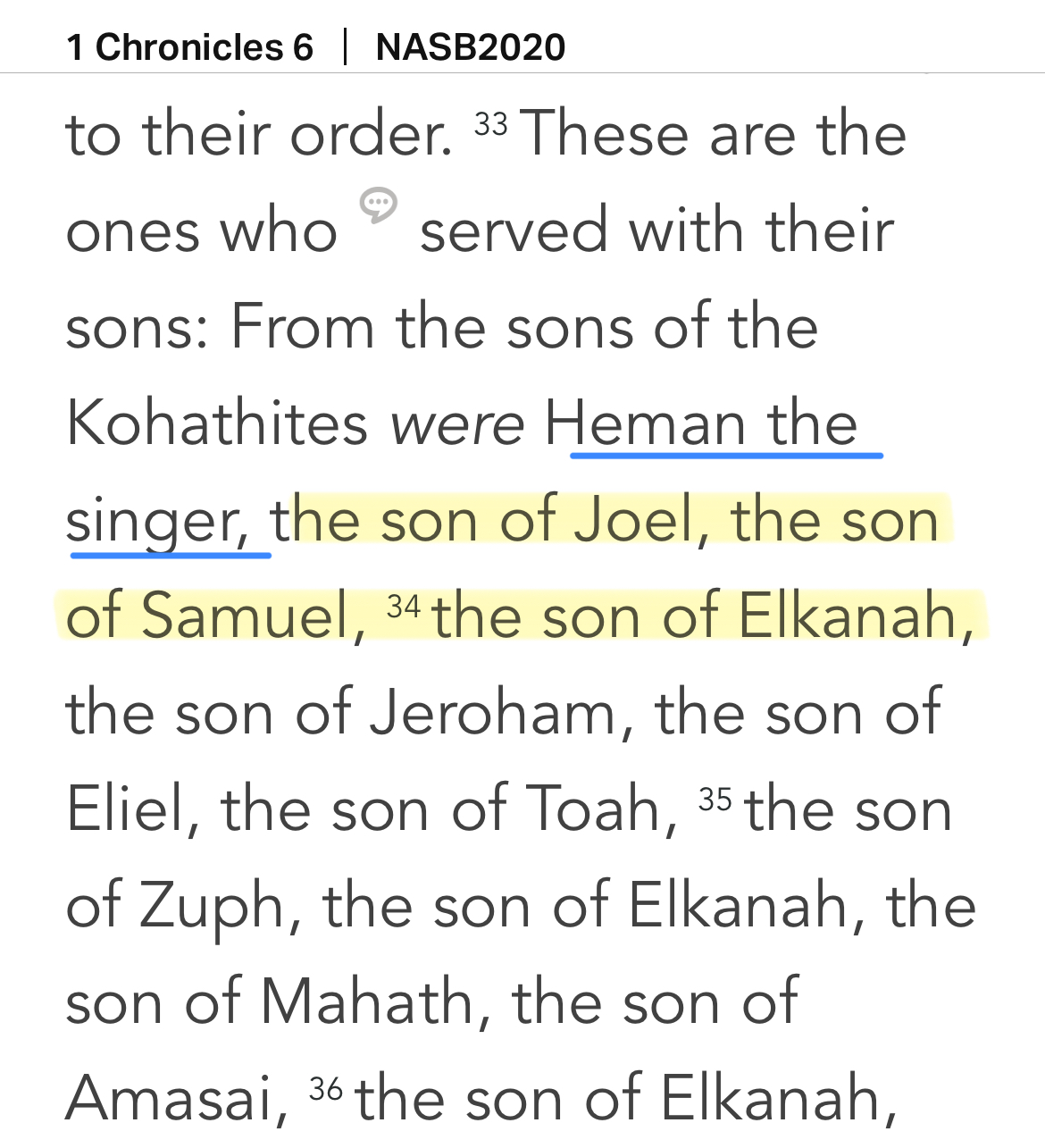
The psalmist Heman is the grandson of Samuel. “These are the ones who served with their sons: From the sons of the Kohathites were Heman the singer, the son of Joel, the son of Samuel, the son of Elkanah, the son of Jeroham, the son of Eliel, the son of Toah” (1 Chronicles 6:33-34; 1 Samuel 1:1, 20). 

Samuel came from the line of Levites (specifically the Kohathites), which is the same family to which Moses, Aaron, and Miriam belonged. While the tabernacle of the Lord was mobile in the wilderness, the Kohathites were responsible for carrying the furnishings of the tabernacle (Numbers 4:4-20).

When the permanent temple was constructed in Jerusalem, the responsibility of the Kohathites changed. They now oversaw the worship in the temple, and Heman is listed as the chief worship leader, with others to his right and left. “Heman’s brother Asaph stood at his right hand, Asaph the son of Berechiah, the son of Shimea. … On the left hand were their kinsmen the sons of Merari: Ethan the son of Kishi, the son of Abdi, the son of Malluch” (1 Chronicles 6:39, 44). 

And then we see Heman’s family line continuing in the roles of worship leaders after him: ”All these were the sons of Heman the king’s seer to exalt him according to the words of God, for God gave fourteen sons and three daughters to Heman. All of these were under the direction of their father to sing in the house of the Lord, with cymbals, harps, and lyres, for the service of the house of God. Asaph, Jeduthun, and Heman were under the direction of the king. Their number who were trained in singing to the Lord, with their relatives, all who were skillful, was 288“ (1 Chronicles 25:5-7). 

The Book of Psalms contains just one psalm that Heman composed (Psalm 88). 

(You can read all of the biblical references I listed in this biography here.)

Critics Can Be Gifts To Us

Listen to the podcast of this post by clicking on the player below, and you can also subscribe on AppleSpotify, or Audible.

I’m going to guess that I’m not alone in this: I don’t like when people criticize me. 

Especially when I’m in a leadership position, trying my best to make good decision for the entire organization, and someone comes up to me to criticize my decision-making abilities or my skill at carrying out my decisions. 

The easiest thing to do is simply dismiss their biting remarks. We can so easily say, “They have no idea what they’re talking about so I can ignore everything they’ve said to me.” 

Criticism is one of the most common bites that sheep dispense to those who are trying to shepherd them. 

But before we simply dismiss them, let me ask you to consider this: 

  • Is it possible that God is using these critics to get your attention? 
  • Is it possible that you have a flaw in a blind spot, and this critic is showing you something that you’ve been missing? 

If you can answer, “Yes” to even one of those questions, then you can also say that your critic is a God-sent gift for you to improve your leadership capacity. 

I discussed this recently on the Fellowship of Ailbe podcast.

The full quote from Dick Brogden’s book Proverbs: Amplified and Applied says: “Critics and skeptics are gifts to us, for in their aspersions they often bring to light a brokenness or a liability early on in its development in us. If we are secure enough to ferret out the truth through the condemnation of others, we remain healthy in the long term as our malady is exposed and dealt with before it becomes too serious.” 

This means that criticism should lead us to a time of honest introspection.

In the chapter “Is God Trying to Get My Attention?” in my book When Sheep Bite, I wrote—

      Remember that we are naturally self-protective, so this time of introspection will need to be supernaturally empowered by the Holy Spirit if we are going to see the true prompter of the attack. A prayer I have prayed more times than I can count is, “Search me thoroughly, O God, and know my heart! Try me and know my thoughts! And see if there is any wicked or hurtful way in me, and lead me in the way everlasting” (Psalm 139:23-24 AMPC). 

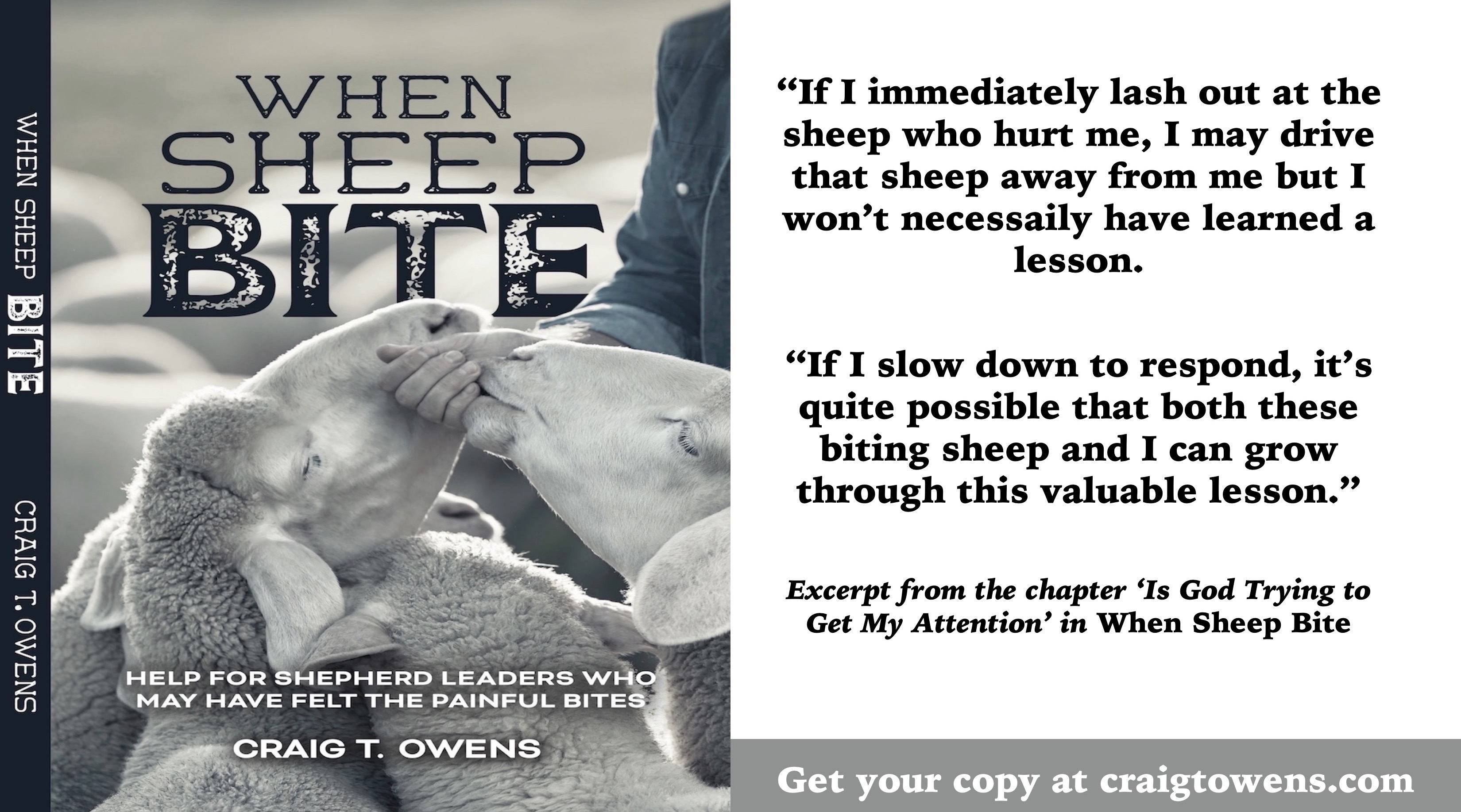
      It is only this humble reflection that can turn an experience into a lesson. If I immediately lash out at the sheep who hurt me, I may drive that sheep away from me but I won’t necessarily have learned a lesson. The one who bit me may have left my pasture, but perhaps they will never join any other pasture but may wander in the wilderness for the rest of their life. If I slow down to respond, it’s quite possible that both these biting sheep and I can grow through this valuable lesson. 

Let’e reframe the way we think about critics and their criticism. Before we simply dismiss it, let’s prayerfully consider if there is a lesson that God is trying to teach to us through this critic. 

You can check out the full conversation I had on the Ailbe podcast here. 

You can order a copy of When Sheep Bite here.

And you may be interested in two related blog posts: 20 helpful thoughts on criticism and What is valid criticism?

►► Would you please prayerfully consider supporting this ministry? My Patreon supporters get behind-the-scenes access to exclusive materials. ◀︎◀︎

A Prayer List For Government Officials

In the New Testament, we are told to pray for those in leadership positions: “I urge, then, first of all, that petitions, prayers, intercession and thanksgiving be made for all people—for kings and all those in authority, that we may live peaceful and quiet lives in all godliness and holiness” (1 Timothy 2:1-2). 

Here in Psalm 72, we find a good source to form our petitions for our leaders:

🙏🏻 Give Your judgment to our leaders

🙏🏻 May our leaders follow Your righteousness

🙏🏻 May our leaders rely on Your righteousness to make laws and judgments that honor You

🙏🏻 May our leaders exercise godly justice for those in need

You may also want to check out:

Remembering Prompts Worship

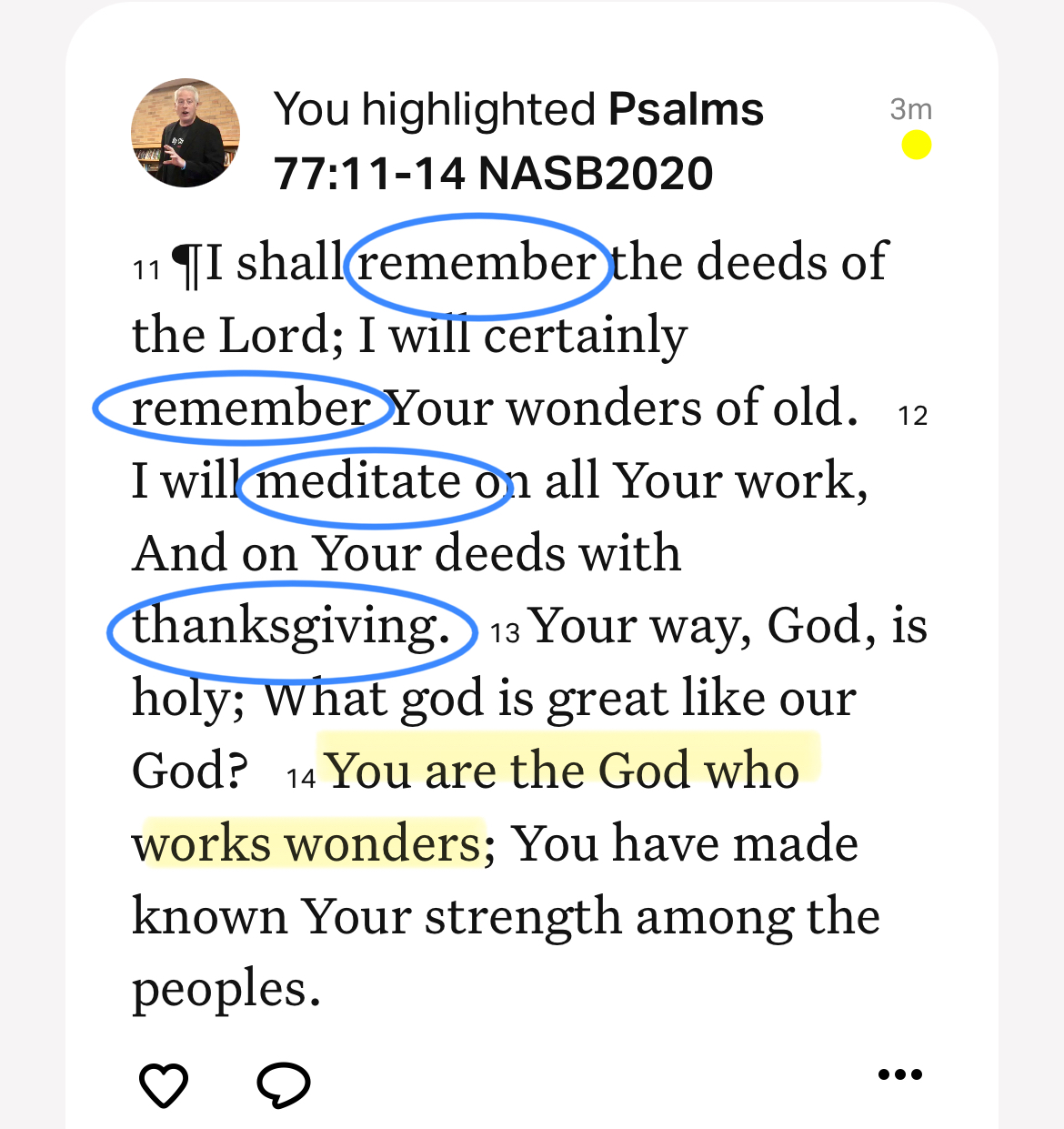
Remembering all God has done is the antidote to any fear or anxiety that we may feel. Recalling who God is and what He has done cannot help but lead us into worship of our awesome King! Then, as the words of an old chorus remind us—

🎶 In the presence of Jehovah
God Almighty, Prince of Peace
Troubles vanish, hearts are mended
In the presence of the King 🎶

I have shared a couple of other insights from Psalm 77 here:

Faith Starts Walking

Listen to the podcast of this post by clicking on the player below, and you can also subscribe on AppleSpotify, or Audible. 

Sometimes the way that we show our faith in Jesus is that we hit the road! Check out this important lesson in faith from a loving father.

Check out this episode of The Podcast.

This story of the faith-filled father is found in John 4:46-53, and the prayer that I shared from King David is in Psalm 5:3.

I wrote more about this prayer of David in Prayer Preparation and Prayer Expectation. And I wrote about another man’s faith-filled walking in When Your Walking is Your Praying.

Here are a bunch of ways to get in touch with me and follow along with other projects on which I am involved.

►► Would you please prayerfully consider supporting this ministry? My Patreon supporters get behind-the-scenes access to exclusive materials. ◀︎◀︎

Praying For The “So Thats”

“God, do not remain quiet; do not be silent and, God, do not be still. For behold, Your enemies make an uproar, and those who hate You have exalted themselves. They make shrewd plans against Your people, and conspire together against Your treasured ones. They have said, “Come, and let’s wipe them out as a nation, so that the name of Israel will no longer be remembered.” … Fill their faces with dishonor, so that they will seek Your name, Lord. May they be ashamed and dismayed forever, and may they be humiliated and perish, so that they will know that You alone, whose name is the Lord, are the Most High over all the earth.” (Psalm 83:1-4, 16-18 NASB2020)

Even God’s punishment on the enemies of His people has a redemptive purpose: “So that they will seek Your name … So that they will know that You alone, whose name is the Lord, are the Most High over all the earth.” 

This is why we are to leave judgment in His capable hands. We humans are prone to desire the complete and immediate elimination of all our enemies, but our loving God knows how to dispense punishment in perfect proportion so that evildoers may recognize their sin and repent. 

Yes, we should pray as this psalmist’s Holy Spirit-inspired words direct us. Pray for protection for God’s people, pray for punishment for God’s enemies, but also pray that all of this brings about the “so thats” that will lead these enemies of God to accept His forgiveness that Jesus paid for on the Cross.

Links & Quotes

Shepherd leaders do know the voice of their sheep, and the sheep know the voice of their shepherd. Leaders, this is the value of regularly being around all the people on your team. Check out this full conversation Greg and I had on our leadership podcast. This idea is central to my book Shepherd Leadership.

I have lots of new content every week, which you can check out on my YouTube channel.

Alice Reynolds Flower (1890-1991), the wife of [Assembly of God] pioneer J. Roswell Flower, is a shining example of motherhood. Affectionately known as ‘Mother Flower,’ she preached, taught Sunday School, led prayer meetings, wrote articles, penned poetry, authored books, and lived a godly example in front of her six children and everyone she came in contact with. As Mother’s Day approaches, it is good to consider an article that Mother Flower wrote for the Pentecostal Evangel in May 1952.” Check out Alice Flowers’ article here.

Kenneth Blanchard discusses when it is and isn’t a good time for a leader to be a micromanager. He concludes this insightful post by saying, “The best leaders know how to continually adjust their leadership style to fit each situation, helping to develop individuals who will ultimately achieve each goal and perform well on each task with little direction or support.”

“The pre-Flood world had some truly massive dinosaurs, and the largest of them were in the group Sauropodomorpha. Within this group were titanosaurs, which include the gigantic Argentinosaurus that is estimated to have weighed over 100 tons.” Read more about titanosaurs here.

What is it about morality that points humans higher and higher to find the Source? J. Warner Wallace, in this video based on his book God’s Crime Scene, makes the case that objective, transcendent morality is good proof for God. This reminds me of C.S. Lewis’ similar argument: “My argument against God was that the universe seemed so cruel and unjust. But how had I got this idea of just and unjust? A man does not call a line crooked unless he has some idea of a straight line. What was I comparing this universe with when I called it unjust? If the whole show was bad and senseless from A to Z, so to speak, why did I, who was supposed to be part of the show, find myself in such a violent reaction against it?”

Pastors, listen to this call to revival from the pen of Jonathan Edwards. Let us seek in prayer for a revival in our day! “The Scripture gives us great reason to think, that when once there comes to appear much of a spirit of prayer in the church of God for this mercy, then it will soon be accomplished…Spiritual waters and rivers are explained by the apostle John, to be the Holy Spirit…It is now a time of scarcity of these spiritual waters; there are, as it were, none. If God’s people, in this time of great drought, were but made sensitive of this calamity, and their own emptiness and necessity, and brought earnestly to thirst and cry for needed supplies, God would, doubtless, soon fulfill this blessed promise.”