Confident, Bold, and Joyful

Listen to the podcast of this post by clicking on the player below, and you can also subscribe on AppleSpotify, or Audible.

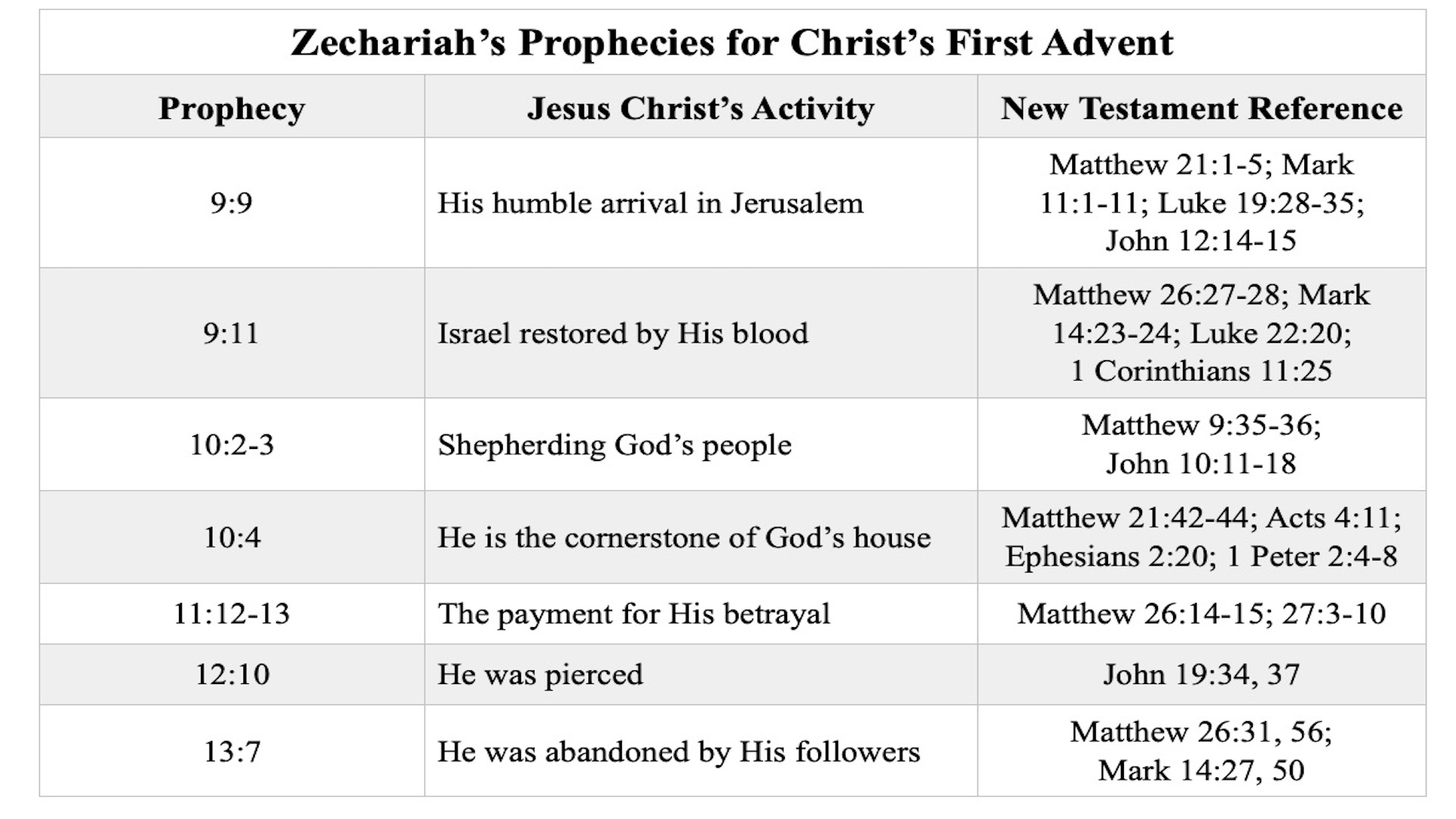
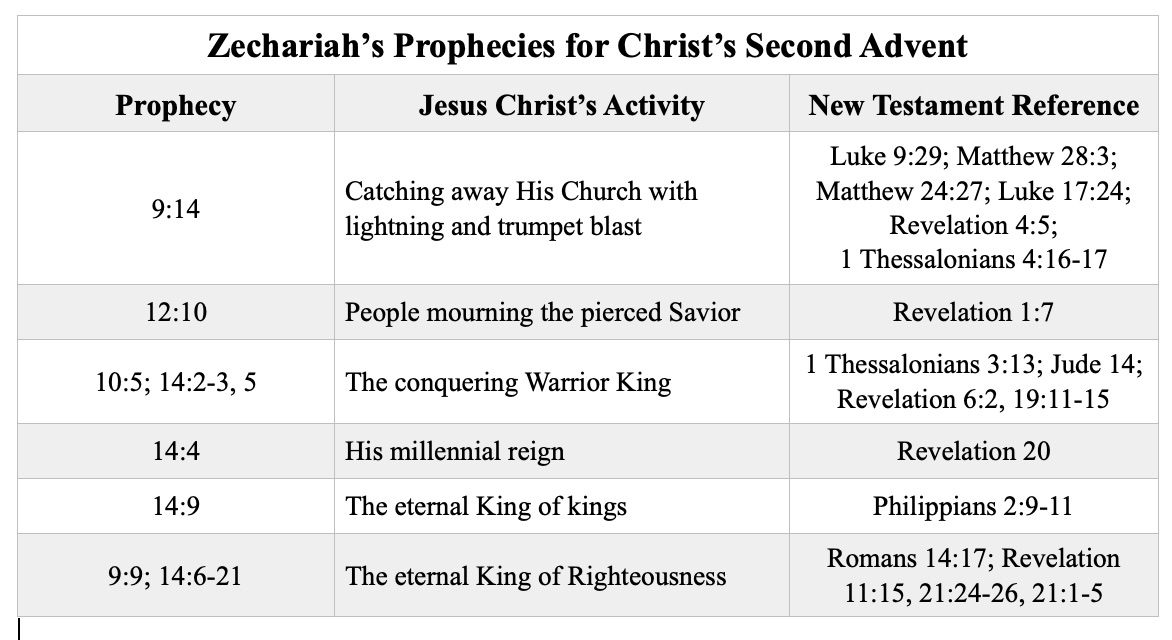
Zechariah pronounces more messianic prophecies than any other biblical writer, with the exception of Isaiah (and he wrote 66 chapters!). These prophecies are fulfilled in Christ’s First Advent, and promised for His Second Advent. Check these out for yourself…

(All of the biblical references for the above chart can be viewed by clicking here.) 

(All of the biblical references for the above chart can be viewed by clicking here.)

Why is it so vital that Jesus fulfilled these prophecies? 

(1) The historicity of these fulfilled prophecies gives us a confidence for the future. 

These fulfilled prophecies assure us that God is sovereign over all history. There are no accidents, and God needs no help from anyone else in fulfilling what He has promised. As a result, no world event—no matter how big it may seem—should be able to rattle us! 

(2) The authenticity of what God has done gives us boldness for today. 

When God does the miraculous, He authenticates His Word. This authenticity has always made God’s people stand out (see Genesis 41:39). It’s also why people recognized Jesus as the divine Son of God (John 3:2; 9:30-33). So we can live with the boldness to know that what God says He will do, He will do! 

(3) The exclusivity of God’s promises and fulfillment of those promises gives us joy for our testimony. 

Only Jesus could have done all of this (Luke 24:26-27, 44), so only Jesus can fulfill what is still remaining to be fulfilled! We can have supreme joy in knowing that only Jesus is our hope of salvation (John 14:6; Acts 4:12). 

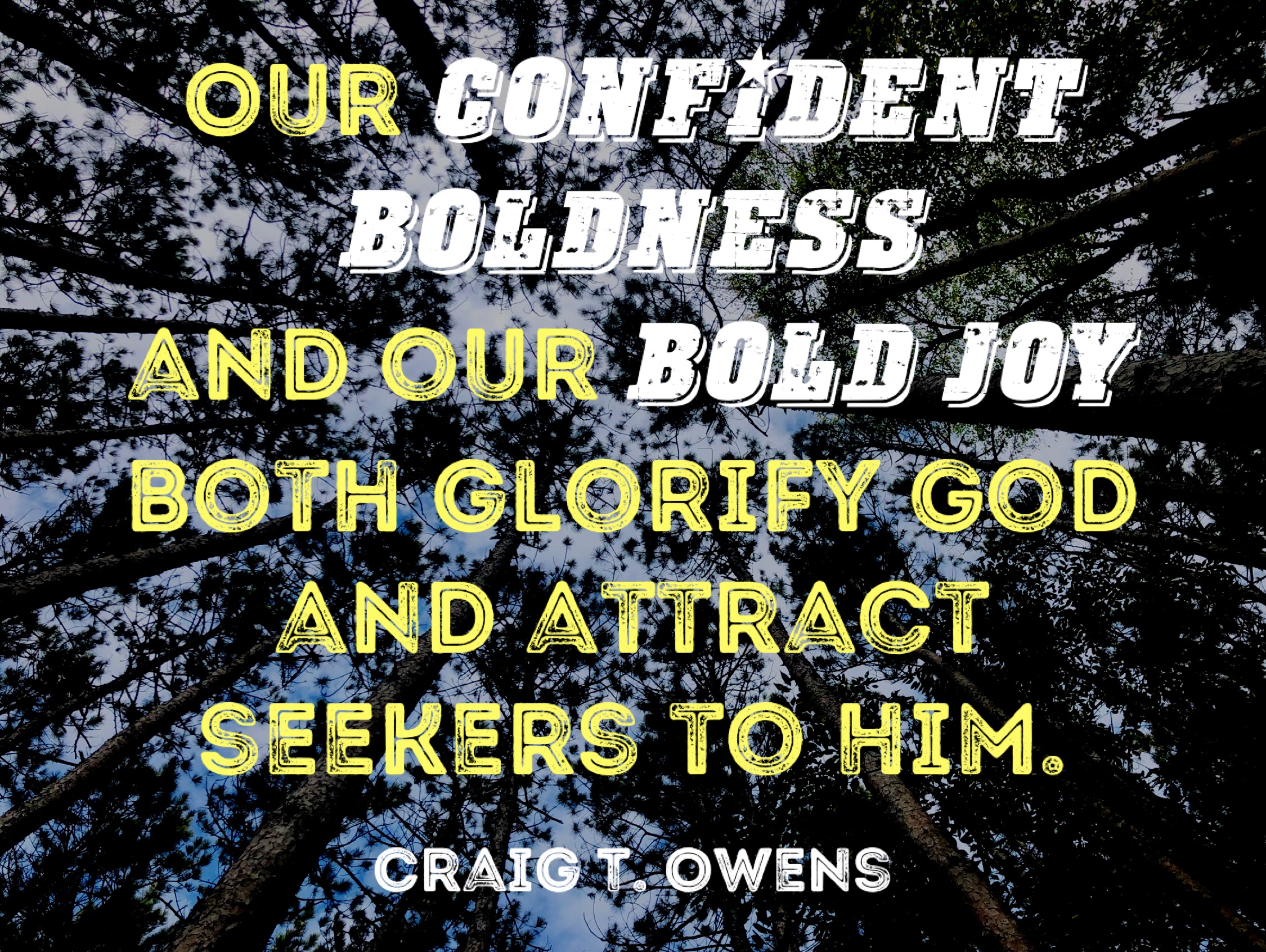
It’s vital that we know this is true so that we can live confident, bold, and joyful! Our confident boldness and our bold joy both glorify God and attract seekers to Him. 

If you’ve missed any of the other messages in our series looking at the major lessons from the minor prophets, you can access all of those messages by clicking here. 

You may download a PDF version of the above charts by clicking here → Zechariah prophecies for the First Advent or here → Zechariah prophecies for the Second Advent

►► Would you please prayerfully consider supporting this ministry? ◀︎◀︎

Thursdays With Spurgeon—Keep Moving Forward

This is a weekly series with things I’m reading and pondering from Charles Spurgeon. You can read the original seed thought here, or type “Thursdays With Spurgeon” in the search box to read more entries.

Listen to the podcast of this post by clicking on the player below, and you can also subscribe on iTunes or Spotify.

Keep Moving Forward  

For we walk by faith, not by sight. (2 Corinthians 5:7) 

     God does not say to us, ‘This is the way,’ and then stop. He says, ‘This is the way, walk in it.’ We are always to be making advances. We are to be going from faith in its beginnings to faith in its perfections, from faith to assurance, from assurance to full assurance. And from there, we are to go to the full assurance of hope to the full assurance of understanding, always forward, waxing stronger and stronger. …  

     The Christian’s motto is ‘Upward and onward.’ Not as though he has already obtained, either is already perfect, he presses forward to the mark for the prize of his high calling in Christ Jesus. …  

     Can you perform the common activities of the household and the daily duties that fall to your lot in the spirit of faith? This is what the apostle means. He does not speak about running or jumping or fighting, but about walking—and he means to tell you that the ordinary life of a Christian is different from the life of another man—that he has learned to introduce faith into everything he does. 

From Faith Versus Sight

I have a t-shirt that says on the front, “Keep moving forward.” But the back of the t-shirt has the real-life challenge: “Crawling is acceptable. Falling is acceptable. Puking is acceptable. Crying is acceptable. Pain is acceptable. Quitting is not!” 

How true! 

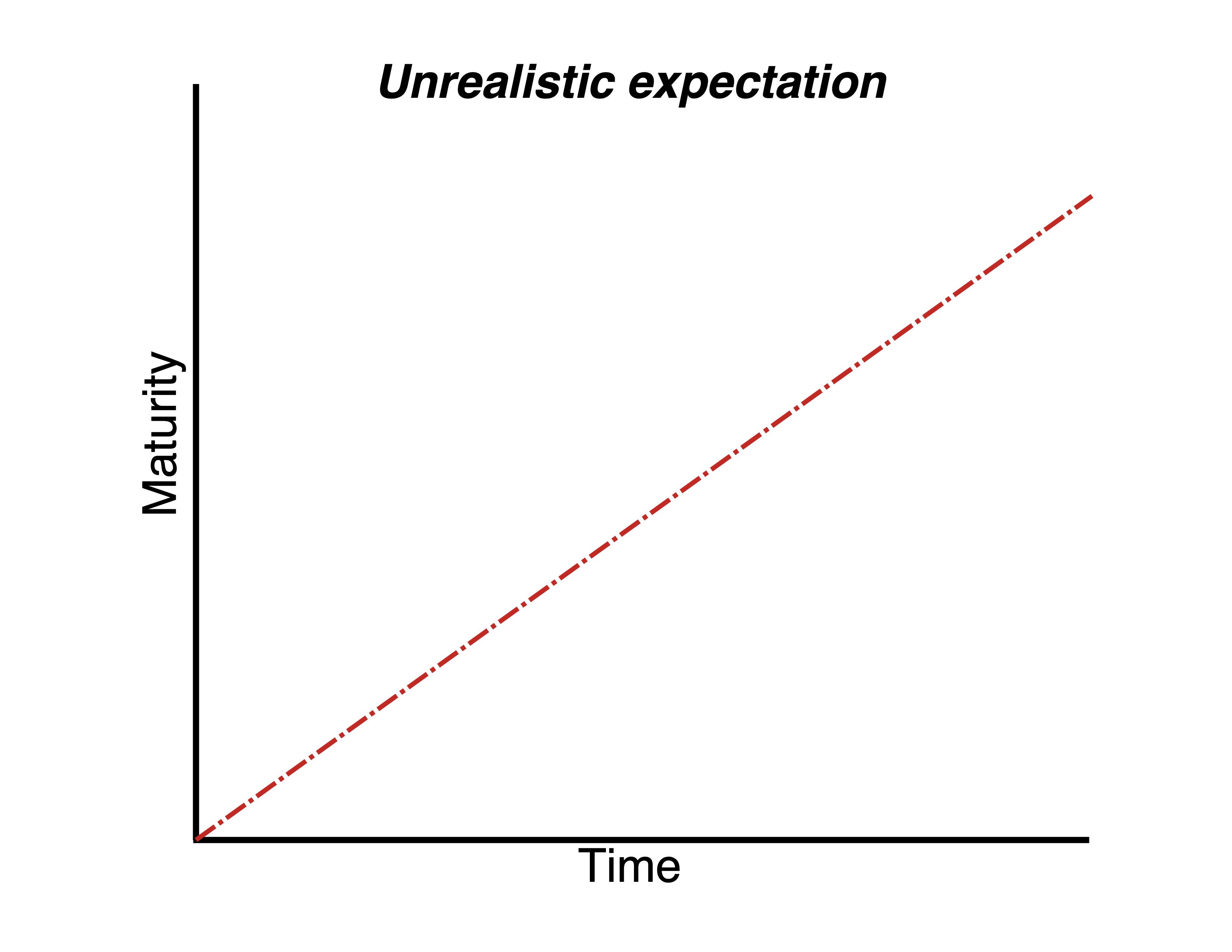
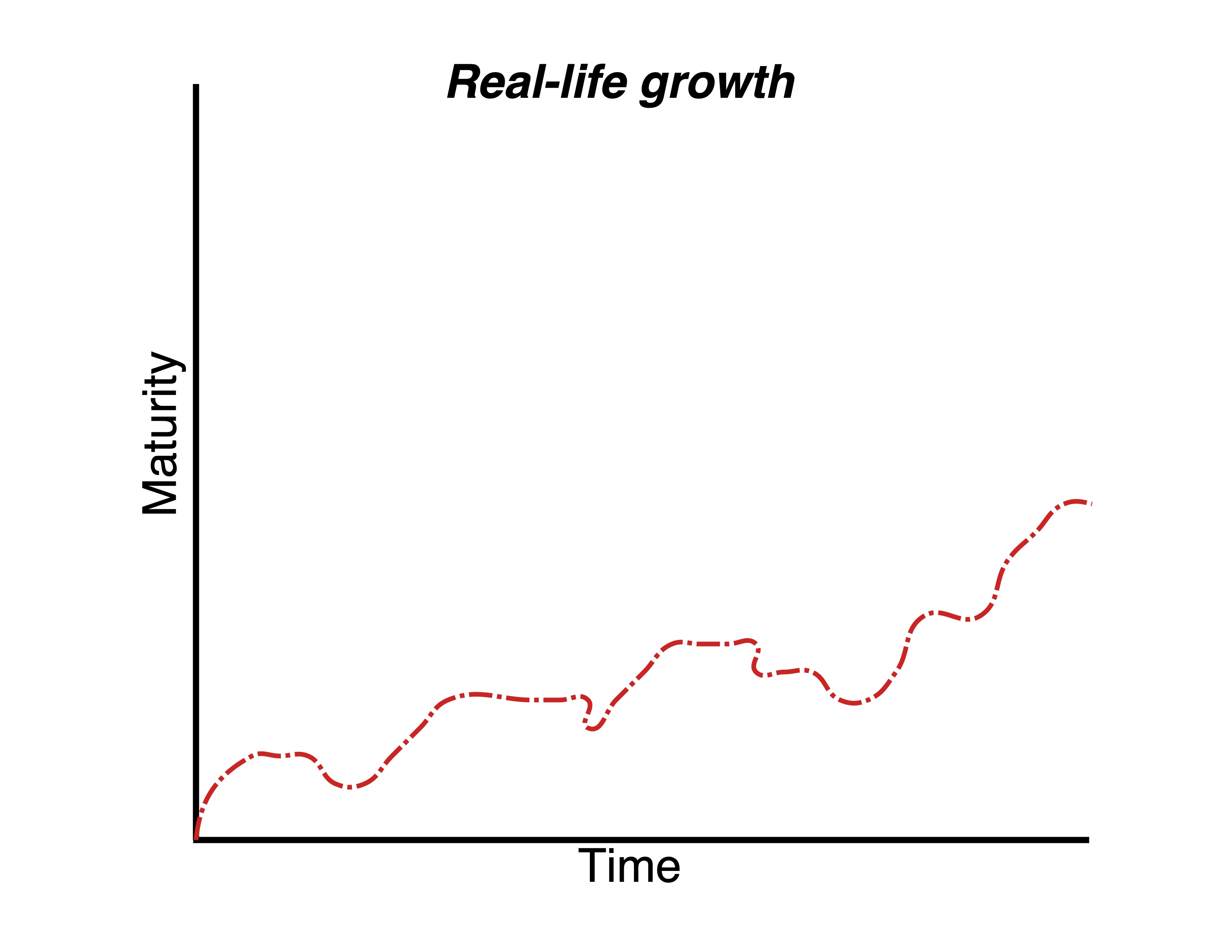
I think the problem for many Christians is that they have an unrealistic expectation of growth. Somehow we’ve come to believe that our Christian growth is a constant upward trajectory to maturity, and that if there are ever any stumbles along the way, that means we’ve blown it. (By the way, Oswald Chambers has some helpful thoughts on our stair-step growth.)

But Paul tells us, “We walk”: We keep moving forward. That doesn’t mean there aren’t times of stumbling, or a plateau, or even a pause to catch our breath. Paul tells us that an important aspect of our walk is that we forget what’s behind us and we keep moving forward—keep walking—keep going. 

Every single day, let us say along with Paul, “I don’t mean to say that I have already achieved these things or that I have already reached perfection. But I press on to possess that perfection for which Christ Jesus first possessed me. No, dear brothers and sisters, I have not achieved it, but I focus on this one thing: Forgetting the past and looking forward to what lies ahead, I press on to reach the end of the race and receive the heavenly prize for which God, through Christ Jesus, is calling us” (Philippians 3:12-14 NLT). 

My friend, keep moving forward in faith, believing that the Holy Spirit is with you—maturing you, strengthening you—on every single step on your Christian walk.

►► Would you please prayerfully consider supporting this ministry? ◀︎◀︎


Heart Rate Recovery

Listen to the podcast of this post by clicking on the player below, and you can also subscribe on AppleSpotify, or Audible. 

A few years ago Mark Schultz wrote a song about someone living a go-go-go, overly-busy life and he entitled the song “Running just to catch myself.” Ever been there? 

There’s a Hebrew word that shows up 70 times in the Bible (mostly in the Psalms) that, sadly, many English translations of the Bible have relegated to a footnote. That’s too bad because Selah is such a powerful word. Unless we want to live our lives “running just to catch myself,” we all need a take time to Selah. Look how some have translated this word:

  • “Stop there and consider a little” (Matthew Henry) 
  • “the sacred pause” (Charles Spurgeon) 
  • “pause and calmly think of that” (AMP) 

Whether it’s a planned exercise time or just something that frightens or excites us, our heart rate is designed by God to increase—this is how we prepare for fight-or-flight. Doctors say that one of the most vital statistics they now look at to gauge overall cardio health is heart rate recovery (HRR). Doctors want to see a significant increase in HRR after exercise, fright, or excitement. 

A few of the factors that boost HRR:

  • Regular, planned exercise 
  • Getting the proper amount of quality sleep 
  • Reducing stress 

Respond-and-recover is part of a health-building cycle. But if we’re “running just to catch myself” all the time, this time of recovery isn’t happening. Not only are we not recovering well, but we are not properly prepared for the next time our heart needs to start beating faster.   

This HRR is just as vital for us emotionally and spiritually as it is physically: We cannot always be stressed or always be “on.” We need a Selah—a time to stop and consider, a time to take a sacred pause to calmly think. 

This is what David teaches us in Psalm 68. Check out the “bookend verses” where he reminds us that when God arises His enemies are scattered, and that God is awesome and He gives power and strength to His people (vv. 1, 35). And look a the middle verse where David says that when God ascends in victory He gives gifts (v. 18). 

This tells me two things: (1) God is sovereignly in charge (not me or anyone else), and (2) In His love, God delights to use His sovereign power to bless His children. 

The question is not IF I’m going to be confronted by difficult things or difficult people, but HOW will I recover from these confrontations? 

May I suggest a 3-step process to increase your spiritual HRR? 

  1. Acknowledge your situation—don’t try to cover it up or justify it 
  2. Selah—pause to take a deep breath  
  3. During that breath, redirect your thoughts from the difficulty to your awesome God (see 2 Corinthians 10:5; Philippians 4:4-8)

Look at David’s example in this psalm:

Reflect Worship
God defeats enemies (vv. 1-2) Be glad, rejoice, sing (vv. 3-4)
God is a Father and Deliverer (vv. 5-7) Selah (v. 7)
God is sovereignly in control (vv. 8-18) Praise and Selah (v. 19)
God defeated Death (vv. 20-23) Join the procession of worshippers (vv. 24-27) 
God uses His strength to care for His people (vv. 28-31) Sing praises and Selah (vv. 32-35)

As you breathe deeply in this worship of recovery, think on this: “Your sigh can move the heart of Jehovah; your whisper can incline His ear to you; your prayer can stay His hand; your faith can move His arm.” —Charles Spurgeon 

Our Selah pause leads to proper perspective, which allows us to recover more quickly. That, in turn, helps us to be better prepared for the next time we’re confronted by difficulties. 

To check out the other lessons we’ve learned in our ongoing series called Selah, please check out the list I’ve compiled here.

►► Would you please prayerfully consider supporting this ministry? ◀︎◀︎

Ruth + Boaz—The Father’s Day Version

Listen to the podcast of this post by clicking on the player below, and you can also subscribe on Apple or Spotify.

On Mother’s Day that we saw how Ruth’s obedience allowed her to realize God’s favor, part of that favor is being included in the genealogy of Jesus Christ. Of course, Ruth can’t give birth to her son Obed without there being a father, which makes Boaz’s part in this story just as important. 

[This whole story of Ruth + Boaz is just four short chapters, so I’d encourage you to take a couple of minutes to read it.] 

When we first meet Boaz, he is described as “a man of standing.” Some Bible translations say “a man of wealth,” which is an acceptable definition. In fact, the word can mean strength, wealth, valor, or prominence, but the root word means something brought forth out of travail and pain. That tells us that Boaz wasn’t born a man of standing, he became a man of standing by going through difficult times, not giving in to the downward slide of culture, and remaining true to God. 

Boaz had a steel-forged integrity! 

Believe me, it would have been easy for Boaz to compromise! This was a dark time of selfishness in Israel’s history. A time where just doing the bare minimum was acceptable because most of the Israelites were selfishly doing whatever would benefit them (Judges 21:25). 

The other description we read about Boaz is that he is a “kinsman-redeemer.” This same word is used in this verse: “Plead my cause and redeem me; revive me and give me life according to Your word” (Psalm 119:154). A redeemer is one who is close by to help, has the strength or resources to help, and is willing to help. Of course, the perfect example of a Kinsman-Redeemer is Jesus, who became our human kinsman so that He could rescue us (see Hebrews 2:14; Philippians 2:7-8). 

Boaz was given the opportunity to do this for Naomi and Ruth, and he seized the opportunity with gusto. Far from being a “bare minimum” man, Boaz always went the second mile to bless Ruth and Naomi:

  • he practiced the “hospitality clause” plus he protected Ruth and gave her more than was required 
  • he provided food for his workers plus he provided food for Ruth and Naomi 
  • he blessed his workers plus he blessed Ruth in the name of the Lord 

Ultimately, Boaz did indeed become the kinsman-redeemer for Naomi (by paying off all the debts of her deceased husband) and for Ruth (by marrying this non-Israelite woman and bringing her into the family line of Jesus). 

Boaz was King Solomon’s great-great-grandfather. When Solomon was completing the temple in Jerusalem, he erected two pillars at the entrance: one was named Boaz, and the other was Jakim (with means “God will establish”). Taken together these pillars proclaim the message: By His integrity and faithfulness, God establishes and makes firm. 

Boaz exhibited integrity at every opportunity, which is what forged his character and made him “a man of standing.” Boaz demonstrated that integrity is really faith in God plus faith-filled, second-mile, others-focused actions.

“Faith without works is just wishful dreaming.
Works without faith is just religious posturing.
Works with faith is God-glorifying!” —Craig T. Owens

Men of God, please remember this: 

  • Every Word of God that you read or hear is a test—will you obey Him or will you compromise? 
  • Every setback you go through is a test—will you learn and grow or will you sulk and shrink back? 
  • Every success you experience is a test—will you bless others or will you hoard your blessings? 
  • Every decision you make in a dark culture is a test—will you just have faith, just have bare-minimum works, or will you exhibit the steel-forged integrity that comes from putting your faith to work? 

God’s blessing on your life of integrity will show others a picture of Jesus. God’s blessing on your life of going the second mile will show others that it is God who establishes and makes firm. 

Don’t rob your family, don’t rob us, don’t rob future generations of the outpouring of God’s blessing because you are selfish or compromising. Stand strong, trust God, go the second mile, be the kinsman-redeemer for those in need, and then watch for God’s blessings! 

If you missed Ruth’s vital part in this story, please check that out by clicking here.

►► Would you please prayerfully consider supporting this ministry? ◀︎◀︎

The Deity And Divinity Of Jesus

Listen to the podcast of this post by clicking on the player below, and you can also subscribe on Apple or Spotify.

Some really silly guys did a series of videos called “Neature Walk” because they wanted to share how neat is nature! In episode one Vic sees a tree that he really likes and says, “Score! This is an aspen tree. You can that it’s an aspen tree because of the way it is.” This is either circular reasoning or an obvious statement. “Just look at this thing. You can tell it’s this thing because it looks and acts like this thing.” 

I feel a lot like this when I look at the first part of our third foundational truth statement: “We believe in the Deity of the Lord Jesus Christ.” (As a side note, I covered the second part of this statement—“As God’s Son, Jesus was both human and divine”—in another post, which you may find here.) 

Check this out: the definition for Deity is the divine character of God, and the definition for divine means things relating to the Deity. In saying we believe Jesus is God we are really saying, “You can tell that Jesus is God because of the way He is.” 

In order to make this definition work, we need evidence for both the divinity and the deity of Jesus. That being said, let me remind you of J. Warner Wallace’s instruction on faith. There is:

  • Blind faith—believing in something without evidence 
  • Unreasonable faith—believing in something in spite of the evidence 
  • Reasonable faith—believing in something because of the evidence 

Here is some evidence that I think makes it reasonable to believe that Jesus is divine:

  1. Virgin birth—Isaiah 7:14; Luke 1:34-35; Matthew 1:22-23 
  2. Sinless life—Isaiah 53:4-6, 9; Hebrews 7:26-27; 1 Peter 2:22 
  3. Miracles—Acts 10:38; 2:22-24 
  4. Death, resurrection, exaltation—Isaiah 53:10-12; Philippians 2:6-8; Hebrews 1:3 

(Check out all the Scriptural references listed above by clicking here.) 

I think the best evidence for the Deity of Jesus is the connection He Himself made between the “Jehovah” titles of the First Testament and His “I AM” statements in the Second Testament:

  • Jehovah Jireh (I Am Your Provider) → I am the Bread of Life (John 6:35)
  • Jehovah Rapha (I Am Your Healing) → I am the Resurrection and the Life (John 11:25-26)
  • Jehovah Nissi (I Am Your Source) → I am the Vine (John 15:5)
  • Jehovah Shalom (I Am Your Peace) → I am the Light of the world (John 8:12)
  • Jehovah Raah (I Am Your Shepherd) → I am the Good Shepherd (John 10:11)
  • Jehovah Sabaoth (I Am Your Wall Of Protection) → I am the Gate (John 10:9)
  • Jehovah Tsid-kenu (I Am Your Righteousness) → I am the Way, Truth, and Life (John 14:6)
  • Jehovah Shammah (I Am Here) → I am the Alpha and Omega (Revelation 1:8; 22:13). 

(Check out all the Scriptural references listed above by clicking here.)

The Jewish leadership understood perfectly what Jesus was claiming! But the more pertinent question is this: Do we understand what we must do with this evidence? 

We cannot claim that Jesus was born of a virgin, or lived a sinless life, or did miracles, or died and rose again and then not believe He is God. We cannot pick and choose the parts of Jesus we want. 

The apostle Paul reminded us that someday “at the name of Jesus every knee should bow, in heaven and on earth and under the earth, and every tongue acknowledge that Jesus Christ is Lord, to the glory of God the Father” (Philippians 2:11-12). 

Every knee will bow to Him one day: Either in worship of Jesus their Savior, or in abject terror of Jesus their Judge. 

I pray that you believe in Jesus as your Lord and Savior today… don’t wait another moment! 

►► Would you please prayerfully consider supporting this ministry? ◀︎◀︎

If you’ve missed any of the other messages in our Foundational Stones series, which is exploring our foundational beliefs, you may access all of them by clicking here.

God Delights In Me

It’s been said that the bookends of success are starting well and finishing well. I believe that! 

David started well when he lifted up a prayer of thankfulness to God when he became king over the united nation of Israel. Prayer at the the beginning puts us on a path toward success. 

Have you ever begun to assemble a child’s toy or a piece of furniture, gotten completely stumped, and only then read the instruction manual? We’ve all been there! There are many things in life that we start on our own and then hit our knees in prayer only after we’ve exhausted all of our human resources. Fortunately, after we pray and God answers, we often end up finishing well with a prayer of praise and thanksgiving. The question is: what do we do when we again get ready to start something else? Do we pause to start well with prayer, or do we dive in on our own again? 

I think one of the biggest reasons we don’t go to prayer quickly is because we feel unworthy to go into the presence of a holy, righteous God. 

One commentator said about Psalm 18 that David probably prayed this “before he committed his terrible sin” with Bathsheba and Uriah. That may be, but with very few minor changes, David prayed this exact same prayer (2 Samuel 22) at the very end of his reign. His reign as king was bookended with the same prayer. 

Between the bookend prayers of Psalm 18 and 2 Samuel 22, David prayed another prayer—this one was after he had sinned against God, Bathsheba, and Uriah. David truly believed that God forgave that sin and wiped the slate clean, so much so that he noted this great blessing on his life: “He brought me out into a spacious place; He rescued me because He delighted in me. 

He rescued me because He delighted in me?! Yes! 

David knew that God had told us that He delights in those who obey Him. The example of God’s delight was seen in Jesus. Because Jesus paid the price for the forgiveness of my sins, I can be completely cleansed. Then Jesus comes in me, and takes me into Him, and takes both of us into the Father. So now when our Heavenly Father looks at a forgiven sinner, He sees only the righteousness of Jesus—something He utterly delights to see! (Check out all of the biblical passages I’m referencing by clicking here.)  

David said his sin had been washed “whiter than snow” (Psalm 51:7), So now look at what he could claim—

The Lord has dealt with me according to my righteousness; according to the cleanness of my hands He has rewarded me. For I have kept the ways of the Lord; I am not guilty of turning from my God. All His laws are before me; I have not turned away from His decrees. I have been blameless before Him and have kept myself from sin. The Lord has rewarded me according to my righteousness, according to my cleanness in His sight” (2 Samuel 22:21-25). 

…according to my cleanness in His sight. 

In GOD’S sight! The devil wants to accuse me. He wants my sight to dominate. The devil doesn’t want me to see myself as God sees me. But I declare it out loud: I am clean IN HIS SIGHT! 

This cleanness allows me full, bold, confident access to Almighty God! I can take everything to God in prayer because I am clean in His sight! 

If you would like to read more of the posts in our prayer series called Be A First Responder, please click here. 

Learning Contentment

A mark of a maturING saint is one who when he realizes he is in a trough begins to praise God in anticipation of the blessings which are coming! Even the most mature Christian you know hasn’t “arrived”; we are all a work-in-progress. Going through the dark nights is one way God helps mature our understanding of contentment. 

You know the differences between a need and a want: a need is something vital, something I require to survive; a want is something that would be nice to have. 

In good times I can convince myself that my wants are really the same as my needs. In the bright, sunny times a lot of wants mistakenly get called needs. But in the dark nights, this confusion is quickly clarified! 

In Philippians 4, Paul explains what he has learned about needs as he went through some very challenging, dark times. When he says he knows what a need is, he isn’t exaggerating a bit (see 2 Corinthians 11:24-28). And yet the Amplified Bible has Paul saying, “Not that I am implying that I was in any personal want.” 

That’s because Paul was learnING contentment. The verb tense here means I have learned, I am learning, and I will keep on learning. It was an ongoing process that helped him clarify needs from wants. The word Paul uses for content is unique in all the New Testament and it means independent of external circumstances, or as the Amplified Bible says, “satisfied to the point where I am not disturbed or disquieted in whatever state I am. 

Paul uses another unique word in verse 12 when he says “I have learned.” This is a different Greek word from the previous verse. This time it means disciplined by experience to know how to respond. In other words, Paul disciplined himself to reflect on the lessons he learned in the night. The cliche “Experience is the best teacher” isn’t necessarily true. Lots of people go through experiences and never learn a single thing. Instead, we should say, “Evaluated experience is the best teacher.” That’s exactly what Paul is saying here: “I have learned lessons in my time of meditation after going through a dark night.” 

The English dictionary defines contentment in two important phrases: 

  1. Satisfied with what I have. In Psalm 16, David learned that he had everything he needed in God, and Jesus reminded us that “your Father knows what you NEED before you ask Him” (Matthew 6:8).
  2. Satisfied with who I am. Paul knew that “God, who set me apart from my mother’s womb and called me by His grace, was pleased” (Galatians 1:15). God made Paul on purpose and for a purpose, and Paul was satisfied with who he was in Christ. God made you on purpose too! 

Our relationship with Jesus is a maturING one. It’s only IN Christ that I can be satisfied with what I have, and satisfied with who I am. It’s only IN the night that my wants get separated from my needs, by learnING contentment.

I can be thankful in the night because I am learning contentment. 

If you’ve missed any of the other messages in this series called Thankful In The Night, you can access the full list by clicking here. 

Praising God In The Troughs

Some people mistakenly think that the maturity of a Christian is a steady climb, and anything short of that is not God-honoring. They feel the graph has to always be moving up and to the right. In reality—if we zoom in—we will see lots of peaks and troughs that are in the climb. 

For instance, we read the worship leader of Psalm 42 saying, “By day the Lord directs His love, at night His song is with me—a prayer to the God of my life,” and we think, “Yeah, that’s what I expect from a saintly psalmist!” 

But let’s get the context. In the opening verses, this same worship leader talks about his profound thirst, his tears, and the taunts of his enemies. Twice in this psalm, he laments, “Why are you so downcast, O my soul? Why so disturbed within me?” 

Many people have gone through what has been called “the dark night of the soul.” I doubt anyone has ever given thanks because of those dark times, but they have learned to give thanks during those dark times.

Consider David’s beautiful words in Psalm 23. He points out that the Good Shepherd leads us into green pastures AND into dark valleys, beside quiet waters AND into the presence of enemies. 

But notice this: the Shepherd of our soul provides what we need in both daytime AND nighttime. He pours out blessings in the presence of our enemies, and as my grandfather wrote in the margin of his Bible next to verse 4, “Where there is shadow there must be light.” 

Consider the example of Paul who wrote to the Philippians, “Rejoice in the Lord always. I will say it again: Rejoice!” (4:4). He wrote this to the church that was birthed by Paul’s miraculous deliverance from prison, while Paul and Silas were doing just that: Praying and singing hymns to God! 

In The Screwtape Letters, C.S. Lewis gives us insight into how the demons view the temptation of Christians. Uncle Screwtape wrote to his nephew, “It may surprise you to learn that in God’s efforts to get permanent possession of a soul, He relies on the troughs even more than on the peaks; some of His special favorites have gone through longer and deeper troughs than anyone else. … It is during such trough periods, much more than during the peak periods, that the human is growing into the sort of creature He wants it to be. Hence the prayers offered in the state of dryness are those which please Him best.” 

A mark of a maturing saint is one who when he realizes he is in a trough begins to praise God in anticipation of the blessings which are coming! 

Don’t feel like you need to praise God FOR your troughs, but you can and should praise Him BECAUSE of His presence even in your driest, darkest trough. God is doing something in this trough time that He could accomplish in no other way. As David said, our Good Shepherd leads us in both sunlit and dark paths “for His name’s sake”—He will be glorified and you will be rewarded! 

Be sure to follow along on this series Thankful In The Night.

Poetry Saturday—An Exercise For The Mind Of Christ

The mind—ah!, what a precious gift!
But what a task each day to sift
from every thought just those that lift
and raise us to God’s glory.

But take from Paul each day one phrase,
and seek just one of many ways
which someone dear its truth displays,
and note it, to God’s glory.

Then, when the day at last is through,
share what this person means to you,
how in this one this phrase is true,
for God’s delight and glory.

The mind is precious, but untrained
unless its ways are all constrained
to serve the Lord. Thus shall be gained
for us, eternal glory! —T.M. Moore, inspired by Philippians 4:8

The Legacy Of Worship

As my friend Josh Schram led us through Psalm 66 in our Selah series, I was reminded how our worship of God—especially in our trials—can leave a godly legacy that crosses generations and continents. 

There are three Selahs in this psalm. Remember that Selah is a call to pause to consider the impact of what the inspired biblical text just said to us. The Selahs in this psalm are surrounded by praise to God, as well as the impact of that praise. 

“We don’t praise God because our circumstances are good. We praise God because our God is awesome!” —Josh Schram 

 Psalm 66 could be briefly outlined like this:

  • We say to God, “How awesome are Your deeds!” 
  • Selah—pause to ponder how awesome God is. 
  • We say to others, “Come and see the awesome things God has done!” 
  • Selah—pause to let our worship of God impact others. 
  • Others join with us in saying, “God is worthy to be praised!” 
  • Selah—pause and rejoice as their praise to God reverberates. 
  • Now we can say to an even larger audience, “Come and listen to the awesome things God has done!” 

Notice that our praise of God—despite the circumstances we’re in—makes all of the other steps possible. 

“Come and see my life of praise” (v. 3) precedes the opportunity to say, “Come and listen to my testimony” (v. 5). In other words, we live out our love for God and earn the right to speak out to others about our love for God. 

Look at the same pattern in Paul and Silas:

  • They are thrown in prison on sham charges and they still are about to sing through their physical pain, “How awesome is our God!” 
  • God sends an earthquake that breaks off their shackles and opens the prison doors. 
  • The jailer asks how he also can have this kind of relationship with Jesus. 
  • Paul and Silas have the opportunity to say to him and his family, “Come and listen.” 
  • The jailer and his family accept Jesus as their Savior. 

But it’s not just this jailer. Luke wrote that the other prisoners were also listening to Paul and Silas sing about their awesome God. Through the jailer and perhaps some of these prisoners, a church was started in Philippi. 

Later on, Paul would write to this church about their partnership in ministry, and he would write to the Corinthian church about the amazing missions generosity of the Philippian church (see Philippians 1:3-5; 2 Corinthians 8:1-2). That’s what I mean about leaving a godly legacy that crosses generations and continents. 

God is worthy to be praised! Let others hear you saying, “God is awesome” even in the midst of your painful trials, and you, too, will earn the opportunity to say to them, “Come and listen as I tell you how awesome it is to be in a relationship with God through His Son Jesus!” You can be a part of this godly legacy in your community. 

If you’ve missed any of the messages in our Selah series, you can find the full list of messages by clicking here.