I love reading, and I love sharing my love of good books with others! Here is a list of the books I read and reviewed in 2018. Click on a title to be taken to that review.
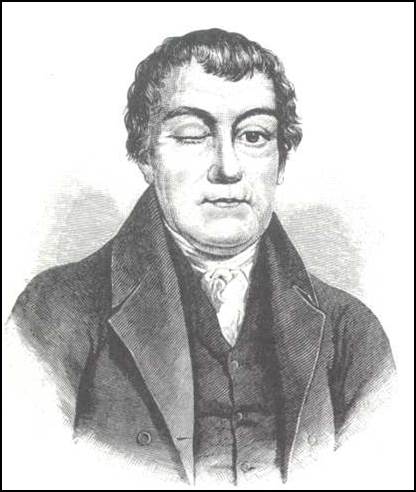
Christmas Evans tells us in his diary that one Sunday afternoon he was traveling a very lonely road to attend an appointment, and he was convicted of a cold heart. He wrote,
“I tethered my horse and went to a sequestered spot, where I walked to and fro in an agony as I reviewed my life. I waited three hours before God, broken with sorrow, until there broke over me a sweet sense of His forgiving love. I received from God a new baptism of the Holy Ghost.
“As the sun was westering, I went back to the road, found my horse, mounted it and went to my appointment. On the following day I preached with such new power to a vast concourse of people gathered on the hillside, that a revival broke out that day and spread through all Wales.”
Christmas went on to write 13 covenants to God. You can read all 13 of them by clicking here, but here are six of them that especially resonated with me—
V. O Jesus Christ, Son of the living God, take for the sake of Thy cruel death, my time, and strength and the gifts and talents I possess; which, with a full purpose of heart, I consecrate to Thy glory in the building up of Thy Church in the world, for Thou art worthy of the hearts and talents of all men.
VI. I desire Thee, my great High Priest, to confirm, by Thy power from Thy High Court, my usefulness as a preacher, and my piety as a Christian, as two gardens nigh to each other; that sin may not have a place in my heart to becloud my confidence in Thy righteousness, and that I may not be left to any foolish act that may occasion my gifts to wither, and I be rendered useless before my life ends….
VIII. … Grant that I may experience the power of Thy Word before I deliver it, as Moses felt the power of his own rod, before he saw it on the land and waters of Egypt. Grant this, for the sake of Thine infinitely precious blood, O Jesus, my hope, and my all in all.
IX. Search me now, and lead me into plain paths of judgment. Let me discover in this life what I am before Thee, that I may not find myself of another character when I am shown in the light of the immortal world, and open my eyes to all the brightness of eternity….
X. Grant me strength to depend upon Thee for food and raiment, and to make known my requests….
XII. Grant, O blessed Lord, that nothing may grow and be matured in me to occasion Thee to cast me off from the service of the sanctuary, like the sons of Eli; and for the sake of the Thine unbounded merit, let not my days be longer than my usefulness….(emphasis mine)
If you want to do great things for God—if you want Him to do great things through you—then you must be wholly committed to Him. Perhaps Christmas Evans’ covenant statements will help you draft your own, or adopt a couple of his, to consecrate yourself to God’s service.
This is a weekly series with things I’m reading and pondering from Oswald Chambers. You can read the original seed thought here, or type “Thursdays With Oswald” in the search box to read more entries.
Jeremiah 8
[These are notes from Oswald Chambers’ lecture on Jeremiah 8.]
Wherever I banish them, all the survivors of this evil nation will prefer death to life (Jeremiah 8:3).
Our Lord Jesus used these burning words, “The worms that eat them do not die, and the fire is not quenched,” [Mark 9:44, 46, 48] in reference to the condition of people who deprive themselves of right judgment by persistently going wrong (see also 2 Thessalonians 2:11). In the prophecies of Jeremiah we have the same great revelation, that eternal issues are involved in temporal living, but in a different connection. If we are going to remain true disciples of Jesus Christ, we will have to remain alien to the day we live in.
Such terrible suggestions as these verses contain [verses 1-3] serve as a very wholesome awakening, and bring men to the understanding of the need of Redemption. …
The subject of the Second Coming is the one the average unholy Christian cannot stand, and the tendency is to listen, as the people did in Jeremiah’s day, to the false prophets (2 Peter 3:3-6). …
The modern scholar pretends to be expounding the Word of God, but in reality he is writing with a lying pen, he builds his wisdom out of his own rationalism, and takes out of the law of God only what agrees with it. …
Paul says the same to Timothy—“For the time will come when men will not put up with sound doctrine. Instead, to suit their own desires, they will gather around them a great number of teachers you say what their itching ears want to hear” (2 Timothy 4:3).
They dress the wound of My people as though it were not serious. “Peace, peace,” they say, when there is no peace (Jeremiah 8:11). That is the perpetual peril at all times, relieving present pain by a temporal fictitious cure, when what is needed for an effectual cure is a surgical operation. …
All Christians are not Christian workers, but those who are called to be workers need the courage of the Holy Ghost to face life from God’s standpoint. We have to keep our hearts and minds faced with the awful condition of human life apart from the Cross of Christ. We must get into our souls the iron of God which makes us strong enough to present Jesus Christ to men. …
The majority of us know nothing about shame and repentance, consequently we drift from the central point because we more easily get into sympathy with men than with God, and that is slander against God. To save the world cost Jesus Christ His life, and if we teach that the world can be saved in any other way we slander God.
From Notes On Jeremiah
Oh God, help us—all of us, but especially Your workers—to preach sound doctrine that would save lost people from an eternal Hell.
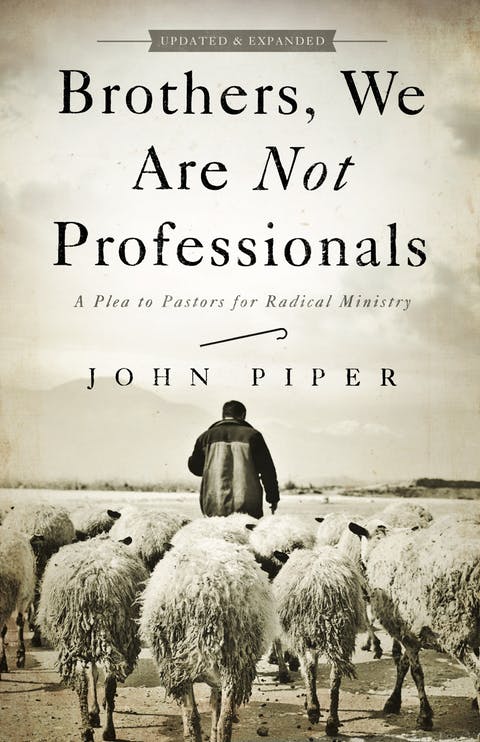
Those in pastoral ministry are ministers; they are not professional, career-minded, corporate ladder-climbers. John Piper has written a book that I believe every pastor should read: Brothers, We Are Not Professionals. Here are a few more quotes from this excellent book.
“Is not our most painful failure in the pastorate the inability to weep over the unbelievers in our neighborhoods and the carnal members of our churches? …
“I must feel the truth of hell—that it exists and is terrible and horrible beyond imaginings forever and ever. ‘These will go away into eternal punishment’ (Matthew 25:46). Even if I try to make the ‘lake of fire’ (Revelation 20:15) or the ‘fiery furnace’ (Matthew 13:42) a symbol, I am confronted with the terrifying thought that symbols are not overstatements but understatements of reality. …
“I say to you, on the authority of Scripture, remember, remember, remember the horrid condition of being separated from Christ, without hope and without God, on the brink of hell. ‘Remember that you were at that time separated from Christ, alienated from the commonwealth of Israel and strangers to the covenants of promise, having no hope and without God in the world’ (Ephesians 2:12). …
“When the heart no longer feels the truth of hell, the gospel passes from good news to simply news.”
“Warning has value in stirring us up to take the glories of holiness and heaven seriously so that we come to see them for what they are and delight in them. But it is the delight in them that causes the true grief when we fall short.”
“Pastors, you will know your people’s souls best by knowing your own. So try to be ruthlessly honest with yourself.”
“If the heart is without passion, it will produce lifeless, jargon-laden spontaneity. And if the heart is aflame, no form will quench it.”
“We ought to experience the deepest emotions about the deepest things. And we ought to speak often, and publicly, about what means most to us, in a way that shows its value.”
“Eating, exercising, and sleeping are more spiritually relevant in the ministry than we may think. … The point is that we be intentional about how our eating affects the ability of our body to be a helpful partner in seeing the glory of God.”
“When we say that what we do on Sunday morning is to ‘go hard after God,’ what we mean is that we are going hard after satisfaction in God, and going hard after God as our prize, and going hard after God as our treasure, our soul-food, our heart-delight, our spirit’s pleasure. Or to put Christ in His rightful place—it means that we are going hard after all that God is for us in Jesus Christ, crucified and risen.”
“It will transform your pastoral leadership in worship if you teach your people that the basic attitude of worship on Sunday morning is not to come with your hands full to give to God but with your hands empty to receive from God.”
“Brothers, we are leaders, and the burden of change lies most heavily on us.”
You can read my full book review of Brothers, We Are Not Professionals by clicking here, and you can check out some other quotes from this book here.
“We naturally tend to interpret Scripture in the light (or shadow) of our own temperament and let our peculiar mental cast decide the degree of importance we attach to various religious doctrines and practices. …
“The minister above all others should look deep into his own heart to discover the reason for his more pronounced views. It is not enough to draw himself up and declare with dignity that he preaches the Bible and nothing but the Bible. That claim is made by every man who stands in sincerity to declare the truth; but truth has many facets and the man of God is in grave danger of revealing only a limited few to his people, and those the ones he by disposition favors most. …
“The Scriptures, critical self-discipline, honesty of heart and increased trust in the inward operations of the Holy Spirit will save us from being too greatly influenced by temperament.” —A.W. Tozer, in Man—The Dwelling Place Of God
Although written over 100 years ago, Workmen Of God is still a treasure-trove for anyone in pastoral ministry today. I have shared longer passages from this book in my weekly series called “Thursdays With Oswald,” but here are a few other gems from this book. You can read my full book review of Workmen Of God by clicking here.
“We must keep ourselves in touch, not with theories, but with people, and never get out of touch with human beings, if we are going to use the Word of God amongst them, and if the Holy Spirit is to apply the Word of God through us as workmen meeting not to be ashamed.”
“Men’s minds will always assent that Jesus Christ is right—why? Because Jesus Christ is Incarnate Reason. There is something in Jesus Christ that appeals to every man, no matter what condition he is in. If once Jesus Christ is brought into contact with the man, let that man seem to us dead and indifferent, destitute of anything like goodness—let him come in contact with Jesus Christ by the Holy Spirit, and you will instantly see that he can grasp something about Him in a way we cannot understand unless we know the Holy Spirit.”
“Unless your religion will go to the lowest and the worst and the most desperate case you know of, your religion is of no use.”
“Intercessory prayer for a backslider is a most instructive but most trying work for God, it will teach the worker that prayer is not only making petitions, but that prayer is breathing and atmosphere.”
“When the message you have to deliver, brother preacher, strikes straight home, don’t water it down just a little. Go straight for God if you come from Him. Neither for fear nor favor alter the message.”
“Love for men as men will never stand the strain. In order to catch men for the Lord Jesus Christ, you must love Jesus Christ absolutely, beyond all others. You must have a consuming passion of love, then He will flow through you in a passion of love and yearning and draw all men to Himself.”
“We need to live steadfastly in the presence of God so that when we are praised we don’t arouse the spirit of envy, the spirit that makes a man want to do something, not because he loves God, but because he wants to emulate us. … God grant we may see that the great need of every worker is a first-hand acquaintance with Jesus Christ which puts to death the spirit of ambition.”
“You cannot have holiness without a chaste physical life. Oh, the sapping power of God because of unchaste men and women who preached His Gospel.”
Oswald Chambers constantly tried to follow what Paul spoke to Timothy, “And these things you have heard me say in the presence of many witnesses entrust to reliable men who will also be qualified to teach others” (2 Timothy 2:2). In Workmen Of God, we have a collection of lectures Chambers is giving to those “reliable men” and women who were either already working in pastoral ministry or preparing to do so.
It’s amazing how Chambers could so effectively and specifically apply biblical principles to the audiences he addressed. For instance, some might think that those pastoring a local church and those ministering as a missionary would receive roughly the same sort of training. But a collection of Chambers’ lectures to those in missionary work (in his book So Send I You) has completely different ministry principles from the lectures he delivers to pastors in this book.
But in both books, we are privileged to read what Chambers’ friend and coworker Mary Hooker called “a wealth of spiritual vitamins.” She went on to say, “And now this latest book [Workmen Of God] goes forth, at a time when soul-sickness is more than ever rampant. The messages are full of spiritual discernment and diagnosis.”
If Chambers’ time was a time of rampant “soul-sickness,” how much more so do we need his insight today!
Indeed, Chambers talks to pastors about their work among those entrenched in their unbelief, those who are skeptical, those who are backslidden, those who are hypocrites, and those who have sick souls. He also challenges pastors on how to minister to themselves so that they are prepared to minister to any soul in which God brings them in contact.
Although written over 100 years ago, this book is still a treasure-trove for anyone in pastoral ministry today!
John Piper has written a book that I think every pastor should read: Brothers, We Are Not Professionals. You can read my review of this book here. Below are just a few quotes that caught my attention.
“We pastors are being killed by the professionalizing of the pastoral ministry. The mentality of the professional is not the mentality of the prophet. … The professionalization of the ministry is a constant threat to the offense of the gospel.”
“I defined spiritual leadership as ‘knowing where God wants people to be and taking the initiative to get them there by God’s means in reliance on God’s power.’ … So the goal of spiritual leadership is to muster people to join God in living for God’s glory.”
“The Son of Man has not come seeking employees. He has come to employ Himself for our good.”
“In this fallen world, the tide is always going out. That is, the affections of our people have for God Himself (as distinct from His gifts) are continually prone to shrink. Our job is to tilt the world, by the power of the Spirit and the Word, so that the tide rolls in again.”
“A pastor who feels competent in himself to produce eternal fruit knows neither God nor himself.”
“Salvation is a gift of God (Ephesians 2:8). Love is a gift of God (1 Thessalonians 3:12). Faith is a gift of God (1 Timothy 1:14). Wisdom is a gift of God (Ephesians 1:17). Joy is a gift of God (Romans 15:13). Yet as pastors we must labor to ‘save some’ (1 Corinthians 9:22). We must stir up the people to love (Hebrews 10:24). We must advance their faith (Philippians 1:25). We must impart wisdom (1 Corinthians 2:7). We must work for their joy (2 Corinthians 1:24). We are called to labor for that which is God’s alone to give. The essence of the Christian ministry is that its success is not within our reach.”
“Are not our people really yearning to be around a man who has been around God? Is it not the lingering aroma of prayer that gives a sense of eternity to all our work?”
“Few things frighten me more than the beginnings of barrenness that come from frenzied activity with little spiritual food and meditation.”
“The domestication of God is a curse on preaching in our day. We need to recover reality and the language of majesty and holiness and awe and glory.”
“He knows that the only way he can deliver God’s message to God’s people is by being rooted in it and by saturating his sermon with God’s own revelation in the Bible. The Bible-oriented preacher wants the congregation to know that his words, if they have any abiding worth, are in accord with God’s words. He wants this to be obvious to them. That is part of his humility and his authority. Therefore, he constantly tries to show the people that his ideas are coming from the Bible. He is hesitant to go too far toward points that are not demonstrable from the Bible.”
“Our salvation and the salvation of those who hear us week after week depend in large measure on our faithful attention to personal holiness and sound teaching” [see 1 Timothy 4:16]. … Oh, how earnest we should be in attending to ourselves and the soundness and helpfulness of our teaching!”
The pastor is called upon to do lots of things, some of which are considered by both pastor and parishioner to more “spiritual” or more “business.” But in reality, all that a pastor (or any Christian for that matter) does is spiritual, because it is all to be done for the glory of God. Over time, many pastors have lost sight of the sacred nature of their calling, turning what they do into a professional pursuit.
Piper explains, “First, professionalism should always be marginal, not central; optional, not crucial. And second, the pursuit of professionalism will push the supernatural center more and more into the corner while ministry becomes a set of secular competencies with a religious veneer. … When I look back, my regret is not that I wasn’t more professional but that I wasn’t more prayerful, more passionate for souls, more consistent in personal witness, more emotionally engaged with my children, more tender with my wife, more spontaneously affirming of the good in others.”
Every chapter is chockfull of biblical insights, personal examples from John Piper’s ministry, and historical sources that have stood the test of time. I’ll say it again: every pastor should read this book!
I’ll add my own “amen” this prayer John Piper offers: “Banish professionalism from our midst, O God, and in its place put passionate prayer, poverty of spirit, hunger for God, rigorous study of holy things, white-hot devotion to Jesus Christ, utter indifference to all material gain, and unremitting labor to rescue the perishing, perfect the saints, and glorify our sovereign Lord. In Jesus’ great and powerful name. Amen.”
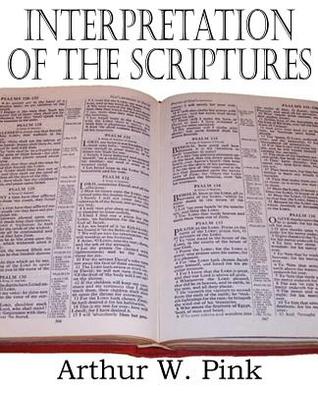
You don’t have to be a pastor to benefit from reading Interpretation Of The Scriptures by A.W. Pink, rather I think all students of the Bible will benefit from reading this classic book. However, the Apostle James did warn that “not many of you should presume to be teachers” because “we who teach will be judged more strictly” (James 3:1). In that light, A.W. Pink directs several of this comments in this book exclusively to those who teach/preach from the Bible. Here are a few of those quotes.
“The preacher’s task is both the most honorable and the most solemn of any calling, the most privileged and at the same time the most responsible one.”
“The ministry is no place for trifiers and idlers, but for those who are prepared to spend and be spent in the cause of Christ. The preacher ought to work harder than the miner, and to spend more hours per week in his study than does the man of business in his office.”
“Particularly does the minister need to attend unto this injunction ‘take heed unto thyself’ in his study of the Scriptures, reading them devotionally ere he does so professionally; that is, seeking their application and blessing to his own soul before searching for sermonic materials.”
“To ‘open’ the Scriptures helpfully to the saints requires something more than a few months’ training in a Bible institute, or a year or two in a seminary. None but those who have been personally taught of God in the hard school of experience are qualified so to ‘open’ the Word that Divine light is cast upon the spiritual problems of the believer, for while Scripture interprets experience, experience is often the best interpreter of Scripture.”
“The preacher should be with his time as the miser is with his gold—saving it with care, and spending it with caution.”
“Great care needs ever to be taken that we do not expound our own minds instead of God’s.”
“The preacher should be, above everything else, a man of the Book, thoroughly versed in the contents of God’s Word, one who is able to bring forth out of his treasure ‘things new and old’ (Matthew 13:52). The Bible is to be his sole text-book, and from its living waters he is to drink deeply and daily.”
“Commentaries we consult only after we have made a first-hand and exhaustive study of a passage.”
“It is at the feet of God that the preacher must take his place, learning from Him the meaning of His Word, waiting upon Him to open its mysteries, looking to Him for his message.”
“To discourse upon the chemical properties of food will not feed a starving man, neither will tracing out the roots of the Hebrew and Greek words (necessary though that be in its proper place) the better enable Christ’s followers to fight the good fight of faith.”
“Scripture must be allowed to speak for itself, and it does so only so far as the preacher sets forth its genuine import. Not only is he to explain its terms, but also the nature of the ideas they express, otherwise he is apt to make use of scriptural terms and yet give them an unscriptural sense.”
To read the other quotes I shared from Interpretation Of The Scriptures, click here. You may also check out my full book review by clicking here.



 I love reading, and I love sharing my love of good books with others! Here is a list of the books I read and reviewed in 2018. Click on a title to be taken to that review.