Links & Quotes

link quote

Some good reading from today…

“Every deadly calamity is a merciful call from God for the living to repent.” —John Piper

“Our Father refreshes us on the journey with some pleasant inns, but will not encourage us to mistake them for home.” —C.S. Lewis

“I ask you, dear Christian friends, to come nearer to it [the blood Jesus shed on the Cross] this morning than ever you have been. Think over the great truth of substitution. Portray to yourself the sufferings of the Savior. Dwell in His sight, sit at the foot of Calvary, abide in the presence of His Cross, and never turn away from that great spectacle of mercy and of misery. Come to it; be not afraid. You sinners, who have never trusted Jesus, look here and live! May you come to Him now.” —Charles Spurgeon

“Our most pressing obligation today is to do all in our power to obtain a revival that will result in a reformed, revitalized, purified church. It is of far greater importance that we have better Christians than that we have more of them.” —A.W. Tozer

Links & Quotes

link quote

Some good reading and watching from today…

“Too much of our Christian witnessing is unconvincing because we have not been convinced. We are ineffectual because we have not yet capitulated to the Lord from glory.” —A.W. Tozer

“Everyone feels benevolent if nothing happens to be annoying him at the moment. Thus a man easily comes to console himself for all his other vices by a conviction that ‘his heart’s in the right place’ and ‘he wouldn’t hurt a fly,’ though in fact he has never made the slightest sacrifice for a fellow creature. We think we are kind when we are only happy: it is not so easy, on the same grounds, to imagine oneself temperate, chaste, or humble.” —C.S. Lewis

“So think this way. Not: I must have faith and love so as to be worth God’s favor; but rather: God’s favor is free and it is infinitely worth trusting. Walking worthy of that favor means walking by faith because faith is the one thing that agrees with (and fits) our bankruptcy and God’s infinite worth.” —John Piper

“We are mistaken when we look forward to death; the major portion of death has already passed. Whatever years light behind us are already in death’s hand.” —Seneca

An interesting discovery about a Neanderthal skeleton.

[VIDEO] Ken Davis is hilarious! Check out his take on frog-faced Christians.

12 Quotes From “12 Huge Mistakes Parents Can Avoid”

12 Huge MistakesI highlighted a lot in Tim Elmore’s newest book 12 Huge Mistakes Parents Can Avoid … a lot! This is book that every parent (or grandparent) should read because it’s never too late to invest the best in our (grand)children. You can read my full book review of this must-read book by clicking here. Below are just a few of the quotes I highlighted in this book.

“I believe we have under-challenged kids with meaningful work to accomplish. We have overwhelmed them with tests, recitals, and practices, and kids report being stressed-out by these activities. But they are essentially virtual activities. Adults often don’t give significant work to students—work that is relevant to life and could actually improve the world if the kids rose to the challenge. We just don’t have many expectations of our kids today.” 

“Every parent and teacher wants to see their kids succeed in school, in sports, and in life, but making it impossible to fail isn’t the answer. Removing failure, in fact, is a terrific way to stunt maturity. … As parents, we’ve given them lots of possessions but not much perspective. As educators, we’ve given them plenty of schools but not plenty of skills. As coaches, we’ve taught them how to win games but not how to win in life. As youth workers, we provide lots of explanations but not enough experiences. As employers, we’ve mentored them in profit and loss but haven’t shown them how to profit from loss.”

“Truth be told, when kids have heard they are excellent without working hard or truly adding value to a team, the praise rings hollow to them. Our affirmation must match their performance.”  

“When people—especially young people—know they are free to try something and fail, their performance usually improves. It brings out the best in them. But if they are preoccupied with trying not to fail, they become paralyzed:

  • Failure can create resilience.
  • Failure can force us to evaluate.
  • Failure can motivate us to better performance.
  • Failure prompts creativity and discovery.
  • Failure can develop maturity.”

“Our constant caving begins to foster a constant craving in them. They want clarity. With boundaries unclear, they need more direct attention from Mom or Dad. Unwittingly, we actually breed insecurity and instability in our kids. This may sound strange, but consistency may be your best friend as a parent because it aids in your authority and in your child’s development.” 

“Removing the consequences takes one of two roads. We either excuse their behavior and remove negative outcomes, or we actually step in and pay the consequence for them. When we do this, we frequently relieve the stress. We bring immediate peace to the situation, so we get addicted to this pattern. Unfortunately, we don’t see the long-term problems we are causing. Removing the consequences from our children’s lives brings short-term tranquility but long-term trouble.”

“‘You can do anything you want.’ I recognize why we say this, but as our kids grow older, we must help them to see what we really meant. … We really meant, if they set their mind to do something, they’ll be amazed at what they can pull off. The catch is, it needs to be something with in their gift area. They cannot simply make up a dream or copy a friend’s dream and call it theirs. Dreams should be attached to strengths.” 

“We have created a world of conveniences, filled with smart phones, microwaves, Internet shopping, and online banking. The subtle message is that struggles are to be avoided. We want as much convenience as possible. In fact, we feel entitled to it. But we failed to see that when we remove the struggles from our children’s lives, we begin to render them helpless. They don’t have the opportunity to develop the life skills they’ll need later on. Further, when we step in to control their levels of struggle, they don’t learn how to be in control or under control themselves. In fact, all they learn is how to be controlled.”

“Ironically, the things young people want to avoid are necessary for them to mature authentically. Slow, hard, boring, risky, laborious… these are the very challenges that prepare me to become a good man, a good husband, a good father, a good employee, a good employer. Many life skills that once naturally developed in us now atrophy in today’s culture. So we must be far more intentional about leading our kids into opportunities to build these skills.” 

“When we affirm looks or clothing—external matters instead of internal virtues—kids values become skewed. Remember, what gets rewarded gets repeated. Without realizing it, we are reinforcing cosmetic features—usually features that are not in their control. … We should be doing just the opposite. We must affirm effort and behavior, which are in their control, instead of characteristics that are out of their control. If we do this, we begin to foster a growth mindset instead of a fixed mindset.”

“We mistake hurtful with harmful. Many times, hurting helps us. In fact, removing the hurt may be harmful. … When we hurt, we can learn important truths about ourselves and about others, truth that will be beneficial later in our lives. … We confuse disturbance with damage. We hate being disturbed. Our days are so full, we often hope and pray we won’t face any unexpected disturbances as we pursue our goals. The fact is, however, that on our way to those goals, we fall into unhealthy ruts. Interruptions force us out of those ruts. Interruptions are not damaging at all. They are the very items that save us from our tunnel vision. We need to be disturbed from time to time. Interruptions are wake-up calls that rouse us from our apathy or complacency.” 

“I know you think kids are tired of you talking about the good old days. But I’ve found most kids love hearing stories of how we adults struggled to learn the same life skills when we were young. It’s all part of growing up.”

Links & Quotes

link quote

Some really good reading (and watching) from this weekend…

“The Constitution was never meant to prevent people from praying; its declared purpose was to protect their freedom to pray.” —Ronald Reagan

“I hope that when you’re my age you’ll be able to say, as I have been able to say: we lived in freedom, we lived lives that were a statement, not an apology.” —Ronald Reagan

Senator Ted Cruz reminds us: Never Forget The Gift Of Freedom.

Want more proof that Planned Parenthood’s singular focus is death? Check out the awards they hand out.

“We lack a comfort in just being alone with our thoughts. We’re constantly looking to the external world for some sort of entertainment,” says Malia Mason, a psychologist at Columbia University. A study finds: Many people would rather endure physical pain than be alone with their own thoughts.

[INFOGRAPHIC] Stats on homelessness.

“For if a man is always busy talking and yet is slow to act, he shows by his acts how worthless his knowledge is: besides it is much worse to know what one ought to do, and yet not to do what one has learnt should be done. On the other hand, to be active in good works and unfaithful at heart is as idle as though one wanted to raise a beautiful and lofty dome upon a bad foundation.” —Ambrose

“Faith feeds on the Word of God. Without a steady diet it gets weaker and weaker. If you are dissatisfied with your Christian courage and joy and purity of heart, check the way you are feeding your faith.” —John Piper

Thursdays With Oswald—Spill Your Guts

This is a weekly series with things I’m reading and pondering from Oswald Chambers. You can read the original seed thought here, or type “Thursdays With Oswald” in the search box to read more entries.

Oswald Chambers

Spill Your Guts!

     Perhaps to be able to explain suffering is the clearest indication of never having suffered. Sin, suffering, and sanctification are not problems of the mind, but facts of life—mysteries that awaken other mysteries until the heart rests in God, and waiting patiently knows “He does all things well.”

     Oh, the unspeakable joy of knowing that God reigns! That He is our Father, and that the clouds are but “the dust of His feet”! Religious life is based and built up and matured on primal implicit trust, transfigured by Love; the explicit statement of that life can only be made by the spectator, never by the saint.

From Christian Disciplines

C.S. Lewis wrote in one of his most profound books, The Problem Of Pain, “God whispers to us in our pleasures, speaks in our conscience, but shouts in our pains: it is His megaphone to rouse a deaf world.”

Suffering has a way of getting us to what matters most by filtering out the things that were clamoring for our attention before. God speaks in our pain because God stepped into our pain. Jesus was called a Man of sorrows because He experienced every pain you and I will ever experience; in fact, He experienced it with even greater intensity that you and I can ever experience!

Are you in pain? Are you suffering? No one can know what is really in your heart, except the One who knows you better than even your closest friend. Spill your guts, don’t hold back, tell Him all that’s on your mind. He already knows your thoughts, so let loose in His presence, and feel how close your Comforter is to you.

Painful Love

Sometimes pastors don’t want to say “No” to someone in their congregation because they don’t want to hurt them. Sometimes pastors don’t confront someone in their sinful choices because it seems “mean spirited” to do so.

David Wilkerson

David Wilkerson

Love must be tough. Love sometimes inflicts pain.

“Love inflicts pain, even as it does no harm (Romans 13:10). True love repeatedly disappoints, hurts, confronts, refuses, and disciplines. This is certainly how God has loved us, and we should not expect to love others without hurting them. Love hurts but does not harm. God’s minister bears the sword, but not in vain (v. 4) and with the hope that long-term health will come from short-term faithful wounds.” —Dick Brogden

“Elijah’s hatred for the sins of Israel sprang out of his very strong love for God’s people. He was not a people hater, only a sin hater. He was not a man of revenge, but rather a man whose heart yearned for Israel’s return to the Lord.” —David Wilkerson 

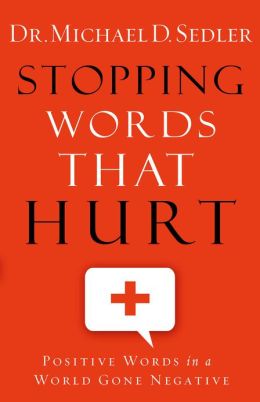
15 Quotes From “Stopping Words That Hurt”

Stopping Words That HurtThere was so much for me to process in Stopping Words That Hurt by Dr. Michael Sedler (you can read my full book review by clicking here). If you’ve ever been hurt by someone else’s words about you, there is help for you in this book. If you’ve ever hurt someone else with the words you’ve spoken, there is help for you in this book.

Bottom line: this book can help cut-off hurtful words and evil reports before they gain momentum. Please read this book!

Here are just a few quotes that stood out to me—

“We are so brainwashed into believing that it is permissible to violate one another verbally that it takes a concentrated effort to begin to have a new thought pattern.”

“It is imperative that you understand this truth: Just listening to an evil report can do tremendous damage to your perspective, viewpoint and overall spirit. … Joining in a negatively-driven conversation, no matter how small the participation, may destroy the testimony of a life. Listening to grumbling and ungodly attitudes eventually contaminates the spirit. The more we allow discontent to be taken in by our spirits, the greater the tendency to compromise our own speech patterns. We are being called to a high standard of living where the rewards for our faithfulness are eternal.”

“It is usual for most of us to listen without questioning. We oftentimes want to support a friend, supervisor or person of influence. In fact, a messenger may single us out because she knows we will not disagree with or question her. Are we being used because of our own gullibility and blindness to negative speech patterns?”

“We must have our antennas up and be prepared when we hear negative comments and subtle innuendos about others.”

“If we are unable to recognize the potential destruction caused by negative words, we will eventually cause injury to those around us. And, sadly, we often deceive ourselves into believing there was justification for our actions.”

“It is rude to knowingly be a part of gossip. It is not good manners to listen to verbal assaults and blatant character assassinations of people who are not present to defend themselves. It is foolishness and ignorance. We must open our eyes and discern when we are listening to evil reports in order to be accepted by the crowd.”

“A bold positive response can put out the fire.”

“Learn to avoid the trap of falling into emotional identification by getting information for yourself. Compare your feelings and thoughts with the Bible’s guidelines. Look for corroboration or contradictions as you assess the situation. And, finally, give a little more weight to the perspective of those who have been faithful, trustworthy and proven people of integrity than the words of a stranger or ‘expert’ who has no track record of honesty.”

“Fear can draw us toward God or pull us away. It can create a desire in us to cling to the truth or alter our perception of the truth. While satan wants to use fear to rob us of our faith in God, we need to continue to speak words of truth and confidence regarding our place with Christ.”

“Impurity occurs when we hear evil reports with our natural ears and minds without seeking spiritual wisdom and understanding. If we accept the words of others as truth, we will become filled with a mixture of philosophies, attitudes and beliefs.”

“A person who has responsibility over others also has great influence. If he or she shares a negative report with the general population, those with unguarded spirits will become contaminated.”

“I speak a strong word of caution to husbands and wives, significant others and close family members. We often take on the offense when a loved one is wronged or slighted. And though they may work through the issue, we still hold on to the anger and bitterness.”

“It is difficult to ‘have ears that hear’ at this point in the process. First of all, we do not see ourselves as defiled or polluted. We think we are right and can handle everything ourselves. We are suspicious about counsel. We question the motives of those giving it. We actually fight the process of cleansing using words such as manipulating, self-centered and controlling to describe the interventions of others. We accuse even our closest friends and supporters of being insensitive and uncaring. Whereas once we received challenges and guidance from others, now we meet each comment or suggestion with disdain and animosity. It is during this phase that people have a tendency to reject the process of cleansing, choosing instead to walk away from purity and to blame and curse others for their lack of support and love.”

“In order to heal with words, we must be willing to be persistent with them. Jesus frequently verbalized His love for His disciples. Once is not enough! Encouragement, praise and positive words continue to feed the soul in the same way water moistures the soil. Soil will eventually dry out and need another dose of fresh water.”

“Great people of God find a way to speak hope into others. They give a sense of purpose, of calling, of future, of destiny to those around them.”

Oxymoron

John of the CrossNo, an oxymoron is not the big oaf sitting next to you! An oxymoron is a literary term where two seemingly contradictory things are put together to make a new item. For instance, jumbo shrimp isn’t something that is big smallness, but a tasty seafood dish. A girl who is awfully pretty isn’t a beautiful jerk, but someone remarkably cute.

I love the oxymoron that appears in the section of Psalm 119 called Tethgood pain. In just eight verses the word good appears six times, right alongside the word afflicted, which appears twice.

How in the world can pain be good?!?

To be sure there is bad pain, but where does good pain come in? Bad pain is the pain that sends you to the doctor, perhaps the pain that means you need to have surgery. There is still pain after the surgery, but that’s a good pain because it reminds you that what was wrong has been fixed. But if what was wrong has now been fixed, wouldn’t we say that the initial pain was really good pain all along?

That’s what the writer of the 119th Psalm thought. He said, “It was good for me to be afflicted so that I might learn Your decrees” (v. 71). Do you see the good pain there? How about in verse 67: “Before I was afflicted I went astray, but now I obey Your Word.”

A 16th-century monk named John of the Cross described good pain this way—

“Thou hast wounded me, oh, hand Divine, in order to heal me, and Thou hast slain in me that which would have slain me but for the life of God wherein now I see that I live.” (emphasis added)

We’re really good at dulling physical pain with aspirin, Motrin and Tylenol. We try to chase away emotional pain with anti-depressants. And, to our own harm, we try to excuse or mask our spiritual pain too. But that spiritual pain is GOOD pain … if we will listen to it.

The psalmist knew good pain that came from the Holy Spirit’s illumination of God’s Word was something to pay attention to and obey quickly. The writer of Hebrews knew it too—

For the Word that God speaks is alive and full of power, making it active, operative, energizing, and effective; it is sharper than any two-edged sword, penetrating to the dividing line of the breath of life (soul) and the immortal spirit, and of joints and marrow of the deepest parts of our nature, exposing and sifting and analyzing and judging the very thoughts and purposes of the heart. (Hebrews 4:12, Amplified Bible)

Don’t ignore that spiritual pain. It’s good pain for those who will listen.

If you have missed any of the messages in our P119 series, you can access them all by clicking here.

God Takes The Burden Of Suffering

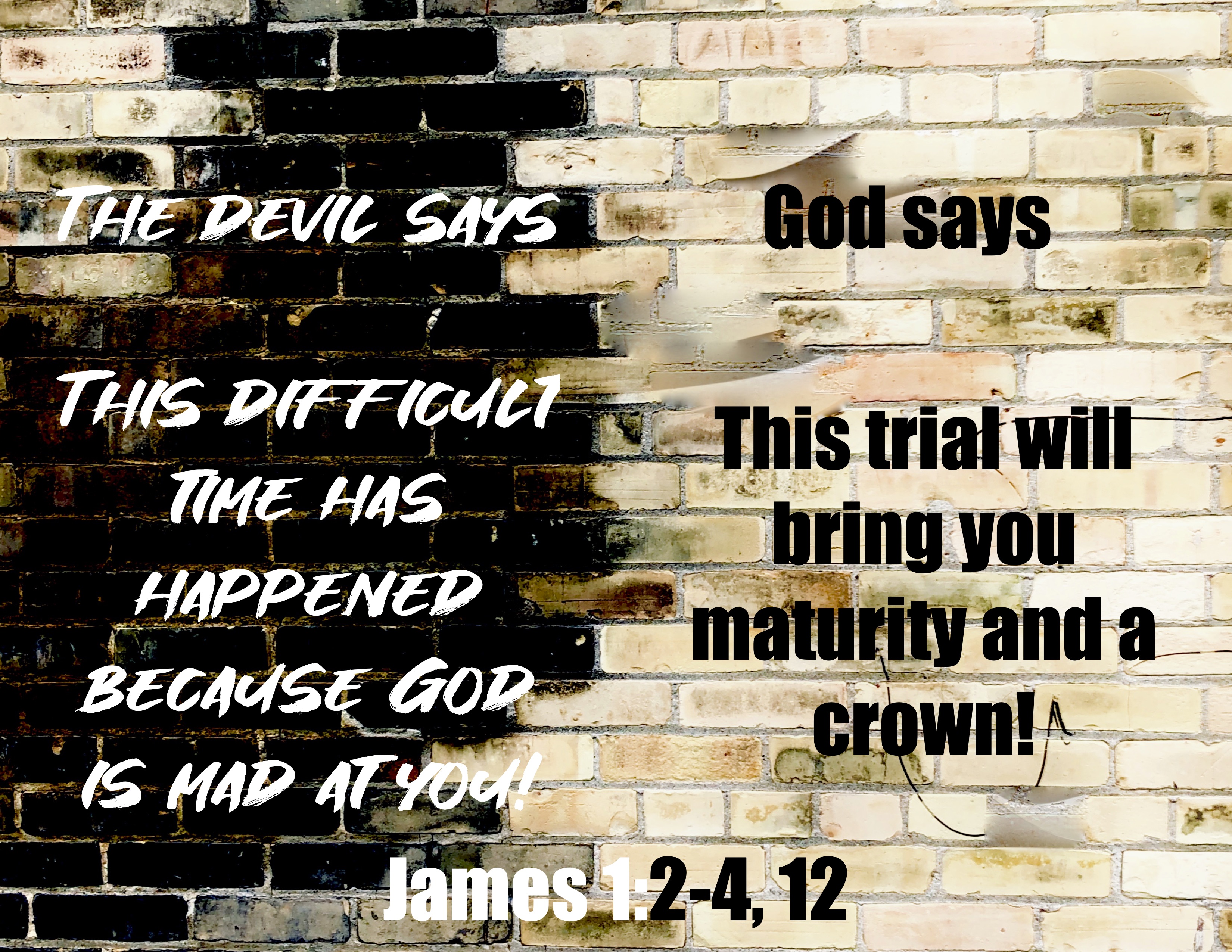
It’s always been a difficult verse for me. Consider it pure joy, my brothers, whenever you face trials of many kinds (James 1:2).

I am still wrestling with this verse and probably will be for as long as there is suffering. But I trust God. I believe He is working out something which will bring Him full glory. I know, as the apostle Paul said, that I only see through a dim glass now. But what I see of God’s love and goodness is more than enough for me to continue to trust Him.

This video is an amazing story of how suffering and disability actually brought a family to Christ—and they brought glory to God.

Getting Back Up When Life Has Knocked You Down

The Bible never presents life as some sort of pie-in-the-sky, walk-in-the-park, everyday-is-always-rosy picture. If it did, we would reject the Bible because our experiences would immediately tell us otherwise. Instead, the Bible realistically portrays the challenges, and the pain, and the heartache, and the disappointments of life. But as it does so it also shows us that God’s way is the only way out of our sorrow and into His joy!

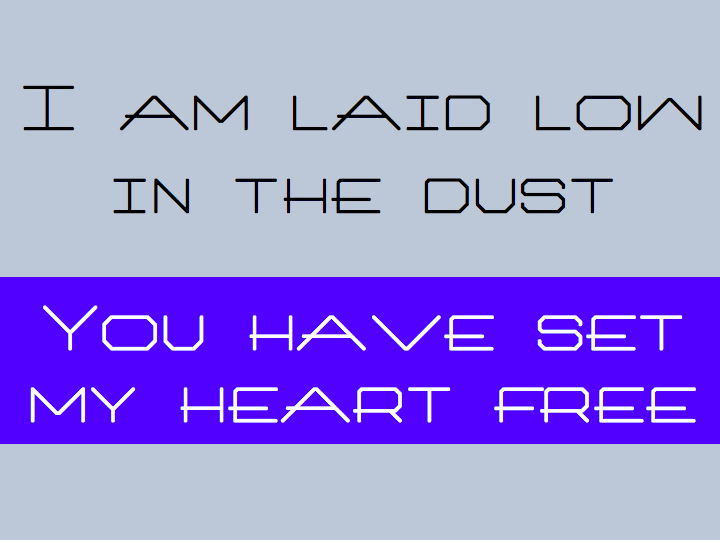
In our P119 Spiritual Workout series, we saw the bookends of the section daleth (Psalm 119:25-32) are:

I am laid low in the dust (v. 25) → You have set my heart free (v. 32).

How do we get this freedom when we are knocked down and laid low in the dust?

The Jews saw the Hebrew letter daleth as a door. Specifically, a door through which humble people stepped into a greater realization that He is God, and I’m not … that He has the answers, and I don’t … that He is in control, and I’m not. So part of going from down in the dust to a free heart is humbly acknowledging that you need God’s help!

In verses 26 and 27, the psalmist recalls his past history, and in so doing he is reminded that God has always been there. God has never left him nor forsaken him, so here’s what the psalmist resolves to do:

  • Teach me = I learned something before, so let me learn again.
  • Let me understand = help me to discern, distinguish; tell things apart. This word is used for things that are divinely disclosed; in other words, they’re things you and I cannot figure out on our own.
  • Meditate = talk with my soul about these new things the Holy Spirit has disclosed to me.

In verse 28, the psalmist says that his soul is weary with sorrow (or as the King James Version states it: my soul melteth for heaviness). The only way to overcome this is to ask for God’s help to energize us to go forward.

In the final four verses of this section you can sense the psalmist’s strength returning as he makes these bold statements:

  • keep me from deceitful ways (v. 29a) = keep me from lying to myself (NLT).
  • be gracious to me (v. 29b) = give me the privilege of knowing Your instructions (NLT).
  • I have chosen (v. 30a) = I have determined (NLT).
  • I have set (v. 30b) = I am long-sighted (on God), not short-sighted (on my problems).
  • I hold fast (v. 31) = the KJV says I have stuck to it!
  • I run (v. 32) = I will [not merely walk, but] run the way of Your commandments (AMP).

So when you are sad/disappointed/injured, run TO God. Don’t cling to your own (old) ways of thinking. Let Him take you from I am laid lowYou have set my heart free.

If you have missed any of the messages in our P119 series, you can access them all by clicking here.