If you want your heart to be able to perform better, you are going to have to stress it a bit—that’s called exercise. The same thing is true for the heart of leadership—we have to exercise our leadership so that it can rise to the challenge later.
J. Warner Wallace wrote, “Everyone, whether they realize it or not, is engaged in worship. We all adore something, elevating it above the rest, sometimes so much that we overlook its flaws.” Check out this post about being careful about what we worship.
“Nothing teaches us about the preciousness of the Creator as much as when we learn the emptiness of everything else.” —Charles Spurgeon
“We should avoid end-time hysteria and ‘not grow weary in doing good’ (2 Thessalonians 3:13). There will be good work to do (vocationally and socially and personally) right up to the Lord’s coming. Our normal earthly duties will not end until the Lord appears. The rule then, until he comes, is, ‘Whatever you do, work heartily, as for the Lord and not for men’ (Colossians 3:23).” —John Piper
Greg Morse has a fascinating post connecting the fable of Chicken Little with the historical account of Noah and the imminent return of Jesus. “I hope an acorn falls afresh on our heads as we observe an Old Testament saint who was the Chicken Little of his day. A man who remained awake and faithful with his back against the end of the world: a man named Noah.”
Listen to the podcast of this post by clicking on the player below, and you can also subscribe on Apple, Spotify, or Audible.
Jesus said His Second Coming would occur at a time in history that was just like the behaviors during “the days of Noah” (Matthew 24:36-39; Luke 17:26-27).
What exactly did those days look like?
The earth was depraved and putrid in God’s sight, and the land was filled with violence (desecration, infringement, outrage, assault, and lust for power). And God looked upon the world and saw how degenerate, debased, and vicious it was, for all humanity had corrupted their way upon the earth and lost their true direction. (Genesis 6:11-12 AMPC)
Paul describes this same environment to his friend Timothy—
For people will be lovers of self and [utterly] self-centered, lovers of money and aroused by an inordinate [greedy] desire for wealth, proud and arrogant and contemptuous boasters. They will be abusive (blasphemous, scoffing), disobedient to parents, ungrateful, unholy and profane. [They will be] without natural [human] affection (callous and inhuman), relentless (admitting of no truce or appeasement); [they will be] slanderers (false accusers, troublemakers), intemperate and loose in morals and conduct, uncontrolled and fierce, haters of good. [They will be] treacherous [betrayers], rash, [and] inflated with self-conceit. [They will be] lovers of sensual pleasures and vain amusements more than and rather than lovers of God. (2 Timothy 3:2-4 AMPC)
It seems to me that we are now living in “the days of Noah” and “the last days.” For Christians, I think this means two things:
(1) Be diligent to keep yourself devoted to living for God.Noah stood out in stark contrast to everyone else because of his righteousness and blamelessness “in his evil generation” (Genesis 6:9). Peter wrote,
So, beloved, since you are expecting these things, be eager to be found by Him [at His coming] without spot or blemish and at peace [in serene confidence, free from fears and agitating passions and moral conflicts]. (2 Peter 3:14 AMPC)
(2) Be active in telling people about the Second Coming of Jesus and that the only door to salvation from God’s judgment is Jesus Christ. Jude wrote this—
Guard and keep yourselves in the love of God; expect and patiently wait for the mercy of our Lord Jesus Christ (the Messiah)–[which will bring you] unto life eternal. And refute [so as to] convict some who dispute with you, and on some have mercy who waver and doubt. [Strive to] save others, snatching [them] out of [the] fire; on others take pity [but] with fear, loathing even the garment spotted by the flesh and polluted by their sensuality. (Jude 1:21-23 AMPC)
The time is short. Let’s stay righteous and let’s stay active in proclaiming the Good News that Jesus is coming as the All-Righteous Judge, but He has already paid for our forgiveness so that we can “stand in the presence of His glory, blameless and with great joy” (Jude 1:24).
Listen to the podcast of this post by clicking on the player below, and you can also subscribe on Apple, Spotify, or Audible.
There’s an interesting verb used with both Enoch and Noah that denotes intimate fellowship—the word is “walked.”
Enoch walked with God; and he was not, for God took him. (Genesis 5:24)
These are the records of the generations of Noah. Noah was a righteous man, blameless in his generation. Noah walked with God. (Genesis 6:9)
David uses this same verb when he prays, “Vindicate me, Lord, for I have walked in my integrity, and I have trusted in the Lord without wavering. Examine me, Lord, and put me to the test; refine my mind and my heart. For Your goodness is before my eyes, and I have walked in Your truth” (Psalm 26:1-3).
And Solomon uses the same verb to say that anyone who walks in righteous integrity leaves a legacy of righteousness for his family: “A righteous person who walks in his integrity—how blessed are his sons after him” (Proverbs 20:7).
There is something important that is implied in this walking. God tells us what it is in this question: How can two walk together unless they agree to do so? (Amos 3:3).
But make no mistake, God doesn’t agree with whatever path I choose to walk, but I must agree to walk God’s path.
I must agree that God’s path is best, despite what everyone else is doing—“Then the Lord saw that the wickedness of mankind was great on the earth, and that every intent of the thoughts of their hearts was only evil continually” (Genesis 6:5). Yet Noah didn’t walk with the wicked, but he was commended because he walked with God.
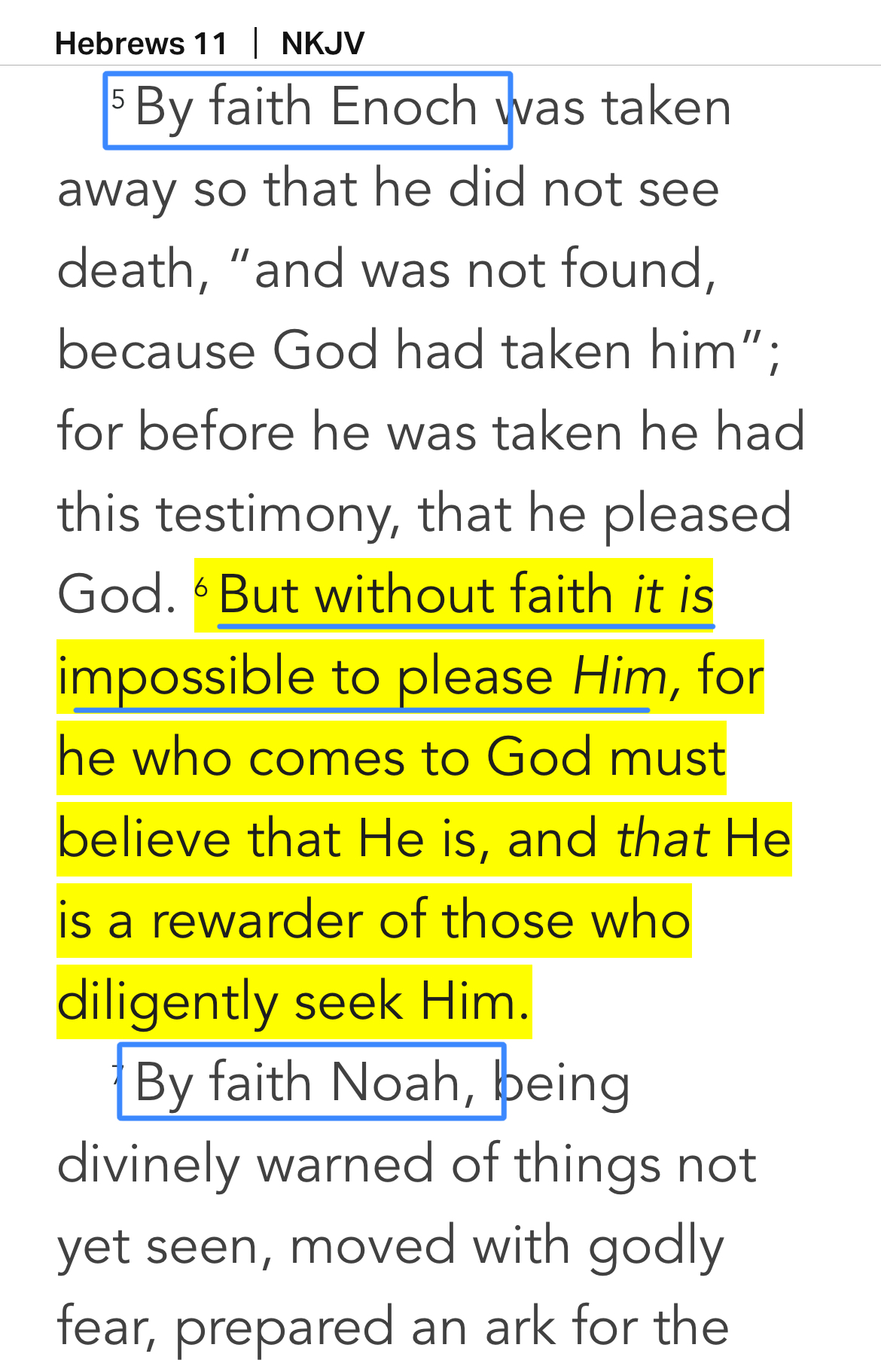
In the New Testament, Enoch and Noah are listed as back-to-back examples of faith (Hebrews 11:5, 7). The verse that connects these two men speaks of the faith-filled integrity that kept them walking with God—
And without faith it is impossible to please Him, for the one who comes to God must believe that He exists, and that He proves to be One who rewards those who seek Him. (Hebrews 11:6)
That word “seek” means to diligently crave. Enoch and Noah and David show us examples of men who diligently craved walking with God above all else. Their faithful, diligent walking made them stand out from all those around them.
What about us? Hebrews 11:6 says we can follow their example. We can choose to walk with God by faith. We can diligently crave Him above all else. When we walk righteously with God, He “rewards those” who do—for ever and ever!
“Hard times create strong men. Strong men create good times. Good times create weak men. Weak men create hard times.” —G. Michael Hopf
“Luck is when an opportunity comes along and you’re prepared for it.” —Denzel Washington
“Ministers are set to be lights to the souls of men in this respect, as they are to be the means of imparting divine truth to them, and bringing into their view the most glorious and excellent objects, and of leading them to and assisting them in the contemplation of those things that angels desire to look into…by which they may know God and Jesus Christ, whom to know is life eternal.” —Jonathan Edwards
“Scripture the unus sermo Dei—the one sermon of God.” —Augustine
T.M. Moore is presenting another outstanding series of posts, this one about the dignity of work. In one post, he wrote, “A just society requires all members to contribute love for their neighbors, whether they are poor or wealthy. Those who will not work when they can do so should be left to the consequences of their sluggardliness (2 Thessalonians 3:10). It is incumbent on local community leaders to discover ways, analogous to the work of gleaning, of helping to meet the needs of local poor. These might include keeping part-time work available, identifying ‘community work’ opportunities and helping to fund them, offering job counseling and training, and so forth. Churches certainly could pioneer the way in this, creating opportunities for work on their campuses, on behalf of needy members, and for the community at large.”
“The Holy Spirit responds to our walking according to the Word, not merely talking about the Word.” —Dr. Tony Evans
God made you uniquely YOU on purpose. So you can ask Him to show you why He put you together as He did—with all of the gifts that make you YOU. Please subscribe to my YouTube channel.
“It is best not to be too dogmatic about the events surrounding [Christ’s] second coming. But if language is a vehicle of thought at all, it certainly takes a good deal of explaining and interpreting to make anything else out of Jesus’ words than that He Himself looked forward to His coming again as a definite historical event in which He will personally and literally appear to gather to Himself and to eternal glory those who have been redeemed by His blood.
“And it is best not to cloud the hope of His coming with too detailed a theory as to what is going to happen when He comes. Some people may be disappointed if Jesus does not follow the schedule they have mapped out for Him.”
“The future doesn’t belong to the fainthearted; it belongs to the brave.” —Ronald Reagan
“We are not called to punish the people for whom Jesus was already punished.” —Kevin Berry
Daniel B. Wallace, a New Testament professor at Dallas Theological Seminary, wrote, “If you could stack up all handwritten manuscripts of the New Testament—Greek, Syriac, Latin, Coptic, all languages—how tall would the stack be? … I have said in many lectures that it would be the equivalent of c. 4 & 1/2 Empire State Buildings stacked on top of each other. How did I come up with that number?” Check out his post to read how he calculated this astounding number. This is just another link in the chain of evidence for the historicity of the Bible.
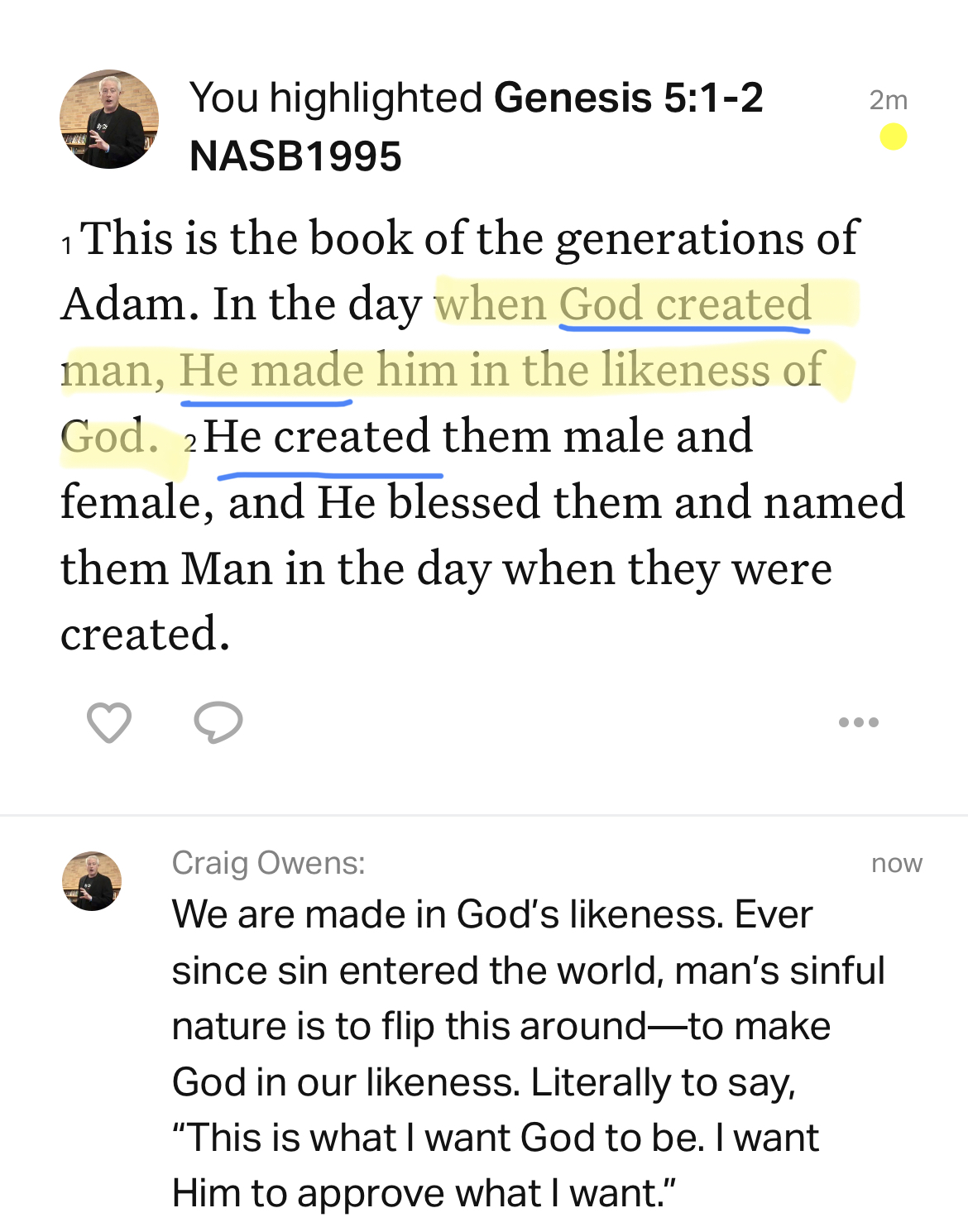
I shared this commentary on YouVersion this week: We are made in God’s likeness. Ever since sin entered the world, man’s sinful nature is to flip this around—to make God in our likeness. Literally to say, “This is what I want God to be. I want Him to approve what I want.”
“Pure humor is the most difficult of all of comedy. Late night humor is funny because it is mean. It is relatively easy to be crude, cynical, and sarcastic. It comes naturally to our fallen natures to criticize, tease, mock, and scoff. It’s much harder to make people laugh by lifting others up.” —Dick Brogden, in his book Proverbs: Amplified and Applied, commenting on Proverbs 1:22
Listen to the podcast of this post by clicking on the player below, and you can also subscribe on Apple, Spotify, or Audible.
Thus Noah did; according to all that God commanded him, so he did (Genesis 6:22).
Noah did ALL that God commanded him to do. Noah was asked to…
… remain pure in a depraved, everything-goes generation
… build an ark in a place nowhere close to water, when it had never rained on the earth, let alone flooded
… gather animals from all over the world
… secure food for himself, his family, and all of the animals he had collected
… convince his family this ark was needed to escape the world-wide flood God was sending, and
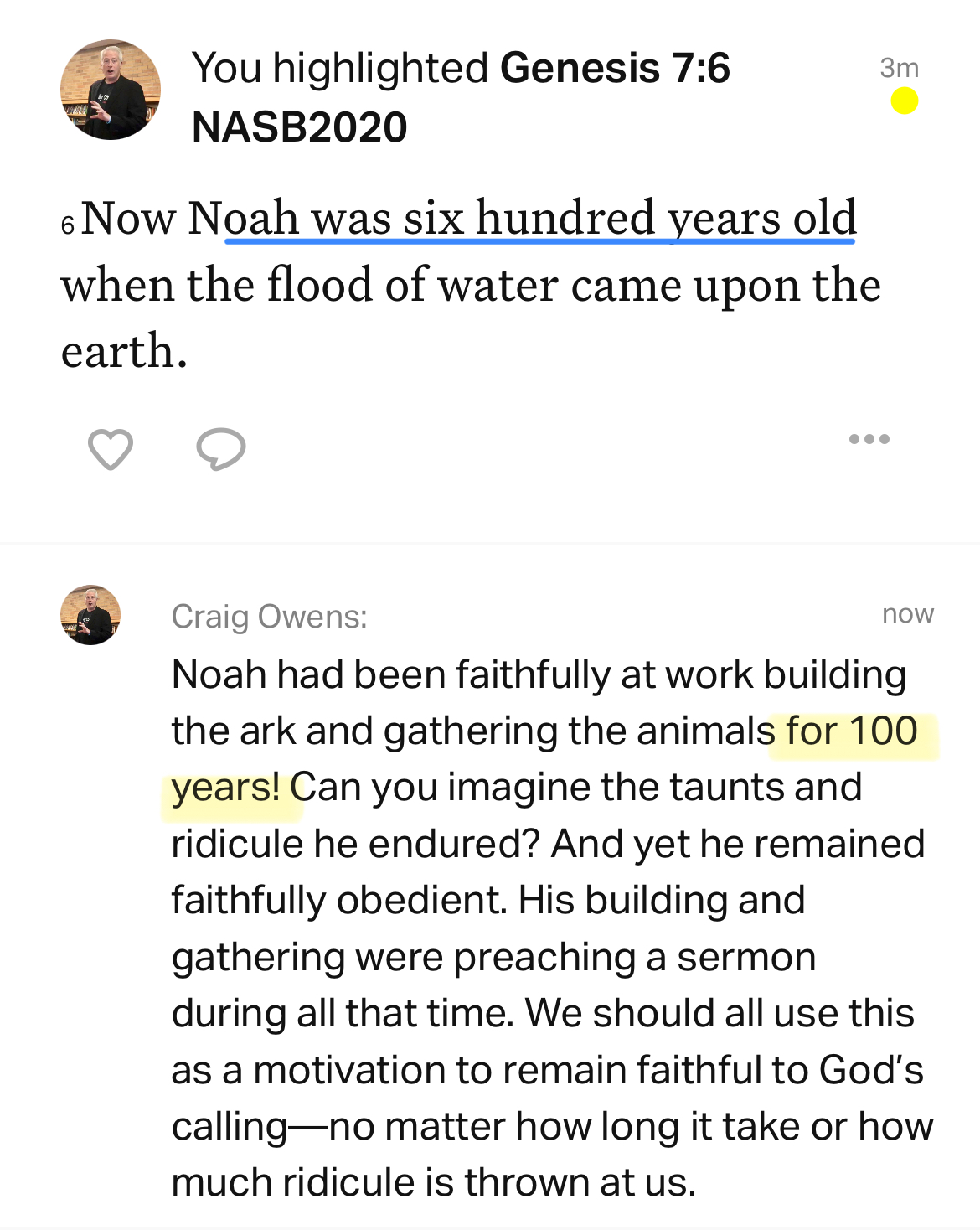
… keep convincing his family to hang in there with him for the next 100 years!
And Noah did all of this: Everything that God told him to do.
“No matter how unusual, or unconventional, or even unheard of, if God commands I must fully obey. I must do according to all that God says.” —Craig T. Owens
In doing so, God saw that Noah was “righteous before Me in this generation” (Genesis 7:1). This allowed God to pronounce a blessing on Noah and his family (9:1).
God’s blessing always follows our obedience.
God doesn’t say, “I have blessed you, now obey Me.” But He says, “If you obey Me I will bless you.”
Here’s a prayer we should consider offering—
Holy Spirit, help me to obey all that You are instructing me to do. May my obedience be as pleasing to my Heavenly Father as Noah’s obedience was. May God be glorified by my full and quick obedience, and may others be drawn to Christ as they see the blessings that follow my obedience. No matter how unusual, or unconventional, or even unheard of, may I be quick to obey. In Jesus name I pray. Amen!
How do you handle a hard passage in the Bible? Peter wrote this about Paul, “His letters contain some things that are hard to understand….” But if we don’t take the time to wrestle with that passage, Peter says this is what happens next: “…which ignorant and unstable people distort, as they do the other Scriptures, to their own destruction” (2 Peter 3:16).
So here’s a 5-step plan I use when I am working through a challenging passage of Scripture.
Ask the Holy Spirit to help you
All Scripture is inspired by the Holy Spirit (2 Timothy 3:16), and the same Holy Spirit lives in a Christian (1 John 2:20). Think about that: the same Holy Spirit that inspired an author to write the words of Scripture is the same Spirit that will illuminate them to you!
Read the difficult passage in context
We will make our task much easier when we “zoom out” from the difficult text and read the whole passage surrounding the difficult verse/phrase. Perhaps we need to “zoom out” even farther to understand why the whole chapter or book was written.
Identify the parts that are clear
Start off by identifying the parts that you do understand, and then see what light that shines on the tricky text.
Cross reference with other Scriptures
Never, ever, ever draw a conclusion from just one passage of Scripture. Paul reminded his audience that he used the “whole counsel of God’s Word” (Acts 20:27) in forming his sermons. If the challenging passage contains an Old Testament passage, look it up; if it references an historical event, read that history. I also like to use biblegateway.com’s excellent search feature to find cross references.
Draw conclusions on what appears to be the main point
Only after you have done step #1-4 should you attempt to draw some conclusions. You will set yourself up for error if you draw a conclusion first, and then try to find other texts in the Bible that agree with you.
The Apostle Peter writes something rather challenging in his first letter. In fact, Martin Luther said this about 1 Peter 3:18-22: “A wonderful text is this, and a more obscure passage perhaps than any other in the New Testament, so that I do not know for a certainty just what Peter means.” If you would like to see how I walk through the 5-step plan on this “obscure passage,” please check out the video below.
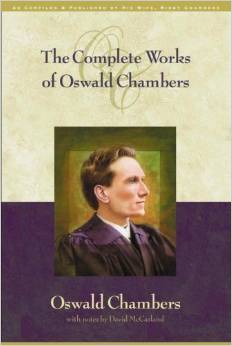
I love having Oswald Chambers walk alongside me as I study the Bible. He is like a wise, insightful friend pointing out, “Did you see that? Did you notice what God is doing here? What do you think that means for you?” In Our Portrait In Genesis, Chambers walks with us through the first book of the Bible.
Previously I reviewed Not Knowing Where by Oswald Chambers, which looks specifically at the life of Abraham in Genesis 12-25. In Our Portrait, Chambers turns his attention to the other notable people in Genesis.
As he looks at Adam, Eve, Cain, Able, Noah, and the other patriarchs, Chambers is constantly pointing out the lessons we can learn from their lives and apply to our lives. Because of his training in psychology, Chambers is so skilled at knowing what was going on in the minds of these biblical examples, and then helping us examine our own thinking along the same lines.
Our Portrait and Not Knowing Where are tremendously helpful commentaries to read as you work your way through the book of Genesis. As always, you can’t go wrong picking up an Oswald Chambers book!
I think most people are familiar with Spock’s famous Vulcan hand signal that means “Live long and prosper.” But long before Star Trek, the origins of this idea were displayed in the pages of Scripture.
The Hebrew word for grace or favor is first used in relation to Noah: “BUT Noah found favor in the eyes of the Lord” (Genesis 6:8). The conjunction BUT at the beginning of this verse tells us that the favor Noah experienced is being contrasted to something exactly the opposite. Here’s what we read two verses earlier, “The Lord was grieved that He had made man on the earth, and His heart was filled with pain” (v. 6).
Noah had to make a choice: would he fear God, or would he fear man. It’s a choice we all have to make today. We have to weigh and decide:
Fear of God vs. fear of man
Pleasing God vs. pleasing myself or someone “important” to me
Humble reliance on God vs. self-reliance
Objective obedience to God vs. subjective agreement when it feels okay
In the section of Psalm 119 called shin (vv. 161-168), the psalmist wrestled with this as well. He decided that he wasn’t going to be afraid of government officials that could persecute him, BUT“my heart trembles at Your Word.” He decided that he wouldn’t look for worldly treasures, BUT he would “rejoice in Your promise” (v. 162). That he wouldn’t praise temporary things, BUT“I praise You for Your righteous laws” (v. 164). That he wouldn’t try to find satisfaction in the temporary, BUT he would bask in the “great peace [for them] who love Your law” (v. 165). On and on it goes…
…I wait for YOUR salvation
…I follow YOUR commands
…I obey YOUR statutes
…I obey YOUR precepts (vv. 166-168)
People that live this way experience the same favor and grace that Noah experienced.
The Lord BLESS you and keep you; the Lord make His face SHINE upon you and be GRACIOUS to you; the Lord turn His face toward you and give you PEACE. (Numbers 6:24-26)
You can live blessed and peaceful by choosing God above all else!
“If we divide ourselves between God and Mammon, or Christ and self, we shall make no progress. We must give ourselves wholly to holy things or else we shall be poor traders in heavenly business, and at our stocktaking no profit will be shown.” —Charles Spurgeon
A very intelligent post on the Noah movie: Gnosticism And Kabbalah In Aronofsky’s Noah. And if you want to read Dr. Brian Mattson’s complete post (which is referenced in the Gnosticism article), read Sympathy For The Devil. Here is one passage from Dr. Mattson’s post—
“In Darren Aronofsky’s new star-gilt silver screen epic, Noah, Adam and Eve are luminescent and fleshless, right up until the moment they eat the forbidden fruit. Such a notion isn’t found in the Bible, of course. This, among the multitude of Aronofsky’s other imaginative details like giant Lava Monsters, has caused many a reviewer’s head to be scratched. Conservative-minded evangelicals write off the film because of the ‘liberties’ taken with the text of Genesis, while a more liberal-minded group stands in favor of cutting the director some slack. After all, we shouldn’t expect a professed atheist to have the same ideas of ‘respecting’ sacred texts the way a Bible-believer would. Both groups have missed the mark entirely. Aronofsky hasn’t ‘taken liberties’ with anything. The Bible is not his text.”
“When we cannot climb the ladder of prayer, surely God comes down to the foot of it where we lie. … We are His and He is of our kind—only all that is infinitely better.” —George MacDonald
“Are you aware of a brother or sister whose marriage is in turmoil? If so, what do you do about it? Do you merely tell others what a shame it is that they are about to break up? Or do you bring up their names to the Lord and strive for them in prayer? Do you desire this ministry of being a helper in prayer? If you don’t know anyone with a need, start by praying for all Christian marriages and all of God’s saints. Your prayers do not have to be long. Simply state your request, and trust God to hear you.” —David Wilkerson



 If you want your heart to be able to perform better, you are going to have to stress it a bit—that’s called exercise. The same thing is true for the heart of leadership—we have to exercise our leadership so that it can rise to the challenge later.





 Craig T. Owens