8 Quotes From “Warnings To The Churches”

This hard-hitting, no-pulled-punches book is directed primarily at pastors and other church leaders. However, I think anyone who loves Christ and His Bride will find much to ponder in Warnings To The Churches by J.C. Ryle. You can read my full book review by clicking here. 

“Go forward, beloved brethren, and fear not the adversary. Only abide in Christ and the victory is sure. Marvel not at the hatred of the gates of hell. ‘If you were of the world, the world would love you as its own’ [John 15:19]. So long as the world is the world, and the devil is the devil, there must be warfare, and believers in Christ must be soldiers! The world hated Christ, and the world will hate true Christians as long as the earth stands. As the great reformer, [Martin] Luther, said, ‘Cain will go on murdering Abel so long as the Church is on earth.’” 

“He who cannot lie has pledged His royal word that all the powers of hell shall never overthrow His Church. It shall continue, and stand, in spite of every assault. It shall never be overcome.” 

“Weak as this true Church may appear to the eye of man, it is an anvil which has broken many a hammer in times past, and perhaps will break many more before the end. He who lays hands on it is touching the apple of God’s eye!” 

“We corrupt the Word of God most dangerously when we throw any doubt on the absolute inspiration of any part of Holy Scripture.” 

“We corrupt the Word of God when we make defective statements as doctrines. We do so when we add to the Bible the opinions of the Church or of the Church Fathers, as if they were of equal authority. We do so when we take away from the Bible for the sake of pleasing men. We do so when from a feeling of false liberality, keep back any statement which seems narrow, or harsh, or hard. We do so when we try to soften down anything that is taught about eternal punishment or the reality of hell. We do so when we bring forward doctrines in their wrong proportions.” 

“May we never care what men say of us so long as we walk in the light of God’s Word! May we strive and pray to be wholly independent of, and indifferent to, man’s opinion, so long as we please God!” 

“Chosen as believers are by God the Father, justified as they are by the blood and righteousness of Jesus Christ, sanctified as they are by the Holy Spirit, believers are still only men—they are still in the body and still in the world. They are ever near temptation. They are ever liable to misjudge, both in doctrine and in practice. Their hearts, though renewed, are very feeble; their understanding, though enlightened, is still very dim. They ought to live like those who dwell in an enemy’s land, and every day to put on the armor of God. The devil is very busy: he never slumbers or sleeps.” 

“Like the fruit of which Eve and Adam ate, at first sight it looks pleasant and good, and a thing to be desired. ‘Poison’ is not written up on it and so people are not afraid. Like counterfeit coin it is not stamped ‘bad.’ It passes for the real thing, because of the very likeness it bears to the truth. Let us be on our guard against the very small beginnings of false doctrine.” 

Warnings To The Churches (book review)

J.C. Ryle died in 1900, placing his writings two centuries before our own. And yet his Warnings To The Churches sound an alarm that is just as relevant to the Church and her leaders as if it were written last week! 

Bishop Ryle spoke and wrote with an authority that sounded much like the Old Testament prophets thundering, “Thus saith the Lord!” And at the same time, you can also hear his ardent love for Christ’s Bride as tenderly as the beloved disciple John, who called himself “the disciple whom Jesus loved.” Taken together, that means Ryle’s words are steeped in authoritative, loving Scripture. 

He pulls no punches in pointing out how even Church leaders have bought into a definition of “church” that doesn’t quite line up with the way Jesus defined it. He reminds pastors of their heavy responsibility to preach the Word of God in all its purity. Just like Jesus, Ryle warns church leaders of the “leaven of the Pharisees and Sadducees.” And he calls for loving confrontation of those leaders who have succumbed to the “leaven” just as Paul confronted Peter. 

This is a challenging book to read simply because of the gut-level honest introspection that it will require. I certainly couldn’t read through this book thinking I’ve got my act together, and I doubt few others will be able to either. If you are a church leader and you would like Ryle’s iron to sharpen your iron, Warnings To The Churches is a definite must-read for you.

Where’s God When I Fear Death?

Is death the #1 fear people have? The simple and complicated answer is: It depends. Fear of dying is a BIG fear in those that statistically are the least likely to die: the young. But fear of dying is very LOW for those on death row, the elderly, and the terminally ill.

I hope to convince you of a fourth group that shouldn’t fear death. It’s a group that all of us can be a member of: Those who understand that physical death is not the end. 

In the Garden of Eden, God planted one tree that was off-limits, and He said that the penalty for eating from this tree was death (Genesis 2:16-17). satan tried to get Adam and Eve to doubt what God said, and after they ate the fruit, it appeared satan was correct—they didn’t die. At least not physically.

But their sin did something far, far worse—it separated them from God’s presence. Now when God appeared, Adam and Eve hid in fear. In fact, Jesus even told His followers that the greatest fear wasn’t physical death but spiritual death (Luke 12:4-5). 

Jesus came to lift our hope to something beyond this physical world. He said, “God so loved the world that He sent His one and only Son, that whoever believes in Him would not die, but would have eternal life” (John 3:16). 

Famed atheist Bertrand Russell said, “I would never die for my beliefs because I might be wrong.” 

On the other hand, Jesus DID die for His beliefs and proved He was right by His resurrection! 

Friend, listen to me—We’re definitely not living our best life now. We are all terminal. Unless Jesus returns, the chances of our physical death are 1-in-1. 

But physical death is not the end! Death of the body means freedom for the soul. Jesus has defeated Death once for all! “Do not be afraid. I am the First and the Last. I am the Living One; I was dead, and now look, I am alive for ever and ever! And I hold the keys of death and Hades,” Jesus said (Revelation 1:17-18) 

Death has been swallowed up in victory. Where, O death, is your victory? Where, O death, is your sting? The sting of death is sin, and the power of sin is the law. But thanks be to God! He gives us the victory through our Lord Jesus Christ. (1 Corinthians 15:54-57) 

Invite Jesus into your life right this moment!! 

Once you have invited Jesus into your life, and your sins have been forgiven, and your destiny following your physical death is assured, this is how you should now live: 

  1. Live in joyful hope. Not optimism—that’s just the belief in what you think you can do. But hope is the belief in what you know Jesus has already done!
  1. Live free of all anxiety and the fear of death. Because nothing can separate you from God’s love and presence (Romans 8:38-39).  
  1. Live telling others about your Risen Savior. It’s the most loving thing that you could do for anyone. 

I don’t think it’s a stretch to say that to be a Christian and to be fearful of death is a sin. A fearful Christian gives God no praise, robs Him of glory, and paints God in a bad light. A happy, secure Christian knows the Lord is his strength, his comfort, his supply. A happy Christian lifts God high and invites others to know this All-Good, All-Happy God too! 

We can live this way because Jesus died to pay the penalty for your sins that separated you from God, and He was resurrected back to life to assure you that your eternal home in God’s presence is secure!

Poetry Saturday—How Few Receive With Cordial Faith

How few receive with cordial faith
the tidings which we bring?
How few have seen the arm revealed
of heav’n’s eternal King?

The Saviour comes! no outward pomp
bespeaks His presence nigh;
No earthly beauty shines in Him
to draw the carnal eye.

Fair as a beauteous tender flow’r
amidst the desert grows,
So slighted by a rebel race
the heav’nly Saviour rose.

Rejected and despised of men,
behold a Man of woe!
Grief was His close companion still
through all His life below.

Yet all the griefs He felt were ours,
ours were the woes He bore:
Pangs, not His own, His spotless soul
with bitter anguish tore.

We held Him as condemned by Heav’n,
an outcast from His God,
While for our sins He groaned, He bled,
beneath His Father’s rod.

His sacred blood hath washed our souls
from sin’s polluted stain;
His stripes have healed us, and His death
revived our souls again.

We all, like sheep, had gone astray
in ruin’s fatal road:
On Him were our transgressions laid;
He bore the mighty load.

Wronged and oppressed how meekly He
in patient silence stood!
Mute, as the peaceful harmless lamb,
when brought to shed its blood.

Who can His generation tell?
from prison see Him led!
With impious show of law condemned,
and numbered with the dead.

’Midst sinners low in dust He lay;
the rich a grave supplied:
Unspotted was His blameless life;
unstained by sin He died.

Yet God shall raise His head on high,
though thus He brought Him low;
His sacred off’ring, when complete,
shall terminate His woe.

For, saith the Lord, My pleasure then
shall prosper in His hand;
His shall a num’rous offspring be,
and still His honours stand. 

His soul, rejoicing, shall behold
the purchase of His pain;
And all the guilty whom He saved
shall bless Messiah’s reign.

He with the great shall share the spoil,
and baffle all His foes;
Though ranked with sinners, here He fell,
a conqueror He rose.

He died to bear the guilt of men,
that sin might be forgiv’n:
He lives to bless them and defend,
and plead their cause in heav’n. —William Robertson

[Reblog] What’s So Good About Good Friday?

I posted this 10 years ago on Good Friday.

Good Friday? Good for whom?

For you and me? Yes.

Good for Jesus, no. It was Bad Friday for Him, wasn’t it?

Or was it?

The writer of Hebrews says, “For the joy set before Him, Jesus endured the Cross, scorning its shame.

What joy?

It was for the joy of what was nailed to the Cross.

So what exactly was nailed to the Cross?

Isaiah records an unusual statement from God—

Comfort, comfort My people, says your God. Speak tenderly to Jerusalem, and proclaim to her that her hard service has been completed, that her sin has been paid for, that she has received from the Lord’s hand double for all her sins.

That seems unfair! We receive double(!) for our sins! Here’s a 2-minute video where I explain what this means culturally—

Only when invoices were paid-in-full did they get doubled-up.

The Bible tells us that we’ve all sinned, and that the invoice or penalty for our sin is death. We have the IOUs of sin nailed to the door of our heart where God says “You owe Me your life!” But we cannot pay this debt by ourselves.

But Jesus can. And Jesus did! Check this out—

He personally carried our sins in His body on the Cross…. (1 Peter 2:24 NLT)

Having canceled and blotted out and wiped away the handwriting of the note with its legal decrees and demands which was in force and stood against us. This He set aside and cleared completely out of our way by nailing it to His Cross. (Colossians 2:14 AMP)

That’s what is good about Good Friday. Jesus knew that taking our sins on His body, and then allowing His body to be nailed to the Cross, would double-up and nail-down our sin once and for all!

When Jesus said, “It is finished!” He was really saying, “It is paid-in-full!”

Thursdays With Spurgeon—The Assurance In Christ’s Ascension

This is a weekly series with things I’m reading and pondering from Charles Spurgeon. You can read the original seed thought here, or type “Thursdays With Spurgeon” in the search box to read more entries.

The Assurance In Christ’s Ascension

     Our Savior descended when He came to the manger of Bethlehem, and further descended when He became ‘a Man of sorrows and acquainted with grief’ (Isaiah 53:3). He descended lower still when He was obedient to death, even the death of the Cross—and further yet when His dead body was laid in the grave. … Long and dark was the descent. There were no depths of humiliation, temptation, or affliction that He did not fathom. …  

     The time came for our Lord to continue His homeward, upward journey and return to the glory from which He had come down. From the Mount of Olives, ‘while they watched, He was taken up, and a cloud received Him out of their sight’ (Acts 1:9). The rest of His upward progress we cannot describe. Imagination and faith step in and conceive of Him as rising beyond all regions known to us, far above all imaginable height. … 

     How high He ascended after He passed the pearly portal Paul cannot tell us, save that he says God ‘seated Him at His right hand in the heavenly places, far above all principality and power and might and dominion’ (Ephesians 1:20-21). He describes our Master as ‘dwelling in unapproachable light’ (1 Timothy 6:16). The Man Christ Jesus has gone back to the place from where His Godhead came! …

     We are sure that the purpose of His love is secure or He would not have returned to His rest. The love that brought Him here would have kept Him here if all things necessary for our salvation had not been finished. …

     Remember that His assent to the Father is representative. Every believer rose with Him and grasped the inheritance. When He rose up, ascending on high, He taught our feet the way. At the last His people will be caught up together with the Lord in the air, and so will they be forever with the Lord. He has made a stairway for His saints to climb to their bliss, and He has traveled it Himself to assure us that the new and living way is available for us. In His ascension He bore all His people with Him.

From Our Lord’s Triumphant Ascension

Jesus told His Father that He had completed everything He was sent to complete (John 17:4). John also says that Christ’s “It is finished” cry from the Cross also marked the completion of everything that had been prophesied about Jesus (John 19:28-30). 

Such amazing love brought Jesus to earth! And His steadfast love also made sure that He left absolutely nothing undone that was needed for our salvation! 

There’s now no reason for us to live fearful or anxious or skeptical about what is coming next. When Jesus says, “I will never leave you nor forsake you” and when He promises that He has gone to prepare a place for us to bring us to be with Him, He has demonstrated His authority to make these claims in His death, resurrection, and ascension. 

Oh my friends, live every day in that glorious assurance!

Where’s God When I Feel Abandoned?

Have you ever felt abandoned by someone? 

You stood up for someone, but when you needed someone to stand up for you they disappeared Or you did what was right, but no one recognized you for it? Or you were the encourager, but when you needed encouragement no one was around for you? Or maybe even you obeyed God down to the very last detail, and yet it seemed God abandoned you when you needed Him most? 

Jesus knows what every single one of these scenarios feel like! He stood up for the downtrodden, but they screamed, “Crucify Him!” He poured His life into teaching and encouraging His friends, but they all ran when the heat was on, leaving Jesus all by Himself. He obeyed God down to the very last detail, and yet it seemed like God abandoned Him when He needed Him most. 

Have you ever felt abandoned by God? 

Jesus did. 

Hanging from the Cross He cried out, “My God, My God, why have You forsaken Me?!” 

I cannot help but notice two things about the state of mind Jesus was in heading to the horrific treatment He would face (see Matthew 26:31-44; 27:27-46). 

  1. Jesus knew all of this was going to happen to Him. Notice the phrases “for it is written” and “so that the Scriptures would be fulfilled” and “so that the writings of the prophets might be fulfilled. Even His cry from the Cross was a literal quotation of Old Testament Scripture (Psalm 22:1).
  2. God was silent. Even though Jesus called out to His Father three times in prayer, “My Father!” there was no heavenly response. 

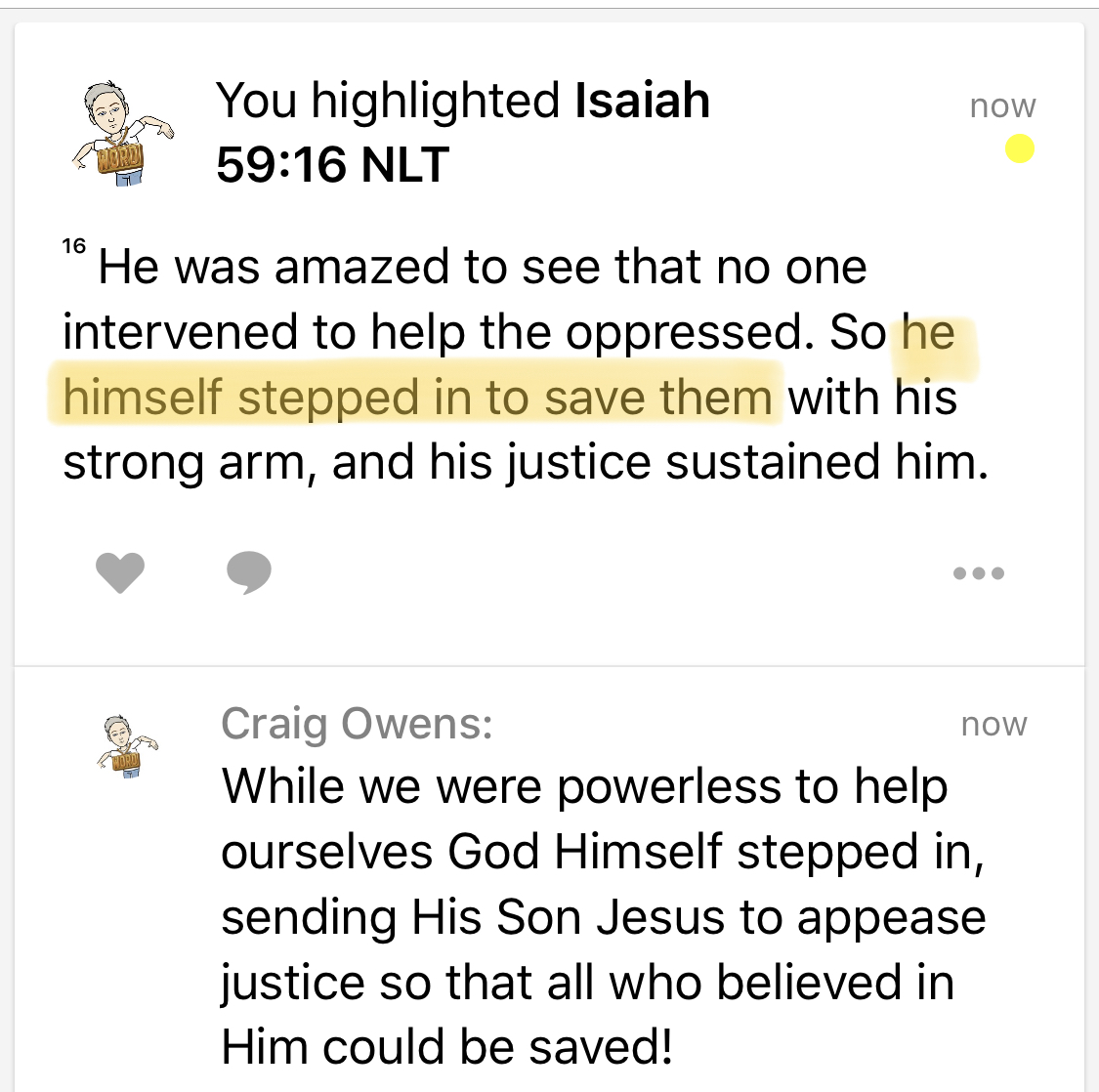
Why would God remain silent during this trial? God didn’t need to speak to His Son during the trial because He had already spoken to Him before the trial! 

It’s the same in our trials—

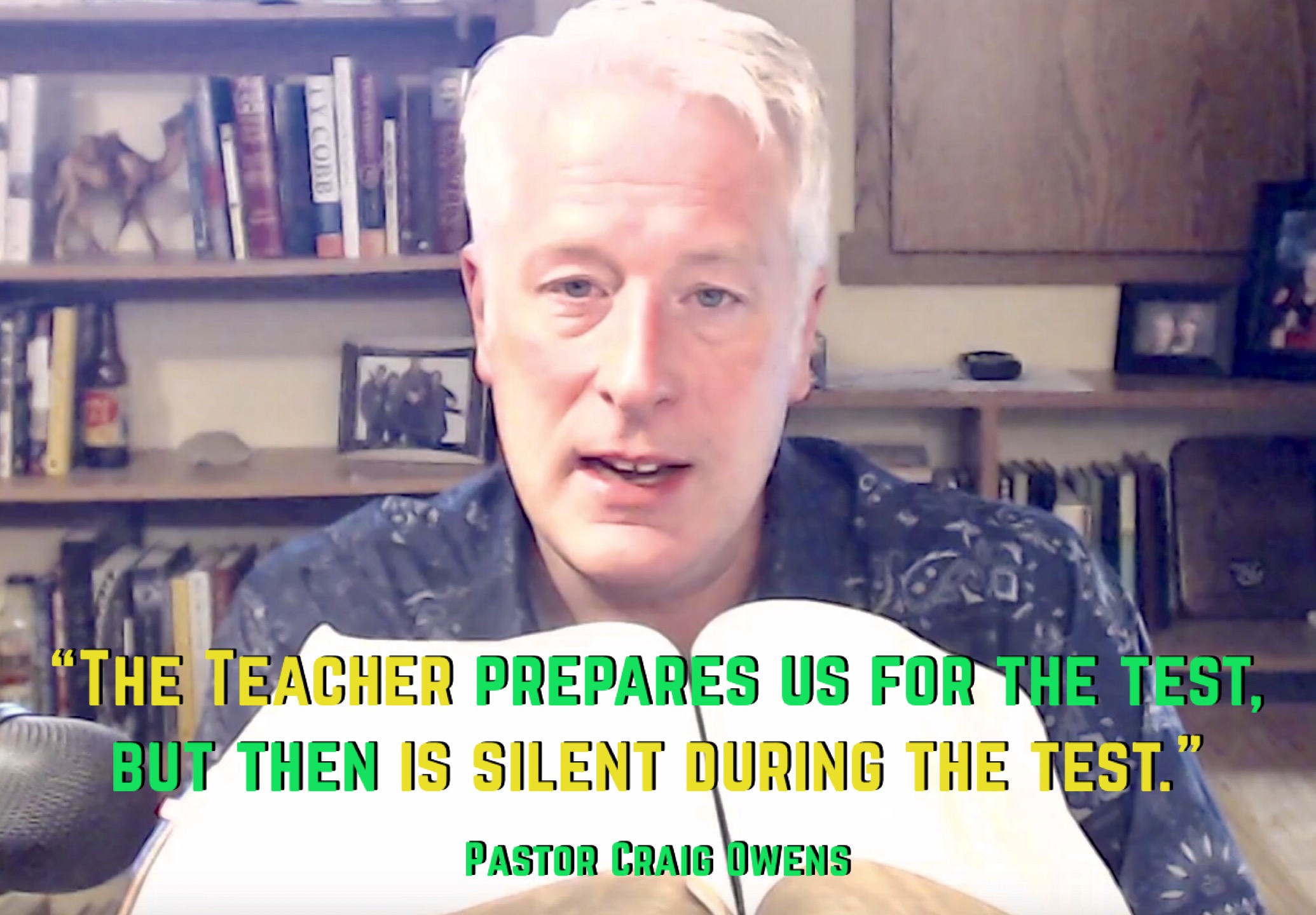
The Teacher prepares us for the test, but then is silent during the test. 

God’s silence is not His rejection or abandonment. Just as God provided for Jesus in His moment of trial, God has provided for us in our trials too—For no temptation (no trial regarded as enticing to sin), [no matter how it comes or where it leads] has overtaken you and laid hold on you that is not common to man [that is, no temptation or trial has come to you that is beyond human resistance and that is not adjusted and adapted and belonging to human experience, and such as man can bear]. But God is faithful [to His Word and to His compassionate nature], and He [can be trusted] not to let you be tempted and tried and assayed beyond your ability and strength of resistance and power to endure, but with the temptation He will [always] also provide the way out (the means of escape to a landing place), that you may be capable and strong and powerful to bear up under it patiently. (1 Corinthians 10:13 AMP) 

So let’s learn three invaluable lessons we can learn from Christ’s time of supreme suffering. 

1. Be honest in God’s presence 

Jesus didn’t hide His feelings, nor did He try to couch His vocabulary in “churchy” sounding words. God already knows what’s in your heart, so pour it out raw and honestly! Go to the Psalms and see raw emotions on full display in prayer. 

2. Lean all your weight on Jesus

Jesus prayed, “My Father!” and He cried out from the Cross, “My God!” His death on the Cross took away the barriers that kept up from coming into God’s presence (see 2 Corinthians 5:21). After His resurrection, Jesus sent this message to His friends: “Go instead to my brothers and tell them, ‘I am ascending to MY Father and YOUR Father, to MY God and YOUR God’” (John 20:17). 

3. Go to the Word of God

This is what Jesus did. In His moment of abandonment, He quoted Psalm 22 from the Cross. Jesus fulfilled ALL of the Scriptures, so now we can pray with greater assurance—For no matter how many promises God has made, they are “Yes” in Christ. And so through Him the “Amen” is spoken by us to the glory of God (2 Corinthians 1:20). 

God’s silence is NOT God’s abandonment. God’s silence is His invitation for us to be honest, to lean on Jesus, and to trust every promise in His Word. Every single promise that is Yes! and Amen! 

If you’ve missed any of the other messages in our Where’s God? series, please check out: 

And join me this Sunday as we take a look at how Jesus has conquered humanity’s ultimate enemy. 

Thursdays With Spurgeon—Why Did Jesus Suffer?

This is a weekly series with things I’m reading and pondering from Charles Spurgeon. You can read the original seed thought here, or type “Thursdays With Spurgeon” in the search box to read more entries.

Why Did Jesus Suffer?

     Think much of all your Lord suffered, but do not overlook the reason for it. If you cannot always understand how this or that grief worked toward the great end of the whole passion, yet believe that it has its share in the grand why. Make a life-study of that bitter but blessed question, ‘Why have You forsaken Me?’ …

     Why, then, did God forsake His Son? I cannot conceive any other answer than this: He stood in our place. There was no reason in Christ why the Father should forsake Him—He was perfect and His life was without spot. God never acts without reason, and since there were no reasons in the character and person of the Lord Jesus why His Father should forsake Him, we must look elsewhere. … 

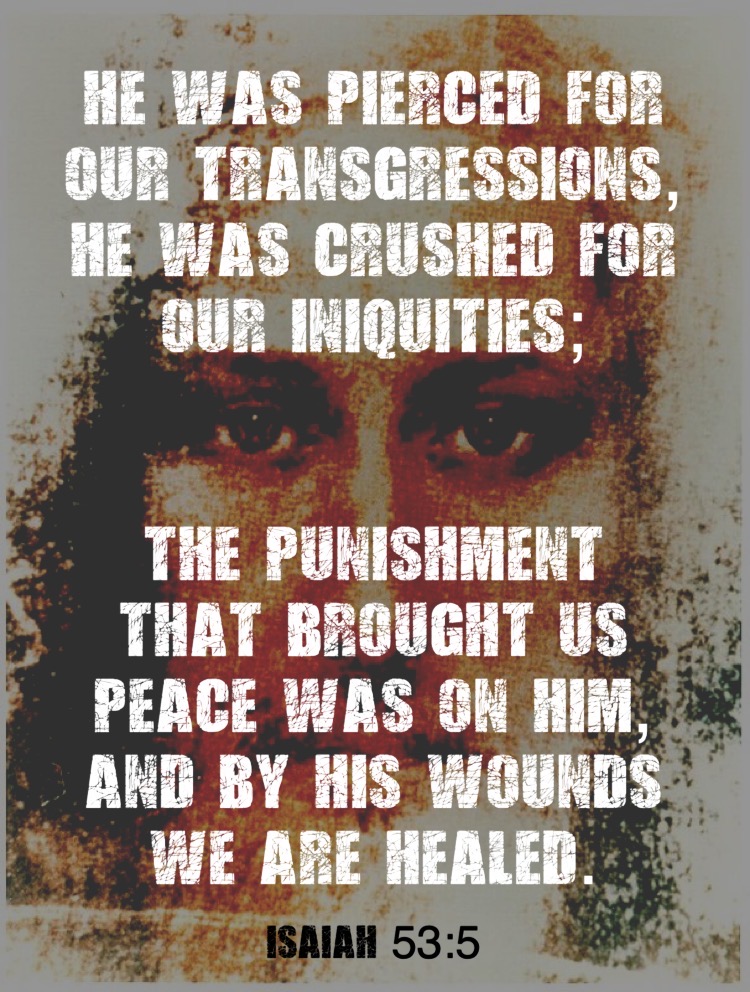
     He bore the sinner’s sin and He had to be treated, therefore, as though He were a sinner, the sinner He could never be! With His own full consent He suffered as though He had committed the transgressions that were laid on Him. Our sin and His taking it upon Himself are the answer to the question, ‘Why have You forsaken Me?’ …

     So long as the smile of God rests on the man, the law is not afflicting him. The approving look of the great judge cannot fall upon a man who is viewed as standing in the place of the guilty. Christ suffered not only from sin, but for sin. If God will cheer and sustain Him, He is not suffering for sin. The judge is not inflicting suffering for sin if He is manifestly encouraging the smitten one. There could have been no vicarious suffering on the part of Christ for human guilt if He had continued, consciously, to enjoy the full sunshine of the Father’s presence. It was essential to being a victim in our place that He should cry, ‘My God, My God why have You forsaken Me?’ … 

     Beloved, see how marvelously, in the person of Christ, the Lord our God has vindicated His law!

From My God, My God Why Have You Forsaken Me?

The great apostle Paul wrote to the church at Corinth about his singular focus—When I came to you, I did not come with eloquence or human wisdom as I proclaimed to you the testimony about God. For I resolved to know nothing while I was with you except Jesus Christ and Him crucified. (1 Corinthians 2:1-2) 

“Think much of all your Lord suffered, but do not overlook the reason for it,” Spurgeon said. 

That earth-quaking, darkness-inducing, temple-rattling, soul-piercing cry of Jesus—My God, My God, why have You forsaken Me?—could only have been uttered by someone perfect. I know plenty of reasons why God could have forsaken me, but Jesus knew only a single reason. 

Jesus did not suffer because of something He had done wrong, but because of all I had done wrong.

That Cross was stained with His blood for my sin. 

Because He was forsaken, I am now accepted in the Beloved Jesus (Ephesians 1:6-7). Think much on this: Jesus was crucified for you and me SO THAT we wouldn’t have to bear the penalty of our sin. Justice was satisfied. Now, by faith in His sacrifice on the Cross, we can come to God not only with our sins forgiven, but we can be accepted by Him as His children. 

My friend, think much on this. Resolve to know the unspeakable value of Christ crucified for you. And then rejoice greatly that you are accepted in the Beloved. If you would like to know more, please contact me.

The Artisan Collection Bible (book review)

How do “Bible” and “artisan” belong in the same title? They’re more connected than you may have previously thought, and The Artisan Collection Bible is the perfect place to explore this connection. 

If you were to ask someone what occupation Jesus had while He was on earth, it would be a safe bet that most people would say He was a carpenter. Indeed, the Greek word tekton is translated as “carpenter” for both Joseph and Jesus (see Matthew 13:54-56 and Mark 6:2-3). However, the consensus among Greek scholars today is that the word tekton is more likely to mean an artisan than just merely a wood-working carpenter. 

That makes sense, doesn’t it? After all, you would expect boundless creativity from the Creator. The One who fashioned our beautiful universe would certainly still be interested in expressing Himself in creative and beautiful ways. 

For myself, reading the Bible sparks in me a desire to be creative with words, and images, and colors, and designs. This is exactly what The Artisan Collection Bible gives you the space to do. And I literally mean “space.” 

One of the most attractive features to me about this Bible is the extra-wide margins along every single page. As you read God’s Word and the beauty of the Creator is illuminated in your heart and mind, you have readily available space to express your own creativity as worship to the Creator. Try crafting a poem, or turning the passage into a personal prayer, or drawing a picture that captures the vibrancy of God’s love letter written to you. The design of this Bible helps you to do more than just read the Word of God, it invites you to interact with the God of the Word. 

The Artisan Collection Bible would make an excellent gift for your creative friend or loved one. 

I am a Zondervan book reviewer and a member of the Bible Gateway Blogger Grid. As a book reviewer I received a free copy of this book from the book publisher. I am not compensated for my review. Although I may have received the book free of charge, I am under no obligation to write a favorable review. I am free to express my honest opinion about the book’s content. If I say it’s a good book, it’s because I think it’s a good book! 

Thursdays With Spurgeon—Turn The Scriptures Into Your Cries

This is a weekly series with things I’m reading and pondering from Charles Spurgeon. You can read the original seed thought here, or type “Thursdays With Spurgeon” in the search box to read more entries.

Turn The Scriptures Into Your Cries

     My God, My God, why have You forsaken Me?’ … This cry is taken from ‘the Book.’ Does it not show our Lord’s love of the sacred Volume, that when He felt His sharpest grief, He turned to the Scripture to find a fit utterance for it? Here we have the opening sentence of the twenty-second Psalm. Oh, that we may so love the inspired Word that we may not only sing to its score but even weep to its music! … 

     When you are delirious with pain, think of your Bible. When your mind wonders, let it roam toward the mercy seat. And when your heart and your flesh fail, still live by faith and still cry, ‘My God, my God.’ … 

     Grief has small regard for the laws of the grammarian. Even the holiest, when in extreme agony, though they cannot speak otherwise than according to purity and truth, yet use a language of their own that only the ear of sympathy can fully receive.

From My God, My God Why Have You Forsaken Me?

Grief is a time to get real. As Spurgeon said, “Grief has small regard for the laws of the grammarian.” Grief is not a time to carefully choose our words. 

Get real with God in your prayer closet. Tell Him everything that frustrates you. I promise you, God is not going to fall off His throne and say, “What?! I had no idea you felt that way!” He already knows what’s in your heart, but it will do you much good to get it out. Much like someone with food poisoning needs to vomit out the poison, God will not be offended when you vomit out your “My God, my God, why have You forsaken me?” in His presence. 

Many scholars believe that Jesus probably sang the entirety of the 22nd Psalm from the Cross. Whether He did or not, listen to the assurances that Jesus had from just this psalm alone, even in the midst of His heart-wrenching cry—

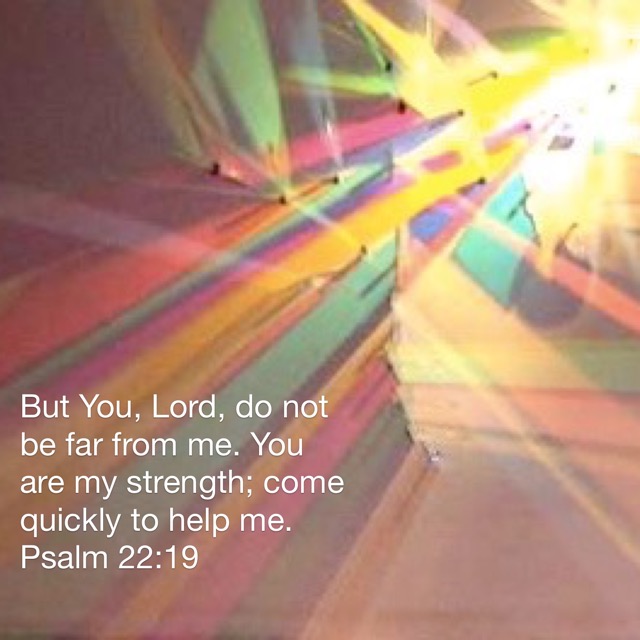
My God, my God, why have You forsaken me? Why are You so far from saving me, so far from my cries of anguish? My God, I cry out by day, but You do not answer, by night, but I find no rest. Yet You are enthroned as the Holy One; You are the one Israel praises. In You our ancestors put their trust; they trusted and You delivered them. To You they cried out and were saved; in You they trusted and were not put to shame. … But You, Lord, do not be far from me. You are my strength; come quickly to help me. … I will declare Your name to my people; in the assembly I will praise You. … From You comes the theme of my praise in the great assembly; before those who fear You I will fulfill my vows. The poor will eat and be satisfied; those who seek the Lord will praise Him. (vv. 1-5, 19, 22, 25-26) 

Jesus turned to the Scriptures to find the words He cried out to His Father in His darkest moment, and He invites you to follow His example. Make the psalms your own—turn them into your own prayers. God is close to you when you cry out, “My God!” to Him.