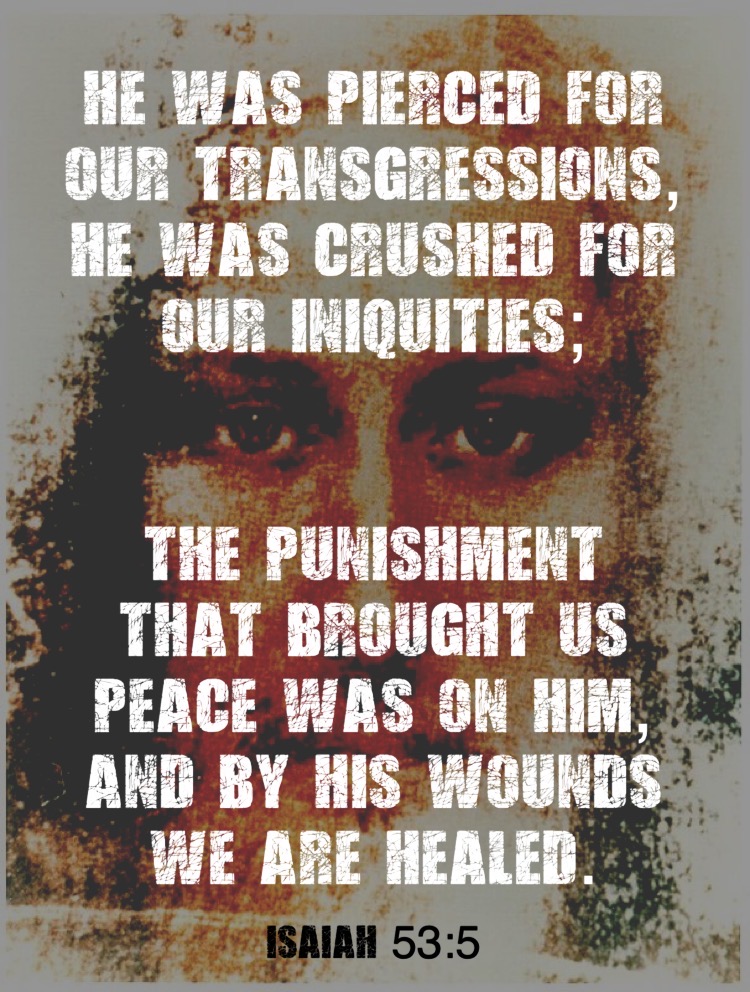
Thursdays With Spurgeon—Why Did Jesus Suffer?

This is a weekly series with things I’m reading and pondering from Charles Spurgeon. You can read the original seed thought here, or type “Thursdays With Spurgeon” in the search box to read more entries.

Why Did Jesus Suffer?

     Think much of all your Lord suffered, but do not overlook the reason for it. If you cannot always understand how this or that grief worked toward the great end of the whole passion, yet believe that it has its share in the grand why. Make a life-study of that bitter but blessed question, ‘Why have You forsaken Me?’ …

     Why, then, did God forsake His Son? I cannot conceive any other answer than this: He stood in our place. There was no reason in Christ why the Father should forsake Him—He was perfect and His life was without spot. God never acts without reason, and since there were no reasons in the character and person of the Lord Jesus why His Father should forsake Him, we must look elsewhere. … 

     He bore the sinner’s sin and He had to be treated, therefore, as though He were a sinner, the sinner He could never be! With His own full consent He suffered as though He had committed the transgressions that were laid on Him. Our sin and His taking it upon Himself are the answer to the question, ‘Why have You forsaken Me?’ …

     So long as the smile of God rests on the man, the law is not afflicting him. The approving look of the great judge cannot fall upon a man who is viewed as standing in the place of the guilty. Christ suffered not only from sin, but for sin. If God will cheer and sustain Him, He is not suffering for sin. The judge is not inflicting suffering for sin if He is manifestly encouraging the smitten one. There could have been no vicarious suffering on the part of Christ for human guilt if He had continued, consciously, to enjoy the full sunshine of the Father’s presence. It was essential to being a victim in our place that He should cry, ‘My God, My God why have You forsaken Me?’ … 

     Beloved, see how marvelously, in the person of Christ, the Lord our God has vindicated His law!

From My God, My God Why Have You Forsaken Me?

The great apostle Paul wrote to the church at Corinth about his singular focus—When I came to you, I did not come with eloquence or human wisdom as I proclaimed to you the testimony about God. For I resolved to know nothing while I was with you except Jesus Christ and Him crucified. (1 Corinthians 2:1-2) 

“Think much of all your Lord suffered, but do not overlook the reason for it,” Spurgeon said. 

That earth-quaking, darkness-inducing, temple-rattling, soul-piercing cry of Jesus—My God, My God, why have You forsaken Me?—could only have been uttered by someone perfect. I know plenty of reasons why God could have forsaken me, but Jesus knew only a single reason. 

Jesus did not suffer because of something He had done wrong, but because of all I had done wrong.

That Cross was stained with His blood for my sin. 

Because He was forsaken, I am now accepted in the Beloved Jesus (Ephesians 1:6-7). Think much on this: Jesus was crucified for you and me SO THAT we wouldn’t have to bear the penalty of our sin. Justice was satisfied. Now, by faith in His sacrifice on the Cross, we can come to God not only with our sins forgiven, but we can be accepted by Him as His children. 

My friend, think much on this. Resolve to know the unspeakable value of Christ crucified for you. And then rejoice greatly that you are accepted in the Beloved. If you would like to know more, please contact me.

The Artisan Collection Bible (book review)

How do “Bible” and “artisan” belong in the same title? They’re more connected than you may have previously thought, and The Artisan Collection Bible is the perfect place to explore this connection. 

If you were to ask someone what occupation Jesus had while He was on earth, it would be a safe bet that most people would say He was a carpenter. Indeed, the Greek word tekton is translated as “carpenter” for both Joseph and Jesus (see Matthew 13:54-56 and Mark 6:2-3). However, the consensus among Greek scholars today is that the word tekton is more likely to mean an artisan than just merely a wood-working carpenter. 

That makes sense, doesn’t it? After all, you would expect boundless creativity from the Creator. The One who fashioned our beautiful universe would certainly still be interested in expressing Himself in creative and beautiful ways. 

For myself, reading the Bible sparks in me a desire to be creative with words, and images, and colors, and designs. This is exactly what The Artisan Collection Bible gives you the space to do. And I literally mean “space.” 

One of the most attractive features to me about this Bible is the extra-wide margins along every single page. As you read God’s Word and the beauty of the Creator is illuminated in your heart and mind, you have readily available space to express your own creativity as worship to the Creator. Try crafting a poem, or turning the passage into a personal prayer, or drawing a picture that captures the vibrancy of God’s love letter written to you. The design of this Bible helps you to do more than just read the Word of God, it invites you to interact with the God of the Word. 

The Artisan Collection Bible would make an excellent gift for your creative friend or loved one. 

I am a Zondervan book reviewer and a member of the Bible Gateway Blogger Grid. As a book reviewer I received a free copy of this book from the book publisher. I am not compensated for my review. Although I may have received the book free of charge, I am under no obligation to write a favorable review. I am free to express my honest opinion about the book’s content. If I say it’s a good book, it’s because I think it’s a good book! 

Thursdays With Spurgeon—Turn The Scriptures Into Your Cries

This is a weekly series with things I’m reading and pondering from Charles Spurgeon. You can read the original seed thought here, or type “Thursdays With Spurgeon” in the search box to read more entries.

Turn The Scriptures Into Your Cries

     My God, My God, why have You forsaken Me?’ … This cry is taken from ‘the Book.’ Does it not show our Lord’s love of the sacred Volume, that when He felt His sharpest grief, He turned to the Scripture to find a fit utterance for it? Here we have the opening sentence of the twenty-second Psalm. Oh, that we may so love the inspired Word that we may not only sing to its score but even weep to its music! … 

     When you are delirious with pain, think of your Bible. When your mind wonders, let it roam toward the mercy seat. And when your heart and your flesh fail, still live by faith and still cry, ‘My God, my God.’ … 

     Grief has small regard for the laws of the grammarian. Even the holiest, when in extreme agony, though they cannot speak otherwise than according to purity and truth, yet use a language of their own that only the ear of sympathy can fully receive.

From My God, My God Why Have You Forsaken Me?

Grief is a time to get real. As Spurgeon said, “Grief has small regard for the laws of the grammarian.” Grief is not a time to carefully choose our words. 

Get real with God in your prayer closet. Tell Him everything that frustrates you. I promise you, God is not going to fall off His throne and say, “What?! I had no idea you felt that way!” He already knows what’s in your heart, but it will do you much good to get it out. Much like someone with food poisoning needs to vomit out the poison, God will not be offended when you vomit out your “My God, my God, why have You forsaken me?” in His presence. 

Many scholars believe that Jesus probably sang the entirety of the 22nd Psalm from the Cross. Whether He did or not, listen to the assurances that Jesus had from just this psalm alone, even in the midst of His heart-wrenching cry—

My God, my God, why have You forsaken me? Why are You so far from saving me, so far from my cries of anguish? My God, I cry out by day, but You do not answer, by night, but I find no rest. Yet You are enthroned as the Holy One; You are the one Israel praises. In You our ancestors put their trust; they trusted and You delivered them. To You they cried out and were saved; in You they trusted and were not put to shame. … But You, Lord, do not be far from me. You are my strength; come quickly to help me. … I will declare Your name to my people; in the assembly I will praise You. … From You comes the theme of my praise in the great assembly; before those who fear You I will fulfill my vows. The poor will eat and be satisfied; those who seek the Lord will praise Him. (vv. 1-5, 19, 22, 25-26) 

Jesus turned to the Scriptures to find the words He cried out to His Father in His darkest moment, and He invites you to follow His example. Make the psalms your own—turn them into your own prayers. God is close to you when you cry out, “My God!” to Him.

Hope-Filled Declarations

Whether it’s a doctor’s diagnosis of cancer, or a rapidly-spreading virus, or a painful relationship, Lynn Eib helps us keep these unexpected things in perspective. These may have taken us by surprise, but nothing takes God by surprise. No diagnosis nor prognostication can limit God’s power and love. 

As David learned in his painful time: “God has spoken once, twice have I heard this: that power belongs to God. Also to You, O Lord, belong mercy and loving-kindness” (Psalm 62:11-12). He is All-Powerful and All-Loving. 

Let these declarations Lynn made when receiving her cancer diagnosis help put things in perspective for you—

I refuse to believe my diagnosis is a death sentence.

I believe God is on the side of my healing because His unbreakable Word says so.

I believe treatment is effective against this illness, especially the skillful efforts of scientific medicine with my strategies for replacing lying thoughts with truth.

I believe my hormones and immune system are on the side of my healing and are even now working to overcome this illness.

I believe I am personally responsible for my treatment and for managing it.

I believe hope is a choice. I choose hope, not hopelessness.

My major aim is to have a mind fully submitted to the Spirit of God and His truth, not just to see better lab results or improvement in physical symptoms.

I believe I am on earth to share Christ, hope, and joy with others. I am here only to love others, regardless of my physical condition.

I believe that God’s will is good. 

I believe that He loves me and wants only the best for me—whatever He is allowing me to experience right now.

I can recover from this illness and live a rich, productive life of service. But whether I recover or not, I am going to leave this life someday regardless. Until then I can live a full life of service every day for as long as I am given. 

—Lynn Eib, in Peace In The Face Of Cancer 

How Long Will This Last?

Chaos is all around us! There’s infighting both politically and religiously. Government officials are imposing new laws and regulations and restrictions. Lots of rival voices are clamoring to be heard. Loss of personal freedoms, civil liberties, and even the freedom of worship. Uncertainty about the future. Fear in the present. 

Although this may sound like current conditions in the USA, I’m actually describing life in Israel around 31 BC. 

The people of Israel were frustrated beyond words with the restrictions they faced. They thought they were living in their land and that they should be able to govern themselves as they saw best. 

Have you ever been in that place of utter frustration? Are you there now? “What’s happening? Why is this not going according to plan? Isn’t there anything I can do? How long is this going to last? God, where are You in all of this?! 

We humans like to think we are in control. Or at least we like to think that we know God’s timetable. Throughout the Bible—and still today—the questions persist: 

  • How long will this last? 
  • When will this take place? 
  • What about him? 
  • Is this the right time? 

(see Psalm 13:1-2; Matthew 24:3; John 21:21; Acts 1:6; Revelation 6:9-10) 

When we ask God, “How long?” He never answers us by pointing to the calendar or the clock, but He points us to principles in His Word.

Here are four principles that we need to ask the Holy Spirit to help us grasp: 

  1. God’s timing was determined before Time even started. 
  2. God is using this “How long?” time to perfect us for His service.
  3. God is using this “How long?” time to empower us to point others to Him.
  4. God is calling us to trust Him alone during our “How long?” times. 

(see Psalm 90:2; Isaiah 46:10; Psalm 13:5-6; Romans 5:3-4; Matthew 24:13-14; Acts 1:7-8; John 21:21) 

Those Israelites I described earlier were so frustrated with asking “How long?” and apparently getting no answer, that they frequently took matters into their own hands. This never turned out well for them. But God’s perfect timing was heading toward His perfect fulfillment.  

We may not perceive it, but God IS doing more than we will ever know during our “How long?” times. 

God’s perfect timing for His people couldn’t be until Caesar Augustus came on the scene and brought an end to the political uncertainty that kept everything in chaos. Nearly 30 years before Jesus was to be born in Bethlehem, Augustus was launching the pax Romana—the peace of Rome—all over the world. Pax Romana was creating the perfect environment in which Jesus could be born and minister, as well in which His followers could then take the Good News all over the world. 

Jesus was born “in the fullness of time” (Galatians 4:4), around 5 BC, in a land where a Jordanian king (Herod the Great) served an Italian emperor (Caesar Augustus) to a people frustrated with waiting. But God knew exactly when and where and how to send His Son to be our Savior!

So, my friends—Trust God in the “How long?” times! 

God’s perfect plan includes YOU, so guard against any anxious thoughts that would make you bail out of His perfectly-timed plan early. (see Psalm 139:16, 23-24)

Join me this Sunday as we continue our series called Where’s God? 

Poetry Saturday—On Another’s Sorrow

Can I see another’s woe,
And not be in sorrow too?
Can I see another’s grief,
And not seek for kind relief?

Can I see a falling tear,
And not feel my sorrow’s share?
Can a father see his child
Weep, nor be with sorrow filled?

Can a mother sit and hear
An infant groan, an infant fear?
No, no! never can it be!
Never, never can it be!

And can He who smiles on all
Hear the wren with sorrows small,
Hear the small bird’s grief and care,
Hear the woes that infants bear—

And not sit beside the next,
Pouring pity in their breast,
And not sit the cradle near,
Weeping tear on infant’s tear?

And not sit both night and day,
Wiping all our tears away?
Oh no! never can it be!
Never, never can it be!
He doth give His joy to all:
He becomes an infant small,
He becomes a man of woe,
He doth feel the sorrow too.

Think not thou canst sigh a sigh,
And thy Maker is not by:
Think not thou canst weep a tear,
And thy Maker is not near.

Oh He gives to us His joy,
That our grief He may destroy:
Till our grief is fled an gone
He doth sit by us and moan. —William Blake

Thursdays With Spurgeon—God With Us

This is a weekly series with things I’m reading and pondering from Charles Spurgeon. You can read the original seed thought here, or type “Thursdays With Spurgeon” in the search box to read more entries.

God With Us

     ‘And you shall call His name Immanuel.’ …

     This is His name, ‘God with us.’ … He has not lost that name. Jesus had that name on earth, and He has it now in heaven! He is now ‘God with us.’ Believer, He is God with you to protect you! You are not alone, because the Savior is with you! … 

     But if you would know this name most sweetly, you must know it by the teaching of the Holy Spirit. … Unless the Holy Spirit takes the things of Christ and applies them to our heart, it is not ‘God with us.’ Otherwise, God is a consuming fire. …

     Immanuel—it is wisdom’s mystery, ‘God with us.’ Just look at it and wonder. Angels desire to see it. The plumb line of reason cannot reach halfway into its depth. The eagle wings of science cannot fly so high, and the piercing eyes of the vulture of research cannot see it! ‘God with us.’  It is hell’s terror! satan trembles at the sound of it. His legions fly apace; the black-winged dragon of the pit quails before it! Let satan come to you suddenly and do you but whisper that word, ‘God with us,’ and back he falls, confounded and confused! satan trembles when he hears that name, ‘God with us.’ It is the laborer’s strength. How could he preach the gospel, how could he bend his knees in prayer, how could the missionary go into foreign lands, how could the martyr stand at the stake, how could the confessor acknowledge his Master, how could men labor if that one word were taken away? ‘God with us’ is the sufferer’s comfort, it is the balm of his woe, it is the alleviation of his misery, it is the sleep that God gives to His beloved, it is the rest after exertion and toil.

     Ah, and to finish, ‘God with us’ is eternity’s sonnet, it is heaven’s hallelujah, it is the shout of the glorified, it is the song of the redeemed, it is the chorus of angels, and it is the everlasting oratorio of the great orchestra of the sky! ‘God with us!’

From The Birth Of Christ

Jesus is—always was and always will be—God with us! 

Do you know Jesus personally? He wants you to know Him. He came to earth so that you could know Him. His heart’s desire is to be with you today and have you with Him forever! 

If you have questions about this, please send me a message and let’s chat.


The God That Runs To You

I’m sure you’ve experienced what I’ve experienced. My nice, orderly world came crashing down all around me. It totally blindsided me! I got on my knees to do some serious soul searching and I prayed, “God I know you called me here. I know I’ve done what You’ve asked me to do. What’s happening? Why am I being attacked? Where are You, God?

I’m sure you’ve been there too. “Where’s God?” has been the cry of countless people from the oldest book of the Old Testament until this very day. In dark times our world seems to shrink, and the weight of the entire world seems to rest on our shoulders. We begin to at first sigh and say, “Why me?” and then those sighs become sobs of “God, where are You?!” 

“Left to ourselves we tend immediately to reduce God to manageable terms. We want to get Him where we can use Him, or at least know where He is when we need Him. We want a God we can in some measure control. We need the feeling of security that comes from knowing what God is like.…” —A.W. Tozer 

Here’s the truth: We are always in a spiritual battle. It’s just hard to see it in the “good ol’ days.” But in the “bad ol’ days” we realize we don’t have it all figured out! The dark days are simply the reality of spiritual warfare revealed. 

Answers don’t come easily because there are no easy answers!

One of Job’s friends named Zophar thought he had God all figured out. He concluded his easy answer that the wicked have a bad life and the righteous have a good life. So if things were going badly for Job, he must have messed up somewhere. Except Zophar was wrong! God Himself pronounced Job righteous (see Job 20:1-8; 1:8). Zophar’s easy answer now doesn’t seem so easy, does it? 

I’ll say it again: In the hard times, answers don’t come easily because there are no easy answers. 

In fact, Jesus told us, “I have told you these things, so that in Me you may have peace. In this world you will have trouble. But take heart! I have overcome the world” (John 16:33). 

How did Jesus overcome the world of hurt and pain? He did it by taking a hands-on approach—Since the children have flesh and blood, [Jesus] too shared in their humanity…. For this reason He had to be made like His brothers in every way…. Because He Himself suffered when He was tempted, He is able to help those who are being tempted (Hebrews 2:14, 17-18). 

The phrase “He is able to help” literally means that He runs to the cry! 

In order to be able to run to our cry, Jesus has to know what our cries sound like and what our pain feels like. He had to taste all our pain for Himself. He had to feel all of them in a human body. The Limitless God was incarnated in limited flesh to experience everything we would ever feel. 

Now that Jesus has died and been resurrected, our cries bring Him running to us with ALL of His LIMITLESS love and power and empathy! 

In the good ol’ days we may not recognize just how close God is to us. But when the bad days come and we cry out to Him, He comes running. Jesus may be closer when you say, “I don’t know where You are!” than He’s ever been before. 

Go ahead and cry out. Jesus knows those cries. He hears you, He knows your pain, He runs to your cries, He comes close to help.

Join me next week as we continue this series asking “Where’s God?” in the specific difficulties that we face. We’ll ask questions like, “Where’s God in my depression?” and “Where’s God in my divorce?” and “Where’s God in this national calamity?” Please don’t miss these encouraging messages! 

Thursdays With Spurgeon—The Humility Of Christ’s Birth

This is a weekly series with things I’m reading and pondering from Charles Spurgeon. You can read the original seed thought here, or type “Thursdays With Spurgeon” in the search box to read more entries.

The Humility Of Christ’s Birth

     Moreover, there was a peculiar wisdom ordaining that Jesus Christ should be the Son of the woman, and not of the man, because ‘that which is born of the flesh is flesh’ (John 3:6). Had He been born of the flesh, and merely flesh, He would, naturally, by carnal generation, have inherited all the frailties and the sins and the infirmities that man has from his birth. He would have been conceived in sin and shaped in iniquity, even as the rest of us. Therefore He was not born of man, but the Holy Spirit overshadowed the virgin Mary and Christ stands as the one man, save one other, who came forth pure from His Maker’s hands, who could ever say, ‘I am pure.’ Yes, and He could say far more than that other Adam could say concerning his purity, for He maintained His integrity and never let it go! And from His birth down to His death He knew no sin, neither was guile found in His mouth….

     Let us take courage here. If Jesus Christ was born in a manger in a rock, why should He not come and live in our rocky hearts? If He was born in a stable, why should not the stable of our souls be made into a house for Him? If He was born in poverty, may not the poor in spirit expect that He will be their friend? If He thus endured degradation at the first, will He count it any dishonor to come to the very poorest and humblest of His creatures and tabernacle in the souls of His children? Oh no!

From The Birth Of Christ

If Jesus was only God, He would never have been able to stoop to love us. 

If Jesus was only Man, He would never have been able to help us. 

Only the God-Man has both the power and the love to save use. Truly there is no one like Jesus! 

No one like Jesus our troubles can see
No one can feel them so keenly as He
No one like Jesus our burdens will bear
He and He only can answer our prayer

No one like Jesus could die for our sins
No one but Jesus can make the heart clean
No one but Jesus such mercy can show
He and He only such love can bestow

Jesus, Jesus
Precious Savior
Oh, how I love You
Love and adore You
Thank You, thank You
Precious Jesus
Oh, how You love me
Oh, what a Savior to me —Fanny J. Crosby, No One Like Jesus

Fasting Power

We are always engaged in an intense spiritual battle. Sometimes we feel the intensity of the battle, sometimes we don’t. But it’s always happening. 

This is why we need to make prayer an ongoing discipline. If we do, we will be much more likely to turn to prayer when we feel the intense moments, and our faith in those intense moments will be strengthened and ready to respond. 

Every day we are either preparing or repairing. Prayer is either helping us prepare for the challenges we will be facing, or it’s helping us recover from the battle we just fought. Believe me: it’s much better to be preparing than it is to be repairing!

One time the disciples of Jesus got stymied in a spiritual battle. A father brought his demon-possessed son to them, asking that they cast out the demon. But this distraught father then had to report to Jesus, “They couldn’t do it” (see Matthew 17:14-21). 

Why couldn’t they? These men had been taught how to pray by Jesus Himself, and they already had experienced ministry success (Matthew 6:9-13; Mark 6:13). So were they stumped now? 

Jesus told them, “It’s because you have so little faith.” He went on to tell them that these intense spiritual battles require an ongoing lifestyle of prayer. Jesus wasn’t suggesting that they should have said to that father, “Come back in a few days after we have prayed and fasted.” 

But what Jesus was really saying was that all of us need to stay connected to the Source of our spiritual power at every single moment (John 15:5, 7). Sometimes this requires taking our eyes off ourselves and our own appetites. 

In a word: we need to fast. 

The word fasting means “to cover the mouth” or “to close the mouth.” 

  • often fasting is in response to calamity or as a sign of mourning 
  • sometimes it’s alongside an intense prayer 
  • ideally it should be a regular discipline in our lives. In Matthew 6:16-18, notice the phrase “when you fast.” Not “if you fast,” but when. Jesus assumed that we would do this, and since this teaching appears right after Jesus teaches us how to pray, it makes sense that prayer and fasting go well together.  

Fasting is not…

Fasting intensifies our focus on God in the quiet times so that we can keep our eyes on Him in the crashing storms. 

Fasting helps us tune in to the unmistakable Voice of the Holy Spirit in the peaceful moments so that we can still recognize His Voice in the tumult of battle. 

Is there a comfort food you tend to run to? Is there a coping activity that you typically use to de-stress? Is there someone or something other than God that is your go-to in times of trouble? Perhaps we should start there and fast from those things for a short period of time. 

Fasting in the quiet times will strengthen us for the intense battle times. 

Let’s prepare daily for victory, instead of having to repair after a failure.