David was uncomfortable with the spiritual status quo that had seemed to descend on him and the people around him. He desperately wanted to stoke the passion of his heart to burn hot for God again. So he prayed, he fasted, he abased himself, he cried out to God. Zeal for God consumed David!
In both of them we see a passion for God that moved them to action, but action that also aroused the anger of those who preferred the passivity of “religious activity” to the realness of God’s presence. Both David and Jesus became the targets of insults, scorn, and mockery.
Just as Jesus would announce 1000 years later, David expressed the same motivation that prompted his zealous action: God’s glory—
may those who hope in You not be disgraced because of me
may those who seek You not be put to shame because of me
may Your salvation protect me
Zeal for a real closeness to God’s presence is rare.
Zeal for that intimacy upsets hypocrites.
Zeal for God empowers others who aren’t satisfied with merely playing at religion.
Zeal for God glorifies God.
And most importantly: Zeal for God pleases God!
When you see play actors and religionists blocking hungry seekers from coming closer to God, I pray that your zeal, too, burns white hot. Be prepared to be the target of scorn, but know that God’s smile on your zeal for Him far outweighs their insults.
Listen to the podcast of this post by clicking on the player below, and you can also subscribe on Apple or Spotify.
John Maxwell said, “We overestimate what we can do in a day; we underestimate what we can do in a year.” In the case of parents, I think we do the same thing: we lose sight of the big picture when we get bogged down in the details and the pressures of each day. As a result, many times we are unaware of the long-lasting rewards that come from our daily obedience and God’s eternal faithfulness. This was never more true than in the fantastic love story of Ruth + Boaz.
Last week we looked at the history of Pentecost and what took place 50 days after the Passover, we saw a picture in the Old Testament that was fulfilled in the New Testament. The Jews saw this too. In the Hagiographa (Holy Writings), they picked one of the books of the Old Testament to read at each of the annual Jewish feasts, and the Book of Ruth was selected for Pentecost. I think this was because Ruth herself is in essence a “harvest” of God’s blessing. She is the firstfruits of the non-Jewish people whom God has engrafted into His holy family.
The story of Ruth’s coming into God’s family is birthed out of heartache. Elimelech and Naomi live in Bethlehem, which means “house of bread,” but it was a time of famine; Elimelech’s name means “God is King,” but Israel had no king and everyone lived for themselves; Naomi’s name means “pleasant,” but her days were bitter (see Judges 21:25; Ruth 1:1-5).
After Elimelech and his two sons die, Naomi changes her name to Mara (which means bitterness), and yet she hears “that the LORD had come to the aid of His people by providing food for them” (1:6) and she decides to return to Bethlehem. She counsels her daughters-in-law to remain with their families in Moab, but Ruth decides to cling to Naomi.
In the face of utter hopelessness, Ruth could have chosen what was familiar—her family, her homeland, her gods—but instead she chose to cling to Jehovah.
Perhaps when she heard that Jehovah had come to the aid of His people she realized, “I’ve never heard of Chemosh coming to the aid of his people. We sacrifice to him but he doesn’t do anything for us. This Jehovah cares for His people. I will put my faith in Him.”
Ruth’s first step of obedience triggers a whole series of events, starting with one that the writer of this story introduces by saying, “As it turned out, Ruth found herself working in a field belonging to Boaz.”
But this is no accident—God oversees and directs all of the details. All of history is His story. God is in charge of the tiniest of details: even down to directing Ruth to the right barley field. Ruth’s trust in Jehovah, her obedience in following Him, set things in motion that God had planned, just as Paul explained in Romans 8:28.
Moms, at the end of the story of your life, you will look back and see so many as-it-turned-out moments. But that means you are living in an as-it-turned-out moment right now.If you believe God is overseeing the details of your life, then every momentis divinely orchestrated by Jehovah, every moment is strategic, every moment is God-directed. You must remain daily obedient to God.
Don’t underestimate the legacy of God’s provision that is being established every single day that you remain obedient in following Him. Look at the amazing way God used Ruth and Boaz in the family tree of Jesus Christ (Ruth 4:16-22; Matthew 1:1-6).
Moms, your obedience today is preparing your children—and their future generations—for them to experience God’s provision in a coming famine (see Amos 8:11; Psalm 91).
Of course, Ruth can’t give birth to Obed without there being a father, which is why the story is called Ruth + Boaz. On Father’s Day we’ll look at the integrity of Boaz that made this possible too, so please make plans to join me then.
This is a weekly series with things I’m reading and pondering from Charles Spurgeon. You can read the original seed thought here, or type “Thursdays With Spurgeon” in the search box to read more entries.
Listen to the podcast of this post by clicking on the player below, and you can also subscribe on iTunes or Spotify.
It’s Not About Me
Look to Me, and be saved, all you ends of the earth! For I am God, and there is no other. (Isaiah 45:22 NKJV)
To whom does God tell us to look for salvation? Oh, does it not lower the pride of man when we hear the Lord say, ‘Look to Me, and be saved, all you ends of the earth’? … How frequently you who are coming to Christ look to yourselves. ‘Oh!’ you say, ‘I do not repent enough.’ That is looking to yourself. ‘I do not believe enough.’ That is looking to yourself. ‘I am not worthy.’ That is looking to yourself.
‘I cannot discover,’ says another, ‘that I have any righteousness.’ It is quite right to say that you have not any righteousness. But it is quite wrong to look for any. It is ‘Look to Me.’ God will have you turn your eye off yourself and look to Him. The hardest thing in the world is to turn a man’s eye off himself. As long as he lives, he always has a predilection to turn his eye inside and look at himself, whereas God says, ‘Look to Me.’ …
It is not a consideration of what you are but a consideration of what God is and what Christ is that can save you.
For God has committed them all to disobedience, that He might have mercy on all (Romans 11:32). He has passed a sentence of condemnation on all so that the free grace of God might come upon many to salvation. ‘Look! Look! Look!’ This is the simple method of salvation. ‘Look to Me, and be saved, all you ends of the earth!’
From Sovereignty And Salvation
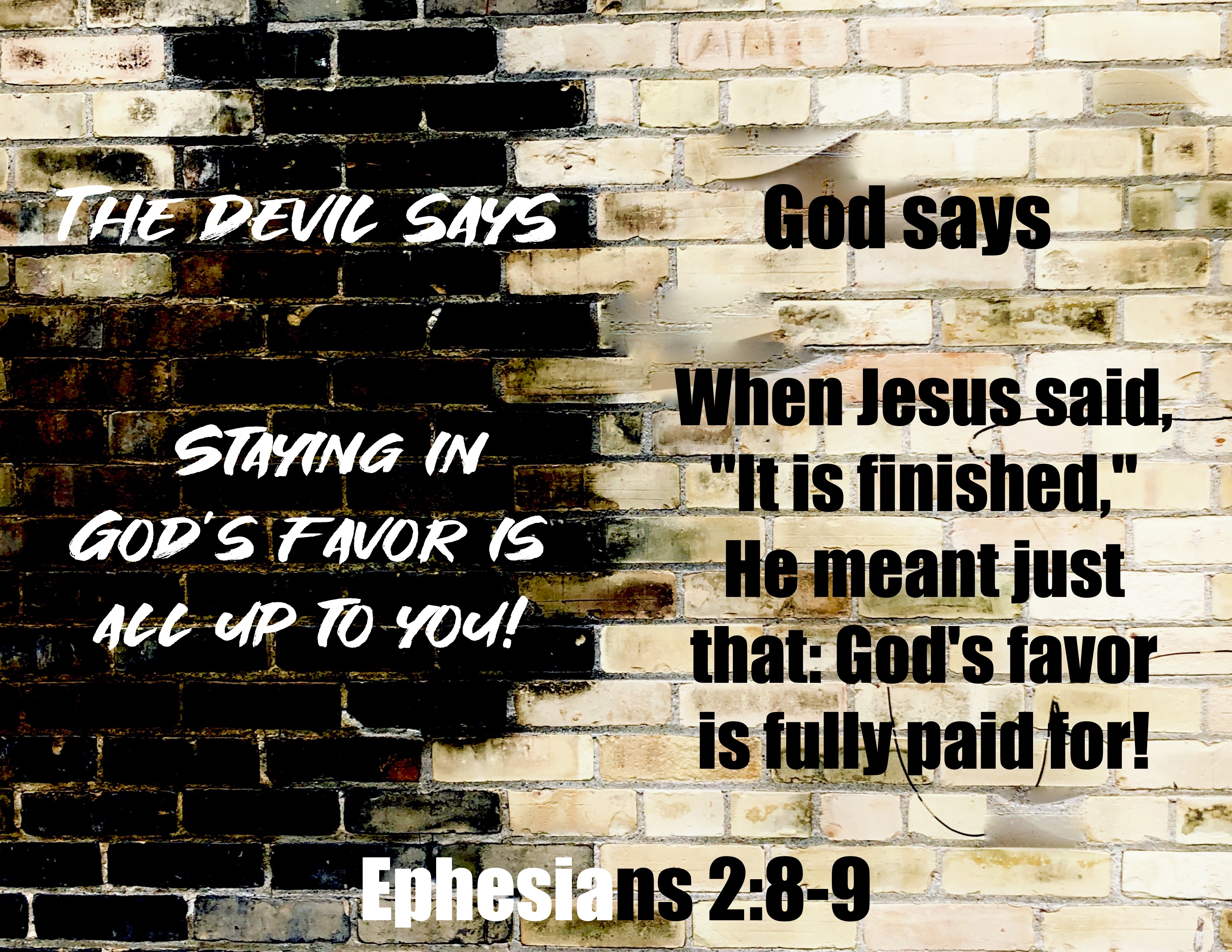
One of the greatest—and most effective—lies that satan keeps whispering is that you have to do something to be saved. Or you have to do something to stay in God’s favor. Or your salvation is hanging by a flimsy thread.
No, no, no! A thousand times no!
When Jesus said, “It is finished,” He meant just that: everything is done. Salvation is a free gift of God’s grace extended to you through faith in Jesus alone. Jesus paid it all, so there is absolutely nothing you or I can add to it. For it is by grace you have been saved, through faith—and this is not from yourselves, it is the gift of God—not by works, so that no one can boast (Ephesians 2:8-9).
Tell the devil he is a liar. Then, as Spurgeon said, look away from yourself and what you think you have to do and look only to the completed work of Calvary. True freedom and eternal joy come to the heart that looks away from itself and keeps its gaze on its Savior! When Jesus said, “It is finished,” He meant it! It is no longer what I must do, but what Jesus already did!
Listen to the podcast of this post by clicking on the player below, and you can also subscribe on Apple or Spotify.
The baptism in the Holy Spirit is what Pentecostal Christians frequently refer to as our distinctive doctrine. Notice I said distinctive, not better. Can someone go to heaven without being baptized in the Spirit? Yes! But I’ve found that living in this distinctive empowerment makes the journey to heaven so much more productive and joyful.
After the resurrection of Jesus, everything took on a whole new meaning, because the “light” had been turned on in the Old Testament palace. All of the practices that Jews had been observing for thousands of years suddenly had a new illumination in the New Testament.
Pentecost had always been a celebration 50 days following the Passover. In the Old Testament, the law was given from Sinai on the fiftieth day after the deliverance from Egypt, so in a sense, the appearance of God on Sinai was the birthday of the Jewish nation. In the New Testament, the first outpouring of the Holy Spirit on the first Pentecost after Jesus ascended to heaven was the birthday of the Christian nation for all people.
One of our foundational truths says: “All believers are entitled to and should ardently expect and earnestly seek the promise of the Father, the baptism in the Holy Spirit and fire, according to the command of our Lord Jesus Christ. This was the normal experience of all in the early Christian Church.”
And another foundational truth is a corollary: “The baptism of believers in the Holy Spirit is witnessed by the initial physical sign of speaking with other tongues as the Spirit of God gives them utterance.”
God has always confirmed His presence with signs and wonders. From the signs in Egypt to convince Pharaoh that Jehovah was greater than the Egyptian gods to the ministry of Jesus. In fact, Peter said that the signs and wonders done by Jesus were God’s authentication of His ministry (see Luke 5:17-26; Acts 2:22; Acts 10:38).
R.A. Torrey noted, “The baptism of the Holy Spirit always imparts power for service…. The baptism of the Holy Spirit is the Spirit of God falling upon the believer, taking possession of his faculties, imparting to him gifts not naturally his own, but which qualify him for the service to which God has called him.”
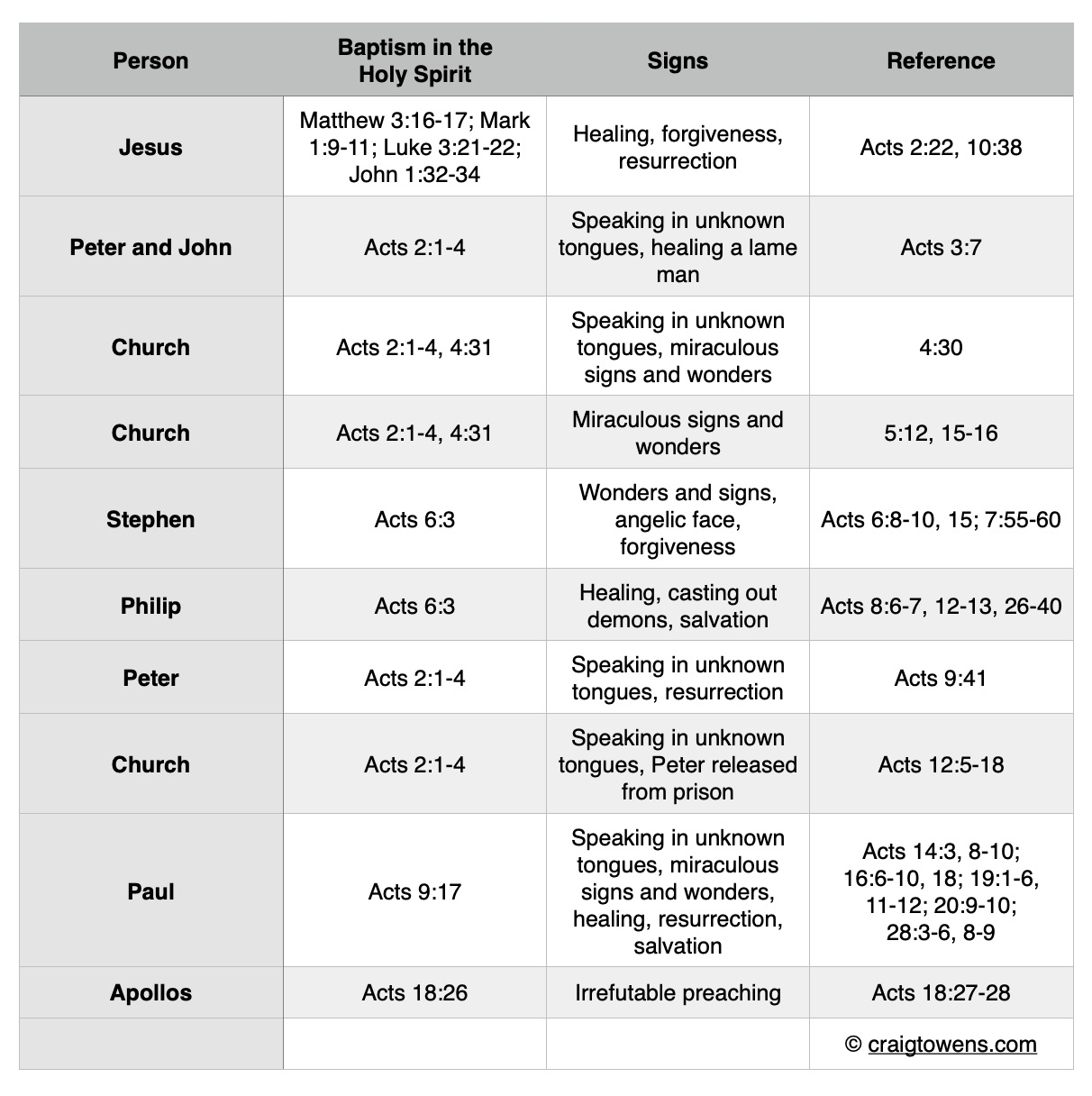
Check out this chart that walks us through the book of Acts to see how God authenticated the ministry of those who were baptized in the Holy Spirit by performing signs and wonders through them:
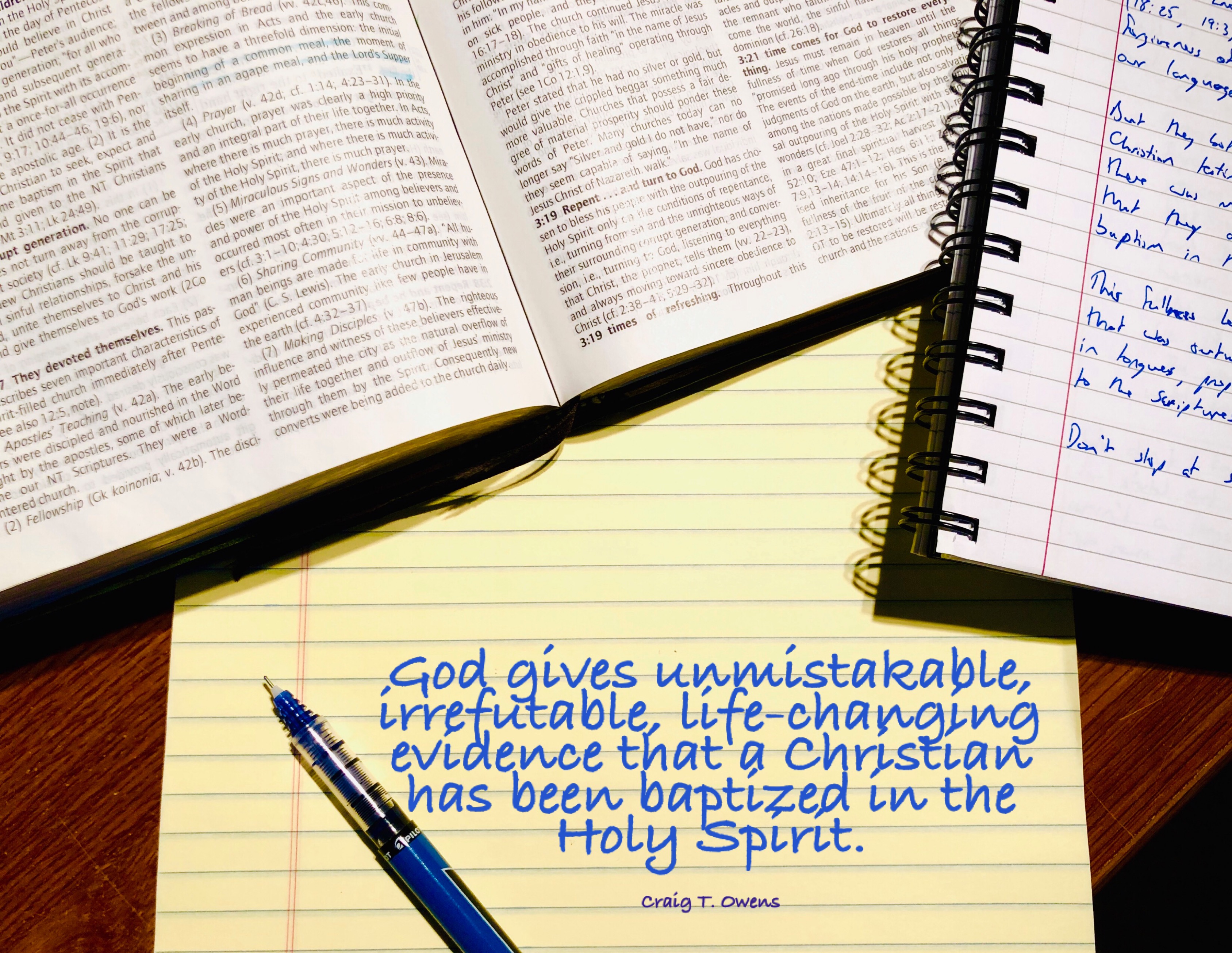
When a Christian is baptized in the Holy Spirit there are two types of evidence:
Initial evidence—typically speaking in a language that hasn’t been studied but has been supernaturally given by God.
Ongoing evidence—I would sum this up in the word sanctification (or as I like to remember it by saying “saint-ification”). This is the lifestyle change, the empowered living, and even the miraculous that cannot be counterfeited by man’s efforts alone.
Let’s not try to put God in a box—telling Him when, where, how, and through whom He can work. Instead, let’s yield ourselves entirely to Him by letting the Holy Spirit empower us to be effective, unmistakable witnesses for Jesus Christ.
I will be relaunching our series called We Are: Pentecostal in two weeks. Please follow along with all of the messages in this series by clicking here for the details.
Listen to the podcast of this post by clicking on the player below, and you can also subscribe on Apple or Spotify.
I have some sobering news for you: You are going to die.
Death is the great equalizer. It comes for the rich and poor, the scholar and the illiterate, all races, all ages, the healthy as well as the sick. Unless you’re still alive when Jesus comes back again, your odds of dying are 1-in-1.
What happens “on the other side”? What happens after this life is over? Since it seems dark and mysterious to most people, they tend to ignore it until it’s thrust upon them. That’s why I find the dying words of people interesting. Like P.T. Barnum asking, “How were the receipts today at Madison Square Garden?” or W.C. Fields reading a Bible on his deathbed and telling a friend, “I’m looking for a loophole.”
Jesus is steeped in Scripture, so nearly everything He says in His final four declarations come directly from the Psalms, including His final phrase which comes from Psalm 31:5.
When Jesus broke a three-hour silence with His cry, “My God, My God, why have You forsaken Me,” both Matthew and Mark use the Greek words megas phoné to describe how loudly Jesus spoke. And now with His final words, Luke uses the same megas phoné description.
Notice in the first megaphone cry Jesus calls on God the All-Powerful Creator. And with His last megaphone declaration, He calls on His Father who is All-Loving. How comforting it is to know that God is both All-Powerful and All-Loving! Not only can He answer our cries, but He delights to answer them!
The word Jesus uses for “commit” is in the future tense and it means “to entrust as a deposit.” Jesus believed that God was going to do more than just give Him life again, but that He would give life to all who would believe in Him.
Unlike atheist Bertrand Russell who said, “I would never die for my beliefs because I might be wrong,” Jesus DID die for His beliefs, and by rising from the dead proved He was right in trusting God.
Job saw an inescapable death for all mankind, but he also foresaw the forgiveness of God (Job 14:5, 16-17). Jesus died once for all mankind and was then resurrected, bringing about the death of death by making forgiveness accessible to anyone (Hebrews 9:27-28; 1 Corinthians 15:19-22).
We can now have the peace that comes from trusting the only One to Whom we can safely entrust our souls. Because Jesus brought death to death, we can have the same peace when we die that Jesus had when He died.
With faith in Jesus, you can…
…live today knowing you’re invincible until God calls you home
…live today full of joy because your home in heaven is secure
…live your very last day in peace because you know to Whom your soul is entrusted
Because Jesus died at peace with God, we can face death triumphantly!
This is a weekly series with things I’m reading and pondering from Charles Spurgeon. You can read the original seed thought here, or type “Thursdays With Spurgeon” in the search box to read more entries.
Listen to the podcast of this post by clicking on the player below, and you can also subscribe on iTunes or Spotify.
Never Give Up On Grace And Mercy
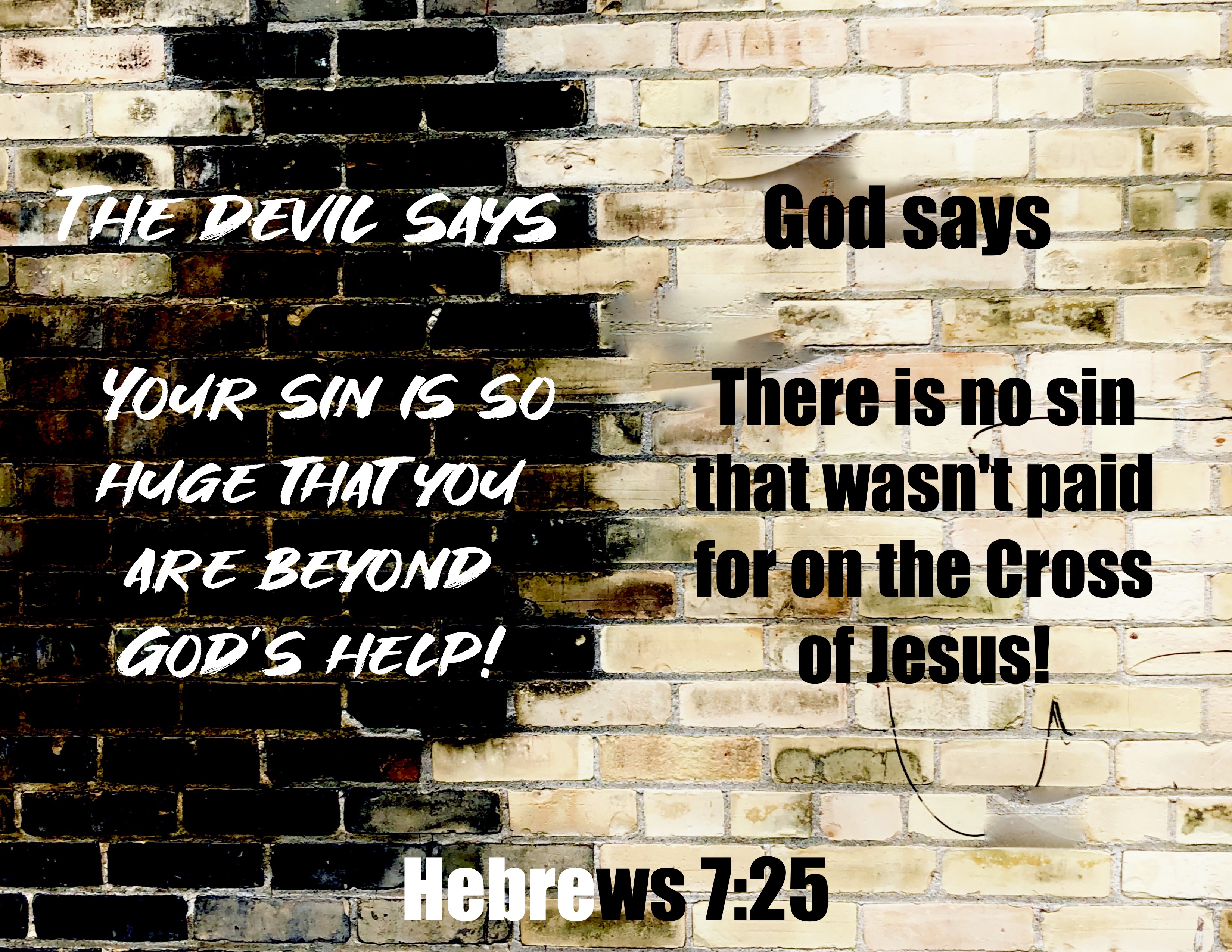
Therefore He is also able to save to the uttermost those who come to God through Him, since He always lives to make intercession for them. (Hebrews 7:25)
My friends, it is one thing to go to church or chapel. It is quite another thing to go to God. …
Coming to God is not what some of you suppose, that is, now and then sincerely performing an act of devotion but giving to the world the greater part of your life. You think that if sometimes you are sincere, if now and then you put up an earnest cry to heaven, God will accept you. And though your life may be still worldly and your desires still carnal, you suppose that for the sake of this occasional devotion God will be pleased, in His infinite mercy, to blot out your sins. I tell you, sinners, there is no such thing as bringing half of yourselves to God and leaving the other half away. …
If I should see a sinner staggering on his progress to hell, I would not give him up, even when he had advanced to the last stage of iniquity. Though his foot hung trembling over the very edge of perdition, I would not cease to pray for him. And though he should in his poor drunken wickedness go staggering on till one foot was over hell and he was ready to perish, I would not despair of him. Till the pit had shut its mouth upon him I would believe it is possible that divine grace might save him. See there! He is just upon the edge of the pit, ready to fall. But before he falls, free grace bids, ‘Stop that man!’ Down mercy comes, catches him on her broad wings, and he is saved—a trophy of redeeming love.
From Salvation To The Uttermost
My friend, if you don’t have a personal relationship with God through the forgiving work that Jesus accomplished on the Cross, I implore you to come to Him before another minute passes. When Jesus said from this Cross, “It is finished,” He told you that He paid in full your debt that would have kept you separated from God forever.
Now you just need to come to Him in faith. Simply pray something like this: “God, I acknowledge that I am a sinner separated from You. But I believe that Jesus paid the penalty for all of my sins when He died on the Cross. Because of that payment, I am asking You to forgive me and bring me into a full relationship with You. I pray this in the name of Jesus. Amen.”
And let me speak to you, my Christian brother or sister who has been praying earnestly for the salvation of someone dear to you. Let me encourage you to not give up! God’s mercy and God’s grace are so swift that even with the last breath they can swoop in to save. Never cease to pray for them and know that Jesus is interceding for them before God’s throne too!
Listen to the podcast of this post by clicking on the player below, and you can also subscribe on Apple or Spotify.
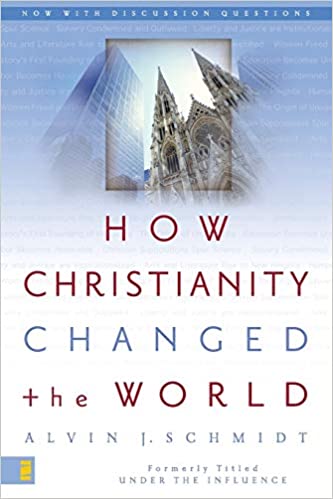
Alvin Schmidt claims, “No other religion, philosophy, teaching, nation, movement—whatever—has so changed the world for the better as Christianity has done.” And I quite believe him. He lays out the evidence to back up this bold claim in his book How Christianity Changed The World.
A few years ago I presented a series of messages to make the case for the resurrection of Jesus. One of the pieces of evidence I presented was the cultural engagement of Christians whose lives had been transformed by a personal relationship with the resurrected Jesus Christ. Alvin Schmidt’s book is like taking this single point of mine and putting it on steroids!
Using the reports of first-person observers from the first century all the way through present day, Mr. Schmidt shows how there is not a single part of the culture that hasn’t benefitted from the involvement of those who live out the Christian principles they have discovered in the Bible. From the care of the sick and elderly, to the elevation of women and marriage, to art, and architecture, and music, and medicine, and science, and education—every sphere of life has been improved by practicing Christians.
I would highly recommend reading this book and then keeping it close at hand to share with those ignorant or skeptical of the claims of Christianity. As William Barclay noted, “Anyone who asks the question, ‘What has Christianity done for the world?’ has delivered himself into a Christian debater’s hands. There is nothing in history so unanswerably demonstrable as the transforming power of Christianity and of Christ on the individual life and on the life of society.” To that, I add a hearty Amen!
Please get a copy of How Christianity Changed The World for your library.
Today you will be with Me in paradise—only in Luke
Dear women, behold your son—only in John
My God, My God, why have You forsaken Me?—only in Matthew and Mark (and this is the only dying declaration they record)
I thirst—only in John
It is finished—only in John
Father, into Your hands I commend My spirit—only in Luke
This is an excellent apologetic for the legitimacy and authenticity of the historical record.
You know that when your friends are at an important event, not everyone notices the same thing or even to the same extent as the others.
Cold-case detective J. Warner Wallace has pointed out that when he’s conducting an investigation, he separates the eyewitnesses from each other exactly so they don’t get their stories to “match.” Detective Wallace is able to get the full story precisely because of the differences in each of the accounts.
This is why the Gospel writers’ accounts ring true: they tell us the same historical event from their unique perspectives. It’s only by reading all of them that we get the full picture. If the death and resurrection of Jesus had been a conspiracy, these writers clearly would have collaborated to “get their story straight” ahead of time, and as a result, we would have four identical stories.
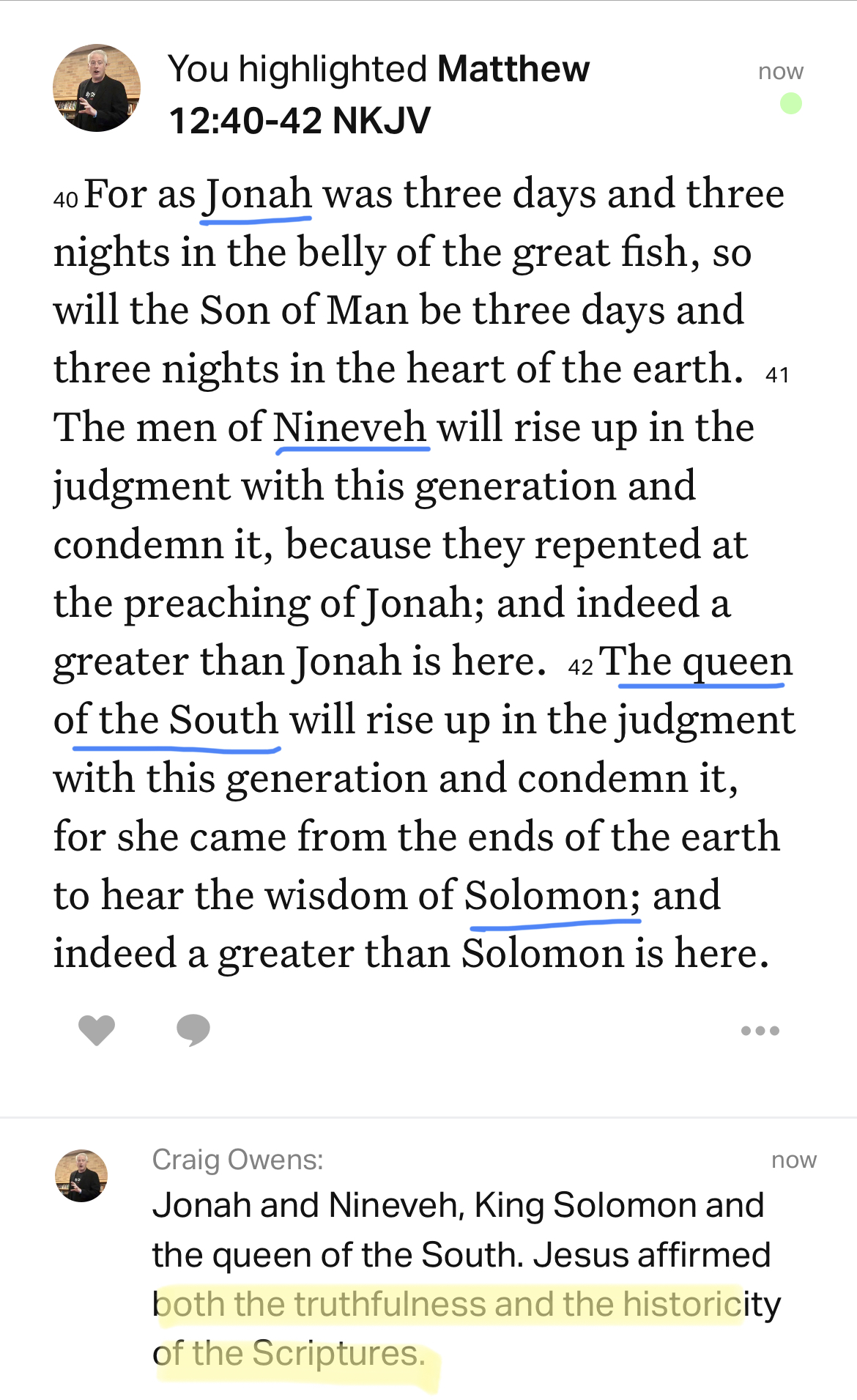
The historicity of Jesus as told in the Bible is spot-on and completely trustworthy!
Listen to the podcast of this post by clicking on the player below, and you can also subscribe on Apple or Spotify.
Just before Jesus said, “I am thirsty,” John tells us that Jesus knew everything written about Him in the law had been completed and all of the prophecies about Him had been fulfilled. Jesus knew this to be true but no one else standing there would have said “Aha!” because of that statement. But Jesus left no doubt for any of us when He next said, “It is finished!”
These three English words are just one word in Greek: tetelestai. It’s in the perfect tense, telling us that nothing more needs to be added to Christ’s work. It not only shares the same root word that John uses for completed and fulfilled, but it closes the circle of another dying declaration of Jesus when He quoted Psalm 22:1: “My God, My God, why have You forsaken Me?” His “It is finished” statement is also the last verse of Psalm 22.
The root word telos translated as completed, fulfilled, and finished has a very rich meaning. Here are three definitions we should consider:
(1) To complete or bring to a conclusion
Jesus told His Father that He had finished (telos) His mission (John 17:4). Q: How do we know His mission was completed? A: Jesus sat down! Think about this: There were no chairs in the Old Testament temple because a priest never rested, there was always more work to do. But when Jesus finished His work, He sat down (see Hebrews 10:1-4, 11-12).
(2) To discharge a debt
Since Jesus was the only One who could make the final “once for all” payment, that means that we were hopeless debtors prior to that. God foretold of His forgiveness using the picturesque language of a debt being “doubled up” when it was paid in full (see this video where I explain this concept more fully). Here’s what Jesus did:
Having cancelled and blotted out and wiped away the handwriting of the note with its legal decrees and demands which was in force and stood against us. This note with its regulations, decrees, and demands He set aside and cleared completely out of our way by nailing it to His cross. (Colossians 2:14 AMP)
In this case, Jesus took what was missing by switching cups with us. He drank the cup of God’s righteous wrath—which was justly ours—and gave us His cup of righteousness in its place! (see Isaiah 51:17-22; Matthew 26:39).
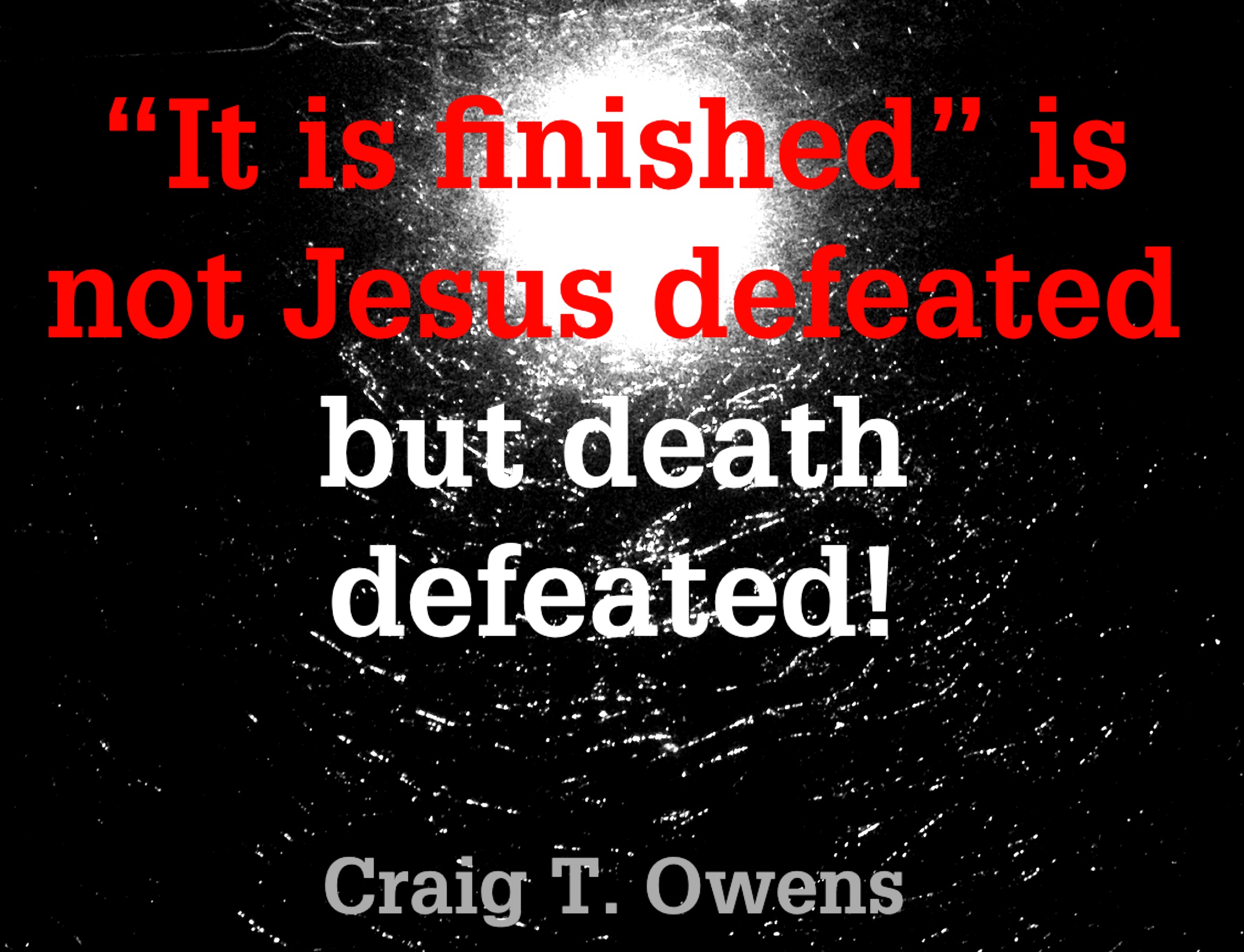
Q: How do we know we have a cup of righteousness in place of a cup of wrath? A: Dead saints of God were resurrected when Jesus died. “It is finished” was not Jesus giving up, but death giving up … it was not Jesus defeated, but death defeated!
Jesus paid it all! There is nothing I can do to add to His completed—tetelestai—work, so I can now do what formerly was impossible: I can live a holy life for God’s glory. I can now finish (telos) my race on earth and receive the rewards God has stored up for me (see 2 Timothy 4:7-8).
Christ’s tetelestai confession is our empowerment to live holy!



 For zeal for Your house consumes me, and the insults of those who insult You fall on me (Psalm 69:9).






 Craig T. Owens