Thursdays With Spurgeon—Never Give Up On Grace And Mercy

This is a weekly series with things I’m reading and pondering from Charles Spurgeon. You can read the original seed thought here, or type “Thursdays With Spurgeon” in the search box to read more entries.

Listen to the podcast of this post by clicking on the player below, and you can also subscribe on iTunes or Spotify.

Never Give Up On Grace And Mercy

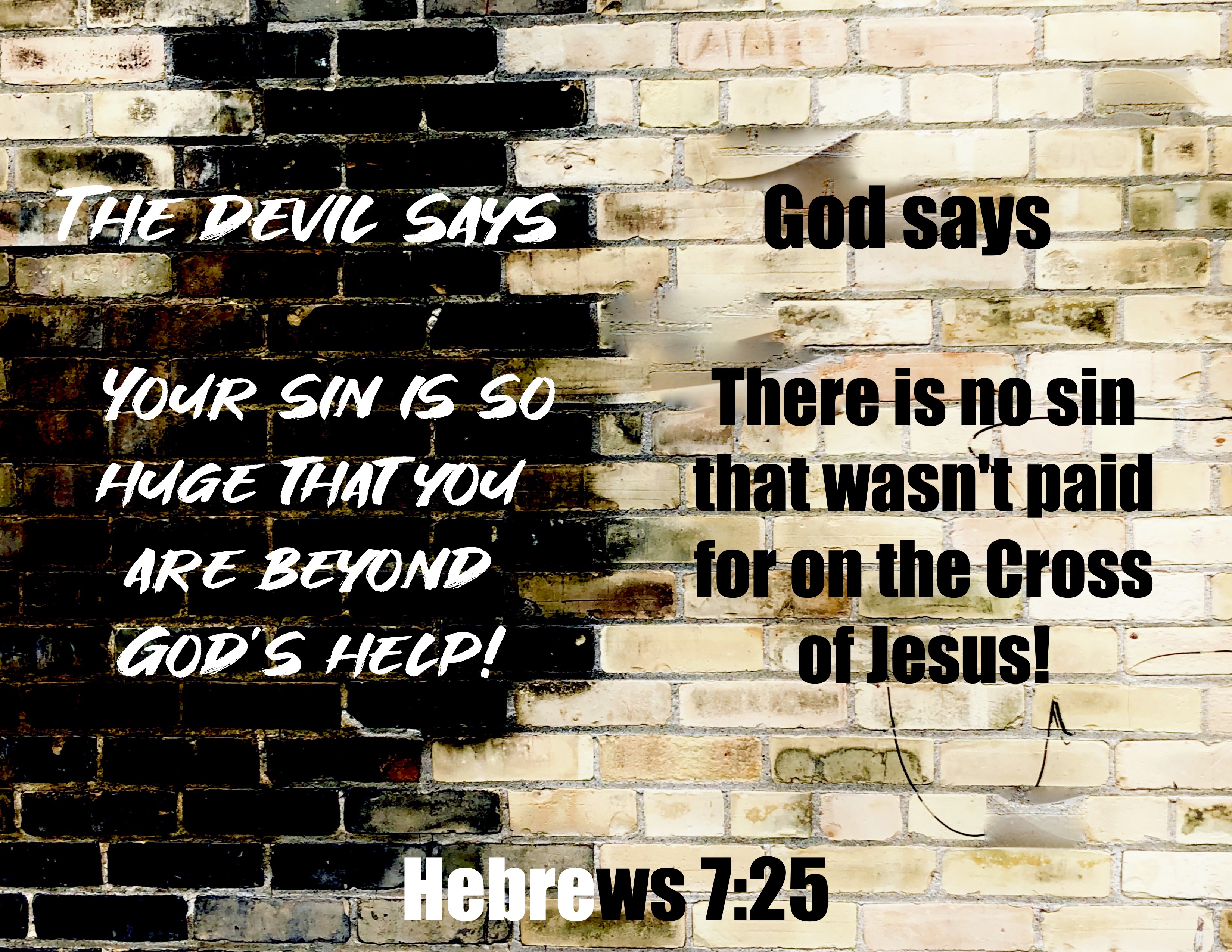
Therefore He is also able to save to the uttermost those who come to God through Him, since He always lives to make intercession for them. (Hebrews 7:25) 

     My friends, it is one thing to go to church or chapel. It is quite another thing to go to God. …

Coming to God is not what some of you suppose, that is, now and then sincerely performing an act of devotion but giving to the world the greater part of your life. You think that if sometimes you are sincere, if now and then you put up an earnest cry to heaven, God will accept you. And though your life may be still worldly and your desires still carnal, you suppose that for the sake of this occasional devotion God will be pleased, in His infinite mercy, to blot out your sins. I tell you, sinners, there is no such thing as bringing half of yourselves to God and leaving the other half away. …  

     If I should see a sinner staggering on his progress to hell, I would not give him up, even when he had advanced to the last stage of iniquity. Though his foot hung trembling over the very edge of perdition, I would not cease to pray for him. And though he should in his poor drunken wickedness go staggering on till one foot was over hell and he was ready to perish, I would not despair of him. Till the pit had shut its mouth upon him I would believe it is possible that divine grace might save him. See there! He is just upon the edge of the pit, ready to fall. But before he falls, free grace bids, ‘Stop that man!’ Down mercy comes, catches him on her broad wings, and he is saved—a trophy of redeeming love. 

From Salvation To The Uttermost 

My friend, if you don’t have a personal relationship with God through the forgiving work that Jesus accomplished on the Cross, I implore you to come to Him before another minute passes. When Jesus said from this Cross, “It is finished,” He told you that He paid in full your debt that would have kept you separated from God forever. 

Now you just need to come to Him in faith. Simply pray something like this: “God, I acknowledge that I am a sinner separated from You. But I believe that Jesus paid the penalty for all of my sins when He died on the Cross. Because of that payment, I am asking You to forgive me and bring me into a full relationship with You. I pray this in the name of Jesus. Amen.” 

And let me speak to you, my Christian brother or sister who has been praying earnestly for the salvation of someone dear to you. Let me encourage you to not give up! God’s mercy and God’s grace are so swift that even with the last breath they can swoop in to save. Never cease to pray for them and know that Jesus is interceding for them before God’s throne too!

►► Would you please prayerfully consider supporting this ministry? ◀︎◀︎

 

How Christianity Changed The World (book review)

Listen to the podcast of this post by clicking on the player below, and you can also subscribe on Apple or Spotify.

Alvin Schmidt claims, “No other religion, philosophy, teaching, nation, movement—whatever—has so changed the world for the better as Christianity has done.” And I quite believe him. He lays out the evidence to back up this bold claim in his book How Christianity Changed The World. 

A few years ago I presented a series of messages to make the case for the resurrection of Jesus. One of the pieces of evidence I presented was the cultural engagement of Christians whose lives had been transformed by a personal relationship with the resurrected Jesus Christ. Alvin Schmidt’s book is like taking this single point of mine and putting it on steroids! 

Using the reports of first-person observers from the first century all the way through present day, Mr. Schmidt shows how there is not a single part of the culture that hasn’t benefitted from the involvement of those who live out the Christian principles they have discovered in the Bible. From the care of the sick and elderly, to the elevation of women and marriage, to art, and architecture, and music, and medicine, and science, and education—every sphere of life has been improved by practicing Christians. 

I would highly recommend reading this book and then keeping it close at hand to share with those ignorant or skeptical of the claims of Christianity. As William Barclay noted, “Anyone who asks the question, ‘What has Christianity done for the world?’ has delivered himself into a Christian debater’s hands. There is nothing in history so unanswerably demonstrable as the transforming power of Christianity and of Christ on the individual life and on the life of society.” To that, I add a hearty Amen! 

Please get a copy of How Christianity Changed The World for your library. 

►► Would you please prayerfully consider supporting this ministry? ◀︎◀︎
The Historicity Of The Gospels

Listen to the podcast of this post by clicking on the player below, and you can also subscribe on Apple or Spotify.

I’m intrigued by the way the four Gospel writers have recorded the dying declarations of Jesus:

  • Father, forgive them—only in Luke 
  • Today you will be with Me in paradise—only in Luke 
  • Dear women, behold your son—only in John 
  • My God, My God, why have You forsaken Me?—only in Matthew and Mark (and this is the only dying declaration they record) 
  • I thirst—only in John
  • It is finished—only in John
  • Father, into Your hands I commend My spirit—only in Luke 

This is an excellent apologetic for the legitimacy and authenticity of the historical record. 

You know that when your friends are at an important event, not everyone notices the same thing or even to the same extent as the others. 

Cold-case detective J. Warner Wallace has pointed out that when he’s conducting an investigation, he separates the eyewitnesses from each other exactly so they don’t get their stories to “match.” Detective Wallace is able to get the full story precisely because of the differences in each of the accounts. 

This is why the Gospel writers’ accounts ring true: they tell us the same historical event from their unique perspectives. It’s only by reading all of them that we get the full picture. If the death and resurrection of Jesus had been a conspiracy, these writers clearly would have collaborated to “get their story straight” ahead of time, and as a result, we would have four identical stories. 

The historicity of Jesus as told in the Bible is spot-on and completely trustworthy! 

►► Would you please prayerfully consider supporting this ministry? ◀︎◀︎

“It Is Finished”

Listen to the podcast of this post by clicking on the player below, and you can also subscribe on Apple or Spotify.

Just before Jesus said, “I am thirsty,” John tells us that Jesus knew everything written about Him in the law had been completed and all of the prophecies about Him had been fulfilled. Jesus knew this to be true but no one else standing there would have said “Aha!” because of that statement. But Jesus left no doubt for any of us when He next said, “It is finished!

These three English words are just one word in Greek: tetelestai. It’s in the perfect tense, telling us that nothing more needs to be added to Christ’s work. It not only shares the same root word that John uses for completed and fulfilled, but it closes the circle of another dying declaration of Jesus when He quoted Psalm 22:1: “My God, My God, why have You forsaken Me?” His “It is finished” statement is also the last verse of Psalm 22.

The root word telos translated as completed, fulfilled, and finished has a very rich meaning. Here are three definitions we should consider: 

(1) To complete or bring to a conclusion

Jesus told His Father that He had finished (telos) His mission (John 17:4). Q: How do we know His mission was completed? A: Jesus sat down! Think about this: There were no chairs in the Old Testament temple because a priest never rested, there was always more work to do. But when Jesus finished His work, He sat down (see Hebrews 10:1-4, 11-12). 

(2) To discharge a debt

Since Jesus was the only One who could make the final “once for all” payment, that means that we were hopeless debtors prior to that. God foretold of His forgiveness using the picturesque language of a debt being “doubled up” when it was paid in full (see this video where I explain this concept more fully). Here’s what Jesus did: 

Having cancelled and blotted out and wiped away the handwriting of the note with its legal decrees and demands which was in force and stood against us. This note with its regulations, decrees, and demands He set aside and cleared completely out of our way by nailing it to His cross. (Colossians 2:14 AMP) 

Q: How do we know the debt was paid in full? A: The curtain that had separated us from God’s presence was torn in two.

(3) To fill up what’s missing

In this case, Jesus took what was missing by switching cups with us. He drank the cup of God’s righteous wrath—which was justly ours—and gave us His cup of righteousness in its place! (see Isaiah 51:17-22; Matthew 26:39).  

Q: How do we know we have a cup of righteousness in place of a cup of wrath? A: Dead saints of God were resurrected when Jesus died. “It is finished” was not Jesus giving up, but death giving up … it was not Jesus defeated, but death defeated! 

Jesus paid it all! There is nothing I can do to add to His completed—tetelestai—work, so I can now do what formerly was impossible: I can live a holy life for God’s glory. I can now finish (telos) my race on earth and receive the rewards God has stored up for me (see 2 Timothy 4:7-8). 

Christ’s tetelestai confession is our empowerment to live holy! 

If you’ve missed any of the messages in our series looking at the dying declarations of Jesus, you may access the full list by clicking here.

►► Would you please prayerfully consider supporting this ministry? ◀︎◀︎

Poetry Saturday—Eternal Spirit

Listen to the podcast of this post by clicking on the player below, and you can also subscribe on Apple or Spotify.

Eternal Spirit, we confess
And sing the wonders of Your grace!
Your power conveys our blessings down
From God the Father and the Son.
Enlightened by Your heavenly ray,
Our shades and darkness turn to day.
Your inward teachings make us know
Our danger and our refuge, too.
Your power and glory work within,
And break the chains of reigning sin,
Does our imperious lusts subdue,
And forms our wretched hearts anew.
The troubled conscience knows Your voice,
Your cheering words awake our joys;
Your words allay the stormy wind,
And calm the surges of the mind.

*Spurgeon used this poem as a conclusion to his sermon entitled Human Depravity and Divine Mercy. I was unable to find this poem attributed to anyone else, so I am assuming it was written by Spurgeon himself. 

►► Would you please prayerfully consider supporting this ministry? ◀︎◀︎

Thursdays With Spurgeon—Simple Faith Is Still Powerful Faith

This is a weekly series with things I’m reading and pondering from Charles Spurgeon. You can read the original seed thought here, or type “Thursdays With Spurgeon” in the search box to read more entries.

Listen to the podcast of this post by clicking on the player below, and you can also subscribe on iTunes or Spotify.

Simple Faith Is Still Powerful Faith

     I would have you note that the faith that justified Abram was still an imperfect faith, although it perfectly justified him. It was imperfect beforehand, for he had prevaricated as to his wife and bid Sarai, ‘Say you are my sister’ (Genesis 12:13). 

     It was imperfect after it had justified him, for the next chapter we find him taking Hager, his wife’s handmaid, in order to effect the divine purpose, and so showing a lack of confidence in the working of the Lord. It is a blessing for you and for me that we do not need perfect faith to save us! ‘If you have faith as a mustard seed, you will say to this mountain, “Move from here to there,” and it will move; and nothing will be impossible for you’ (Matthew 17:20). If you have but the faith of a little child, it will save you. Though your faith is not always at the same pitch as the patriarch’s when he staggered not at the promise through unbelief, yet if it is simple and true, if it confides alone in the promise of God, it is an unhappy thing that it is no stronger, and you ought daily to pray, ‘Lord, increase my faith,’ but still it will justify you through Christ Jesus! A trembling hand may grasp the cup that bears a healing draught to the lip, but the weakness of the hand will not lessen the power of the medicine.

From Justification By Faith

A prayer that Jesus loved was simply this: “Lord, I believe; help me overcome my unbelief” (Mark 9:14-27). The recognition that Jesus alone could help is the essence of faith. 

I’ve often said that the simplest, most powerful prayer we can pray is, “Lord, help!” In just those two words we are saying, “I cannot do a thing to help myself, but, Lord, I believe Your power is limitless to help me!” 

Small faith is still powerful faith—even faith as small as a mustard seed—because it can move mountains. Childlike faith touches the heart of God. I love how Spurgeon reminds us that the weakness of the hand that grasps the cup promise does not lessen the power of the medicine in the cup. 

The best way to learn to pray in faith is simply to pray in faith. A baby doesn’t wait until he has a fully-formed vocabulary to ask his father or mother for help. Just pray! The Holy Spirit can turn even your childlike prayers into pleasing sounds in your Heavenly Father’s ears. 

Maybe you could paraphrase that father who was in desperate need of Christ’s help, “Lord, I am praying; help me to keep on praying!

►► Would you please prayerfully consider supporting this ministry? ◀︎◀︎


“I Am Thirsty”

Listen to the podcast of this post by clicking on the player below, and you can also subscribe on Apple or Spotify.

Jesus has just broken a 3-hour silence with His megaphone-voice cry: “My God, My God, why have You forsaken Me?” Now His final three statements will follow in rather short order, beginning with, “I am thirsty.”

It might seem trivial that Jesus expressed His desire for a drink, especially since He also knew that there was no thirst-quenching water nearby. Far from being trivial, however, this was eternally important because it completed His mission. 

Before saying, “I am thirsty,” John tells us that Jesus knew “that all was now completed.” The Greek word for know is sometimes translated as “see” and sometimes “know.” When it’s “see” it’s always in the past tense—“saw” or “have seen.” Perhaps in His 3-hour silence, Jesus was reviewing His earthly life, looking back to see what He had accomplished. Make no mistake about it, Jesus was on-mission for all 30+ years of His life in Israel. 

But now that He has seen His life, He “knows.” This word is in the perfect tense. He’s seen it all and He knows He has accomplished all He set out to complete. As He had told His audience earlier in His life, “For assuredly, I say to you, till heaven and earth pass away, one jot or one tittle will by no means pass from the law till ALL is fulfilled” (Matthew 5:18). 

In looking back on His life, Jesus saw one final thing: He needed to be given vinegar to drink just as David prophesied (Psalm 69:13-21). With that sour sip, ALL the Ts are crossed and ALL the Is are dotted! 

When John writes, “Knowing all was now completed, and so the Scripture would be fulfilled,” he uses the Greek word which means mission accomplished! 

Why did Jesus need to fulfill ALL the prophecies and complete ALL the law? Check out His earlier statement from the Amplified Bible: “For truly I tell you, until the sky and earth pass away and perish, not one smallest letter nor one little hook identifying certain Hebrew letters will pass from the Law until all things it FORESHADOWS are accomplished.” 

The law was just our temporary guardian and the temple practices were just a shadow of the realities of Heaven (see Galatians 3:23-25; Hebrews 10:1-10). ALL of them were merely pointing to Jesus, so Jesus made sure ALL of them were completed. 

His “I am thirsty” statement was really His “Amen” to His completed mission. 

Jesus fulfilled every Scripture so that we could stand on every promise! 

Check this out: “For no matter how many promises God has made, they are ‘Yes’ in Christ. And so through Him the ‘Amen’ is spoken by us to God” (2 Corinthians 1:20). 

The shadows of the law were turned into the substance on which we can come boldly before the throne of God’s grace! In just three words—“I am thirsty”—Jesus completed His mission for God’s glory and for our eternal help! 

If you’ve missed any of the messages in our series on the dying confessions of Jesus from the Cross, you can access the full list by clicking here.

►► Would you please prayerfully consider supporting this ministry? ◀︎◀︎
Poetry Saturday—Standing On The Promises

Listen to the podcast of this post by clicking on the player below, and you can also subscribe on Apple or Spotify.

Standing on the promise of Christ my King,
Through eternal ages let His praises ring,
Glory in the highest, I will shout and sing,
Standing on the promises of God.

Standing on the promises that cannot fail,
When the howling storms of doubt and fear assail,
By the living Word of God I shall prevail,
Standing on the promises of God.

Standing on the promises I now can see
Perfect, present cleansing in the blood for me;
Standing in the liberty where Christ makes free,
Standing on the promises of God.

Standing on the promises of Christ the Lord,
Bound to Him eternally by love’s strong cord,
Overcoming daily with the Spirit’s sword,
Standing on the promises of God.

Standing on the promises I cannot fall,
Listening every moment to the Spirit’s call
Resting in my Savior as my all in all,
Standing on the promises of God. —Russell Kelso Carter

►► Would you please prayerfully consider supporting this ministry? ◀︎◀︎
Thursdays With Spurgeon—Never Beyond God’s Love

This is a weekly series with things I’m reading and pondering from Charles Spurgeon. You can read the original seed thought here, or type “Thursdays With Spurgeon” in the search box to read more entries.

Listen to the podcast of this post by clicking on the player below, and you can also subscribe on iTunes or Spotify.

Never Beyond God’s Love

Lost, perishing sinners, hear the voice of God, for it speaks to you. 

“Where art thou? for I am come to seek thee.” 

“Lord, I am in such a place that I cannot do anything for myself.” 

“Then I am come to seek thee and do all for thee.” 

“Lord, I am in such a place that the law threatens me and justice frowns upon me.” 

“I am come to answer the threatenings of the law, and to bear all the wrath of justice.” 

“But, Lord, I am in such a place that I cannot repent as I would.” 

“I am come to seek thee, and I am exalted on high to give repentance and remission of sins.” 

“But, Lord, I cannot believe in Thee, I cannot believe as I would.” 

“A bruised reed I will not break, and a smoking flax will I not quench; I am come to give thee faith.” 

“But, Lord, I am in such a state that my prayers can never be acceptable.” 

“I am come to pray for thee, and then to grant thee thy desires.” 

“But, Lord, Thou dost not know what a wretch I am.” 

“Yes, I know thee. Though I asked thee the question, ‘Where art thou?’ it was that thou mightest know where thou art, for I know well enough.” 

“But, Lord, I have been the chief of sinners; none can have so aggravated their guilt as I have.” 

“But wherever thou mayest be, I have come to save thee.” 

“But I am an outcast from society.” 

“But I am come to gather together the outcasts of Israel.” 

“O but I have sinned beyond all hope.” 

“Yes, but I have come to give hope to hopeless sinners.” 

“But, then I deserve to be lost.” 

“Yes, but I have come to magnify the law and make it honorable, and so to give thee thy deserts in the person of Christ, and then to give thee My mercy because of His merits.” —Charles Spurgeon

My friend, there isn’t anything you can do to make God love you any less or any more—God IS Love. You are never beyond His love! 

There is never a hole so deep, or a burden so heavy that God cannot rescue you—God IS All-mighty. You are never beyond His rescue! 

You cannot escape the powerful love of your Heavenly Father. Jesus purchased your salvation with His blood, and the Holy Spirit is calling to your heart today. Will you come to Him in faith? O, please, my friend, receive God’s love today! 

►► Would you please prayerfully consider supporting this ministry? ◀︎◀︎
 

Prayer (book review)

Listen to the podcast of this post by clicking on the player below, and you can also subscribe on Apple or Spotify.

John Bunyan was in prison for refusing to bow to the dictates of the ecclesiastical rulers of England, but prison could not silence his pen. Before writing The Pilgrim’s Progress, which Bunyan said came to him in a dream, he wrote two manuscripts on prayer which can only have come from a visit to a much more substantial heavenly realm. 

Prayer is actually two books written in the mid-seventeenth century. The first book is A Discourse Touching Prayer in which Bunyan dives deep on the apostle Paul’s desire, “I will pray with my spirit, but I will also pray with my understanding” (1 Corinthians 14:15). The second book is The Saints’ Privilege And Profit, which is a deep dive into the idea of “the throne of grace” (Hebrews 4:15). 

When I say “deep dive” I mean that John Bunyan gives us a masters’ level course on prayer! This is not reading for a new Christian nor for someone who merely utters a superficial prayer here and there. These books are for the mature Christian who is dissatisfied with their current level of prayer and longs for a deeper level of intimacy in communion with our Heavenly Father. 

Let me reiterate that Bunyan wrote these books from jail. Not exactly the idyllic setting for contemplation, nor an environment for pious platitudes that are reserved for the serene time of prayer in a place of comfort. Just imagine: Bunyan uses just one verse from the Bible for each of these works, and then keeps drilling down and down into the immeasurable riches that are found in our relationship with God. 

If you’re ready to take your prayer to an entirely new and more intimate place, spend some time with your Bible and these two short books from John Bunyan. 

►► Would you please prayerfully consider supporting this ministry? ◀︎◀︎