This is a weekly series with things I’m reading and pondering from Charles Spurgeon. You can read the original seed thought here, or type “Thursdays With Spurgeon” in the search box to read more entries.
Listen to the podcast of this post by clicking on the player below, and you can also subscribe on iTunes or Spotify.
Active Love
True love next shows itself in obedience. … ‘Tis love that makes our willing feet in swift obedience move.’ We can do anything for those we love, and if we love Jesus, no burden will be heavy, no difficulty will be great. We should rather wish to do more than He asks of us and only desire that He was a little more exacting that we might have a better opportunity of showing forth our affection. …
The apostle says, ‘Let us not love in word or in tongue, but in deed and in truth’ (1 John 3:18). Actions speak louder than words, and we will always be anxious to tell our love in deeds as well as by our lips. The true disciple asks continually, ‘Lord, what do You want me to do?’ (Acts 9:6). He esteems it his highest honor to serve the Lord. …
I believe in an active love that has hands to labor and feet to run as well as a heart to feel, eyes to glance, and ears to listen.
Listen to the podcast of this post by clicking on the player below, and you can also subscribe on Apple, Spotify, or Audible.
… my hands … my mouth … my lips … my heart … my head … my words … my eyes … (Psalm 141)
David’s all-in attitude toward God reminds me of the words of Jesus: Love the Lord your God with all your heart and with all your soul and with all your mind and with all your strength (Mark 12:30).
Clearly, David wants God to have full access—no part of his life is exempt from God’s lordship:
hands lifted in worship
mouth and lips free from ungodly words
heart not drawn to unrighteousness
head receptive to godly correction
words always well-spoken and God-pleasing
eyes fixed steadfastly on God
This is also what the Holy Spirit wants to do for me in the process of sanctification: Bringing me into the place where no part of my life is exempt from His lordship. This reminds me of the words of an old hymn, “All to Jesus I surrender, all to Him I freely give.”
This is a weekly series with things I’m reading and pondering from Charles Spurgeon. You can read the original seed thought here, or type “Thursdays With Spurgeon” in the search box to read more entries.
Listen to the podcast of this post by clicking on the player below, and you can also subscribe on iTunes or Spotify.
Such Love!
Our Savior so loved us that He stripped Himself of His robes of radiance. Listen, you children of God, it is the old story over again, but it is always new to you. He stripped Himself of His bright array. He laid aside His scepter and His crown and became an infant in Bethlehem’s manger among the horned oxen. Thirty years of poverty and shame the King of heaven spent among the sons of men, and all out of love to us. Jesus the heavenly lover, panting to redeem His people, was content to abide here without a place to rest His head that He might rescue us!
Do you see Him yonder in the garden in His agony? His soul is exceedingly sorrowful even to death! His forehead, no, His head, His hair, and His garments are red with bloody sweat. Do you see Him giving His back to the smiters and His cheeks to them who pluck off His hair? See Him, as He hides not His face from shame and spitting, dumb like a sheep before her shearers and like a lamb that is brought to the slaughter! He opened not His mouth but patiently bore it all on our behalf. See Him with the Cross upon His mangled shoulders, staggering through Jerusalem’s streets, unwept for and unpitied, except by poor feeble women!
See Him, you who love Him, and love Him more as He stretches out His hands to the nails and gives His feet to the iron. See Him, as with power to deliver Himself He is made captive. Behold Him as they lift up the Cross with Him upon it and dash it down into its place and dislocate His bones. Hear that cry, ‘I am poured out like water, and all My bones are out of joint’ (Psalm 22:14). Stand, if you can, and view that face so full of grief. Look till a sword will go through your own heart as it went through His mother’s very soul. Oh, see Him as He thirsts and has that thirst mocked with vinegar!
Hear Him as He prays and has that prayer parodied, ‘Look, He is calling for Elijah! … Let us see if Elijah will come to take Him down’ (Mark 15:35-36). See Him as they who love Him come and kiss His feet and bathe them with their tears. Will you not love Him who did all that friend could do for a friend? He who gave His life for us?
From The Church’s Love To Her Loving Lord
My friend, if you don’t know Jesus as your personal Lord and Savior, I ask that you would consider this amazing act of love all for you. Jesus went through all of this for you! Won’t you accept His love and invite Him into your heart today?
If you do have a personal relationship with Jesus, look again at your Beloved Savior. Let this love rekindle your heart to share Christ’s love with everyone around you.
This is a weekly series with things I’m reading and pondering from Charles Spurgeon. You can read the original seed thought here, or type “Thursdays With Spurgeon” in the search box to read more entries.
Listen to the podcast of this post by clicking on the player below, and you can also subscribe on iTunes or Spotify.
The Assurance Of God’s Love
Tell me, O you whom I love, where you feed your flock, where you make it rest at noon. For why should I be as one who veils herself by the flocks of your companions? (Song of Solomon 1:7)
It is well to be able to call the Lord Jesus Christ by this name without an ‘if’ or a ‘but.’ A very large proportion of Christian people can only say of Christ that they hope they love Him. They trust they love Him, but this is a very poor and shallow experience to be content to stay here. It seems to me that no one ought to give any rest to his spirit till he feels quite sure about a matter of such a vital importance. We are not content to have a hope of the love of our parents, or of our spouse, or of our children! We feel we must be certain there. And we are not to be satisfied with a hope that Christ loves us and with a bare trust that we love Him. …
‘I know whom I have believed,’ says Paul (2 Timothy 1:12). ‘I know that my Redeemer lives,’ says Job (Job 19:25). ‘You whom I love,’ says Solomon in the Song as we have it here. Learn, dear friends, to get that positive knowledge of your love to Jesus, and be not satisfied till you can talk about your interest in Him as a reality that you have made infallibly sure by having received the witness of the Holy Spirit and His seal upon your soul by faith that you are born of God and belong to Christ. …
Why do we love Jesus? We have the best of answers: because He first loved us! … Why do we love Him? Because before this round earth was fashioned between the palms of the great Creator, before He had painted the rainbow or hung out the lights of the sun and moon, Christ’s delights were with us. He foresaw us through the glass of His prescience. He knew what we should be….
From The Church’s Love To Her Loving Lord
God wants you to know how much He loves you. He went first because we didn’t have any way to approach Him. But Jesus made it possible for us to come close to God through His substitutionary death on the Cross for our sins. And now the Holy Spirit is speaking clearly to your heart to trust that this is absolutely, irrevocably true: GOD LOVES YOU!
As Spurgeon said, don’t be content with merely thinking this is true, but ask the Holy Spirit to help you know this is true!
Listen to these words—This is how God showed His love among us: He sent His one and only Son into the world that we might live through Him. … This is how we know that we live in Him and He in us: He has given us of His Spirit. And we have seen and testify that the Father has sent His Son to be the Savior of the world. … We love because He first loved us. (1 John 4:9, 13-14, 19)
Listen to the podcast of this post by clicking on the player below, and you can also subscribe on Apple, Spotify, or Audible.
For any students of American history or of the role the Bible has played in affecting world affairs, Reading The Bible With The Founding Fathers is an eye-opening book. You can check out my full book review by clicking here. Unless otherwise noted, quotes are from author Daniel Dreisbach.
“Following an extensive survey of American political literature from 1760 to 1805, political scientist Donald S. Lutz reported that the Bible was referenced more frequently than any European writer or even any European school of thought, such as the Enlightenment or Whig intellectual traditions. Indeed, the Bible accounted for about one-third of all citations in his sample. According to Lutz, ‘Deuteronomy is the most frequently cited book, followed by Montesquieu’s The Spirit of the Laws.’ … Saint Paul is cited about as frequently as Montesquieu and [William] Blackstone, the two most-cited secular authors, and Deuteronomy is cited almost twice as often as all of [John] Locke’s writings put together.”
“The founders often quoted the Bible without the use of quotation marks or citations, which were not necessary for a biblically literate society but the absence of which fail to alert a biblically illiterate modern audience to the Bible’s invocation.”
“Increasing unfamiliarity with the Bible makes it harder and harder for Americans to understand their origins and their mores, or to put words to their experiences. … Lacking knowledge of the Bible, Americans are likely to be literally inarticulate, unable to relate themselves to American life and culture as a whole.” —Wilson Carey McWilliams
“Knowledge of the Bible and its place in the American experience, in short, helps Americans better understand themselves and their history.”
“In regard to this Great Book [the Bible], I have but to say, it is the best gift God has given to man. All the good the Saviour gave to the world was communicated through this book. But for it we could not know right from wrong. All things most desirable for man’s welfare, here and hereafter, are to be found portrayed in it.” —Abraham Lincoln
“[T]he Bible has had a literary influence not because it has been considered as literature, but because it has been considered as the report of the Word of God.” —T.S. Eliot
“[William] Tyndale, who was the first to translate the Bible into English from the original Hebrew and Greek, can be rightly called the father of the King James Bible. Approximately ‘eighty percent of his Old Testament and ninety percent of his New Testament’ were adopted by the King James translators. …
“There is much truth in the remark that ‘without Tyndale, no Shakespeare.’ It is also true that ‘without Tyndale, no King James Bible.’ ‘Without the King James Bible,’ Alister McGrath observed, ‘there would have been no Paradise Lost, no Pilgrim’s Progress, no Handel’s Messiah, no Negro spirituals, and no Gettysburg Address. … Without this Bible, the culture of the English-speaking world would have been immeasurably impoverished.’”
“The size of the vocabulary found in the King James Bible is not extensive. [William] Shakespeare, it is estimated, used between fifteen and twenty thousand different words. Milton’s verse draws on a lexicon of about thirteen thousand words. The Old Testament, in the Hebrew and Aramaic, has approximately fifty-six hundred words. The New Testament, in the Greek, has around forty-eight hundred words. In the entire King James Bible, by contrast, there are only about six thousand different words, according to one accounting.”
“The opinion that human reason, left without the constant control of divine laws and commands, will preserve a just administration, secure freedom and other rights, restrain men from violations of laws and constitutions, and give duration to a popular government, is as chimerical as the most extravagant ideas that enter the head of a maniac. … Where will you find any code of laws, among civilized men, in which the commands and prohibitions are not founded on Christian principles? I need not specify the prohibition of murder, robbery, theft, [and] trespass. … Every wise code of laws must embrace the main principles of the religion of Christ.” —John Adams
“Moral principles and precepts contained in the Scriptures ought to form the basis of all our civil constitutions and laws. These principles and precepts have truth, immutable truth, for their foundation; and they are adapted to the wants of men in every condition of life. They are the best principles and precepts, because they are exactly adapted to secure the practice of universal justice and kindness among men; and of course to prevent crimes, war and disorders in society. No human laws dictated by different principles from those in the gospel, can ever secure these objects. All the miseries and evils which men suffer from vice, crime, ambition, injustice, oppression, slavery and war, proceed from their despising or neglecting the precepts contained in the Bible. … For instruction then in social, religious and civil duties resort to the scriptures for the best precepts and most excellent examples of imitation.” —Noah Webster
Listen to the podcast of this post by clicking on the player below, and you can also subscribe on Apple, Spotify, or Audible.
Do you keep a journal? I’m not talking about a diary of your daily events, but a journal of your ongoing dialogue with God. This is a discipline I began over 25 years ago, and it’s been immensely helpful to me.
Every time you read the history of Israel in the Old Testament, you are really reading a written history—a journal—of what God did for His people.
In Luke 1:46-55, we read Mary’s song about the soon-to-be-born Jesus that someone journaled to record for posterity. The same thing is true for Zechariah’s song about his son John in Luke 1:67-79. I am sure that many people found great comfort in reading and recalling these songs, perhaps even Jesus Himself and John the Baptist.
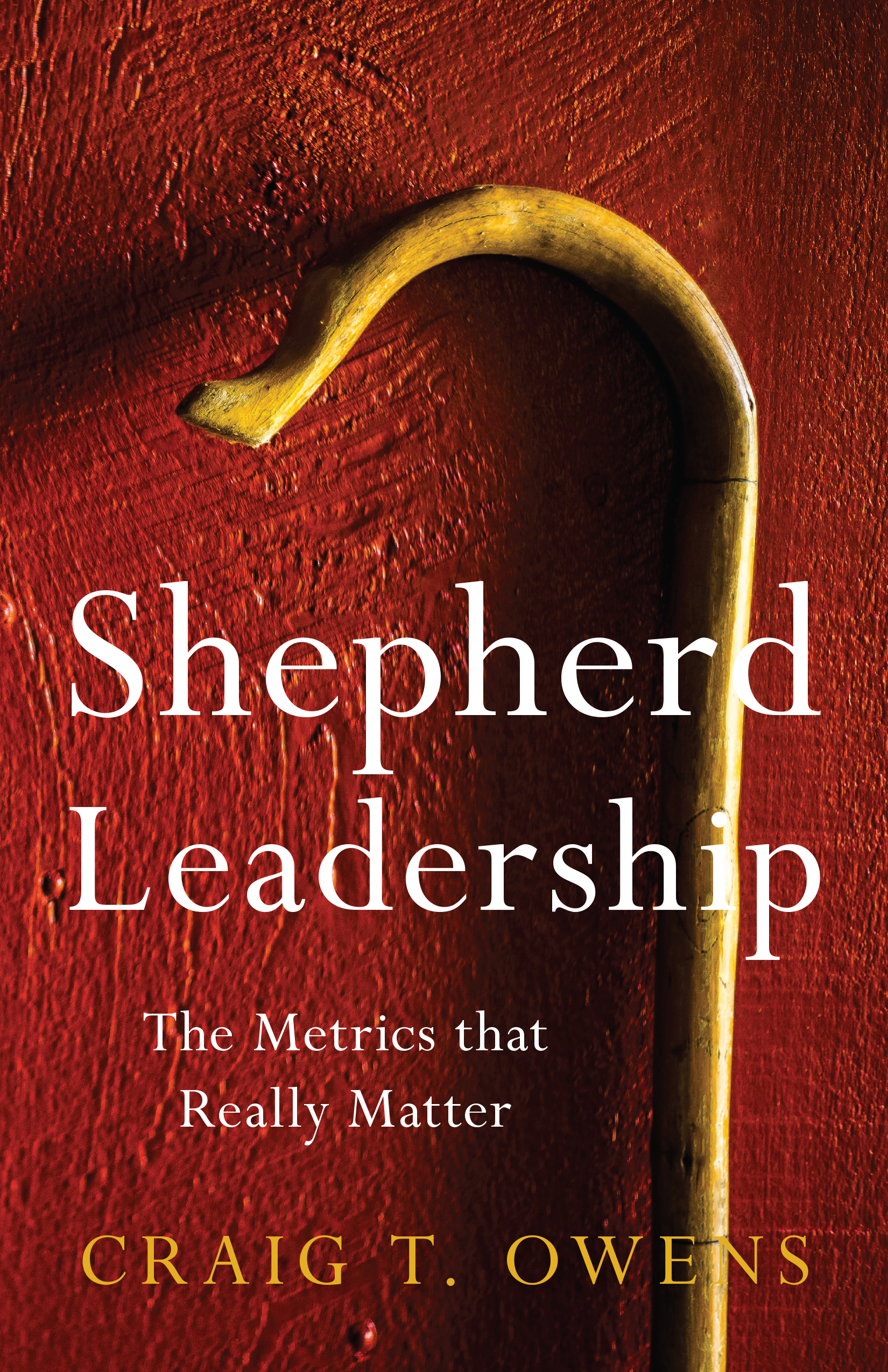
Journaling has helped me at so many crucial points in my life. Especially when I needed to look back to be reminded of something God had spoken to me. I shared one example of this in my book Shepherd Leadership: The Metrics That Really Matter—
The board was making a major decision. They were considering a change in their leadership to one who had completely different credentials and training from all of their previous leaders. Because this change would be so momentous, the board interviewed me for more than four hours. When they finally felt they had deliberated long enough, they asked me to leave the room while they prayed and voted. I stepped out into the lobby for just a couple of minutes when the door opened again and they asked me to step back inside.
“Well, Craig,” the spokesman began, “we prayed and we feel you are the one God has selected for this position.” I told them I would be happy to accept their offer. After they prayed over me, I began to pack up my things to head home.
“Hold on a minute,” one of the board members said to me, “we’re about to discuss the budget, and we think it would be good for you to be a part of this discussion.” I agreed and resumed my seat at the table.
I was handed both the year-to-date financial report and the projected income and expenses for the remaining quarter of the year. “As you can see,” the treasurer began, “we are projecting a $70,000 loss for this year.” Then he turned to me and asked, “What are you going to do about that?”
I gulped, tried not to show that my stomach was doing flips, and said, “Honestly, I don’t know.” I paused, and since no one else said anything, I continued, “But I’ll let you know what we come up with.”
All the way home, I kept thinking, “What have I gotten myself into? I’m walking away from a successful business to oversee an organization that’s going to go bankrupt before I even get started?!” But then I began to remind myself of something else: God chose me.
When I returned home, I immediately went to my journal. I flipped to the page where I had written down all of the reasons why I had concluded that God chose me for this position. I looked at the way God had spoken to me and to my wife, and the way friends who knew nothing about this decision spoke a confirming word to me. I looked at the pages where I had written down the vision I believed God had given me for this new organization, and how the board chairman’s handwritten vision for the organization matched mine thought-for-thought. Looking at these words—at the specific dates and ways God had spoken, and confirmed, and re-confirmed His direction—gave me the confidence to step into this assignment, even when facing such a huge financial mountain. (excerpt from chapter 5 “A Humble Leader’s Attitude Adjustment”)
If you haven’t journaled in the past, I encourage you to begin this spiritual discipline today. I can tell you from both what I read in the Bible and my own personal experience how valuable this will be for you.
Listen to the podcast of this post by clicking on the player below, and you can also subscribe on Apple, Spotify, or Audible.
When you’ve been at a church service have you ever asked yourself, “What are we doing here? What exactly is ‘church’? What are we supposed to be doing?”
Some people think church is saints going out to tell people about Jesus, and some people think church is saints coming together to hear about Jesus (see Matthew 28:19-20; 1 Corinthians 11:18). I think this is an either-or trap.
I think a better way of looking at this is “both-and” and “so that”: BOTH coming to a gathering of believers so that we can be equipped to go out AND going out to tell people about Jesus so that we can bring new disciples into the church.
Our foundational truth statement says: The Church is the Body of Christ, the habitation of God through the Spirit, with divine appointments for the fulfillment of her great commission. Each believer, born of the Spirit, is an integral part of the General Assembly and Church of the Firstborn, which are written in heaven.
To help us see where we play a vital role in all of this, the Bible gives us three pictures of the church:
All of these pictures speak of multiple parts making up one unified, healthy whole. Remove any part or any function, and the whole thing is diminished. All of these pictures also speak of intentionality. No one becomes healthy by accident, or builds a sound structure by accident, or enjoys a fulfilling marriage by accident. Health, soundness, and fulfillment all result from being intentional about our choices and interactions.
I believe these three pictures also help us see what the church isn’t and is.
A healthy church isn’t about numbers
A healthy church isn’t about the day of the week that we meet
The first Church in the New Testament showed us how they followed the example of Jesus. Before trying to fulfill the Great Commission of going into all the world, they first obeyed the directive from Jesus to stay in Jerusalem until they were empowered by the Holy Spirit. Then we see an intentionality, and an empowerment, and a complete reliance on the Holy Spirit in everything they undertook from that point on.
It’s not about going to “my church” or going to “your church.” It’s about being the Church (with a capital “C”)—the Body of of Christ, the Building of Christ, the Bride of Christ.
Bottom line:
Christians are being the Church when they are intentionally living in a way that makes Jesus known.
Listen to the podcast of this post by clicking on the player below, and you can also subscribe on Apple, Spotify, or Audible.
What does it mean to be a Christian? Or maybe I should ask it this way: what do Christians do to show that they are indeed a Christian?
Lots of people have come up with must-do and must-not-do lists, but is this the way Jesus lived?
I love the simple summary of the life of Jesus that Peter gave: “How God anointed Jesus of Nazareth with the Holy Spirit and power, and how He went around doing good and healing all who were under the power of the devil, because God was with Him” (Acts 10:38). Jesus was so overflowing with love and the Holy Spirit that He couldn’t help but make a difference wherever He went.
It’s simple, but not easy. Look at how people lashed out at Jesus even while He was healing, teaching, loving, and forgiving.
Or what about the simple description Jesus gave of an activity that brought applause from our Master: “You saw someone who was hungry and you fed him” (see Matthew 25:34-40).
Simple, but not easy. Look at the logistical challenges in buying food, preparing it, and getting it to those who are indeed hungry.
The churches of the Cedar Springs Ministerial Association are trying to live out this simple Christianity through our weekend food program. Nearly half of the students in our school district are eligible for free or reduced meals, which means they are having breakfast and lunch provided to them at school Monday through Friday.
That also means that they are in need of food on the weekends. This is where our churches step in. We provide healthy breakfast, snack, and dinner items for these students to eat during the weekend.
It’s simple, but it’s not easy.
We need lots of help—from food and financial donations, to shoppers, to shelf stockers, to small teams who prepare breakfast and snack packs, to larger teams who assemble the whole weekend’s supply, to those who deliver the food to the school buildings. There are so many places to get involved.
If you live in West Michigan, would you please help us? We have set up a separate website to keep people updated on current food needs and volunteer opportunities. We also have a link for online financial gifts. If you would like to make a recurring donation, just $20 per month will provide healthy food for a student for the whole month. Whatever you can do with your time or financial support will be a blessing to so many!
Let’s take advantage of this simple way to show the love of Jesus to these families in our community.













 Craig T. Owens