The Power To Turn Worry Into Worship

Anxiety makes people feel overwhelmed. We over-burden ourselves with worries like…

  • Can I do it?
  • Am I good enough?
  • Do people really like me?
  • What if I fail?

Jesus said, “Which of you by being anxious can add a single hour to his span of life? If then you are not able to do as small a thing as that, why are you anxious about the rest?” Jesus went on to say that this type of worry and anxiety was exactly the opposite of what His followers should be doing: “People who don’t know God and the way He works fuss over these things.”

Instead, Jesus said, we are to turn our focus on Him: “Your Father already knows your needs. Seek the Kingdom of God above all else, and He will give you everything you need.” (see Luke 12:22-31)

Instead of worrying … pray!

My friend Josh Schram said,

“When we worry, we communicate to God that we don’t really trust Him to take care of us.”

OUCH!

You might be saying, “If I’m supposed to pray every time I worry about something, I’d be praying all the time!” You know what? That’s actually a good thing because it’s exactly what the Bible instructs us to do—

Always be joyful. Never stop praying. (1 Thessalonians 5:16-17)

Give all your worries and cares to God, for He cares about you. (1 Peter 5:7)

Don’t worry about anything; instead, pray about everything. Tell God what you need, and thank Him for all He has done. (Philippians 4:6)

“We have the power to turn our…

  • anxiety into prayer
  • worry into worship
  • struggles and trials into testimonies.” (Josh Schram)

Are you using that power God has given you? Don’t let worry cause you to feel overwhelmed. Keep turning your worries over to God again and again and again and again….

Tozer: We Must Face Up To This

“Our Lord told of two men who appeared before God in prayer, a Pharisee who recited his virtues and a publican who beat on his breast and pleaded for mercy. The first was rejected, the other justified [see Luke 18:9-14].

“We manage to live with that story in some degree of comfort only by keeping it at full arm’s length and never permitting it to catch a hold of our conscience. These two men are long ago dead and their story has become a little religious classic. We are different, and how can anything so remote apply to us? So we reason, on a level only slightly above our unconscious, and draw what comfort we can from the vagueness and remoteness of it all.

“But why should we not face up to it? The truth is that this happens not a long while ago, but yesterday, this morning; not far away, but here where some of us last knelt to pray. These two men are not dead, but alive, and are found in the local church, at the missionary convention and the deeper life conference here, now, today.” —A.W. Tozer, from Man—The Dwelling Place Of God

How Should Christians Handle Unfriendly Earthlings?

Christians are citizens of Heaven who are merely passing through Earth, so this isn’t a Christian’s final home. Because of this, it’s not unusual for Earthlings to mistreat, insult, and even persecute these “aliens and strangers.”

How are Christians supposed to respond to this?

First off, let’s make sure the persecution is for the right reason. Jesus said, “Blessed are you when people insult you, persecute you and falsely say all kinds of evil against you because of Me (Matthew 5:11).

Jesus also told us that this persecution has a blessing in it: we would be able to share our faith in Jesus Christ at the highest levels on Earth: On account of Me you will stand before governors and kings as witnesses to them” (Mark 13:9).

In 1 Peter 3:8, the apostle tells us how to live with everyone, Christian and Earthling alike:

  1. Harmoniously—keep The Main Thing the main thing; don’t get caught up in petty arguments
  2. Empathetically—put yourself in others’ shoes
  3. Kindly—treat everyone like a sibling that shares the same parents with you
  4. Compassionately—be strong enough to handle other people’s stuff
  5. Courteously—remember this: manners matter!

This list may be easy to live out when people are friendly to you, but what about when unfriendly Earthlings are downright mean to you? In the very next verse Peter gives us two Don’ts and one Do:

  1. Don’t repay evil with evil—Jesus is our example of this (see 1 Peter 2:21-23)
  2. Don’t insult the insulters—treat others as you want them to treat you (Luke 6:31)
  3. Do bless those who slander and persecute you—Jesus says we get absolutely no credit if we only treat kind people kindly (see Luke 6:32-33)

In Psalm 35 David is dealing with people who are fighting against him. They are saying mean things and trying to do even meaner things. This prayer shows both God’s part and our part

God’s part—defend me against the evildoers … remind me of Your salvation … pursue those who are falsely pursuing me … stay close to me.

My part—listen to God’s voice of assurance … live quietly … don’t give others cause to mistreat me … pray for those who persecute me … continually turn my thoughts and praise to God.

Peter wraps up this thought with these words—Who is going to harm you if you are eager to do good? But even it you should suffer for what is right, you are blessed (1 Peter 3:13-14).

Don’t give in to mistreatment and lash out in anger. Trust God to handle things. Keep on living a good life that is focused on bringing God all the glory due His name!

If you’ve missed any messages in this series, you may find the complete list by clicking here.

Are There Ghosts?

As a part of our annual Q Series, this was a question that was turned in: Are there ghosts?

Check out the video below…

The Scriptures I reference in this answer:

For other Q&As from this series, check out discussions about the Bible here, and questions about the mark of the beast here, and a question about a Christian losing his/her salvation here.

Can A Christian Lose Their Salvation?

As a part of our annual Q Series, this was a question that was turned in: Can a Christian lose his or her salvation?

Check out the video below…

Some of the Scriptures I reference in this answer:

For other Q&As from this series, check out discussions here and here.

The Q Series—The Bible

Our annual Q Series is where folks send their questions to me on a variety of subjects and we do our best to answer them. This week many of the questions were about the Bible. Questions like:

  • What books should be included in the Bible?
  • What about Bible translations?
  • Is it okay for the Bible to have pictures in it?

Here’s what we discussed, along with the time this discussion appears on the video:

  • How was it decided what books would be included in the New Testament? [5:38] **Be sure to check out this post: How We Got The Bible on Biblegateway.
  • J. Warner Wallace’s list of criteria for New Testament books [9:45]
  • Did contemporary sources support or refute the New Testament authors? [11:45]
  • How did the final 27 books of the New Testament make the list? [15:02]
  • How was it decided what books would be included in the Old Testament? [18:22]
  • Evidence presented by the Apostle Paul [20:31]
  • How do we know the Scriptures were accurately transcribed? [22:50] **Be sure to check out this post: Why Trust The Bible? on Biblegateway.
  • The history surrounding the complete Latin Bible and the Dead Sea Scrolls [23:45]
  • What are Bible translations and paraphrases (with references to the Wycliffe Bible and the discovery of the Rosetta Stone)? [25:45]
  • Some cautions about Bible paraphrases [33:23]
  • Is it okay for a Bible to have pictures in it? [35:16]
  • Are icons of the Cross acceptable or a blasphemy? [37:42]
  • How can someone better understand the Bible when they read it for themselves? [41:32]
  • Why ask questions? [48:39]

We’ll be discussing more questions this upcoming Sunday, so be sure to send them my way. For all of the ways you can send questions, please click here.

10 Great Reasons To Go To Church Regularly

Without exception, all human beings have exactly 168 hours in a week. No one gets any bonus time and no one has any hours taken away. We’re supposed to get 8 hours of sleep a night, and most of us work about 40 hours each week. So let’s do the math…

168 hours per week
– 56 hours for sleeping
– 40 hours for work
=72 discretionary hours

In those 72 hours there must be time for eating and taking care of chores. But what about going to church? The problem for many people is looking at church attendance as just another “chore” or item on their “To Do” list.

But instead of thinking of going to church as “I have to,” how about if you looked at all of the “I get to” benefits?

Here are 10 great reasons for going to church regularly. I get to…

  1. …draw closer to my Heavenly Father, just like Jesus did (Luke 2:49)
  2. …be an example to others (1 Timothy 4:12)
  3. …hang out with some really great people (Hebrews 10:24)
  4. …get to know Jesus and my brothers and sisters better (1 John 1:3)
  5. …reaffirm the priority that God is first in my life (Matthew 6:33)
  6. …learn to better understand Scripture (2 Timothy 2:15)
  7. …join with a choir of God worshipers (John 4:23-24)
  8. …grow spiritually (1 Peter 2:2-5)
  9. …complete the Body of Chris (1 Corinthians 12:12)
  10. …avoid becoming isolated and possibly lost (Proverbs 18:1)

“Sometimes we make it sound like we’re making a sacrifice to go to church, but think about the very real sacrifice Jesus made so that we could meet together as brothers and sisters!” —Scott Troost

How about it? Do you think you could invest an hour or two of your 72 discretionary hours in a local church this week?

My thanks to my brother, Scott Troost, for sharing such a timely message!

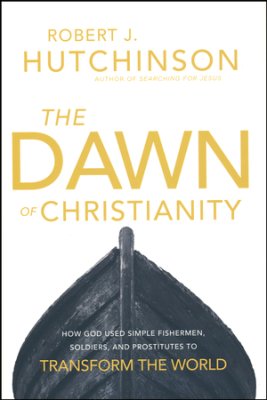
The Dawn Of Christianity (book review)

Sometimes when people are reading the Gospels and the Book of Acts in the New Testament of the Bible they forget what an accurate history is presented at a pivotal time in world events. In The Dawn Of Christianity, Robert J. Hutchinson makes the history behind, surrounding, and after the biblical accounts come to life in a fresh way.

The Dawn Of Christianity tells the history surrounding Jesus of Nazareth and His followers almost in a novel-like format. Hutchinson masterfully puts together the four Gospel accounts and Luke’s history of the early church in chronological order, and then brings in archaeological, geographic, and anthropological resources like a supporting cast to the biblical account. Along the way, we are introduced to extra-biblical characters, places, and customs that add a new depth of understanding to the history presented in Scripture.

Hutchinson notes, “Recent archaeological discoveries are showing that the New Testament in general, and the Gospels in particular, are far more reliable historical sources than previous generations of New Testament experts realized.” Indeed, he makes good use of as many pertinent finds as possible to enhance his storytelling.

The Dawn Of Christianity spans the time from just before the birth of Jesus Christ of Nazareth and then tracks the spread of Christianity for about 20 years following Christ’s ascension into heaven. It’s a fascinating and enlightening story for both Bible aficionados and skeptics alike.

I am a Thomas Nelson book reviewer.

The Promised Power Of Pentecost

When the Israelites were delivered from Egypt on the night of Passover, fifty days later they arrived at Mount Sinai where God delivered the Ten Commandments to them. This became the birth of the Jewish nation. For millennia following this, not only did the Jewish people observe Passover but they also celebrated “The Feast of Weeks” (also known as Pentecost) fifty days following Passover.

But on the first Pentecost after Christ ascended to Heaven, something amazing happened which was a game-changer for the new Christians. An event which became the birth of the Christian nation.

On that Pentecost Sunday, the Holy Spirit was poured out on Christ’s followers in a way never before seen in history. Although this had never been seen before, it was the fulfillment of something God had promised thousands of years before.

  1. Promised

This blessing of the Holy Spirit had been hinted at when God first called Abraham, as He promised that from Abraham would come a blessing for all peoples on earth (Genesis 12:3). Jesus said that this blessing would be realized with the outpouring of the Holy Spirit, and then Peter tied the Day of Pentecost experience to the fulfillment of those promises (Acts 2:38-39).

  1. Commanded

Jesus had this empowerment of the Holy Spirit and He wanted all of His followers to have it too, so His directive to His follower is not a suggestion. Twice when Jesus tells His followers to receive the baptism in the Holy Spirit, the verbs He uses are commands (see Luke 24:49 and Acts 1:4).

  1. Normal Experience

For the first Christians, the baptism in the Holy Spirit was a normal experience for them following salvation. This baptism gave them power to…

  1. Initial Evidence

The baptism in the Holy Spirit is accompanied by an initial physical evidence of speaking in a language you’ve never studied. This is to be an unmistakable proof—primarily to you—of the Spirit’s outpouring. But the ongoing development of Christlike character is the continual evidence of the baptism in the Holy Spirit.

So what’s the controversy? Why do people spend so much time arguing this baptism isn’t for us, or for now? If we start down that path, what else are we going to say is outdated or exclusive for some?

Doesn’t it seem much more logical to simply accept what God promised all His people?!

So here’s the question I would ask you—Have you been baptized in the Holy Spirit? If not, why not?

Are You Healthy Enough To Love Serving Others?

Jesus was wholly healthy. That is to say, He was healthy in every aspect of His life—mentally, physically, spiritually and emotionally (see Luke 2:52). This is important to note because Christians are called to be healthy in all of these same areas.

The phrase Dr. Luke uses about Christ’s growth is a telling one: Jesus grew in favor with men. People liked having Jesus around. The word for favor is from the same root word where we also get grace. So Jesus was a graceful man.

What does it mean when someone is graceful? It means they are pleasant to be around … you feel safe around them, knowing they will never belittle you or put you down … their focus is on your agenda, not their own … they are a “there you are!” person, not a “here I am!” person.

Bottom line: they are filled with love for others.

Jesus was healthy in His mind, His body, His spirit and His emotions, which allowed Him to be in a unique place where He fully knew how powerful He was, yet He chose to use His power not for His own benefit, but to serve others (see John 13:1-4).

Healthy love loves God and then serves God by loving and serving others. Only a wholly healthy person can truly serve with a right attitude…

  • People with unhealthy thoughts won’t serve because they don’t know they’re supposed to serve.
  • People with unhealthy bodies can’t serve because their disease won’t let them.
  • People with unhealthy spirits shouldn’t serve because they are promoting hypocrisy.
  • People with unhealthy emotions don’t serve because their attitude gets in the way.

Jesus not only told us His loving service was an example for us (John 13:15-17), but He went on to say that our loving service would be an example for others (vv. 34-35).

Healthy love loves God and then serves God by loving and serving others.

Do you have that kind of healthy love? Are you becoming wholly healthy enough to serve?

Ask yourself these questions:

  1. What do I know that I’m not yet doing?
  2. What will it take for me to turn knowing into doing?
  3. Can people tell I am growing wholly healthier year by year?