Listen to the podcast of this post by clicking on the player below, and you can also subscribe on Apple, Spotify, or Audible.
Isaiah 49 has an interesting phrase that appears twice: “But I said…” (vv. 4, 14).
Notice that first word: But. That conjunction means that “I” am saying something in contradiction to what someone else has said. Sadly, in this case the Someone Else that is speaking in this chapter is God Himself!
The phrase “this is what the LORD says” is used three times in this same chapter (vv. 8, 22, 25). Look at what God is saying to you and me:
I made you
I called you
you are My servant
I reward you
you have My favor
you have My comfort
I never forget you
I will never disappoint you
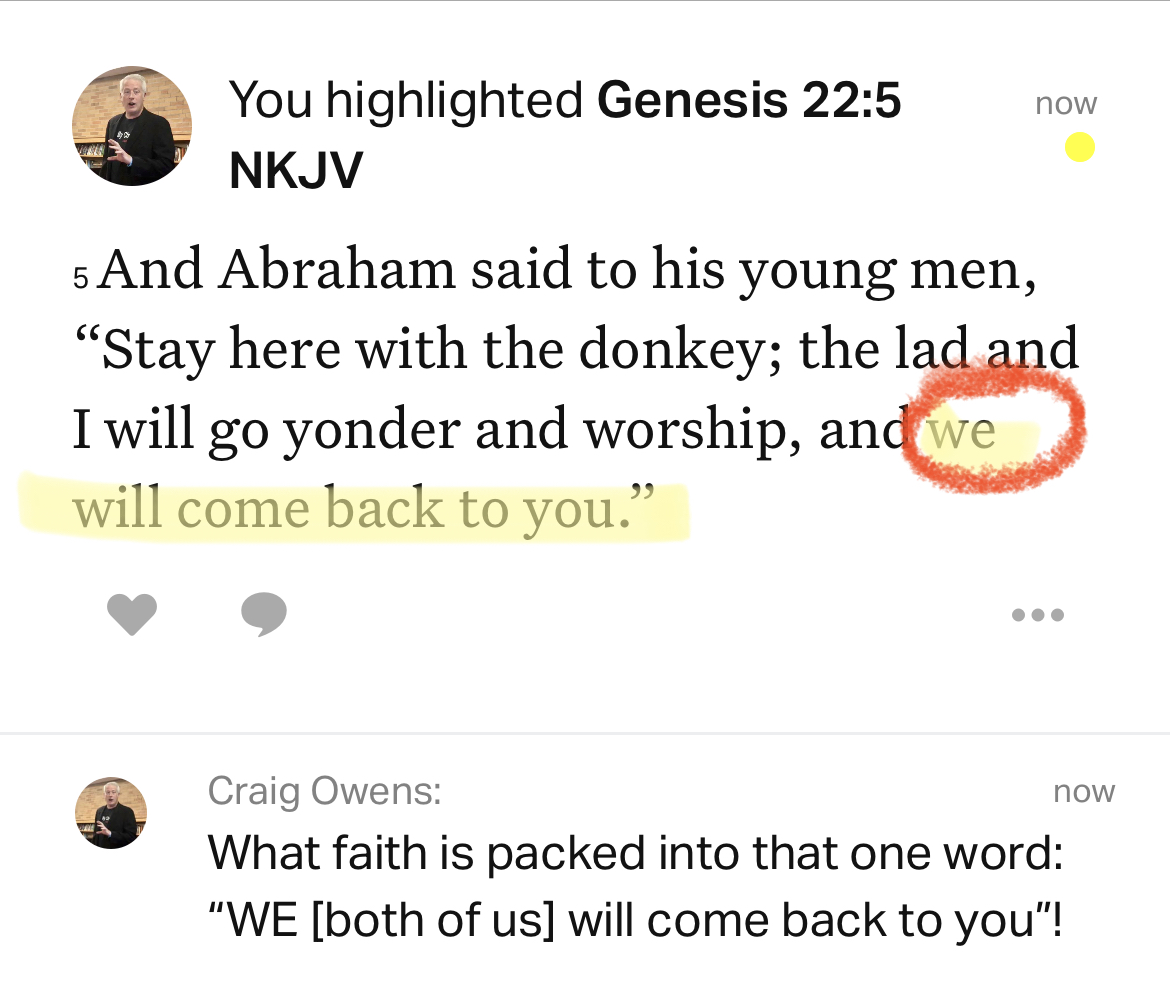
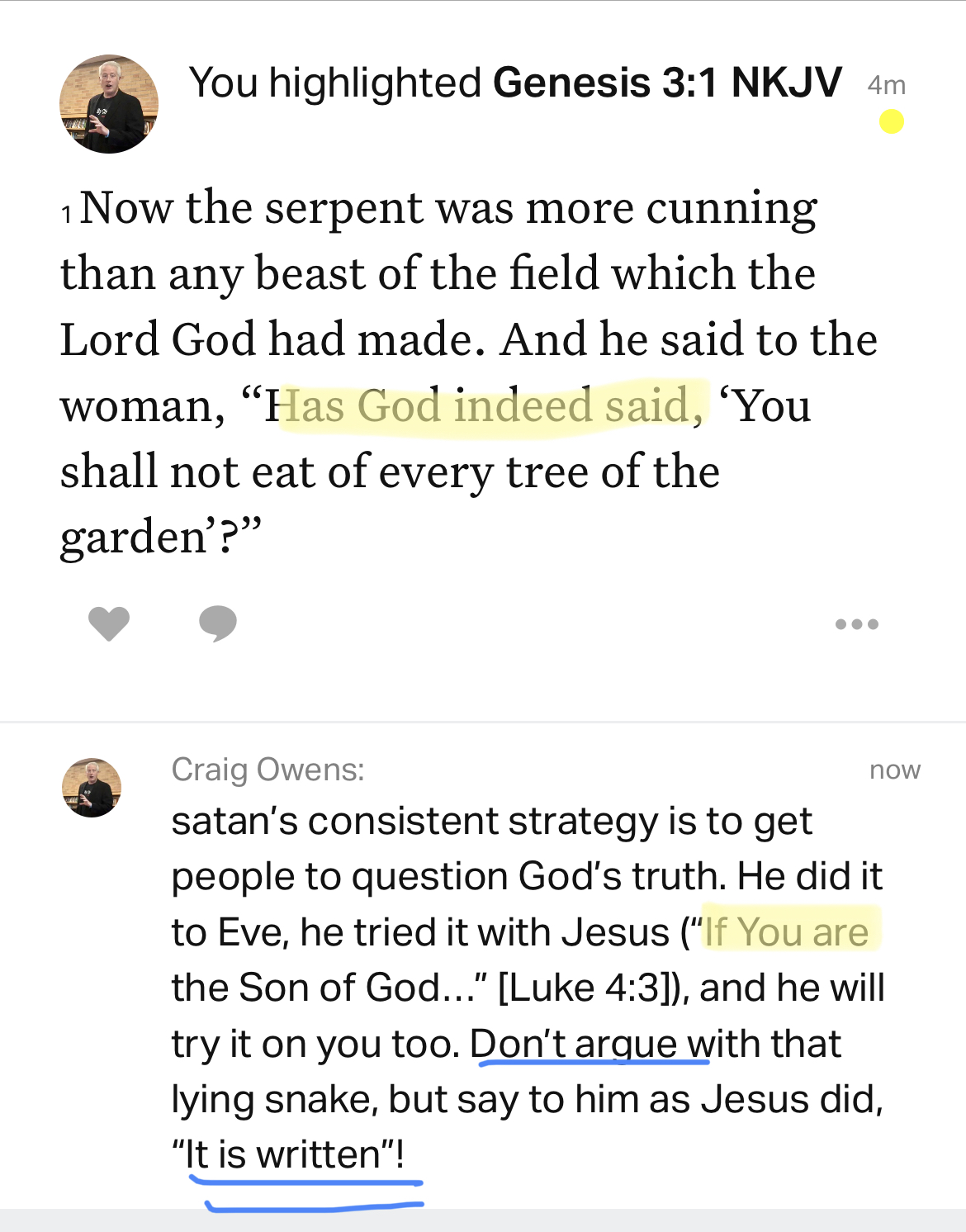
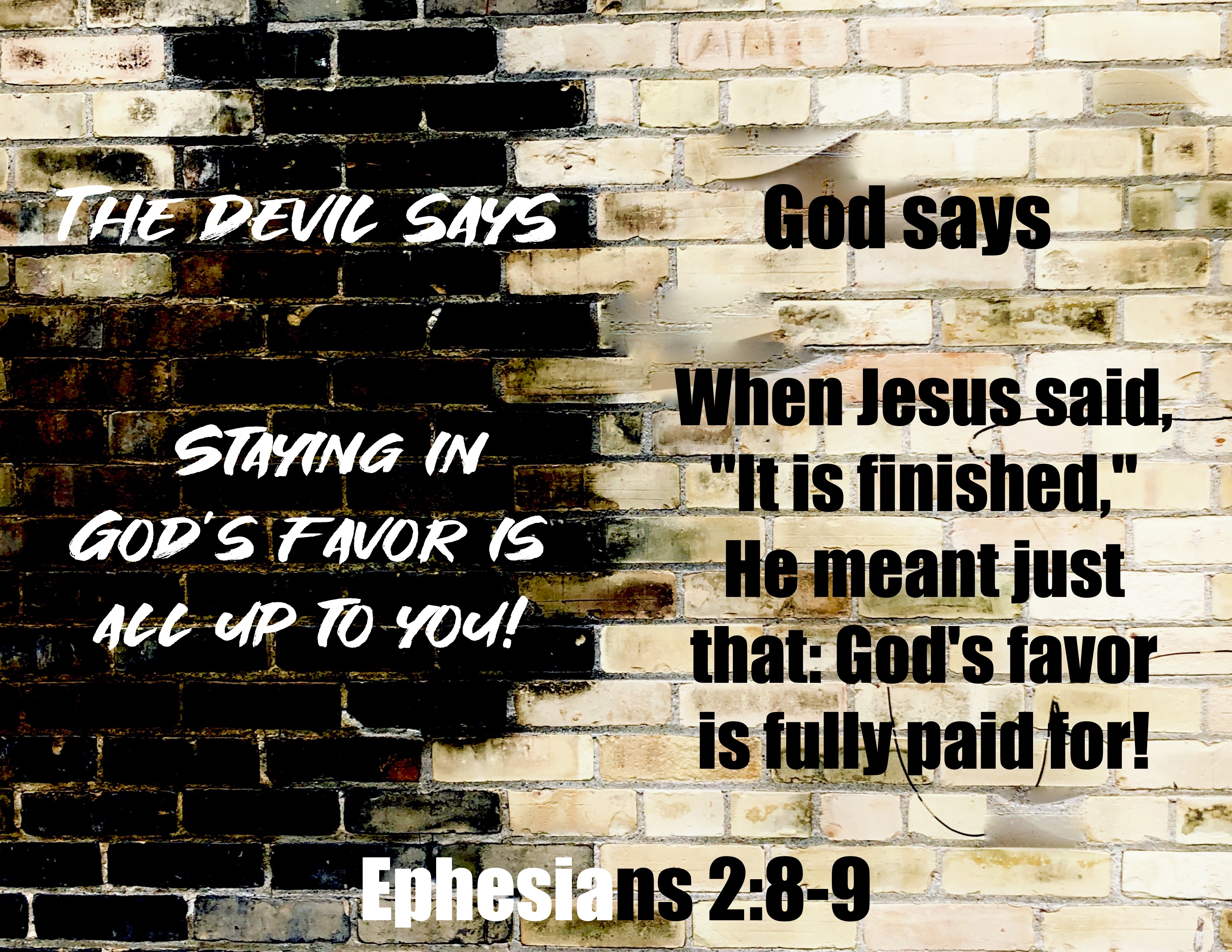
A consistent strategy of the devil is try to get us second-guessing or doubting God’s promises. He did this to Eve—“Did God really say that?”—and he tried it with Jesus—“Are You really the Son of God?”—and he’s still trying it today.
Jesus said the devil’s native tongue is lying. He lies and he slanders you. He wants you to simply listen to those lies without questioning them.
Someone once asked Smith Wigglesworth, “Smith, how do you feel?” He replied, “I never ask Smith how I feel. I tell him how he feels!”
That’s good counsel for us today!
Don’t listen to yourself, especially when you’re tired or lonely or anxious or scared, but talk to yourself. Remind yourself what God says to you and what He says about you. Remind those negative thoughts that God never lies, that He is all-loving, that He is all-powerful, and that He has a unique plan and purpose your life.
Whenever you feel like saying, “But I said,” change those thoughts around to, “But this is what God says!”
I’ve shared a couple of other posts that expand on this idea which you may want to read here and here.
Listen to the podcast of this post by clicking on the player below, and you can also subscribe on Apple, Spotify, or Audible.
Let’s get on the same page with a few facts:
Nearly 1-of-5 adults in the United States age 18 and older battle some form of anxiety disorder.
Being anxious is not a sin but we can grieve God’s heart if we don’t train ourselves to turn to Him as our First Source. Notice that David said, “When[not “if”] I am afraid, I put my trust in You” (Psalm 56:3).
A third definition of anxiety is found here: “Cast your cares on the Lord and He will sustain you; He will never let the righteous be shaken” (Psalm 55:22). This word for cares or anxieties is the only time this Hebrew word is used in the Bible. The idea is a heavy burden, which the Amplified Bible captures like this: “Cast your burden on the Lord—releasing the weight of it—and He will sustain you….”
We can be burdened because we pick up and carry things on our own. But the word for cares or burdens in Psalm 55:22 can mean not only things we pick up, but things given to us by God or allowed by God. You might ask, “Why would God give me a burden?”
Sometimes it’s allowed—God allowed satan to afflict Job within limits, and He allowed Joseph’s brothers to ambush him (Job 1:8-12; 2:3-7; Genesis 50:20).
Sometimes it’s given—God gave Jesus a bitter cup to drink, and He gave Paul a “thorn in the flesh” (Matthew 26:39-42; 2 Corinthians 12:7).
In every instance, the limits are perfectly measured to accomplish what God wants to do. The way we respond glorifies Him and keeps us dependent on Him (Job 1:20; 2:10; Genesis 50:20; 2 Corinthians 12:8-10; Hebrews 10:10).
Still in the middle of this, the burdens can seem overwhelming and anxiety-inducing. That’s why God tells us what to do with these burdens: Cast them off!
In Psalm 55:22, David gives us the word “cast” in the imperative mood, which means it’s a command. Literally, the word means to throw away or shed the burden.
How often do we do this? David said he prayed “evening, morning, and noon” for God’s help (Psalm 55:16-17).
What does God do when we cast off these burdens? He sustains and supports us—“He will sustain you; He will never let the righteous be shaken.”
The apostle Peter quotes the opening words of this verse when he writes, “Cast all your anxiety on Him,” and then he tells us why we can do this: “Because He cares for you” (1 Peter 5:7). Just like David said he prayed for his burdens to be released “evening, morning, and noon,” the verb tense Peter uses implies the same thing. We don’t just release our burdens once, but we continue to do it again and again and again!
The word Peter uses for “cast” is only used twice in all the New Testament. The word means not just to drop our burdens at our feet—where we may trip over them or be tempted to pick them up again—but to throw our burdens on someone else. The only other place this word is used is when on the day Jesus rode into Jerusalem the disciples “threw their cloaks on the colt and put Jesus on it” (Luke 19:35).
Peter tells us that this casting off of our burdens requires us to humble ourselves before God. Pride makes us think we can handle it on our own, and that same pride robs God of the glory He would receive when He provides relief from our heavy load. We cast these burdens onto Jesus so that we can be alert to the enemy’s sneaky tactics, and help others who are also being attacked. And just as David said God supported and sustained him, Peter said the same thing (1 Peter 5:6-10). I especially like the wording from the King James Version—
But the God of all grace, Who hath called us unto His eternal glory by Christ Jesus, after that ye have suffered a while, make you perfect, stablish, strengthen, settle you. (1 Peter 5:10 KJV)
Jesus can X-out the instability that comes with carrying heavy burdens and make us stablished, strengthened, and settled in Him.
Don’t try to carry these anxiety-inducing burdens on your own, but cast them on Jesus every evening, morning, and noon. Let Him carry those burdens so you can live in a way that glorifies Him every single day.
This is a weekly series with things I’m reading and pondering from Charles Spurgeon. You can read the original seed thought here, or type “Thursdays With Spurgeon” in the search box to read more entries.
Listen to the podcast of this post by clicking on the player below, and you can also subscribe on iTunes or Spotify.
Faith Sees Better Than Sight Does
For we walk by faith, not by sight. (2 Corinthians 5:7)
There is walking by faith, and there is walking by sight. The most of men, all men indeed, naturally walk by sight. They have a proverb that says, ‘Seeing is believing,’ and they are wise men, for they trust people as far as they can see them, and no further. … Self-reliance is the name of the principle, and according to the world, the best and grandest thing that a man can do is have faith in himself. …
I think the world must be pretty well ashamed of itself if it still considers this poor earth to be all that a soul has to live for. I feel as if I could not talk upon the matter. Solomon tried everything there was in this world—riches, power, pleasure—every sort of delicacy and delight he had, beyond the point of satisfaction. And what was his verdict upon at all? ‘Vanity of vanities, all is vanity’ (Ecclesiastes 1:2). …
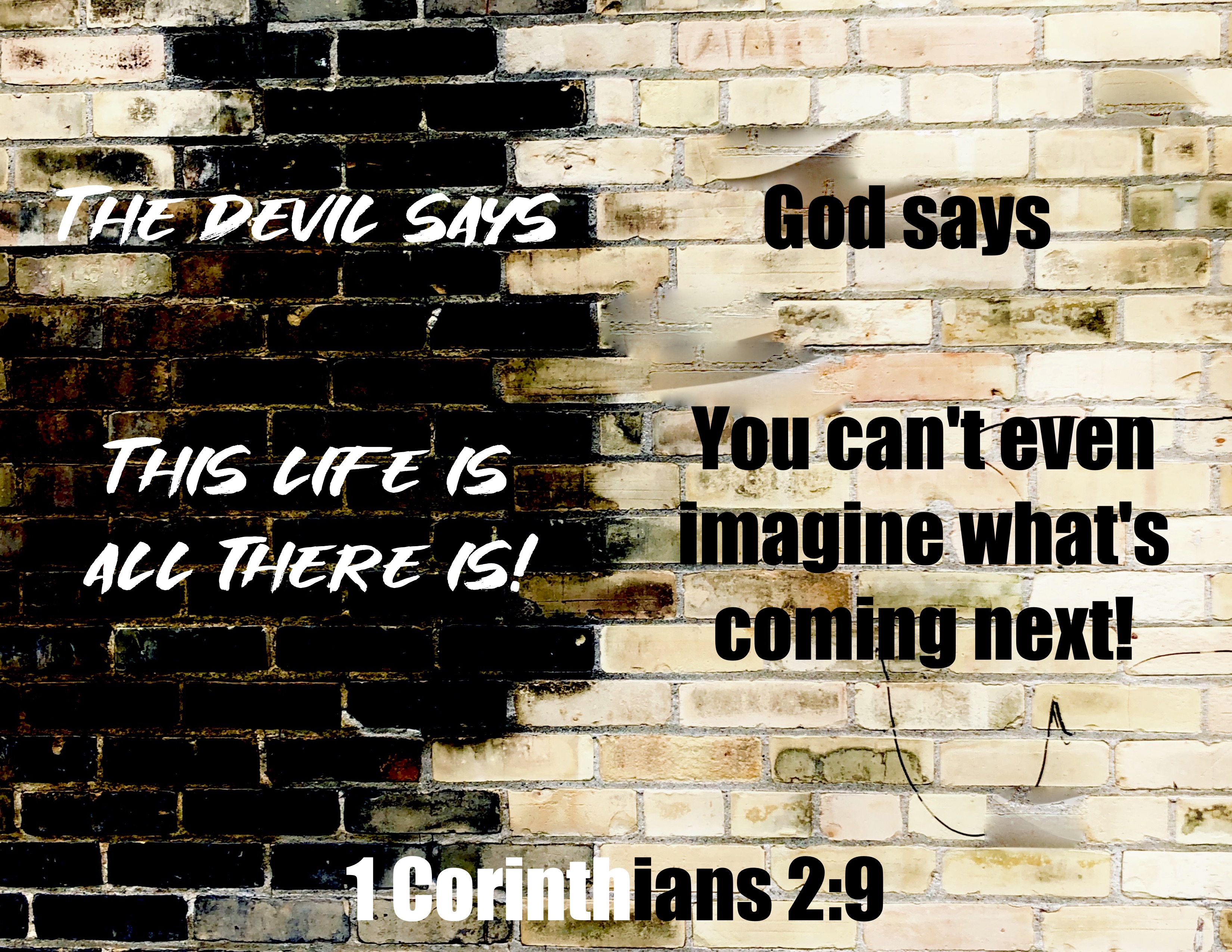
If there is not another world to live for, I must say that this life is a most unutterably empty kind of thing! It is not worthy of a man! But oh, to believe what God tells me: that there is a God; that God became flesh to bear me up to Himself! To believe that I am God’s son, that I have an immortality within myself that will outlast the stars, that I will one day see His face and sing His praise forever with cherubim and seraphim! Why, there is something here! …
If you walk only by sight and believe only what you see, what do you believe? You believe that while you are living here, it is a good thing to make the best you can of it. And then you will die and be buried, and that will be the end of you! What a poor, miserable, ignorant belief this is! … But when you believe in what God reveals and come to walk by faith, how your information expands! Now riddles are all solved, and the inexplicable is understood! …
The principle of faith does best in the dark. He who walks by faith can walk in the sunlight as well as you can, for he walks with God. He has enlightened eyes, but he can walk in the dark as you cannot, for his light is still shining upon him. He trusts in the unseen and in the invisible, and his soul rejoices when present things are passing away.
The devil’s strategy hasn’t changed. He will try to get you to say, “Woe is me! Look at all of the bad things happening around me!”
But we walk by faith, not by sight. “Faith is the assurance—the confirmation, the title deed—of the things we hope for, being the proof of things we do not see and the conviction of their reality—faith perceiving as real fact what is not revealed to the senses” (Hebrews 11:1 AMP).
Don’t give in to the temptation to believe only what you see. There is so much more waiting for you. It’s all yours by faith in Jesus Christ!
This is a weekly series with things I’m reading and pondering from Charles Spurgeon. You can read the original seed thought here, or type “Thursdays With Spurgeon” in the search box to read more entries.
Listen to the podcast of this post by clicking on the player below, and you can also subscribe on iTunes or Spotify.
Holy Familiarity
All these thirteen years, so far as Scripture informs us, Abram had not a single visit from his God. We do not find any record of his either doing anything memorable or having so much as a single audience with the Most High. Learn from this that if we once forsake the track of simple faith, once cease to walk according to the purity that faith approves, we strew our path with thorns, cause God to withhold the light of His countenance from us, and pierce ourselves through with many sorrows.
But mark, beloved, the exceeding grace of God: The way to recover Abram from his backsliding was that the Lord should appear to him…. This brings to my remembrance the words in the book of Revelation concerning the church in Laodicea: ‘You are neither cold nor hot. I could wish you were cold or hot. So then, because you are lukewarm, and neither cold nor hot, I will vomit you out of My mouth’ (Revelation 3:15-16)—a very solemn declaration. But what follows? ‘Behold, I stand at the door and knock. If anyone hears My voice and opens the door, I will come in to him and dine with him, and he with Me’ (Revelation 3:20). That means just this: For recovery out of a horrible state of languishing and lukewarmness there is no remedy but the coming of Jesus Christ to the soul in near and dear communion! …
Distance from God’s presence always means sin. Holy familiarity with God engenders holiness. The more you think of God, the more you meditate on His works, the more you praise Him, the more you pray to Him, the more constantly you talk with Him and He with you by the Holy Spirit, the more surely are you on the road to thorough consecration to His cause!
From Consecration To God
I’ve often said that one of the most powerful prayers we can pray is simply, “God, help!” In those two words we acknowledge our helplessness and His omnipotence, our sin and His forgiveness, our shortcomings and His desire to restore us.
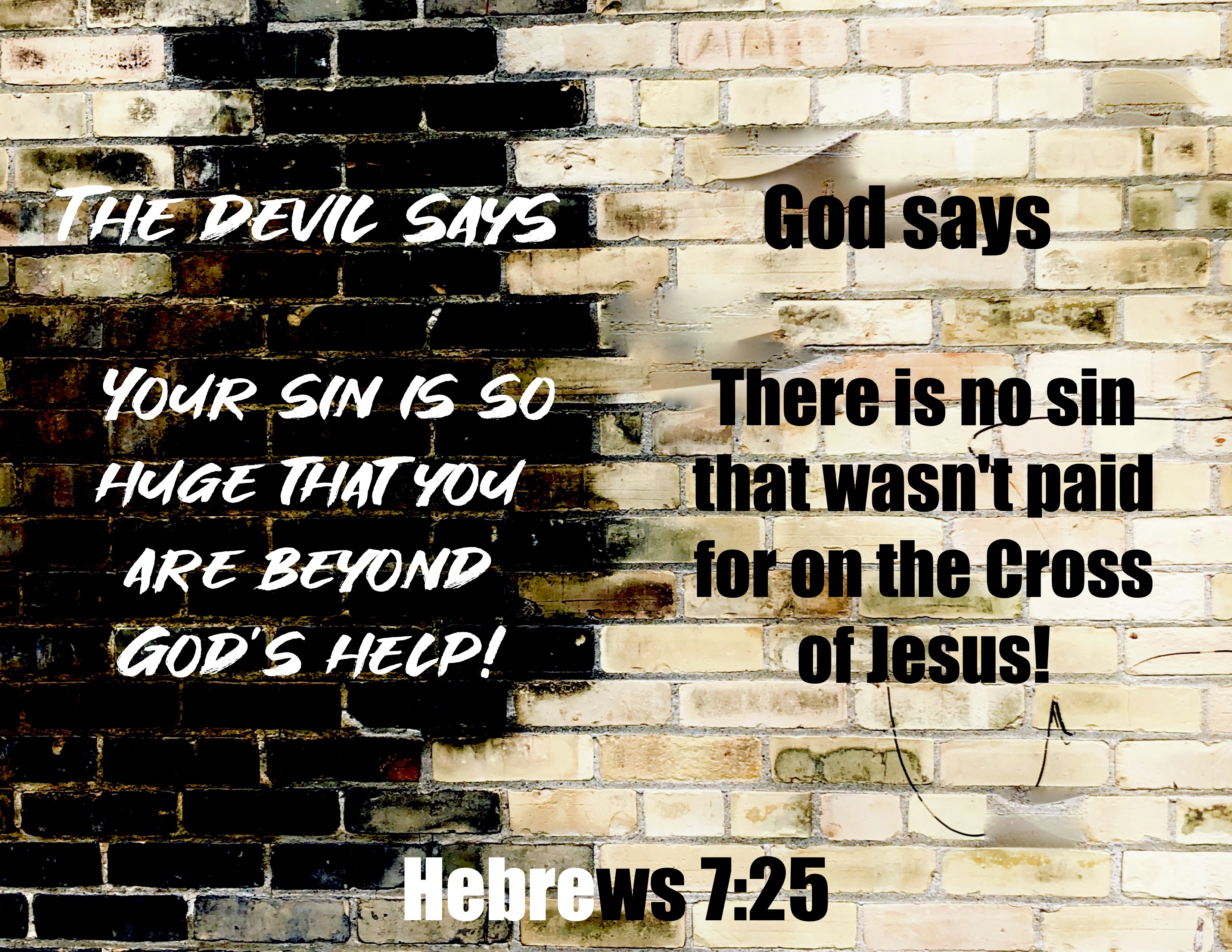
The devil lies! He loves to whisper the condemning words of, “You’ve messed up one too many times. You’re too far away for God to rescue you now. This time you exhausted God’s mercy.”
Once again, by simply crying out, “God, help!” you are calling out satan’s lies. Jesus paid too high of a price for Him to ever let you go. Near the end of this sermon, Charles Spurgeon spoke a powerful reminder: “The blessings of grace are not given today to be taken back tomorrow, but are eternal blessings [Genesis 17:7, 13, 19].” Amen!
My friend, cry out to God today—He loves you and He’s longing to restore you!
This is a weekly series with things I’m reading and pondering from Charles Spurgeon. You can read the original seed thought here, or type “Thursdays With Spurgeon” in the search box to read more entries.
Listen to the podcast of this post by clicking on the player below, and you can also subscribe on iTunes or Spotify.
Wart Warning
At the instigation of his wife, Abraham adopted means that were not justifiable in order that he might obtain the promised heir [see Genesis 16]. He used means that may not be so vicious to him as they would be in men of modern times, but that were suggested by an unbelieving policy and were fraught with evil. He takes Hager to wife. He could not leave it to God to give him the promised seed. He could not leave it with God to fulfill His promise in His own time and justifies himself in turning aside from the narrow path of faith to accomplish, by doubtful methods, the end that God Himself had promised and undertaken to accomplish! How shorn of splendor is Abraham seen when we read, ‘And Abraham heeded the voice of Sarah’ (Genesis 16:2). That business of Hagar is to the patriarch’s deep discredit and reflects no honor at all upon either him or his faith.
Look at the consequences of his unbelieving! Misery soon followed. Hager despises her mistress. Sarah throws all the blame on her husband. The poor bondwoman is so harshly dealt with that she flees from the household. … One marvels that such a man as Abraham allowed one who had been brought into such a relationship with him to be heedlessly chased from his house while in a condition requiring care and kindness!
We admire the truthfulness of the Holy Spirit that He has been pleased to record the faults of the saints without extenuating them. Biographies of good men in Scripture are written with unflinching integrity—their evil recorded as well as their good. These faults are not written that we may say, ‘Abraham did so-and-so; therefore we may do it.’ No, brothers and sisters, the lives of these good men are warnings to us as well as examples, and we are to judge them as we should judge ourselves—by the laws of right and wrong.
From Consecration To God
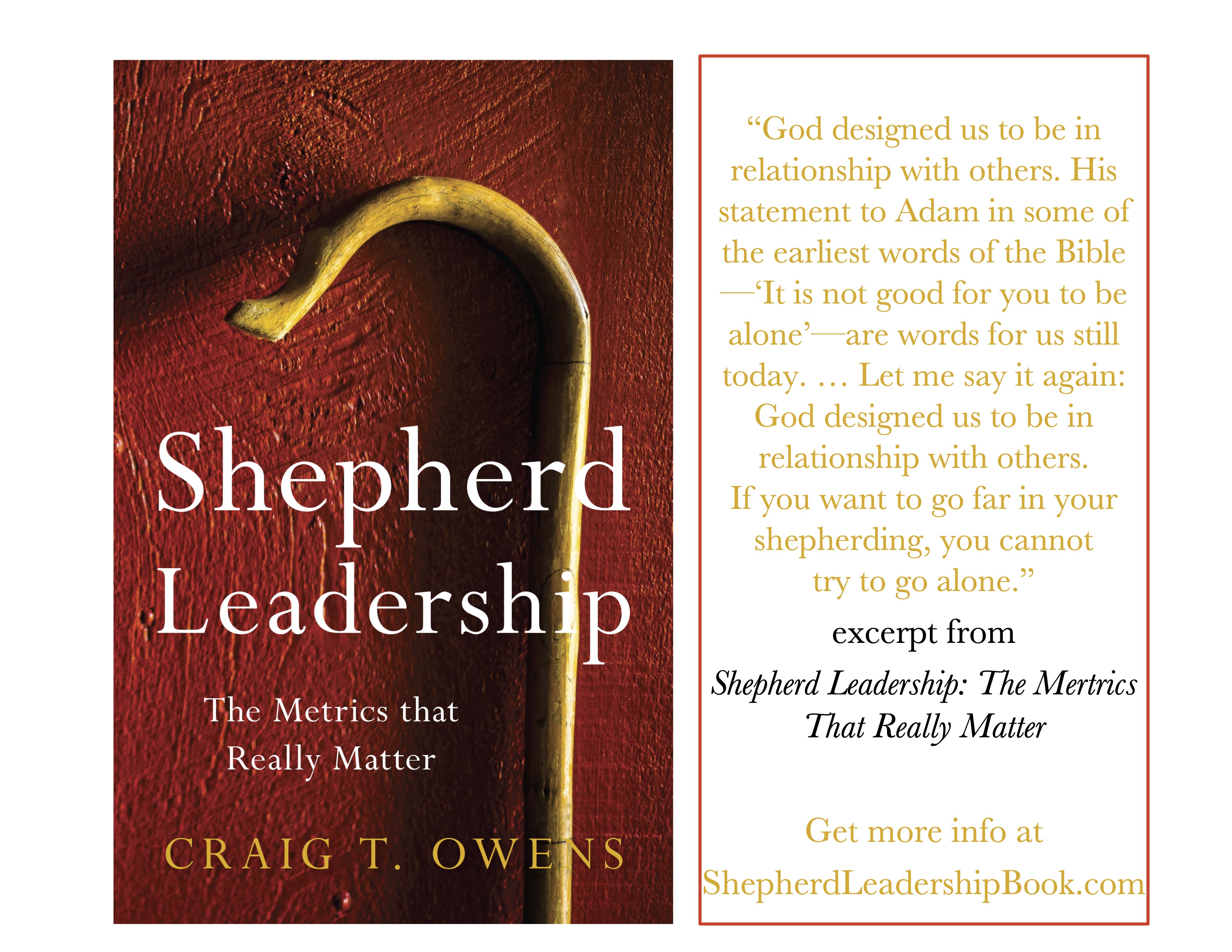
In my book Shepherd Leadership: The Metrics That Really Matter, I also talk about the faults that we see in God’s leaders. In looking at David’s adulterous affair with Bathsheba, Elijah’s slide into depression, and Peter’s denial of Jesus, I see something similar: They were alone.
David stayed in Jerusalem while his army went to fight, Elijah left his servant behind and went into the wilderness alone, and Peter was separated from his fellow disciples. Just like with Abraham, all of these other men were brought back into close fellowship with God. But all of these men now have a “wart” on their biography.
“God designed us to be in relationship with others. His statement to Adam in some of the earliest words of the Bible—‘It is not good for you to be alone’—are words for us still today. As I mentioned earlier [in my book], you will not find the word ‘saints’ in the singular in the New Testament. Instead, you will find such phrases as ‘one another,’ ‘each other,’ and ‘all together’ prominently displayed throughout the New Testament church. Let me say it again: God designed us to be in relationship with others. If you want to go far in your shepherding, you cannot try to go alone.” —from the chapter in Shepherd Leadership called‘Going Farther’
Let’s be forewarned by these examples. Stay close to God, but also stay close to godly friends that will help you in the hard times. Don’t let a wart blemish your record.
Listen to the podcast of this post by clicking on the player below, and you can also subscribe on Apple or Spotify.
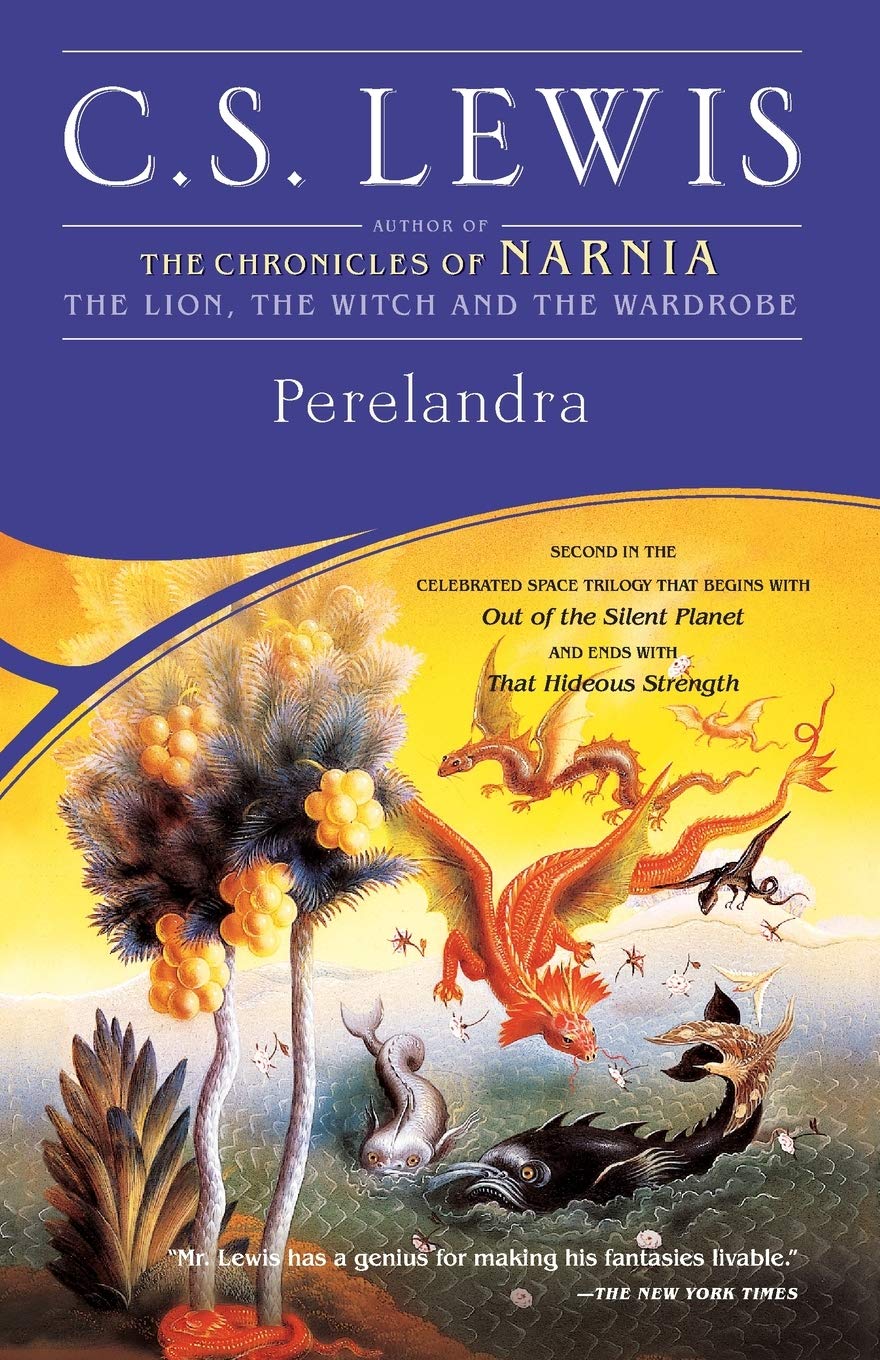
Perelandra by C.S. Lewis is the second book in Lewis’ space trilogy. Of all the books in this series, this is the only book that I would recommend reading the first book—Out Of The Silent Planet—first, so that you can fully appreciate the story.
Out Of The Silent Planet took place on Malacandra (or Mars) where our protagonist Dr. Elwin Ransom learns the Old Solar language and clashes with the antagonist Dr. Edward Weston. Perelandra (or Venus) is the setting of this second book, which essentially picks up right from the conclusion of book one.
Although C.S. Lewis had much stricter definitions for terms like “allegory” or “parable,” his fantasy stories in both this space trilogy and his Narnian books clearly are telling a much grander and more real Story than merely the fictional accounts in these books. This concept is on full display in Perelandra.
In the biblical account of the temptation of Eve, the whole affair is covered rather quickly. The devil says, “Eat the fruit,” to which Eve replies, “We’re not supposed to.” And then the devil says, “Nothing bad will happen to you if you do eat it,” and she does it. In Perelandra, C.S. Lewis takes us back to that scene and imagines the debate that might have happened, with Ransom counseling the Lady of Perelandra to obey, and Weston (or at least Weston’s body) trying to convince her to bravely disobey. The interplay between these three characters is quite fascinating.
This story is a very enjoyable read on its own, but I found that the backstory of Out Of The Silent Planet increased my enjoyment in reading this book again. Whenever you choose to read this book, you are in for—with all due apologies to C.S. Lewis—a lovely allegory!
Listen to the podcast of this post by clicking on the player below, and you can also subscribe on Apple or Spotify.
Don’t you wish that you could clean things up and they would stay clean? After you get everything set the way you like it, why can’t it just stay that way? Quite simply, things can’t stay clean and pristine because of the Law of Entropy. Entropy is the measure of disorder in a system, and the Law of Entropy says that unless sufficient energy is applied, an ordered system will always move toward disorder. This is as true spiritually as it is in physics.
God created a perfectly ordered system both physically and spiritually, but man’s sin brought in disorder, disease, and decay. It gets so bad that just three chapters after man’s first sin we read, “The Lord saw how great the wickedness of the human race had become on the earth, and that every inclination of the thoughts of the human heart was only evil all the time” (Genesis 6:5).
Throughout history, there have been revivals, reformations, and awakenings where people see the disorder and decay that sin has brought to their lives and they want to return to God. The pain of entropy causes people to repent, and the Spirit of God moves in with sufficient energy to restore. Sadly, unless the Holy Spirit’s energy is continually applied, entropy will again begin to run its downward course.
Jesus not only came to reverse the entropy of sin (see Isaiah 9:2, 49:9; John 1:5, 8:12), but He sent us out into a sinful world to do the same thing. Jesus told us that we are salt that reverses entropy’s decay and we are light that reverses entropy’s darkness (Matthew 5:13-14). Jesus also told us that there’s no way we can maintain this entropy-reversing energy on our own—we need the Holy Spirit’s empowerment (Luke 24:49; Acts 1:8). [Check out all of these verses by clicking here.]
Paul talked about this same idea in 2 Corinthians 3. He contrasts the ministry of the Old Testament with its fading glory, and the ministry of the New Testament with terms like moreglorious, surpassing glory, and ever-increasing glory.
Do you realize that Spirit-filled Christians never have to long for “the good ol’ days”? Being baptized in the Holy Spirit means, as Paul reminds us, that we are perpetually being transformed into the image of Jesus and we are therefore reflecting more and more of His glory. Every day can be more glorious than the day before. We don’t have to experience any entropy in our spiritual walk.
This isn’t because of our actions. Paul says, “not that we are competent in ourselves…but our competence comes from God. … [We] are being transformed into His likeness with ever-increasing glory, which comes from the Lord, who is the Spirit.”
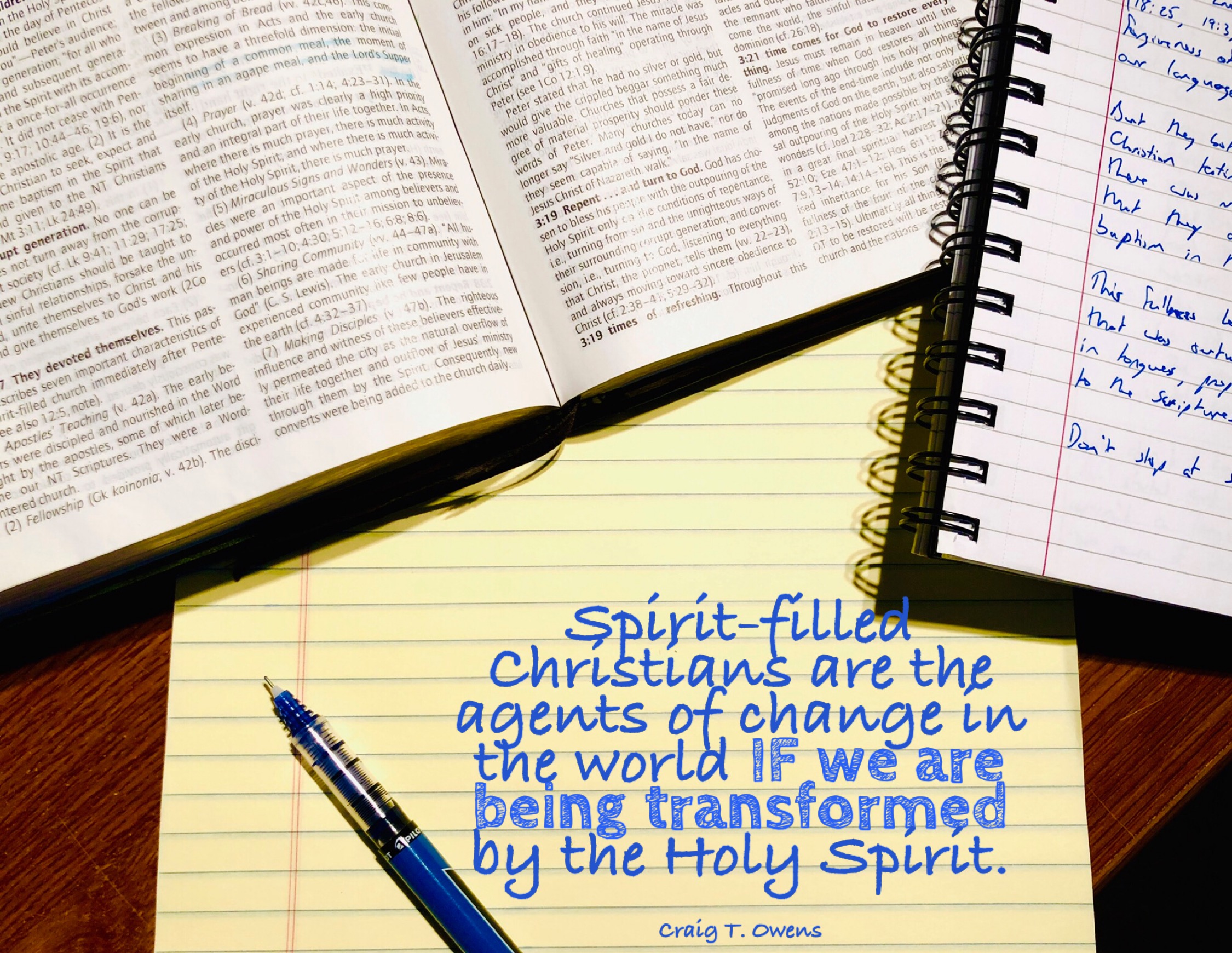
Spirit-filled Christians are the agents of change in the world IF we are being transformed by the Holy Spirit. In other words, we will tend toward entropy (and uselessness) unless we have the Spirit’s energy continually applied to our lives.
Being transformed is an ongoing, continual process. We have to have the energy of the Holy Spirit continually at work on us personally to keep us from entropy. And then we’ll be able to reflect that entropy-defeating light to a dark world.
I’ve said this before, but I’m going to keep on saying it: Don’t stop at salvation—be baptized in the Holy Spirit. Don’t let entropy decay your salt or dim your light. Let the Holy Spirit help you reflect the light Jesus so that you can reverse the entropy of a dark, sinful world.
This is a weekly series with things I’m reading and pondering from Charles Spurgeon. You can read the original seed thought here, or type “Thursdays With Spurgeon” in the search box to read more entries.
Listen to the podcast of this post by clicking on the player below, and you can also subscribe on iTunes or Spotify.
Three Pieces Of Evidence
Many who believe in the name of Jesus are not sure that they have eternal life. They only hope so. … I speak affectionately to the weaker ones who cannot yet say that they know they have believed. I speak not to your condemnation but your consolation. Full assurance is not essential to salvation, but it is essential to satisfaction. May you get it at once. At any rate may you never be satisfied to live without it. You may have full assurance. …
Do you love God? Do you love His only begotten Son? You can answer those two questions surely. … If I love Him, I know it is because He first loved me [1 John 4:19]. Love to God in us is always the work of God’s love toward us. … Love to Jesus is an effect that proves the existence of its cause. …
John goes on to give another evidence: ‘By this we know that we love the children of God, when we love God and keep His commandments’ (1 John 5:2). … The Holy Spirit tells us that if we love the brethren, we have passed from death to life. You can tell whether you love the brethren, as such, for their Master’s sake and for the truth’s sake that is in them. And if you can truly say that you thus love them, then you may know that you have eternal life [1 John 3:14]. …
Our apostle gives us this further evidence: ‘This is the love of God, that we keep His commandments. And His commandments are not burdensome’ (1 John 5:3). Obedience is the grand test of love. … Do you feel that you love the ways of God, that you desire holiness and follow after it joyfully? Then, dear friends, you have eternal life and these are the sure evidences of it. Obedience, holiness, delight in God, never came into a human heart except from a Heavenly Hand. …
To me the fact that the mouth of God has spoken it stands in the place of all argument, either for or against. If Jehovah says so, so it is. … If your faith stands in the wisdom of men and is based upon the cleverness of a preacher, it will fail you. But if it stands on the sure Word of the Lord, it will stand forever.
From The Blessing Of Full Assurance
These pieces of evidence are why I stressed last week that you make reading the Bible a regular practice: God tells us that faith comes through hearing the Word of God (Romans 10:17). One of the favorite tactics of the devil is to try to get people to doubt or misapply God’s Word—he asked Adam and Eve, “Did God really say…” and then he quoted the Psalms out of context to Jesus to try to get Him to doubt (Genesis 3:1; Luke 4:10-11).
So when doubts about your secure standing in God’s sight creep in, you can return to the Scripture to say, “I have these three pieces of evidence that make me confident of God’s favor: I love Him because He first loved me, I love others because His love is in me, and I delight to obey all that my Father has told me.”
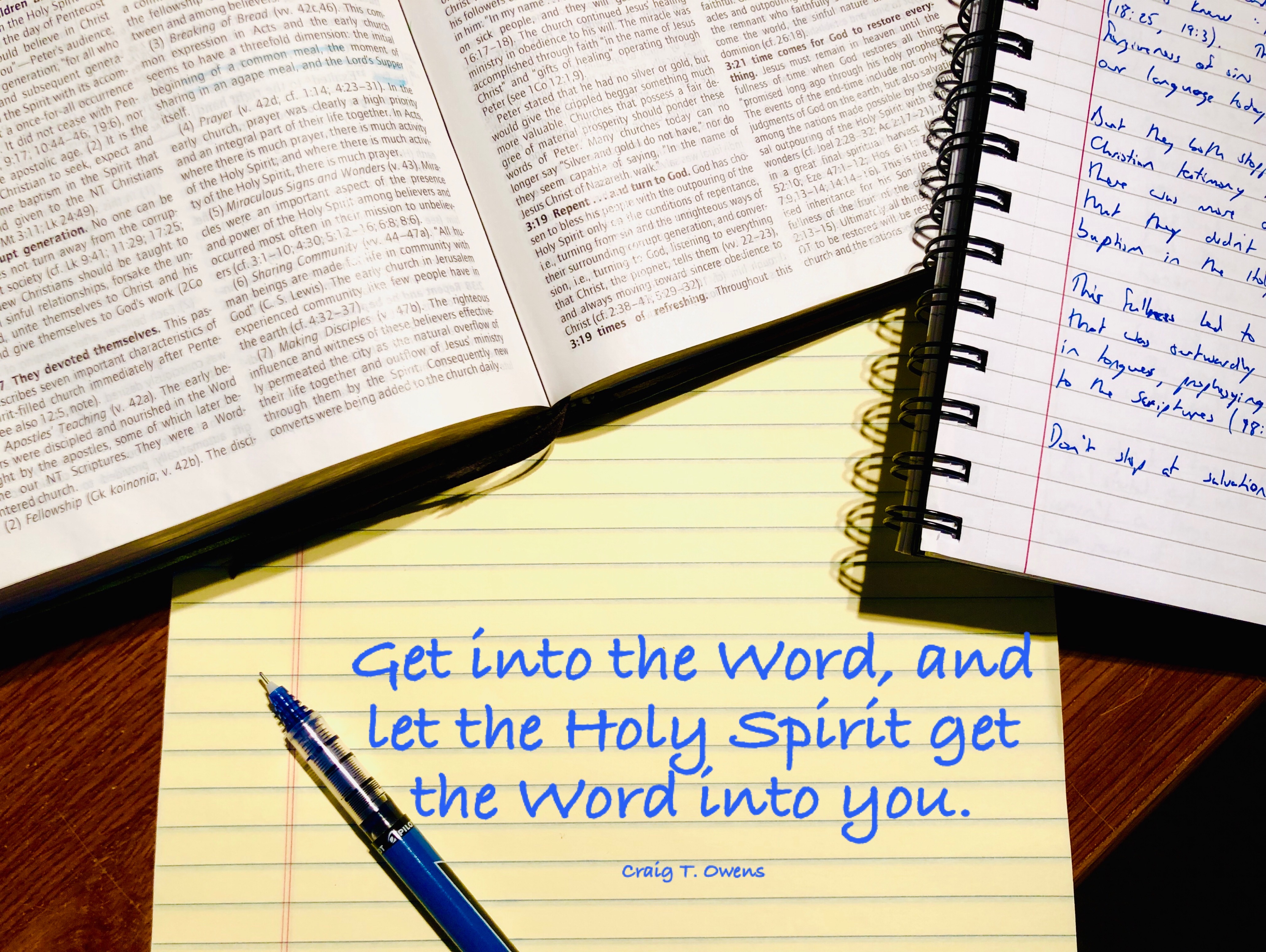
Don’t passively listen to your doubts and the devil’s lies, but actively talk back to them! Get into God’s Word and let God’s Word get into you so that you can speak the truth to every doubt.
This is a weekly series with things I’m reading and pondering from Charles Spurgeon. You can read the original seed thought here, or type “Thursdays With Spurgeon” in the search box to read more entries.
Listen to the podcast of this post by clicking on the player below, and you can also subscribe on iTunes or Spotify.
Simple Faith Is Still Powerful Faith
I would have you note that the faith that justified Abram was still an imperfect faith, although it perfectly justified him. It was imperfect beforehand, for he had prevaricated as to his wife and bid Sarai, ‘Say you are my sister’ (Genesis 12:13).
It was imperfect after it had justified him, for the next chapter we find him taking Hager, his wife’s handmaid, in order to effect the divine purpose, and so showing a lack of confidence in the working of the Lord. It is a blessing for you and for me that we do not need perfect faith to save us! ‘If you have faith as a mustard seed, you will say to this mountain, “Move from here to there,” and it will move; and nothing will be impossible for you’ (Matthew 17:20). If you have but the faith of a little child, it will save you. Though your faith is not always at the same pitch as the patriarch’s when he staggered not at the promise through unbelief, yet if it is simple and true, if it confides alone in the promise of God, it is an unhappy thing that it is no stronger, and you ought daily to pray, ‘Lord, increase my faith,’ but still it will justify you through Christ Jesus! A trembling hand may grasp the cup that bears a healing draught to the lip, but the weakness of the hand will not lessen the power of the medicine.
From Justification By Faith
A prayer that Jesus loved was simply this: “Lord, I believe; help me overcome my unbelief” (Mark 9:14-27). The recognition that Jesus alone could help is the essence of faith.
I’ve often said that the simplest, most powerful prayer we can pray is, “Lord, help!” In just those two words we are saying, “I cannot do a thing to help myself, but, Lord, I believe Your power is limitless to help me!”
Small faith is still powerful faith—even faith as small as a mustard seed—because it can move mountains. Childlike faith touches the heart of God. I love how Spurgeon reminds us that the weakness of the hand that grasps the cup promise does not lessen the power of the medicine in the cup.
The best way to learn to pray in faith is simply to pray in faith. A baby doesn’t wait until he has a fully-formed vocabulary to ask his father or mother for help. Just pray! The Holy Spirit can turn even your childlike prayers into pleasing sounds in your Heavenly Father’s ears.
Maybe you could paraphrase that father who was in desperate need of Christ’s help, “Lord, I am praying; help me to keep on praying!”
Listen to the podcast of this post by clicking on the player below, and you can also subscribe on Apple or Spotify.
“Jesus is risen indeed!” This is the glorious good news that Christians around the world celebrate.
But good news is really only good news when you fully realize how bad the bad news was. Like when the doctor comes in to tell you, “You’re going to be fine,” and you breathe a sigh of relief. And then the doctor goes on to explain what your condition was and all of the heroic efforts that were undertaken on your behalf, and you realize how close to death you actually were that your sigh of relief turns into a shout of joy!
Our fourth foundational belief says: “Man was created good and upright…. However, man by voluntary transgression fell and thereby incurred not only physical death but also spiritual death, which is separation from God.”
They sinned. “And sure enough, they then had knowledge of good and evil, but it was from the standpoint of becoming evil and remembering how good they once were,” said Nancy Guthrie. Because they sinned, now all of us are unable not to sin. Why? Because no one has been able to demonstrate to us how to be able not to sin.
Their sin had consequences for them that have extended to us:
they felt shame at their vulnerability before God
they were fearful to be in God’s presence
they were separated from God
and they doomed all of us to live an utterly meaningless existence forever!
But Adam and Eve’s sin didn’t send God scrambling for a remedy. Our fifth foundational truth says: “Man’s only hope of redemption is through the shed blood of Jesus Christ the Son of God.”
Jesus turned the absolutely worst news into the most eternally, overwhelmingly good news ever!
Jesus was made the cure for sin from before the foundation of the world. God made Jesus to be our sin (not just to carry our sins). In order for this to happen, Jesus had to become human like us. That means that Jesus, like Adam and Eve, had the same choice to sin or to not sin but He did not sin. This allowed Him to be our perfect sacrifice on the Cross.
When He died on the Cross, Jesus removed the uncrossable abyss between us and God. Jesus made it possible once again for us to be able not to sin. Not only that, but Jesus covers the shame that would linger even after our sin is forgiven by clothing us in His own righteousness!
Sin had us doomed to not only a meaningless existence on earth, but also to an utterly meaningless existence for the eternity following death. Jesus became our sin to allow us to be reunited with God and reclothed in Christ’s righteousness. This is not just good news, it’s eternally, overwhelmingly good news!