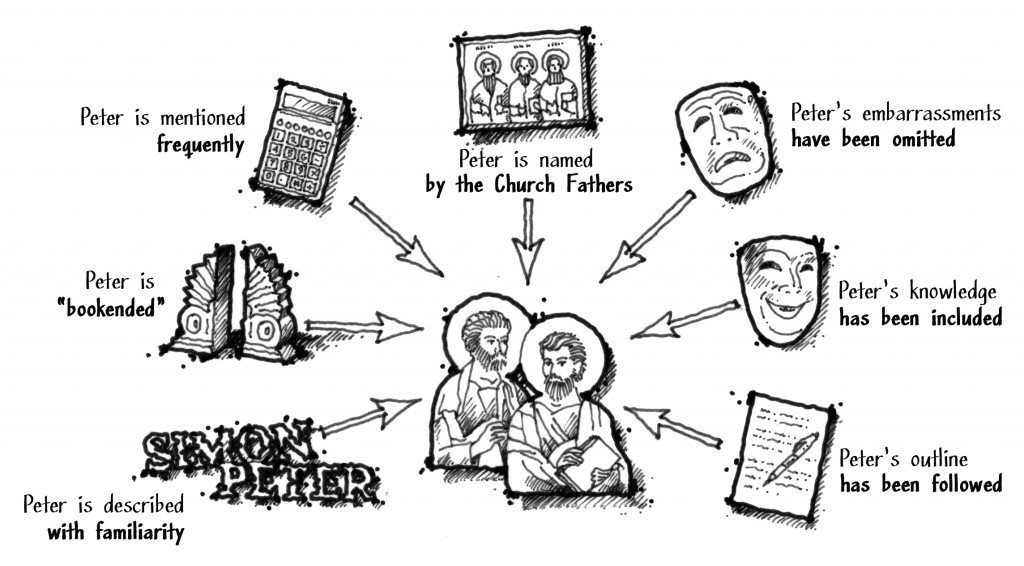
Everyday Evidence

Last week we learned that speaking in tongues was one of the most noticeable and consistent characteristics of those who were baptized in the Holy Spirit. 

Speaking in tongues as the Spirit enables you is the unmistakable, objective, outward, initial physical evidence. The Bible makes clear that continuing to pray in tongues has huge benefits for both our personal prayer lives and for the corporate church body. But don’t stop there! 

The initial, outward evidence is primarily for the individual Christian—it’s a way of knowing that you know that you have indeed been baptized in the Spirit. But there also needs to be some everyday evidence for others that testifies to them that something is different about your life. 

Consider the disciples of Jesus before and after being baptized in the Holy Spirit…

Their vocabulary

Before being baptized in the Spirit they said stupid things because they didn’t know what to say (Mark 9:5-6) But after being baptized in the Spirit there was no more foot-in-mouth disease. Just as the Holy Spirit enabled them to praise God in an unlearned tongue, He also empowered their natural dialect. The same Greek word is used in Acts 2:4 (enabled by the Holy Spirit), 2:14 (Peter addressed the crowd), and 26:25 (what I am saying is true and reasonable). 

Their spiritual power

Before it was limited, and often thwarted, but afterward, it was limitless and effortless (Mark 9:17-18; Acts 3:1-8; 5:15; 6:8).

Their understanding of servanthood

Before they argued about who was the greatest. Afterward, they gladly gave all that they had to others (Mark 9:33-34; Acts 2:44-45). 

Their boldness in the face of adversity

Before they abandoned Jesus, ran away, and hid in locked rooms. Afterward, there was no intimidating or silencing them (Acts 4:8, 13, 18-20). 

Their understanding of Scripture

Before they had virtually no understanding of Scripture’s application. Afterward, they understood how to apply God’s Word in almost every situation (Acts 2:16, 33-35; 4:24-26). 

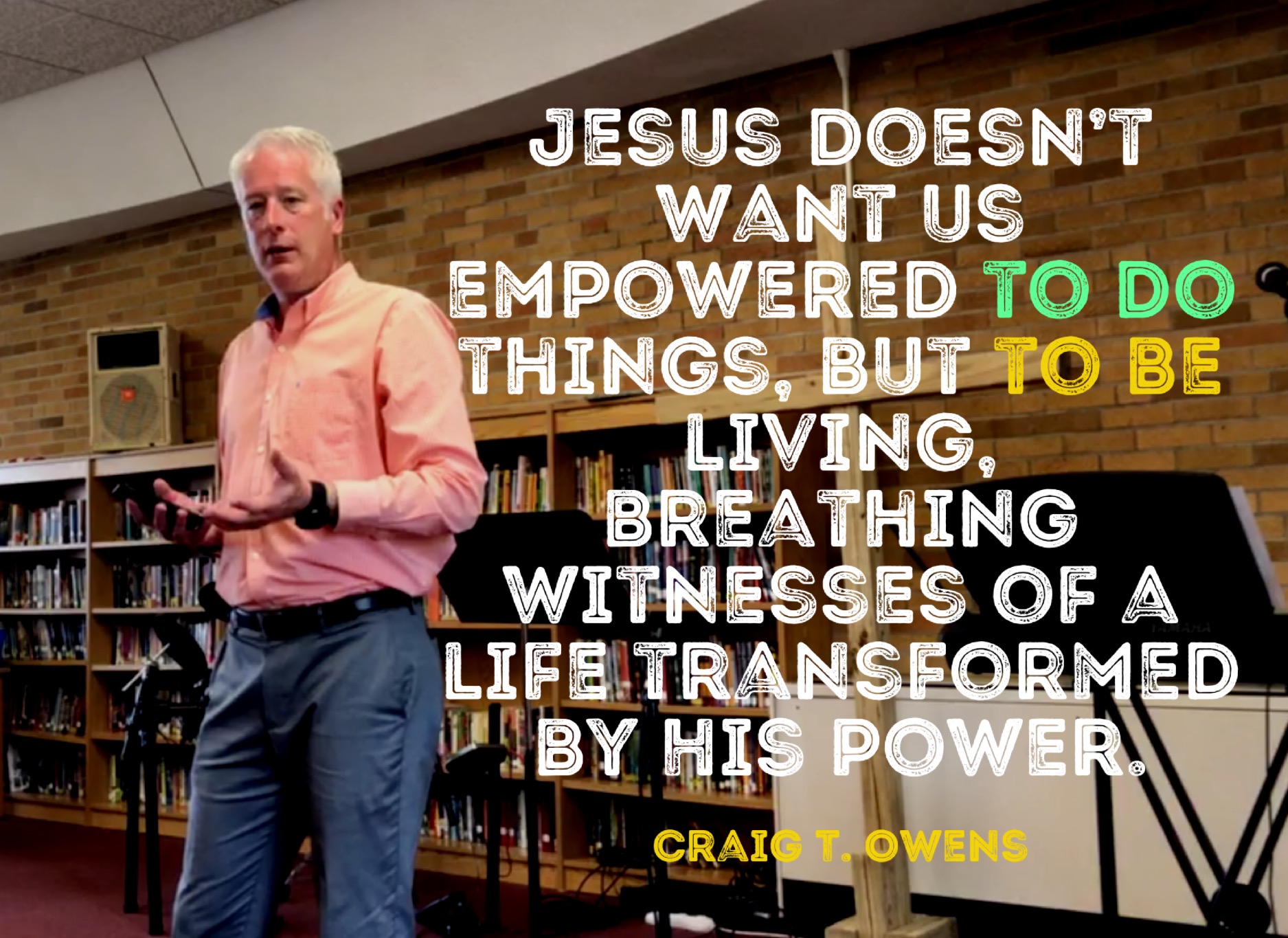
Jesus promised that the baptism in the Holy Spirit would empower us TO BE His witnesses (Acts 1:8). Not just to do things for Him. There’s nothing wrong about doing Jesus-glorifying things, but in themselves, they are too short-sighted. Jesus doesn’t want us empowered to do things, but TO BE a living, breathing, walking, talking witness of a life transformed by His power. That’s the reason why I say to you again and again: Don’t stop at salvation. Press on and press in to be baptized in the Holy Spirit so that you can BE an empowered, transformed and transforming witness for Jesus!

If you missed any of the messages in this series, you can access the full list of messages by clicking here

We Are: Pentecostal

Pentecost for over 1500 years was a celebration in Jerusalem that brought in Jews from all over the world. But on the Day of Pentecost that came just ten days after Jesus ascended back into heaven, the meaning of Pentecost was forever changed! 

Followers of Jesus—now empowered by an infilling of the Holy Spirit—began to take the good news of Jesus all over the world. These Spirit-filled Christians preached the Gospel and won converts to Christ even among hostile crowds, performed miracles and wonders, stood up to pagan priests and persecuting governmental leaders, and established a whole new way of living as Christ-followers. 

We, too, can be Pentecostal followers of Jesus Christ today. We can experience an anointing and an empowering in our lives that turns ordinary Christianity into extraordinary Christianity! 

Please join me this Sunday as we begin a series of messages called We Are: Pentecostal. You can find a map here, or if you live too far away to join us in person, be sure to check out our Facebook Live broadcasts every Sunday morning.

Here are the topics we covered in this series:

**We rejoined this series again in 2020. You can find a list of those topics by clicking here.

Thursdays With Oswald—The Power Is In The Solitude

Oswald ChambersThis is a weekly series with things I’m reading and pondering from Oswald Chambers. You can read the original seed thought here, or type “Thursdays With Oswald” in the search box to read more entries.

The Power Is In The Solitude

     If we want to know the universal sovereignty of Christ, we must get into solitude with Him. It is not sufficient for someone else to tell us about Him; we must perceive with our own eyes Who He is, we must know Him for ourselves. … 

     We must get to the place of real solitude with Christ. He is our mountain-height and our sea-calm; He is the recreating power; He is the universal Sovereign. He tells us to consider the lilies; we say—“No, we must consider life.” We mistake the mechanism of life for life itself, and that idea has become incorporated into Christian work. In the active work we do for God we do not really believe that Jesus Christ is sovereign Lord; if we did, we should fuss less and build more faith in Him. We cannot do the Savior’s work by fuss, but only by knowing Him as the supreme sovereign Lord. … 

     Our Lord’s word “go” simply means “live,” and Acts 1:8 describes the “going.” Jesus did not say to the disciples—“Go into Jerusalem, go into Judea, go into Samaria, go into the uttermost part of the earth”; but—“You shall be My witnesses” in all these places: He undertakes to establish the goings. So many people are obsessed with this idea—“What are you going to do?” I hope none of us are going to do anything: I hope we are going to be what He wants us to be. … 

     The key to the missionary is the absolute Sovereignty of the Lord Jesus Christ. We must get into real solitude with Him, feed our soul on His Word, and He will engineer our circumstances.

From So Send I You 

Jesus gave a command to all His followers—including all of us today—All authority in heaven and on earth has been given to Me. Therefore go (Matthew 28:18-19). Jesus is saying to us, “Preach and teach out of a living experience of Myself.” In this respect, we are all missionaries.

Oswald Chambers reminds us missionaries that the only way we will be effective in our goings is by spending adequate time in solitude and worship with Our Lord. If we don’t, then we are trying to do ministry on our own, trying to engineer our own circumstances. But the missionary who is spending time with Jesus finds that He directs all our goings and engineers all our circumstances.

The power to testify about Jesus comes from our time of solitude with Jesus.

Notes From The Global Leadership Summit

I had an amazing time last week at the Willow Creek Global Leadership Summit. Every year I came away with some many thoughts, and a brand new passion for the various leadership roles in which I get to serve.

Below are just a few of my notes that I jotted down during an intense two days.
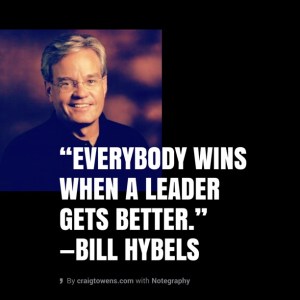
Hybels - everybody winsBill Hybels—The Lens Of Leadership

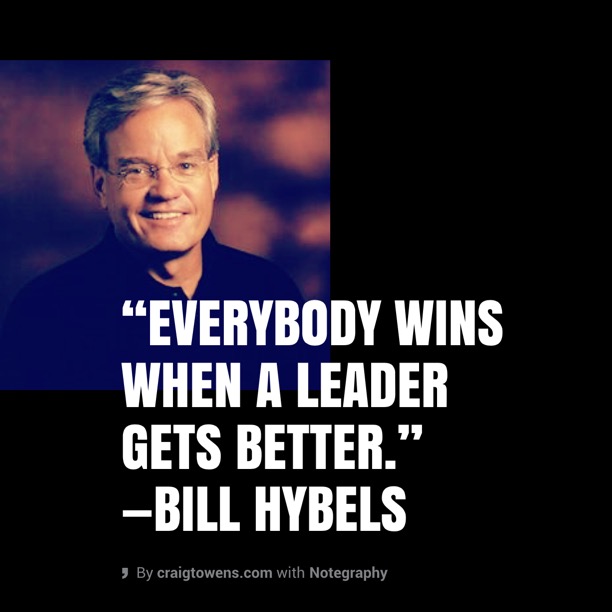
“Everybody wins when a leader gets better.”

“Armed with enough humility, leaders can learn from anyone.”

Hybels discussed four leadership lenses:

1.   Passionate leader (depicted by vibrant bright red frames)

  • They understand unbridled passion in leadership.
  • “Passion is like protein for the team.”
  • A motivated worked will outperform an unmotivated worker by 40%.
  • People are more motivated by working for a passion-filled leader than they are by compensation or perks.
  • Passion comes from a mountain-top dream, or a valley-deep frustration of current settings.

2.   People leader (cool frames, but cracked lenses)

  • An organization will only be as healthy as the top leader wants it to be.
  • This world needs more pastors of businesses, factories, medical offices, military units, etc.

3.   Performance leader (self-adjusting glasses)

  • Leaders ask: what progress should be made? how do we measure this? what doesn’t need to be measured?
  • Every worker wants to know how they are doing. For the leader, it’s cruel to hire someone and never let them know how they’re doing. Every staff member should get an update at least every six months.

4.   Legacy leader (sunglasses with a rearview mirror [cyclist])

  • Every once in awhile we need to look behind to see what legacy we’re leaving behind.
  • Leaders should reflect on this annually.
  • If my leadership assignment were to end today, what legacy would I leave?
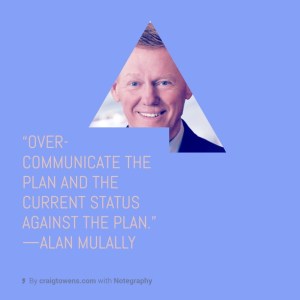
Mulally - overcommunicateAlan Mulally—CEO Boeing and Ford Motor Company

An average commercial airline has 4 million parts!

  • People first
  • Include everyone
  • Create a compelling vision
  • Present a workable strategy
  • Set clear performance goals
  • Relentless implementation
  • Share lots of data
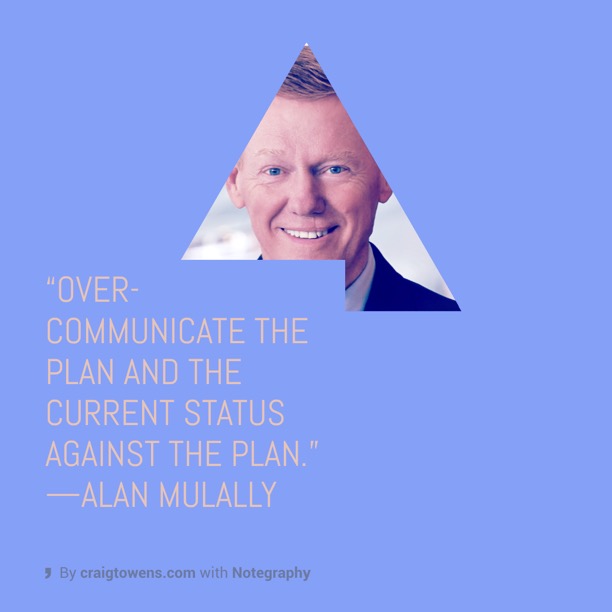
  • “Over-communicate the plan and the current status against the plan.”
  • Instill a positive can-do attitude
  • Keep your emotional resilience
  • Have fun


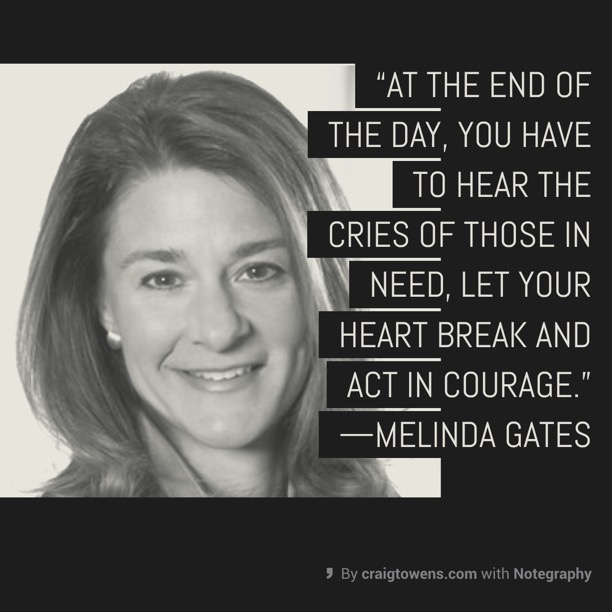
Melinda Gates - hear the criesMelinda Gates—Gates Foundation

Melinda says of herself, “I am an impatient optimist. We are changing the world, but we need to change it faster.”


“At the end of the day, you have to hear the cries of those in need, let your heart break and act in courage.”

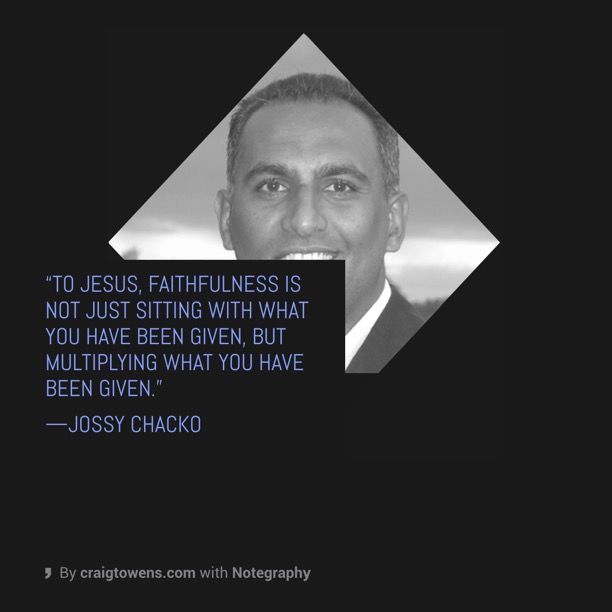
Jossy Chacko—Empart

“All of us have been entrusted with something. What are we doing to leverage it?”

In thinking about the parable of the talents … “To Jesus, faithfulness is not just sitting with what you have been given, but multiplying what you have been given. God’s mission is not maintaining.”

“Playing it safe is not enough for a follower of Jesus Christ.”

Three principles for expanding our leadership reach:
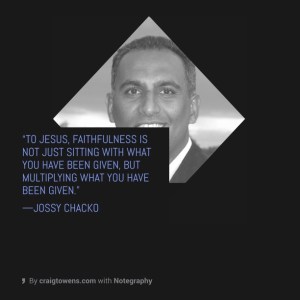
Jossy Chacko - faithfulness1. Enlarge your vision

  • “When people hear my vision, they should know the size of my God.”
  • “An enlarged vision should keep us driven.”
  • “Do not be confused about what people say about your vision; trust what God has said to you.”

2. Empower your people

  • “Leadership is about taking wise chances and giving people opportunities.”
  • “Your leadership reach will be determined by your empowerment choices.”
  • Three things to keep in mind: (1) Focus on building their character before empowering them; (2) Empowerment has to be through relationship; and (3) Make sure we have agreed on the right outcomes, and have the right way to measure them.

3. Embrace risk

  • Faith = risk. Without faith it is impossible to please God = without taking risks it is impossible to please God.
  • Paradigms to be changed: (1) See risk as your friend to love, not as your enemy to be feared; (2) See comfort and safety as your enemies; and (3) Increase your pain threshold.
  • “Your leadership capacity is in direct relationship to your pain threshold.”
  • “Don’t allow the fear of losing what we have to lose what God has in store for you.”
  • “By me not taking risks, who is missing out?”
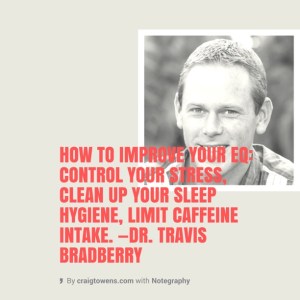
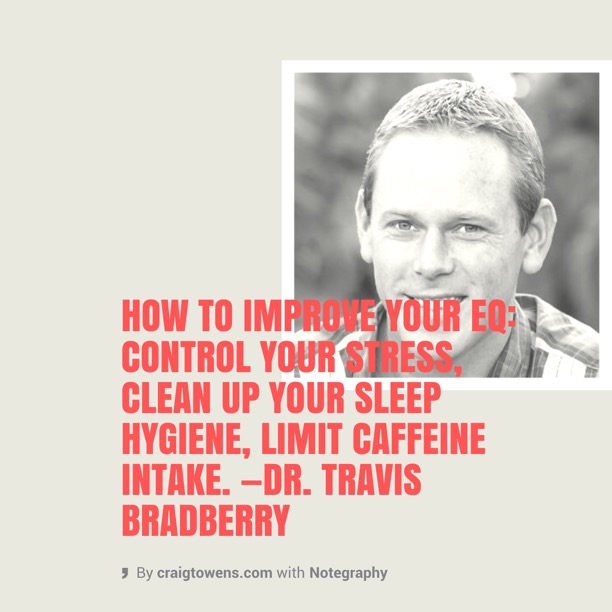
Bradberry - EQDr. Travis Bradberry—TalentSmart

All inputs into the brain travel through the limbic system first (emotional center) before the inputs travel to the frontal cortex. The EI (emotional intelligence) center is in the front of the brain, just above the left eye.

Only 36% of people are able to accurately identify their emotions as they happen.

EQ (the Emotional Quotient that measures emotional intelligence) is not IQ.

EQ can be improved all throughout life.

Four components of emotional intelligence:

 1. Self-awareness: knowing my emotions, and knowing my tendencies. I need to lean into my discomfort if I want to improve.

   2. Self-management: what I do with this increased self-awareness. This is not “stuffing” my feelings. The biggest mistake is only trying to manage negative emotions; positive emotions need to be managed too.

   3. Social awareness: focusing more on others than on myself.

   4. Relationship management: using the first three skills in concert. Seeing how my behavior is affecting the other person, and then adjusting accordingly.


How to increase my EQ:

  1. Control stress—stress under control is healthy; chronic stress is unhealthy. Gratitude reduces the stress hormone cortisol.
  2. Clean up my sleep hygiene—sleep cleans up toxic hormones in the brain. To get better sleep: (1) Don’t take any kind of sleeping pill; and (2) Reduce “blue lights” in the evening.
  3. Reduce my caffeine input—especially after noon.
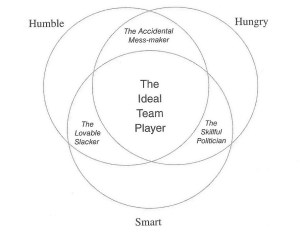
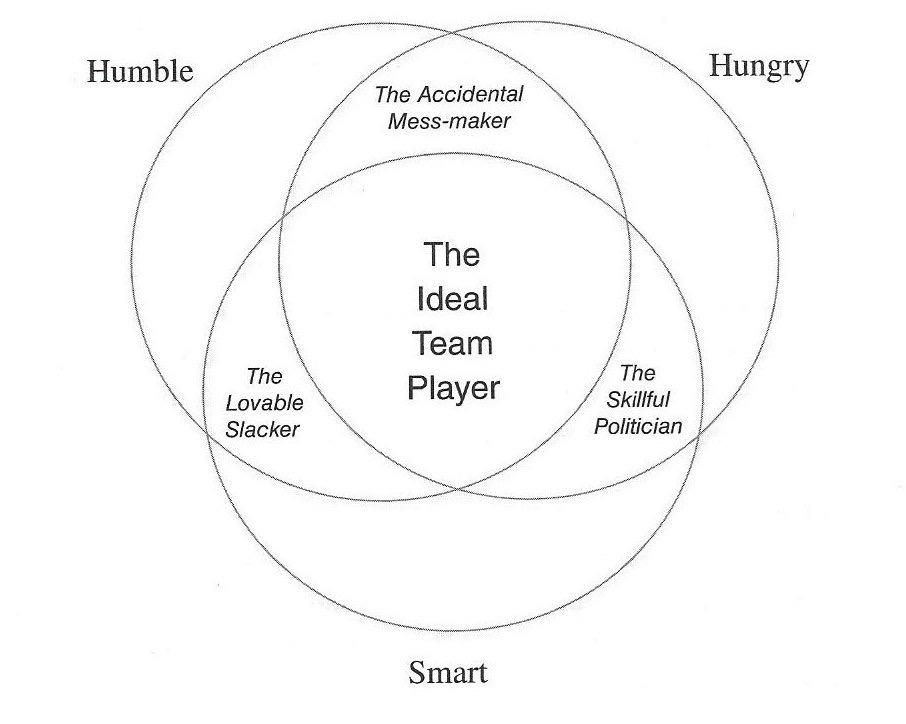
Ideal team playerPatrick Lencioni—Author

Three qualities of an ideal team player:

1.   Humble

  • Lacking self-confidence is not humility.
  • “Denying skills and downplaying abilities is not humility.”

2.   Hungry

  • Strong work ethic
  • Driving hard

3.   Smart

  • Not intellectual smarts, but people smarts = EQ

“To develop people, we have to have the courage to humbly and constantly talk to people about their ‘stuff.’”
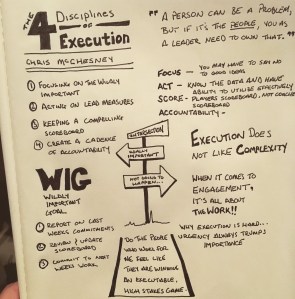
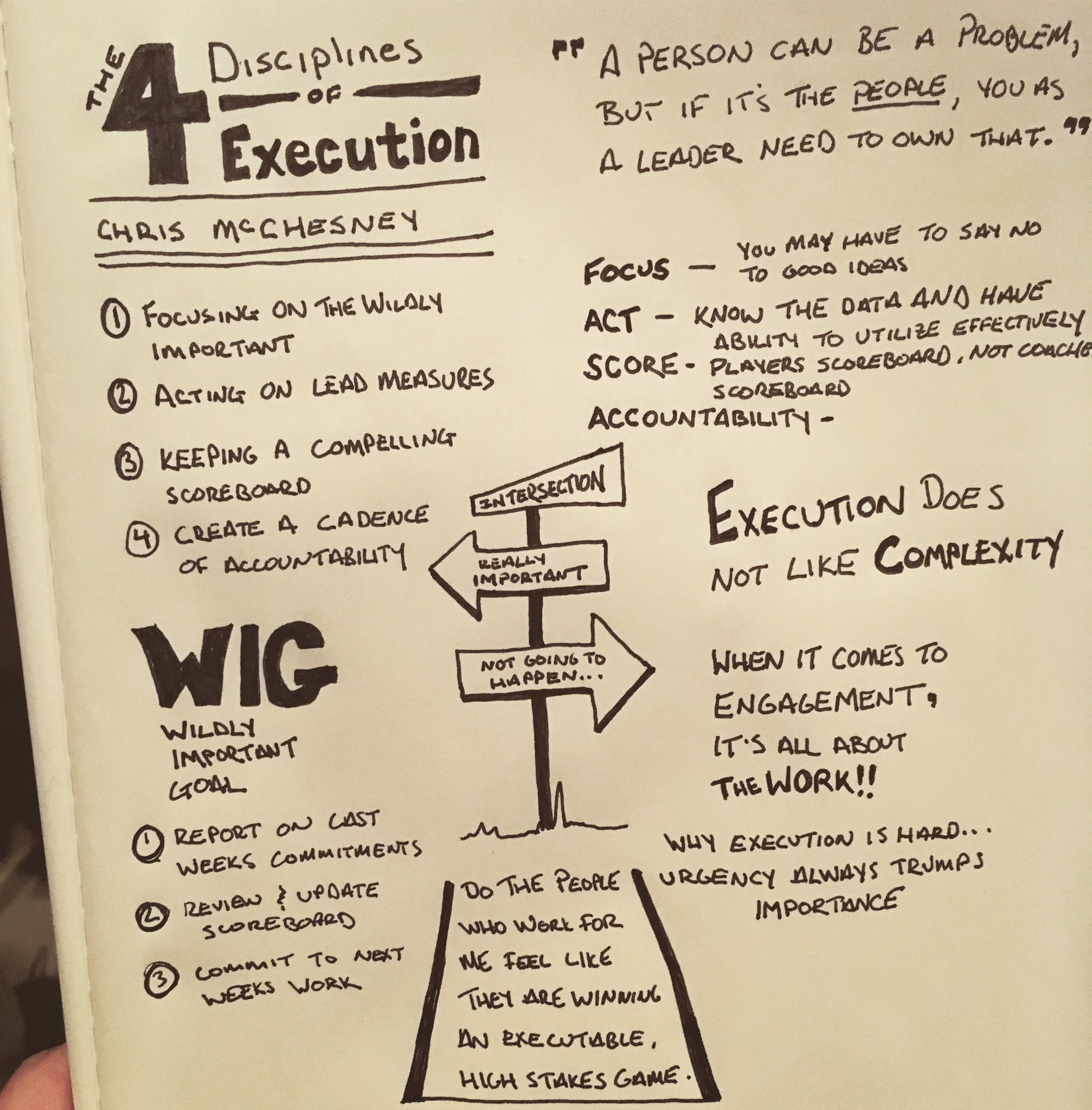
McChesney - execution disciplinesChris McChesney—Franklin Covey

Rahm Charan asked:

  • Q: Do leaders struggle more with strategy or execution? A: Execution.
  • Q: Are leaders more educated in strategy or execution? A. Strategy.

“The hardest thing a leader will ever do is drive a strategy that changes someone’s behavior.”

There are four disciplines for making changes in human behavior:

1.  Focus

  • “Focus on the wildly important.”
  • If a team focuses on 2-3 goals, they are likely to get them done. But if there are 4-10 goals, momentum is killed. At 11+ goals, the team is going backward.
  • We narrow the focus by coming up with a WIG: wildly important goal (this lives at the intersection of ‘really important’ and ‘not going to happen’).

2.  Leverage

  • “What are the fewest number of battles necessary to win the war?”
  • “When you want to go big, don’t think big, think narrow.”
  • One WIG per team at the same time. Everything else is in sustainment mode.
  • Make goals like this—“From x to y by when.”

3.  Engagement

  • “The biggest driver of engagement is when people feel like they’re winning.”
  • “Do the people who work for me feel like they’re playing a winnable game?”

4.  Accountability

  • Everyone needs to answer: “What are the things I do that have the biggest impact on the WIG?”
  • After sharing the scoreboard, allow people to determine what they need to do next. The people need to determine their own next moves, not the leader. The leader pulls this out of people.
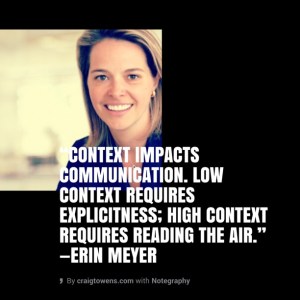
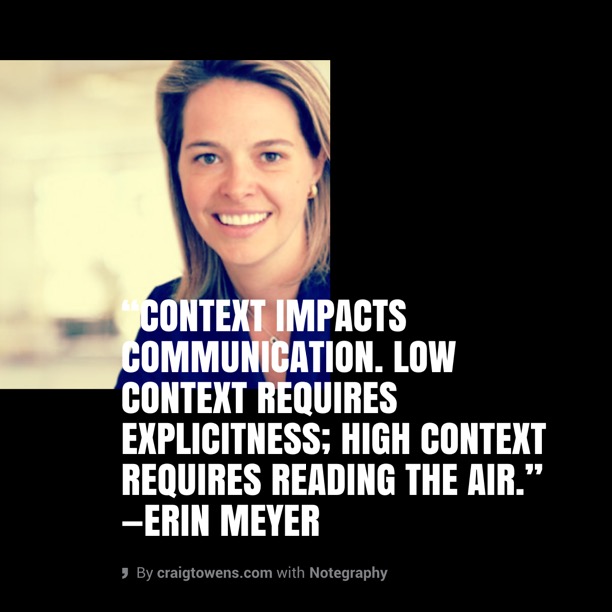
Erin Meyer - contextErin Meyer—INSEAD

On The Culture Map communication is divided into Low vs. High Context:

  • Low = feel we don’t have the same context or relationship. We feel we need to explain things very simply and explicitly.
  • High = we assume we have a larger body of shared reference points. We feel communication is more implicit or nuanced.

Anglo-Saxon countries are typically low context.

Latin American are mid-low.

Asian countries are usually high context.

In low context we tend to nail things down in writing, where in high context we leave things more open to later interpretation.

“Context impacts communication. … We need to read both the messages ‘in the air’ as well as the explicitly stately messages.”

“In a high context culture, repeat things less, ask more questions, learn to ‘read the air.’”
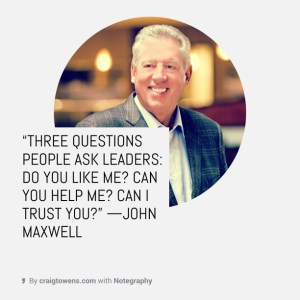
 

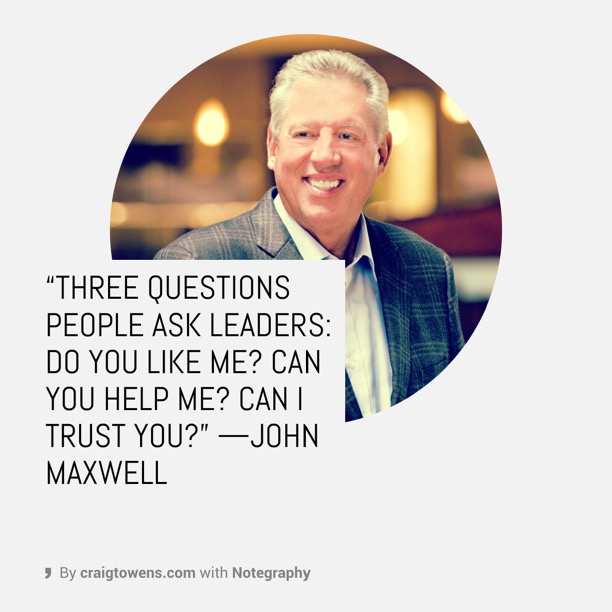
Maxwell - 3 questionsJohn Maxwell—Author 

“Good leaders lift.”

“You have to find the people before you lead the people.”

“The one thing leaders have to get right—they must intentionally add value to people every day.”


Five things that intentionally adds value to people:

  1. Value people—“God values people I don’t know; He even value people I don’t like.” “Are we going to spend our lives connecting with people, or correcting them?”
  2. Think of ways to add value to people—“Intentional living is thinking upfront on how to help people.”
  3. Look for ways to add value to people.
  4. Do things that add value to people.
  5. Encourage others to add value to people.

If you attended the GLS, please share in the comments below something amazing / challenging / paradigm-busting that you learned. Let’s all keep on learning!

Links & Quotes

link quote

“While it’s true we need to shape up our practice of the faith, now is no time for shying away from engagement for the Gospel. Now is the favorable time for Christians to declare and defend the Christian worldview. Now is the day of salvation, and all believers must be diligent in proclaiming the Good News at every opportunity and by every means.” —T.M. Moore

“If you tell the world that Jesus is your Lord, your Savior and your Healer, a God Who can perform the impossible, they will watch to see how you react in impossible situations. Their eyes are glued to everyone who boasts of God’s goodness, power and glory. And the devil looks on, too, hoping our faith will fail.” —David Wilkerson

“There is a great God of grace Who magnifies His own infinite self-sufficiency by fulfilling promises to helpless people who trust Him. And there is a power that comes from prizing this God that leaves no nook and cranny of life untouched. It empowers us to love in the most practical ways.” —John Piper

“When your ethnicity is heaven, then all adversity offers the gift of intimacy, driving you into the home of His heart.” ―Ann Voskamp

Spiritual leaders need to be emotionally healthy. Peter Scazzero has written a couple of books on this topic, and I believe this interview will entice you to check out his books.

Ty Cobb is hands-down my favorite Detroit Tiger (maybe even my all-time favorite baseball player). He has gotten a bad rap from shoddy reporting. A Terrible Beauty is on my Amazon wish list (hint, hint!), and here is a cool interview with the book’s author Charles Leerhsen.

Jesus encouraged His followers to be childlike in their innocence and wonder. Here’s a great post to help us do that: How Not To Be A Boring Adult.

[VIDEO] Bobby Conway gives a good explanation of an important piece of church history: The Apostles Creed—

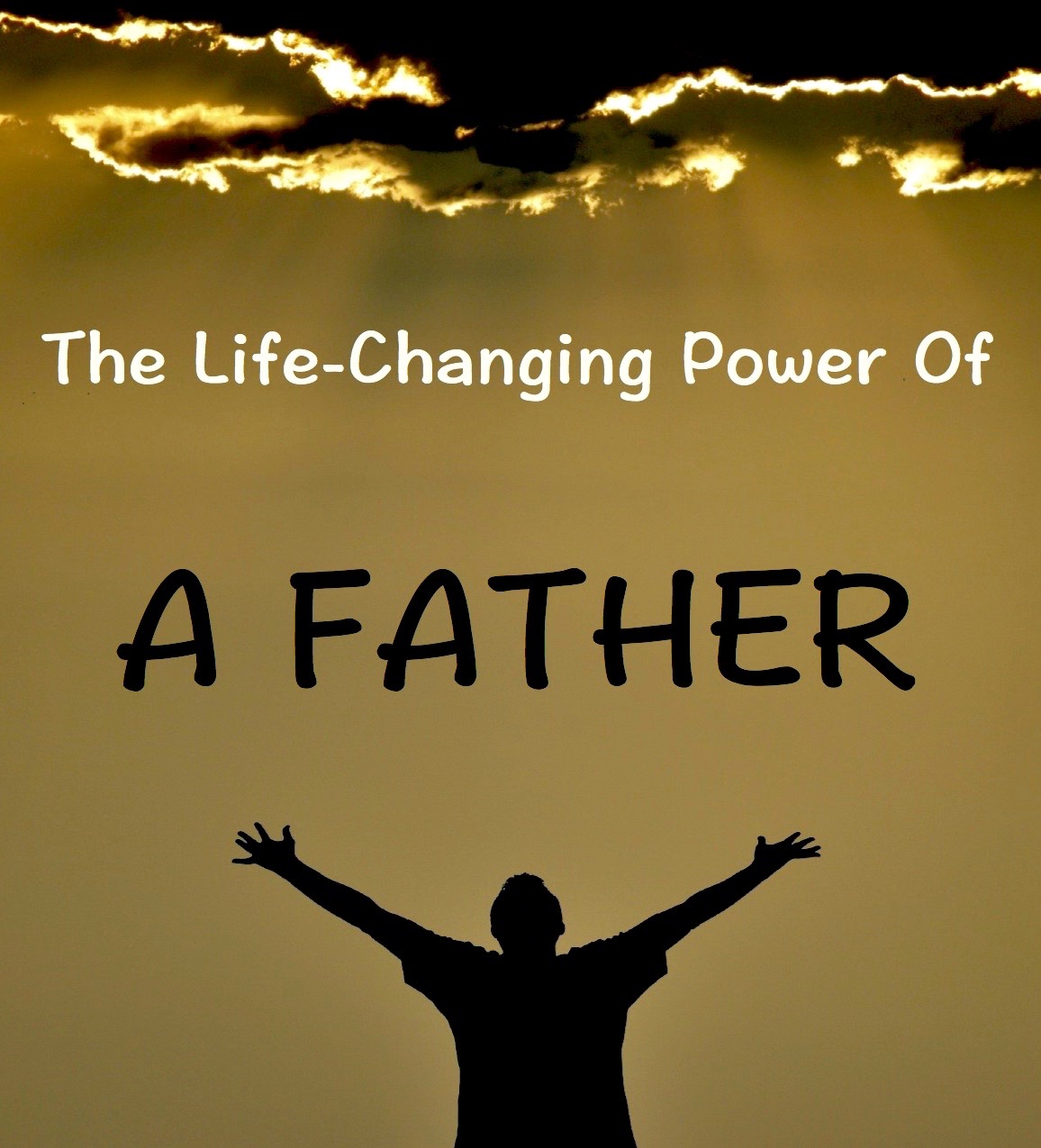
The Life-Changing Power Of A Father

Fathers DayThe Bible uses the phrase “a father” quite often, but it doesn’t always refer to a biological father. Whether it’s an emotional father, a spiritual father, or a biological father, the message in the Scripture is quite clear…

Fathers have the God-given power to change a life forever!

This Sunday we are going to be celebrating Dads. If you are in the Cedar Springs area, I encourage you to come join us and learn more about what God is saying to our Dads today about their power to change a life, a generation, a nation forever!

Hope to see you at 10:30am this Sunday. Click here to get directions to Calvary Assembly of God.

Links & Quotes

link quote

“Prayer for your enemies (Matthew 5:44) is one of the deepest forms of love, because it means that you have to really want that something good happen to them. You might do nice things for your enemy without any genuine desire that things go well with them. But prayer for them is in the presence of God Who knows your heart, and prayer is interceding with God on their behalf.” —John Piper

“The only thing one can usually change in one’s situation is oneself. And yet one can’t change that either—only ask Our Lord to do so….” —C.S. Lewis

“God cannot give us a happiness and peace apart from Himself, because it is not there. There is no such thing.” —C.S. Lewis

“The world is not looking for more doctrinal proof of the reality of God! It is not looking for greater proof of the resurrection or better arguments about creation. The world is looking for Christians who can stand up to every crisis, fear, trouble and difficulty and remain calm and at rest in the midst of it all. The world needs to see God’s children trusting wholly in their Lord.” —David Wilkerson

“I would then that the quickening Spirit would come down upon me, and upon you, upon every one of us in abundance, to create men valiant for truth and mighty for the Lord.” —Charles Spurgeon

I know I have said this before, but I love the infographics and study tools from the folks at The Overview Bible Project. Here is a sample of their overview of Deuteronomy.

Illustration-11-1024x566Another great Bible study resource is the work of former cold case detective J. Warner Wallace. Here is a cool article and infographic on the authorship of the Gospel of Mark.

Jim Cymbala says, “The Scriptures are not so much the goal as they are an arrow that points us to the life-changing Christ.” Read more in his post The Limits Of Teaching.

Rosaria Butterfield wrote, “Unbelievers don’t ‘struggle’ with same-sex attraction. I didn’t….” Read more in her post The Dead End Of Sexual Sin.

GREAT NEWS: Kansas passes the nation’s first ban on abortion by dismemberment.

Links & Quotes

link quote

Fellas, you need to check this out: 5 More Things Men Should Do To Protect Their Marriage.

This is an amazing admission from a medical doctor who is also an abortion provider: “If a woman with a serious illness―heart disease, say, or diabetes―gets pregnant, the abortion procedure may be as dangerous for her as going through pregnancy … with diseases like lupus, multiple sclerosis, even breast cancer, the chance that pregnancy will make the disease worse is no greater than the chance that the disease will either stay the same or improve. And medical technology has advanced to a point where even women with diabetes and kidney disease can be seen through a pregnancy safely by a doctor who knows what he’s doing. We’ve come a long way since my mother’s time…. The idea of abortion to save the mothers’ life is something that people cling to because it sounds noble and pure―but medically speaking, it probably doesn’t exist. It’s a real stretch of our thinking.” ―Dr. Don Sloan, M.D.

“The Word says, ‘Love not the world, neither the things that are in the world’ (1 John 2:15). Jesus warned, ‘Beware of covetousness: for a man’s life does not consist in the abundance of the things which he possesses’ (Luke 12:15). Things—our possessions—can tie us down to this world. While heaven and hell prepare for war, we go shopping. Eternal values are at stake! The end of all we know is near—and we are busy playing with our toys!” —David Wilkerson

“The blood of Christ doesn’t cover your sins, conceal your sins, postpone or diminish your sins.  It takes away your sins, once and for all! So…since you are saved, you can serve!” Read more from Max Lucado in Saved To Serve.

Dr. Tim Elmore writes about 2 essential ingredients to form a young leader. You should read the whole post, but the two ingredients are quite surprising: problems and empowerment.

[VIDEO] An excellent explanation on what sources are used to determine the text of the Bible―

11 Quotes From Nick Vujicic In “Stand Strong”

Stand StrongStand Strong is an invaluable resource for school-age students, their parents, and teachers and principals in our schools. Nick Vujicic uses his own life as an example of how to overcome bullies. You can read my full book review by clicking here. Below are some quotes from the author I highlighted in this book.

“If someone hurt you, then become the person who reaches out to others who are hurting. If you were not treated with compassion, then change that pattern by offering compassion to others. If no one stood up for you, then stand up for someone else.” 

“What happens in our lives isn’t about chance. It’s about choice. You and I may not be able to stop bullies and thoughtless people from saying and doing hurtful things, but we do have the ultimate power—the power to choose how we respond and how we live.”

“There is nothing wrong with wanting to fit in and be accepted, but there is something wrong with abandoning your values and beliefs to do it. … Try this instead: Be so comfortable with yourself that other people feel comfortable with you too. Create a life that makes you so joyful that they will want to share in your happiness.” 

“Being secure and comfortable in your identity, trusting that you have value, and having a strong sense of your purpose are important in every aspect of life. Those qualities also help make you less vulnerable to bullying. … If we let bullies drag us down with their cruelty and meanness, why can’t we pull ourselves back up by being friends to ourselves and building up our confidence and spirits when we need a boost? … So here’s my suggestion for a simple, easy-to-apply, no muss, no fuss first step to building your antibully 1.0 operating system. Be a friend to yourself. Forgive your mistakes, your flaws, and your failures. Be kind to yourself instead. Focus on the good.”

“What’s easier to hit, a sitting duck or a rabbit on the run? If bullies are looking for someone to hit, their last choice will be a moving target, someone who has it in gear with the pedal to the metal on the road to a better life.” 

“If you are generous to others, you will feel better about yourself, and that makes it more difficult for bullies or anyone else to get to you.”

“Being gentle isn’t about being weak. … Being gentle is more about practicing humility, giving up the need to be right, putting other people first, being a good listener and a good friend, protecting those who are being abused, and comforting those in need. … Many of the strongest and most admirable people I know are gentle spirits who don’t have to prove how tough they are on the outside because they are so strong on the inside.” 

“Psychologists say the more social interactions we have—the closer we are to family members, and the more friends and acquaintances we have—the less likely it is that a bully can isolate us as targets.”

“One of the key facts about relationships: people respond to you and treat you according to the way you act, not the way you think or feel.” 

“The people I want to keep close and trust the most are those who make me want to be better, smarter, more loving, more open minded, more collaborative, more trustworthy, more empathetic, more faith filled, more God loving, more grateful, more forgiving, and more open to opportunities to serve God and those around me. These are the type of friends that will make you and me bully proof.”

“I encourage you to develop empathy for others, like the Good Samaritan showed. Please do everything you can to protect others from emotional and physical harm caused by bullies. … Stand together so no one will stand alone!” 


Be A Witness

Good newsJesus said we have some really, really, REALLY good news to share! It’s news about how much God loves us and wants us to know Him personally.

Jesus wanted us to spread the word far and wide about this really, really, REALLY good news, but He didn’t want us to try to do it in our own power. In fact, the last words He spoke to His disciples before ascending into Heaven were—

But you will receive power when the Holy Spirit comes on you; and you will be My witnesses in Jerusalem, and in all Judea and Samaria, and to the ends of the earth. (Acts 1:8)

Did you catch those words: power TO BE witnesses. The Holy Spirit provides us with the resident, miracle-working, moral, influential, and enabling power not to do witnessing, but to be witnesses.

“The Pentecostal believer is to be something, not just experience something. He or she must become a living witness of Christ on earth.” —Charles Crabtree

There are really two ways that we are witnesses for Him. Our witness is:

(1) Strategic

  • The New Testament believers strategically met house-to-house and in the Temple (Acts 2:46).
  • The church strategically picked leaders to help them be effective in their witness (Acts 6:2-3).
  • The Holy Spirit strategically picked missionaries to be witnesses in far-off lands (Acts 13:2-3).
  • Those missionaries were strategic in following up on their witnessing work (Acts 15:36).

(2) Spontaneous

  • The newly Spirit-baptized believers were able to spontaneously worship God (Acts 2:4) and testify of His power to others (Acts 2:14).
  • Peter could spontaneously respond to the crowd’s question after Peter had finished his sermon (Acts 2:37-39).
  • Peter and John had a spontaneous reply when the Sanhedrin called them in to testify (Acts 4:8).
  • This spontaneous witnessing power was available to them through the Holy Spirit just as Jesus had promised (Matthew 10:17-20).

If we try to just do witnessing, our strategy will be lacking and we’ll quite possibly be caught off-guard in a spontaneous setting. But when we allow the Holy Spirit’s power to transform us TO BE witnesses, our strategies are more effective and our spontaneous moments are too! The Holy Spirit helps us share the really, really, REALLY good news!