Links & Quotes

Leaders need to give others confidence to try something new. We need to help people get moving so that we can coach what they are doing. For more great leadership insights, check out The Craig and Greg Show.

I have lots of new content every week, which you can check out on my YouTube channel.

A couple of thought-worthy quotes for pastors. First from David Mathis: “Pastors, observe that in and of itself, mocking is no clear reflection of the faithfulness or fruitfulness of preaching Christ. Wise preachers do not take mocking as an indicator of failure, nor as an indicator of success. Twice in Athens some mock Paul, which may seem like a failure compared to his homiletic triumphs elsewhere. However, others say, ‘We will hear you again.’ And then, in the end: ‘some men joined him and believed’ [Acts 17:32-34]. … How foolish it would be to distract ourselves with the mockers. Or to call special attention to the mocking as some great badge of our own faithfulness. Rather, we have the example of Paul at Mars Hill, who, so far as we can tell, wholly overlooks, with a holy disregard, these mockers and concerns himself instead with those asking honest questions.”

…and then one from John Piper: “Preaching is a happy business. Because even if the text is a hard word that devastates the hearers, the preacher connects the hard word with the gracious word and the hopeful word, and he catches them as they fall. So, in the end, all preaching is a happy business.

“A people that values its privileges above its principles soon loses both.” —Dwight D. Eisenhower

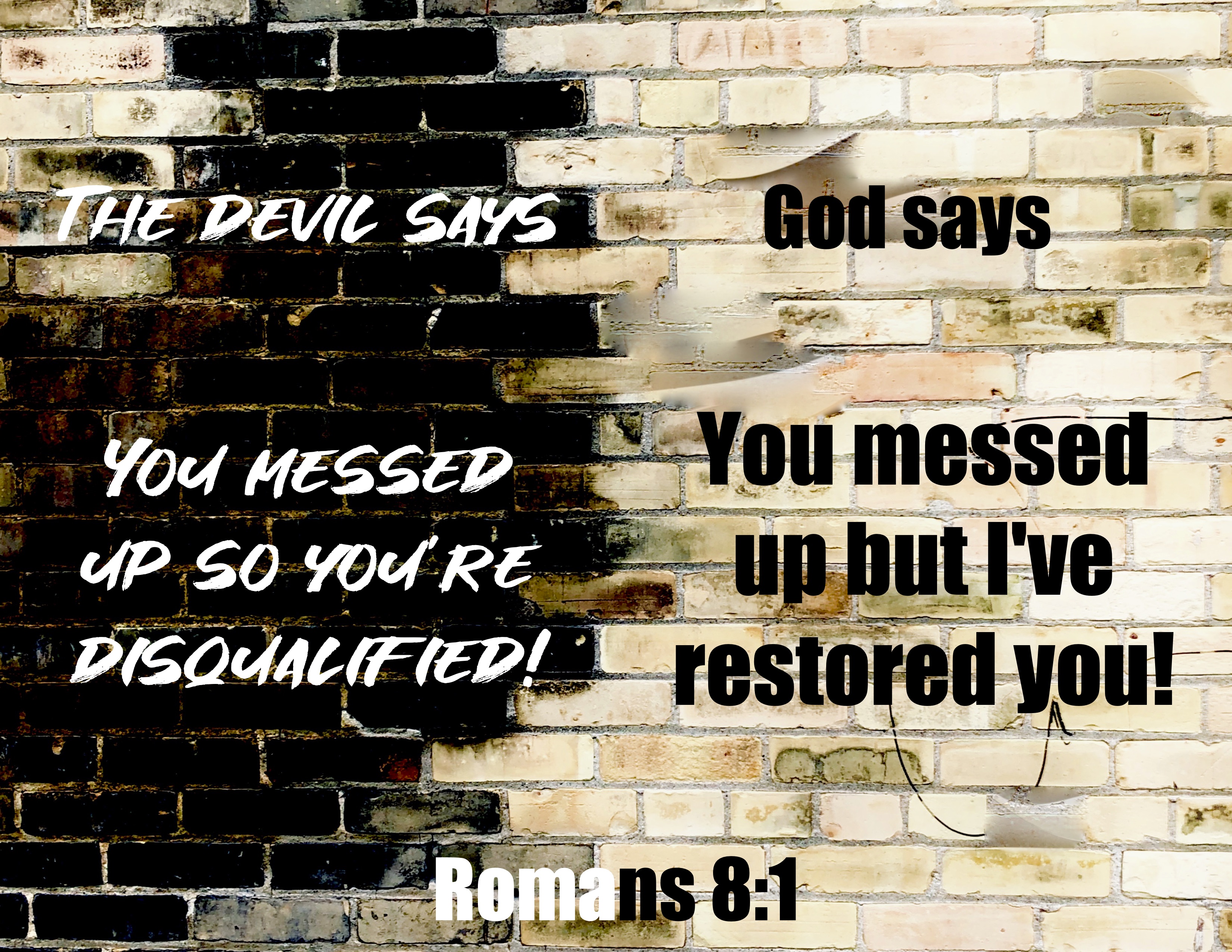
“For condemnation to work, we must say to God what the devil has said to us and believe it. If I want to stand before God with excuses that make what He said to me void, I’ll have to quote the devil to God. Does that sound like a good thing to do? God’s will for me is not to condemn me, but to liberate me from everything that holds me back from being what He created me to be through an ongoing relationship. To accomplish that, I need to do the opposite of what I used to do when I walked in condemnation. Instead of quoting to God what the devil is saying, I quote to the devil what God has said.” —Jim Wiegand, in Recruiting To Releasing 

Thinking about “how Martin Luther, a professor at Wittenberg University, helped to spark the 16th century Protestant Reformation,” J. Calvin Holsinger conceived the idea of preparing missionaries to US colleges and universities—a ministry called Chi Alpha.

Another great story from the “Here We Stand” series of biographies of notable people during the Reformation. “An attendant asked [King Henry VIII] whom he wished to have at his bedside. The king asked for Thomas [Cranmer]. By the time Cranmer arrived, King Henry was unable to speak. Foxe tells the story. ‘Then the archbishop, exhorting him to put his trust in Christ, and to call upon His mercy, desired him though he could not speak, yet to give some token with his eyes or with his hand, that he trusted in the Lord. Then the king, holding him with his hand, did wring his hand in his as hard as he could (Foxe’s Book of Martyrs, 748).’ The scene sweetly punctuates the most important friendship in the English Reformation. Whatever King Henry believed when he squeezed Cranmer’s hand that day, God used the bond between them to break England free from Roman Catholicism and to recover the one true gospel.”

The ICR reports, “Genesis claims that people in the pre-Flood world routinely attained 900-year lifespans. The best-known example is Methuselah, who had the longest recorded lifespan of 969 years (Genesis 5:27). Skeptics dismiss these great ages as fanciful legends, but recent fossil data are providing unexpected, albeit indirect, corroboration of the Bible’s testimony.” Check out this full report.

“In my experience, each failure contains the seeds of your next success—if you are willing to learn from it.” —Paul Allen, cofounder of Microsoft

No Condemnation

Listen to the podcast of this post by clicking on the player below, and you can also subscribe on AppleSpotify, or Audible. 

Caiaphas’ bold claim couldn’t be backed up, but every bold claim Jesus made was backed up. In the process of looking at those claims, we’ve actually already read another bold claim—one that was repeated three times. It is a bold claim made by the Roman governor Pontius Pilate.

When Jesus was first brought to Pilate, he attempted to “pass the buck” by sending Jesus to King Herod Antipas. Since Herod sent Jesus right back to Pilate, the governor took that as support for his bold claim. Check out what Pilate said: 

  • I have found no basis for your charges against Jesus
  • neither has Herod
  • Jesus has done nothing to deserve death 
  • I have found in Him no grounds for the death penalty (Luke 23:13-22)

Even Pilate’s wife supported him by saying, “Don’t have anything to do with that innocent Man” (Matthew 27:19). 

Pilate’s role in this case was as a modern-day judge. A judge weighs the evidence from the prosecution, compares that with the laws on the books, weighs the evidence from the defendant, and then makes his ruling. Pilate rules multiple times: Not guilty. But the accusers keep coming back with their loud voices but no more evidence. Even though “[Pilate] knew it was out of self-interest that they had handed Jesus over to him” (Matthew 27:18), the shouts of the religious leaders finally prevailed (Luke 23:23-25). 

Why was Pilate’s claim of the innocence of Jesus so bold? Because the Bible tells us, “ALL have sinned and fall short of the glory of God” (Romans 3:23). 

These religious elites had been trying to find an accusation against Jesus almost since the beginning of His public ministry. Many of these same accusers were present on the day they hauled a woman caught in the act of adultery before Jesus (John 8:2-11). They claimed she deserved to be stoned to death, but Jesus simply said, “Let those without any sin throw the first stone at her.” Jesus once again allowed His eloquent silence to work on their hearts, as they knew that not one of them was without sin, so they all dropped their stones and left. 

Jesus freed this woman from her sin when He refused to condemn her. After all, He was the only sinless One who could have been justified in throwing the first stone, but He knew that “God did not send His Son into the world to condemn the world, but to save the world through Him” (John 3:17). 

Jesus doesn’t condemn us, but He doesn’t want us to stay in our sin either, which is why He then told this woman, “Go now and leave your life of sin.” 

Jesus called all of us to live a perfect life: “Be perfect, therefore, as your heavenly Father is perfect” (Matthew 5:48). Yet like those men in John 8, we all would have to drop our stones and leave. 

And satan loves to remind God’s saints of this. John shares with us that “the accuser of our brothers and sisters…accuses them before our God day and night” (Revelation 12:10). The accuser wants to keep us trapped in the guilt of our sin—wants to see us condemned to an eternity separated from God’s presence. 

But when someone has placed their faith in the sacrifice Jesus made for us with His death on the Cross, Jesus takes us into Himself and there is now no condemnation for those IN Jesus because there is nothing in Jesus to be condemned! Because of what Jesus did, it’s not us who is condemned, but sin is condemned! As a result, we no longer have to live according to the sinful nature and suffer the condemnation of sin, but instead when we are in Jesus, “the righteous requirements of the law” are fully met in us (see Romans 8:1-4). 

We cannot do this on our own, but only through the power of the blood of Jesus. Look at the rest of this passage from Revelation: “For the accuser of our brothers and sisters, who accuses them before our God day and night, has been hurled down. They triumphed over him by the blood of the Lamb” (Revelation 12:10-11). 

What amazing news! The writer of Hebrews gives us more details in this passage: 

For by one sacrifice [Jesus] has made perfect forever those who are being made holy. The Holy Spirit also testifies to us about this. First He says: “This is the covenant I will make with them after that time, says the Lord. I will put My laws in their hearts, and I will write them on their minds.” Then He adds: “Their sins and lawless acts I will remember no more.” (Hebrews 10:14-17)

When we are in Jesus—when we have accepted by faith His work on the Cross—God can make the same bold claim to the devil that Pilate made to the religious leaders: “I find no basis for a charge!” This is how we can then fulfill the righteous requirement Jesus gives us to “Be perfect, therefore, as your heavenly Father is perfect.” 

Only Jesus can do this for us! 

If you’ve missed any of the other messages in our series of Bold Claims, you can find them all here. 

►► Would you please prayerfully consider supporting this ministry? My Patreon supporters get behind-the-scenes access to exclusive materials. ◀︎◀︎

Links & Quotes

Immature people only want to do the bare minimum, but mature people want to do more than is expected of them. Jesus called these people those that went the second mile. That was a topic in my most recent Monday Motivation series.

I am a big fan of The Babylon Bee. If you haven’t checked out their satirical wit, please do so! One post that caught my eye this week is called What Your Favorite Book Of The Bible Says About You. Wow, did this one make me laugh! If you would like to check out some real Bible studies, I have some here and here.

Cold-case detective and Christian apologist J. Warner Wallace discusses how Jesus impacted other world religions—

The drought in north Texas has revealed some more dinosaur tracks, raising some new questions about these massive animals that roamed Earth.

The devil loves to try to pervert the conviction of the Holy Spirit into condemnation. Here is the freeing truth we can stand on: There is NO condemnation for those who are in Christ Jesus.

Sean McDowell elaborates on the dangers of pornography.

Thursdays With Spurgeon—Talking Back To Your Old Family

This is a weekly series with things I’m reading and pondering from Charles Spurgeon. You can read the original seed thought here, or type “Thursdays With Spurgeon” in the search box to read more entries.

Listen to the podcast of this post by clicking on the player below, and you can also subscribe on iTunes or Spotify.

Talking Back To Your Old Family

     When a man is adopted into a family and comes thereby under the regime of his new father, he has nothing whatever to do with the old family he has left behind and he is released from subjection to those whom he has left. And so, the moment I am taken out of the family of satan, the prince of this world has nothing to do with me as my father and he is no more my father. I am not a son of satan; I am not a child of wrath. 

     …When the law comes to a Christian with all its terrible threats and horrible denunciations, the Christian says, ‘Law! Why do you threaten me? I have nothing to do with you. I follow you as my rule, but I will not have you to be my ruler. I take you to be my pattern and mold, because I cannot find a better code of morality and of life, but I am not under you as my condemning curse.’ …  

     If one man adopts another child into his family, he cannot give it his own nature as his own child would have had. And if that child whom he will adopt should have been a fool, it may still remain so. He cannot make it a child worthy of him. But our heavenly Father, when He comes to carry out adoption, gives us not only the name of children, but the nature of children, too. He gives us a nature like His well-beloved Son, Jesus Christ.

From Adoption

Charles Spurgeon was called “the prince of preachers” for good reason! His word pictures are so biblically-accurate and so easy to recall, that anyone can grasp the concepts he shares from the Scripture. I have two takeaways from this portion of his sermon: 

First, we need to talk back to our old family. The name “satan” means accuser: he accuses, condemns, slanders, and does his best to separate. When a Christian has been adopted into God’s family, there is no condemnation for the one who now calls God, “Abba Father” (see Romans 8:1-17). 

This is where we need to call out satan’s lies. I mean literally call them out. We need to talk back to the devil and tell him the truth, just as Spurgeon said in his example of talking back to the Law. Let me say it again: literally speak the truth out loud. The devil needs to hear it and your own ears need to hear it too: “I am no longer subject to your jurisdiction. You have no say over me any longer. I am a child of God. My sins have been forgiven and forgotten; therefore, there are no grounds left for any condemnation!”


Second, we need to talk back to our old nature. After being adopted into God’s family, the Holy Spirit undertakes a process to conform us to the image of Jesus. This process is called sanctification, but I like to call it saint-ification. 

This is where we call out what we used to be. And, again, I challenge to literally speak these words out loud. Don’t say, “I’m so impatient,” but tell yourself (out loud!), “I am becoming the patient saint Jesus wants me to be.” Don’t say, “I’ll never get this right,” but tell yourself, “I am learning more and more about Christ’s nature with each attempt.” Talk back to these old habits from your old family, and tell them about the new saintly habits the Holy Spirit is developing in you. 

The book of Revelation tells us that the saints overcame the slanderous devil by the blood of Jesus and by the words of their testimony. Speak out those life-affirming words every time that slanderer tries to make you forget into whose family you have been adopted!

Thursdays With Oswald—Don’t Judge Others

This is a weekly series with things I’m reading and pondering from Oswald Chambers. You can read the original seed thought here, or type “Thursdays With Oswald” in the search box to read more entries.

Don’t Judge Others

     This statement of our Lord’s [Matthew 7:2] is not a haphazard guess, it is an eternal law which works from God’s throne right down (see Psalm 18:25-26). … Life serves back in the coin you pay; you are paid back not necessarily are the same person, but the law holds —“for in the same way you judge others, you will be judged, and with the measure you use, it will be measured to you.” …

     In Romans 2, this principle is applied still more definitely—I am guilty myself of what I criticize in another. Every wrong I see in you, God locates in me; every time I judge you, I condemn myself. “You, therefore, have no excuse, you who pass judgment on someone else, for at whatever point you judge the other, you are condemning yourself, because you who pass judgment do the same things” [v. 1]. …

     We have judged our fellow-men as sinners; if God had judged us like that we would be in hell. God judges us through the marvelous Atonement of Jesus Christ.

From Studies In The Sermon On The Mount

Jesus warns us against judging people by a different standard that even God Himself uses! Can you imagine that we think we actually know better than God does who should be punished and who should be spared?!

The trouble is, we cannot see inside the other person’s heart so we judge by mere outward appearances. We ended up judging the other person by their actions, but we judge ourselves by our intentions. How utterly unfair! 

We are in a far better place to simply let the Holy Spirit help us deal with the beams in our own eyes (Matthew 7:3-5), and let the Holy Spirit deal with others too. There is no good in my being involved in any judgments at all! 

Fight Like Jesus

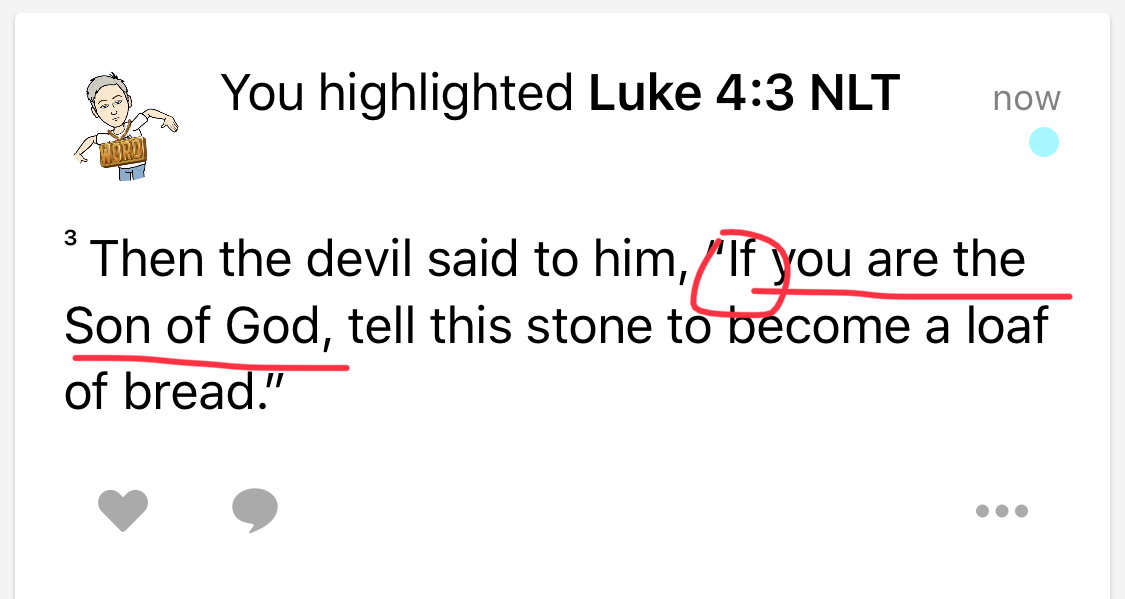
God announces to the world that Jesus is His Son, but as soon as the devil has an opportunity to tempt Jesus he begins with, “IF You are the Son of God….

“This is the bedrock of EVERY temptation. If satan can cause us to reject, doubt, or forget our original identity as beloved sons and daughters of the King, he can get us to fall for any number of tricks and non-satisfying pleasures.” —Honoring Christ In Human Rights (a YouVersion reading plan)

The devil has always been a slanderer and a prosecutor—always leveling charges against God’s children, trying to get them to feel unworthy of God’s love. He still does this today. 

Don’t let him. It’s time to fight back!

How?

We read in Revelation: “For the accuser of our brothers and sisters, who accuses them before our God day and night, has been hurled down. They triumphed over him by the blood of the Lamb and by the word of their testimony” (Revelation 12:10-11).

Jesus—the Lamb of God—shed His blood for you. You have been purchased with an amount that is incalculable. You have so much worth to your Heavenly Father! You did nothing to earn this payment of blood, you just receive it by faith. 

But we also need “the Word.” Notice that every time the devil attacked Jesus, He responded by saying, “It is written,” and then He quoted the Word (see Luke 4:1-12). We must do the same. 

When the devil says you’re unworthy of God’s love, you say, “It is written, ‘There is no condemnation for me because I am covered by the blood of Jesus’” (Romans 8:1).

When the devil says God can’t or won’t help you, you say, “It is written, ‘If God did not spare His own Son, but gave Him up for me—how will He not also graciously give me everything I need?’” (Romans 8:32). 

When the devil says you can’t resist his temptations for very much longer, you say, “It is written, ‘Greater is He that is in me than anything you’ve got. I have submitted myself to God and I will not give in to you, so you must flee from me!’” (1 John 4:4; James 4:7).

When the devil says you’re all alone in this world, you say, “It is written, ‘God said He would never leave me, and His Spirit is inside me right now and forever’” (Hebrews 13:5; John 14:16-18).

Dear friend, the blood of the Lamb covers you. Now use His Word to refute every single charge the devil tries to use to slander you. 

10 Quotes From “Praying The Promises”

There is something special about turning God’s Word into a prayer to our Heavenly Father, and Max Lucado shows us how in his book Praying The Promises. You can check out my full book review by clicking here. 

“We do not need more opinions or hunches; we need the definitive declarations of our mighty and loving God. He governs the world according to these great and precious promises. Let’s be who we were made to be: People of the Promise. Let’s keep these promises handy. Praise Him out loud. Fill our lungs with air and hearts with hope and declare our belief in God’s goodness.” 

“Everything in creation gives evidence of God’s existence. The intricacy of snowflakes, the roar of a thunderstorm, the precision of a honeybee, the bubbling of a cool mountain stream. These miracles and a million more give testimony to the existence of a brilliant, wise, and tireless God (Psalm 19:1-4). Everything shows evidence of a purposeful design. The facts lead to a wonderful conclusion. God is…and God is knowable. … We can know more than simple facts about our Creator; we can know His heart, His joy, His passion, His plan, and His sorrows. … The mark of a saint is that he or she is growing in the knowledge of God.” 

“As we fellowship with God, read His Word, obey His commands, and seek to understand and reflect His character, something wonderful emerges. Or, better stated, Someone wonderful emerges. God comes out of us. We say things God would say. We do things God would do.” 

“When we pray, we engage the power of God against the devil. When we worship, we do what satan himself did not do: we place God on the throne. When we pick up the sword of Scripture, we do what Jesus did in the wilderness. He responded to satan by proclaiming truth (Matthew 4:1-11).… satan will not linger long where God is praised and prayers are offered.” 

“We don’t need a large army. We don’t need abundant resources. God’s presence tilts the scales in our favor.” 

“If you have taken on the name of Christ, you have clout with the most powerful Being in the universe. When you speak, God listens. … Your prayers matter to God because you matter to God.” 

“When nothing quenches your deepest thirsts, when droughts turn your fields into deserts and retirements into pocket change, what can you do? Evaluate your priorities: Is God’s big thing my big thing? 

“Guilt simmers like a toxin in far too many souls, but you don’t need to let it have a place in yours. Internalize this promise: ‘There is now no condemnation for those who are in Christ Jesus’ (Romans 8:1). Not ‘limited condemnation,’ ‘appropriate condemnation,’ or ‘calculated condemnation.’ That is what people give people. God gives His children no condemnation.” 

“The greatest news in the world is not that God made the world but that God loves the world. He loves you. You did not earn this love. And His love for you will not fade if you lose your way. His love for you will not diminish if your discipline does. You have never lived one unloved day. God loves you, and because He does, you can be assured joy will come.” 

“I will fix my eyes on things above. Because I know that this world is not my home, I will keep eternity in sight.” 

These are quotes from the section of Praying The Promises called “unshakable hope.” Stay tuned because I will be sharing soon some of the model prayers Max gave us in this helpful book. 

Saturday In The Psalms—God’s Voice Of Peace

Lord, You have been favorable … You have forgiven … You have covered all their sin. Selah (Psalm 85:1-2).

God’s favor, forgiveness, and covering of sin. Justice would say that God doesn’t have to do any of these things. The people sinned—they violated the holy law—and thus deserve death. But pause and consider this [that’s what Selah means]: God instead shows His favor, deliverance, and forgiveness. All His anger has been turned away!

How do we respond to this? The psalmist asks for restoration and revival. Revival comes when we turn back to God and turn away from our sin, and here we see God initiating revival … making revival possible.

Listen to God’s voice: He speaks peace, which allows us to experience revival. Jesus didn’t say, “Go and sin no more; I do not condemn you.” No! He said, “Neither do I condemn you, now go and sin no more” (John 8:11).

The removal of the wrath of condemnation makes the revival of the soul possible!

Once we hear God’s voice of peace, we can then know His…

  • … mercy
  • … truth
  • … righteousness
  • … goodness
  • … pathway
  • … freedom

God, You are so good! So loving, kind, merciful! Showing Your favor to all who will listen to Your words of peace!

Are You Wretched?

absolute-surrender“You will find that in this passage (Romans 7:6-25) the name of the Holy Spirit does not occur once, nor does the name of Christ occur. The man is wrestling and struggling to fulfill God’s law. Instead of the Holy Spirit and of Christ, the law is mentioned nearly twenty times. In this chapter, it shows a believer doing his very best to obey the law of God with his regenerate will. Not only this; but you will find the little words, I, me, my, occur more than forty times. This is the regenerate I in its impotence seeking to obey the law without being filled with the Spirit. This is the experience of almost every saint. …

“Blessed be God when a man learns to say: ‘O wretched man that I am!’ from the depth of his heart. He is on the way to the eighth chapter of Romans [Romans 8:1]. …

“God does not work by His spirit as He works by a blind force in nature. He leads His people as reasonable, intelligent beings, and therefore when He wants to give us that Holy Spirit Whom He has promised, He brings us first to the end of self, to the conviction that though we have been striving to obey the law, we have failed. When we come to the end of that, then He shows us that in the Holy Spirit we have the power of obedience, the power of victory, and the power of real holiness.” —Andrew Murray, in Absolute Surrender

Rewards And Consequences

Rewards and ConsequencesThe Bible consistently gives us—right up front—the rewards for right living, and the consequences for wrong living. No one ever has to be surprised. 

For example, take this message from Jesus in Luke 6.

  1. If you don’t want others to judge you, don’t be judgmental (v. 37).
  2. If you don’t want to be condemned by others, don’t condemn others (v. 37).
  3. If you want to be forgiven, forgive others first (v. 37).
  4. If you want to receive, be the first to give to others (v. 38).
  5. If you want to teach, find a good teacher and then be a good learner first (vv. 39-40).
  6. If you want to help others with their problems, first look in the mirror at yourself (vv. 41-42).
  7. If you want to speak good words, put good words inside yourself (vv. 43-45).
  8. If you want to stand strong through adversity, build on the right foundation (vv. 46-49).

God doesn’t miss a thing! He told us how to stay in the place where He can bless us, and how we can avoid life’s negative consequences.

We would all do well to hear these words and put them into practice (v. 47)!