G.K. Chesterton penned these words over a century ago. If they were true then, imagine how much more so they are now: “These are the days when the Christian is expected to praise every creed except his own.”
“The only way to do great work is to love what you do. If you haven’t found it yet, keep looking. Don’t settle.” —Steve Jobs
Epaphras literally put his life on the line to tell others about Jesus (Colossians 1:7; Philemon 23) and then tenaciously wrestled in prayer for the saints he led to the Lord (Colossians 4:12). That is a life worth emulating!
Sarah Young uses passages of Scripture and writes in the first-person voice as though Jesus Himself was speaking to us. “When you bring Me prayer requests, lay out your concerns before Me. Speak to Me candidly; pour out your heart. Then thank Me for the answers that I have set into motion long before you can discern results. When your requests come to mind again, continue to thank Me for the answers that are on the way. If you keep on stating your concerns to Me, you will live in a state of tension. When you thank Me for how I am answering your prayers, your mind-set becomes much more positive. Thankful prayers keep your focus on My Presence and My promises.”
Listen to the podcast of this post by clicking on the player below, and you can also subscribe on Apple, Spotify, or Audible.
The letters we’ve looked at so far—B, A, S, and I—are bringing about greater fruitfulness and joy-fullness in our lives, which is then enhancing our personal testimony. So the B, A, S, and I all lead up to the C—community involvement.
One of the first things we need to consider about our community is our role—both what the Bible says is and isn’t our area of concern. Jesus helps us with a parable about wheat and weed and its explanation a few verses later (Matthew 13:24-30, 36-43).
From Jesus we learn that the world was created good—that’s what God said at each day of Creation. Since the fall of man, satan has sown his evil seeds alongside Christ’s good seeds.
Our responsibility isn’t about pointing out what’s wrong in the world
It isn’t about rooting out the evil in the world
It isn’t about judging the evil or even the evildoers in the world
Our responsibility is to proclaim how good our God is
Our responsibility is to bear as much God-honoring fruit as we can
Our responsibility is to embody biblical principles and proclaim the benefits of God’s Kingdom to others
The apostle Paul helps us see our role in our community with his payer in Ephesians 1:17-20. Paul desires that we know…
The hope to which God has called us. A rock-solid, irrevocable, eternal hope!
The riches of His inheritance in His saints. The treasure is in us. We get to be God’s blessing to those around us.
God’s incomparably great power for us. We’re never lacking anything because His power is for us—God Himself is for us!
When our eyes are opened to this, we can see better how to live in our communities. God has placed us and equipped us to proclaim His glorious Gospel in our Personal Mission Field. The PMF includes places like our:
Family—John 1:35-42
Friend group—John 1:43-46
Neighborhood—Colossians 1:3-8
Workplace—Ephesians 6:5-9
How do we do this?
We talk about the daily interactions you have with Jesus—make it clear that He is a real Person with Whom you have a relationship.
We live out our biblical worldview.
We stay in fellowship with out saints so that we are sharpened and prepared to give an answer for the reason for the hope we have.
We continually monitor our conversation and attitude to make sure they are Christ-like.
Let us saints be known for what we’re for more than for what we’re against!
Instead of railing on the evil, proclaim the favor of God, proclaim the soul-satisfying joy of a relationship with Jesus, and proclaim the advantages of the Holy Spirit’s continual counsel.
If you’ve missed any of the previous messages in our series B.A.S.I.C. Christianity, you can find them all here.
If you want your heart to be able to perform better, you are going to have to stress it a bit—that’s called exercise. The same thing is true for the heart of leadership—we have to exercise our leadership so that it can rise to the challenge later.
J. Warner Wallace wrote, “Everyone, whether they realize it or not, is engaged in worship. We all adore something, elevating it above the rest, sometimes so much that we overlook its flaws.” Check out this post about being careful about what we worship.
“Nothing teaches us about the preciousness of the Creator as much as when we learn the emptiness of everything else.” —Charles Spurgeon
“We should avoid end-time hysteria and ‘not grow weary in doing good’ (2 Thessalonians 3:13). There will be good work to do (vocationally and socially and personally) right up to the Lord’s coming. Our normal earthly duties will not end until the Lord appears. The rule then, until he comes, is, ‘Whatever you do, work heartily, as for the Lord and not for men’ (Colossians 3:23).” —John Piper
Greg Morse has a fascinating post connecting the fable of Chicken Little with the historical account of Noah and the imminent return of Jesus. “I hope an acorn falls afresh on our heads as we observe an Old Testament saint who was the Chicken Little of his day. A man who remained awake and faithful with his back against the end of the world: a man named Noah.”
Listen to the podcast of this post by clicking on the player below, and you can also subscribe on Apple, Spotify, or Audible.
You may have noticed that the intensity of the pain of these sheep bites has been escalating—from flattery, to criticism, to gossip. Now we come to probably the most painful of bites: slander. This is the bite that will have the strongest pull toward the natural response, which will require our greatest reliance on the Holy Spirit to respond supernaturally.
Remember that gossip has a veneer of truth on it; slander has no truth at all. They are outright lies. They are flimsy lies. They are malicious lies. One of the Hebrew words translated slander means scandal-monger: someone who trades in lies (Jeremiah 6:28 NLT; Leviticus 19:16).
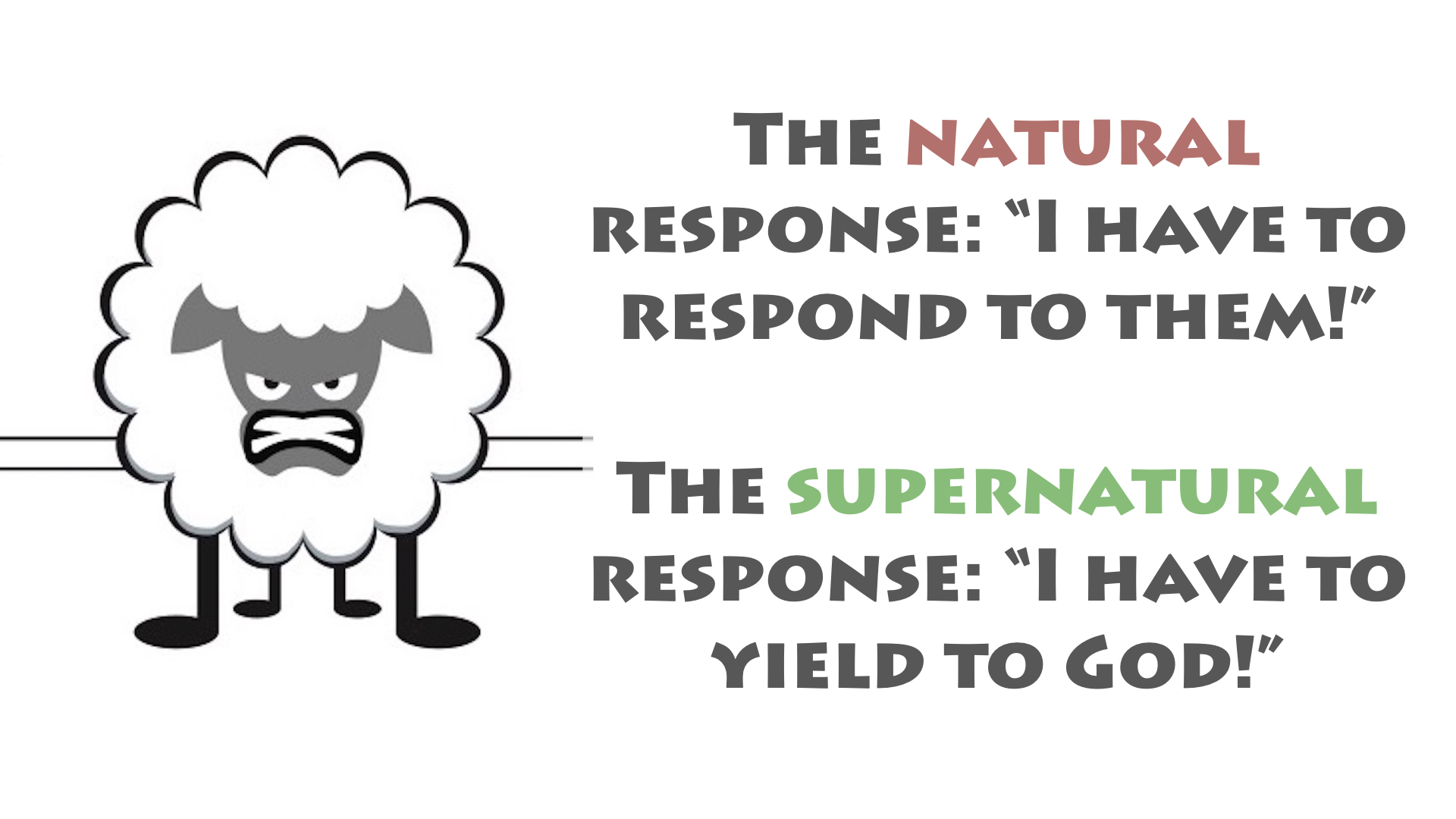
The natural response to slander is, “I have to respond to them!” The supernatural response to slander is, “I have to yield to God!”
The natural response, however, is fueled by my wounded pride. On the other hand, the supernatural response is fueled by humility toward God.
Slanderers are arrogant people too (remember Jeremiah said “they are as hard as bronze and iron” [Jeremiah 6:28]). God’s people are learning to humble themselves to wait for God (Psalm 38:12-15). These humble people are the ones who get God’s help, and not His laughter (James 4:6; Proverbs 3:34 NLT).
Look at how Jesus dealt with the very natural urge to respond to those who slandered Him. After Jesus was arrested by the temple guards, He was hauled before one group after another and each time the slanderous lies were spitefully spit at Him. In front of the Sanhedrin, before Roman governor Pontius Pilate, and in the throne room of King Herod Antipas, angry men unleashed their venomous claims—none of which were true.
There are two common themes we can notice in all of these settings.
The lies were seen for what they were: complete fabrications without any truth behind them—Mark 14:55. Governor Pilate said “I find no basis for a charge against Him” (Luke 23:4), and he added, “Herod came to the same conclusion and sent Him back to us” (v. 15).
The silence of Jesus: “Jesus remained silent and gave no answer” (Matthew 27:13-14; Mark 14:61, 15:5). The only red letters in this interaction with both the Sanhedrin and Pilate are when Jesus is asked a direct question. Jesus quickly answers the questions, “Are You the Messiah,” “Are You a King,” and “Don’t You know the power I have?” (Mark 14:61, 15:2; John 19:10), but He never responds to the slander.
Let me repeat: Our supernatural response can only come from yielding to the Holy Spirit’s influence.
We cannot treat slanderers as anything less than people created in the image of God (Genesis 1:27; Psalm 15:1, 3).
We must take our pain into God’s presence. This is what Jesus did (1 Peter 2:21-23). We can help ourselves by praying imprecatory prayers. These are words for God’s ears only (Jude 1:9; Psalm 58:6-8).
We have to learn to pray for our slanderers. We have to mature from praying against them to praying for them. Look at how Jesus interceded for His slanderers (Luke 23:34), which He calls us to as well (Luke 6:28).
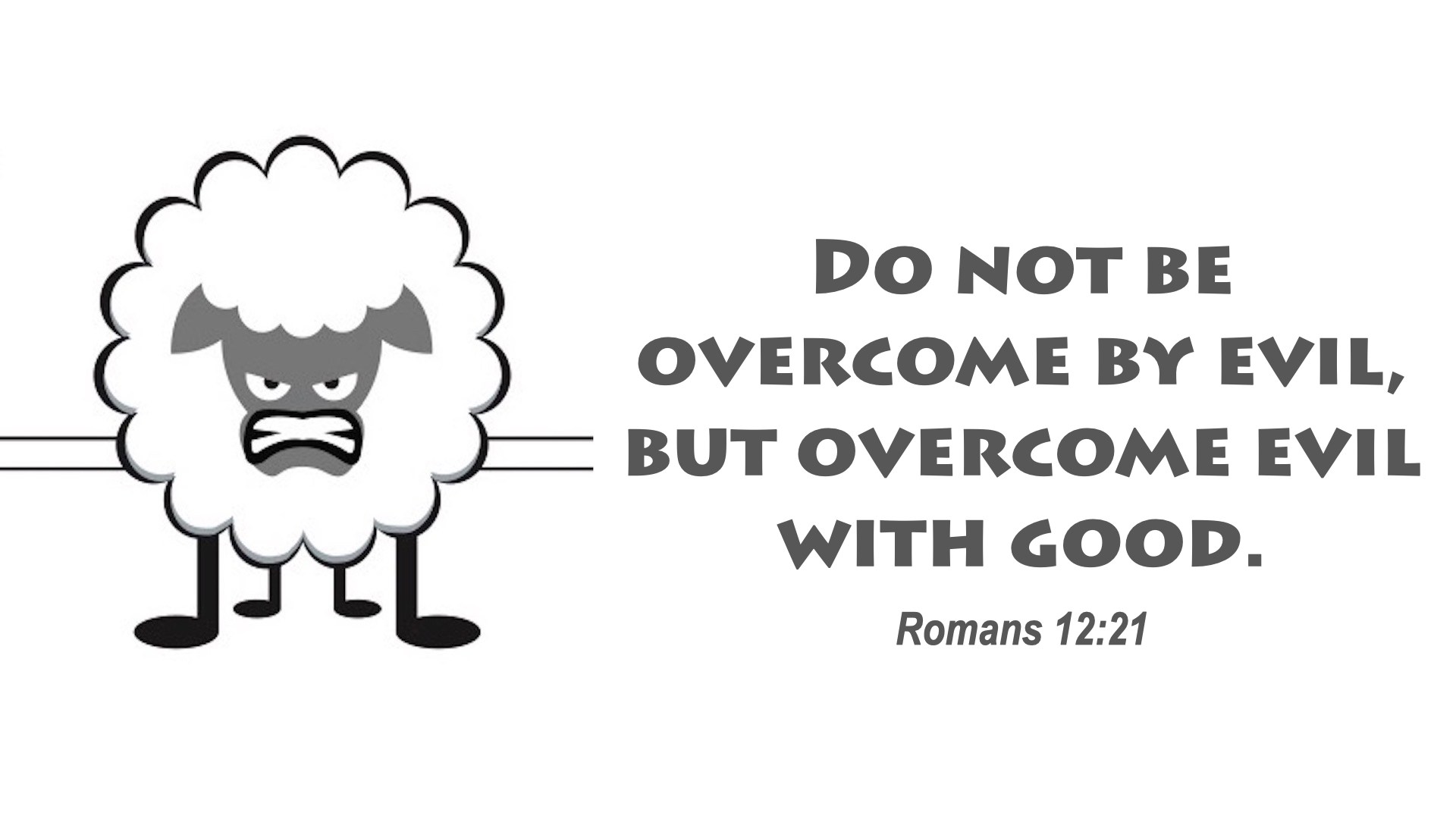
We have to live as overcomers. We overcome by NOT responding to slander in the natural way (Romans 12:21). But we allow our supernatural response to be used as a powerful testimony (2 Corinthians 6:3-10; Colossians 3:1-2, 8, 12-14).
We can do this—the Holy Spirit is empowering us to do this. Let’s not get down in the mud with those who slander us, but let’s yield to God and allow Him to handle this painful situation far better than we ever could.
If you’ve missed any of the messages in this series, you can find them all here. And if you are a pastor, please check out my book When Sheep Bite, which will help you both respond to sheep bites and teach others how to respond as well.
The word gospel simply means the good news about the salvation that comes only through Jesus.
Paul loves this word!
Interestingly, although we refer to the first four books of the New Testament as “The Gospels,” the word itself barely appears:
Matthew—4 times
Mark—8 times
Luke—0 times
John—0 times
And even though these four opening books are the Gospels about Jesus, He Himself only uses the word nine times, with the other three times attributed to someone else mentioning what Jesus was doing.
Peter only uses this word twice (Acts 15:7; 1 Peter 4:17). And John uses it just once (Revelation 14:6).
Paul, however, uses this word 64 times!
It becomes such a part of who he is and how he thinks, that he calls it “my gospel” twice (Romans 2:16, 16:25) and “our gospel” three times (2 Corinthians 4:3; Colossians 1:23; 2 Thessalonians 2:14).
For Paul and for us this Good News is—
God’s promises fulfilled
salvation power
the fullness of God’s blessing
the opening of mysteries
the guide for godly living
glorious light
the expression of God’s grace
the standard of all truth
a key part of the Christian’s spiritual armor
the empowerment for ministry
the anchor of unshakable hope
the means by which we experience Christ’s glory
the only door to life and immortality
For those of us who have been called to preach this Gospel, these thoughts should both humble and empower.
For those of us who have been saved by believing this Gospel, these thoughts should cause us to desire to know more, and more, and more about our Savior.
Listen to the podcast of this post by clicking on the player below, and you can also subscribe on Apple, Spotify, or Audible.
As both a consultant and in one-on-one conversations with colleagues, I have lost count of how many times I’ve heard leaders tell me how incompetent their teammates are. When I have gently asked how they could help their teammates improve, the response is usually something like, “I think they are giving me all they have right now.”
There is an age-old leadership principle that goes something like this—
A poor leader doesn’t believe his people can achieve more than they already are, so he stops training them and stops expecting great things from them. His people soon discover the level of performance their leader will settle for, and then gravitate to that level.
The leader then assumes that’s all that his people are capable of achieving, so he accepts it as fact and quits challenging his people to get better.
So both reinforce what the other believes, and the vicious downward cycle continues.
How sad!
But I have found that exemplary leaders believe the best is still to come. They challenge their teammates to strive for greatness. They take time to train, resource, and encourage them to strive for the next level. They don’t beat them up or give up on them when they stumble, but they treat stumbles as learning opportunities. They always believe their teammates can achieve more.
If you were on a team with a leader like that, wouldn’t you want to live up to those expectations? Of course you would! So instead of the vicious downward cycle I just outlined, an environment like this creates a virtuous cycle that keeps pulling people upward.
The apostle Paul talked in virtuous terms about his teammates. He wrote publicly about Timothy (I have no one else like him—Philippians 2:20), Epaphroditus (my brother, co-worker and fellow soldier—Philippians 2:25), Mark (he is helpful to me in my ministry—2 Timothy 4:11), and Luke (the beloved physician and faithful comrade—Colossians 4:14), to name just a few.
Even when he had to speak a challenging, correcting word to the saints in Corinth, he still believed the best for them—
I am not sorry that I sent that severe letter to you, though I was sorry at first, for I know it was painful to you for a little while. Now I am glad I sent it, not because it hurt you, but because the pain caused you to repent and change your ways. … I am very happy now because I have complete confidence in you. (2 Corinthians 7:8-9, 16 NLT)
I love that phrase: I have complete confidence in you!
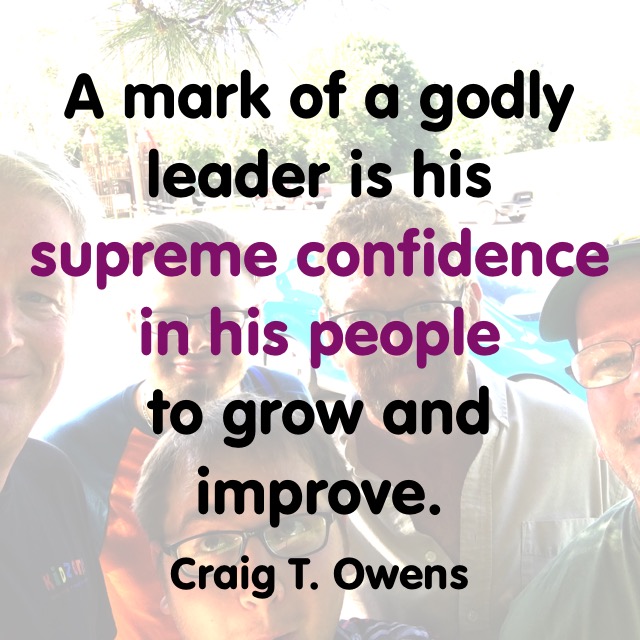
A mark of a godly leader is his supreme confidence in his people to grow and improve.
If you feel like your teammates just aren’t measuring up, can I suggest that you take a look in the mirror? It may be that your expectations of them are too low, that your attitude toward them has been squelched, and that your words and actions are perpetuating a downward cycle.
By changing your attitude toward your teammates, you can put the brakes on that downward pull, and begin a brand new virtuous cycle that pulls your entire team—and your whole organization—up to heights where they have never gone before!
This is part 82 in my series on godly leadership. You can check out all of my posts in this series by clicking here.
“First, they teach the Word of God faithfully (Hebrews 13:7). They aren’t trying to impress anyone with how clever, witty, or visionary they are personally. Their desire is that the Word of Christ might dwell in people richly, and all their teaching is based on that holy and inspired Word (Colossians 3:16).
“Second, their lives exemplify the things they teach (Hebrews 13:7). True leaders are people whom, as you follow them, you begin to become like in ways that reflect full faith in Jesus Christ (John 13:1-15).
“Third, true leaders care for our souls (Hebrews 13:17; 1 Thessalonians 5:12-13). They are interested in us, want to get to know us, do everything they can to serve and build us up; and they will go the extra mile when necessary to help us become people of full faith in Jesus.”
Listen to the podcast of this post by clicking on the player below, and you can also subscribe on Apple, Spotify, or Audible.
Let me remind you of something I covered last week:
If we start out thankful but then forget about our blessings, we become fearful and selfish, which makes us susceptible to the sin of grumbling against God.
But if we start our thankful and then continually remember all that God has done for us, we remain joyful and secure, which fortifies us against giving in to the sin of grumbling against God.
As I have shared with you during this series, medical science has discovered so many connections between gratitude and wellbeing—mentally, physically, emotionally, and relationally. Here’s another important finding from medical science: Chronic stress impairs memory formation.
Remember this insight from George Santayana: “Those who do not learn from history are doomed to repeat it”?
But what if we cannot learn the lessons from history because we cannot remember and recall those lessons? That’s one of the ways chronic stress ravages our ability to be grateful. Stress literally clogs up the amygdala in our brain so that these lessons cannot be filed away for future use.
Where does this chronic stress come from? Stress can be a good thing—think of the stress we put on our lungs, heart, and muscles when we exercise. That good stress (eustress) prepares us to respond well in difficult situations.
But chronic stress is unhealthy. It begins to make us withdraw into ourselves. We become self-protective. We start to see potential problems even behind blessings.
Self-protective becomes self-focused, which is the exact opposite of the God-focus we looked at last week in Psalm 103:2. This also makes us want to isolate from people (see Psalm 42:1-4, especially the “used to” in v. 4).
Consider the example of David’s life. David is in a stressful state where I am sure it is becoming increasingly difficult for him to find praiseworthy things. He is becoming more and more self-protective and therefore self-focused.
Saul tries to kill him—1 Samuel 20:28-33
The Philistines have him trapped—21:10-13; Psalm 56
The people of Keilah reward David’s help with betrayal—23:10-12
David is in a desert place (literally!) and sold-out by the Ziphites—23:14, 19-20
Psalm 54 is written when David learns about the Ziphites’ plan. He begins to pour out his complaint to God in vv. 1-3, but then there is a totally different tone in vv. 4-7. What comes between is the word Selah—a pause to consider.
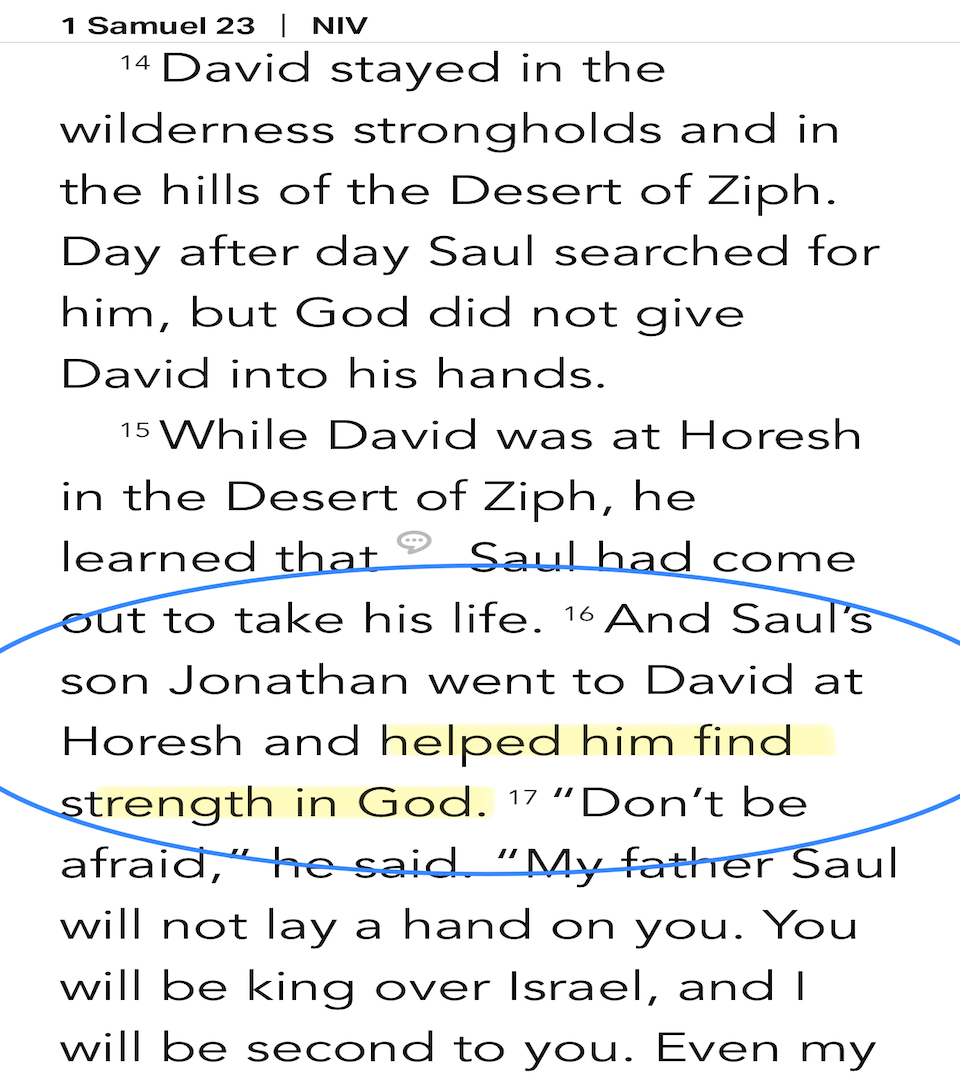
I believe at this time is when Jonathan shows up to encourages David—And Saul’s son Jonathan went to David at Horesh and helped him find strength in God (1 Samuel 23:16).
David learned this lesson well because when he’s in another tight spot, we read that David found strength in the Lord his God, which allowed him to encourage his distraught men to seek God’s help. It was with God’s help that they recovered everything single thing that had been taken from them (1 Samuel 30:1-18)!
Your gratitude fortifies you and helps you encourage other saints. As you encourage other saints, they will then be fortified to help other saints—maybe even you!
I like how Eugene Peterson paraphrases 1 Thessalonians 5:11 in The Message: “So speak encouraging words to one another. Build up hope so you’ll all be together in this, no one left out, no one left behind. I know you’re already doing this; just keep on doing it.”
Your gratitude could make all the difference in someone else’s life, so “just keep on doing it”!
I shared this video last week with my Patreon supporters. When we’re unclear about all that God has asked us to do, the first step is to obey the part that is clear to us. Check out my blog post Clearing up the Confusion for more insight on how Peter handled this.
I have lots of new content every week, which you can check out on my YouTube channel.
T.M. Moore calls on Christians to recognize the God-given authority our leaders have. Not just recognize, but submit to that authority: “We show that we believe the Lord and trust in His Word, and we demonstrate the evidence of that faith when we submit to our church leaders as unto the Lord (Colossians 3:23-24). Submitting to proper authorities is an integral component of full faith. If we want to gain the benefit God intends for us from those appointed to lead, we’re going to have to learn to submit.”
“Talent is never enough. With few exceptions the best players are the hardest workers.” —Earvin Magic Johnson
“Take your job seriously, but don’t take yourself too seriously.” —Alex Trebek
The American Bible Society reports that Gen Z is engaged with Scripture less than any other generation. But here is a sad outcome: “Scripture Engagement is associated with significantly lower anxiety levels among all Americans, but especially among Generation Z. The anxiety score for Bible Engaged Gen Z respondents (3.4) is less than half that of the anxiety score for Bible Disengaged Gen Z respondents (7.1).”
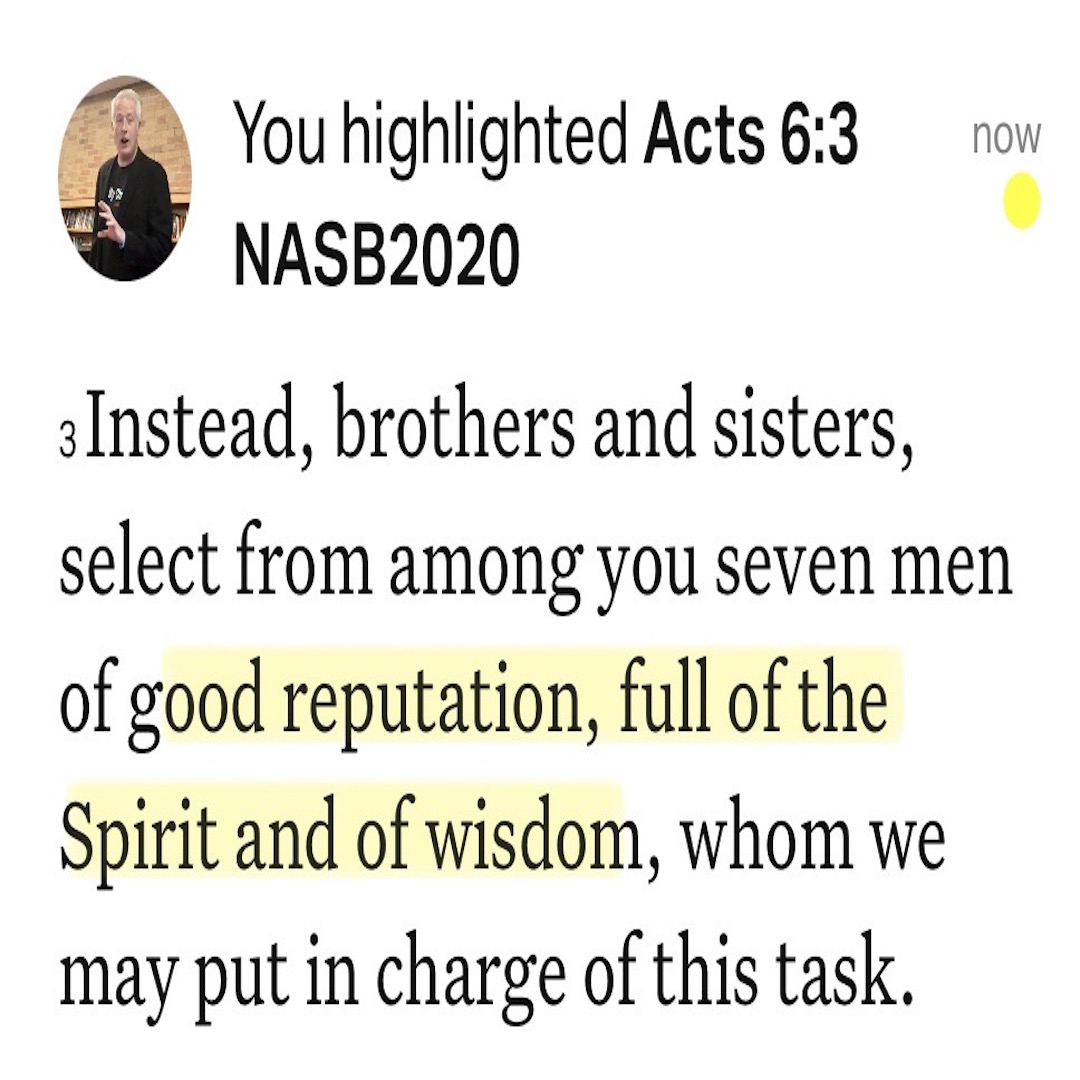
What if the qualifications in Acts 6:3 were the only qualifications we used for selecting folks for ministry assignments: (a) good reputation, (b) full of the Holy Spirit, and (c) full of wisdom?
Listen to the podcast of this post by clicking on the player below, and you can also subscribe on Apple, Spotify, or Audible.
A quick recap: We are all gifted by God, but we typically restrict ourselves to a comfort zone which is much smaller than our God-given gift zone. In order to maximize our impact for the Kingdom of God, we are going to have to get uncomfortable with staying comfortable—we are going to have to trust God as we push out further into our gifts.
Last week I gave you a homework assignment to think about the things you love to do. Why do we need to know this? Because it is one of the indicators of our areas of giftedness.
In the whole carrot-versus-stick discussion, you will find that most people are motivated by reward way more than they are by the fear of punishment. Look at how these God-fearing men were motivated by the God’s rewards:
Who’s more likely to get the reward: the one who loves what they are doing or the one who hates what they are doing? We are more likely to stick with what we love doing, and you are going to love doing what you are gifted by God to do.
Why we do what we do is much more important that what we do (Isaiah 1:11, 13, 15; Matthew 7:22-23).
We have been gifted by God to do great things. When we do those great things, we are rewarded and it brings God glory. That realization should answer the question of why we do what we do (Ephesians 2:10).
The way we see the world, what motivates us, and how we act are all determined by our gifts. We are working on the same Great Commission, but how we live that out will be different because of our different gifts.
In the Old Testament, the saints wanted Zion to be strong and God-glorifying:
David fought battles and wrote worship songs
Solomon gave wise proverbs
Josiah brought about reforms
Ezra encouraged the Israelite governor and high priest
Daniel encouraged the Babylonian rulers
Nehemiah built the wall
In the New Testament era, the saints should all want the Body of Christ to be strong and God-glorifying. Toward that goal, we still need warriors, worshipers, wisemen, reformers, teachers, counselors, workers.
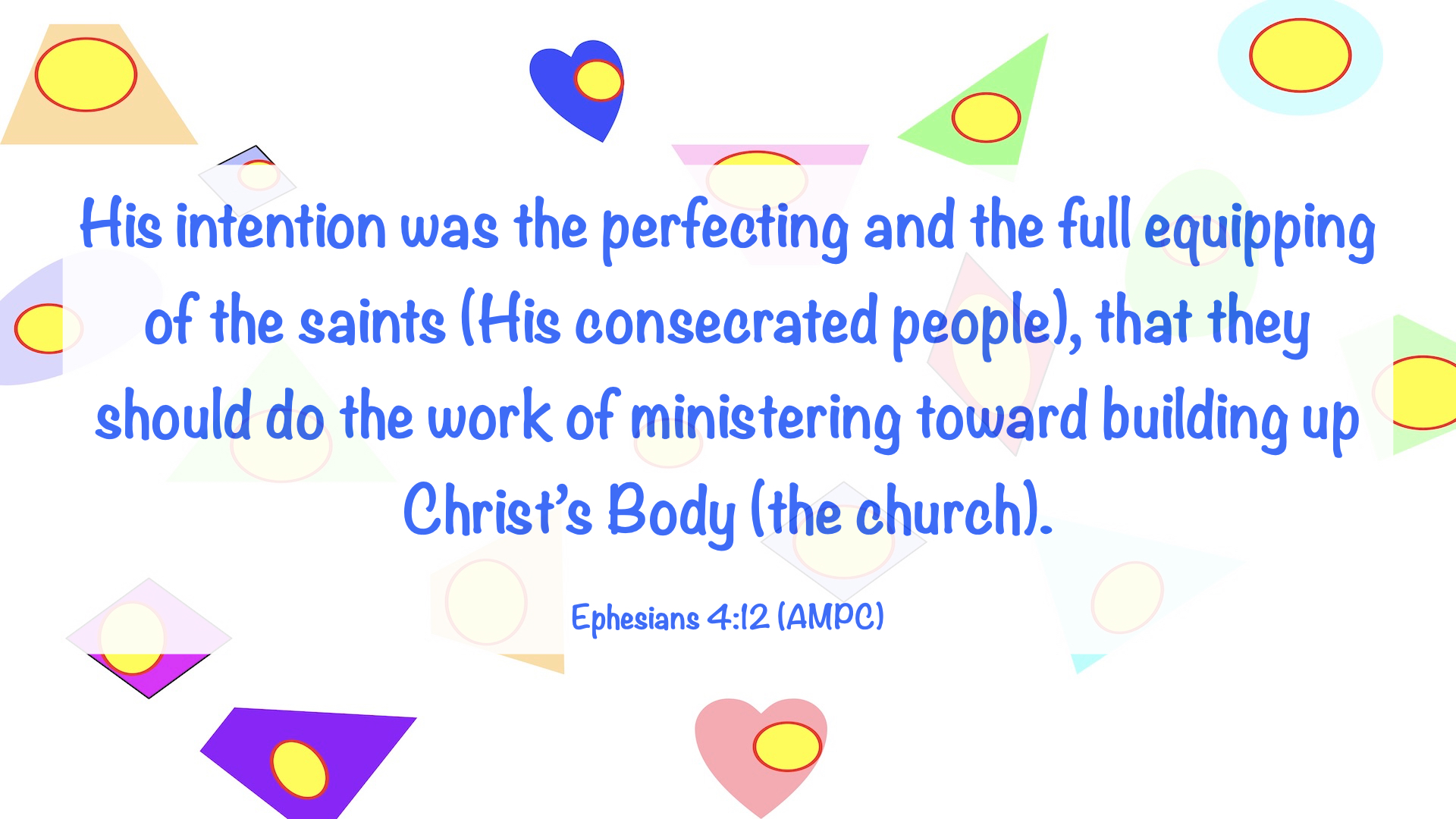
Toward that goal, we all have a part to play (Ephesians 4:12). Check out the example of Paul in…
…Thessalonica: Paul was in the synagogue on three Sabbaths (Acts 17:1-2; 2 Thessalonians 3:8)
…Corinth: Paul was synagogue on the Sabbath days, but after Silas and Timothy arrived, Paul was able to be preaching every day for 18 months (Acts 18:1-5, 11)
What’s the difference? Silas and Timothy used their gifts so that Paul could use his. Without the “enzyme” of Silas and Timothy’s gifting, the whole Body of Christ would have been impoverished.
One of the things that will help your spot your areas of giftedness is noticing what you are passionate about—What do you love to do?
Let me give you three things to consider:
When can I do this again? vs. When will this be over?
When I do this, I’m tired but fulfilled vs. When I do this, I’m tired.
I would do this without pay vs. I would rather find something else to do.
Our prayer should echo what Paul prayed:
For this reason, since the day we heard about you, we have not stopped praying for you. We continually ask God to fill you with the knowledge of His will through all the wisdom and understanding that the Spirit gives, so that you may live a life worthy of the Lord and please Him in every way: bearing fruit in every good work, growing in the knowledge of God. (Colossians 1:9-12)
If you’ve missed any of the messages in our series Living in Your Gift Zone, you can find them all here.



 Greg and I shared some insights for leaders interacting with people from different generations. Check out this clip about Gen Y.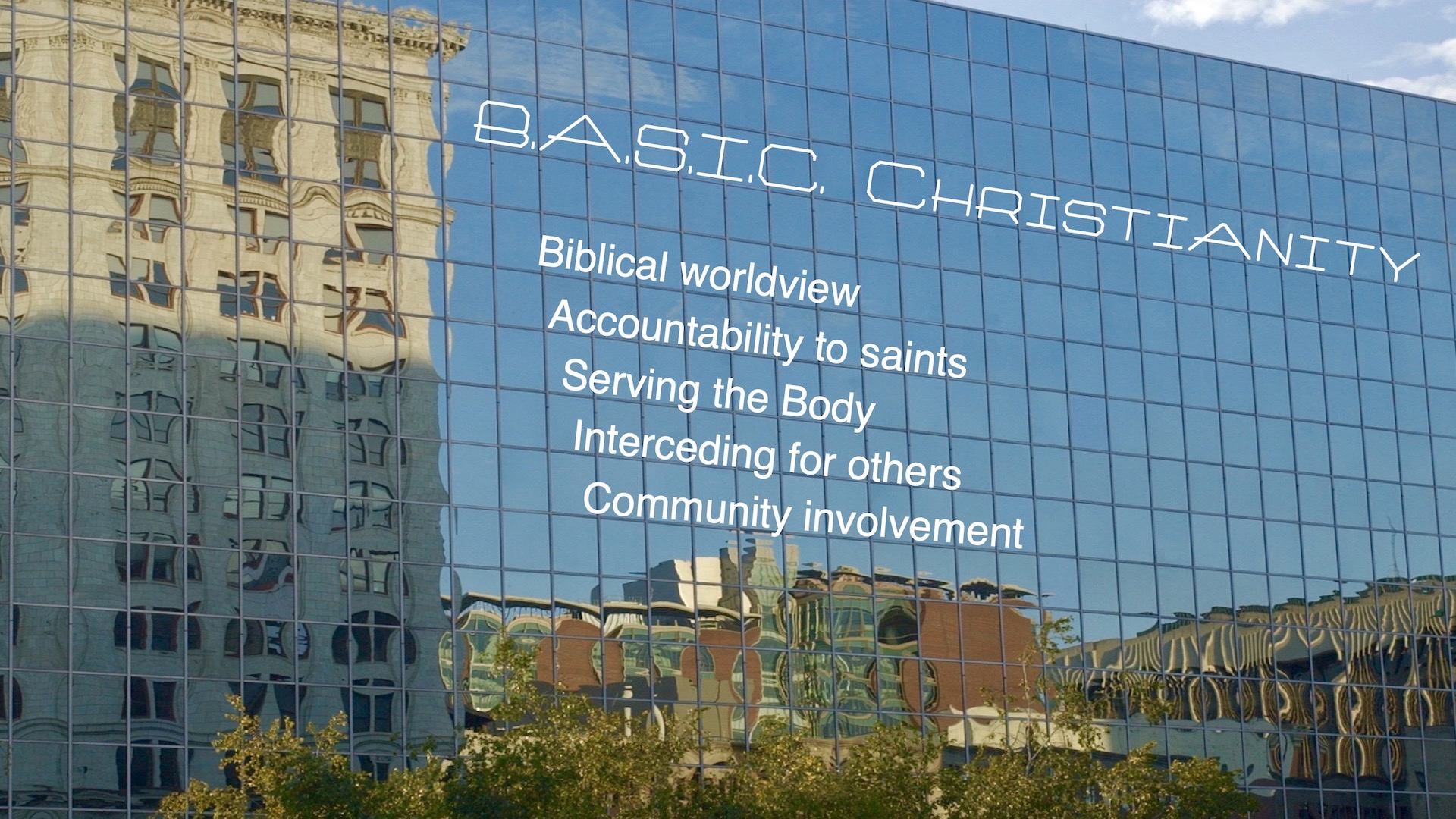








 Craig T. Owens