So Good!

Listen to the podcast of this post by clicking on the player below, and you can also subscribe on AppleSpotify, or Audible. 

You may have heard it this last weekend. Someone says, “Jesus is risen,” and their friend responds, “He is risen indeed!” Jesus Christ’s resurrection from the dead is the greatest event ever! And yet some people just can’t seem to grasp how good this truly is.

We’ve been trained to believe if something sounds too good to be true, then it probably is. So we are careful to be skeptical of any too-good-to-be-true claims that we may hear. Our heart might get excited at the possibilities, but then our logical mind begins to shout, “Wait!” 

Here’s what a logical argument looks like: P1 + P2 + P3 = C. 

The Ps are premises, and if we put true premises all together, then the C (conclusion) is true as well. All I have to do is invalidate one of the Ps and the whole argument falls apart. Then my logical mind can say, “See! I told you it was too good to be true!” 

People heard the teachings of Jesus, they saw His miracles, thousands of them had even tasted the bread and fish He miraculously multiplied. They had hoped He was the One they had been longing for—the Messiah that would deliver them. But then He was crucified and their excitement was extinguished. 

On the Sunday morning after His crucifixion, rumors began to swirl that Jesus had been resurrected back to life. Others said they had actually seen Him and talked with Him. Hearts began to swell with excitement again. But for many of them, their logical minds began to shout, “Wait! Don’t fall for another too-good-to-be-true story!” 

We meet a couple of men who felt like this in Luke 24:13-24. They so wanted it to be true that Jesus was the Messiah they had longed for, but I notice that they use the word “but” three times. That’s their logical mind trying to invalidate any one of the premises. 

Jesus was indeed resurrected from the dead. There is so much evidence that I don’t have time to go through today, but let me just share one item with you: Paul listed all of the people who had seen Jesus alive (1 Corinthians 15:3-8). Facing persecution and even martyrdom, none of these eyewitnesses recanted their faith. 

Chuck Colson, who was at the center of the Watergate scandal and who was not a Christian at that time, said,  

“I know the resurrection is a fact, and Watergate proved it to me. How? Because twelve men testified they had seen Jesus raised from the dead, then they proclaimed that truth for 40 years, never once denying it. Every one was beaten, tortured, stoned and put in prison. They would not have endured that if it weren’t true. Watergate embroiled twelve of the most powerful men in the world and they couldn’t keep a lie for three weeks. You’re telling me twelve apostles could keep a lie for 40 years? Absolutely impossible.”  

Remember our logical statement: P1 + P2 + P3 = C. 

Jesus gave one of His own in Luke 18:31-33. It would go something like this: 

  • ✔️ P1 (He was turned over to the Romans) 
  • ✔️ P2 (He mocked, flogged, killed) 
  • ✔️ P3 (He was raised from the dead)
  • ✔️ C (Jesus fulfills every promise of God) 

The disciples on their way to Emmaus used the word “but” three times, but Jesus counteracted that by using the word “all” three times (Luke 24:25-27), when He said all of the Scriptures point to Him and are fulfilled in Him! 

The Bible is packed with promises! Promises of courage, assurance, wisdom, healing, direction, provision. And they are all valid promised because of the resurrection of Jesus—

For no matter how many promises God has made, they are “Yes” in Christ. And so through Him the “Amen” is spoken by us to the glory of God. … What, then, shall we say in response to these things? If God is for us, who can be against us? He who did not spare His own Son, but gave Him up for us all—how will He not also, along with Him, graciously give us all things? (2 Corinthians 1:20; Romans 8:31-32)

It may seem like these promises are too-good-to-be-true, but Jesus is so good that He makes all of the promises true! 

If you missed any of the messages in our series looking at how Jesus fulfilled the smallest of details of prophecy, check them out here. 

►► Would you please prayerfully consider supporting this ministry? My Patreon supporters get behind-the-scenes access to exclusive materials. ◀︎◀︎

Links & Quotes

We are to love the sinner but hate the sin. This is hard to do, especially when the sin they are doing is directed at us and making us angry! Jesus gave us a great example in these times of high anger: withdraw. Check out my full message “A Christlike Response to Skeptics.” I have lots of new content every week, which you can check out on my YouTube channel.

“In many pagan religions the purpose of worship is to placate the gods—to keep them happy and to stay on their good side, lest they mess with, you know, the harvest or procreation or whatever. Worship is thus a work pagans do to earn or keep the favor of their deity. Christians don’t worship to placate God or earn His favor. We don’t worship to make God happy or bring Him pleasure. God is all-satisfied, all-happy, and all-pleased in Himself alone. We add nothing to Him when we come together to worship. At the same time, as we worship, God adds Himself to us. He deigns to commune with us, inhabits our praises, and brings us into His presence and joy in ways that transform all we are, think, feel, value, say, and do. … In worship, rightly conceived and conducted, our minds and imaginations expand beyond their everyday thoughts and dreams, stretched and molded to fill up with the glory of the heavenly throne room, to be conformed to the mind of Christ, and to see the world as He does (1 Corinthians 2:16).” —T.M. Moore

J. Warner Wallace shares two reasons why we can still consider the Bible relevant today.

My grandpa had honey bees on his farm, and I’ve been intrigued by them ever since that time. In fact, honey bees were subject of my semester-long research project in my ecology class. So I’m always fascinated to read more discoveries about these amazing insects!

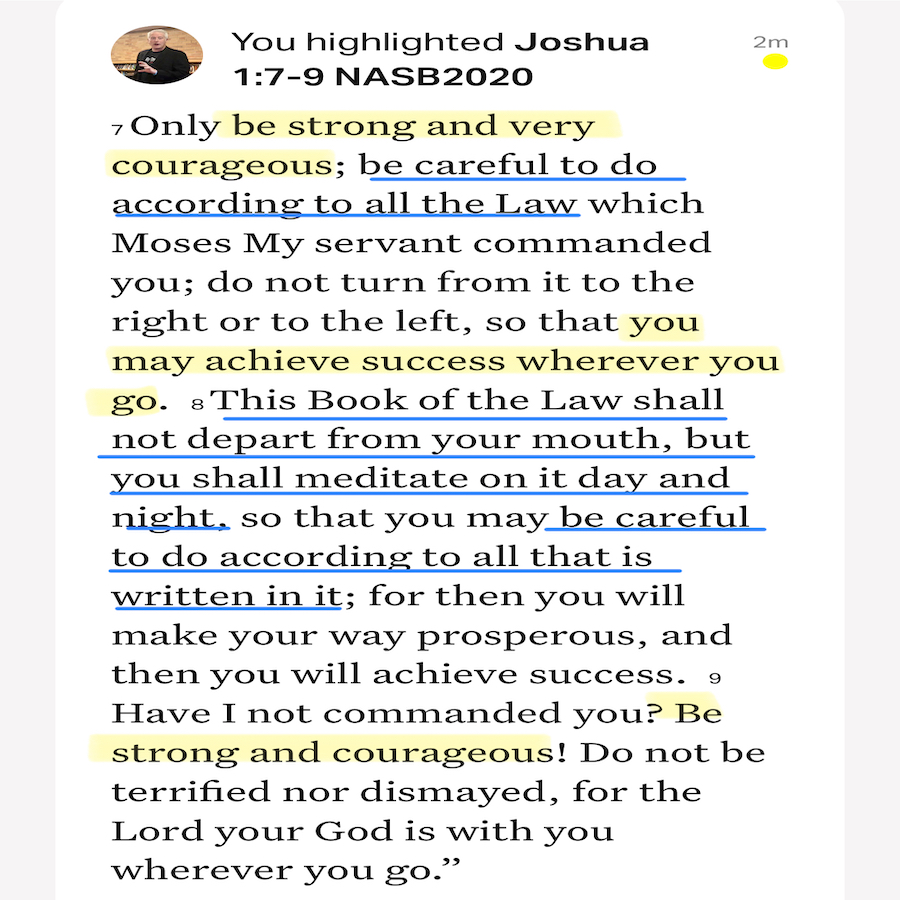
The level of a leader’s strength and courage is directly tied to the leader’s meditation upon God’s word. God’s wisdom transforms a leader’s heart and sharpens his thoughts. This is what gives the leader the necessary courage to lead people in a God-honoring way. I have a whole series of posts on godly leadership where I expand more on these thoughts. 

Links & Quotes

God’s blessings are not primarily for me, but they are through me for His glory. This is a short clip from an exclusive video I shared with my Patreon supporters. Become a supporter todayI have lots of new content every week, which you can check out on my YouTube channel.

“What to do with a mistake: recognize it, admit it, learn from it, forget it.” —Dean Smith

Until the mid-1800s, the historicity of King Sargon II (mentioned by Isaiah) was in doubt. Not only has archeology again affirmed the historical statements made in Scripture, but “the way Isaiah spelled Sargon’s name is an indicator that the prophet lived at the time of Sargon II, and that the book was not penned hundreds of years later.” Check out this archeological biography of Sargon II.

And then there is this archeological report about the destruction of Sodom and Gomorrah. Fascinating!

How sweet and gracious even in common speech,
Is that fine sense which men call Courtesy!
Wholesome as air and genial as the light,
Welcome in every clime as breath of flowers—
It transmutes aliens into trusting friends,
And gives its owner passport round the globe. —James T. Fields

“A person always doing his or her best becomes a natural leader, just by example.” —Joe DiMaggio

Not using the spiritual gift God has given you is selfish. He gave you these gifts on purpose so that His kingdom could be made more visible and desirable.

God In The Footnotes?

Listen to the podcast of this post by clicking on the player below, and you can also subscribe on AppleSpotify, or Audible. 

Can we trust our Bibles? There are some things that skeptics point to that we need to be able to defend—even in this model prayer that we have been studying. We come to the last verse of this prayer, which many of you probably learned or heard as, “For Yours is the kingdom and the power and the glory forever. Amen.” Yet some Bibles have a footnote here that notes that this doxology is not seen in all biblical manuscripts. 

How are we to handle this observation, and others like it in places like Mark 16:9-20 and John 7:53-8:11? 

Let’s start with how we got the Bibles we have today, because it is very instructive. 

We don’t have the autographs (original writings) but we have manuscripts (copied by a trained scribe from the autograph, and then copied from by yet another reliable scribe, and so forth). The oldest calfskin manuscript we have goes back to 1500 BC, and the oldest papyrus manuscript goes back to 2400 BC. 

The scribes were incredibly talented and disciplined men. They became a recognized group called the Sopherim (scribes) in about 500 BC. By AD 100, the Talmudic scribes eclipsed them, and then the Masoretic scribes—the most stringent scribes of all—dominated from AD 500-900. 

Let’s turn our attention first to the manuscripts that compromise what we call the Old Testament. What did Jesus—and others that lived in His time—call those 39 books of the Old Testament? They were called Scripture. Those books were not in doubt even before Jesus was on earth. 

Dr. Peter Flint notes, “The biblical Dead Sea Scrolls are up to 1,250 years older than the traditional Hebrew Bible, the Masoretic text. We have been using a one-thousand-year-old manuscript to make our Bibles. We’ve now got scrolls going back to 250 BC. … Our conclusion is simply this—the scrolls confirm the accuracy of the biblical text by 99 percent.” 

In the New Testament era, the disciples of Jesus went out in pairs. Their oral transmission of the news of Jesus and the quoting of Scripture was verified by their traveling partners. Even for those who happened to be by themselves (e.g. Philip in Samaria), there was always follow up by other church leaders. 

So the New Testament epistles were written to verify the spoken words—James was the earliest (probably AD 45). The number of manuscripts we have of these New Testament words are simply astounding! 

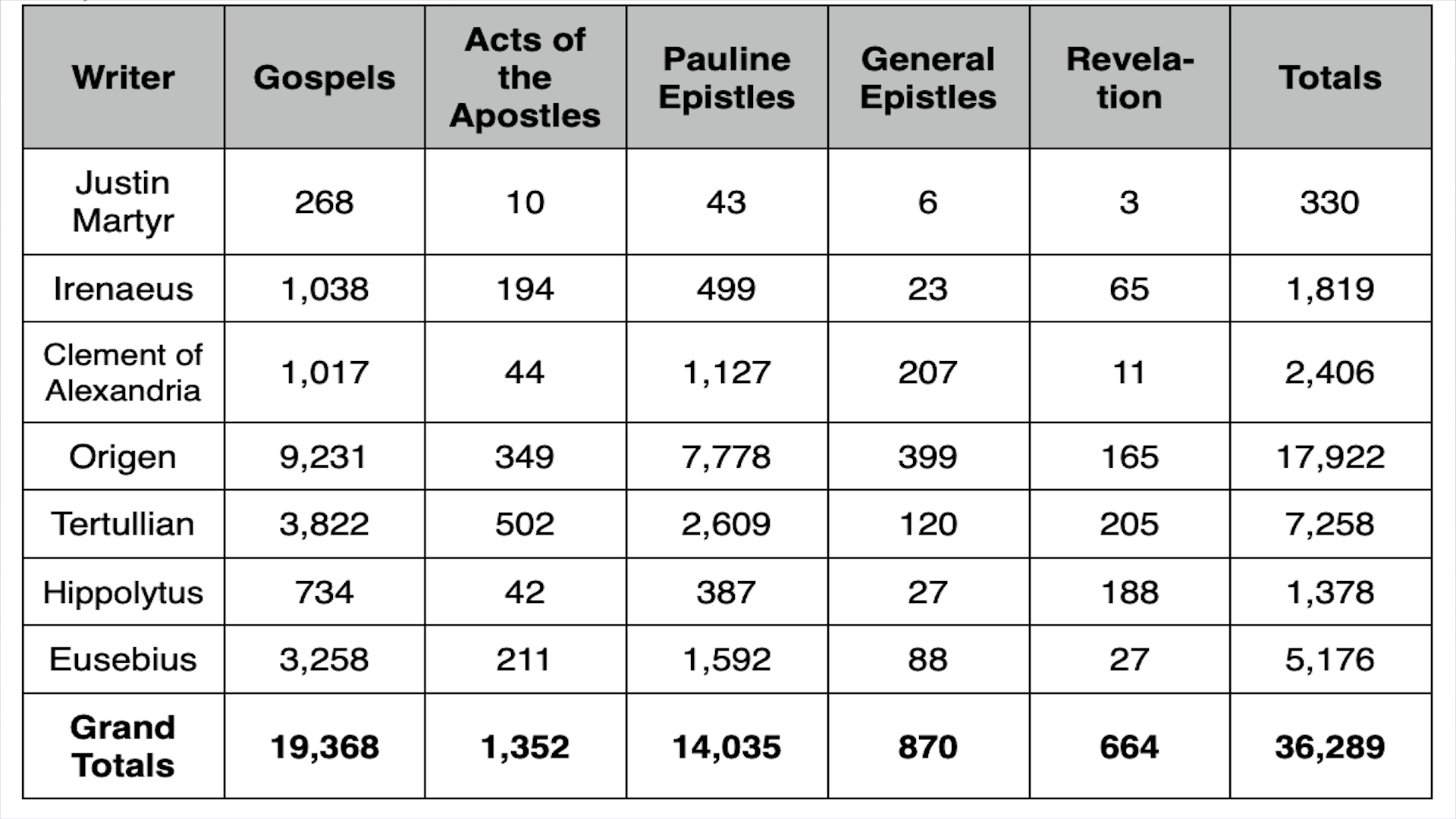
After the canon of the New Testament was completed, the church fathers quoted so much of the New Testament in their letters and books that we could completely reconstruct those 27 books just from their writings. 

With this many manuscripts in existence, is it likely that there would variations in manuscripts? Yes. But none of the variations ever discovered have been fundamental enough to change anything in the meaning. Josh McDowell states, “Compared with other ancient writings, the Bible has more manuscript evidence to support it than the top ten pieces of classical literature combined.” 

So how do we handle these places where scholarly footnotes tell us of a discrepancy in the existing manuscripts? 

  1. Get the context—does this fit with what is happening around it? 
  2. Is there corroboration—can we cross-reference it from elsewhere in the Bible? 

In the conclusion of the powerful model prayer Jesus has given us, the closing words appear to be a doxology. But I think we can trust this because for three main reasons: 

  1. This doxology seems to come full circle with how the prayer begins in: Our Father in heaven, hallowed be Your name, Your kingdom come, Your will be done, on earth as it is in heaven (vv. 9-10). 
  2. These words are found almost verbatim in the words of David: Yours, Lord, is the greatness and the power and the glory and the majesty and the splendor, for everything in heaven and earth is Yours. Yours, Lord, is the kingdom; You are exalted as head over all (1 Chronicles 29:11). 
  3. Finally, these words are similar (if not identical) to the words that John records he heard in Heaven—Revelation 4:11; 5:12-13; 7:12; 11:15-17 

As we have noted throughout this prayer series, the focus of this prayer is two-fold: It is both an acknowledgement of the awesome, praiseworthy glory of our God, and it is a petition for our lives to be empowered to help others see our glorious God and Savior for themselves. 

For these reasons, this doxology, I believe, is an indispensable part of this majestic prayer. 

If you missed any of the other messages in this series, you can check them all out here. 

►► Would you please prayerfully consider supporting this ministry? My Patreon supporters get behind-the-scenes access to exclusive materials. ◀︎◀︎
Links & Quotes

Many of the examples Jesus used to tell us about the Kingdom of God seem like such small things. But those small beginnings have irresistible growth potential! Check out more thoughts in my series of posts called Kingdom Praying. I have lots of new content every week, which you can check out on my YouTube channel.

My wife is a school teacher and I also work quite a bit in our local schools. I think T.M. Moore is spot-on in his analysis of the breakdown in our current educational system: “This commitment to the Law and Word of God as foundational to the education of the young was everywhere practiced throughout the pre-revolutionary period in colonial America. It was unthinkable in the colonies that young people should be submitted to any instruction for any length of time without being taught the commandments and statutes of God, including the Gospel of Jesus Christ. Parents insisted on it, colonial and local statutes required it, and local school boards dutifully saw to it in all their schools.Since the middle of the previous century, assailed by specious invocations of ‘the separation of Church and State,’ educational policy in America has increasingly denied a place to God, His commandments, and His Word in the public-school curriculum. Generations of American children have grown up in a ‘disenchanted’ world (Charles Taylor), a world in which God, spiritual things, and the Law of God are deemed to be irrelevant if not oppressive, or at least a nuisance. The present crisis of morality, culture, and social upheaval is only the most visible consequence of that policy.”

David Mathis shared some thoughts about the healthy pace of ministry Jesus demonstrates for us. He said, “Let’s sit together at the feet of Jesus, and consider the pace and patterns of His life and ministry. He was not idle. Nor was He frenzied. From all we can tell from the Gospels, Jesus’s days were full. I think it would be fair to say He was busy, but He was not frantic. He lived to the full, and yet He did not seem to be in a hurry. In Jesus, we observe a human life with holy habits and patterns: rhythms of retreating from society and then reentering to do the work of ministry. Even as God Himself in human flesh, Jesus prioritized time away with His Father. He chose again and again, in His perfect wisdom and love, to give His first and best moments to seeking His Father’s face.“ These words resonate with me, because they are thoughts that I considered quite extensively for my book Shepherd Leadership.

I love reading stories like these that show how a relationship with Jesus utterly transforms a person’s life! “Opal W. Eubanks joined the Mississippi Highway Patrol during the race riots of 1964. A large, broad-shouldered white man, he relished the opportunity to strike fear in the hearts of African-Americans who were in trouble with the law. By his own admission, he was a foul-mouthed sinner who liked ‘rough stuff.’ A radical conversion to Christ in the early 1970s altered the course of Eubanks’ life, and his hardened heart became tender toward African-Americans in his rural community. He and his wife, Thelma, ultimately pioneered an Assemblies of God congregation consisting mostly of African-Americans, which they pastored for 21 years.”

The Greek word for “teaching” in Mark 9:31 means an ongoing dialogue. It’s an imperfect verb here because it is an activity that is never fully completed. Jesus wants us to abide with Him—to dialogue with Him—to continually learn from Him. The New Living Translation says it this way, ”For He wanted to spend more time with His disciples and teach them.” This is just as true for us today! 

J. Warner Wallace addresses the claims that the Old Testament prophets actually foretold that Jesus would be the Messiah. I love considering the apologetics for the death and resurrection of Jesus Christ, and this video will become an added resource for me in the future.

Links & Quotes

On the latest episode of The Craig And Greg Show, Greg and I talked about Christmas traditions. I have lots of new content every week, which you can check out on my YouTube channel.

“Always be sure of your ground and be sure that you are honoring God. If there is anything about the situation that will make you special, it will bring you sorrow. Your whole ministry has to be along the lines of His grace and blessing.” —Smith Wigglesworth 

“Leaders have the responsibility to keep evil out. Government is incapable of making men and women moral and, in fact, it is not given that assignment, for it does not have that power. God grants government the right to make laws to hold back the power of evil, for only the church through the gospel can help men and women be good. Conversely, leadership and government can do much harm if they, through injudicious application or partial enforcement of law, let evil in. Government cannot make people good, but it can certainly make them bad. We need leadership and government to build barriers against what is wrong, but neither leaders nor external human powers can usher us to what is right. Only Jesus, full of grace and truth, can do that.” —Dick Brogden, in Proverbs: Amplified and Applied

The celebration of Christmas is obviously not seen in the Bible, but it has always seemed to be closely connected to the church’s calendar. Scott Hubbard has an eye-opening history of Christmas in his post The Curious History of Christmas.

Scientists have learned from butterflies’ amazing vision how to better detect cancer cells. The way our Creator has designed these winged marvels is truly astounding!  

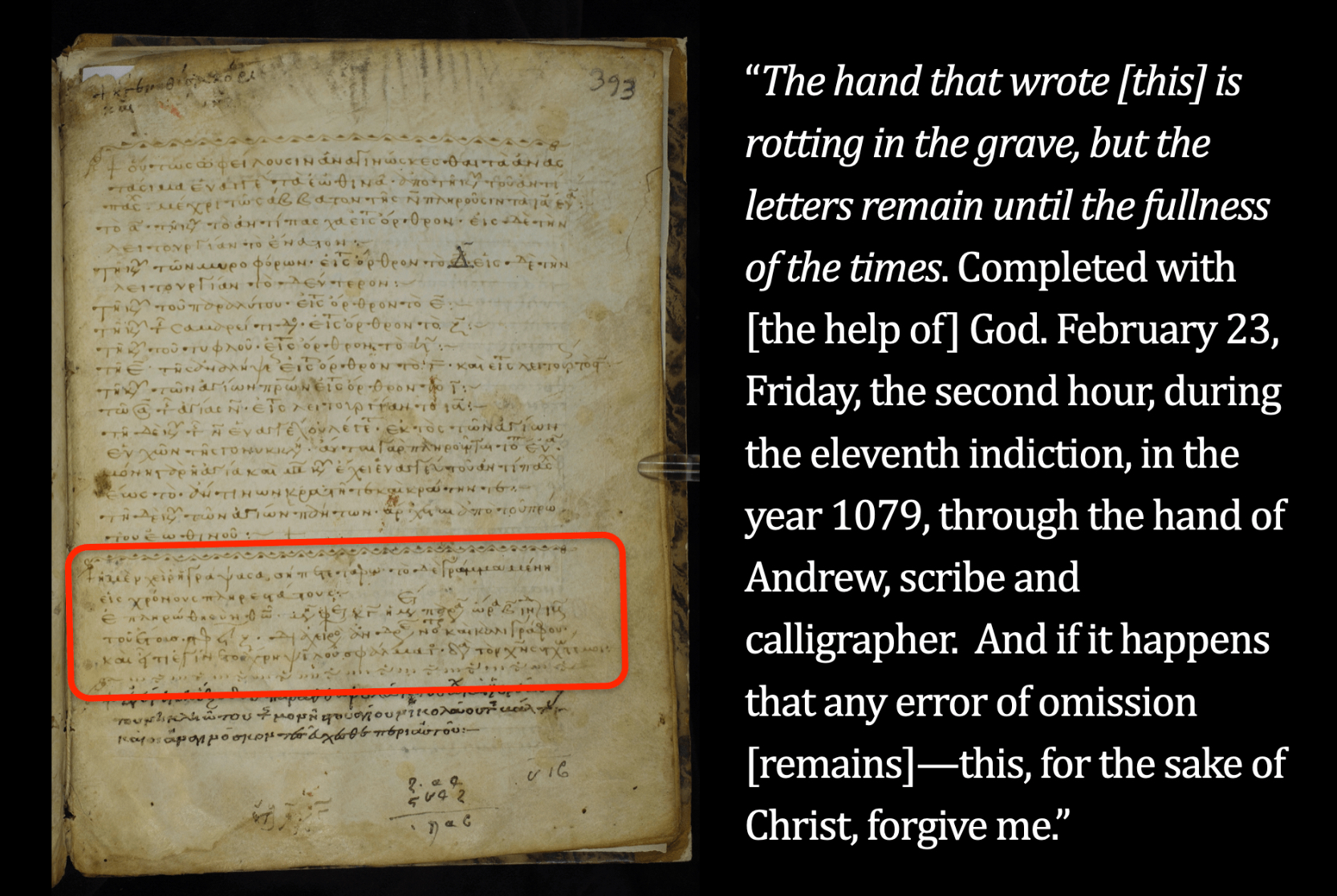
The ways the biblical text has been preserved and transmitted down to us today is nothing short of miraculous! Daniel Wallace is at the forefront of continuing to preserve the Word of God for future generations. Here is an example of the dedication of the biblical scribes: “The hand that wrote [this] is rotting in the grave, but the letters remain until the fullness of the times. Completed with [the help of] God. February 23, Friday, the second hour, during the eleventh indiction, in the year 1079, through the hand of Andrew, scribe and calligrapher. And if it happens that any error of omission [remains|—this, for the sake of Christ, forgive me.”

Just as archeological finds continue to confirm biblical accounts, fossil discoveries continue to confirm the biblical claim of Creation. Paleontologists have now created the term “problematica” to try to address fossil finds that don’t fit their evolutionary models.

T.M. Moore is sharing a thought-worthy series of posts on the biblical view of our economic activities, including a look at how governments and businesses should operate under God’s laws. Moore says, “Since God has written the works of the Law on the heart of all His image-bearers (Romans 2:14, 15), we should expect that awareness (if only subconsciously) to find expression. Put another way, whether they know it or not, people long for an economy guided by Biblical principles and guidelines.”

Links & Quotes

Are you looking for a Christmas gift for your pastor? Check out my book Shepherd LeadershipI have lots of new content every week, which you can check out on my YouTube channel.

“We rise no higher when we pull others down, yet when we stoop to serve, we conquer.” —Dick Brogden, in Proverbs: Amplified and Applied 

“Truth is incontrovertible. Panic may resent it. Ignorance may deride it. Malice may distort it. But there it is.” —Winston Churchill

The amazing history of the authors of the New Testament epistles, and their connections with each other.

“Nothing is really work unless you would rather be doing something else.” —J.M. Barrie

“God has made His Word so precious that if I could not get another copy of it, I would not part with my Bible for all the world. There is life in the Word. There is power in it. I find Christ in it, and He is the One I need for spirit, soul, and body. It tells me of the power of His name and the power of His blood for cleansing.” —Smith Wigglesworth

“Christians can most directly affect the shape of our economy by practicing love for God and neighbor in all our transactions. Beyond that, we should make the most of every opportunity and means for influencing the shape of public policy so that honesty, fairness, justice, and love guide all the policies that bind us together as we the people.” —T.M. Moore

Christian apologist Sean McDowell goes head-to-head with ChatGPT—

Links & Quotes

Your Heavenly Father never gets tired or distracted. He lovingly keeps His eye on you all the time❣️I have lots of new content every week, which you can check out on my YouTube channel.

“Could you use some high-octane boldness? If you want to outlive your life, you could. As long as you are stationary, no one will complain. Dogs don’t bark at parked cars. But as soon as your accelerate—once you step out of drunkenness into sobriety, dishonesty into integrity, or lethargy into compassion—expect the yapping to begin. Expect to be criticized. Expect to be mocked. Expect to be persecuted. So how can we prepare ourselves? Simple. Imitate the disciples. Linger long and often in the presence of Christ. Meditate on His grace. Ponder His love. Memorize His words. Gaze into His face. Talk to Him. Courage comes as we live with Christ.” —Max Lucado, Outlive Your Life 

J. Warner Wallace has an excellent teaching on why we can trust the truthfulness of the Bible.

“Unbelief robs them of these blessings. It is possible to hear and yet not to perceive the truth. It is possible to read the Word and not share in the life it brings. It is necessary for us to have the Holy Spirit to unfold the Word and bring to us the life that is Christ. We can never fully understand the wonders of this redemption until we are full of the Holy Spirit.” —Smith Wigglesworth

Fascinating evidence from Dr. Joel Kramer for the dating of the biblical exodus from Egypt and the naming of the pharaoh that reigned during that time.

Links & Quotes

Leaders, you need to determine the coachability factor before you start trying to coach a teammate. Check out our full conversation on The Craig and Greg Show. I have lots of new content every week, which you can check out on my YouTube channel.

Sextortion is when someone demands money or other favors in exchange for not sharing an explicit photo or video of the targeted victim. The sextortion of minor children runs into the thousands every month. Axis reported, “Most targets of sextortion are teen boys, who seem to be more likely than girls to send an explicit selfie to someone they aren’t having a romantic relationship with. Anonymous scammers will reach out to their target over social media, engaging in a flirtation and eventually asking for nudes.” Axis also shared these helpful resources, “Families can prepare by telling their teens about resources like TakeItDown, a free service which will remove nudes from the internet within two days, and the 24/7 Crisis Text Line, which connects teens with professional counselors via text at any time.”

“First, government is not God; instead, government is God’s servant for the good of those served. And second, the people are not God, and therefore must not be allowed the last word on what defines the terms of ‘good’ public policy. Only God can define what is good for people, for He alone is good (Mark 10:18; Psalm 119:68).” —T.M. Moore

“Since the Roe v. Wade U.S. Supreme Court decision more than 50 years ago, almost 40% of all abortions in America have been in the Black community, resulting in erasing the lives and destinies of an estimated 23 million Black babies.” The National Black Fellowship is aggressively working to change this.

Can New Testament Christians claim Old Testament promises? Yes! John Piper shares 8 “filters” to help us with this application.

“You gain strength, courage and confidence by every experience in which you really stop to look fear in the face. You are able to say to yourself, ‘I have lived through this horror. I can take the next thing that comes along.’ You must do the thing you think you cannot do.” —Eleanor Roosevelt

J. Warner Wallace uses forensic evidence to demonstrate why we should believe the New Testament was written much closer to the time of the actual event than most skeptics believe. Check out this video.

Links & Quotes

If God seems distant, get your eyes off other things and put them back on Him. Check out the full sermon hereI have lots of new content every week, which you can check out on my YouTube channel.

T.M. Moore is in a series of posts about the Kingdom of God being revealed on earth. He wrote, “Jesus’ vision of the proximity of the Kingdom, therefore, was a threefold vision: The Kingdom is yet to come in all its fullness (there and then); nevertheless, at the same time, the Kingdom is unfolding in our midst (here and now); and thus every follower of Jesus Christ must make it their primary concern to seek and attain to more and more of the Kingdom of God every day of their lives. Then and there, here and now, more and more: This is how we must think about the Kingdom of God and our involvement in it.”

For many years, the theory of evolution has been unraveling. As more and more discoveries are being made, Darwin’s theory is becoming less tenable. John Stonestreet and Shane Morris wrote a recent blog post on this. Their article opens with this: “In 1973, evolutionary biologist Theodosius Dobzhansky wrote that “nothing in biology makes sense except in light of evolution.” Almost 50 years later, an increasing number of scientists are asking whether evolution makes any sense in light of what we now know from biology.”

The most effective leaders consistently see the world through their teammates’ eyes. Check out this full conversation on The Craig And Greg Show.

“Imagine yourself as a living house. God comes in to rebuild that house. At first, perhaps, you can understand what He is doing. He is getting the drains right and stopping the leaks in the roof and so on: you knew that those jobs needed doing and so you are not surprised. But presently He starts knocking the house about in a way that hurts abominably and does not seem to make sense. What on earth is He up to? The explanation is that He is building quite a different house from the one you thought of—throwing out a new wing here, putting on an extra floor there, running up towers, making courtyards. You thought you were going to be made into a decent little cottage: but He is building a palace. He intends to come and live in it Himself.“ —C.S. Lewis

“No prophet or priest, king or great leader has ever told us to dare to address God as our Father, except Jesus! He is the only One who has taught us to call God, our Maker and Creator, Father. In the Old Testament, that relationship is mentioned only a few times (for example, Exodus 4:22-23; 2 Samuel 7:14). But in the gospels, it is mentioned 165 times. Jesus wanted to instill in us how important God’s fatherhood is. It is not a mere creed. It is a relationship that is central to our new life in Christ and essential in our worship to Him.” —Sobhi Malek