Living Between The Advents

We live in an amazing time—the First Advent of Jesus has already happened in Bethlehem, and yet we are eagerly anticipating Christ’s Second Advent at any moment! 

The fourth stanza of Charles Wesley’s classic Christmas carol Hark! The Herald Angels Sing is a wonderful between-the-Advents look at what happened at the First Advent, and what we have to look forward to in the Second Advent. The key thing to note in this stanza is the verbs: come, fix, rise, bruise, efface, stamp, and reinstate. 

COME, Desire of nations—What is the “desire of nations”? It’s the restoration of God’s glory on earth, so it’s not really a what but a Who. The prophet Haggai informs us that our Desire is realized in the Advent of Jesus (2:1-9).  

FIX in us Thy humble home—At His First Advent, Jesus came and humbly made His home among us, even dying to pay the penalty for our sins (Hebrews 2:14, 17; Philippians 2:7-8). 

RISE, the woman’s conquering seed—Although Jesus was obedient to death—even death on a Cross, He didn’t stay dead but was resurrected (Philippians 2:8-9; Revelation 1:18)! 

BRUISE in us the serpent’s head—With His death and resurrection, Jesus took away the sting of death from satan, fulfilling one of God’s first prophesies (Genesis 3:15; 1 Corinthians 15:19-26, 54-57).  

Adam’s likeness now EFFACE—That means to wipe out, do away with, expunge. That’s exactly what God does with our forgiven sins (Psalm 103:1-4, 10-12)! 

STAMP Thine image in its place—Although our sin has been effaced, God doesn’t leave us as blank slates, but instead He allows the image of His Son Jesus to be stamped onto our lives (2 Corinthians 1:21-22; 2 Corinthians 3:18). 

REINSTATE us in Thy love—The relationship we longed for is now reborn in us (1 Corinthians 15:49)! 

The Desire of Nations HAS come, and yet He WILL come again! We’re living between the Advents now, so a good question for Christians to ask is: “How are we to live?” I think there are three key things—

  1. In celebration that Jesus came at His First Advent to be our Savior
  2. In anticipation of the Second Advent
  3. In obedience to God’s Word (Revelation 22:7)

To take a look at the other stanzas of this Christmas carol, please click here.

Thursdays With Oswald—Christianity In The Actual And Real Life

This is a weekly series with things I’m reading and pondering from Oswald Chambers. You can read the original seed thought here, or type “Thursdays With Oswald” in the search box to read more entries.

Christianity In The Actual And Real Life

     A man cannot take in anything he has not begun to think about, consequently until a man is born again what Jesus says does not mean anything to him. The Bible is a universe of revelation facts have no meaning for us until we are born from above; when we are born again we see in it what we never saw before. We are lifted into the realm where Jesus lives and we begin to see what He sees (John 3:3). 

     By “Actual” is meant the things we come in contact with by our senses, and by “Real” that which lies behind, that which we cannot get at by our senses (cf. 2 Corinthians 4:18). The fanatic sees the real only and ignores the actual; the materialist looks at the actual only and ignores the real. The only sane Being whoever trod this earth was Jesus Christ, because in Him the actual and the real world one. …  

     When we are born from above we begin to see the actual things in the light of the real. …

     Deliverance from sin is not deliverance from conscious sin only, it is deliverance from sin in God’s sight, and He can see down into a region I know nothing about. By the marvelous Atonement of Jesus Christ applied to me by the Holy Spirit, God can purify the springs of my unconscious life until the temper of my mind is unblameable in His sight. …  

     Everything Jesus says is impossible unless He can put His Spirit into me and remake me from within…. When a man is born from above, he does not need to pretend to be a saint, he cannot help being one. …

     There is only one way in which as a disciple you will know that Jesus has altered your disposition, and that is by trying circumstances. … The proof that God has altered our disposition is not that we persuade ourselves He has, but that we prove He has when circumstances put us to the test.

From Studies In The Sermon On The Mount

The truths that the Bible declares are real truths, but they need to be lived out in the actual life of a Christian. Jesus is the only One who has ever done this, but by His Atonement applied to our actual lives by the Holy Spirit, we can begin to live this way as well. 

In order to live out real truths in actual life, we have to experience actual life—all of the ups and downs, the victories and defeats, the temptations succumbed to and the temptations overcome—in light of real truth. In every experience, the Holy Spirit can sanctify us. I like to think of that word sanctification like this: saint-ification. If I will allow Him, the Holy Spirit can bring out actual saintly qualities in my life. 

The more I allow Him to do this, the more saintliness is seen in my actual life. As Chambers reminds us, then we don’t have to pretend to be a saint, but we cannot help but be an actual one! 

The Dangers In Grumbling

God wants to give us His peace. The Hebrew word is shalom and it means a deep tranquility found in a personal relationship with Jesus that is greater than all external circumstances. Sadly, many people block the shalom God wants them to have. 

The “shalom cycle” looks like this…

Our gratitude for the things God has done fuels our faith in God’s future grace. That faith-filled expectation serves as fuel for our prayers, and answered prayer gives us even more for which we can give thanks. 

But the shalom cycle can break down when we forget to be thankful. My friend Scott Troost says that ungrateful people are usually characterized by—

  • Being bitter and unforgiving
  • Constantly attending their own pity parties 
  • Struggling with low self-esteem
  • Being greedy and covetous for the things they don’t have

Scott goes on to explain how we can stop the grumbling ingratitude from derailing the shalom cycle. 

  1. Be thankful for what you have, instead of wishing for things you don’t have (Philippians 2:14).
  2. Keep a gratitude journal of all that God has done for you (Habakkuk 3:2). 
  3. Notice how God has given you strength to make it through challenging times in the past (2 Corinthians 12:7-10). 

“There’s a huge difference between being thankful for something and being thankful in something. We are to be thankful always.” —Scott Troost 

As I talked about last week—we need to think about what we’re thinking about. This is the key to spotting those grumbling, ungrateful thoughts before they derail the cycle and rob us of God’s shalom. 

Join us next week for the third part of our 4-part series in which we will be uncovering another way that the shalom cycle can become derailed. Please join us either in person or on Facebook Live. 

What Is Shalom?

Shalom is the Hebrew word for peace. Some of the best definitions of shalom include ideas of completeness, soundness, and wholeness. One Jewish rabbi commented that when you say “Shalom” to someone, you’re really saying, “may you be full of well-being.” Or another way of thinking of shalom is—nothing missing, nothing broken. 

Some have tried to describe shalom as the absence of conflict, but that’s not quite accurate. On the verge of going into the Promised Land to fight their enemies, God commanded Aaron to speak a blessing of peace of the people (Numbers 6:24-26). And just before Jesus said, “Blessed are those who are persecuted because of righteousness,” He said, “Blessed are the peacemakers” (Matthew 5:9-10). 

Shalom is not controlled by outward circumstances. Shalom is a deep-seated, rock-solid, unshakable assurance that I am in God’s hand. 

Isaiah describes how we live in shalom like this—

You will guard him and keep him in perfect and constant peace whose mind—both its inclination and its character—is stayed on You, because he commits himself to You, leans on You, and hopes confidently in You. (Isaiah 26:3)

How do we do keep our mind stayed on God? The Apostle Paul says, “We take captive every thought to make it obedient to Christ” (2 Corinthians 10:5). Psychologists call this process metacognition: when we think about what we’re thinking about. It’s being aware of our anxious thoughts that are robbing us of shalom and then talking back to them. 

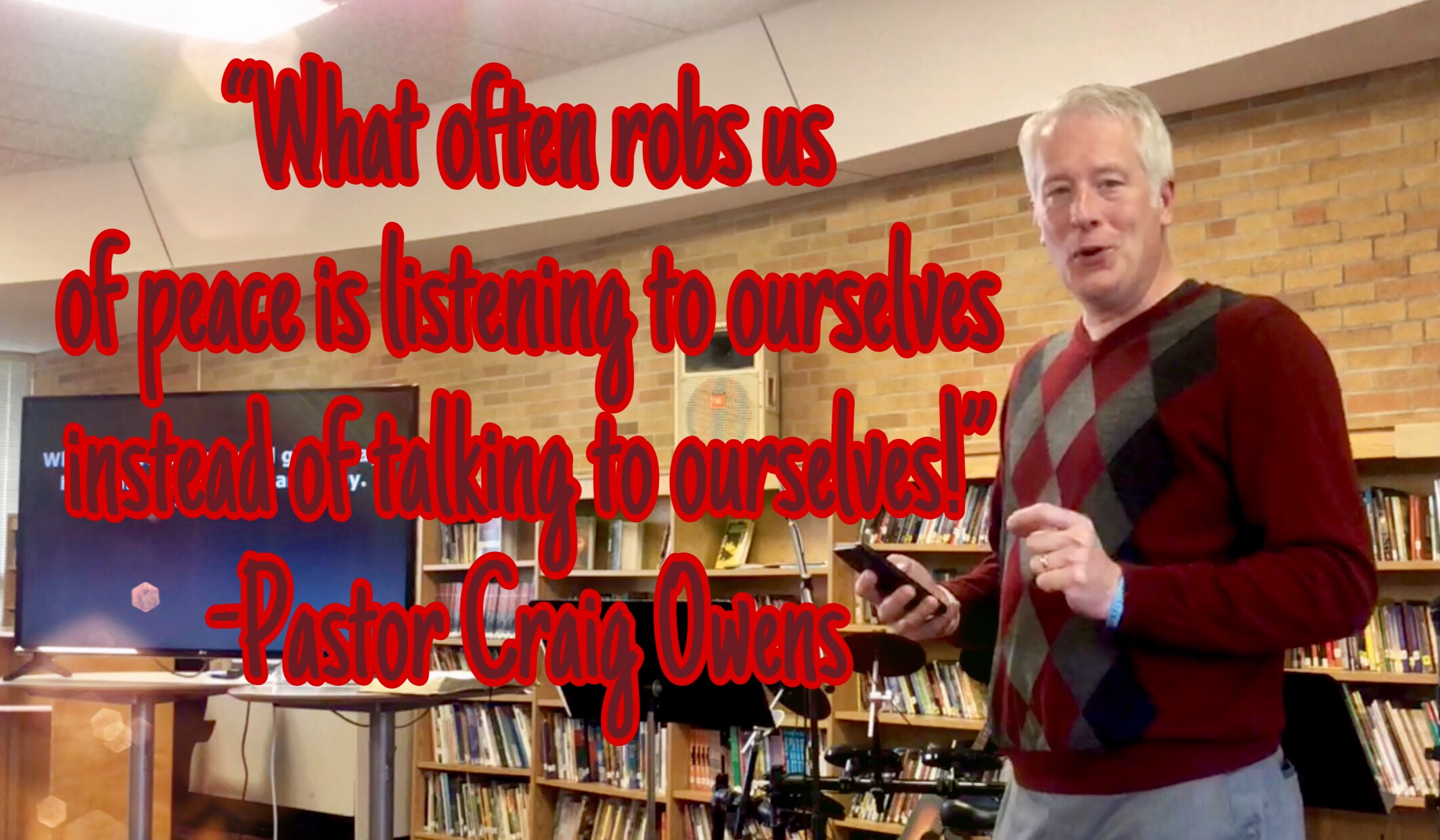
What often robs us of peace is listening to ourselves instead of talking to ourselves! 

Someone once asked evangelist Smith Wigglesworth, “Smith, how do you feel?” He replied, “I never ask Smith how I feel. I tell him how he feels!” Exactly right! 

Why do we make our thoughts obedient to Jesus? Because one of the titles given to Jesus before He was born was Prince of Peace (Isaiah 9:6), and Jesus assures us that His peace is unlike anything we can ever find in earthly things (John 14:27, 16:33). 

God’s peace is always there, but our divided minds keep us from experiencing His peace. So Isaiah tells us to keep our mind steadfast on God’s goodness, and Paul says the same thing—Don’t fret or worry. Instead of worrying, pray. Let petitions and praises shape your worries into prayers, letting God know your concerns. Before you know it, a sense of God’s wholeness, everything coming together for good, will come and settle you down. It’s wonderful what happens when Christ displaces worry at the center of your life. (Philippians 4:6-7)

I want to encourage you to practice what the Bible calls capturing your thoughts—or what psychologists call metacognition. Ask yourself, “Why am I thinking that?” Capture those thoughts and make them obedient to Christ. Don’t let your worrisome thoughts rob you of God’s shalom.

Join me this Sunday as we take a closer look at the “shalom cycle,” including the things that can derail it. 

Thursdays With Oswald—Jeremiah 27-28

Oswald ChambersThis is a weekly series with things I’m reading and pondering from Oswald Chambers. You can read the original seed thought here, or type “Thursdays With Oswald” in the search box to read more entries.

Jeremiah 27-28

[These are notes from Oswald Chambers’ lecture on Jeremiah 27-28.] 

     God does not act according to His own precedents, therefore logic or a vivid past experience can never take the place of personal faith in a personal God. … God is constantly stirring up our nests that we may learn that the only simplicity there is is not the simplicity of a logical belief, but “the simplicity that is in Christ” [2 Corinthians 11:3]. … 

     Never try to explain God until you have obeyed Him…. The only bit of God we understand is the bit we have obeyed. … Never be surprised if there our whole areas of thinking that are not clear, they never will be until you obey (John 7:17). …

     We never gain any knowledge by intellectual curiosity, but only as a relationship of simplicity to God is it maintained. In John 9 Our Lord was dealing with religious teachers who had known God’s way in the past but they were blind to His ways in the present. … Our Lord’s phrase “blind leaders of the blind” was used of those who built their teaching as to how God would act in the future on their knowledge of how He had acted in the past, instead of on a personal knowledge of God. …  

     We have to keep in unbroken touch with God and give every soul the same freedom and liberty before God as God gives us. …

     No silence is so profound as the silence that falls on a soul that has quenched the Spirit of God by concentration on religious convictions. … Our only safety is in concentration on God with nothing between.

From Notes On Jeremiah

God is infinitely creative—He never has to repeat Himself. For proof, just look at the billions of unique snowflakes! 

We must be very careful not to say, “God, You worked just like this last time so I expect You to work exactly the same way this time.” Let God be God; let Him do what He knows is best to do. Don’t tell God how He’s supposed to work, and don’t teach others to interact with God the same way you have interacted with God. 

Let God be God—unique, inimitable, creative, sovereign, omnipotent, personal—with you and with others. 

7 More Prayers From “Praying The Promises”

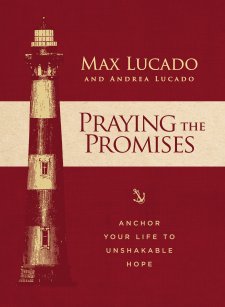
In his book Praying The Promises, Max Lucado shows us how simply we can turn passages of Scripture into intimate and powerful prayers. Here are a few more prayers (the references in brackets are passages that formed the prayer).

Lord, in the midst of my storms, I may doubt Your presence. I may wonder if You are there and if You care. Don’t let me lose hope or lose heart. Deepen my belief in You, even during the storms. Don’t allow doubt to take over. Help me release control of my circumstances and surrender them to You. Jesus is interceding on my behalf, and I am so comforted by this truth. [Luke 22:32; Hebrews 7:25; Matthew 14:23-24]

God, teach me how to live free from condemnation. Teach me how to trust and believe in this promise: in Christ, I am no longer a slave to sin. Free me from guilt and shame. [Romans 3:23-25; Romans 6:6-7; Romans 8:1] 

Lord, thank You for the promise of a temporary tomb. Your power has no limits. You have conquered death. You have promised to make all things new. You are the God of restoration and redemption and regeneration. You are the God of resurrection. In my day-to-day life it can be difficult for me to maintain an eternal perspective. Sometimes I may get bogged down in the worries of today and forget that the best is yet to come. Restore in me the joy of my salvation, God. Renew my mind and my heart so that I will have an eternal perspective of all the worries of my day. They are nothing compared to spending eternity with You. And because of Your promise of resurrection, I do not have to fear death. I will live in faith, knowing that in Jesus, death has been swallowed up in victory. Amen. [Matthew 28:5-6; 2 Corinthians 4:16-18] 

Guide me today, Holy Spirit. Show me where You want me to go, whom You want me to talk to, what decision You want me to make. Help me discern Your voice over my own and others’. Walk closely with me and whisper truth to me. Forgive me when I listen to my own desires and ignore what You are telling me. [John 16:13-15; Galatians 5:25] 

You know all of my needs before I can even ask for them. Sometimes it’s tempting for me to believe I can rely on myself for what I need. Instead of trusting You to provide, I think I can look out for myself. I fear not having enough. And when I do have enough, it never feels like it. But You have promised to meet my needs out of Your glorious riches. Remind me of Your kind and generous provision. Thank You for taking care of me and meeting all of my needs. [Psalm 34:10; Matthew 6:8; Matthew 10:29-31]

Help me to keep eternity in mind, making the most of my days and showing others Your renewing love. [2 Corinthians 4:16-18; 2 Peter 3:13] 

Dear God, You are my unshakable hope. Your promises are unbreakable. You never waiver. You are faithful to the end. My hope cannot be anchored to anything less than Your promises. … Forgive me for those times when I don’t put my hope in You. May I rest in Your promises once again. May any fear, anxiety, or confusion I feel subside in light of You as my anchor. [Isaiah 40:31; Romans 15:13] 

You can check out my review of Praying The Promises by clicking here. I also shared some other prayers here and some quotes from this book here. 

Thursdays With Oswald—Jeremiah 20

Oswald ChambersThis is a weekly series with things I’m reading and pondering from Oswald Chambers. You can read the original seed thought here, or type “Thursdays With Oswald” in the search box to read more entries.

Jeremiah 20

[These are notes from Oswald Chambers’ lecture on Jeremiah 20.] 

    O Lord…I am ridiculed all day long; everyone mocks me (Jeremiah 20:7b). Jeremiah came back to the city and repeated to all the people the message he gave to the elders (Jeremiah 19:14-15). For the first time Jeremiah is designated by his office—‘the prophet’ (20:2), and the action of Pashur is against him as a prophet for his public utterance. According to the people Pashur was right and Jeremiah a raving fanatic. How we select things out of the Bible! We have forgotten what Paul wrote—‘He was crucified in weakness … likewise, we are weak in Him’ [2 Corinthians 13:4]. A Christian is one who can be weak, an abject failure in the eyes of the world. …

     It takes the grace of God to go through disgrace unspoilt. … 

     O Lord, You deceived me, and I was deceived [v. 7a]. Jeremiah says in heart-breaking sobs before God, ‘I have been deceived in what I hoped Thou wouldst do.’ His cry is not the theological argument of a man’s mind, he is pouring it all out before God; there is no charge brought against God and no reply from God. ‘I spoke because the people were reproaching Thy Word, and now I see nothing but ridicule all day long.’ 

     Jeremiah is sensitive to the last degree to all the affinities of the people and he speaks out of perplexity—But if I say, ‘I will not mention him or speak any more in His name,’ His Word is in my heart like a fire, a fire shut up in my bones, and I am weary of holding it in; indeed, I cannot [v. 9]. 

     I hear many whispering… ‘Report him! Let’s report him!’ All my friends are waiting for me to slip, saying, ‘Perhaps he will be deceived; then we will prevail over him and take our revenge on him.’ ‘The people watch for inconsistencies in my life that they may say on that ground I am not preaching Thy truth.’ To be defamed means that if you stand for God you will not be able to stand for anything else. …

     But the Lord is with me like a mighty warrior [v. 11]—a sudden outburst of the devotion of Jeremiah’s heart for God. … When in communion with God His desires are a delight, he sees and enjoys deliverance.

From Notes On Jeremiah

Standing for God may mean that you stand alone. Are you ready?

Standing for God also mean that He stands with you like a mighty warrior. Are you ready now?!

The Blessing Of Quiet Humility

“When you’re full of yourself, God can’t fill you. But when you empty yourself, God has a useful vessel. Your Bible overflows with examples of those who did.

“In his gospel, Matthew mentions his own name only twice. Both times he calls himself a tax collector. In his list of apostles, he assigns himself the eighth spot.

John doesn’t even mention his name in his gospel. The twenty appearances of ‘John’ all refer to the Baptist. John the apostle simply calls himself ‘the other disciple’ or the ‘disciple whom Jesus loved.’

Luke wrote two of the most important books in the Bible but never once penned his own name.

Paul, the Bible’s most prolific author, referred to himself as ‘a fool’ (2 Corinthians 12:11).

King David wrote no psalm celebrating his victory over Goliath. But he wrote a public poem of penitence confessing his sin with Bathsheba (see Psalm 51).

“And then there is Joseph. The quiet father of Jesus. Rather than make a name for himself, he made a home for Christ. And because he did, a great reward came his way. ‘He called His name Jesus’ (Matthew 1:25).” —Max Lucado, in You!

Check out my book review of You! by clicking here, and you can read some other quotes from this book here.

A Warrior For God’s Favor

I love this guy! 

Caleb is a dog. I’m not kidding: his name literally means dog. To be more specific his name actually means a rabid dog. What?! Yeah, but it totally fits his life. 

Caleb first shows up on the scene when the Israelites are getting ready to explore Canaan for the first time. They have just been delivered from Egypt and in about two months have arrived at the border of their promised land. Moses wants to send a representative from each tribe to scout out the land. 

So the first thing we learn about Caleb is that he is a leader of the largest, most powerful tribe in Israel (Numbers 13:1-3, 6). 

After scouting the land for 40 days, these men come back with a report for everyone. Halfway through their report, Caleb interrupts everyone—“We should go take the land right now, for we can certainly do it!” (13:30). Caleb was outspoken for God’s favor. He firmly believed that God was for them. 

Unfortunately, nearly all the other scouts (except Joshua) disagreed with Caleb. They warned that there were giants in the land that would eat them for lunch. In essence, the same people who had seen God deliver them from the Egyptians and part the Red Sea for them now thought that God wasn’t able to defeat giants. This vocal majority turned the entire nation against Moses and wanted to return to Egypt! 

So God promised that none of the adults would enter the promised land, with only two exceptions: Joshua and Caleb. God pointed out that Caleb “has a different spirit and follows Me wholeheartedly” (Numbers 14:24). This is where we first learn that Caleb is rabid. The term rabid means zealous, intense, fanatical, inspired. Caleb is a man who is focused—intensely, wholeheartedly focused—on God. In fact, this word wholehearted is used about Caleb three more times (see Joshua 14: 8, 9, 14). 

Along with the rest of the Israelite community, Caleb wandered in the wilderness for 40 years. He never thought God had forgotten him; he never lost his intense wholeheartedness; he stayed rabid the whole time. He had a trust in God that never diminished. His motto might have been: “God said it; I believe it.” 

After 40 years in the wilderness, and then five more years fighting to claim their promised land, Caleb was still raring to go. He told Joshua, “I am still just as strong as I was 45 years ago. I’m 85 years old and still ready to take on giants. Let me at ‘em!” And he did it! Caleb drove out three giants in order to claim his territory (Judges 1:20).

But Caleb wasn’t done yet. He then used God’s favor to be a blessing to others. The Apostle Paul tell something that Caleb lived out: God will generously provide all you need. Then you will always have everything you need AND plenty left over to share with others (2 Corinthians 9:8). Without a word of complaint, Caleb gladly accepted not only the responsibility of letting the Levities live in the town he had conquered, but he also took on the added duties of making that city of Hebron a “city of refuge.” In this city, Caleb would keep anyone safe from those seeking their lives until a proper trial could be held. 

Caleb was successful for nearly 90 years because he was convinced that God was for him.

Nothing could distract him from wholeheartedly clinging to God’s favor! 

Caleb was a warrior for God’s favor, and he was a successful warrior because of God’s favor. The same can be said of you IF you will decide to cling to God’s favor wholeheartedly.

Is It Really The 11th Hour?

When we’re down to the last minutes before a crucial deadline, we often refer to it as “the eleventh hour.” 

Have you been there? You’re sweating it out, wondering if God is going to come through for you. Or perhaps thinking about what you might need to handle yourself in order to meet the deadline. And then God comes through for us, and we let out a deep sigh of relief and gratitude. 

But why a sigh? Were we worried that God wouldn’t come through? Did we think God’s supply was limited? And what made us think that it was “the eleventh hour” anyhow? 

What we often think is the eleventh hour is really God’s first hour! God is never late. He’s never scrambling to come up with what we need. We might be the ones “scrambling,” but God never is. He always has the perfect resources at the perfect moment. 

We should know this because the Bible tells us: God who did not spare His own Son, but gave Him up for us all—how will He not also, along with Him, graciously give us all things? (Romans 8:32) 

Jesus tells a story about an eleventh-hour situation in Matthew’s Gospel. Men were waiting around to work for the day when a landowner came along to hire them. He hired some guys first thing in the morning and agreed to pay them a full day’s pay. He hired some other workers at 9:00 AM and promised to pay them fairly, and then he hired even more workers at noon and at 3:00 PM, also promising to pay them what was fair. Finally, he hired some workers at 5:00 PM—literally at the eleventh hour—without any mention of pay. 

At the end of the day, every single worker was paid a full day’s wage. Every single one of them. Jerry Bridges notes why this is significant: 

“Each worker, regardless of how long he had worked, received a day’s wages. He received not what he had earned on an hourly basis, but what he needed to sustain his family for a day. … Those eleventh-hour workers were hired because they needed to receive a day’s wages. They had been standing all day waiting for someone to hire them so they could earn money to support their families. They needed to work more than the landowner needed their work. He hired them, not because of his need, but because of their need.” (emphasis added)

You see, God knows what you NEED and He generously supplies that NEED right on time.

Jesus taught us to pray, “Give us this day our daily bread.” The problem comes when we start looking down the road wondering what’s going to happen tomorrow, and the next day, and the next day (see Matthew 6:11, 31-34). 

God’s favor toward us is out of all proportion to our work or sacrifice. He gives exactly what we need, exactly when we need it. 

If you’re feeling anxious—like the clock is ticking down to the eleventh hour—perhaps you should recall how God has provided for you in the past. Then discipline your thoughts from running ahead to tomorrow as you pray, “Give me this day what I need.” 

Here’s a prayer I’m praying—

“God, I remember the wonderful deeds You have done for me. They are constantly in my thoughts. I cannot stop thinking about Your mighty works in the past. Therefore, I ask you today for my daily bread. Let my heart be on guard against scrambling as though I were in an eleventh-hour situation. You are my all-loving, all-gracious Father. You know what I have need of even before I ask. May my attitude be one of assured contentment in your abundant, right-on-time supply. May you be glorified as others see this confidence in my attitude.”