Thursdays With Spurgeon—An Assured Eternity

This is a weekly series with things I’m reading and pondering from Charles Spurgeon. You can read the original seed thought here, or type “Thursdays With Spurgeon” in the search box to read more entries.

Listen to the podcast of this post by clicking on the player below, and you can also subscribe on iTunes or Spotify.

An Assured Eternity 

     The life of God in the soul is not transient but abiding. Not temporary but eternal. Some think that the life of God in the believer’s soul may die out. But how then could it be eternal? If it dies, it is not eternal life. If it is eternal life, it cannot die. … We are said to have been made ‘partakers of the divine nature’ (2 Peter 1:4). Surely this means, among other things, that we receive an undying life. …  

     If our life is Christ’s life, we will not die until Christ dies. … 

     This is John’s desire for you: that you would believe with all your heart and soul and strength. He would have you believe more constantly, so that you may say, ‘My heart is steadfast, O God, my heart is steadfast; I will sing and give praise’ (Psalm 57:7). It is not always so with us. We are at times chicken-hearted. We play the man today and the mouse tomorrow. Lord, have mercy upon us. We are an inconsistent people, fickle as the wind. The Lord would have us abide always in Him with strong and mighty confidence, being rooted and built up in Him. He would have us trust courageously.

From The Blessing Of Full Assurance 

John the Beloved wrapped up his Gospel with this statement: “But these are written that you may believe that Jesus is the Messiah, the Son of God, and that by believing you may have life in His name” (John 20:31). The word John uses for “life” is the Greek word zoe. This is how zoe is defined—

Life real and genuine, a life active and vigorous, devoted to God, blessed, in the portion even in this world of those who put their trust in Christ, but after the resurrection to be consummated by new accessions…and to last for ever. (Strong’s Greek dictionary) 

Do you believe Jesus died and rose again? Based on that faith, have you asked the Father to forgive you of your sins? If so, then listen for the voice of the Holy Spirit in your heart that is giving you full assurance of promises like these: 

  • Everyone who believes may have eternal life in [Jesus] (John 3:15) 
  • Whoever believes in [Jesus] shall not perish but have eternal life (John 3:16) 
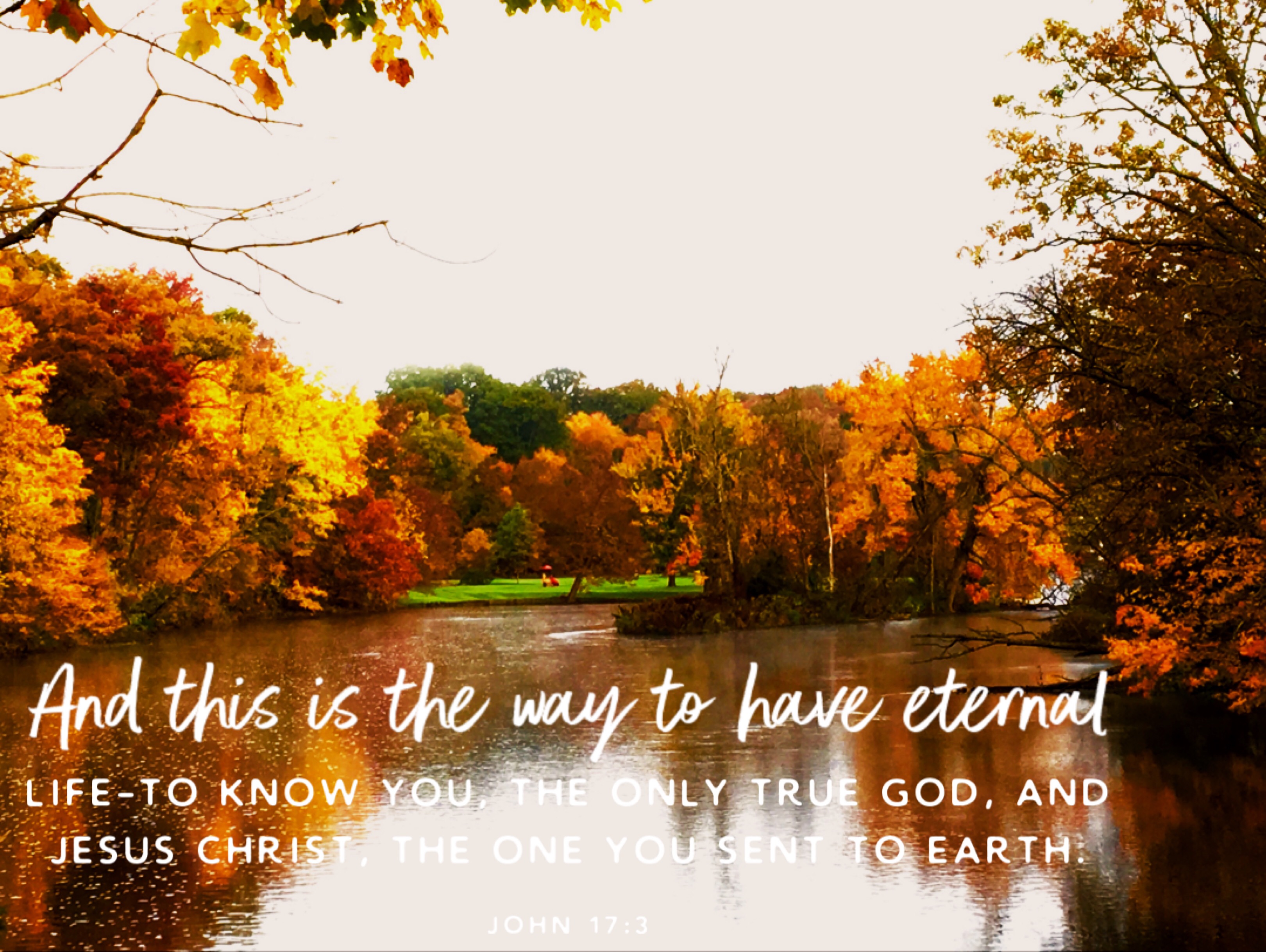
  • Now this is eternal life: that they know You, the only true God, and Jesus Christ, whom You have sent (John 17:3) 
  • Whoever believes in the Son has eternal life (John 3:36) 
  • Whoever drinks the water I give them will never thirst. Indeed, the water I give them will become in them a spring of water welling up to eternal life (John 4:14) 
  • Because I live, you also will live (John 14:9) 
  • Whoever hears My word and believes Him who sent Me has eternal life and will not be judged but has crossed over from death to life (John 5:24) 
  • My Father’s will is that everyone who looks to the Son and believes in Him shall have eternal life, and I will raise them up at the last day (John 6:40) 
  • When Christ, who is your life, appears, then you also will appear with Him in glory (Colossians 3:4) 
  • Resting in the hope of eternal life, life which the ever truthful God Who cannot deceive promised before the world or the ages of time began (Titus 1:2) 
  • I write these things to you who believe in the name of the Son of God so that you may know that you have eternal life (1 John 5:13) 

[Check out all of these verses by clicking here.]

Friend, this is why it’s so important for us to regularly read the Bible. We need to have our faith bolstered by hearing these rock-solid, unchanging, eternal words of God so that we can live each day in full assurance of our salvation and eternal life.

►► Would you please prayerfully consider supporting this ministry? ◀︎◀︎

Thursdays With Spurgeon—Three Pieces Of Evidence

This is a weekly series with things I’m reading and pondering from Charles Spurgeon. You can read the original seed thought here, or type “Thursdays With Spurgeon” in the search box to read more entries.

Listen to the podcast of this post by clicking on the player below, and you can also subscribe on iTunes or Spotify.

Three Pieces Of Evidence

     Many who believe in the name of Jesus are not sure that they have eternal life. They only hope so. … I speak affectionately to the weaker ones who cannot yet say that they know they have believed. I speak not to your condemnation but your consolation. Full assurance is not essential to salvation, but it is essential to satisfaction. May you get it at once. At any rate may you never be satisfied to live without it. You may have full assurance. …  

     Do you love God? Do you love His only begotten Son? You can answer those two questions surely. … If I love Him, I know it is because He first loved me [1 John 4:19]. Love to God in us is always the work of God’s love toward us. … Love to Jesus is an effect that proves the existence of its cause. …

     John goes on to give another evidence: ‘By this we know that we love the children of God, when we love God and keep His commandments’ (1 John 5:2). … The Holy Spirit tells us that if we love the brethren, we have passed from death to life. You can tell whether you love the brethren, as such, for their Master’s sake and for the truth’s sake that is in them. And if you can truly say that you thus love them, then you may know that you have eternal life [1 John 3:14]. … 

     Our apostle gives us this further evidence: ‘This is the love of God, that we keep His commandments. And His commandments are not burdensome’ (1 John 5:3). Obedience is the grand test of love. … Do you feel that you love the ways of God, that you desire holiness and follow after it joyfully? Then, dear friends, you have eternal life and these are the sure evidences of it. Obedience, holiness, delight in God, never came into a human heart except from a Heavenly Hand. …

     To me the fact that the mouth of God has spoken it stands in the place of all argument, either for or against. If Jehovah says so, so it is. … If your faith stands in the wisdom of men and is based upon the cleverness of a preacher, it will fail you. But if it stands on the sure Word of the Lord, it will stand forever.

From The Blessing Of Full Assurance 

These pieces of evidence are why I stressed last week that you make reading the Bible a regular practice: God tells us that faith comes through hearing the Word of God (Romans 10:17). One of the favorite tactics of the devil is to try to get people to doubt or misapply God’s Word—he asked Adam and Eve, “Did God really say…” and then he quoted the Psalms out of context to Jesus to try to get Him to doubt (Genesis 3:1; Luke 4:10-11). 

So when doubts about your secure standing in God’s sight creep in, you can return to the Scripture to say, “I have these three pieces of evidence that make me confident of God’s favor: I love Him because He first loved me, I love others because His love is in me, and I delight to obey all that my Father has told me.” 

Don’t passively listen to your doubts and the devil’s lies, but actively talk back to them! Get into God’s Word and let God’s Word get into you so that you can speak the truth to every doubt.

►► Would you please prayerfully consider supporting this ministry? ◀︎◀︎

Thursdays With Spurgeon—Value The Scriptures

This is a weekly series with things I’m reading and pondering from Charles Spurgeon. You can read the original seed thought here, or type “Thursdays With Spurgeon” in the search box to read more entries.

Listen to the podcast of this post by clicking on the player below, and you can also subscribe on iTunes or Spotify.

Value The Scriptures

     John wrote to believers, ‘These things I have written to you who believe in the name of the Son of God’ (1 John 5:13). It is worthy of note that all the Epistles are so written. … 

     We do not wonder that certain men do not receive the Epistles, for they were not written to them. … Here is a will and you begin to read it. But you do not find it interesting. It is full of words and terms that you do not take the trouble to understand because they have no relation to yourself. But should you, in reading that will, come upon a clause in which an estate is left to you, I guarantee you that the nature of the whole document will seem changed to you.

You will be anxious now to understand the terms and to make sure of the clauses, and you will even wish to remember every word of the clause that refers to yourself. O dear friends, you may read the testament of our Lord Jesus Christ as a testament of love to yourselves, and then you will prize it beyond all the writings of the sages. … 

     But as these things are written to believers, believers ought especially to make themselves acquainted with them and to search into their meaning and intent. … Do not, I beseech you, neglect to read what the Holy Spirit has taken care to write to you. …  

     Value the Scriptures. … The saint can say, ‘Oh, how I love Your law!’ (Psalm 119:97). If we cannot say so, something is wrong with us. If we have lost our relish for Holy Scripture, we are out of condition and need to pray for spiritual health.

From The Blessing Of Full Assurance 

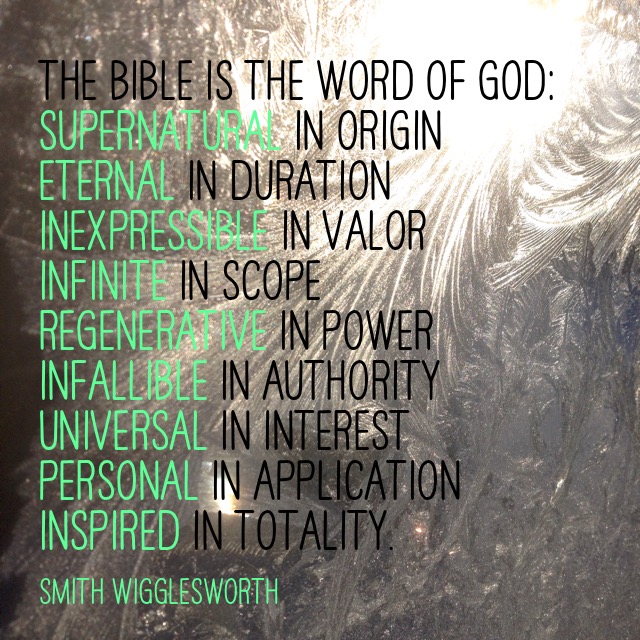
The Bible is God’s love letter to you. I love what Smith Wigglesworth said about the Word of God: 

“Never compare this Book with other books. Comparisons are dangerous. Never think or say that this Book contains the Word of God. It is the Word of God. It is supernatural in origin, eternal in duration, inexpressible in value, infinite in scope, regenerative in power, infallible in authority, universal in interest, personal in application, inspired in totality. Read it through. Write it down. Pray it in. Work it out. And then pass it on.”

I spent a whole week blogging about my favorite Book. You can check out those posts by clicking here. In the meantime, let me encourage you in the strongest possible terms: Make the time to read your Bible every single day. Doing so will totally transform your life!

►► Would you please prayerfully consider supporting this ministry? ◀︎◀︎

God Is One, God Is Love

Listen to the podcast of this post by clicking on the player below, and you can also subscribe on Apple or Spotify.
There is a common characteristic among every human civilization: they all have had a pantheon of gods. It seems that no one god could capture all of the attributes each civilization thought were important, so they created multiple gods to help fill in the gaps. 

Onto the world scene comes the account recorded for us in the Bible of a God who creates the universe. The Hebrew word for this God is elohiym which means “a divine one.” This name is used throughout the Creation story in Genesis 1. 

Then in Genesis 2:4, a new name appears, one that is used over 6500 times in the Bible. It is the unpronounceable name YHWH: often pronounced Yahweh or substituted with the word Jehovah. In most Bible translations this name is designated by all capital letters: LORD. Yahweh or Jehovah means “the existing One.” 

The first part of our second foundational truth states, “The one true God has revealed Himself as the eternally self-existent ‘I AM,’ the Creator of heaven and earth and the Redeemer of mankind.” This Creator is uncreated: He sustains the universe without needing to be replenished Himself. He is utterly complete in Himself; hence, His name means I AM (see Exodus 3:13-15). 

The second part of this foundational truth statement says, “He has further revealed Himself as embodying the principles of relationship and association as Father, Son and Holy Spirit.” 

The I AM is One (see Deuteronomy 6:4), but He reveals Himself in three Persons—Father, Son, Spirit—that we call the Trinity (although this is not a word found in the Bible). 

Sometimes Christians have done a disservice to the I AM by making it appear He is divided. For instance, we might say, “The Father is the Creator, the Son is the Redeemer, and the Spirit is the Regenerator.” But remember that our One God is not a pantheon of gods; He is One. We see the fullness of the Trinity operating in every area. Here’s just a short sampling:  

  • The creation of the universe—Genesis 1:1; Colossians 1:15-16; Psalm 104:30 
  • The creation of man—Genesis 1:26-27 
  • A prophecy about Jesus’ advent—Isaiah 9:6 
  • The incarnation of Jesus—Luke 1:35 
  • The baptism of Jesus—Matthew 3:16-17
  • The resurrection of Jesus—Acts 2:32; John 10:18; Romans 1:4 
  • Our atonement—Hebrews 9:14 
  • A Christian’s baptism in the Holy Spirit—John 14:16 

(You can read all of these verses for yourself by clicking here.) 

A good question for us to ponder is: Why would this I AM God create humans? If He needs nothing to complete Himself or sustain Himself, why make us? 

The apostle John captures the essence of the Trinity in three words: God is love.

God created us out of an overflow of His love so that we too could enjoy the intimate, eternal pleasure of being at-onement with Him forever. God then wants our love to overflow to everyone around us, so that they will also be drawn into this at-oneness with the I AM. 

When Jesus was asked to state the greatest commandment, He first quoted from Deuteronomy 6: “Hear, O Israel: The LORD [Yahweh] our God, the LORD [Yahweh] is one.” Christ’s conclusion was for us to love this All-Loving God with all our heart, soul, mind, and strength. And then Jesus added an obvious overflow of that love: “And love your neighbor as yourself” (see Mark 12:29-31).

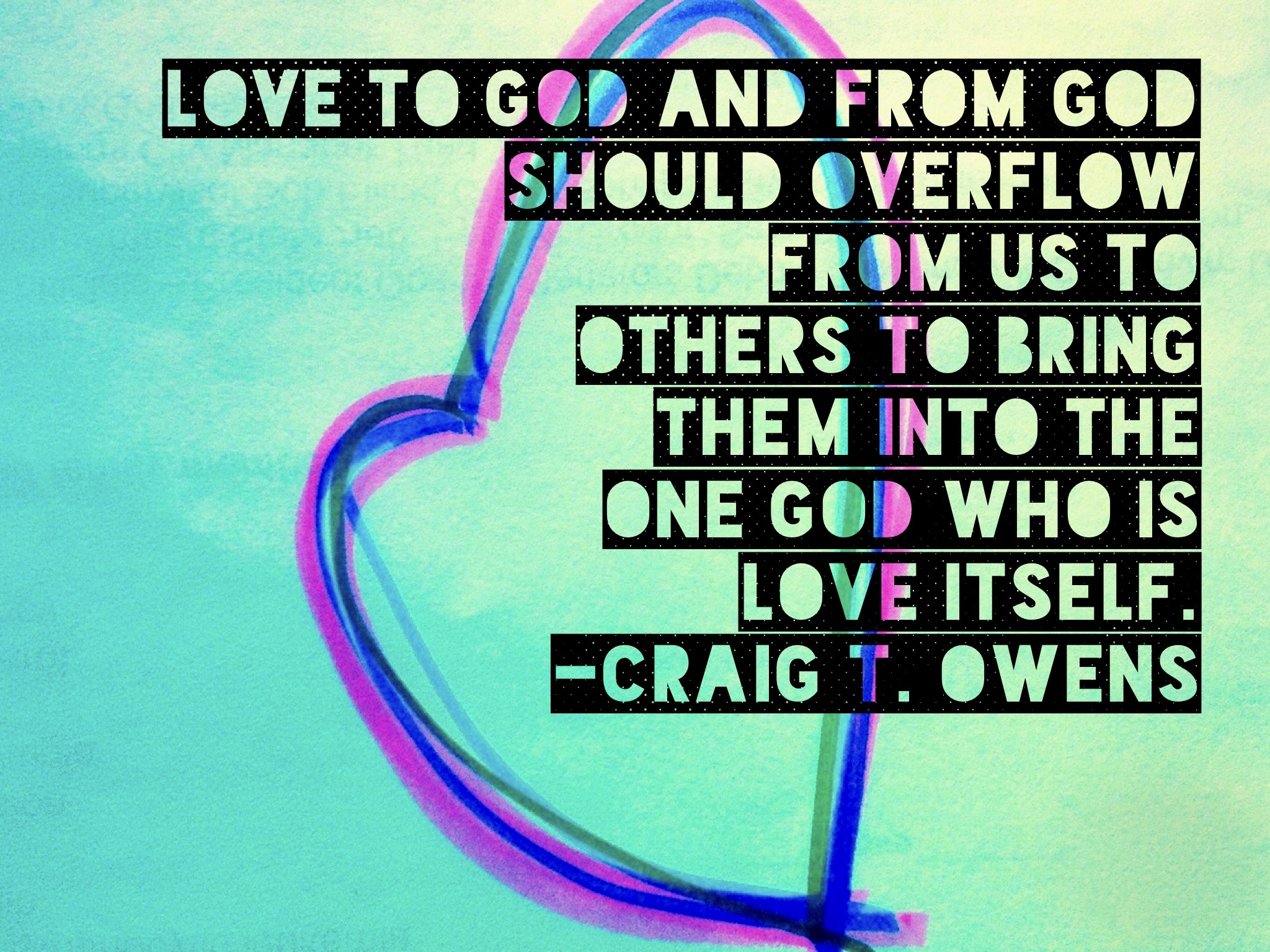
Love to God and from God should overflow from us to others to bring them into the One God who is love itself.  

The more we understand this love that the I AM has for us: (1) the better able we will be to love and worship Him, (2) the more we will love others out of this overflow of love, and (3) the more glory our awesome GOD will receive. Which is exactly what the apostle Paul prayed for us in Ephesians 3:14-19. 

This idea of an I AM God who reveals Himself as Father, Son, and Spirit has been described by the Latin phrase mysterium tremendum. It is indeed a mystery: not one that frightens and confuses, but one that energizes and enlivens. Pray Paul’s prayer for yourself, so that you can see more dimensions of this awesome love that God has for you! 

If you missed any parts of this series exploring our foundational belief statements, you can check out the full list by clicking here.

God Delights In Me

It’s been said that the bookends of success are starting well and finishing well. I believe that! 

David started well when he lifted up a prayer of thankfulness to God when he became king over the united nation of Israel. Prayer at the the beginning puts us on a path toward success. 

Have you ever begun to assemble a child’s toy or a piece of furniture, gotten completely stumped, and only then read the instruction manual? We’ve all been there! There are many things in life that we start on our own and then hit our knees in prayer only after we’ve exhausted all of our human resources. Fortunately, after we pray and God answers, we often end up finishing well with a prayer of praise and thanksgiving. The question is: what do we do when we again get ready to start something else? Do we pause to start well with prayer, or do we dive in on our own again? 

I think one of the biggest reasons we don’t go to prayer quickly is because we feel unworthy to go into the presence of a holy, righteous God. 

One commentator said about Psalm 18 that David probably prayed this “before he committed his terrible sin” with Bathsheba and Uriah. That may be, but with very few minor changes, David prayed this exact same prayer (2 Samuel 22) at the very end of his reign. His reign as king was bookended with the same prayer. 

Between the bookend prayers of Psalm 18 and 2 Samuel 22, David prayed another prayer—this one was after he had sinned against God, Bathsheba, and Uriah. David truly believed that God forgave that sin and wiped the slate clean, so much so that he noted this great blessing on his life: “He brought me out into a spacious place; He rescued me because He delighted in me. 

He rescued me because He delighted in me?! Yes! 

David knew that God had told us that He delights in those who obey Him. The example of God’s delight was seen in Jesus. Because Jesus paid the price for the forgiveness of my sins, I can be completely cleansed. Then Jesus comes in me, and takes me into Him, and takes both of us into the Father. So now when our Heavenly Father looks at a forgiven sinner, He sees only the righteousness of Jesus—something He utterly delights to see! (Check out all of the biblical passages I’m referencing by clicking here.)  

David said his sin had been washed “whiter than snow” (Psalm 51:7), So now look at what he could claim—

The Lord has dealt with me according to my righteousness; according to the cleanness of my hands He has rewarded me. For I have kept the ways of the Lord; I am not guilty of turning from my God. All His laws are before me; I have not turned away from His decrees. I have been blameless before Him and have kept myself from sin. The Lord has rewarded me according to my righteousness, according to my cleanness in His sight” (2 Samuel 22:21-25). 

…according to my cleanness in His sight. 

In GOD’S sight! The devil wants to accuse me. He wants my sight to dominate. The devil doesn’t want me to see myself as God sees me. But I declare it out loud: I am clean IN HIS SIGHT! 

This cleanness allows me full, bold, confident access to Almighty God! I can take everything to God in prayer because I am clean in His sight! 

If you would like to read more of the posts in our prayer series called Be A First Responder, please click here. 

Thursdays With Spurgeon—Seeing God In Jesus

This is a weekly series with things I’m reading and pondering from Charles Spurgeon. You can read the original seed thought here, or type “Thursdays With Spurgeon” in the search box to read more entries.

Seeing God In Jesus 

For it is the God who commanded light to shine out of darkness, who has shone in our hearts to give the light of the knowledge of the glory of God in the face of Jesus Christ. (2 Corinthians 4:6) 

     Paul knew not merely God, but God in Christ Jesus! Not merely ‘the glory of God,’ but ‘the glory of God in the face of Jesus Christ’ (2 Corinthians 4:6). The knowledge dealt with God, but it was Christward knowledge! He pined not for a Christless theism but for God in Christ! This, beloved, is the one thing that you and I should aim to know. …  

     Even when your thought sweeps round the stars and circumnavigates space, you feel that heaven, even the heaven of heavens, cannot contain Him. Everything conceivable falls short of the inconceivable glory of God! When you come, however, to gaze upon the face of Christ Jesus, how different is the feeling! Now you have a mirror equal to the reflection of the eternal Face, ‘in Him dwells in the fullness of the Godhead bodily’ (Colossians 2:9). His name is ‘Wonderful, Counselor, Mighty God’ (Isaiah 9:6). He is the image of God, ‘the brightness of His glory and the express image of His person’ (Hebrews 1:3). If your conception of Christ is truthful, it will coincide with the true idea of God and you will exclaim, ‘This is the true God and eternal life’ (1 John 5:20). Like Thomas, you will salute the wounded Savior with the cry, ‘My Lord and my God!’ (John 20:28). …  

     How softly breaks the divine glory through the human life of Jesus; a babe in grace may gaze upon this brightness without fear! When Moses’ face shone, the people could not look at him, but when Jesus came from His transfiguration, the people ran to Him and saluted Him! Everything is attractive in God in Christ Jesus! In Him we see God to the fullest, but the Deity so mildly beams through the medium of human flesh that mortal man may draw near and look and live. 

From The Glory Of God In The Face Of Jesus Christ

If you would like to know God more intimately, look more closely at Jesus. 

Read through the Gospels slowly, focusing on what Jesus was saying and doing. Let the Holy Spirit transport you to those dusty Israelite roads, where you can walk with Jesus and get a new glimpse of the majestic glory of God.

The Core Curriculum Of The Spirit

“The Law of God teaches us how to love Him and our neighbors (Matthew 22:34-40). The Law of God is critical for seeking the Kingdom of God (Matthew 5:17-19). The Law of God liberates us from the blinding and binding power of sin (James 2:8-13). The Law of God marks the path of love that Jesus walked, and that all must walk who would follow Him (1 John 2:1-6; 5:1-3). The Law of God provided the framework within which the apostles ordered their churches (cf. 1 Corinthians 5, 9; James 2:5; 1 John 5). The Law of God is the core curriculum of the Spirit, as He brings us into the presence of God’s glory and transforms us into the image of Jesus Christ (Ezekiel 36:26-27; 2 Corinthians 3:12-18). Neglecting the Law of God is a major cause for the decline of true and selfless love in the world; it licenses the progress of evil; and it threatens to render the prayers of Law-neglecting believers an ‘abomination’ or, we might say, ‘a dead and a useless thing’ (Matthew 24:12; Proverbs 28:4, 9). 

[all Scriptures from the above paragraph are here]

“It’s no wonder the psalmist, echoing Moses, insisted that the righteous person, the one who embodies the goodness of God in all his ways, meditates on the Law of God day and night, hides it in his heart and embodies it in all his ways (Psalm 119:9-11; Deuteronomy 6:1-9), keeps it diligently, delights in and loves it, and hastens to make sure his feet follow in its path (cf. Psalm 1; Psalm 119:4, 5, 35, 59, 60, 97). 

[all Scriptures from the above paragraph are here]

“If you are missing the Law of God in your relationship with Jesus, you are depriving yourself of a most important resource for bringing the goodness of God to light in the land of the living. The good works outlined in the Law of God are those ‘ordained of old’ which God intends us to do in all our ways (Ephesians 2:10). Yes, understanding the Law can be difficult. But we can learn from the prophets, Jesus, and the apostles how to read, study, and meditate in this most important corpus of Biblical literature, and thus we can discover the true freedom for goodness and love that God has prepared for us.” —T.M. Moore 

Feelings, Facts, and Faith

Confusing times become more stressful—and more confusing!—when the response of people seems to throw more fuel on the fire. Frustration boils up into anger. Confusion gives way to fear. Uncertainty about what to believe or what to do becomes anxiety over what might be coming next. 

You might think I’m describing current events in our country right now. But in times like these we need to remember that there have always been times like these. When I talk about frustration, anger, confusion, fear, uncertainty, and anxiety, I am actually thinking about events that took place over 2000 years ago. 

Like when the residents of Ephesus became Christians and stopped buying idols of Artemis, a huge backlash broke out. “Soon the whole city was in an uproar. … The assembly was in confusion: Some were shouting one thing, some another. Most of the people did not even know why they were there” (Acts 19:29-32). 

Or when some Jews thought Paul had taken some non-Jews into the part of temple restricted to Jews only. “Jews from the province of Asia saw Paul at the temple. They stirred up the whole crowd and seized him, shouting, ‘Fellow Israelites, help us! This is the man who teaches everyone everywhere against our people and our law and this place. And besides, he has brought Greeks into the temple and defiled this holy place.’ (They had previously seen Trophimus the Ephesian in the city with Paul and assumed that Paul had brought him into the temple.) The whole city was aroused, and the people came running from all directions. Seizing Paul, they dragged him from the temple. … Some in the crowd shouted one thing and some another, and the commander could not get at the truth because of the uproar…” (Acts 21:27-34). 

There are three Fs at work here: feelings, facts, and faith. 

Have you heard it said, “Feelings are not facts”? Feeling are a fact to the one experiencing those feelings, so feelings can indeed be facts: subjective facts that are factual to me. 

Facts are not necessarily better than feelings because our facts might come from faulty sources. For example, Trophimos was with Paul, but Paul did not bring him into the restricted area. 

Whether feelings or facts, we need faith in God’s sovereignty. We need to remember: God has a plan, He is in control, nothing takes Him by surprise, nothing derails His purpose, He is intimately aware of everything that is happening. 

The Holy Spirit helps us evaluate both feelings and facts through the filter of truth found in God’s Word. Then the Spirit also gives us faith to stand firm despite the feelings and the facts. 

The Holy Spirit not only helps us pray through these confusing times (Romans 8:27), but He helps us know what’s really behind the confusing times, as well as how we can communicate that truth to others (1 Corinthians 2:10, 13 AMP). 

Probably my favorite promise (which I especially like in the Old English of the King James Version) is this: Ye have an unction from the Holy One, and ye know all things (1 John 2:20).

So I want to encourage you again: Don’t stop at salvation—be baptized in the Holy Spirit and have that unction that will help you with all your feelings and all the facts that are thrown at you. 

If you have missed any messages in this series on Pentecostal Christians, you can find the full list by clicking here. 

What We Can Know

… we know … (1 John 3:16, 19, 24; 4:2, 6, 13; 5:2, 13, 19, 20).

God clearly reveals Himself to us so that it is not a mystery of how to abide with Him. 

The word John uses for “know” in the Greek is ginosko. This is a knowledge through personal, firsthand experience; not knowledge someone told us about secondhand. 

God reveals Himself in Creation, in His law, in the rituals of worship, in our conscience, and in the voice of the prophets. Ultimately—and most unmistakably of all—God reveals Himself in Jesus (John 14:9). 

So here are 8 things we can now know…

  1. We know true love because of the sacrifice of Jesus (3:16; 4:7-10).
  2. We know we have God’s love in us by the way we treat others (3:17-19; 4:11; 4:20-21).
  3. We know our hearts our confident by the inward witness of the Holy Spirit Who assures us that we abide in God and He in us (3:20-24).
  4. We know how to discern deceptive spirits (4:1-6).
  5. We know what it means to be confident on Judgment Day (4:12-19).
  6. We know that loving others fulfills God’s commands (5:1-13).
  7. We know God hears our prayers (5:14-17).
  8. We know that we can be victorious over sin (5:18-21).

WE KNOW!

No doubts, no ambiguity. It’s crystal clear, pure knowledge through Him Who loves us!  

“With-ness”

…fellowship… (four times in 1 John 1:3, 6, 7)

The word “fellowship” is the Greek word koinonia. It means intimacy of relationship.

All of the apostle John’s books carry this key theme: Jesus loves us so this is how we should live differently because of that love. 

Koinonia means giving all I’ve got to someone else, and graciously receiving all they have to give to me. This creates a… 

  • … oneness
  • … togetherness
  • … with-ness

Our with-ness creates a visible witness of God’s love. 

John says that fellowship with God can’t help but be expressed in fellowship with others. And then fellowship with others stimulates us to a deeper relationship with God. This love dance is itself a picture of the Ultimate Koinonia of the Trinity—“I am in You, Father, and You are in Me. These followers of Us are in Me and I in them,” said Jesus.

Don’t try to pursue a relationship with Jesus on your own, but find people that you can be in fellowship with and then watch how that deepens your fellowship with God!