Giving Preference To Others

Listen to the podcast of this post by clicking on the player below, and you can also subscribe on AppleSpotify, or Audible.

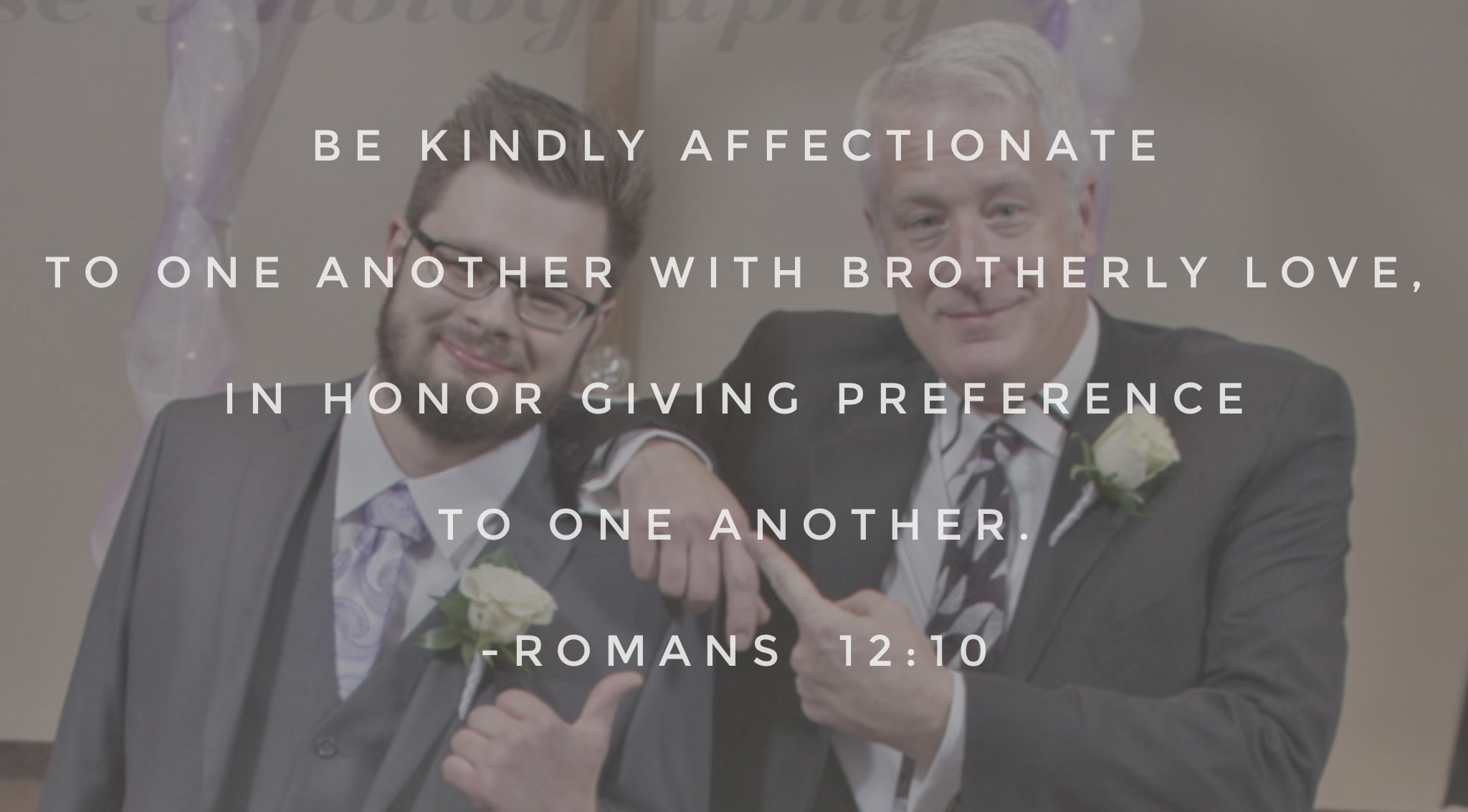
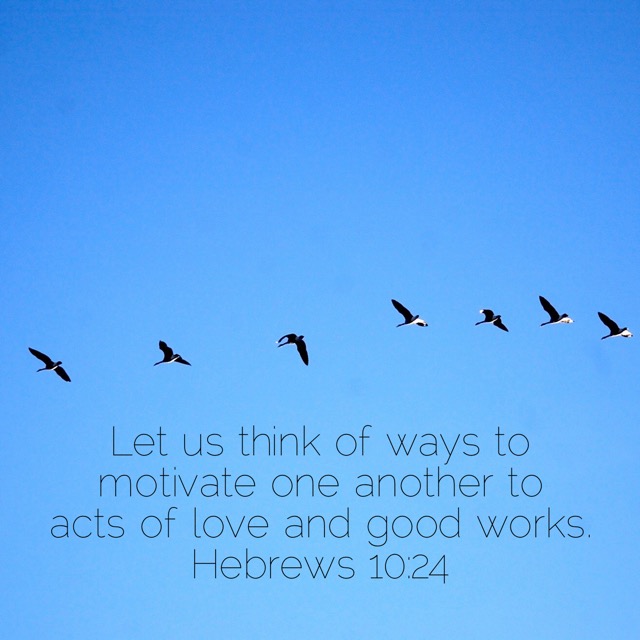
Be kindly affectionate to one another with brotherly love, in honor giving preference to one another” (Romans 12:10). 

What does it mean to give preference to a friend or loved one? Here are a few suggestions to get the ball rolling. 

Giving preference means I am…

  1. …speaking their “language.” I am a classic Doer, which means my style is, “Ready, Fire! aim.” I need to give grace to those who move a bit slower than me.
  1. …moving at their “speed.” My temperament is highly choleric, so I get fired up quickly and attack situations head-on. I need to give grace to those temperaments that are less emotional and want to handle things more strategically. 
  1. …sensitive to their “fears.” It’s insensitive for me to say, “It’s no big deal” about something that troubles them. Empathy is important so I can see and feel things like they see and feel them. 
  1. …helping them battle their “demons.” Perhaps viewing pornography isn’t a temptation for me, but it may be for someone else. So I need to seek out resources and accountability to help them fight this battle like I was fighting my own battle. 
  1. …avoiding their “stumbling blocks.” Perhaps I can watch certain genres of movies without compromising my Christian testimony, but it may cause my brother or sister a lot of grief. If I am going to prefer them in love, I will avoid talking about those movies in their presence, and I certainly won’t try to get them to “lighten up” to see things my way. 

Agape love is never selfish—it doesn’t want “my way” but it wants others to be edified. So, ultimately, what it means to give preference to another is to only promote those things that will build them up. Remember: saints is always plural in the New Testament, so we must build each other up to bring out the saintliness in all of us. 

►► Would you please prayerfully consider supporting this ministry? My Patreon supporters get behind-the-scenes access to exclusive materials. ◀︎◀︎

The Craig And Greg Show: When Craig Met Greg

Listen to the audio-only version of this podcast by clicking on the player below, or scroll down to watch the video.

On this episode of “The Craig And Greg Show” we talk about: 

  • [0:40] Who are we and how did we meet?
  • [2:00] A little bit of Greg’s biography as he headed to college
  • [4:10] A little bit of my biography as I headed to college
  • [5:40] How Greg tweaked his major while at Hope College
  • [6:57] I added an additional major while at Oral Roberts University
  • [7:28] Greg was drafted by two professional sports teams
  • [9:14] Transitions are important for leaders
  • [10:29] Self-reflection + coach ability = superpower 
  • [11:02] Greg’s first business venture was only an entry point to his career
  • [13:37] Another decision further refined Greg’s niche in business
  • [15:03] The unforeseen changes that brought me to West Michigan where I met Greg
  • [15:59] One of the first ministries that we worked on together
  • [20:00] A leadership lesson we tried to teach to the students at an urban youth center
  • [20:40] The dream list for us going forward
  • [22:40] What do we do as consultants?
  • [24:02] Greg has some cool keynote addresses that he presents
  • [25:53] How we can help you grow your leadership capacity

Check out this episode and subscribe on YouTube so you can watch all of the upcoming episodes. You can also listen to our podcast on Spotify and Apple.

Sabbathing For Pastors

Listen to the podcast of this post by clicking on the player below, and you can also subscribe on AppleSpotify, or Audible. 

During a Bible study I was recently leading, I was asked how a pastor finds a day to set aside as a Sabbath day. This is tricky for pastors because Sunday is usually considered a “workday” for us. And even if we can take a “day off” there are still people who need to speak with us.  

Being able to Sabbath is vital for all leaders, but especially for pastors. I spend five chapters in my book Shepherd Leadership talking about the mental, physical, spiritual, and relational health of pastors. If you are a pastor, I encourage you to pick up a copy of my book. If you love your pastor, please get a copy for him or her. 

I was recently interviewed on the Thriving In Ministry podcast specifically on the topic of sabbathing, you can listen to that interview here. You can also check out some other blog posts I’ve written about sabbathing by clicking here.

►► Would you please prayerfully consider supporting this ministry? My Patreon supporters get behind-the-scenes access to exclusive materials. ◀︎◀︎

…The Certainty Of Eternal Light

Listen to the podcast of this post by clicking on the player below, and you can also subscribe on AppleSpotify, or Audible.

Even though Jesus explicitly told His followers about His crucifixion, it was clear on that Friday on Golgotha that they didn’t fully grasp what was going on. 

We see the same thing in Heman’s maskil of Psalm 88: The faint hope that his Savior would rescue him from death, but still not fully grasping what was happening. Just as Jesus cried out, “It is finished” and His disciples thought the darkness had fallen, Heman ends his psalm with, “You have taken my companions and loved ones from me; the darkness is my closest friend” (Psalm 88:18). 

There is the reality of darkness in this world—but it is only temporary darkness. This is why I entitled our look at Psalm 88 as “The reality of temporary darkness” because, in the second part of this couplet of maskil psalms, Ethan moves right into the light of Resurrection Sunday: “I will sing of the Lord’s great love forever” (Psalm 89:1). 

Consider this Good Friday-to-Resurrection Sunday thought from Jesus: “…In the world you will have tribulation; BUT be of good cheer, I have overcome the world” (John 16:33). This tells us of both the temporary darkness and the conquering Light. But also notice that Jesus said our peace would come from knowing that both darkness and light are realities: “These things I have spoken to you, that in Me you may have peace.” Whether we are in temporary darkness or looking forward to the eternal light, our peace is only found in Jesus. 

When the followers of Jesus came to His tomb on Sunday morning, the angels asked them a penetrating question, “Why are you looking for a living Person in a place where there are dead people?” Then they began to stimulate their memory to get them to recall Christ’s words. Finally, we read, “THEN they remembered” (Luke 24:5-8). Then they had to choose to obey the word of God. 

Ethan recalls God’s words and uses his “will” three in the opening two verses. 

The disciples also could bank on Christ’s words, just as Ethan chose to bank on Jehovah’s words. The central part of Psalm 89 is God speaking: Check out His assurance in the “I will” statements within the quotation marks in verses 19-37. Then we are called to Selah to let that soak in. 

Notice what radiates out from this foundational assurance:

  • Ethan uses the pronouns You/Your 20 times in reference to God to assure us that God is in sovereign control (vv. 8b-14). Then he tells us of the blessings of God’s favor on our obedience to His word (vv. 15-18). 
  • On the other side of the central quotation from God, Ethan again uses the pronouns You/Your 13 times in vv. 38-45, but then he tells us of the blessing of God’s discipline on our disobedience.
  • Radiating out further, Ethan asks seven questions—much like his brother Heman did in Psalm 88—in verses 5-8 and 46-48. 
  • Finally, we see the psalm both opening and closing with praising God as we remember His covenant word (vv. 1-4, 49-52). 

Remember we said the darkness cannot prevail. The darkness is temporary (Romans 8:18) but Ethan repeatedly reminds us of God’s foreverness (vv. 1, 2, 4, 29, 52). 

  • The Selah after v. 4 is to pause in wonder at God’s words and break into rejoicing!
  • The Selah after v. 37 is again to pause after remembering God’s covenant, and to reflect on our own obedience or disobedience. 
  • The Selah after v. 45 is a pause to mourn and repent from our disobedience. 
  • The Selah after v. 48 is to pause to reflect on the forgiveness purchased on Calvary and the eternal light and life that bought. 
  • Finally, v. 52 harkens back to v. 1 as the praise is restored and the cycle begins all over again. In fact, the praise of God’s light continues forever! 

Heman and Ethan both remind us of this important truth—

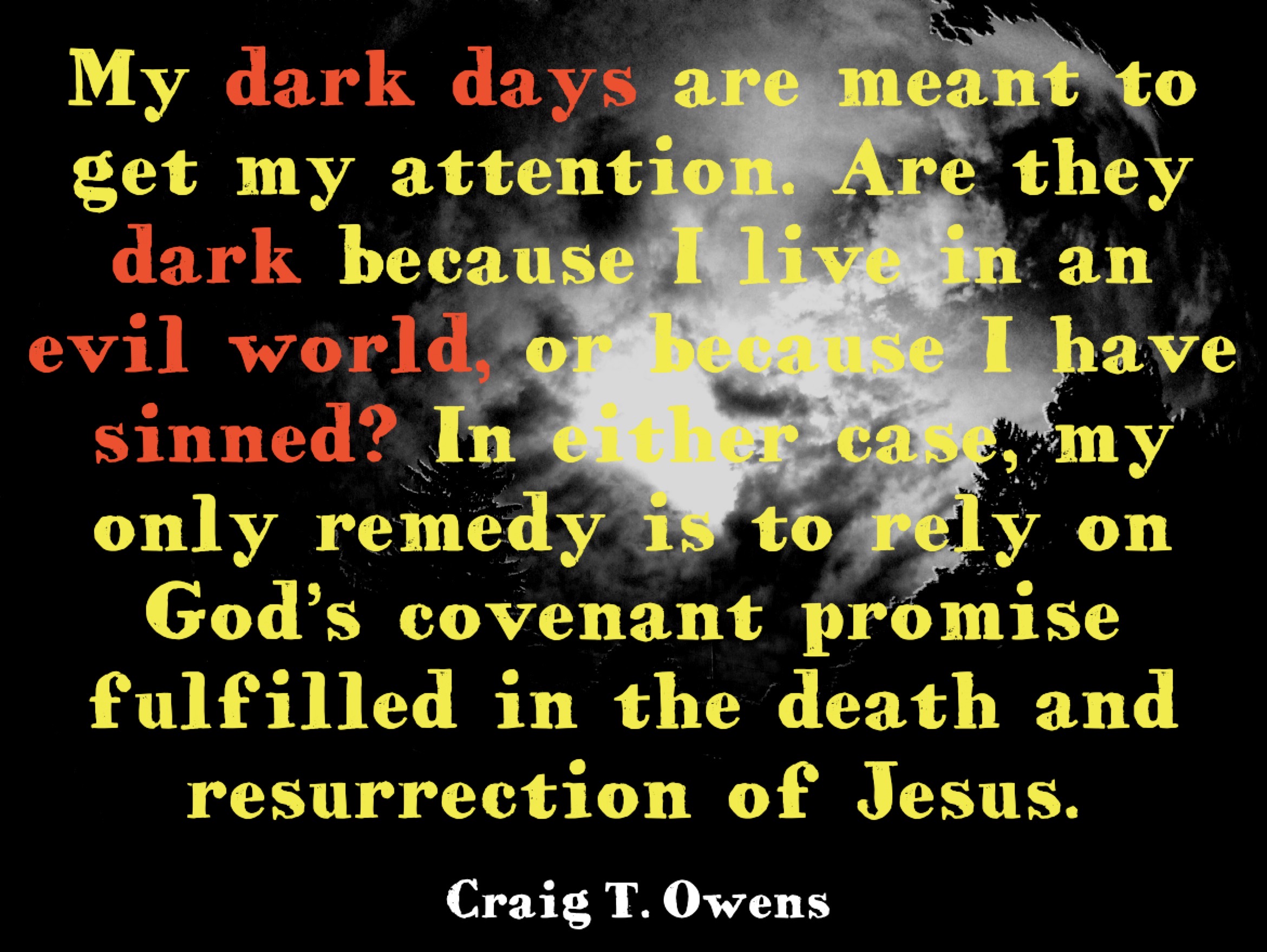
My dark days are meant to get my attention. Are they dark because I live in an evil world, or because I have sinned? In either case, my only remedy is to rely on God’s covenant promise fulfilled in the death and resurrection of Jesus. 

If you’ve missed any of the other messages in our Selah series, you can find a complete list by clicking here.

►► Would you please prayerfully consider supporting this ministry? My Patreon supporters get behind-the-scenes access to exclusive materials. ◀︎◀︎
Links & Quotes

John Maxwell makes it clear in this quote that leaders are to focus on the other person: “Lead according to their dream. Coach according to their weakness. Mentor according to their potential. Delegate according to their strengths. Relate according to their personality.” —John Maxwell 

In my ongoing Monday Motivation video series, I shared one of my favorite Bible verses about mentoring:

A very interesting mini-biography of Alexander Hamilton: American Prodigal—The Rise, Fall, and Redemption of Alexander Hamilton.

“…One of my favorite analogies of prayer is a wartime walkie-talkie. I like to contrast the wartime walkie-talkie of prayer with the domestic intercom. What I like to say is that one of the reasons prayer malfunctions is because people take a wartime walkie-talkie and try to turn it into a domestic intercom, in which they ring up the butler to please bring another pillow to the den. 

“Prayer is not designed as an intercom between us and God to serve the domestic comforts of the saints. It’s designed as a walkie-talkie for spiritual battlefields. It’s the link between active soldiers and their command headquarters, with its unlimited fire-power and air cover and strategic wisdom. When you understand this, you can pray the locks off people’s hearts.” —John Piper

“I do not think that there is any other quality so essential to success of any kind as the quality of perseverance.” —John D. Rockefeller

“Envy is the demand that what will make me happy is what I do not possess.” —Dr. John Townsend

How Nazi rocket scientist Wernher von Braun became a Christian. Here’s an interview by C. M. Ward.

Here is a brief clip from a recent Craig And Greg Show leadership podcast that honors my grandpa’s words and gives something for all leaders to aspire to: honoring others…

Go Deep—Giving And Leadership

According to Romans 12, all Christians have been given a unique gift package by God. We are to use these motivational gifts to make God’s Kingdom more visible and more desirable. 

This week we discuss the gifts of teaching and exhortation. You may download the participant’s notes and the gifts assessment I use in this lesson:

If you missed any of the lessons in this class, you can find them all here.

If you would like to join us in person for this class, here is where you can find us.

Thursdays With Spurgeon—This Bible Is God’s Bible

This is a weekly series with things I’m reading and pondering from Charles Spurgeon. You can read the original seed thought here, or type “Thursdays With Spurgeon” in the search box to read more entries.

Listen to the podcast of this post by clicking on the player below, and you can also subscribe on AppleSpotify, or Audible. 

This Bible Is God’s Bible

     Here lies my Bible—who wrote it? I open it, and I find it consists of a series of tracts. The first five tracts were written by a man called Moses. I turn on and I find others. Sometimes I see David is the penman, at other times, Solomon. Here I read Micah, then Amos, then Hosea. As I turn further on, to the more luminous pages of the New Testament, I see Matthew, Mark, Luke, and John, Paul, Peter, James and others. But when I shut up the Book, I ask myself who is the author of it? 

     Do these men jointly claim the authorship? Are they the compositors of this massive volume? Do they between themselves divide the honor? Our holy religion answers, ‘No!’ This volume is the writing of the living God. Each letter was penned with an Almighty finger. Each word in it dropped from the everlasting lips; each sentence was dictated by the Holy Spirit. Albeit that Moses was employed to write his histories with his fiery pen, God guided that pen. It may be that David touched his harp and let sweet Psalms of melody drop from his fingers, but God moved his hands over the living strings of his golden harp. It may be that Solomon sang canticles of love, or gave forth words of consummate wisdom, but God directed his lips, and made the Preacher eloquent. If I follow the thundering Nahum when his horses plow the waters, or Habakkuk when he sees the tents of Cushan in affliction, if I read Malachi, when the earth is burning like an oven, if I turn to the smooth page of John, who tells of love, or the rugged, fiery chapters of Peter, who speaks of the fire devouring God’s enemies; if I turn to Jude, who launches forth anathemas upon the foes of God, everywhere I find God speaking. It is God’s voice, not man’s. The words are God’s words, the words of the Eternal, the Invisible, the Almighty, the Jehovah of this earth. This Bible is God’s Bible.

From The Bible

I love God’s Book! I hope you love it and love is Author more and more. 

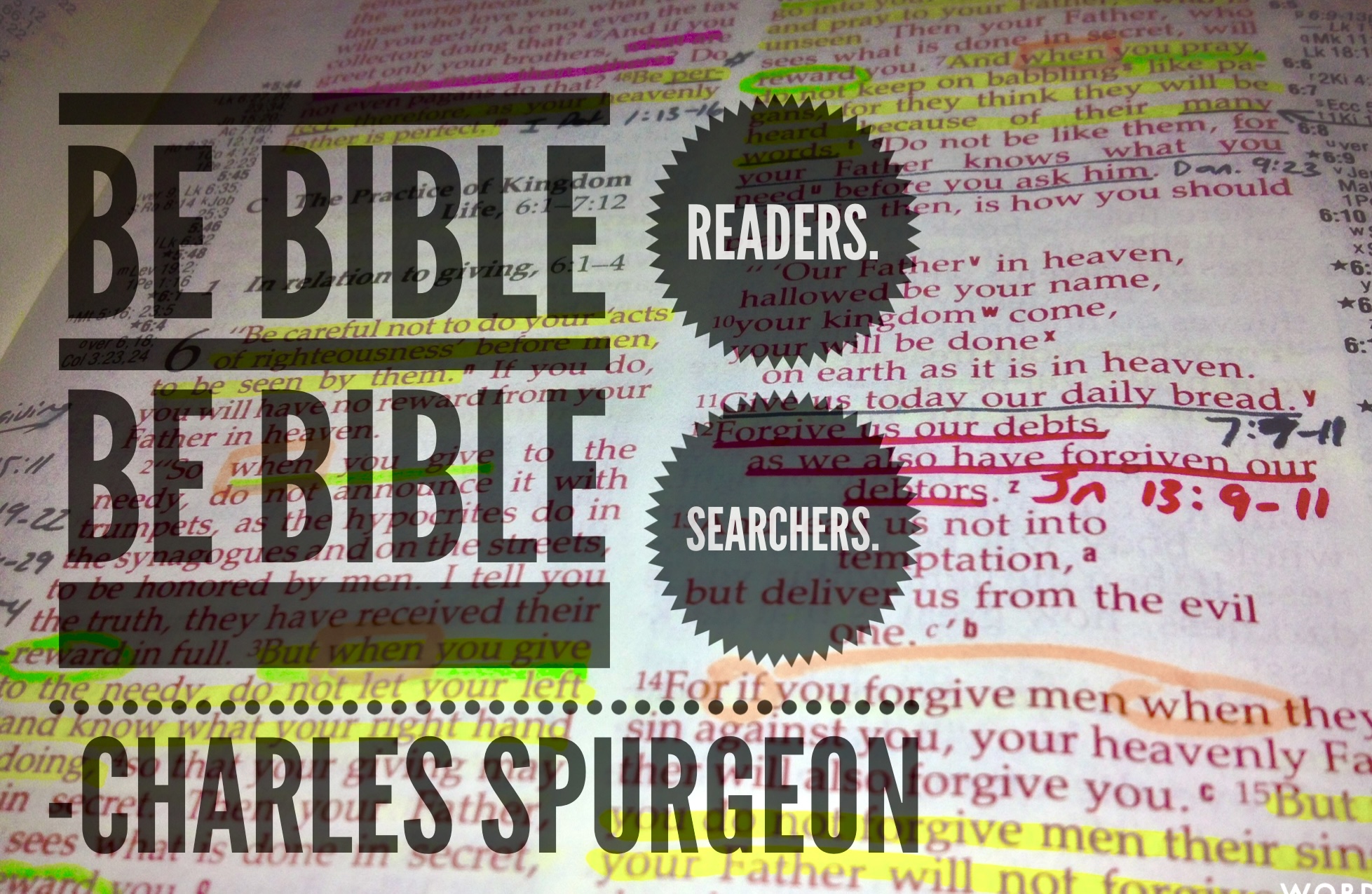
One final word from Charles Spurgeon: “Be Bible readers. Be Bible searchers.” 

To that, I can only say, “Amen!”

►► Would you please prayerfully consider supporting this ministry? My Patreon supporters get behind-the-scenes access to exclusive materials. ◀︎◀︎

When Non-biblical Becomes Unbiblical

Listen to the podcast of this post by clicking on the player below, and you can also subscribe on AppleSpotify, or Audible. 

I have written before about the difference between terms that are biblical, unbiblical, and non-biblical. It is very important for us to keep these terms straight, especially so for those in leadership positions. 

The problem becomes very challenging when non-biblical issues are given biblical status, and as a result, people begin to respond in a decidedly unbiblical way. 

In a recent talk that I gave to some ministry interns, I unpacked this idea in more depth. 

►► Would you please prayerfully consider supporting this ministry? My Patreon supporters get behind-the-scenes access to exclusive materials. ◀︎◀︎

“Let Us” Be The Church

Listen to the podcast of this post by clicking on the player below, and you can also subscribe on AppleSpotify, or Audible. 

I had a great time on the 200churches podcast with Jeff Keady. 

Jeff asked me what was different for our church during the pandemic shutdowns. I explained to him how our season of change had begun long before anyone was even talking about a coronavirus.

Of course one of the big things in my personal life during the last year was authoring a #1-selling book called Shepherd Leadership: The Metrics That Really Matter. As I commented to Jeff, those “let us” phrases in the Book of Hebrews so struck me that I wrote about it in my book. 

     Have you noticed that the word “saints” in the New Testament is always in the plural, never the singular? That’s because we need each other to bring out the saintly qualities in each other. This is why the writer of Hebrews stresses the camaraderie of “let us” so many times (Hebrews 10:22–25). I’ve found that many shepherd leaders tend to isolate. They are so involved in their own pasture of ministry that they seldom make the time to interact with other shepherds. In fact, isolation is one of the devil’s favorite tactics. I encourage you to find friends—fellow saints—who are also committed to healthy spiritual growth and avail yourself of their friendship and insight. —an excerpt from the chapter ‘Four Elements to Optimal Spiritual Health’ 

“Let us” be the church wherever God places us and however He chooses to use us. 

I’ll be sharing more clips from this 200churches interview soon, so please stay tuned. Shepherd Leadership: The Metrics That Really Matter is available in print or ebook, and in audiobook through either Audible or Apple. 

►► Would you please prayerfully consider supporting this ministry? My Patreon supporters get behind-the-scenes access to exclusive materials. ◀︎◀︎

The Reality Of Temporary Darkness…

Listen to the podcast of this post by clicking on the player below, and you can also subscribe on AppleSpotify, or Audible.

A father came home from work and noticed a note addressed to him taped to his teenage son’s door:

Dear Dad, 

Jason and I borrowed Mom’s car to go to Taco Bell. I know I didn’t have permission, but I thought we’d be back before you and Mom got home. Unfortunately, I hit a pothole and blew out the front right tire. 

We jacked up the car to put on a spare tire, but the jack slipped and the car rolled backward into the ditch. 

Bill came with his pickup to pull us out, but the tow strap pulled off the front bumper and the car rolled further down the hill and sunk in the pond. 

I bought a bus ticket to get out of town and go enlist in the Army. Give Mom a hug and I’ll see you both in about 2 years. 

Love, your son

P.S. None of the above is true. Mom took her car to Aunt Jan’s house and I rode my bike to Jason’s house. However, I hope the fact that none of these bad things actually happened will help you put in perspective the D+ on my report card. 

We like to manage expectations, don’t we? We frequently deliver bad news with the good news close by. 

Psalms 88 and 89 are written by brothers: both of them are called Ezrahite, and both of them were worship leaders in the tabernacle. And until Solomon, these guys were considered the wisest in the land (1 Chronicles 2:6; 15:19; 1 Kings 4:29-34). 

I believe these two psalms form a couplet. They make up the last two psalms of Book III in the Psalter, with Psalm 89 ending with, “Amen and Amen.” Both of them label their psalms a maskil which means “a poem of contemplation” (NKJV). And look how Psalm 88 leaves us in the dark, while Psalm 89 shines a light in the dark.

In Psalm 88, Heman soberly prepares us for his two-Selah psalm in his introductory remarks. He uses a phase mahalath leannoth which means someone who is so physically weak from emotional grief that they are now battling depression. The NLT calls it “the suffering of affliction.”  

Heman is describing a reality: We will all experience pain in this life. Maybe even for our entire earthly life—from my youth I have been afflicted and close to death (v. 15). Heman’s reality is seen in his words in the first five verses of this psalm. 

His first Selah is breathtaking because he wants us to pause to realize that God has allowed all of this (notice the pronoun You in vv. 6-8, 16-18). But still, Heman knows God saves because he has made a decision to continue to praise Him even in the dark times (vv. 1-2, 9, 13).  

Heman’s second Selah comes in the middle of a series of five questions (vv. 10-14) that sound a lot like both questions Jesus asked in Gethsemane and from the Cross, and the reality of the temporary darkness He was facing (Psalm 22:1-2; Luke 22:53; John 19:11). 

Even the way Heman closes his psalm foreshadows the darkness surrounding the death of Jesus: “My God, My God, why have You forsaken Me? 

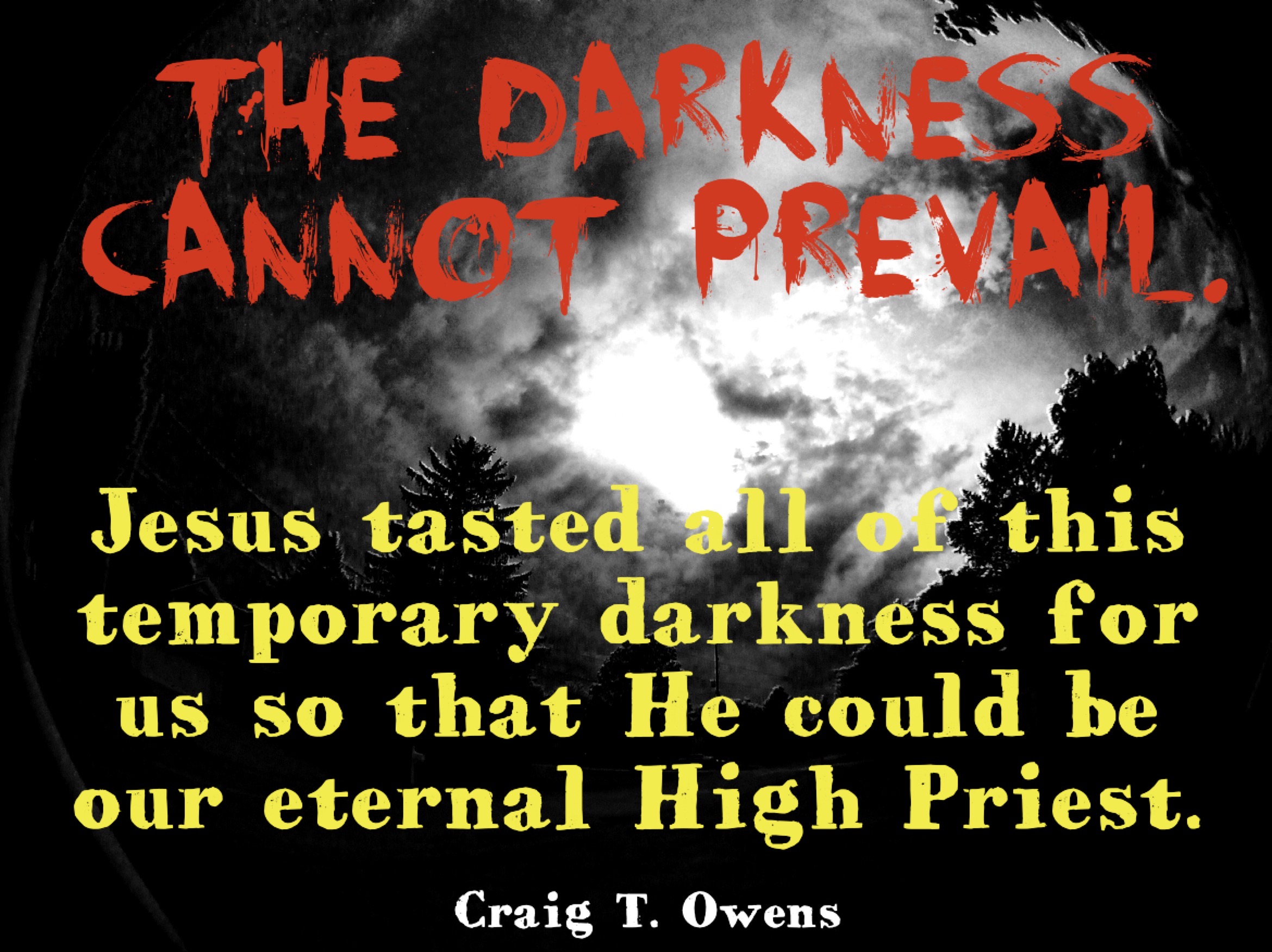
Jesus tasted all of this darkness for us so that He could be our perfect and empathetic High Priest (Hebrews 5:7, 4:15-16). 

Psalm 88 shows us the reality of temporary darkness (like Good Friday), but Psalm 89 points us to the certainty of eternal light (like Resurrection Sunday)! 

So when you are battling your dark times, let me give you these assurances: 

  1. This darkness is only temporary (Romans 8:18) 
  2. Jesus walks with us in our dark times (Romans 8:26-39)
  3. The darkness cannot prevail—Jesus tasted all of this temporary darkness for us so that He could be our eternal High Priest!

If you’ve missed any of the messages in our Selah series, you can check them out by clicking here. Please join me on Sunday when we will look at Ethan’s words in Psalm 89 about the certainty of the eternal light. 

►► Would you please prayerfully consider supporting this ministry? My Patreon supporters get behind-the-scenes access to exclusive materials. ◀︎◀︎