…with Your mouth You have promised and with Your hand You have fulfilled it… (2 Chronicles 6:15).
I rest solely on what God says—He says it and He fulfills it.
I can live on “every Word” He speaks (Deuteronomy 8:3).
“Every Word” of God is flawless and is a protection for me (Proverbs 30:5).
None of God’s Word ever fail (Isaiah 55:11).
God gives us His Word to speak (Jeremiah 26:12; John 12:49; Luke 21:15).
We defeat our enemies by God’s Word in our mouth (Matthew 4:4, 7, 10; Revelation 12:11).
Every Word of God gives life because of the Holy Spirit’s anointing on it (John 6:63).
Every Word of God is a sword (Hebrews 4:12; Revelation 1:16; 2:12, 16; 19:15). Or as my friend Sasha reminds me God’s Word is our S(word)!
There isn’t a more effective shield against enemies, there isn’t a more deadly weapon against temptation, there isn’t a more sure foundation in storms than the Word spoken and fulfilled by God!
Horatius Bonar has given us a collection of sermons preached to pastors, which have been collated in a book under the title Words To Winners Of Souls.
Although these were words by a pastor to pastors, this shouldn’t be a book exclusively read by pastors. Anyone who wants to successfully share their Christian testimony with unsaved friends and loved ones can find much to digest in these sermons. That being said, this is still a must-read (and I don’t say that very often) for those in pastoral ministry.
Bonar was a no-pulled-punches preacher! He spoke candidly and forcefully, but he also spoke out of a love for the Body of Christ and its ministers. Early on in this book he says, “We take for granted that the object of the Christian ministry is to convert sinners and to edify the body of Christ. No faithful minister can possibly rest short of this. Applause, fame, popularity, honor, wealth—all these are vain. If souls are not won, if saints are not matured, our ministry itself is vain.” Wow: “our ministry itself is vain”—you cannot get more gut-level honest than that!
In this collection of messages, Bonar helps us diagnose what may be hindering our soul-winning practices, and he also proposes the remedy for those shortcomings. These words are honest and often hard to hear, but they are so needed for everyone who desires, as Jesus does, “that none should perish but all should come to repentance” (2 Peter 3:9).
Pastors, please read this book!
Parishioners, please get a copy of this book for your pastor and then offer to prayerfully read through it with him or her. I promise you: this book will pay eternal dividends.
Near the end of the movie The Princess Bride, the grandson learns that Wesley, the hero of the story, has apparently died. He asks his grandfather, “Who kills Prince Humperdink,” the arch-villain in the story.
His grandfather replies, “No one. He lives.”
“You mean he wins!?” blurts out the exasperated boy, “Grandpa, why did you read me this story??”
We love to see bad guys get what’s coming to them, don’t we? Some of the baddest bad guys—perhaps in all of history—are the kings of Assyria. When the Assyrians in Nineveh repented and God’s judgment didn’t fall on them, Jonah’s response was much like the grandson in The Princess Bride, “God, why did You send me here?!”
For Judah, this is a short-lived victory because the two kings which follow Sennacherib turn out to be two of the evilest and ruthless kings of Assyria. Yet Nahum’s prophecy still stands: an ultimate destruction is coming. In 605 BC Assyria was defeated by the Babylonians, and the destruction was so complete that Nineveh’s very existence was questioned until archeological discoveries were made in the 19th century.
Why is this prophecy given to us? What are we New Testament Christians supposed to do with this promise of judgment?
Nahum’s name means comfort, so it seems like God’s justice should comfort us. But, interestingly, the root word of his name means to regret or to feel sorry.
Why is this? Think about it: You cannot really know what peace is unless you have been through a period of turmoil. Likewise, you cannot truly understand the relief of being spared God’s judgment unless you fully understand the weight and totality of God’s judgment that should fall on you.
Assyria’s utter destruction is less than a drop in the bucket compared to eternal separation from God. As C.S. Lewis commented about the end of time:
“For this time it will be God without disguise; something so overwhelming that it will strike either irresistible love or irresistible horror into every creature. It will be too late then to choose your side. There is no use saying you choose to lie down when it has become impossible to stand up. That will not be the time for choosing: it will be the time when we discover which side we really have chosen, whether we realized it before or not. Now, today, this moment, is our chance to choose the right side. God is holding back to give us that chance. It will not last forever. We must take it or leave it.”
Today (and every day) is the day for heart-searching, acutely feeling the regret of our sin, and then knowing that our forgiven sins are forgotten sins!
the 3 Ts that help make teams stronger and more effective
how leaders can help teammates who make a mistake
the strategic importance of “timeouts”
the importance of a leader’s confident humility
the attractiveness of a team’s enthusiasm
an insightful quote from Rich DeVos
Check out this episode and subscribe on YouTube so you can watch all of the upcoming episodes. You can also listen to our podcast on Spotify and iTunes.
O Lord my God
When I in awesome wonder
Consider all the worlds Thy hands have made
I see the stars
I hear the rolling thunder
Thy power throughout the universe displayed
Then sings my soul
My Savior God to Thee
How great Thou art
How great Thou art (Carl Boberg)
Galaxies and snowflakes.
Volcanoes and water geysers.
Summer and winter.
Day and night.
Puppies and mosquitoes.
Red blood cells and white.
Me.
You made them all.
You know them all.
You are in them all.
How great Thou art!
I want to praise You more.
To praise You more,
I must know You more.
To know You more,
I must experience You more.
Give my eyes sharper sight.
My ears more attentive hearing.
Give my tongue better tasting.
My nose more acute smelling.
Give my skin more sensitive feeling.
All my senses more keenly aware of all Your creation.
More aware of my Creator in creation.
You are in every sight.
Sound.
Taste.
Smell.
Touch.
You are in all.
Today I want to experience You more.
To praise You more.
To know Your greatness more.
To realize Your love more.
How great Thou art! —Craig T. Owens
s
This is a weekly series with things I’m reading and pondering from Charles Spurgeon. You can read the original seed thought here, or type “Thursdays With Spurgeon” in the search box to read more entries.
God’s Part, Our Part
The lesson is clear to all: The wind turns mills that men make. It fills sails that human hands have spread. And the Spirit blesses human effort, crowns with success our labors, establishes the work of our hands upon us, and teaches us all through that ‘the hand of the diligent makes rich’ (Proverbs 10:4). And ‘if anybody will not work, neither shall he eat’ (2 Thessalonians 3:10). …
Let us do our part faithfully, spread every sail, make all as perfect as human skill and wisdom can direct, and then in patient continuance in well-doing await the Spirit’s propitious gales, neither murmuring because He tarries nor being taken unawares when He comes upon us in His sovereign pleasure to do that which seems good in His sight.
From The Holy Spirit Compared To The Wind
We cannot do what only God can do, and God will not do what we are supposed to do. It is the Holy Spirit who can help us keep those two thoughts clear.
It’s wrong to say, “God only helps those who help themselves.” But it’s equally as wrong to say, “I don’t need to do anything except wait for God.” In example after example in the Bible we see people doing their part while at the same time believing for God to do something miraculous:
King Josiah was the last God-fearing king Judah had. After Josiah died, “the peopleof the land” made Jehoahaz king of Judah. He only reigned three months.
After Jehoahaz died, “Pharaoh Necomade Eliakim son of Josiah king” after Egypt subdued Judah. Pharaoh changed his name to Jehoiakim, took all of Judah’s treasures, and imposed a tribute on Judah, forcing Jehoiakim to tax all the citizens.
Later on, Jehoiakim became a vassal king of Nebuchadnezzar. After Jehoiakim died, his son Jehoiachin only reigned as king for three months before he was deposed by Nebuchadnezzar.
Nebuchadnezzar then “made Mattaniah” king. He also imposed tribute and changed the king’s name to Zedekiah.
King Zedekiah rebelled and was executed, after which Nebuchadnezzar “appointed Gedaliah as governor.” Gedaliah was assassinated shortly thereafter, completing the collapse of Judah and sending the people into exile in Babylon for the next 70 years.
Oh, what misery for the people of Judah for this last 20-year span under these final kings! The consequences of the leaders’ continual rebellion against God brought such uncertainty and heartache for the citizens.
A mark of a godless leader is the wake of misery that follows him for generations afterward.
Lord God, help me to see that my actions today have consequences for tomorrow. I want to leave an empowering, God-honoring legacy for the next generations, but this can only happen as I remain obedient to You!
This is part 51 in my series on godly leadership. You can check out all of my posts in this series by clicking here.
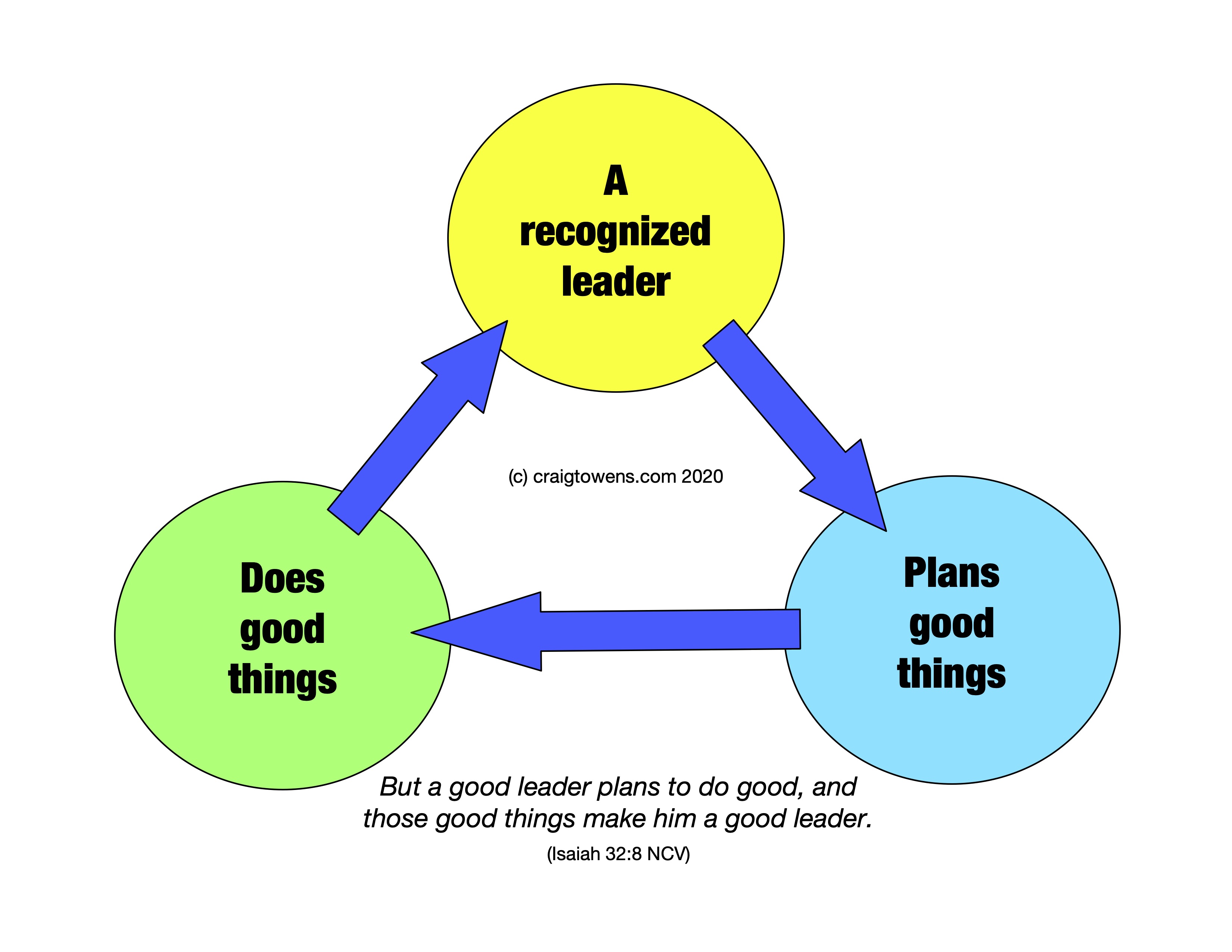
But a good leader plans to do good, and those good things make him a good leader. (Isaiah 32:8 NCV)
A recognized good leader → Plans good things → Does good things → which makes that leader more recognizable, and on and on it goes.
A good leader has to make good plans and has to followthrough on those good plans in a good way. The leader may have started off with just the title of “leader” but the good followthrough on good plans will help that leader be recognizedby others as a good leader.
That recognition of a leader by his/her teammates makes it that much easier the next time to make the good plans and then followthrough on them.
This is a virtuous cycle that pays dividends for everyone involved!
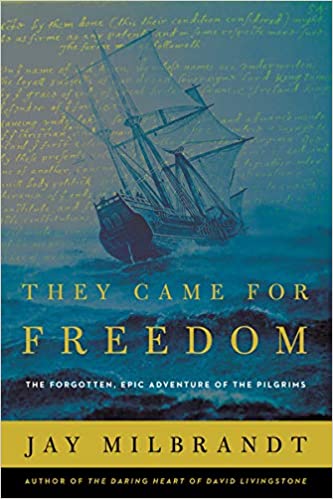
I was first introduced to Jay Milbrandt through his book The Daring Heart Of David Livingston. I was so captivated by Jay’s writing style that I had to seek out more of his books. They Came For Freedom is the story of the first pilgrims that came to this land we now call the United States of America.
Jay uses his training as an attorney to sift through the voluminous historical documentation that was available for him to use in the writing of this book. Just as an attorney is trained to evaluate the evidence to be presented in court in light of the biases of a witness, Jay does the same thing with the many people who documented the story of the pilgrims.
What Jay really wanted to try to capture in this history was the reasons why people wanted to come to this new world. Were there religious motivations? Were there commercial considerations? Were they just adventurers or maybe malcontents? So Jay goes back further into history to set the stage and give us some of the motivations that went into the decision to make such an arduous voyage across the Atlantic Ocean.
In reading this book, undoubtedly you will hear some names of people and places that sound familiar to you. But I’ll bet you are going to see these people and places in a way that your school history books never presented. I found this book absolutely fascinating! I felt about They Came For Freedom the same way I did about Jay’s book on Dr. David Livingston: This is history that reads like a novel.
You may think the story of the first pilgrims coming to these shores is so well known that this book isn’t going to be worth your time, but I can assure you that you are guaranteed to learn something you never knew before. Well done, Jay!
Micah the prophet’s name means who is like God, or more literally: “who but God?” The implied answer, of course, is no one!
Micah opens his letter by telling us his name, and then he closes his prophetic words with a play on his name when he says, “Who is a God like You?” (7:18-20). Who else but God could…
…pardon sin?
…forgive transgressions?
…not stay angry at sinners?
…delight to show mercy?
…have such boundless compassion?
…tread our sins under His foot?
…hurl our iniquities into the sea?
NO ONE!
In light of this, how should we respond to this amazing God? Micah asks a series of rhetorical questions about what sort of religious practices would somehow “balance the scales” for God’s amazing gifts to us. But here’s the deal: there is no way for us to balance the scales! Instead, Micah tells us this, “God has showed you what is good. What does the Lord require of you? To act justly, to love mercy, and to walk humbly with your God.”
In other words, our response to God’s invaluable gifts must transition from a have to lifestyle to a get to lifestyle! Micah makes it clear that God’s Spirit empowers us to live this way (Micah 3:8).
It is the Holy Spirit who empowers Christians to act justly, love mercy, and walk humbly with our God.
The apostle Paul agrees with Micah, even echoing some of Micah’s own phrases—God’s great love, His rich mercy, His unearned grace, His forgiveness of sin, His kindness, and His salvation (Ephesians 2:4-10). Why did God do all of this? So that we could “do good works”—like acting justly, loving mercy, and walking humbly—“which God prepared in advance for us to do”!
I am saved by graceSO THAT I am free to do grace-filled, Spirit-empowered, good things.
All of this prompts me to ask myself three introspective questions:
Do I continually remind myself that I was saved by grace and not by works? I need to check my have to vs. get to attitude.
Am I aware that people are watching me? What are they seeing? Do they see godly justice, loving mercy, and humility?
Am I living like Jesus? Peter explained that Jesus “went around doing good and healing all who were under the power of the devil, because God was with Him” (Acts 10:38). Can that be said of me too?
Who but God could call us, forgive us, and forget our sins? NO ONE!
Who but God could empower us to live in such a way that others see His greatness too? NO ONE!
Let’s never, ever become self-reliant or works-dependent (that’s have to living), but let’s stay so Spirit-reliant that we cannot help be get to people!



 …with Your mouth You have promised and with Your hand You have fulfilled it… (2 Chronicles 6:15).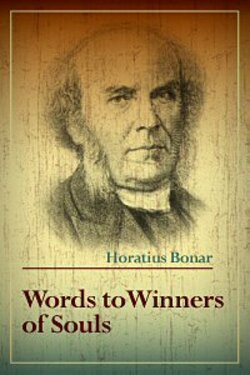


 Puppies and mosquitoes.
Red blood cells and white.
Puppies and mosquitoes.
Red blood cells and white.
 You are in every sight.
Sound.
Taste.
Smell.
Touch.
You are in all.
Today I want to experience You more.
To praise You more.
To know Your greatness more.
To realize Your love more.
How great Thou art! —Craig T. Owens
You are in every sight.
Sound.
Taste.
Smell.
Touch.
You are in all.
Today I want to experience You more.
To praise You more.
To know Your greatness more.
To realize Your love more.
How great Thou art! —Craig T. Owens



 Craig T. Owens