Check out this episode and subscribe on YouTube so you can watch all of the upcoming episodes. You can also listen to our podcast on Spotify and Apple.
Listen to the podcast of this post by clicking on the player below, and you can also subscribe on Apple or Spotify.
When I see words like truly (3 times), surely (2 times), and yes (1 time) occurring so frequently in a rather short psalm, it catches my attention. Combined with the call for a Selah pause another two times in this twelve-verse psalm, and this is clearly a chapter that we should read slowly and deliberately.
Because of these words truly and surely, I find five truisms that David makes clear to us, and I also find that they are linked together in a beautiful circular chain.
Truism #1—God keeps me secure. He alone is my source of security (vv. 1-2).
Truism #2—Evil people are envious of a righteous person’s secure position and will try to pull them down (vv. 3-4). When this happens I need to take a Selah pause to remember Who holds me secure.
Truism #3—These attacks by evil people do not put my security in jeopardy, but instead it gives me a been-there-done-that testimony to share with others (vv. 5-8). Again, I need to Selah to remember that my challenges are often for the benefit of others as much as they are for my strengthening.
Truism #4—Poor people are not excluded from God’s help, and rich people are not above God’s help (vv. 9-10). God sees every human being as infinitely valuable.
Truism #5—God is both All-Loving and All-Powerful. He gets the final word on both judgment and reward (vv. 11-12). This fifth truism should refuel my understanding of the first truism—that God holds me securely—which continues my confident journey through this chain of beautiful truisms all over again.
Listen to the podcast of this post by clicking on the player below, and you can also subscribe on Apple or Spotify.
I have some sobering news for you: You are going to die.
Death is the great equalizer. It comes for the rich and poor, the scholar and the illiterate, all races, all ages, the healthy as well as the sick. Unless you’re still alive when Jesus comes back again, your odds of dying are 1-in-1.
What happens “on the other side”? What happens after this life is over? Since it seems dark and mysterious to most people, they tend to ignore it until it’s thrust upon them. That’s why I find the dying words of people interesting. Like P.T. Barnum asking, “How were the receipts today at Madison Square Garden?” or W.C. Fields reading a Bible on his deathbed and telling a friend, “I’m looking for a loophole.”
Jesus is steeped in Scripture, so nearly everything He says in His final four declarations come directly from the Psalms, including His final phrase which comes from Psalm 31:5.
When Jesus broke a three-hour silence with His cry, “My God, My God, why have You forsaken Me,” both Matthew and Mark use the Greek words megas phoné to describe how loudly Jesus spoke. And now with His final words, Luke uses the same megas phoné description.
Notice in the first megaphone cry Jesus calls on God the All-Powerful Creator. And with His last megaphone declaration, He calls on His Father who is All-Loving. How comforting it is to know that God is both All-Powerful and All-Loving! Not only can He answer our cries, but He delights to answer them!
The word Jesus uses for “commit” is in the future tense and it means “to entrust as a deposit.” Jesus believed that God was going to do more than just give Him life again, but that He would give life to all who would believe in Him.
Unlike atheist Bertrand Russell who said, “I would never die for my beliefs because I might be wrong,” Jesus DID die for His beliefs, and by rising from the dead proved He was right in trusting God.
Job saw an inescapable death for all mankind, but he also foresaw the forgiveness of God (Job 14:5, 16-17). Jesus died once for all mankind and was then resurrected, bringing about the death of death by making forgiveness accessible to anyone (Hebrews 9:27-28; 1 Corinthians 15:19-22).
We can now have the peace that comes from trusting the only One to Whom we can safely entrust our souls. Because Jesus brought death to death, we can have the same peace when we die that Jesus had when He died.
With faith in Jesus, you can…
…live today knowing you’re invincible until God calls you home
…live today full of joy because your home in heaven is secure
…live your very last day in peace because you know to Whom your soul is entrusted
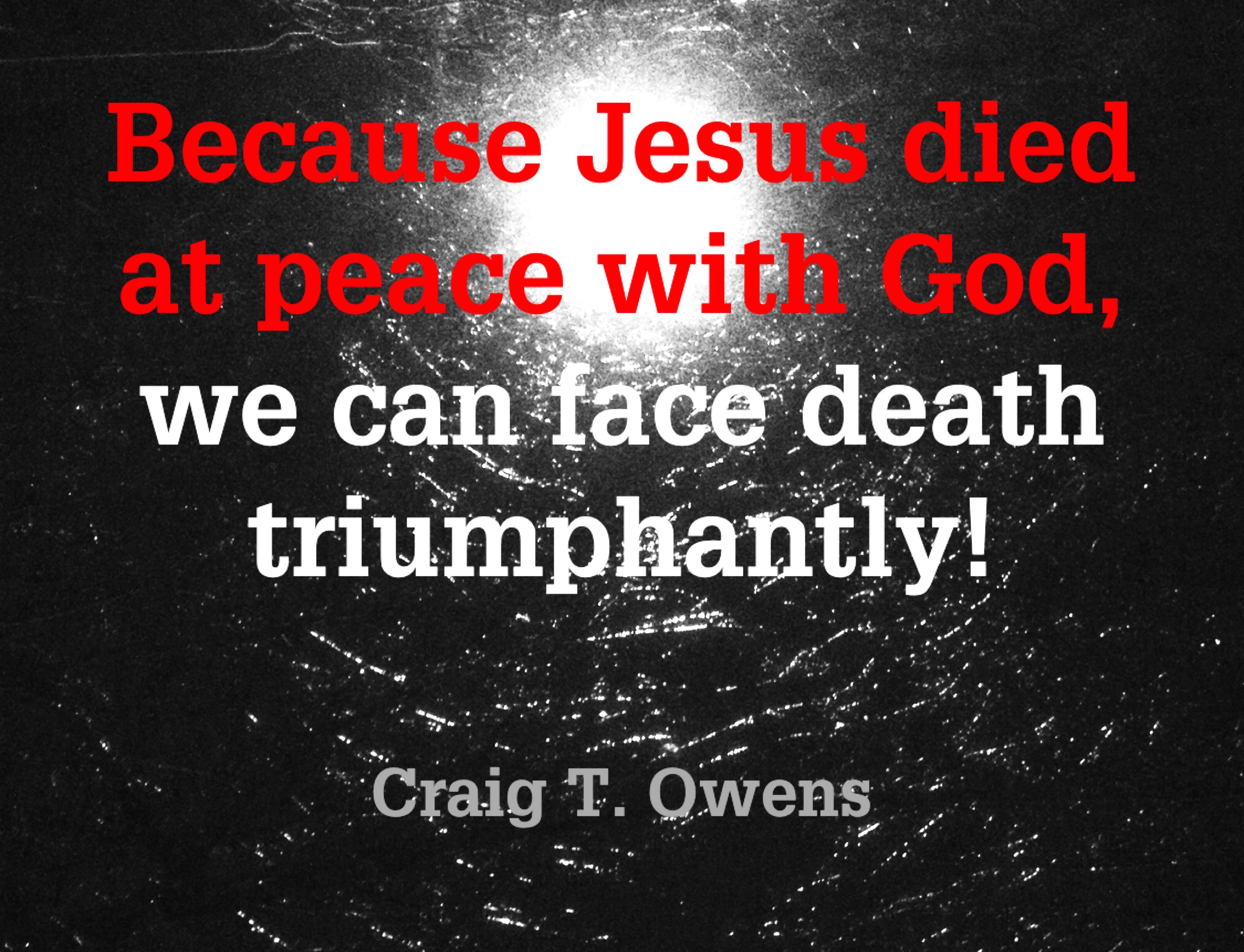
Because Jesus died at peace with God, we can face death triumphantly!
Today you will be with Me in paradise—only in Luke
Dear women, behold your son—only in John
My God, My God, why have You forsaken Me?—only in Matthew and Mark (and this is the only dying declaration they record)
I thirst—only in John
It is finished—only in John
Father, into Your hands I commend My spirit—only in Luke
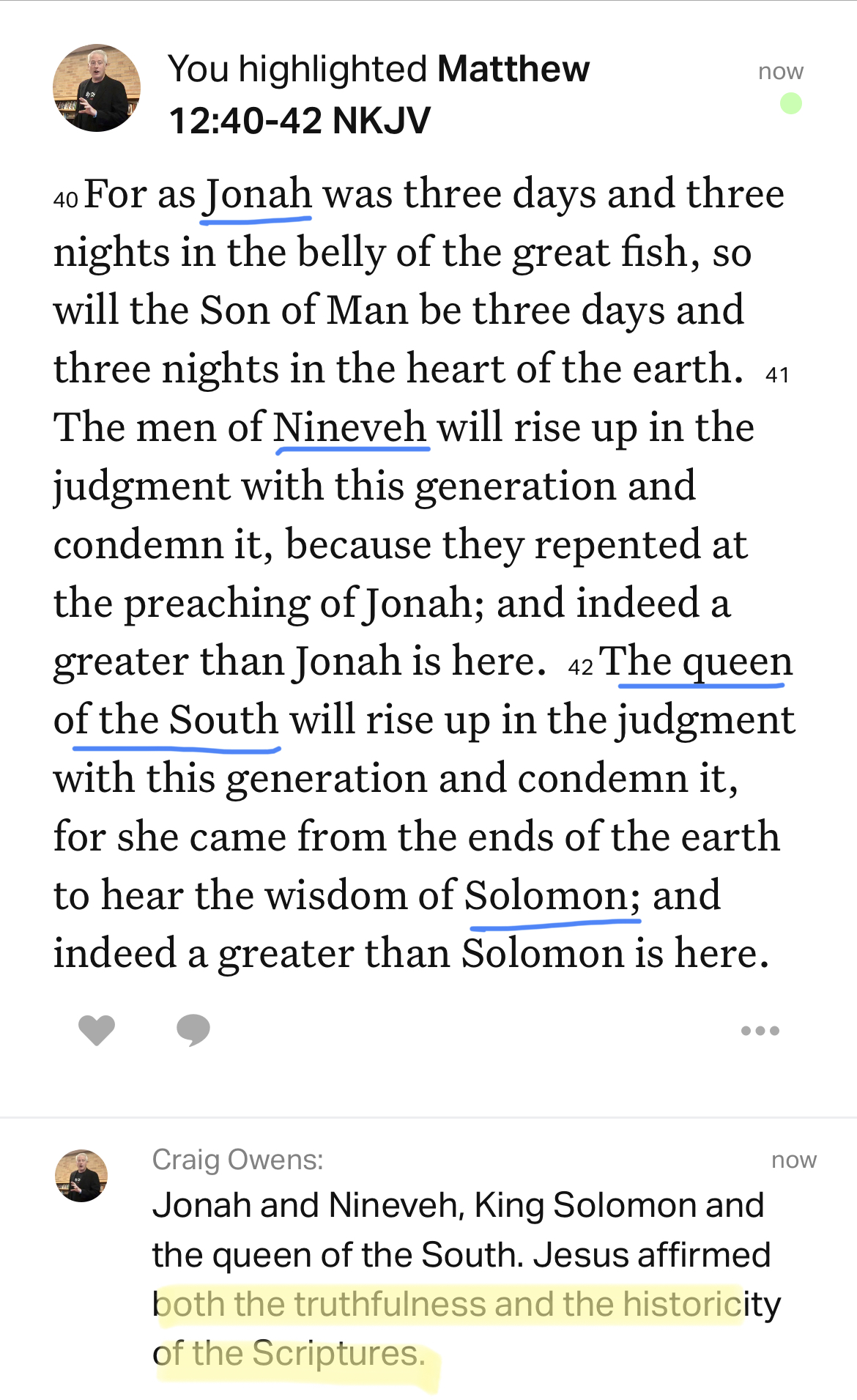
This is an excellent apologetic for the legitimacy and authenticity of the historical record.
You know that when your friends are at an important event, not everyone notices the same thing or even to the same extent as the others.
Cold-case detective J. Warner Wallace has pointed out that when he’s conducting an investigation, he separates the eyewitnesses from each other exactly so they don’t get their stories to “match.” Detective Wallace is able to get the full story precisely because of the differences in each of the accounts.
This is why the Gospel writers’ accounts ring true: they tell us the same historical event from their unique perspectives. It’s only by reading all of them that we get the full picture. If the death and resurrection of Jesus had been a conspiracy, these writers clearly would have collaborated to “get their story straight” ahead of time, and as a result, we would have four identical stories.
The historicity of Jesus as told in the Bible is spot-on and completely trustworthy!
Listen to the podcast of this post by clicking on the player below, and you can also subscribe on Apple or Spotify.
Just before Jesus said, “I am thirsty,” John tells us that Jesus knew everything written about Him in the law had been completed and all of the prophecies about Him had been fulfilled. Jesus knew this to be true but no one else standing there would have said “Aha!” because of that statement. But Jesus left no doubt for any of us when He next said, “It is finished!”
These three English words are just one word in Greek: tetelestai. It’s in the perfect tense, telling us that nothing more needs to be added to Christ’s work. It not only shares the same root word that John uses for completed and fulfilled, but it closes the circle of another dying declaration of Jesus when He quoted Psalm 22:1: “My God, My God, why have You forsaken Me?” His “It is finished” statement is also the last verse of Psalm 22.
The root word telos translated as completed, fulfilled, and finished has a very rich meaning. Here are three definitions we should consider:
(1) To complete or bring to a conclusion
Jesus told His Father that He had finished (telos) His mission (John 17:4). Q: How do we know His mission was completed? A: Jesus sat down! Think about this: There were no chairs in the Old Testament temple because a priest never rested, there was always more work to do. But when Jesus finished His work, He sat down (see Hebrews 10:1-4, 11-12).
(2) To discharge a debt
Since Jesus was the only One who could make the final “once for all” payment, that means that we were hopeless debtors prior to that. God foretold of His forgiveness using the picturesque language of a debt being “doubled up” when it was paid in full (see this video where I explain this concept more fully). Here’s what Jesus did:
Having cancelled and blotted out and wiped away the handwriting of the note with its legal decrees and demands which was in force and stood against us. This note with its regulations, decrees, and demands He set aside and cleared completely out of our way by nailing it to His cross. (Colossians 2:14 AMP)
In this case, Jesus took what was missing by switching cups with us. He drank the cup of God’s righteous wrath—which was justly ours—and gave us His cup of righteousness in its place! (see Isaiah 51:17-22; Matthew 26:39).
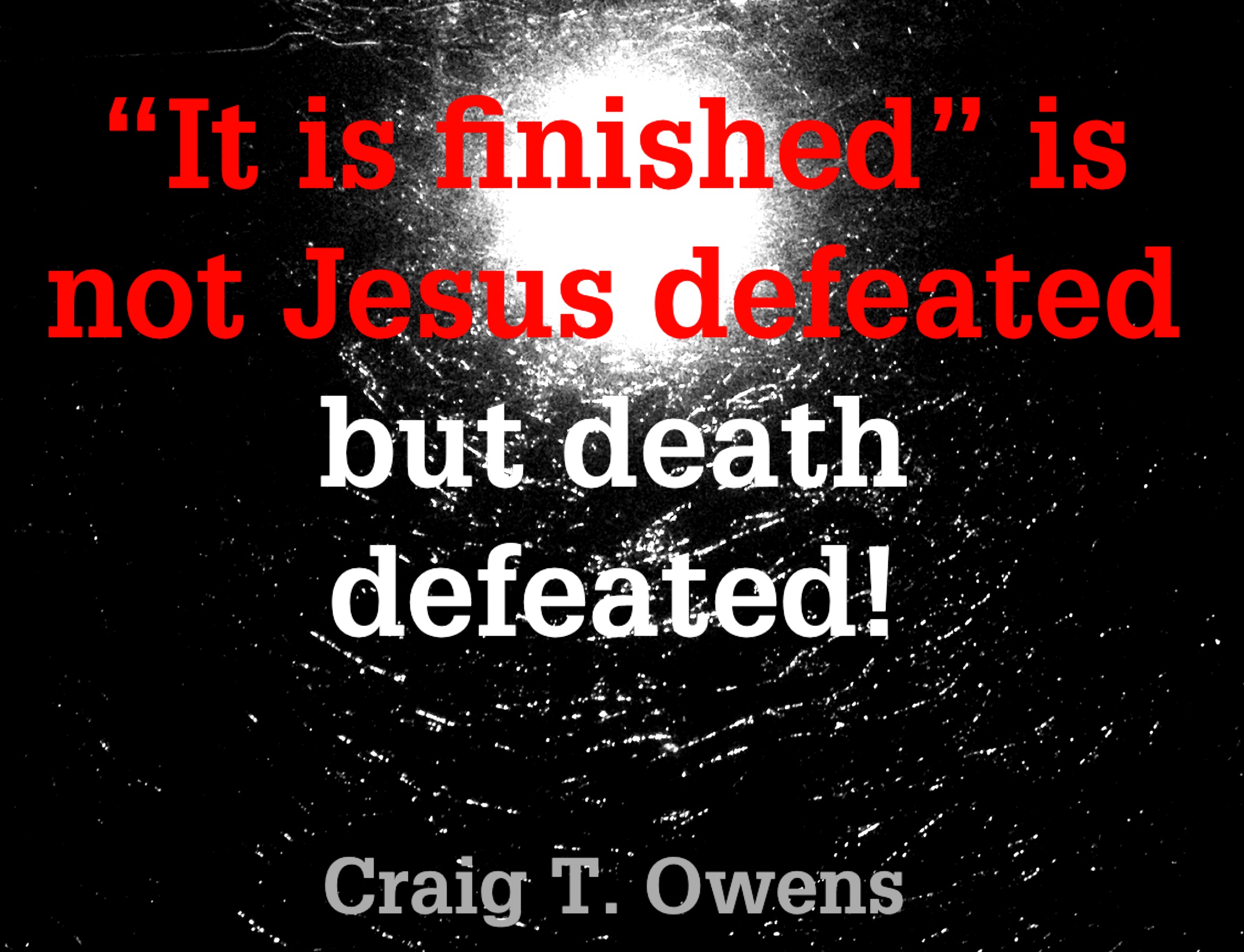
Q: How do we know we have a cup of righteousness in place of a cup of wrath? A: Dead saints of God were resurrected when Jesus died. “It is finished” was not Jesus giving up, but death giving up … it was not Jesus defeated, but death defeated!
Jesus paid it all! There is nothing I can do to add to His completed—tetelestai—work, so I can now do what formerly was impossible: I can live a holy life for God’s glory. I can now finish (telos) my race on earth and receive the rewards God has stored up for me (see 2 Timothy 4:7-8).
Christ’s tetelestai confession is our empowerment to live holy!
laughing is good for your health—both physical health and emotional health
we wonder about the statute of limitations on some pranks with which we may have been involved
laughter triggers endorphins in us but also triggers the mirror neurons in others
we announce a really fun contest!
Check out this episode and subscribe on YouTube so you can watch all of the upcoming episodes. You can also listen to our podcast on Spotify and Apple.
Listen to the podcast of this post by clicking on the player below, and you can also subscribe on Apple or Spotify.
Jesus has just broken a 3-hour silence with His megaphone-voice cry: “My God, My God, why have You forsaken Me?” Now His final three statements will follow in rather short order, beginning with, “I am thirsty.”
It might seem trivial that Jesus expressed His desire for a drink, especially since He also knew that there was no thirst-quenching water nearby. Far from being trivial, however, this was eternally important because it completed His mission.
Before saying, “I am thirsty,” John tells us that Jesus knew “that all was now completed.” The Greek word for know is sometimes translated as “see” and sometimes “know.” When it’s “see” it’s always in the past tense—“saw” or “have seen.” Perhaps in His 3-hour silence, Jesus was reviewing His earthly life, looking back to see what He had accomplished. Make no mistake about it, Jesus was on-mission for all 30+ years of His life in Israel.
But now that He has seen His life, He “knows.” This word is in the perfect tense. He’s seen it all and He knows He has accomplished all He set out to complete. As He had told His audience earlier in His life, “For assuredly, I say to you, till heaven and earth pass away, one jot or one tittle will by no means pass from the law till ALL is fulfilled” (Matthew 5:18).
In looking back on His life, Jesus saw one final thing: He needed to be given vinegar to drink just as David prophesied (Psalm 69:13-21). With that sour sip, ALL the Ts are crossed and ALL the Is are dotted!
When John writes, “Knowing all was now completed, and so the Scripture would be fulfilled,” he uses the Greek word which means mission accomplished!
Why did Jesus need to fulfill ALL the prophecies and complete ALL the law? Check out His earlier statement from the Amplified Bible: “For truly I tell you, until the sky and earth pass away and perish, not one smallest letter nor one little hook identifying certain Hebrew letters will pass from the Law until all things it FORESHADOWS are accomplished.”
The law was just our temporary guardian and the temple practices were just a shadow of the realities of Heaven (see Galatians 3:23-25; Hebrews 10:1-10). ALL of them were merely pointing to Jesus, so Jesus made sure ALL of them were completed.
His “I am thirsty” statement was really His “Amen” to His completed mission.
Jesus fulfilled every Scripture so that we could stand on every promise!
Check this out: “For no matter how many promises God has made, they are ‘Yes’ in Christ. And so through Him the ‘Amen’ is spoken by us to God” (2 Corinthians 1:20).
The shadows of the law were turned into the substance on which we can come boldly before the throne of God’s grace! In just three words—“I am thirsty”—Jesus completed His mission for God’s glory and for our eternal help!
Listen to the podcast of this post by clicking on the player below, and you can also subscribe on Apple or Spotify.
Contend, Lord, with those who contend with me; fight against those who fight against me. (Psalm 35:1).
This psalm is in a category called an imprecatory psalm, which is the theological way of saying, “Get ‘em, God!”
Does it sound unusual to your ears to pray a prayer like that? After all, aren’t we as Christians commanded to forgive those who offend us? How do we square that teaching of Jesus with these brutally honest prayers that David offers up?
Always remember that imprecatory psalms are spoken exclusively to God, notto our enemies. So when we pray these prayers, we are really turning the matter over to God. God does the contending and the vindicating—He knows best how to dispense the appropriate judgment.
David also shares with us several introspective prayers throughout the Book of Psalms, where he asks the Holy Spirit to search him. This heart-searching is interwoven in this imprecatory prayer of Psalm 35, as it should be with our prayers too.
Notice that David can only say these things with integrity because he had already allowed the Spirit to search his heart, and then he had asked forgiveness and he had repented from any sin (see Psalm 139:23-24; Matthew 5:22-24; 6:12, 14-15). David could point out with a clear conscience what his enemies were doing because David was innocent of these actions himself. Things like…
their attack was without cause (v. 7)
their accusations were purposefully designed to entrap him (v. 11)
they were repaying David’s good work with evil deeds (v. 12)
David had attempted to treat them well (vv. 13-14)
they gleefully piled on more slander when David stumbled (v. 15)
the enemy’s mocking was malicious (v. 16)
they hated me without reason (v. 19)
they invented false accusations against David (v. 20)
After his imprecatory prayer, David resolves to turn his eyes from the bad guys to God. He declares that worship of God will be his comfort (v. 28). What a great example for us still today!
When you are falsely, unfairly attacked, take these three actions:
Introspection. Ask the Holy Spirit to search your heart, and then quickly take action where necessary: Ask forgiveness, and repent from sinful thoughts, words, and actions.
Pray. Remember to share your hurts with God alone. There is no need to unleash your anger on those who have attacked you.
Worship. As long as my focus is on my trespassers, my focus is off my God. I cannot be consumed by thoughts of “them” because then I rob myself of thoughts of Him!
Please keep these God-honoring action steps in mind the next time you are unfairly attacked.
Listen to the podcast of this post by clicking on the player below, and you can also subscribe on Apple or Spotify.
“Jesus is risen indeed!” This is the glorious good news that Christians around the world celebrate.
But good news is really only good news when you fully realize how bad the bad news was. Like when the doctor comes in to tell you, “You’re going to be fine,” and you breathe a sigh of relief. And then the doctor goes on to explain what your condition was and all of the heroic efforts that were undertaken on your behalf, and you realize how close to death you actually were that your sigh of relief turns into a shout of joy!
Our fourth foundational belief says: “Man was created good and upright…. However, man by voluntary transgression fell and thereby incurred not only physical death but also spiritual death, which is separation from God.”
They sinned. “And sure enough, they then had knowledge of good and evil, but it was from the standpoint of becoming evil and remembering how good they once were,” said Nancy Guthrie. Because they sinned, now all of us are unable not to sin. Why? Because no one has been able to demonstrate to us how to be able not to sin.
Their sin had consequences for them that have extended to us:
they felt shame at their vulnerability before God
they were fearful to be in God’s presence
they were separated from God
and they doomed all of us to live an utterly meaningless existence forever!
But Adam and Eve’s sin didn’t send God scrambling for a remedy. Our fifth foundational truth says: “Man’s only hope of redemption is through the shed blood of Jesus Christ the Son of God.”
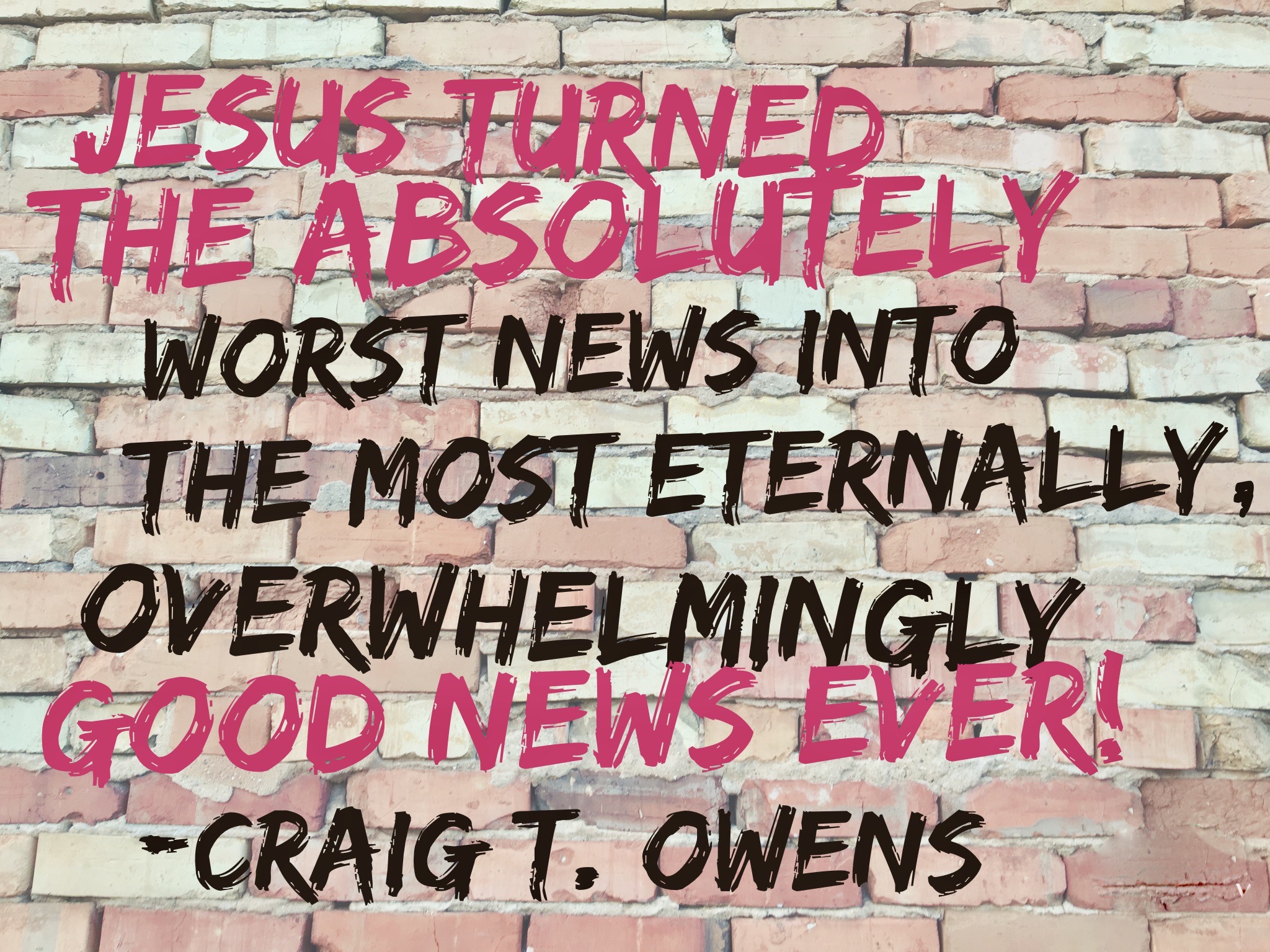
Jesus turned the absolutely worst news into the most eternally, overwhelmingly good news ever!
Jesus was made the cure for sin from before the foundation of the world. God made Jesus to be our sin (not just to carry our sins). In order for this to happen, Jesus had to become human like us. That means that Jesus, like Adam and Eve, had the same choice to sin or to not sin but He did not sin. This allowed Him to be our perfect sacrifice on the Cross.
When He died on the Cross, Jesus removed the uncrossable abyss between us and God. Jesus made it possible once again for us to be able not to sin. Not only that, but Jesus covers the shame that would linger even after our sin is forgiven by clothing us in His own righteousness!
Sin had us doomed to not only a meaningless existence on earth, but also to an utterly meaningless existence for the eternity following death. Jesus became our sin to allow us to be reunited with God and reclothed in Christ’s righteousness. This is not just good news, it’s eternally, overwhelmingly good news!



 I open with a fabulous quote from Greg







 Craig T. Owens