When Your Walking Is Your Praying

Have you ever been in the right place at the right time to experience something wonderful? Maybe you got to meet someone important, or you got the job, or you got the money, or you got to ride in that fancy car. 

Some will call you “lucky” or say you “caught a break,” but both of those statements imply that something unexpected happened to you. 

Is it still “lucky” to be in the right place at the right time if you knew ahead of time that it was coming? For praying Christians, to be in the right place at the right time when we are expecting God to provide is called “an answer to prayer.” 

David prayed, “In the morning, Lord, You hear my voice; in the morning I lay my requests before You and wait expectantly” (Psalm 5:3). The Aramaic word for prayer means “to set a trap.” If we pray, and we live in expectation, then it isn’t luck when we’re in the right place at the right time, but it’s a “trap” that caught the answer to our prayer. 

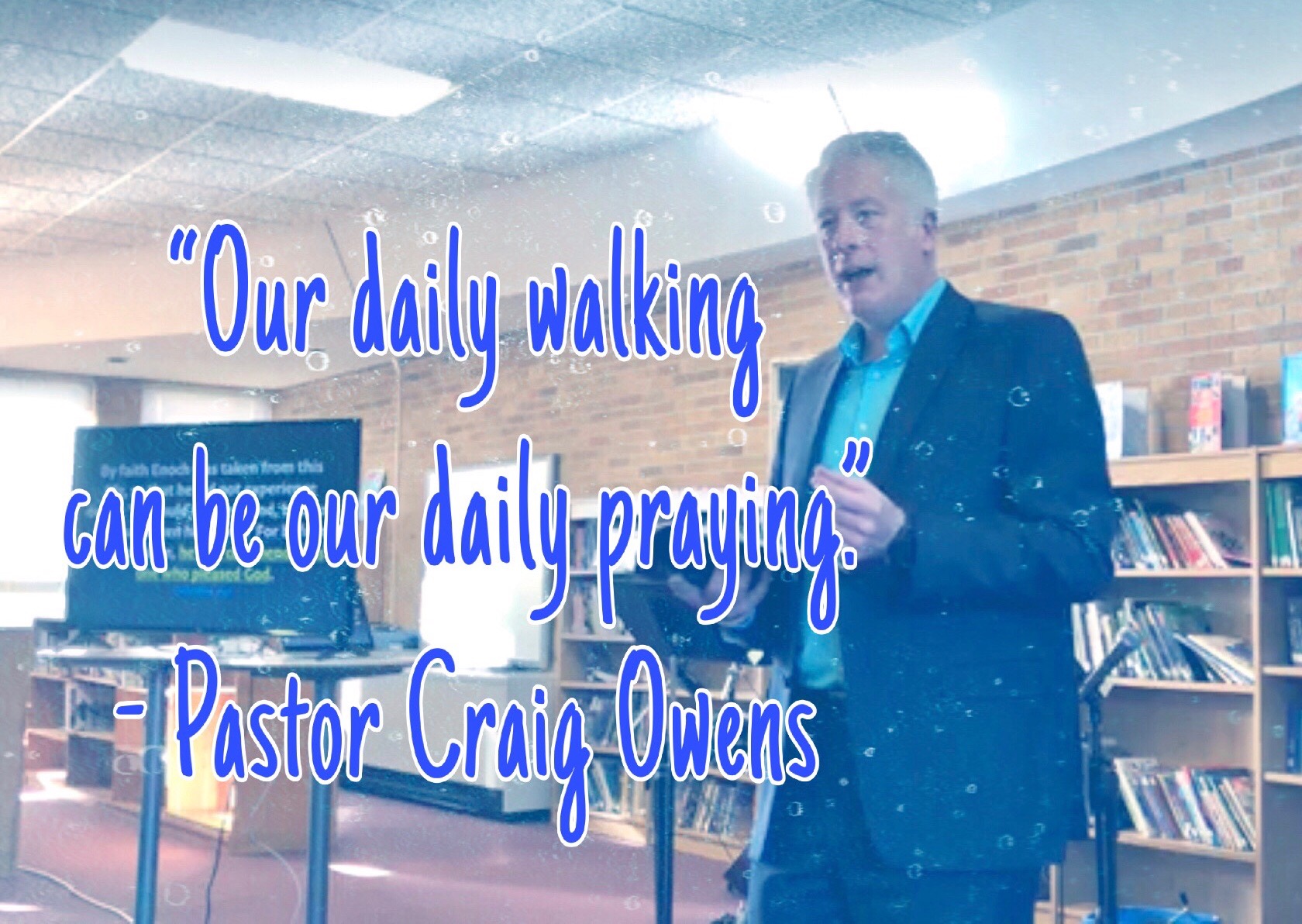
Our daily walking can be our daily praying, as long as we’re walking in faith in the direction God pointed us. 

One man who—literally!—walked this principle out was Elisha.

Before we look at Elisha’s expectant, prayerful walking, let’s look at his prayer request—

When they reached the other side, Elijah said to Elisha, “What can I do for you before I’m taken from you? Ask anything.” Elisha said, “Your life repeated in my life. I want to be a holy man just like you” (2 Kings 2:9 MSG).

Elisha was essentially asking to be like Elijah’s firstborn son, to be his spiritual heir. This was the original promise God gave when He told Elijah to anoint Elisha as his successor (1 Kings 19:16). From that point onward, Elisha steadily walked in expectation of God answering this prayer. 

Elisha wouldn’t stay in a place of military victory, or in a significantly spiritual place, or even in a place surrounded by godly leaders. Elisha wouldn’t be held back by a lucrative family business, or the warning words of friends or his spiritual mentor, or even the seemingly uncrossable Jordan River. He kept on walking (see 2 Kings 2:1-15).

He kept on walking.

He kept on walking until “suddenly” God showed up and answered his prayer. 

But was it really “suddenly”? Elisha knew it was coming. He believed what God had promised. He clung to it even when Elijah told him he had asked “a difficult thing.” Elisha kept on walking until he was in the right place at the right time to receive all that God had planned. 

If you have prayed in faith, start walking. Settling anywhere else is robbing yourself of a blessing and robbing God of glory. 

Just keep walking! And let your walking be your praying. Don’t get discouraged. Don’t settle. Don’t stop eagerly expecting that the next step you took could be the “suddenly” you’ve been waiting for. Just keep walking!

Join me this Sunday as we learn a valuable lesson from another bold pray-er from the Bible. 

No Asterisks

This past Christmas I was quite surprised to receive a package in the mail. It was something I ordered as a Christmas gift for my wife. 

Sort of. 

It was actually half of what I thought I ordered. I went back online and discovered some “fine print” that I hadn’t really noticed earlier. 

You’ve probably experienced that too—asterisks … fine print … footnotes … hidden fees … “limits and exclusions may apply” are all so frustrating!

Unfortunately, we get so used to these things that we begin to—consciously or subconsciously—plug them into places where they don’t actually belong. So even when Jesus Himself says something that sounds wonderful like, “I tell you the truth, if you have faith as small as a mustard seed, you can say to this mountain, ‘Move from here to there’ and it will move. Nothing will be impossible for you” (Matthew 17:20), we want to insert an asterisk. 

Or when He says, “And I will do whatever you ask in My name so that the Son may bring glory to the Father. You may ask Me for anything in My name, and I will do it” (John 14:13-14), we think we’re supposed to ask, “What’s the catch?” 

Christians are inserting asterisks where they don’t belong and, as a result, are praying timid prayers. 

Why do we pray this way? Perhaps we are…

  1. …fearful of being too bold. But in telling us how to pray, Jesus says God rewards our bold “shameless persistence” in prayer. 

I tell you, although he will not get up and supply him anything because he is his friend, yet because of his shameless persistence and insistence he will get up and give him as much as he needs. So I say to you, ask and keep on asking and it shall be given you; seek and keep on seeking and you shall find; knock and keep on knocking and the door shall be opened to you. (Luke 11:8-9 AMP) 

  1. …unsure that God hears us, cares for us, or even wants to answer us. But the Bible is quite clear that all of these things are true: He hears us, cares for us, and does want to give us what He has promised (1 John 5:14-15; Romans 8:32; Romans 4:20-21).  
  1. …ignorant of what/how to pray. T.M. Moore reminds us, “God has given us three great helps to assist us in our prayers. His Spirit groans for us; His Word guides us; and His Son governs and intercedes for us.” 
  1. …not looking for God’s answer. David said that after praying, he expectantly watched for God’s answer (Psalm 5:3). Indeed, the Aramaic word for prayer means “to set a trap.” 

“He is the God of limitless resources—the only limit comes from us. Our requests, our thoughts, and our prayers are too small, and our expectations are too low. God is trying to raise our vision to a higher level, call us to have greater expectations, and thereby bring us to greater appropriation. Shall we continue living in a way that mocks His will and denies His Word?” —A.B. Simpson 

Why are you hesitating to ask God for even a tiny amount when such vast resources are available? What would happen if you started to pray more boldly? What if you began to make mountain-moving requests? I dare you to try! 

Stop looking for the asterisks and start taking God at His word!

Join me next week as we continue our series on Boldly Praying, looking at some bold pray-ers in the Bible.

Poetry Saturday—Exhortation To Prayer

William CowperWhat various hindrances we meet
In coming to a mercy-seat!
Yet who that knows the worth of prayer,
But wishes to be often there?

Prayer makes the darken’d cloud withdraw,
Prayer climbs the ladder Jacob saw,
Gives exercise to faith and love,
Brings every blessing from above.

Restraining prayer, we cease to fight,
Prayer makes the Christian’s armor bright;
And satan trembles when he sees
The weakest saint upon his knees.

While Moses stood with arms spread wide,
Success was found on Israel’s side;
But when through weariness they fail’d,
That moment Amalek prevail’d.

Have you no words? Ah! think again,
Words flow apace when you complain,
And fill your fellow-creature’s ear
With the sad tale of all your care.

Were half the breath thus vainly spent
To Heaven in supplication sent,
Your cheerful song would oftener be,
“Hear what the Lord has done for me.” —William Cowper


Continually Learning To Pray

Lord, teach us to pray… (Luke 11:1). 

This is a request I can continue to make. Jesus is in heaven interceding for me (Hebrews 7:25), and He has given me His Holy Spirit to help me pray (Romans 8:26). 

Jesus is the Perfect Pray-er, so He is the one to Whom I should continually say, “Lord, teach me to pray.”

The key thought Jesus presents is persistence (see Luke 11:8-10). Why? Because the One to Whom I persistently appeal has told me to! God is my Heavenly Father—He wants to give the best to His children. He even gives us “how much more”! 

I learn to pray by praying.

I have to begin to do it and then let the Holy Spirit instruct me. In the meantime, even my childlike prayers are clarified and amplified by the Spirit, they are used by Jesus to intercede on my behalf, and they are carried into the throne room of Almighty God as an incense before Him. He loves to hear from me, or else He would not have told me to keep on asking, keep on seeking, and keep on knocking.

To paraphrase a father who was in desperate need of Christ’s help, “Lord, I am praying; help me to keep on praying!” (see Mark 9:24) 

Four Kings Of Kings

When C.S. Lewis first introduces us to the land of Narnia in The Lion, The Witch and The Wardrobe, we discover that the White Witch has Narnia seemingly under her iron fist, and has made it so that it’s always winter but never Christmas. 

“Come on!” cried Mr. Beaver, who was almost dancing with delight. “Come and see! This is a nasty knock for the Witch! It looks as if her power is already crumbling. … Didn’t I tell you, that she’d made it always winter and never Christmas? Didn’t I tell you? Well, just come and see!” 

And then they were all at the top and did see.

It was a sledge, and it was reindeer with bells on their harness. But they were far bigger than the Witch’s reindeer, and they were not white but brown. And on the sledge set a person whom everyone knew the moment they set eyes on him. He was a huge man in a bright red robe (bright as holly-berries) with a hood that had fur inside it and a great white beard that fell like a foamy waterfall over his chest. … Some of the pictures of Father Christmas in our world make him look only funny and jolly. But now that the children actually stood looking at him they didn’t find it quite like that. He was so big, and so glad, and so real, that they all became quite still. They felt very glad, but also solemn.

“I’ve come at last,” said he. “She has kept me out for a long time, but I have got in at last. Aslan is on the move. The Witch’s magic is weakening.” 

I think the Israelites waiting for their Messiah must have felt a little like the Narnians: always winter, but never Christmas; trapped under the iron-fisted rule of Babylon, and Persia, and Rome. 

But as they approached what we now call the year 1 AD, winter is about to end and the Advent of CHRISTmas is about to occur at long last! 

You might think that the birth of Jesus brought us the King of Kings. But actually, there were three other “king of kings” that preceded Jesus, who all helped to fulfill God’s ultimate plan. 

Nebuchadnezzar was the king of Babylon. God called him “My servant” and also gave him the title “king of kings” (Jeremiah 27:6; Ezekiel 26:7). It was he who defeated Judah and took captives with him to Babylon. Among those captives was a young man named Daniel. 

God gave Daniel the ability to interpret Nebuchadnezzar’s dream which foretold of three other kingdoms which would follow Babylon, with the fourth kingdom being called a kingdom of iron. History shows us that Babylon was defeated by the Medes, who were in turn defeated by the Persians, who were themselves defeated by the Greco-Romans. 

Artaxerxes was king of the Persians, and he called himself “king of kings” (Ezra 7:12). He helps to facilitate the Jews’ return back to Jerusalem, and even helped fund their efforts to rebuild the temple of Solomon and reestablish worship there. 

In 44 BC, Julius Caesar was assassinated, and Octavius was named in Caesar’s will as his adopted son and heir. Eventually, Octavius quelled a 20-year-long civil war and established himself as the unquestioned ruler of the Roman Empire. He changed his name to Caesar Augustus, which means the exalted one. But all throughout the Mediterranean world archeologists have discovered numerous other titles for Caesar Augustus—Divine, Son of God, God Incarnate, God from God, Lord, Redeemer, Liberator, Savior of the World, and King of Kings. 

Historian Luke records these words, “In those days Caesar Augustus issued a decree” (Luke 2:1). This decree called everyone to return to his hometown to be registered in Rome’s census. This decree meant that Joseph was obligated to return to Bethlehem. He took his pregnant wife with him to arrive just in time for Jesus to be born. 

Jesus—THE eternal and ultimate King of Kings—was born in Bethlehem just as had been prophesied 700 years earlier in the winter of Israel’s captivity: 

But you, Bethlehem Ephratah, you are little to be among the clans of Judah; yet out of you shall One come forth for Me Who is to be Ruler in Israel, Whose goings forth have been from of old, from ancient days (eternity). (Micah 5:2) 

The coming of THE King of Kings is proof that God sees you too. God brought the king of kings named Nebuchadnezzar, and Artaxerxes, and Caesar Augustus to power just to move two “average Joes” 70 miles from Nazareth to Bethlehem so that THE King of Kings could be born there to fulfill the prophesy. 

God has a plan for your life. His plan for you was in place before you were even conceived in your mother’s womb. And—even this very moment—He is watching over world events to make sure that every detail of His plan is fulfilled (see Ephesians 2:10; Psalm 139:16; Jeremiah 1:12)! 

If you ever feel like you are in a “winter” season of your life—always winter and never Christmas—just remember that God sees you, He has a plan for you, and He will bring an end to your winter just in time to bring you CHRISTmas!

Living Between The Advents

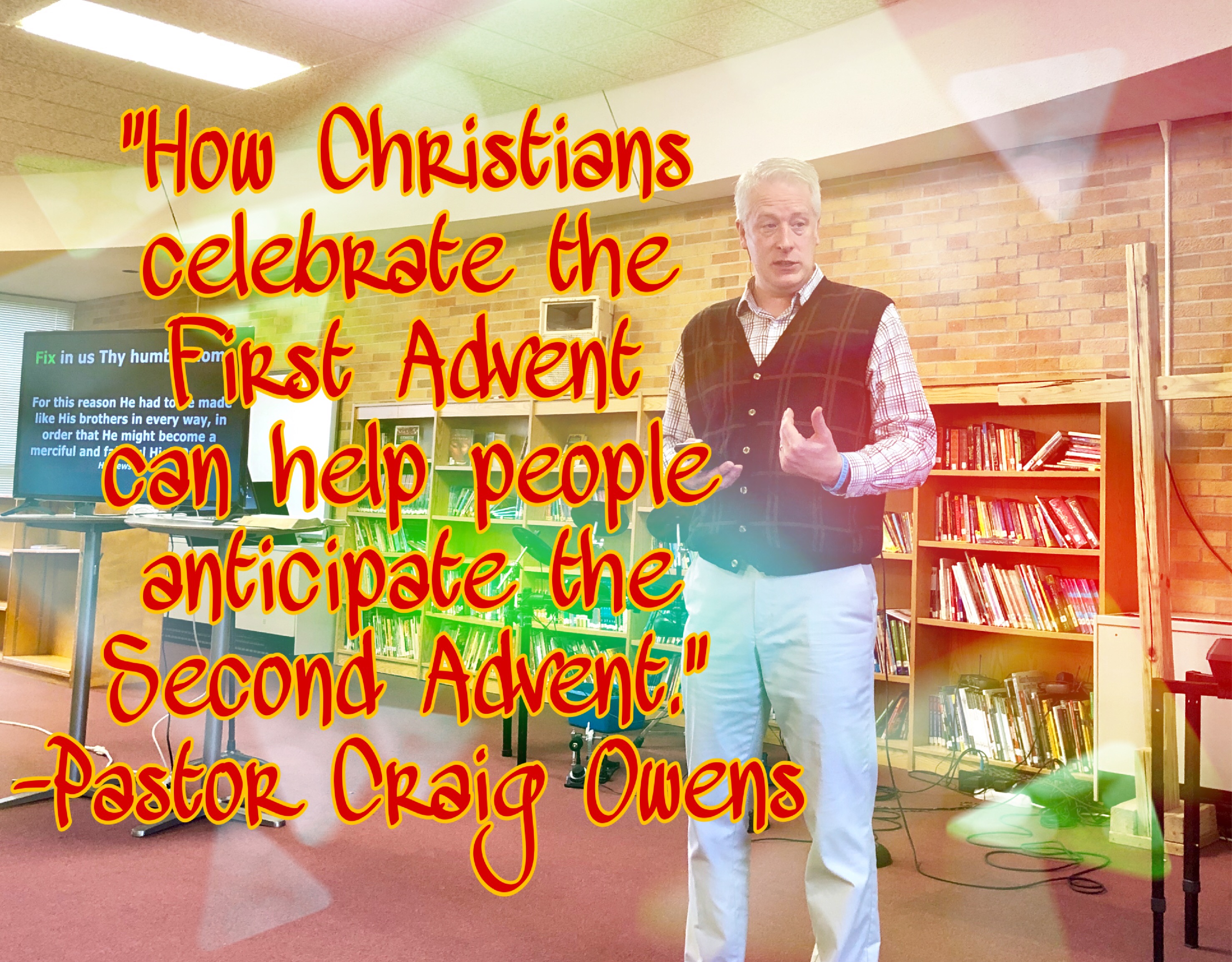
We live in an amazing time—the First Advent of Jesus has already happened in Bethlehem, and yet we are eagerly anticipating Christ’s Second Advent at any moment! 

The fourth stanza of Charles Wesley’s classic Christmas carol Hark! The Herald Angels Sing is a wonderful between-the-Advents look at what happened at the First Advent, and what we have to look forward to in the Second Advent. The key thing to note in this stanza is the verbs: come, fix, rise, bruise, efface, stamp, and reinstate. 

COME, Desire of nations—What is the “desire of nations”? It’s the restoration of God’s glory on earth, so it’s not really a what but a Who. The prophet Haggai informs us that our Desire is realized in the Advent of Jesus (2:1-9).  

FIX in us Thy humble home—At His First Advent, Jesus came and humbly made His home among us, even dying to pay the penalty for our sins (Hebrews 2:14, 17; Philippians 2:7-8). 

RISE, the woman’s conquering seed—Although Jesus was obedient to death—even death on a Cross, He didn’t stay dead but was resurrected (Philippians 2:8-9; Revelation 1:18)! 

BRUISE in us the serpent’s head—With His death and resurrection, Jesus took away the sting of death from satan, fulfilling one of God’s first prophesies (Genesis 3:15; 1 Corinthians 15:19-26, 54-57).  

Adam’s likeness now EFFACE—That means to wipe out, do away with, expunge. That’s exactly what God does with our forgiven sins (Psalm 103:1-4, 10-12)! 

STAMP Thine image in its place—Although our sin has been effaced, God doesn’t leave us as blank slates, but instead He allows the image of His Son Jesus to be stamped onto our lives (2 Corinthians 1:21-22; 2 Corinthians 3:18). 

REINSTATE us in Thy love—The relationship we longed for is now reborn in us (1 Corinthians 15:49)! 

The Desire of Nations HAS come, and yet He WILL come again! We’re living between the Advents now, so a good question for Christians to ask is: “How are we to live?” I think there are three key things—

  1. In celebration that Jesus came at His First Advent to be our Savior
  2. In anticipation of the Second Advent
  3. In obedience to God’s Word (Revelation 22:7)

To take a look at the other stanzas of this Christmas carol, please click here.

Thursdays With Oswald—Getting The Order Right

Oswald ChambersThis is a weekly series with things I’m reading and pondering from Oswald Chambers. You can read the original seed thought here, or type “Thursdays With Oswald” in the search box to read more entries.

Getting The Order Right

     Beware of walking in the spiritual life according to your natural affinities. We all have natural affinities—some people we like and others we do not; some people we get on well with and others we do not. Never let those likes and dislikes be the rule of your Christian life. “If we walk in the light, as He is in the light, we have fellowship one with another” [1 John 1:7], i.e., God gives us fellowship with people for whom we have no natural affinity. …  

     Our example is not a good man, not even a Christian man, but God Himself. We do not allow the big surprise of this to lay hold of us sufficiently. Jesus nowhere says, “Follow your Father which is in heaven—that you may be good men? that you may be lovable to all men?” No, “that you may be the children of your Father which is in heaven” [Matthew 5:44-45], and that implies a strong family likeness to Jesus Christ. …  

     It takes a long time to get the full force of our Lord’s statements. “I say unto you, love your enemies”—an easy thing to do when you have no enemies; an impossible thing when you have. “Bless them that curse you”—easy when no one is cursing you, but impossible when someone is. “Do good to them that hate you, and pray for them that despitefully use you.” It seems easy to do all this when we have no enemies, when no one is cursing or persecuting us; but if we have an enemy who slanders and annoys and systematically vexes us, and we read Jesus Christ’s statement “I say to you, Love your enemies”—how are we going to do it? Unless Jesus Christ can remake us within, His teaching is the biggest mockery human ears ever listened to. …

     “I say unto you, love your enemies.” Jesus does not say, “Love every one.” The Bible never speaks vaguely, it always speaks definitely. People speak about loving “mankind,” and loving “the heathen”; Jesus says, “Love your enemies.” Our Lord does not say, “Bless your enemies,” He says, “Love your enemies.” He does not say, “Love them that curse you”; He says, “Bless them that curse you.” “Do good to them that hate you”—not bless them. He does not say, “Do good to them that despitefully use you”; He says, “Pray for them that despitefully use you.” Each one of these commands is stamped with sheer impossibility to the natural man. If we reverse the order Jesus has given it can be done with strain, but in His order I defy any man on earth to be able to do it unless he has been regenerated by God the Holy Ghost. When a man does love his enemies, he knows that God has done a tremendous work in him, and everyone else knows it too. 

From Studies In The Sermon On The Mount

It’s impossible to do what Jesus commands if we’re trying to do it solely in our own strength. But when we allow the Holy Spirit to remake us from within, we can do what Jesus says:

  • If someone is your enemy—love them.
  • If someone persecutes you—pray for them. 
  • If someone curses you—bless them.
  • If someone hates you—do good to them. 

When we operate this way, we know that God has made this possible in us—and everyone else knows it too!

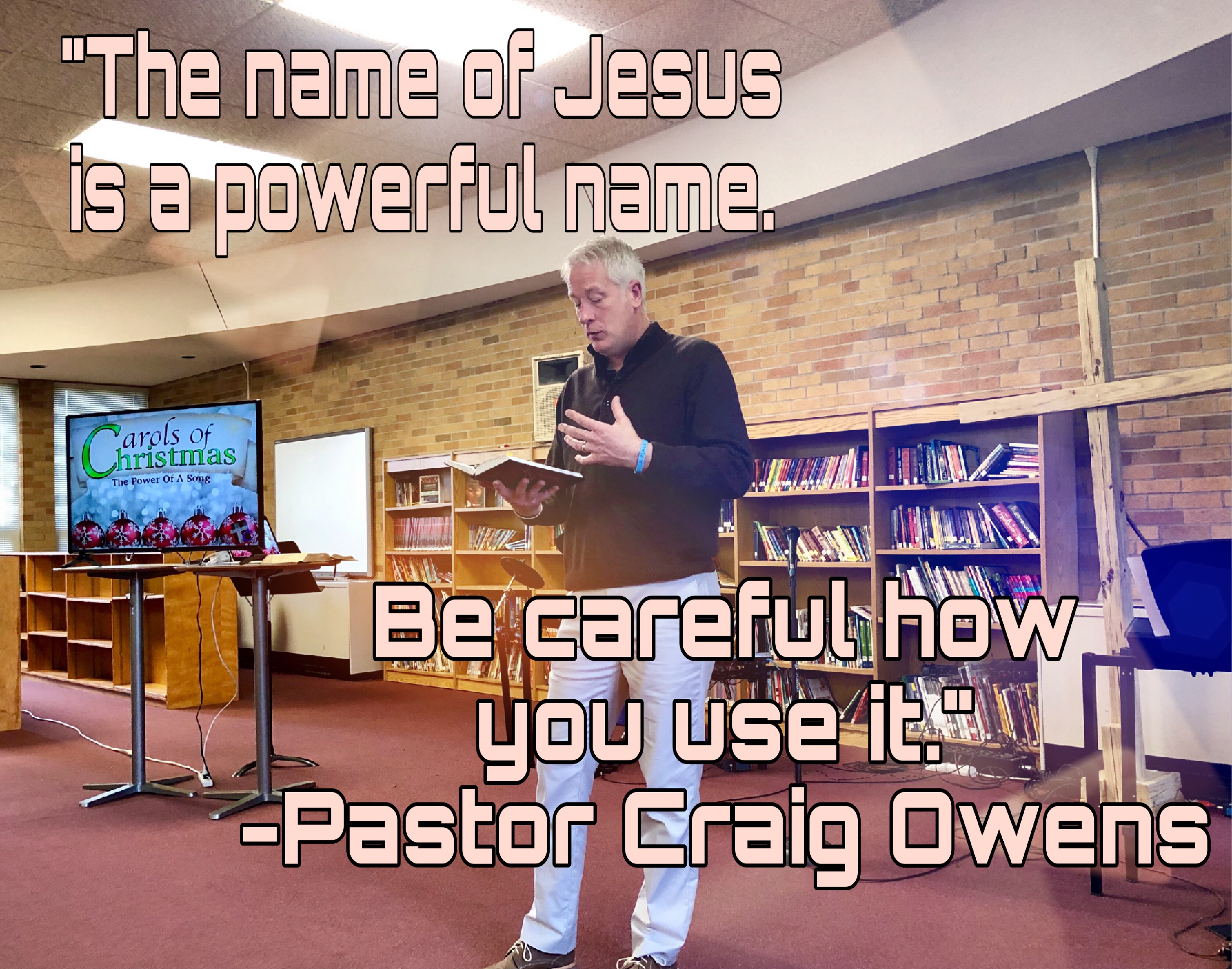
The Powerful Name Of Jesus

As we approach Christmas Day and we think about the First Advent, many times our thoughts go to the scene of a lowly manger, tired parents, and a newborn baby wrapped in cloths. We tend to focus on the Baby. 

And rightly so! 

It is fascinating to think that before He was even born an angel appeared to both Joseph and Mary to tell them that this Baby should be named Jesus (Matthew 1:21 and Luke 1:31). But have you also noticed all of the other names and titles given to the Baby at His birth? 

  • a Savior who is Christ the Lord
  • Immanuel which means “God with us” 
  • Son of the Most High 
  • King of the Jews
  • Ruler of God’s people
  • Son of the Most High God
  • God Himself

What do we do with the name of the Lord? 

When I say “the name of the Lord” I’m not talking about the five letters that spell J-E-S-U-S or even C-H-R-I-S-T. The name of the Lord means all of God’s character, His majesty, His personality, His magnificence, everything that makes God God. 

The Bible clearly tells us how to use God’s name properly. We are to use the name of the Lord for…

  • salvation
  • protection
  • batting the enemy
  • preaching
  • praying
  • casting out demons
  • healing the sick

The use of the name of the Lord should distinguish us. CHRISTians bear the name of Christ, so they should represent the character of God accurately, and in a way that causes others to glorify Him and want to approach Him. 

If there is a proper way of using the name of the Lord, that also means there are ways we can misuse the name of the Lord, something God expressly forbids in the third of the Ten Commandments (Exodus 20:7). 

We misuse the name of the Lord when we… 

There is a holy balance—Jesus is both King of kings and a Friend of sinners. God paid an incredibly high price so that we could be reconciled to Him, but not so that you could treat Him ignorantly or carelessly. This calls for some serious searching by the Holy Spirit! Perhaps you could pray a prayer that David penned: Search me, God, and know my heart; test me and know my anxious thoughts. See if there is any offensive way in me, and lead me in the way everlasting.

To take a look at the other stanzas of this Christmas carol, please click here.

The Everlasting Hope In Our Everlasting Lord

It was for our benefit that God came to Earth in His First Advent, not in thunder, and lightning, and all the brilliance of His heavenly glory, but as a Baby. Otherwise, He would have been unapproachable by sinful man. 

But make no mistake about it—although born as a human baby, Jesus was still “Christ by highest heaven adored; Christ the everlasting Lord”! 

The thought of God being everlasting permeates the Scriptures:

  • He is everlasting Lord
  • He fulfills an everlasting covenant
  • so He is worthy of everlasting praise
  • His everlasting arms support us
  • and give us His everlasting love and everlasting kindness
  • His everlasting salvation gives us everlasting life, or rejecting it leads to our everlasting punishment
  • and in His presence is everlasting joy  

Charles Wesley captures this fully-God-fully-Man essence in his song Hark! The Herald Angels Sing by calling Jesus the everlasting Lord and then listing His humanness at His First Advent with phrases like offspring of a virgin’s womb, veiled in flesh, incarnate Deity, pleased as Man with men to appear, and Immanuel. 

Jesus came to earth as Man not because He was forced to, but because it fulfilled the everlasting covenant that God had planned. The writer of Hebrews explains beautifully how He became like us in all of our humanness so that He could be a merciful help to us (see Hebrews 2:10-18). 

When Matthew tells the birth story of Jesus, he includes a line pregnant with meaning: “All this took place to fulfill…” (Matthew 1:22). 

What “all this”? Just take a look at Christ’s genealogy in the opening verses of Matthew 1. You see Abraham who tried to “help” God fulfill the covenant by fathering a child with another woman; Jacob who swindled his birthright from Esau; Judah who fathered Perez through his widowed daughter-in-law, whom he thought was a prostitute; Rahab was a prostitute; Ruth was a non-Jewish foreigner; David committed adultery with Bathsheba and then had her husband killed, and from their relationship came Solomon; Solomon’s son split the kingdom in two; from Abijah to Jeconiah the kings became progressively more and more evil; from Jeconiah forward the kings were without a kingdom; and then Joseph was a prince without a throne or even the glimmer of a hope of a throne. 

Yet ALL THIS took place to fulfill God’s plan. All of history is His story! Every deed and misdeed was used by God to fulfill His everlasting plan of redemption. Jesus had a very human family tree so that none of us could be outside His merciful reach.

What’s your genealogy like? More good than bad? What about your own history? More mess ups than positives? Nothing in your genealogy—past or present—can ever stop our everlasting Lord from fulfilling His everlasting covenant with YOU (Romans 8:28)! 

Christ’s genealogy is proof that your genealogy is no hindrance to His everlasting plan! 

It may appear He is late in time, but behold Him come at just the right time. Accept Him as your everlasting Lord, lean on His everlasting arms, and bask in His everlasting joy. 

Jesus—our Immanuel here—came so you could have all of God’s everlastingness! 

To take a look at the other stanzas of this Christmas carol, please click here.

A Leader’s Intercession

As for me, far be it from me that I should sin against the Lord by failing to pray for you (1 Samuel 12:23).

Leaders teach, and encourage, and train, and correct, and sometimes even warn. But despite all of this effort sometimes people still do wrong—and even sinful—things. And sometimes there are consequences for these poor choices that even a leader cannot deflect away from them. 

  • Position-conscious leaders say, “It’s not my fault, and I hope this doesn’t reflect poorly on me!” 
  • Selfish leaders say, “I’m glad I’m not in trouble!” 
  • Vindictive leaders say, “It serves you right!” 

Godly leaders say, “How can I serve you?” 

The Israelites grumbled against God, and God was angry. It would have been understandable if Moses would have said, “You complained so you’re going to have to bear the consequences.” But instead, Moses interceded before God on their behalf (Numbers 11:1-2). 

The people rejected God as their King and chose instead a man named Saul to lead them. Samuel could have said, “You’re in big trouble now!” But instead, he said, “Far be it from me that I should sin against the Lord by failing to pray for you” (1 Samuel 12:23). 

What about you? Have you ever grumbled against God or chosen a path that wasn’t best for you? Jesus could say, “Well, you should have known better!” But instead, we read that He intercedes before God’s throne on our behalf (Job 9:33-34; Hebrews 4:15-16; 7:25). 

The mark of a godly leader is one who intercedes for his people.

If you are a Christ-follower and you are a leader of people, then follow Christ’s example. Yes, continue to teach, encourage, train, correct, and warn. But if people mess up, don’t write them off; instead, intercede before God on their behalf! 

This is part 32 in my series on godly leadership. You can check out all of my posts in this series by clicking here.