Both anxiety and peace are seen in our countenance and our actions long before they are heard in our words. Christian, is your life showing that you know the Prince of Peace intimately?
This year is the 55th anniversary of the release of Corrie ten Boom’s book The Hiding Place. If you hav never read this book, you certainly should add it to your list. John Stonestreet shares some insights about thankfulness we learn from this amazing story.
“Even the tired horse, when he comes near home, mends pace: be good always, without weariness, but best at last; that the nearer thou comest to the end of thy days, the nearer thou mayest be to the end of thy hopes, the salvation of thy soul.” —Thomas Adams (youngest son of John Adams)
“I do not want a God whom I have made, but a God who has made me.” —G.K. Chesterton
“I can’t go back to yesterday—because I was a different person then.” —Lewis Carroll
Listen to the podcast of this post by clicking on the player below, and you can also subscribe on Apple, Spotify, or Audible.
I like to take some time at the end of each calendar year to both look back and look forward. Throughout biblical history, whenever God was ready to take His people into a new chapter, He always took time for them to review the ground they had already covered. So as we get ready to go into 2026, here is a look back at the things God taught us in 2025 through these sermon series I shared with the wonderful folks at Calvary Assembly of God.
Our Prayer Book. God has given us an amazing Book! The Bible addresses the human condition—all our desires, frustrations, hopes, and the only path on which we can find eternal and unfading joy. The Bible not only tells us how to live, but it also tells us how to pray. And it’s as we pray that the principles in the Scripture come alive with fresh applications for our daily life. We don’t have to fumble around, attempting to find the right words to pray and then wondering if those prayers were heard on high. We can learn to pray in agreement with God’s perfect will. God has spoken to us through His Word, and He invites us to use His words to form our prayers back to Him. I love beginning each new year with a reminder of the power of prayer.
When Sheep Bite Sheep. No one likes to be mistreated—especially when the one that hurts us is one we would have thought of as an ally or even a friend. These slights become even more painful when they take place inside the Christian community. When sheep bite sheep, our natural response is to lash out to try to even the scales of justice. But the Bible consistently and clearly calls Christians to pursue a supernatural response. This is a highly practical series of messages on how you can respond in a Christ-honoring way when you are bitten by another sheep in God’s pasture.
Grief Into Joy. At the end of your rope … down for the count … nothing but gray skies all around … unable to see any light at the end of the long, dark tunnel. Ever been there? The reality is, we all have been there. But the good news is that we don’t have to stay there! God is always at work to turn our apparent no-win, dark, hopeless situations into something bright and glorious! He is working in ways that no human mind could have dreamed up, and working on our behalf in a way no human power could ever hope to rival. God specializes in turning grief into joy! We are approaching the time of year where we remember the death of Jesus. Without a doubt that was the darkest, most grief-stricken day in all of history. Yet that time of mourning was completely forgotten in the overwhelming joy that exploded from an empty tomb on Resurrection Sunday!
We Are: Pentecostal. Pentecost for over 1500 years was a celebration in Jerusalem that brought in Jews from all over the world. But on the Day of Pentecost which came just ten days after Jesus ascended back into heaven, the meaning of Pentecost was forever changed! Followers of Jesus—now empowered by an infilling of the Holy Spirit—began to take the good news of Jesus all over the world. These Spirit-filled Christians preached the Gospel and won converts to Christ even among hostile crowds, performed miracles and wonders, stood up to pagan priests and persecuting governmental leaders, and established a whole new way of living as Christ-followers. We, too, can be Pentecostal followers of Jesus Christ today. We can experience an anointing and an empowering in our lives that turns ordinary Christianity into extraordinary Christianity!
All Hail King Jesus. The Bible closes with a vivid picture of Jesus as the undisputed King of kings, and we look forward to that time when all creation bows before Him. Even more so, we cannot wait to be with our King for ever and ever! The psalmists of Israel also foresaw the coming of this King, especially in the example they had in their King David. Many of the poetic words they penned esteemed Jesus as the King for Whom they longed. David himself not only saw the future coming of the Eternal King, but he also looked back in time to see Jesus reigning as King before time began. It is these royal psalms that we will be studying as we celebrate the first arrival on Earth of our King and as we anticipate the second coming of our Royal Majesty. The more clear our vision is of this King, the more we will worship Him, follow Him, and invite others to know Him as their own Lord and Master.
B.A.S.I.C. Christianity. When someone invites Jesus into their heart, they are immediately justified in God’s sight and have the assurance of Heaven as their eternal home. But then the question comes, “Now what?” Our justification is immediate but our sanctification is an ongoing, lifelong process. Sanctification is what brings fruitfulness to a Christian’s life and what allows that fruitful life to be a testimony to others. The Bible gives us the B.A.S.I.C.s of this Christian life, and that’s what we will be exploring over the next few weeks.
Earnestly Contend. Jude, the half-brother of Jesus, wrote a letter to the church. He said he was hoping to write about salvation, but looking at the conditions in the culture around him, he felt urged by the Holy Spirit to challenge Christians to “contend for the faith that was once for all entrusted to the saints.” What does this word “contend” mean for us today? Are Christians supposed to be combative about sharing their faith? Are they supposed to argue with anyone and everyone who disagrees with them on any point? Jude gives us Holy Spirit-inspired wisdom to understand how to deal with those who have departed from the purity of biblical truth.
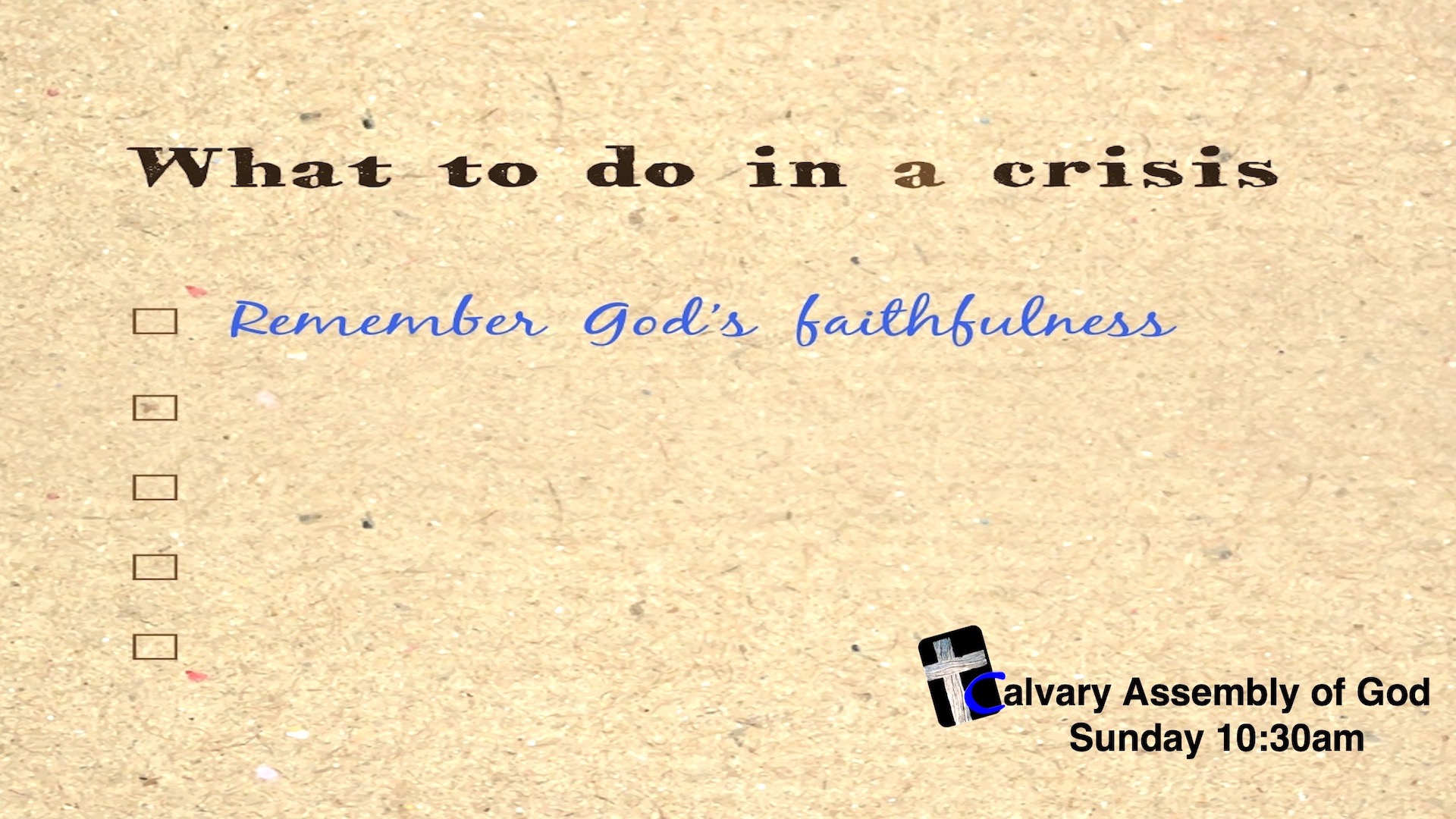
What To Do In A Crisis. Look back through the pages of history and you will see a common theme. Whether it’s world history or your own personal history, you have so much for which you can give thanks. In tough times, we tend to become forgetful because we are so focused on the intensity of the moment. But if we will simply look back in time, we will see just how faithful God has been to us. We bring our focus back to Him in our trying times when we remember and rehearse “the wonderful things He has done” (Psalm 107). The season of Thanksgiving is a good time for us to be reminded of the powerful resource we have when we are giving thanks for our blessings. Thankful people are confident people because they choose hope in God’s faithful provision over grumbling about their current circumstances.
Jesus Is…. Over 700 years before He was born in Bethlehem, God spoke through the prophet Isaiah to describe the Messiah that was coming. Peter said that until the advent of Jesus, the prophets continued to scour the evidence of who this Messiah was going to be. When Jesus finally came to earth as a Man, young and old alike were thrilled to proclaim that the One they had been longing for had made His long-expected appearing! As Jesus lived on earth, died on Calvary, and was resurrected back to life, He continued to fulfill all that had been prophesied about Him. Isaiah said of Jesus: “He will be called Wonderful Counselor, Mighty God, Everlasting Father, Prince of Peace.” This Advent season we will take some time to unpack what each of these majestic titles mean. We will explore how Jesus demonstrates that He is truly worthy of each of these titles, and we will see how that knowledge should thrill our hearts as we celebrate His first Advent and eagerly long for His Second Advent.
If you live in northern Kent County and don’t have a home church, I would be thrilled for you to visit me at Calvary Assembly of God this year.
When the Holy Spirit shines His light on a biblical promise, and you turn that into a prayer, write it down! You may need to go back to this again and again. When God answers your prayer, write it down again! This can become a testimony journal that you and others can use to recall God’s provision.
“The pathway to maturity and to solid biblical food is not first becoming an intelligent person, but becoming an obedient person.” —John Piper
“Somehow or other an extraordinary idea has arisen that the disbelievers in miracles consider them coldly and fairly, while believers in miracles accept them only in connection with some dogma. The fact is quite the other way. The believers in miracles accept them (rightly or wrongly) because they have evidence for them. The disbelievers in miracles deny them (rightly or wrongly) because they have a doctrine against them.” —G.K. Chesterton
“At every moment, we always have a choice, even if it feels as if we don’t. Sometimes that choice may simply be to think a more positive thought.” —Tina Turner
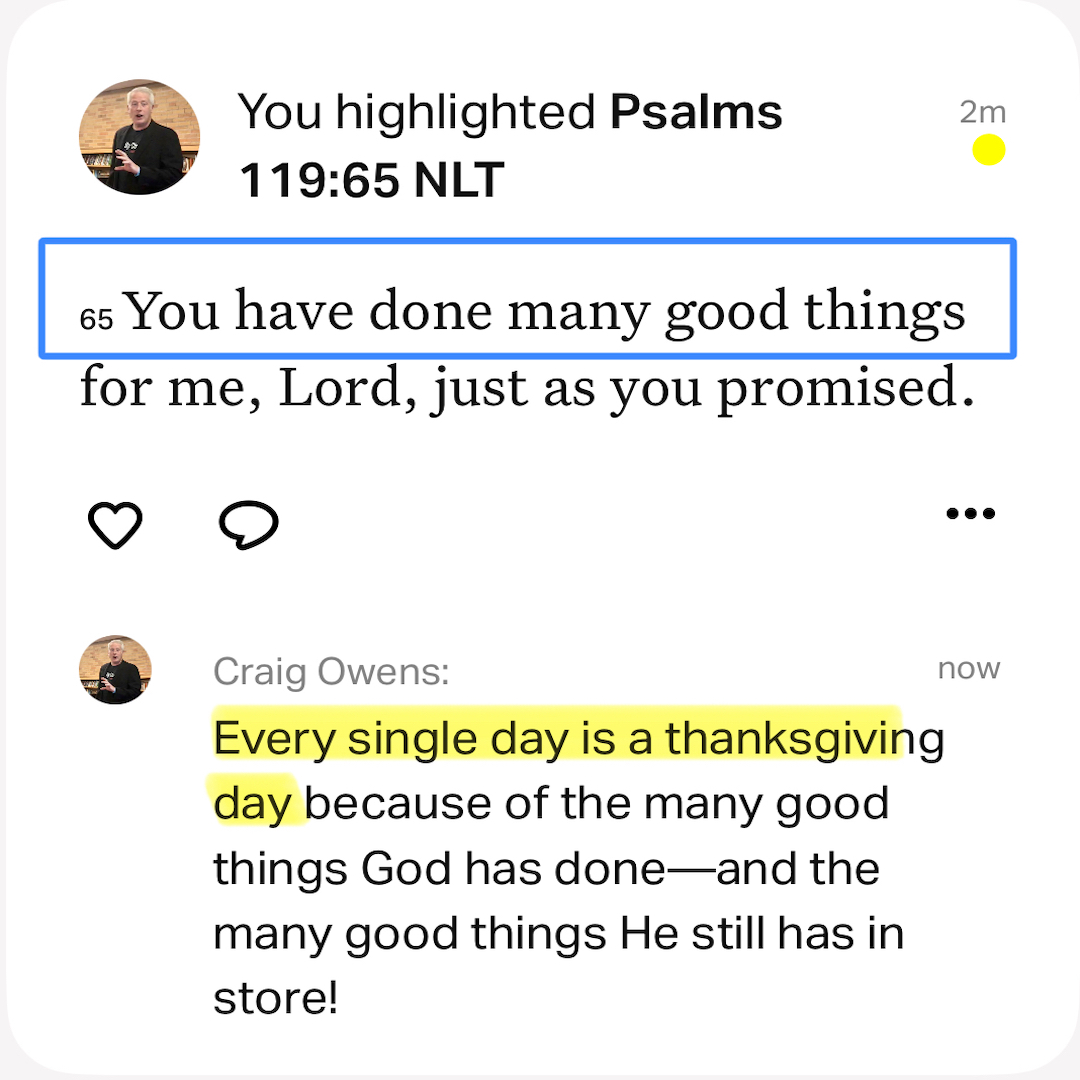
Every day should be a day of thanksgiving!
“We are strangers on Earth; our homeland is in Heaven. Our walk is here; our hearts are there.” —Dr. Henry Halley
I have already shared the first two posts in the latest archeological research on the biblical city of Jericho. Here is part three.
“Success is no accident. It is hard work, perseverance, learning, studying, sacrifice, and most of all, love of what you are doing or learning to do.” —Pelé
“The greatest leader is not necessarily the one who does the greatest things. He is the one who gets people to do the greatest things.” —Ronald Reagan
Listen to the podcast of this post by clicking on the player below, and you can also subscribe on Apple, Spotify, or Audible.
We saw in part one of this two-part series that we quickly go into crisis mode when we forget that God is in control, so we need to remain full of thanks all the time (Ephesians 5:20 AMPC). We called gratitude our inoculation against the pull from contentment to crisis, but inoculation doesn’t mean that we never experience some pangs of anxiety when a moment of darkness hits. Maturing Christians are learning how to spot the beginning of anxiety and move back into the contentment zone earlier and earlier (Romans 5:3-5; James 1:2, 12).
James says we “will receive the crown of life” from Jesus. There’s no doubt about that! In a trial, it’s important to be reassured that the trial can never cause us to lose out with our Heavenly Father (Romans 8:38-39).
Psalm 107 starts out with this same assurance—“those He redeemed” (v. 2) is in the perfect tense. It’s complete and irrevocable! We walk out our redemption in circumstance after circumstance in a way that bring glory to God and draws others to Him as well. “Let the redeemed of the Lord say” is in the imperfect tense, which means giving thanks is an ongoing practice (v. 1).
Redeemed once, but giving thanks always!
Romans 8 gives a little snapshot of some of the situations that could have sent us spiraling into crisis mode, but remember the conclusion: None of those things can separate from God’s love.
Last week we saw how the psalmist linked prayer and gratitude in a repeated theme. This practice is backward looking (vv. 7-8, 14-15, 20-22, 29-32). When we look back to see how God has moved and then we contemplate Who He is (Hebrews 13:8; Isaiah 59:1).
Look at the closing verse (v. 43):
heed = guard, watch over attentively; this is an imperfect verb—which means we keep on doing it
consider = discern: totake apart the evidence and harvest the lessons
great love = God’s limitless lovingkindness
I love this verse in the New Living Translation: Those who are wise will take all this to heart; they will see in our history the faithful love of the Lord.
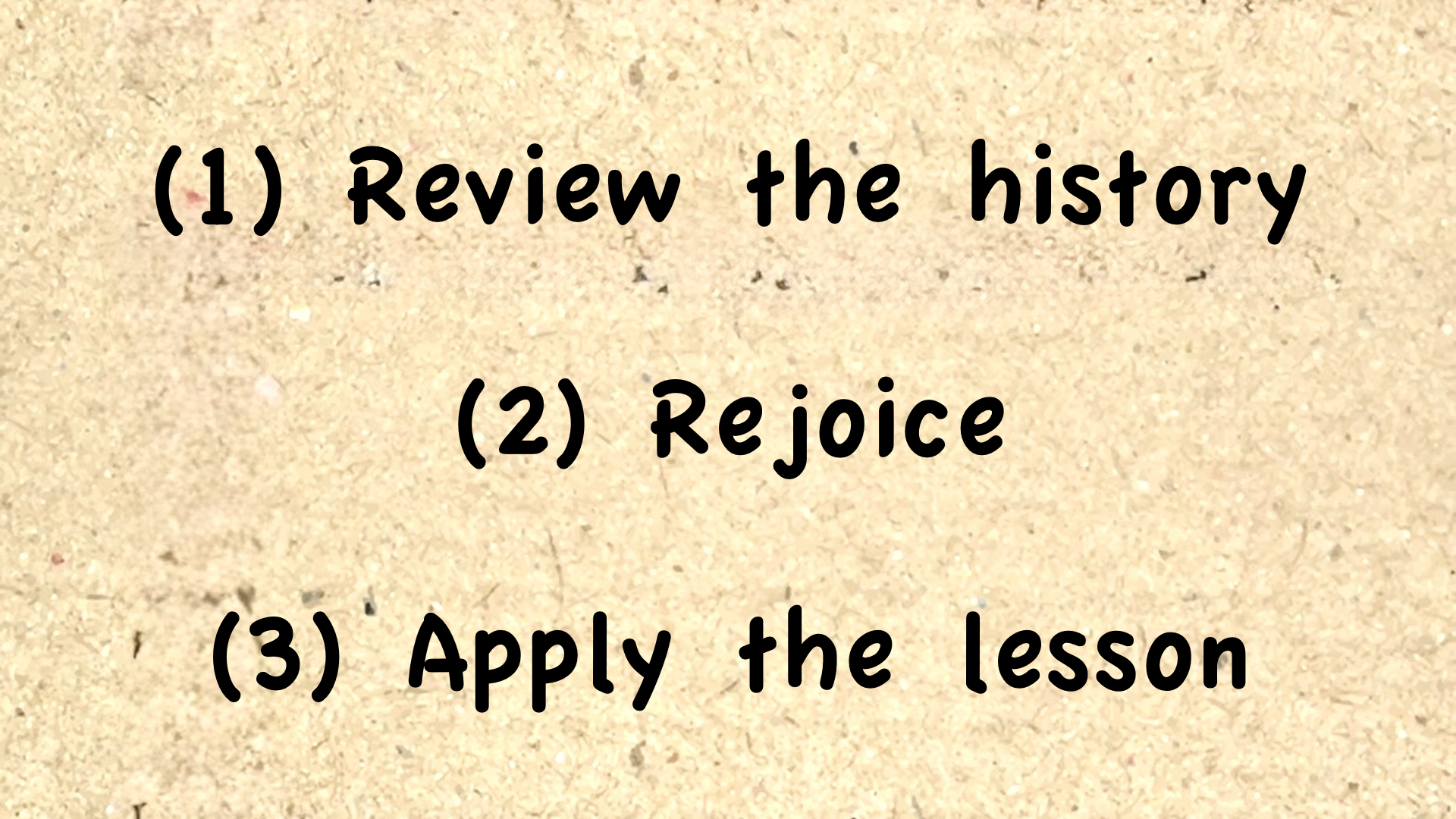
That means we…
Review the history of God’s faithfulness
Rejoice over it
Apply it to your current circumstance
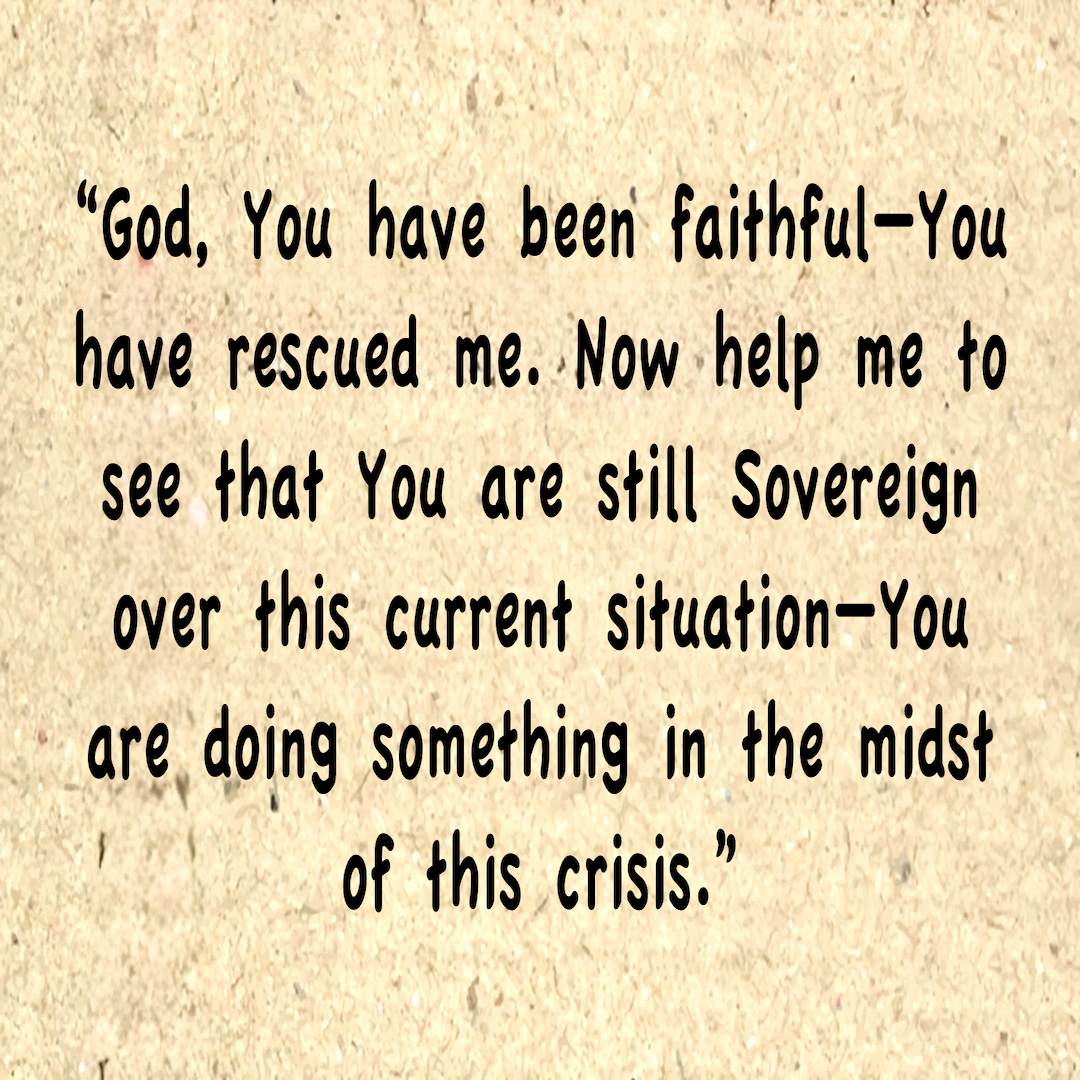
We can pray, “God, You have been faithful—You have rescued me. Now help me to see that You are still Sovereign over this current situation—You are doing something in the midst of this crisis.”
In Romans 8:28, Paul tells us that God is working together all of our circumstances for His glory and our our good. Oswald Chambers noted, “In the Christian life we have no aim of our own, and God’s aim looks like missing the mark because we are too shortsighted to see what He is aiming at.” Reviewing our history and then giving thanks helps assure our anxious heart that God is going to hit the mark (Philippians 1:6).
Praise the Lord! I will thank the Lord with all my heart as I meet with His godly people.How amazing are the deeds of the Lord! All who delight in Him should ponder them.Everything He does reveals His glory and majesty. His righteousness never fails.He causes us to remember His wonderful works. How gracious and merciful is our Lord! (Psalm 111:1-4 NLT)
Look back through the pages of history and you will see a common theme. Whether it’s world history or your own personal history, you have so much for which you can give thanks.
In tough times, we tend to become forgetful because we are so focused on the intensity of the moment. But if we will simply look back in time, we will see just how faithful God has been to us. We bring our focus back to Him in our trying times when we remember and rehearse “the wonderful things He has done” (Psalm 107).
The season of Thanksgiving is a good time for us to be reminded of the powerful resource we have when we are giving thanks for our blessings. Thankful people are confident people because they choose hope in God’s faithful provision over grumbling about their current circumstances.
G.K. Chesterton penned these words over a century ago. If they were true then, imagine how much more so they are now: “These are the days when the Christian is expected to praise every creed except his own.”
“The only way to do great work is to love what you do. If you haven’t found it yet, keep looking. Don’t settle.” —Steve Jobs
Epaphras literally put his life on the line to tell others about Jesus (Colossians 1:7; Philemon 23) and then tenaciously wrestled in prayer for the saints he led to the Lord (Colossians 4:12). That is a life worth emulating!
Sarah Young uses passages of Scripture and writes in the first-person voice as though Jesus Himself was speaking to us. “When you bring Me prayer requests, lay out your concerns before Me. Speak to Me candidly; pour out your heart. Then thank Me for the answers that I have set into motion long before you can discern results. When your requests come to mind again, continue to thank Me for the answers that are on the way. If you keep on stating your concerns to Me, you will live in a state of tension. When you thank Me for how I am answering your prayers, your mind-set becomes much more positive. Thankful prayers keep your focus on My Presence and My promises.”
Listen to the podcast of this post by clicking on the player below, and you can also subscribe on Apple, Spotify, or Audible.
I was honored to be invited to offer the commencement address for some amazing students graduating from the Parent Teacher Co-op program.
I think we rush too quickly through our celebrations. It seems that at each milestone, we pause only briefly to move on toward the next milestone. But if we don’t celebrate well, we are actually setting ourselves up for a disappointing future.
It’s very telling that after the perfection of Creation, God took time to celebrate His own handiwork. And then He called us to do the same. That’s what a sabbath really is: A time to celebrate what God has done for us, and what He has empowered us to do for His glory. I think the reason many older people become more contemplative and nostalgic is because they rushed through their life without taking time for sabbath celebrations.
If you look at the history of the Israelites, you will see majestic mountain peaks followed by depressing valleys. What sent them sliding into their valley was one thing: forgetfulness. Time and time again, God sends His prophet to chastise the Israelites for failing to take a sabbath rest. They forgot to honor God and celebrate Him, but instead they rushed along to the next thing. What brought them out of their valley and back to the mountain was also one thing: remembering. Celebrating God for who He is.
So I challenged these graduates—and you—with this. At each milestone in your life…
Thank God for His blessings
Celebrate your own hard work.
Recognize the help you’ve received from others.
Determine which lessons to keep, which to enhance, and which to leave behind.
Find someone to share the journey with you.
Don’t forget to remember!
I would suggest at a minimum celebrating the sabbath each week as God gave us that example, but you may find that you have a moment to celebrate even a small win in the middle of the day in the middle of your week. If you do that, I think your appreciation for God’s blessings will keep you even more dependent on His abiding presence.
You may also be interested in a couple of related blog posts and videos:
Listen to the podcast of this post by clicking on the player below, and you can also subscribe on Apple, Spotify, or Audible.
Gratitude is a great separator for leaders—it gives them a better vantage point from which to lead people and increases their effectiveness as a catalyst for organizational change.
In short, a grateful leader is a great leader.
Check out the full conversation Greg and I had on The Craig and Greg podcast episode We are Grateful.
And you may be interested in a whole series of posts and video where I talked about the psychological, physiological, emotional, and relational benefits of making gratitude our focus. The series was called Be Thankful.
But this isn’t quid quo pro—we aren’t grateful people just so we can get something back for ourselves. We should be grateful people because…
(1) …God is good all the time and so we should be thankful to Him continually—1 Thessalonians 5:18
(2) …Jesus was grateful—1 Peter 2:23; Hebrews 12:2
(3) …God blesses thankful people—1 Peter 3:9; Luke 6:33
(4) …your thankfulness can benefit people you haven’t even met!
Near the end of his life, David wrote a hymn of thanksgiving, which he taught to Asaph (his worship leader) who then taught it to all the citizens (1 Chronicles 16:7-35). Throughout this song, notice how many times David sang about not only giving thanks but sharing our thankfulness with those around us.
In difficult times, people search for what delivered others in the past. A good example is Psalm 106, where the psalmist warns his readers about the dangers of forgetting to be thankful for God’s blessings. This psalm begins and ends with words taken right from David’s hymn of thanksgiving as an added reminder of what our gratitude should sound like (see vv. 1, 47-48).
One hundred years after David wrote this song, King Asa needed to look back to it. His father Abijah had been evil throughout his reign as king, so had his grandfather Rehoboam. His great-grandfather Solomon started off well, but turned away from God near the end of his life. So Asa looked all the way back to the thankful heart of his great-great grandfather David (1 Kings 15:11).
Jehoshaphat needed this same song 100 years after Asa (200 years after David wrote it) in 2 Chronicles 20. Enemies had surrounded Judah and Jehoshaphat called the people to prayer. Jahaziel, a direct descendant of David’s worship leader Asaph, calls the people to trust God to fight the battle for them. As the army marches out the next morning, they put the worship team at the front who sang David’s 200-year-old song of thanksgiving and God used that to ambush their enemies!
Your lifestyle of gratitude today—your songs of thanksgiving—could be a blessing to future generations that haven’t even been born yet!
We would do well to learn the lessons of the past and make sure we are always quickly turning our grumbling into a song of thankfulness.
As you do, you are…
Emulating the lifestyle of Jesus
Banking up blessings from God
Ambushing the enemy
Bringing a testimony to non-believers
Establishing a standard for future generations
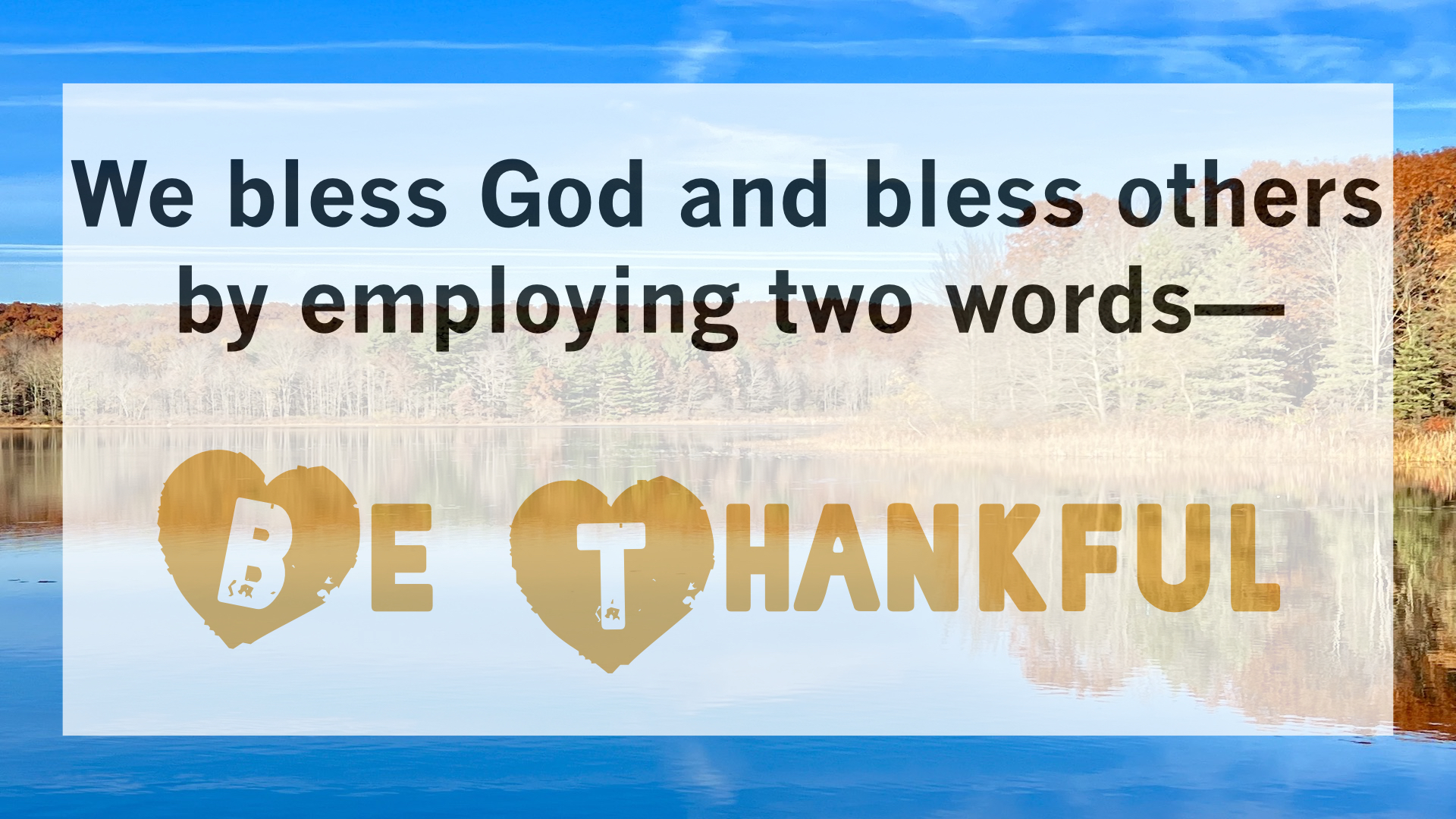
We bless God and bless others by employing two words: BE THANKFUL!
Listen to the audio-only version of this podcast by clicking on the player below, or scroll down to watch the video.
We are grateful for you! Greg and I love talking about leadership, and it’s a great joy that you tune in to listen. In this episode we discuss why an attitude of gratefulness is so important for leaders year-round, not just around the holidays.
[0:17] We are so grateful for you!
[1:25] What is it about gratitude that make someone a great leader?
[4:28] Grateful leaders have greater influence with people around them.
[8:14] It’s easier to build consensus on our teams when we have a thankful paradigm.
[10:52] Thankful correlates with graceful. This is such an attractive quality for leaders.
[14:10] Greg asks me elaborate on how gratitude ties into my book Shepherd Leadership.
[16:09] How does a grateful mindset help us get through the tough times?
[18:56] Happiness is not the same as joy. Joy is much deeper and serves us as leaders much better because happiness can be gone really quickly.
[23:16] We give you some “homework” that will help you grow your gratitude.
Check out this episode and subscribe on YouTube so you can watch all of the upcoming episodes. You can also listen to our podcast on Spotify and Apple.



 Both anxiety and peace are seen in our countenance and our actions long before they are heard in our words. Christian, is your life showing that you know the Prince of Peace intimately?



 Craig T. Owens