Shepherding God’s Flock (book review)

T.M. Moore founded the Fellowship of Ailbe, a ministry patterned after the example of the Irish Christians who kept the spread of the Gospel alive during history’s dark times. A key component of the Fellowship’s ministry is the equipping of pastors for their tasks, and Shepherding God’s Flock masterfully lays out the role of pastors like few other resources. 

Throughout the Scriptures, God uses the picture of a shepherd caring for his sheep as a consistent image of how God cares for His people, and how He desires for pastors/elders to care for those under their care as well. God has stern warnings for shepherd-leaders who misuse or abuse their positions, but He also showers His blessings on those shepherd-leaders whose hearts beat with God’s heart. David talked lovingly of the Lord being our Shepherd, Jesus called Himself the Good Shepherd, and the Apostle Peter called for elders in the church to shepherd the flock under their care. 

Shepherding God’s Flock helps pastors work through the practicalities of their shepherding role. And I do mean work through these concepts. This book is as much a workbook as it is a textbook. T.M. Moore gives valuable insights for pastors, but he intersperses penetrating discussion questions throughout his teaching. You will also need to keep your Bible handy while reading Shepherding because Moore will send you to passage after passage to undergird the principles he is teaching. 

I can’t recommend this book highly enough to both current pastors and those preparing to enter into pastoral ministry. It would probably be a good idea for lead pastors to read this book alongside their elder/deacon boards. 

As Moore notes in his closing words, “Shepherding is the work God has chosen for the care and nurture of His flocks. We’ve neglected this ministry for too long. Let us resolve to bring the work of shepherding to bear on the task of building Christ’s Church.” 

To that, I add my hearty “Amen!”

11 Quotes From “Brothers, We Are Not Professionals”

John Piper has written a book that I think every pastor should read: Brothers, We Are Not Professionals. You can read my review of this book here. Below are just a few quotes that caught my attention.

“We pastors are being killed by the professionalizing of the pastoral ministry. The mentality of the professional is not the mentality of the prophet. … The professionalization of the ministry is a constant threat to the offense of the gospel.”

“I defined spiritual leadership as ‘knowing where God wants people to be and taking the initiative to get them there by God’s means in reliance on God’s power.’ …  So the goal of spiritual leadership is to muster people to join God in living for God’s glory.”

“The Son of Man has not come seeking employees. He has come to employ Himself for our good.”

“In this fallen world, the tide is always going out. That is, the affections of our people have for God Himself (as distinct from His gifts) are continually prone to shrink. Our job is to tilt the world, by the power of the Spirit and the Word, so that the tide rolls in again.”

“A pastor who feels competent in himself to produce eternal fruit knows neither God nor himself.”

“Salvation is a gift of God (Ephesians 2:8). Love is a gift of God (1 Thessalonians 3:12). Faith is a gift of God (1 Timothy 1:14). Wisdom is a gift of God (Ephesians 1:17). Joy is a gift of God (Romans 15:13). Yet as pastors we must labor to ‘save some’ (1 Corinthians 9:22). We must stir up the people to love (Hebrews 10:24). We must advance their faith (Philippians 1:25). We must impart wisdom (1 Corinthians 2:7). We must work for their joy (2 Corinthians 1:24). We are called to labor for that which is God’s alone to give. The essence of the Christian ministry is that its success is not within our reach.”

“Are not our people really yearning to be around a man who has been around God? Is it not the lingering aroma of prayer that gives a sense of eternity to all our work?”

“Few things frighten me more than the beginnings of barrenness that come from frenzied activity with little spiritual food and meditation.”

“The domestication of God is a curse on preaching in our day. We need to recover reality and the language of majesty and holiness and awe and glory.”

“He knows that the only way he can deliver God’s message to God’s people is by being rooted in it and by saturating his sermon with God’s own revelation in the Bible. The Bible-oriented preacher wants the congregation to know that his words, if they have any abiding worth, are in accord with God’s words. He wants this to be obvious to them. That is part of his humility and his authority. Therefore, he constantly tries to show the people that his ideas are coming from the Bible. He is hesitant to go too far toward points that are not demonstrable from the Bible.”

“Our salvation and the salvation of those who hear us week after week depend in large measure on our faithful attention to personal holiness and sound teaching” [see 1 Timothy 4:16]. … Oh, how earnest we should be in attending to ourselves and the soundness and helpfulness of our teaching!”

Book Reviews From 2017

I love reading, and I love sharing my love of good books with others! Here is a list of the books I read and reviewed in 2017. Click on a title to be taken to that review.

#Truth

10 Commitments For Dads

50 Core American Documents

A New Kind Of Apologist

Absolute Surrender

As Kingfishers Catch Fire

Born After Midnight

Brady vs. Manning

Cherish

Everything You Always Wanted To Know About God

Evidence That Demands A Verdict

How Great Is Our God

If

Interpretation Of The Scriptures

Islam Booklets

Joy To Your World

Know Who You Are

Leadership Promises For Every Day

Live Dead Journey

Live Dead Life

Longing For A Changed World

Man—The Dwelling Place Of God

Marching Off The Map

No Limits

On Calvary’s Hill

Ordering Your Private World

Paths To Power

Peace In The Face Of Cancer

Prevailing Prayer

Run Today’s Race

Seeing Jesus

Shade Of His Hand

Take Your Life Back

The Broken Way

The Christian Book Of Mystical Verse

The Christian In Complete Armour

The Christmas Candle

The Dawn Of Christianity

The Servant As His Lord

The World’s Last Night

Transforming Grace

When A Nation Forgets God

Your Next 24 Hours

Here are my book reviews for 2011.

Here are my book reviews for 2012.

Here are my book reviews for 2013.

Here are my book reviews for 2014.

Here are my book reviews for 2015.

Here are my book reviews for 2016.

9 Quotes From Other Authors In “Marching Off The Map”

Tim Elmore’s books are always chockfull of the latest research and insights from multiple sources. Tim does an excellent job of synthesizing mountains of evidence to give parents and teachers actionable steps to help the students with whom they work. Here are just a few of the quotes he shared from other authors in his book Marching Off The Map.

“We all want to progress, but if you’re on the wrong road progress means doing an about-turn and walking back to the right road. In that case, the man who turns back the soonest is the one who is most progressive.” —C.S. Lewis

“Tell me a fact and I will learn. Tell me the truth and I will believe. Tell me a story, and it will live in my heart forever.” —Indian Proverb

“Start where people are before you try to take them where you want them to go.” —Jim Rohn

“Shooting above people’s heads doesn’t mean you have superior ammunition—it means you are a lousy shot.” —Oscar Handlin

“If you think our future will require better schools, you’re wrong. The future of education calls for entirely new learning environments. If you think we’ll need better teachers, you’re wrong. Tomorrow’s learners will need guides who take on fundamentally different roles.” —Dr. Wayne Hammond

“If we continue to develop our technology without wisdom or prudence, our servant may prove to be our executioner.” —Omar Bradley

“For the first time in human history, the majority of people in the developed world are being asked to make a living with their minds, rather than their muscles. For 3000 years, humankind had an economy based on farming: till the soil, plant the seed, harvest the crop. Hard to do, but fairly easy to learn. Then, for 300 years, we had an economy based on industry: mold the parts, turn the crank, assemble the product. Hard to do, but also fairly easy to learn. Now, we have an economy based on information: acquire the knowledge, apply the analytics, use your creativity. Hard to do, hard to learn, and even once you’ve mastered it, you’ll have to start learning all over again, pretty much every day.” —Michael Bloomberg

“He who has a why to live for can bear almost any how.” —Frederick Nietzsche

“Be the person you needed when you were young.” —Ayesha Saddiqi

Be sure to check out my review of Marching Off The Map by clicking here. You can also read some quotes and check out some infographics from Tim Elmore here, here, and here.

11 Quotes For Pastors From “Interpretation Of The Scriptures”

You don’t have to be a pastor to benefit from reading Interpretation Of The Scriptures by A.W. Pink, rather I think all students of the Bible will benefit from reading this classic book. However, the Apostle James did warn that “not many of you should presume to be teachers” because “we who teach will be judged more strictly” (James 3:1). In that light, A.W. Pink directs several of this comments in this book exclusively to those who teach/preach from the Bible. Here are a few of those quotes.

“The preacher’s task is both the most honorable and the most solemn of any calling, the most privileged and at the same time the most responsible one.”

“The ministry is no place for trifiers and idlers, but for those who are prepared to spend and be spent in the cause of Christ. The preacher ought to work harder than the miner, and to spend more hours per week in his study than does the man of business in his office.”

“Particularly does the minister need to attend unto this injunction ‘take heed unto thyself’ in his study of the Scriptures, reading them devotionally ere he does so professionally; that is, seeking their application and blessing to his own soul before searching for sermonic materials.”

“To ‘open’ the Scriptures helpfully to the saints requires something more than a few months’ training in a Bible institute, or a year or two in a seminary. None but those who have been personally taught of God in the hard school of experience are qualified so to ‘open’ the Word that Divine light is cast upon the spiritual problems of the believer, for while Scripture interprets experience, experience is often the best interpreter of Scripture.”

“The preacher should be with his time as the miser is with his gold—saving it with care, and spending it with caution.”

“Great care needs ever to be taken that we do not expound our own minds instead of God’s.”

“The preacher should be, above everything else, a man of the Book, thoroughly versed in the contents of God’s Word, one who is able to bring forth out of his treasure ‘things new and old’ (Matthew 13:52). The Bible is to be his sole text-book, and from its living waters he is to drink deeply and daily.”

“Commentaries we consult only after we have made a first-hand and exhaustive study of a passage.”

“It is at the feet of God that the preacher must take his place, learning from Him the meaning of His Word, waiting upon Him to open its mysteries, looking to Him for his message.” 

“To discourse upon the chemical properties of food will not feed a starving man, neither will tracing out the roots of the Hebrew and Greek words (necessary though that be in its proper place) the better enable Christ’s followers to fight the good fight of faith.”

“Scripture must be allowed to speak for itself, and it does so only so far as the preacher sets forth its genuine import. Not only is he to explain its terms, but also the nature of the ideas they express, otherwise he is apt to make use of scriptural terms and yet give them an unscriptural sense.”

To read the other quotes I shared from Interpretation Of The Scriptures, click here. You may also check out my full book review by clicking here.

9 More Quotes From “Marching Off The Map”

Dr. Tim Elmore has given parents, teachers, coaches, and anyone else who works with students some excellent insights in his book Marching Off The Map. Here are a few more quotes from Dr. Elmore.

“The Latin root word for ‘educate’ is ‘ducere’ which means to ‘push out.’ … We should not put students in a passive mode as we teach. We must be inspirers of learning. We must help pull ambition out of them, not push information into them.”
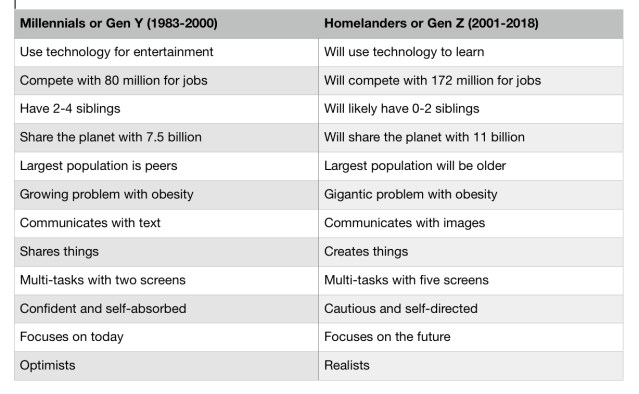
“According to Dr. Michael Leahy, ‘Today’s typical high school student endures the same anxiety levels as a psychiatric patient did in the early 1950s.’ In any given year, about one in five will experience an anxiety attack. Why? Their world is overwhelming, cluttered with information coming at them at the rate of a thousand messages a day.”

“Thousands of Baby Boomers retire each day in America. They will leave leadership positions needing to be filled. Even if everyone in Generation X were a brilliant leader, there would not be enough of them to fill the vacancies left by the Boomers. The young adults among the Millennial Generation will be needed for leadership, ready or not.”

“Although our young adults are rich in potential—we don’t really expect them to perform responsible acts until a full decade later that we expected a century ago. I believe it’s detrimental both for our kids and our society. In many states, we give them the rights to adulthood at 18 or 21, like smoking, drinking or voting. We don’t, however, expect the responsibilities that accompanied those rights. It’s unhealthy. The rights and responsibilities should always go together.”

“Remember that children (in general) cannot comprehend an addictive behavior. Adults must lead them into healthy moderation, where they both understand and enjoy technology, but utilize it as a ‘servant.’ 

“Remember that children will choose ice cream over lima beans—and screens over the healthy alternatives for play. While there are some exceptions, adults must be the ones to lead them in their emotional development, and introduce behaviors and habits that produce maturity.

“Remember that children are drawn to entertainment, whether or not they learn something from it. … Adults must leverage what they’re magnetically drawn to and make it beneficial.”

“Wise leaders utilize vision that can see both backward and forward. They look back and learn from the past. They glean from past mistakes in order to avoid repeating them. Additionally, they seek what was helpful and timeless so they can carry those elements forward. They swing backward so they can swing forward well.”

“A culture that offers the young information and autonomy without requiring equal parts accountability and responsibility produces ‘unready’ adults.”

“Students are incentivized if they know why a topic is relevant before they learn. Students bond with an experience more than a lecture. Students comprehend information when it’s connected to a narrative. Students remember data when an image is utilized in their learning.”

“Effective teachers don’t say as much as possible. They actually say as little as needed—allowing students to get on with their learning.”

You can also check out my review of Marching Off The Map by clicking here. The first set of quotes (and an infographic) I shared from the book are here, and a set of quotes that Dr. Elmore shared in his book are here.

Shortcut To Second Mile

Tim Elmore is always suggesting ways to help those who work with students—parents, teachers, coaches, youth workers—to more effectively interact with young people.

Many of us (adults and students) struggle with wanting things to happen NOW! As a result, we tend to look for shortcuts. Dr. Elmore suggests that a “second mile” mindset will serve us all better. Check this out:

“In order to move from the ‘shortcut’ mindset to the ‘second mile’ mindset, let me suggest these shifts:

Stop Asking Shortcut Questions…

  1. What can I get by with?
  2. What meets ‘expectations’?
  3. How little can I study and still pass?
  4. What can I get out of this job?
  5. Is my behavior justifiable?
  6. Is there an easier way to do this?

Start Asking Second Mile Questions…

  1. What would surprise my supervisor?
  2. What would ‘excellent’ look like?
  3. How much can I study to improve?
  4. What can I give to this job?
  5. Is my behavior helpful to others?
  6. Is there a better way to reach the goal?”

If you are leading students today, I would highly recommend you check out Dr. Elmore’s latest book Marching Off The Map.

7 Quotes + 1 Infographic From “Marching Off The Map”

Once again, Tim Elmore has given us invaluable insight into the emerging youth culture. If you have kids or work with kids, you must read Marching Off The Map. You can check out my full book review by clicking here. Below is the first set of quotes I want to share with you, but there will be plenty more coming in the future, so stay tuned!

“Thanks to technology, information streams into their lives 24/7 and often has no filter on it, even for young children. When we determined not to censor content in the media, we had no idea (understandably) how it would affect our kids. We’re removing the opportunity for them to experience innocence and wonder. However, because they’re still maturing emotionally, socially, cognitively and biologically in their first 25 years, we have now begun to witness a strange paradox in our young: the extinction of childlikeness and the extension of childishness. …

“Since they are exposed to so much adult information, so early in their lives, they can prematurely lose (1) their sense of innocence, (2) their sense of wonder and (3) their sense of trust …

“Biologically, the graduate is an adult. Emotionally, the graduate may be unprepared for the adult world.” 

“If you think our kids are pitifully impulsive on social media—just look at the adult population. … If you think teens are addicted to Facebook, just study the hours their mothers spend on it. If you think young athletes on the Little League baseball field act childish, just look at their dads. The behavior of adults and children has become more and more similar. Society has baptized ‘youthfulness.’ We want to look young, feel young, dress young, talk young and act young. We argue with our children’s teachers. We push our kid’s coaches to get them special treatment. We are not good at delaying gratification, and we frequently don’t keep commitments we make … very much like children. The result? Adulthood has lost much of its aura and authority.”

“As you stand in front of your classroom or your own children—you are, in a sense, Galileo. You are Magellan. You are Christopher Columbus. You are Lewis and Clark. You are Neil Armstrong. Ready or not, they need you to play this role.

“Our world is both expanding and shrinking. Our past maps and methods are antiquated. Like it or not, we’re moving into unfamiliar territory and many think it’s too difficult to explore. We have fallen in love with our old maps. … 

“For educators, our role must change as we teach a generation of students who don’t need adults to get information.

“For parents, our role must change as we raise kids in a time of terrorism, economic recession, racial unrest, underemployment and ubiquitous technology.

“For coaches, our role must change as we train young athletes who have eight-second attention spans, and may arrive at practice with little resilience or grit.

“For youth workers, our role must change as we mentor students who have few life skills or values because adults either over-functioned or were absent.

“For employers, our role must change as we onboard young employees who may have never had a real job before, and may ask when ‘spring break’ will be.”

“Adults must enable the students to leverage what is new, yet at the same time, hold on to what is ancient, yet valuable. We must be both timeless and timely. So, our job as we serve the next generation is two-fold:

  • To adopt or adapt. We must seize what is new and help kids leverage it well.
  • To explain and equip. We must relate to them the timeless ideals every generation needs.”

“I believe we must cultivate one significant skill set in ourselves: we must be able to either adapt to the new world that’s emerging, or we must explain why a timeless virtue or value is still relevant in our 21st century world.”

“A third of young Americans say they don’t belong to any religion. I’ve found, however, they’ve traded in one God for many gods. They want to ‘feel’ spiritual, so they’ve created a buffet—seeking something to satisfy their soul. I often hear students say, ‘I don’t believe in religion, but I want to be a spiritual person.’ Today—pluralism is expanding across the landscape. It’s easier to say ‘no’ to one and enjoy a mixture of many.”

“A third of young Americans say they don’t belong to any religion. I’ve found, however, they’ve traded in one God for many gods. They want to ‘feel’ spiritual, so they’ve created a buffet—seeking something to satisfy their soul. I often hear students say, ‘I don’t believe in religion, but I want to be a spiritual person.’ Today—pluralism is expanding across the landscape. It’s easier to say ‘no’ to one and enjoy a mixture of many.”

“The Latin root word for ‘educate’ is ‘ducere’ which means to ‘push out.’ … We should not put students in a passive mode as we teach. We must be inspirers of learning. We must help pull ambition out of them, not push information into them.”

I’ll be posting some more quotes from Marching Off The Map next week.

On This Day (book review)

on-this-dayI truly believe George Santayana’s maxim about learning from history so that we don’t have to repeat its painful lessons. On This Day: 365 Amazing and Inspiring Stories about Saints, Martyrs and Heroes by Robert Morgan not only helped me learn history, but see that history through a biblical lens.

Each day of the year Robert Morgan will introduce you to someone who played a key part in church history. Some of the names will be well-known to you, and some of them will be brand new; some of the stories will make you smile, and some will break your heart. But all of the stories reinforced two major themes for me—(1) All of history is God’s story, and (2) God uses ordinary people to accomplish His extraordinary purpose.

Each day’s entry is short enough that you can easily add it to your daily schedule. If you are a teacher or a parent, these stories would be a great way to talk about current events in light of what God has already done in past history. Either by yourself or with others, you will gain a greater appreciation for God and the gifts He gives to men and women.

Right-Brain Leadership

Right-Brain LeadershipI read a fascinating article in Influence, written by Mark Batterson, called “Right-Brain Leadership.” If you are involved in any type of speaking or teaching role, you should check out what he has to say about the power of creativity.

Here are some quotes I especially liked…

“Creativity is the natural, supernatural by-product of a Spirit-filled life.”

“Loving God with half your mind doesn’t cut it. Half-minded is no better than half-hearted. God wants to sanctify your right brain imagination so you can see visions and dream dreams.”

“Neuroimaging has shown that as we age the center of cognitive gravity tends to shift from the imaginative right brain to the logical left brain. That neurological tendency presents grave spiritual problems for leaders: At some point, most of us stop living out of imagination and start living out of memory. Instead of creating the future, we start repeating the past. Instead of living by faith, we start living by logic. Instead of going after our dreams, we do it the way it’s always been done.”

“Uniqueness if God’s gift to you. Creativity is your your gift back to God.”

“What to say is content. How to say it is creativity. Part of my calling as a writer and as a preacher is to say old things in new ways. I think that’s precisely what Jesus did with the parables. Most of them are no more than 250 words, but hear them once and you’ll remember them for ever. Jesus was the master of metaphors.”

“The brain processes print on a page at 100 bits per second, but it processes pictures at a billion bits per seconds. That means that a picture isn’t worth a thousand words; it’s worth 10 million.”